

Why Your Retaining Wall’s Structural Integrity Matters
Retaining walls repairs are essential for protecting your property’s safety and value. Addressing early warning signs like cracks or bulging can save you thousands and prevent safety hazards.
Common retaining wall repair options include:
- Minor repairs ($250-$1,500): Sealing cracks, patching mortar, clearing drainage.
- Moderate repairs ($1,500-$5,000): Rebuilding sections, installing reinforcement, upgrading drainage systems.
- Major structural repairs ($5,000-$15,000+): Anchoring, underpinning, or partial reconstruction.
- Full replacement: When damage is too extensive for repair.
Note: These are average costs based on internet data and not actual costs for AJM Grounds.
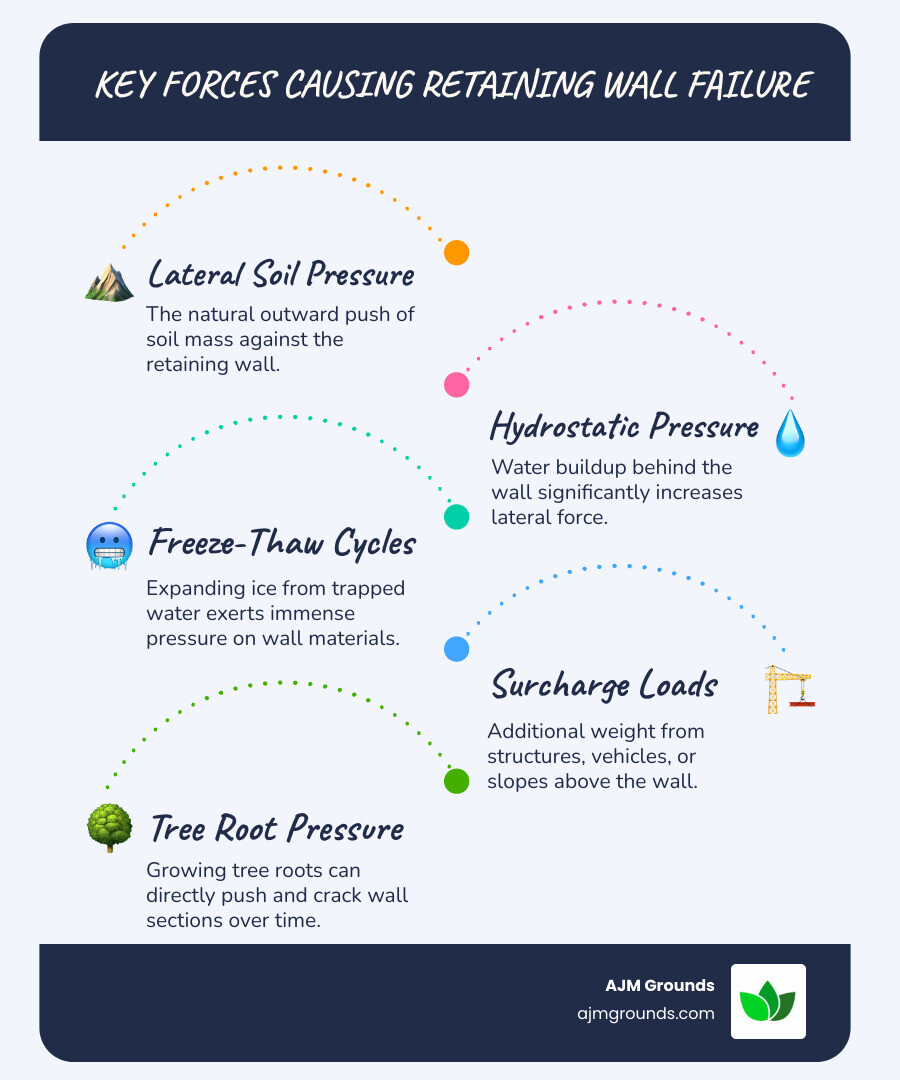
Retaining walls constantly fight against soil pressure, water buildup, and the freeze-thaw cycles common in Massachusetts. When these forces win, you’ll see telltale signs like cracks, separating sections, or a leaning wall.
Fortunately, most retaining wall problems are fixable when caught early. The key is to know what to look for and act quickly.
As John Caplis, owner of AJM Grounds LLC, I’ve helped countless Woburn homeowners with retaining walls repairs through our hardscaping services. My team uses its hands-on experience to deliver sustainable, long-lasting solutions that protect your property investment.
Identifying the Problem: Signs and Causes of Retaining Wall Failure
Don’t ignore signs of distress from your retaining wall. In Woburn, MA, walls work hard against soil pressure, water, and freeze-thaw cycles. Catching problems early makes retaining walls repairs more manageable and prevents bigger headaches later.
Telltale Signs Your Wall Needs Attention
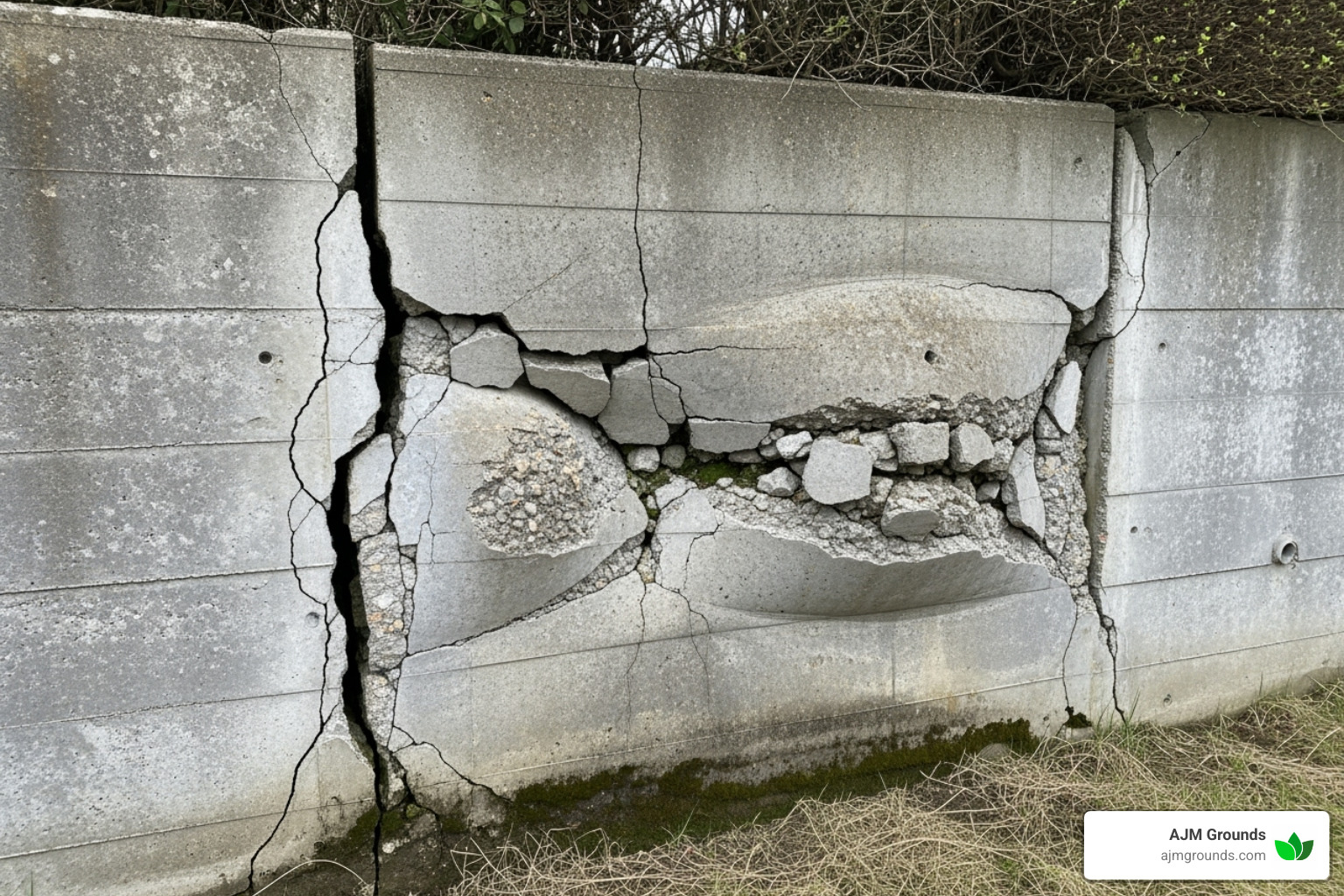
Perform a quick check-up on your wall each season, especially after heavy rains. Look for these red flags:
- Leaning or Tilting: Even a slight lean indicates that the pressure behind the wall is winning. This will only worsen without intervention.
- Bulging or Bowing: Outward curves in the wall suggest the foundation or internal reinforcement is failing under stress.
- Cracks: Any crack wider than a quarter-inch needs professional attention. Horizontal cracks often point to water pressure, while vertical and stairstep cracks can result from weather or soil movement.
- Crumbling Materials: Deteriorating concrete or rotting wood indicates the material is failing due to age, quality, or weather.
- Water Damage: Look for water seeping from the wall (beyond normal weep hole drainage) or pooling at its base. A white, chalky residue (efflorescence) is another sign of moisture issues.
- Soil Separation: If soil is eroding or pulling away from the wall’s base, the foundation is losing support.
The Root Causes of Wall Deterioration
Successful retaining walls repairs address the underlying cause, not just the symptoms. Most failures stem from one of these issues:
- Poor Drainage & Hydrostatic Pressure: This is the primary villain. When water can’t drain, it builds immense pressure (hydrostatic pressure) behind the wall, acting like a battering ram. A proper drainage system, including clear weep holes and effective French drains, is the most critical factor for wall longevity.
- Inadequate Foundation or Construction: A wall needs a solid footing (often 18-24 inches deep) and proper construction. Skimping on foundation depth, using cheap materials, or having insufficient reinforcement creates a weak wall destined to fail.
- Environmental Factors: Massachusetts’ expansive clay soils swell and shrink, putting constant stress on walls. Our freeze-thaw cycles act like a natural jackhammer, widening small cracks over time.
- Surcharge and Root Pressure: Adding significant weight (like a patio or parked car) above the wall can cause it to buckle. Nearby tree roots can also grow into and damage a wall.
For professional help with proper drainage and installation, our hardscape installation service can prevent these issues from the start.
A Homeowner’s Guide to Retaining Walls Repairs
When your retaining wall shows distress, you must decide how to proceed. This section covers the practical side of repairs, from choosing between a fix and a full replacement to understanding the right methods for your wall.
Repair vs. Replacement: Making the Right Call
Deciding whether to repair or replace your wall depends on several factors. A professional assessment is key, as some walls that look terrible are sound, while others that look fine are structurally compromised.
| Factor | Repair | Replacement |
|---|---|---|
| Cost | Lower for minor to moderate issues ($250 – $5,000). | Higher, often starting at several thousand dollars. |
| Time | Generally quicker. | More time-consuming, involving demolition and new construction. |
| Longevity | Can extend wall life, but may not fix underlying issues. | Offers the longest lifespan (50-100 years) with proper design. |
| Extent of Damage | Best for superficial cracks, minor leaning, or localized issues. | Necessary for severe structural failure or complete collapse. |
| Age of Wall | Viable for newer walls with localized damage. | Often best for older walls (50+ years) near their end of life. |
Note: These are average costs based on internet data and not actual costs for AJM Grounds.
For a newer wall that’s failing, replacement might be needed to correct fundamental installation or drainage flaws. For an older wall, replacement is often more cost-effective than repeated, expensive repairs. For guidance on building a new, durable wall, see our retaining wall construction services.
Common Repair Solutions for Different Wall Types
The right repair method depends on your wall’s material.
- Concrete Walls: Minor cracks can be sealed with epoxy or polyurethane injection. Crumbling or spalling surfaces can be patched with fresh mortar. For more information, see our Concrete Retaining Wall Installation page.
- Stone Walls: Crumbling mortar is fixed by re-mortaring (or repointing). Loose stones can be removed and reset on a properly prepared base. We specialize in Natural Stone Retaining Walls.
- Block Walls: Damaged or shifted blocks can often be individually replaced. Leaning or bulging may require reinforcement with geogrid or anchors. Learn more about our Block Wall Installation services.
- Timber Walls: The most common retaining walls repairs for timber involve replacing individual rotted or insect-damaged timbers. Leaning walls can be stabilized with new “dead-man” anchors.
The DIY vs. Professional Approach to Retaining Walls Repairs
Be honest about what you can handle safely.
- DIY-Friendly Tasks: Minor crack sealing, cleaning weep holes, and redirecting downspouts are manageable for handy homeowners.
- When to Call a Pro: Any structural issue—tilting, bulging, significant cracks, or movement—requires professional assessment. Walls over 4 feet tall involve immense forces and often require permits and engineering, making them unsafe for DIY repairs. The risk of injury or catastrophic failure is too high. As noted in The Do’s And Don’ts Of Retaining Wall Repair, attempting to fix structural problems yourself can make them worse.
Advanced Structural Repair Techniques
For serious issues, these techniques can save a wall from total replacement.
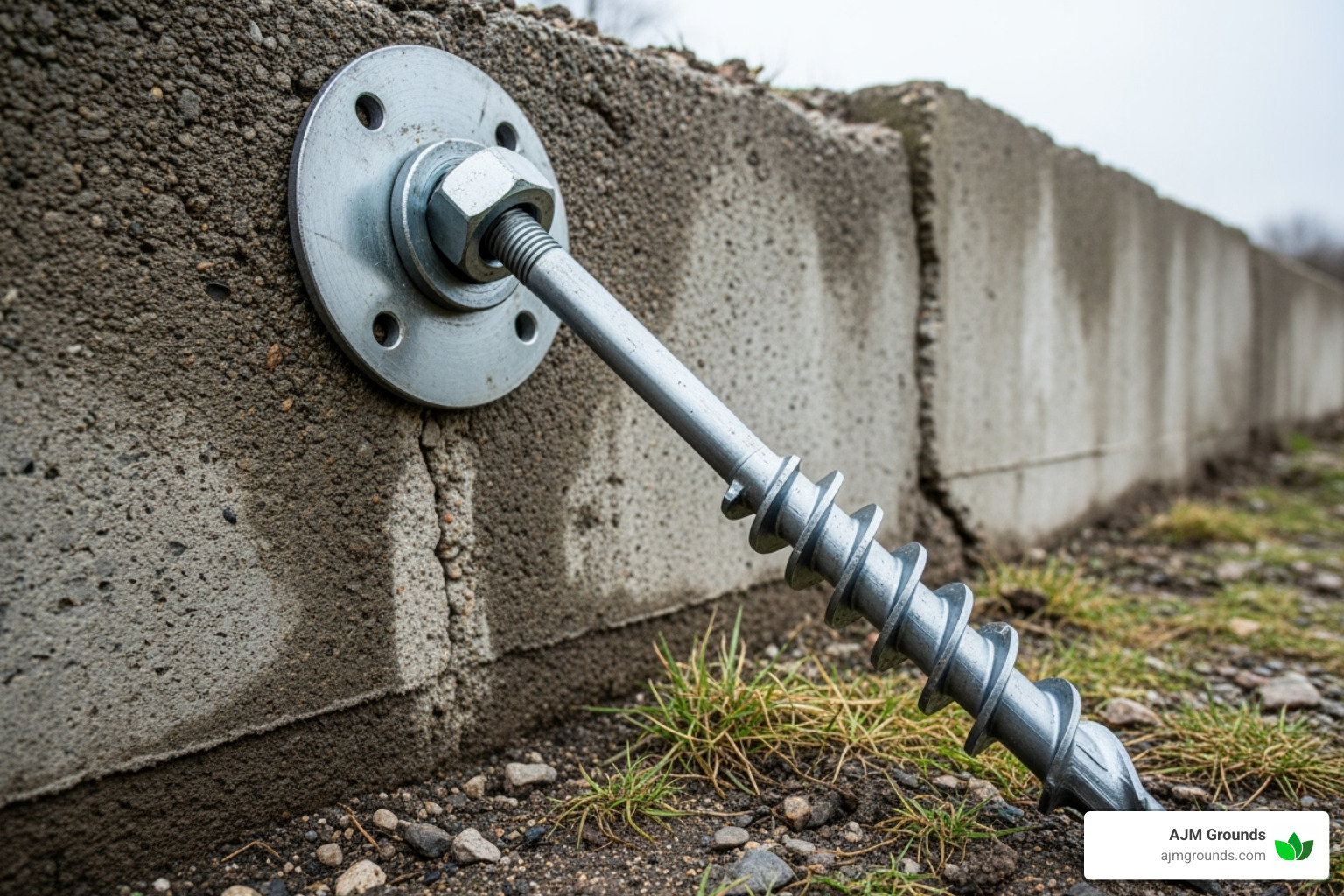
- Helical Tiebacks and Anchors: These giant screws are driven through the wall into stable soil behind it. They are attached to a steel plate on the wall face and can pull a leaning wall back into position. This method is often less disruptive than rebuilding. Bob Vila on anchoring offers more details.
- Soil Nailing: Steel bars are drilled into the soil behind the wall and grouted in place. A new facing is then applied to the wall, creating a stable, reinforced structure.
- Underpinning: If the foundation is failing, this process involves excavating beneath the wall to create a new, stronger concrete footing.
The Financial Side: Budgeting for Your Repair Project
Understanding the costs of retaining walls repairs is key to planning. While it’s tempting to find the cheapest option, investing in quality workmanship and materials ensures durability and safety, protecting your property in the long run.
Estimated Costs for Common Retaining Wall Repairs
Note: These are average costs based on internet data and not actual costs for AJM Grounds. Prices vary based on location, contractor, and complexity.
- Minor Repairs ($250 – $1,500): This covers smaller fixes. Sealing non-structural cracks may cost $150 – $500. Efflorescence cleaning runs $150 – $850. Patching minor crumbling or replacing a few rotted railroad ties can range from $200 to $1,250.
- Moderate Repairs ($1,500 – $5,000): This involves more significant work. Straightening a leaning wall might cost $60 – $200 per linear foot. Installing reinforcement or anchoring systems can run $50 – $200 per linear foot. Adding a proper drainage system may cost $70 – $250 per square foot.
- Major Structural Repairs ($5,000 – $15,000+): These extensive projects can approach the cost of replacement. Rebuilding large sections typically costs $70 – $250 per linear foot. Advanced solutions like helical tiebacks for severe bowing can cost $1,500 to $5,000 or more.
- Full Replacement: A new wall averages $3,500 to $12,000, but can exceed $20,000 for complex projects. Demolition of the old wall adds another $500 to $1,500.
This Retaining Wall Repair Cost Guide offers more detailed breakdowns.
Factors That Influence the Final Price
Several variables can impact your final cost for retaining walls repairs.
- Wall Material: Costs vary by material. For example, repairing a stone wall ($300 – $1,600) is often more labor-intensive than fixing a vinyl wall ($200 – $650).
- Extent of Damage: A small crack is far cheaper to fix than a severe structural lean.
- Wall Size: Taller and longer walls require more materials and labor, increasing the cost.
- Site Accessibility: Difficult-to-reach walls on steep slopes or in tight spaces increase labor costs.
- Labor and Permits: Labor rates typically range from $50 to $200 per hour, with emergency repairs adding $200 to $600. Permits for walls over a certain height add to the total cost.
- Inspections: A professional inspection ($150 – $500) is vital for accurate diagnosis. For severe damage, a structural engineer ($100 – $350 per hour) can save you thousands in the long run by ensuring the repair is designed correctly.
Prevention is the Best Medicine: Maintaining Your Retaining Wall
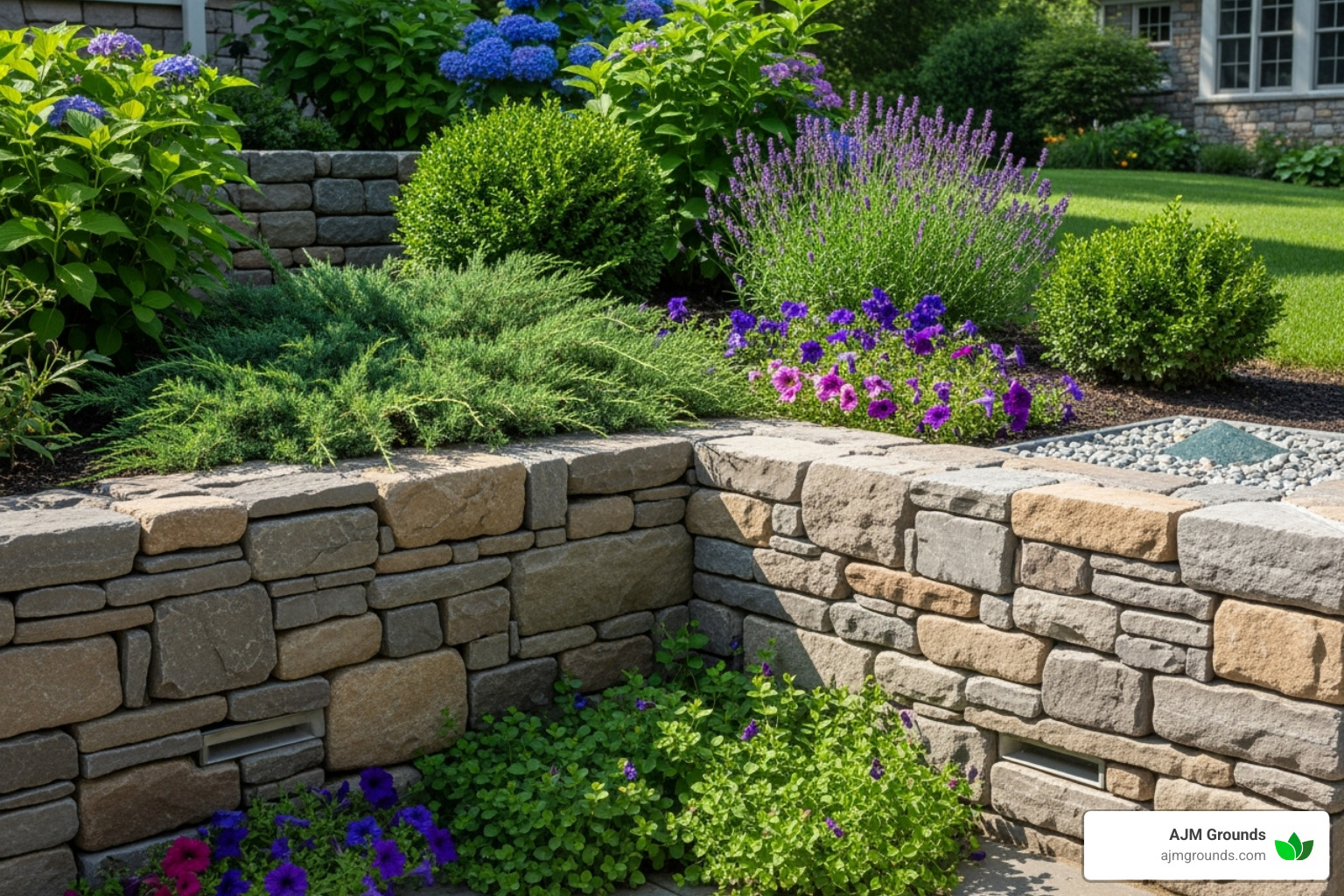
Proactive care can save you from costly retaining walls repairs and significantly extend your wall’s life. A well-maintained wall not only functions properly but also improves your property’s curb appeal in communities like Bedford, Billerica, or Lexington, MA.
Essential Maintenance Checklist for Homeowners
Regular, simple checks can help you catch problems before they become emergencies.
- Inspect Seasonally: Walk around your wall after heavy rains and at the start of each season. Look for new cracks, bulging, leaning, or soil erosion.
- Keep it Clean: Regularly perform Cleaning to remove leaves, dirt, and debris from the wall’s base. This prevents moisture buildup and keeps drainage paths clear.
- Clear Weep Holes: Check weep holes near the base every few months. Use a stick or hose to clear any blockages to ensure water can escape freely.
- Manage Surface Water: Ensure gutters and downspouts direct water far away from the wall. If water pools near the base, regrade the area to promote runoff.
Long-Term Durability Through Smart Choices
The decisions made during construction or major repairs determine if a wall lasts 20 years or 80.
- Use Quality Materials: Don’t cut corners. Natural stone walls and high-grade concrete blocks resist weather damage far better than cheaper alternatives.
- Demand Proper Installation: Even the best materials will fail if installed incorrectly. A proper installation includes a deep footing, correct backfill, adequate reinforcement, and a functional drainage system.
- Landscape Wisely: The right plants can help stabilize soil and control erosion. However, keep large trees with aggressive roots a safe distance from the wall to prevent damage.
At AJM Grounds, we create integrated hardscaping solutions. When landscaping and hardscaping work together, both last longer. With proper care, a well-built wall can last 50 to 100 years.
Hiring the Right Professional for the Job
For most retaining walls repairs, especially structural ones, professional expertise is non-negotiable. A poorly executed repair can lead to complete wall failure, property damage, or injury. Choosing the right contractor is about protecting your investment and ensuring safety.
What to Look for in a Retaining Wall Contractor
Finding the right contractor is like finding a good doctor. You need a specialist with a proven track record.
- Specialized Experience: Hire a contractor who focuses on retaining walls. They will understand the complexities of soil pressure, drainage, and different materials.
- Licensing and Insurance: This is your safety net. A licensed contractor meets state requirements, and insurance protects you from liability. Always ask for proof of both.
- Portfolio and Reviews: Look at their past work for projects similar to yours. Positive local reviews, especially from towns like Bedford or Billerica, confirm their ability to handle our region’s specific soil and weather challenges.
- Clear Communication: A good contractor should explain the problem, their proposed solution, and the costs in terms you can understand.
For local expertise from a team that prioritizes detail and service, see what our retaining wall builders near me can do.
Key Questions to Ask Before You Hire
Use this checklist to interview potential contractors:
- “Do you specialize in retaining walls repairs?” You need an expert, not a generalist.
- “Can you explain what caused the failure?” A pro will identify the root cause, not just the symptom.
- “What repair method do you recommend and why?” They should justify their approach over other options.
- “Will you provide a detailed, written contract?” Get everything in writing to avoid misunderstandings.
- “What is the project timeline?” This helps set realistic expectations.
- “How will you ensure proper drainage?” This is the most critical question. A poor answer is a major red flag.
- “Can you provide local references?” Speaking to past clients is the best way to vet a contractor.
- “What is your plan for unexpected issues?” A professional will have a contingency plan for hidden damage.
Conclusion: Secure Your Landscape for Years to Come
A failing retaining wall is a serious hazard that threatens your property’s safety and value. The good news is that most retaining walls repairs are effective and can prevent catastrophic failure when problems are addressed early.
Ignoring a small crack or slight bulge can lead to soil erosion, landscape damage, or even costly issues with your home’s foundation. The ripple effects of a failing wall are significant, making prompt action essential.
Your Next Steps to a Stable Retaining Wall
Success with retaining walls repairs comes down to a few key actions:
- Inspect Regularly: Make seasonal checks a routine to spot leaning, cracks, or water issues early.
- Diagnose Accurately: Understand if the problem is cosmetic or a sign of deeper structural failure.
- Act Promptly: Procrastination is expensive. A minor fix today can prevent a major rebuild tomorrow.
- Value Professional Expertise: For any structural issue, professional assessment is crucial for a safe, effective, and lasting repair.
Partner with Woburn’s Hardscaping Experts
At AJM Grounds, we solve retaining wall problems the right way, the first time. Our team has experience with every type of wall challenge across Woburn, Bedford, Billerica, Burlington, Lexington, and surrounding towns. We don’t just patch cracks; we fix the root causes, whether that means installing proper drainage or reinforcing the structure.
We provide honest assessments and quality workmanship to ensure your landscape is stable and secure for years to come.
For a professional assessment and expert retaining wall construction and repair services in the Woburn, MA area, contact us today. Let’s work together to protect your investment.
