

The Timeless Appeal of Flagstone
Laying a flagstone walkway creates a natural, durable path that adds lasting beauty and value to your property. Flagstone is a flat sedimentary rock—like sandstone, bluestone, or slate—sliced into unique pieces that form a rustic, charming mosaic. A properly installed path can last for decades with minimal upkeep, increasing your home’s curb appeal.
The secret to a long-lasting flagstone walkway isn’t just the stone; it’s the compacted base underneath. A solid foundation prevents shifting, settling, and trip hazards. Setting the stones flush with your lawn also makes mowing easier and creates a seamless, professional look.
I’m John Caplis, owner of AJM Grounds LLC. For years, my team has been changing outdoor spaces throughout Greater Woburn, MA, with beautiful and functional flagstone walkways. Whether you’re considering a DIY project or professional installation, this guide provides a high-level overview of the process.
Quick Overview: Laying a Flagstone Walkway
- Plan & Design: Mark your path’s route and gather materials.
- Excavate: Dig out 4-6 inches of sod and soil.
- Build a Base: Add and compact layers of crushed stone and sand.
- Set Stones: Place flagstones, leaving 1-3 inch gaps.
- Fill Gaps: Sweep in your chosen filler, like polymeric sand or pea gravel.
- Level & Finish: Tap stones level with a rubber mallet.
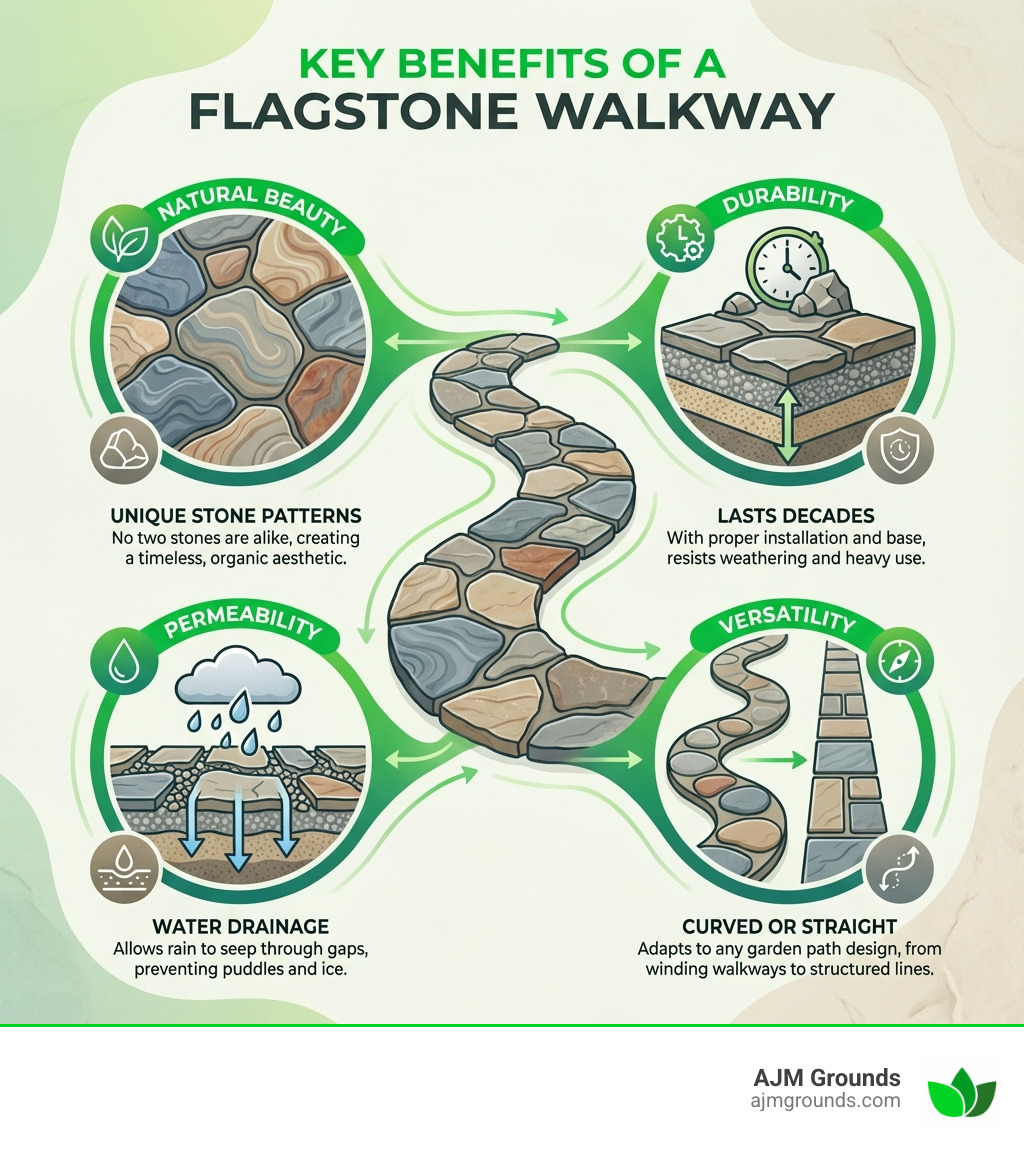
Simple laying a flagstone walkway glossary:
Your Step-by-Step Guide to Laying a Flagstone Walkway
A flagstone walkway adds permanence and natural beauty to any landscape. This guide provides a basic overview of how to achieve this timeless look in your yard.
Step 1: Planning, Designing, and Gathering Materials
Careful planning is the first step to a successful flagstone walkway. Start by choosing your stone. Common types like sandstone, bluestone, and slate each offer unique colors and textures. For walkways, we recommend flagstones that are at least 1.5 to 2 inches thick to prevent cracking under foot traffic.
Next, design your path’s layout. Use a garden hose to visualize the shape and flow. Does it feel natural to walk? A comfortable width for a single person is at least 3 feet. Consider whether you want a formal look with uniform stones or a rustic feel with irregular shapes and wider gaps. Visiting a local stone yard can help you see the options firsthand.
Gathering your tools and materials beforehand will make the project run smoothly.
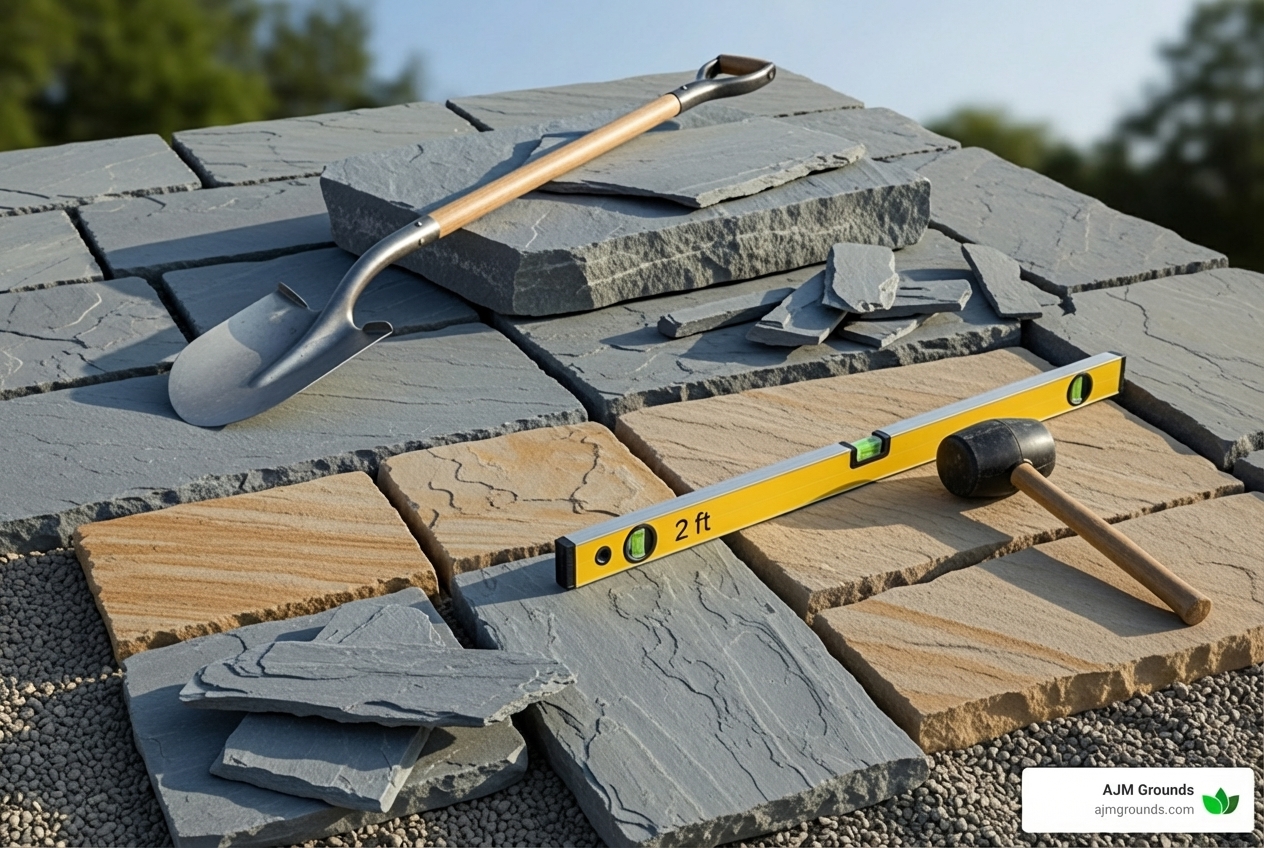
Essential Tools & Materials:
- Tools: Shovel, wheelbarrow, 4-foot level, rubber mallet, tape measure, safety goggles, gloves, rake, and a hand tamper or rented plate compactor for the base.
- Materials: Flagstones (add 10% extra for waste), crushed stone or gravel, sand, landscape fabric, and a joint filler (polymeric sand, pea gravel, or ground cover plants).
What is the typical cost of flagstone per square foot?
The cost of laying a flagstone walkway varies based on stone type and project complexity. Based on internet research, materials for a DIY project can range from $10-30 per square foot. Premium projects with intricate designs can reach $90+ per square foot. A flagstone installation is generally more of an investment than concrete due to higher material and labor costs.
Please note: The pricing information provided here is based on general internet research and is not reflective of actual AJM Grounds pricing. We always provide detailed, personalized quotes for our clients in Greater Woburn, MA, based on their specific project requirements.
Step 2: Preparing the Site and Building a Solid Base
A strong, stable base is the most critical part of a long-lasting flagstone walkway. This is where the heavy lifting begins.
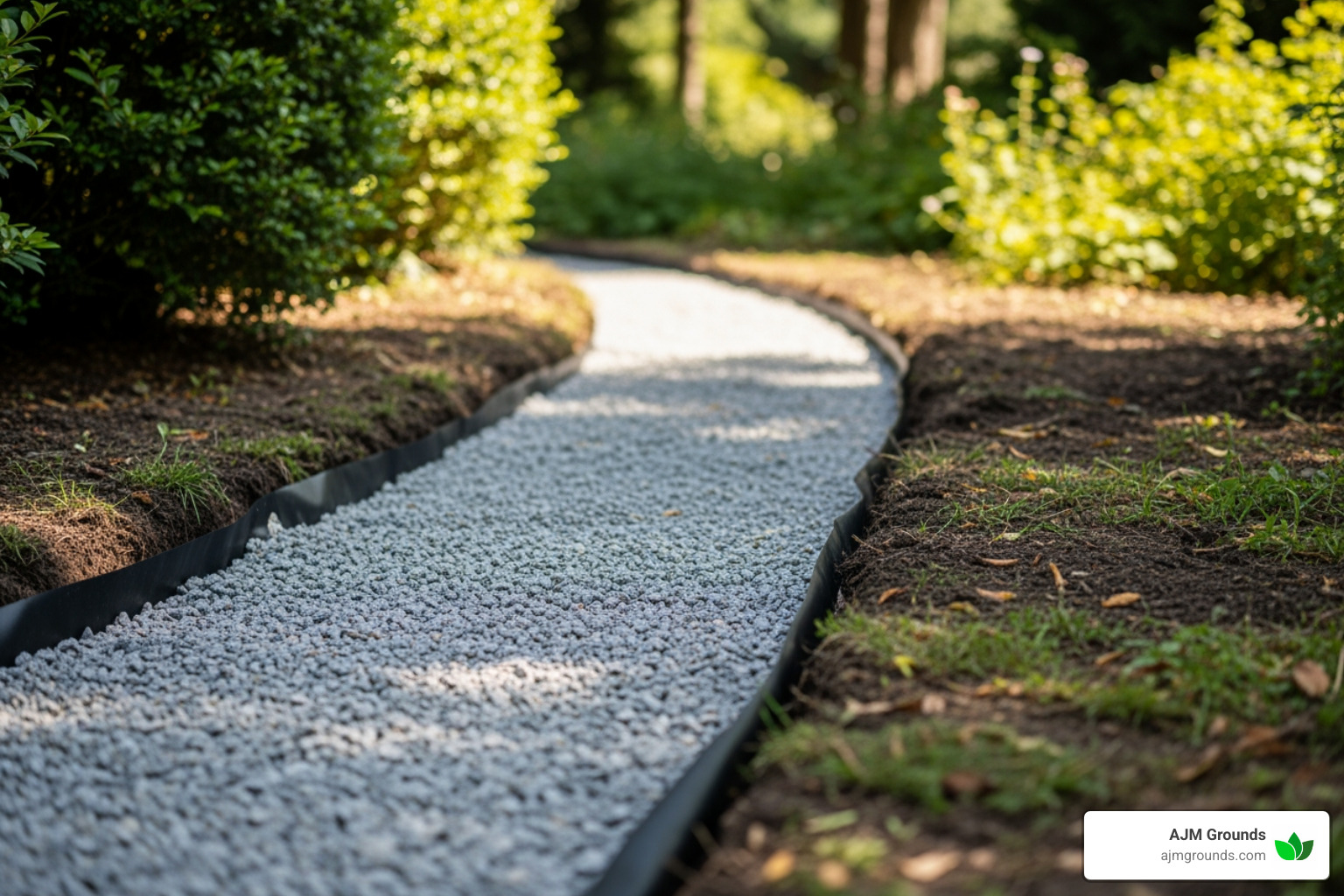
- Excavate the Path: After marking your path’s outline, remove all sod and soil to a depth of 4-6 inches. It’s essential to remove all grass to prevent the stones from becoming unstable later. Before you dig, always contact Call 811 to have underground utility lines marked for safety.
- Install a Weed Barrier: Lay landscape fabric over the excavated area to prevent weeds from growing up between the stones. Overlap any seams by several inches.
- Build the Base: Add a 2-4 inch layer of crushed stone or gravel over the fabric. This layer is for drainage and stability. Rake it smooth, creating a slight slope for drainage away from structures.
- Compact the Base: This is a step you cannot skip. Use a hand tamper or a rented plate compactor to thoroughly compact the gravel layer. A solid base prevents stones from shifting and settling over time.
- Add the Sand Layer: Spread a 1-2 inch layer of sand over the compacted gravel. This creates a leveling bed for setting the flagstones. Rake it smooth and lightly mist it with water.
Step 3: A Basic Guide to Laying the Flagstones
Now for the creative part: placing the stones. We recommend a dry-laid method (setting stones in sand, not mortar), as it handles New England’s freeze-thaw cycles well and makes future adjustments easy.
- Arrange the Stones: Start by laying out your flagstones on the sand bed to create a pleasing pattern, like fitting together a puzzle. Place larger stones in key areas and fit smaller ones around them.
- Set and Level: One by one, lift each stone, ensure its best side is facing up, and set it into the sand. Wiggle it to settle it, then use a rubber mallet to gently tap it until it’s stable and doesn’t rock. Use a level to make sure each stone is flat and even with its neighbors. The goal is to have the tops of the stones flush with the surrounding lawn to prevent trips and make mowing easy.
- Adjust as Needed: If a stone is too high or low, simply lift it and add or remove a little sand underneath before tapping it back into place.
- Maintain Spacing: Leave consistent gaps of 1 to 3 inches between stones for a comfortable and natural-looking path.
Safety First: Always wear gloves and safety goggles. When lifting heavy stones, bend with your knees, not your back. For minor shaping, a hammer and chisel can be used with caution, but for complex cuts or difficult areas, we recommend contacting a professional to avoid injury and ensure a proper fit.
Step 4: Filling the Gaps and Finishing Your Walkway
With the stones in place, the final step is to fill the gaps. Your choice of filler affects both the look and maintenance of the path.
- Polymeric Sand: A popular choice that hardens when wet. It locks stones in place, resists weeds, and prevents washout.
- Pea Gravel: Offers excellent drainage and a classic, textured look.
- Ground Cover: Planting low-growing plants like creeping thyme creates a soft, living walkway that naturally suppresses weeds.
To finish, sweep your chosen filler into the gaps until they are full. For sand or gravel, lightly mist with water to help it settle. If using polymeric sand, follow the manufacturer’s instructions for activation and curing. Once done, sweep any excess material off the stone surfaces, and your new walkway is ready to use.
Maintaining Your Walkway and Knowing When to Call a Pro
With proper care, your new flagstone walkway will provide years of enjoyment. Here’s how to maintain it and when to consider professional help.
Long-Term Care for Your Flagstone Path
Flagstone is durable and relatively low-maintenance. Regular sweeping will keep it clear of debris. Depending on your filler, you may need to pull occasional weeds or top off the material every few years. An annual gentle pressure washing can remove buildup and keep stones looking fresh. If a stone becomes wobbly, simply lift it, adjust the sand underneath, and reset it.
| Filler Type | Maintenance Level | Key Considerations (Greater Woburn, MA Climate) |
|---|---|---|
| Polymeric Sand | Low | Resists weeds and washout. May need topping off every 2-3 years. |
| Pea Gravel | Moderate | Excellent drainage but may need occasional replenishment if displaced. |
| Ground Cover | Moderate to High | Requires watering and weeding until established. Offers a beautiful, natural look. |
| Regular Sand | High | Prone to washing out and requires frequent replenishment and weeding. |
Sealing a dry-laid flagstone path is optional but can improve the stone’s color and protect it from stains.
More info about hardscaping services
Common Mistakes and When to Call a Pro
While laying a flagstone walkway can be a rewarding project, some mistakes can compromise the result. The most common error is inadequate base preparation, which leads to wobbly, sinking stones. Other pitfalls include uneven stones, poor drainage, and not fully removing the sod underneath.
Consider calling a professional at AJM Grounds if your project involves:
- Complex Designs: Intricate curves, steps, or steep slopes require expertise to ensure stability and safety.
- Challenging Conditions: We can address poor soil or drainage issues common in the Greater Woburn, MA, area.
- A Flawless Finish: For a perfectly level, durable, and beautifully integrated walkway, professional installation is the best way to guarantee a lasting landscape feature.
Flagstone is a premium material compared to concrete or pavers, but its natural beauty and longevity make it a worthwhile investment that improves property value for decades. For a flawless finish, trust the experts.
For a flawless finish, consider our professional walkway installation services. We are proud to help homeowners in Woburn, MA, and the surrounding communities of Bedford, Billerica, Burlington, Lexington, Reading, Stoneham, Wilmington, and Winchester, MA, create the outdoor spaces of their dreams.
