

Your First Step to a Flawless Lawn
Resod a yard is the process of removing old, damaged grass and replacing it with fresh sod to create an instant, lush green lawn. Here’s what you need to know:
When to Resod Your Yard:
- Your lawn is over 50% weeds
- Large dead patches don’t respond to watering or fertilization
- Soil compaction or chemical damage has occurred
- You need instant results for curb appeal
Key Benefits:
- Instant change – green lawn in 2-3 weeks vs. 10 weeks for seed
- Fewer weeds – high-quality sod comes relatively weed-free
- Reliable results – no competition from existing weeds like with seeding
Best Timing:
- Early spring or early fall for cool-season grasses
- Late spring for warm-season grasses
- Avoid drought periods or extreme heat
Looking at a patchy, brown lawn can be frustrating – especially when fertilizing and watering don’t seem to help. If your lawn is more weeds than grass, or if dead spots refuse to recover, it might be time to start fresh with new sod.
The good news? Resodding delivers instant results. While grass seed can take up to 10 weeks to establish, new sod creates a thick, green carpet in just 2-3 weeks with proper care.
The process involves removing old grass, preparing the soil, and laying fresh sod in a specific pattern for best results.
As John Caplis, owner of AJM Grounds LLC, I’ve helped countless homeowners in Woburn transform their outdoor spaces through professional landscape installations, including when they need to resod a yard for maximum impact. My team and I understand the precise techniques needed to ensure your new sod establishes quickly and thrives for years to come.
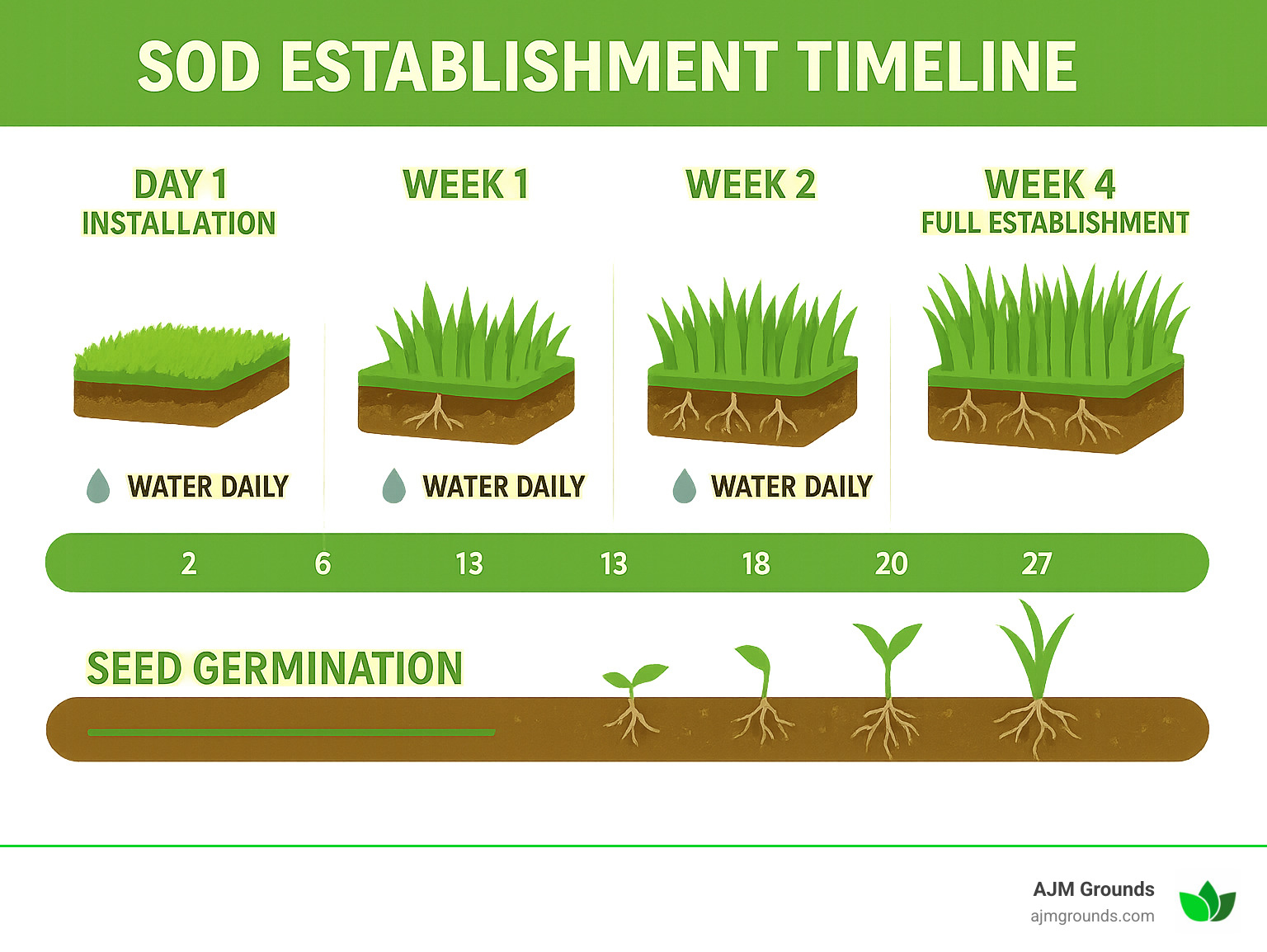
Quick resod a yard definitions:
The Complete How-To Guide to Resod a Yard
Ready to transform your patchy lawn? This guide covers everything you need to know to resod a yard successfully. I’ll walk you through each step with the same attention to detail we bring to every project at AJM Grounds.
Deciding to Resod: Sod vs. Seed and When to Start
First, assess your current lawn. If you see more brown patches than green, or if over half your lawn is weeds (the 50% weed rule), it’s time to start fresh with new sod.
Here’s the honest truth about your options:
| Feature | Sod | Seed |
|---|---|---|
| Cost | More expensive upfront | Less expensive upfront |
| Time to Establish | 2-3 weeks for establishment | Up to 10 weeks for establishment |
| Labor | More intensive initial installation | Less intensive initial installation, more ongoing care |
| Weeds | Relatively weed-free | Seedlings compete with existing weeds |
| Results | Instant curb appeal, dense lawn | Gradual establishment, can take a full season |
When you resod a yard, you’re getting instant gratification. While neighbors wait for grass seed to sprout, you’ll enjoy a thick, green carpet in just a few weeks. The trade-off? It costs more upfront and requires serious elbow grease during installation.
Timing is everything for sodding success. For cool-season grasses (which thrive here in Massachusetts), early spring or early fall are your sweet spots. The weather is ideal for helping roots settle in. If you’re dealing with warm-season grass, late spring to early summer works best.
Whatever you do, avoid starting this project during a drought or heat wave. Your new sod will struggle, and you’ll end up frustrated.
If you’re curious about whether seeding might work for part of your lawn, check out our tips for successful lawn seeding and overseeding.
Gathering Your Tools and Materials
To resod a yard, you need more than enthusiasm. Having the right tools makes the difference between a successful project and a back-breaking nightmare.
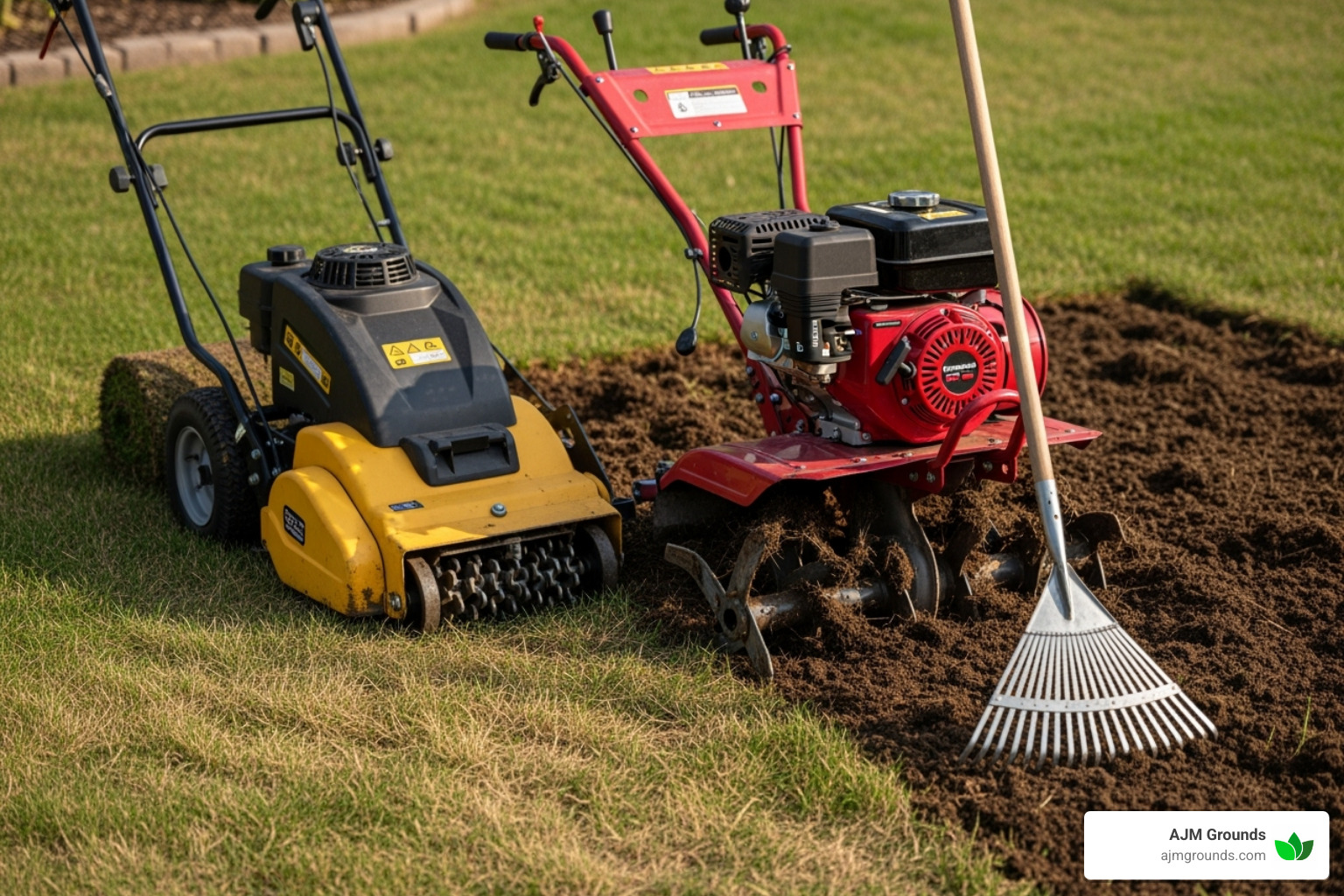
The sod cutter is your best friend for removing old grass efficiently. Most equipment rental places have them available. A rototiller comes next, helping you break up compacted soil and create a welcoming environment for new roots.
Your garden rake (the heavy iron kind) will get a serious workout leveling soil and clearing debris. Keep a sharp utility knife handy for trimming sod around obstacles like sprinkler heads and walkways.
Here’s where many DIYers stumble: the lawn roller. This tool presses new sod firmly against the prepared soil, eliminating air pockets that can kill roots. No roller? A piece of plywood works in a pinch—just lay it down and walk across it.
Don’t forget soil improvements. Topsoil gives you a fresh foundation if your existing dirt is poor quality. Compost works magic for soil structure and drainage. Starter fertilizer (the high-phosphorus kind) gives new roots the nutrients they need to establish quickly.
Finally, you’ll need reliable watering equipment. A good hose and sprinkler system isn’t optional when you resod a yard—it’s absolutely critical for success.
Feeling overwhelmed? Many homeowners find that working with professional teams makes more sense than renting equipment. You can find professional sod companies who come equipped with everything needed.
How to Prepare Your Yard for New Sod
Proper preparation is the foundation of a new lawn and is what separates thriving grass from a struggling yard.
Old grass removal comes first. Use a sod cutter to slice off existing turf about 1-2 inches deep, getting below the root level. This gives you a clean slate and removes competition for your new sod.
Soil testing might seem like overkill, but it’s worth it. Your local extension service can analyze a soil sample for a small fee. They’ll tell you your soil pH and what amendments you need. Most grass loves slightly acidic soil between 6 and 7.5 on the pH scale.
Now for the tilling. Use a rototiller to work the soil to a depth of 3-6 inches. This loosens compacted earth and gives new roots room to spread. The prepared ground needs to be at least 6 inches deep for healthy root development.
Adding amendments based on your soil test comes next. Work in compost for organic matter, topsoil if you need more depth, or sand if drainage is an issue. Mix these thoroughly into the tilled soil.
Leveling and grading requires patience. Use your iron rake to create a smooth, even surface that sits about 1 inch below paved areas like driveways and patios. This ensures your finished lawn will be flush with hardscaping.
Pay attention to grading for proper water flow away from your house. If you have standing water problems, you might need to explore landscape drainage solutions.
Finish with light watering to settle loose soil and create a moist base for your new sod.
The Proper Technique to Resod a Yard
Now it’s time to lay your new sod. Doing it right ensures a lawn that will make the neighbors jealous.

Start by moistening your prepared soil—not soaking, just damp. This prevents the sod from drying out too quickly.
Begin along the straightest edge of your yard, like a driveway or patio. This gives you a clean reference line and makes alignment easier.
Here’s the key technique: lay in a staggered brick pattern. Just like a mason laying bricks, offset each row so the seams don’t line up. This creates a stronger, more uniform lawn.
Keep seams tight but never overlap pieces. Each piece of sod needs direct contact with the soil to root properly. Gaps dry out fast, but overlapping pieces can’t establish roots.
When you encounter obstacles like sprinkler heads or patios, use your utility knife to trim neat, precise cuts. Sloppy edges around hardscaping look unprofessional.
Keep unused sod moist in shaded areas while you work. Once laid, give new sections a light spray to prevent drying.
The final step is crucial: roll the entire area with your lawn roller. This eliminates air pockets and ensures perfect contact between sod roots and soil.
Want professional results without the hassle? Consider residential sod installation services that handle these techniques perfectly every time.
New Sod Care: Watering and Maintenance for Success
Your new lawn is in place, but the next few weeks are critical. Proper care determines whether you get lush grass or patchy disappointment.
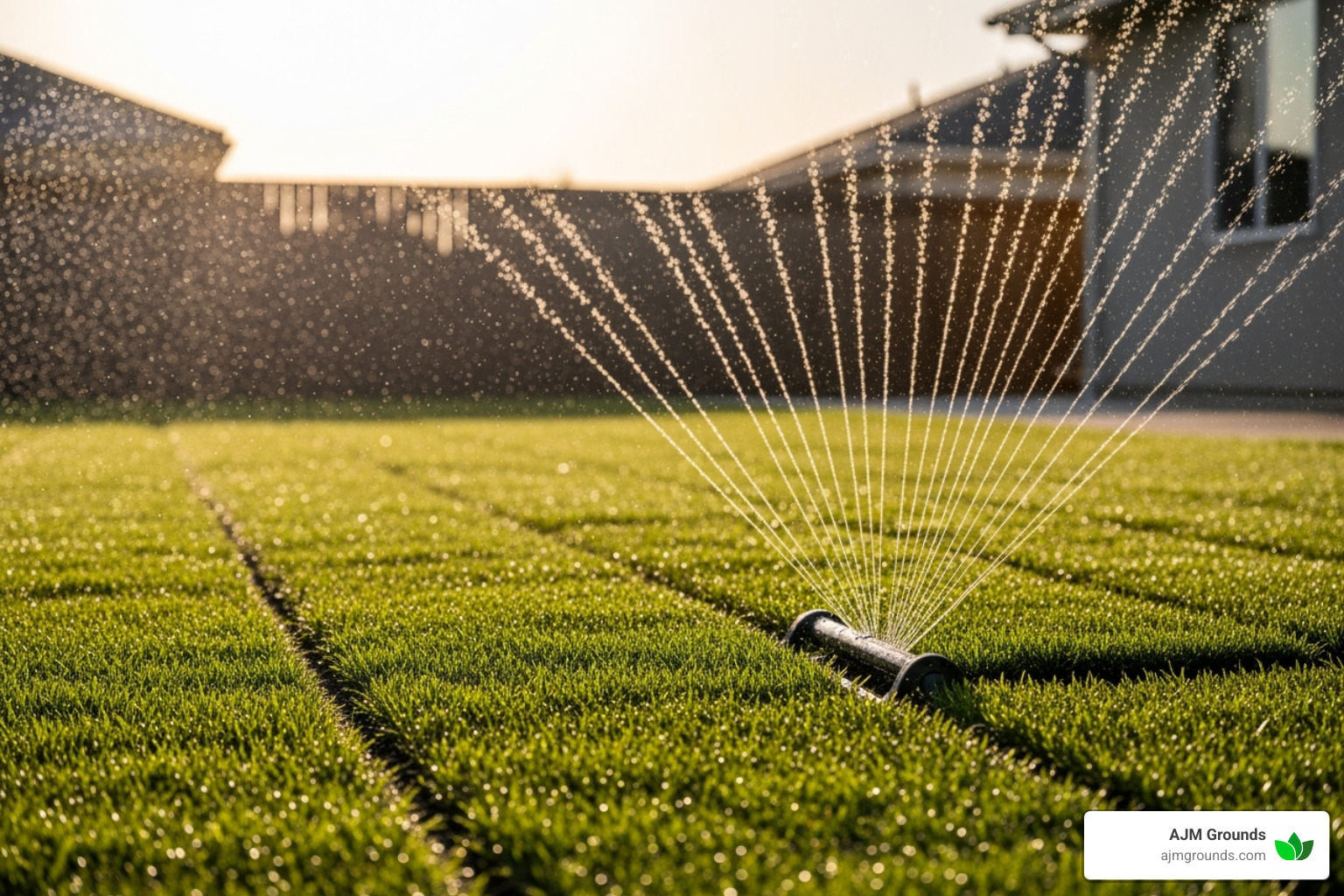
Initial watering happens immediately. Soak the new sod thoroughly, getting water 3-4 inches deep into the soil below. This helps everything settle and starts the bonding process.
For the first week, commit to daily watering. Early morning works best to minimize evaporation and reduce fungal problems. Keep the sod consistently moist but not waterlogged.
Root establishment happens fast. During week two, you can usually cut back to every other day. By week three, twice-weekly watering should be sufficient. To check progress, gently lift a corner of sod—if it resists, roots are forming.
Your first mow comes when grass reaches about 3 inches tall. Set the mower high (around 2 inches) and use a walk-behind mower if possible to avoid stressing new roots. Bag the clippings for the first cut, then follow the one-third rule: never cut more than one-third of the blade length at once.
Fertilizing gets a second round about 3-4 weeks after installation to keep feeding developing roots.
Keep foot traffic to a minimum for the first 2-3 weeks. Once roots are established, your lawn will handle normal family activities.
Following these guidelines sets you up for long-term success. For ongoing care tips, explore our best practices for lawn care and maintenance.
Costs and Common Problems to Avoid
Understanding the costs and potential headaches helps you plan better and avoid frustrating setbacks.
Resodding costs vary widely. Factors like sod type, yard size, preparation needs, and whether you hire professionals all affect the final bill. Average resodding costs range from $1,000 to $3,000 per 1,000 square feet, but complex projects or premium sod can push costs to $10,000+ per 1,000 square feet. Please note, these are average costs based on internet data and not actual costs for AJM Grounds – we provide personalized estimates after assessing your specific project needs.
Common problems can derail projects. Gaps between sod pieces happen if they aren’t butted tightly together. Fix small gaps by filling with topsoil and overseeding with matching grass seed.
Yellowing or browning grass usually means watering issues (too little or too much). Check soil moisture and adjust accordingly. Sometimes it’s a nutrient problem requiring light fertilization.
Dry patches often indicate uneven sprinkler coverage or poor soil contact. Increase watering in those spots and check that sod sits firmly against the soil.
Weed growth can emerge from dormant seeds in your soil. Hand-pull weeds promptly, but avoid herbicides until the grass is fully established after several mowings.
Uneven establishment usually points to inconsistent soil prep or watering. Address dry spots with extra water and consider targeted soil amendments.
Persistent problems might call for professional help. You can consider professional sod installation to ensure flawless results without the stress and potential costly mistakes.
Conclusion: Enjoying Your New Lawn and Next Steps
Congratulations! You’ve transformed your outdoor space from a patchy lawn into something spectacular. The decision to resod a yard gives you a thick, vibrant green carpet that’s ready to enjoy in just weeks, not seasons.
Instead of struggling with bare patches and stubborn weeds, you now have a lush, dense lawn that boosts your home’s curb appeal. Beyond the visual impact, you’ve also created an environmental asset that reduces water runoff, produces oxygen, and naturally cools the area around your home.
There’s something deeply satisfying about stepping onto a lawn you’ve carefully planned and nurtured. Whether you tackled the project yourself or worked with professionals, you now have the knowledge to maintain this beautiful space for years to come.
At AJM Grounds, we’ve helped countless homeowners throughout Woburn, Lexington, Bedford, Billerica, Burlington, Reading, Stoneham, Wilmington, and Winchester transform their yards with this same attention to detail. We bring that expertise to each installation, from small repairs to complete lawn makeovers.
Your lawn journey doesn’t end here. Regular maintenance and proper seasonal care will keep your investment looking its best. You’ve built the foundation for years of enjoyment, family gatherings, and quiet mornings looking out at your personal green oasis.
Ready to take the next step or have questions about maintaining your new space? We’d love to help. Request an estimate for your lawn installation service and let’s discuss how we can keep your yard looking like the neighborhood showpiece it’s become!
