

From Bare Dirt to Your Dream Lawn
Laying sod on new construction is the fastest way to get a lush, green lawn, but only if you address the unique challenges left by builders.
Quick Answer: Essential Steps for Laying Sod on New Construction
- Test and prepare the soil – Remove debris, till 4-6 inches deep, add quality topsoil
- Grade for drainage – Slope away from foundation (6 inches per 10 feet)
- Add amendments – Compost and starter fertilizer based on soil test results
- Install sod properly – Lay in brick pattern with tight seams, roll for soil contact
- Water immediately – Deep watering (4-6 inches) within 30 minutes, daily for 2 weeks
- Wait to use – Limit foot traffic for 1 month, mow after 2 weeks when rooted
The reality is, the ground around your new home is likely the worst soil for grass. Heavy machinery compacts the earth, while construction often removes or buries nutrient-rich topsoil, leaving behind clay subsoil. Without proper prep, even premium sod will struggle.
The good news? With the right approach, you can establish a healthy lawn that thrives for years.
I’m John Caplis, owner of AJM Grounds LLC. We’ve helped many homeowners in Woburn, Massachusetts transform construction sites into vibrant lawns. Success with laying sod on new construction comes down to understanding what construction does to your soil—and knowing how to fix it.
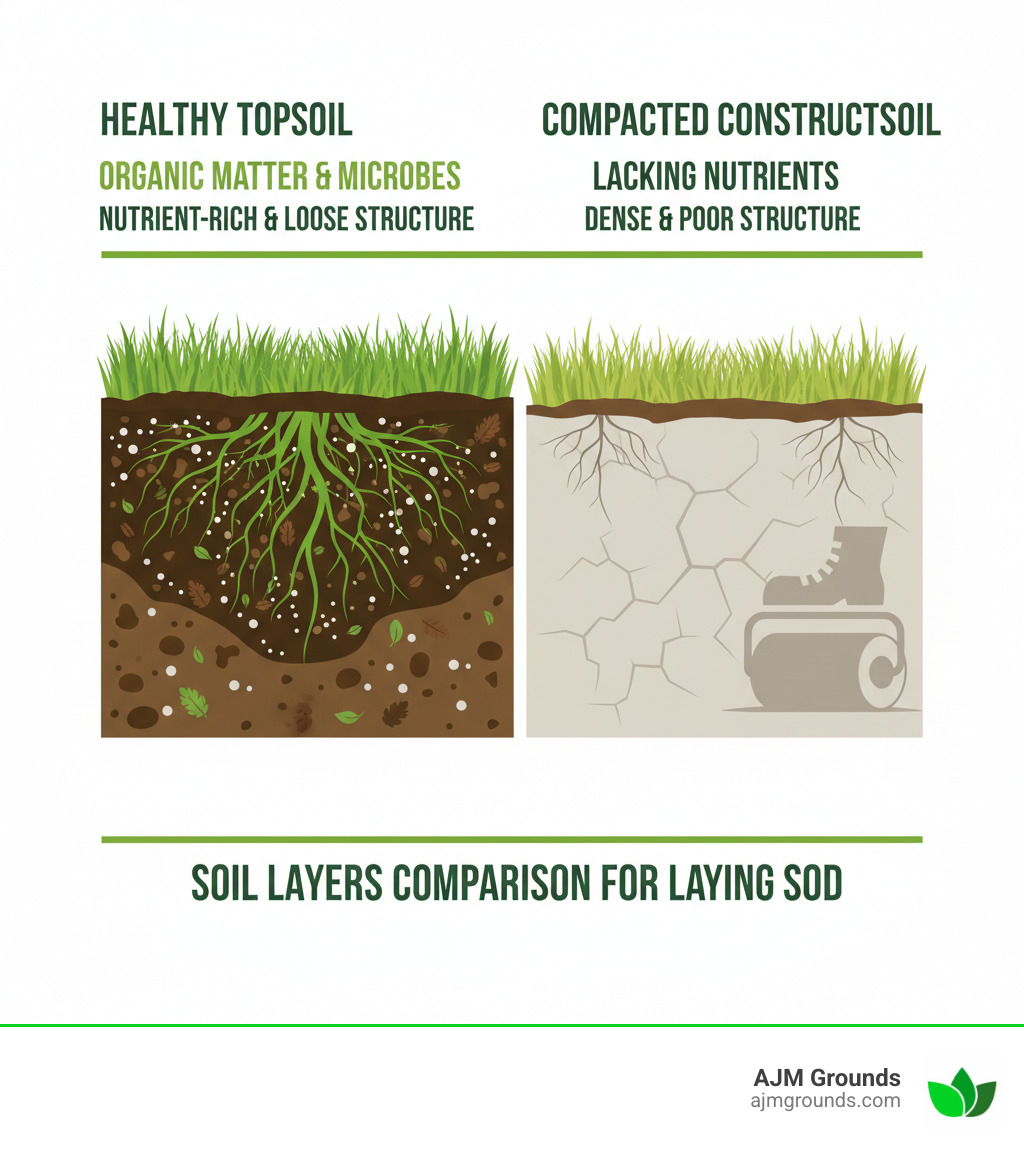
Quick laying sod on new construction definitions:
The Blueprint for Laying Sod on New Construction
Follow these three phases carefully, and you’ll have a lawn that not only looks beautiful but thrives in the challenging conditions left behind by builders.
Phase 1: Essential Soil Prep for a New Lawn
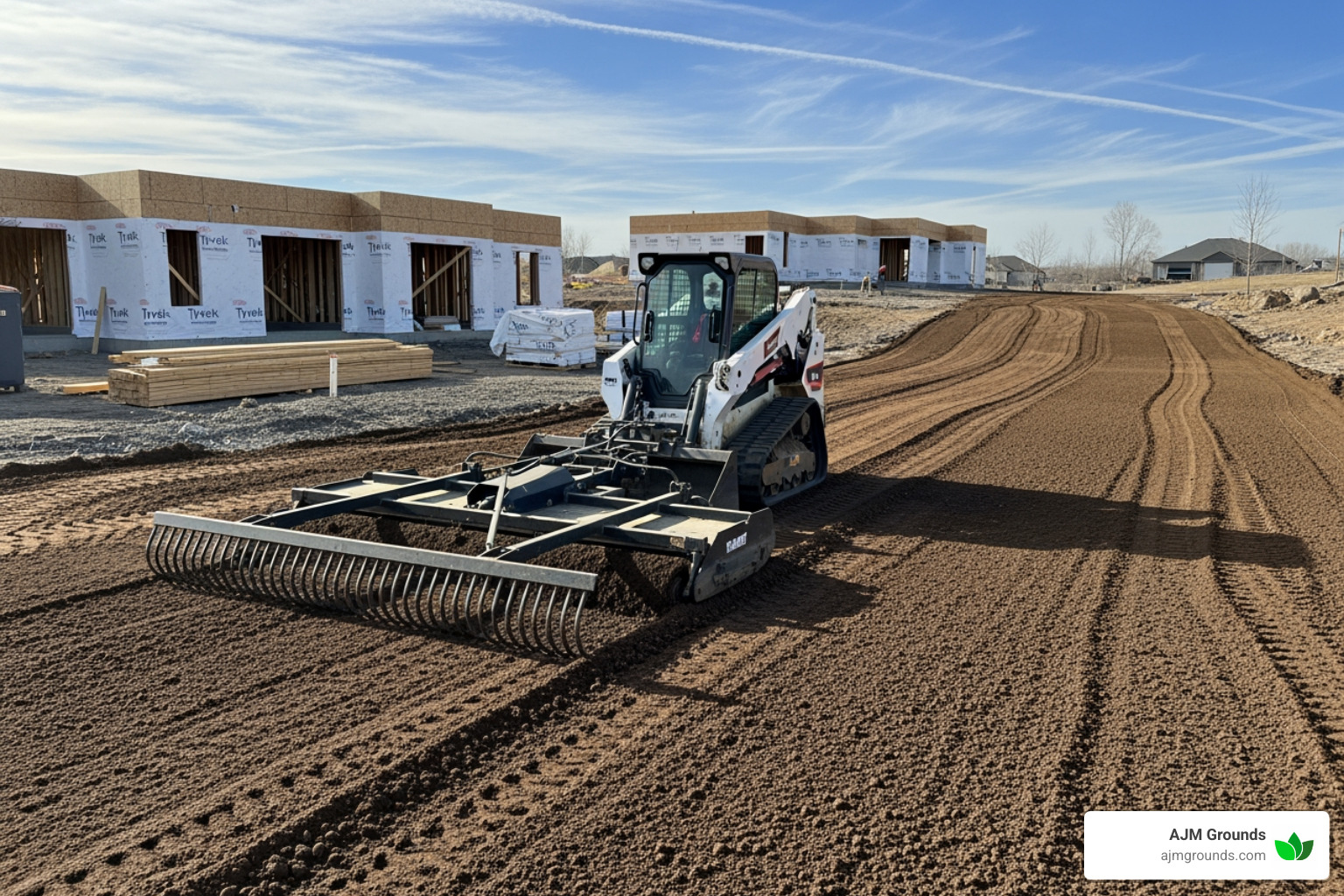
Proper soil prep is absolutely critical when laying sod on new construction. The ground is often compacted, stripped of topsoil, and full of debris. Skipping this phase means even the most expensive sod will struggle to survive.
Start with a soil test. This simple step reveals your soil’s pH and nutrient deficiencies, so you’re not just guessing. Most grass thrives in a pH between 6.0 and 7.5.
Next, clear all debris. Remove any construction scraps, rocks, or roots that could block root growth or cause drainage issues.
Then, break up compacted soil by tilling 4-6 inches deep. This allows air and water to penetrate, which is essential for healthy roots.
Proper grading protects your lawn and home. Grade the area so water flows away from your foundation—a gentle slope of about 6 inches over 10 feet is ideal. This prevents puddles and protects your home. For serious issues, our landscape drainage solutions can help.
Now, add 4-6 inches of quality topsoil. Since construction strips away the original, this step provides a rich foundation for your new sod. Based on your soil test, mix in compost to improve soil structure and add organic matter. Add lime if needed to adjust the pH.
Finally, apply a starter fertilizer rich in phosphorus for root growth. Lightly water and roll the area to create a firm, level base.
For more technical details, the Purdue University Extension guide to Establishing a Lawn From Sod is an excellent resource.
Phase 2: The Art of Installing Sod on a Prepared Site
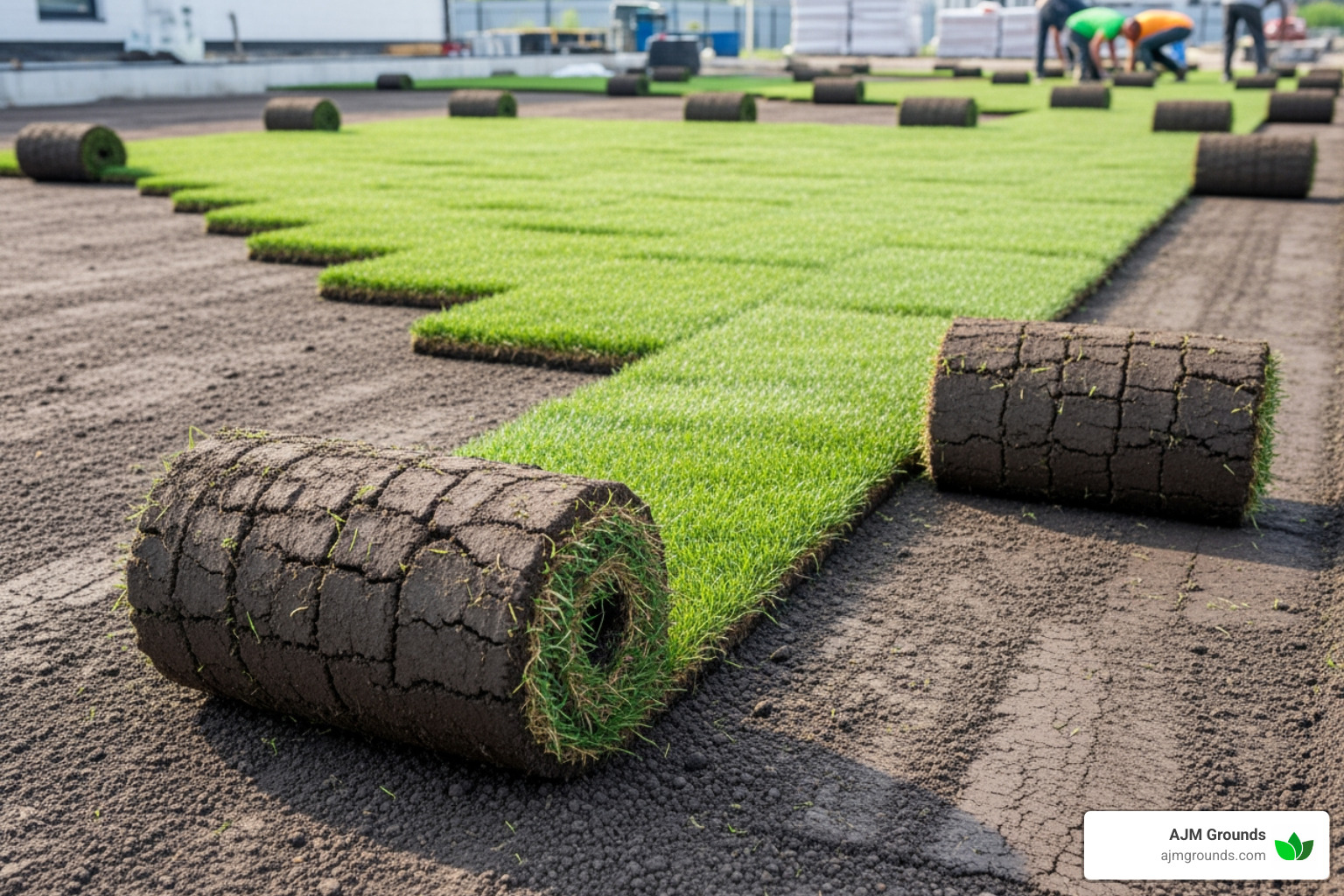
With your soil prepared, it’s time to lay the sod. This phase requires precision and speed, as sod is a living product.
Timing is key. In Massachusetts, spring and fall are the best seasons for laying sod on new construction. The moderate temperatures reduce stress on new sod. Cool-season grasses like Tall Fescue are ideal for our climate.
Measure your lawn area carefully and order at least 10% extra for cuts and waste.
Install the sod the same day it arrives. Start along a straight edge, like a driveway. Butt the edges tightly together without overlapping; gaps create brown lines, and overlaps can kill the grass.
Lay sod in a staggered, brick-like pattern for a stronger, more uniform lawn. Use a utility knife to trim around obstacles. Avoid using small pieces, as they dry out quickly. On slopes, lay sod horizontally (across the slope) to prevent sliding, using staples to secure it if needed.
After all the sod is laid, roll the entire area with a lawn roller. This ensures good sod-to-soil contact, which is crucial for roots to establish.
If this sounds like too much work, our professional sod installation service can handle everything for you.
Phase 3: Post-Installation Care for a Thriving Lawn

What you do in the next few weeks determines whether your new lawn thrives or dies.
Water immediately. Within 30 minutes of finishing, soak the lawn until the soil beneath is moist 4-6 inches deep.
For the first two weeks, keep the sod consistently moist. This usually means watering daily in the morning. In hot or windy weather, you may need to water twice a day. After two weeks, you can gradually reduce watering as the roots establish. The goal is to encourage deep, stress-resistant roots.
Stay off your new lawn for at least a month. Foot traffic can damage delicate new roots and prevent them from anchoring.
Your first mow should be around two weeks after installation, or when the grass is 3 to 3.5 inches tall. Check for rooting by gently lifting a corner. Mow on your mower’s highest setting, never removing more than one-third of the blade at once.
Hold off on fertilizers and weed killers for at least a month. The starter fertilizer you applied is sufficient for now.
Sod begins rooting in 2-3 weeks, but full establishment takes a complete growing season. Consistent care now means a beautiful, healthy lawn for years. For ongoing maintenance tips, check out our guide to lawn care, seeding, and fertilizing.
Key Considerations for Your New Build Lawn
Understanding common pitfalls, costs, and when to call a professional can be the difference between a successful lawn and a costly failure.
Common Mistakes When Laying Sod on New Construction
Even with good intentions, laying sod on new construction can be frustrating. Here are common mistakes to avoid:
- Skipping soil preparation. This is the biggest mistake. Laying sod on compacted, nutrient-poor subsoil means it will likely struggle and die within months. This step is non-negotiable.
- Improper watering. Too little water will dry out the sod, but too much can cause root rot and disease. New sod needs consistent moisture without being waterlogged.
- Leaving gaps between sod pieces. Gaps won’t fill in; they just dry out, create brown streaks, and invite weeds. Sod pieces must be butted tightly together.
- Mowing too soon or too short. Mowing before the sod has rooted, or cutting more than one-third of the blade, puts immense stress on young grass.
- Allowing foot traffic too early. Walking on new sod can damage the delicate root system and compact the soil you just loosened.
Most of these mistakes stem from impatience. Rushing the process, ignoring soil tests, or installing in extreme weather leads to poor results and costly fixes.
Understanding the Timeline and Cost of Laying Sod on New Construction
Creating a new lawn requires both time and financial investment.
The Establishment Timeline
Your new sod will start rooting within 2 to 3 weeks. However, a truly robust lawn that can handle regular use takes a full growing season to establish. This requires several months of consistent care.
Understanding the Cost Range
The cost of laying sod on new construction varies widely. Key factors influencing the price include:
- Yard size
- Grading needs, especially for correcting drainage
- Soil preparation intensity
- Type of sod chosen
- DIY vs. professional installation
Based on internet data, sod material itself can cost $0.30 to over $1.00 per square foot. When you factor in professional installation and proper soil preparation, total costs typically range from $1.50 to $3.00 per square foot. Complex projects with extensive grading or soil work can reach $5.00 to $9.00 per square foot or more.
For a typical Massachusetts residential lawn, total project costs might range from $3,000 for a small, simple yard to $15,000 or more for larger properties with challenging conditions.
Please note that these are average costs based on internet data and not actual costs for AJM Grounds. For a precise estimate custom to your specific property in Massachusetts, we recommend contacting us directly.
Why Professional Installation Ensures Success
While DIY is an option, the unique challenges of new construction sites make professional expertise invaluable.
New construction sites are complicated, with compacted soil, drainage issues, and hidden debris. A failed DIY lawn can end up costing more to fix than professional installation would have in the first place.
At AJM Grounds, we have years of experience changing construction sites in Woburn, MA, and surrounding communities like Bedford, Billerica, Burlington, Lexington, Reading, Stoneham, Wilmington, and Winchester.
Our expertise means we know how to fix it. We understand how to remediate compacted soil, add the right amount of topsoil, and grade for proper drainage across your entire property.
Professional equipment makes a real difference. Our commercial-grade tools allow us to work efficiently, achieving superior results and finishing in days what might take a DIYer weeks of backbreaking work.
Guaranteed results give you peace of mind. We stand behind our work, ensuring you get a lush, healthy lawn that establishes properly.
Save time and effort. Laying sod is labor-intensive. Our experienced team completes the project quickly, so you can enjoy your new lawn without the strain and hassle. We’re not just laying sod—we’re building a foundation for a lawn that will thrive for decades.
Let us take the guesswork and heavy lifting out of creating your dream lawn.
Learn more about our comprehensive lawn installation services and let’s start planning your beautiful new lawn today.
