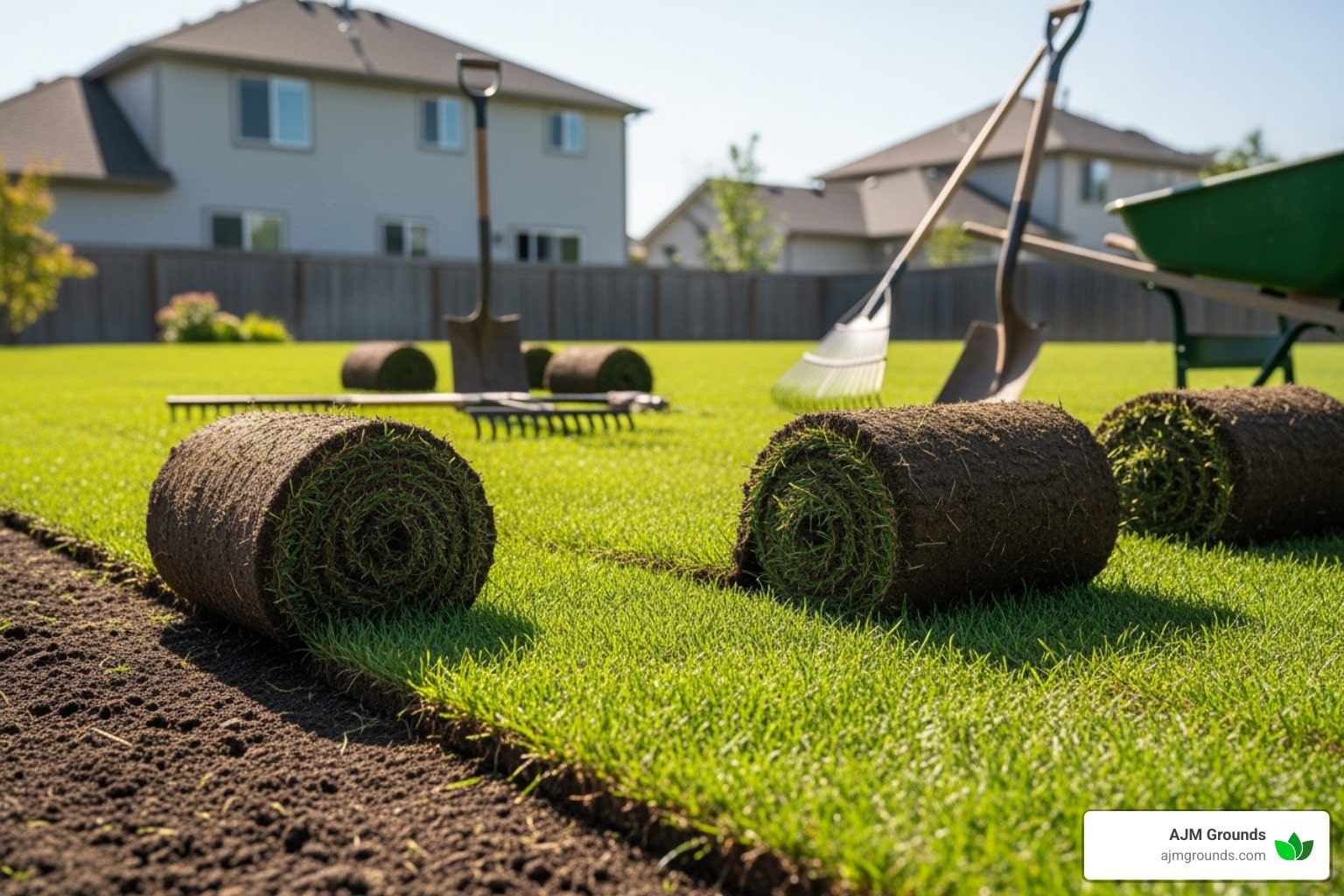
Transform Your Property with Professional New Lawn Installation
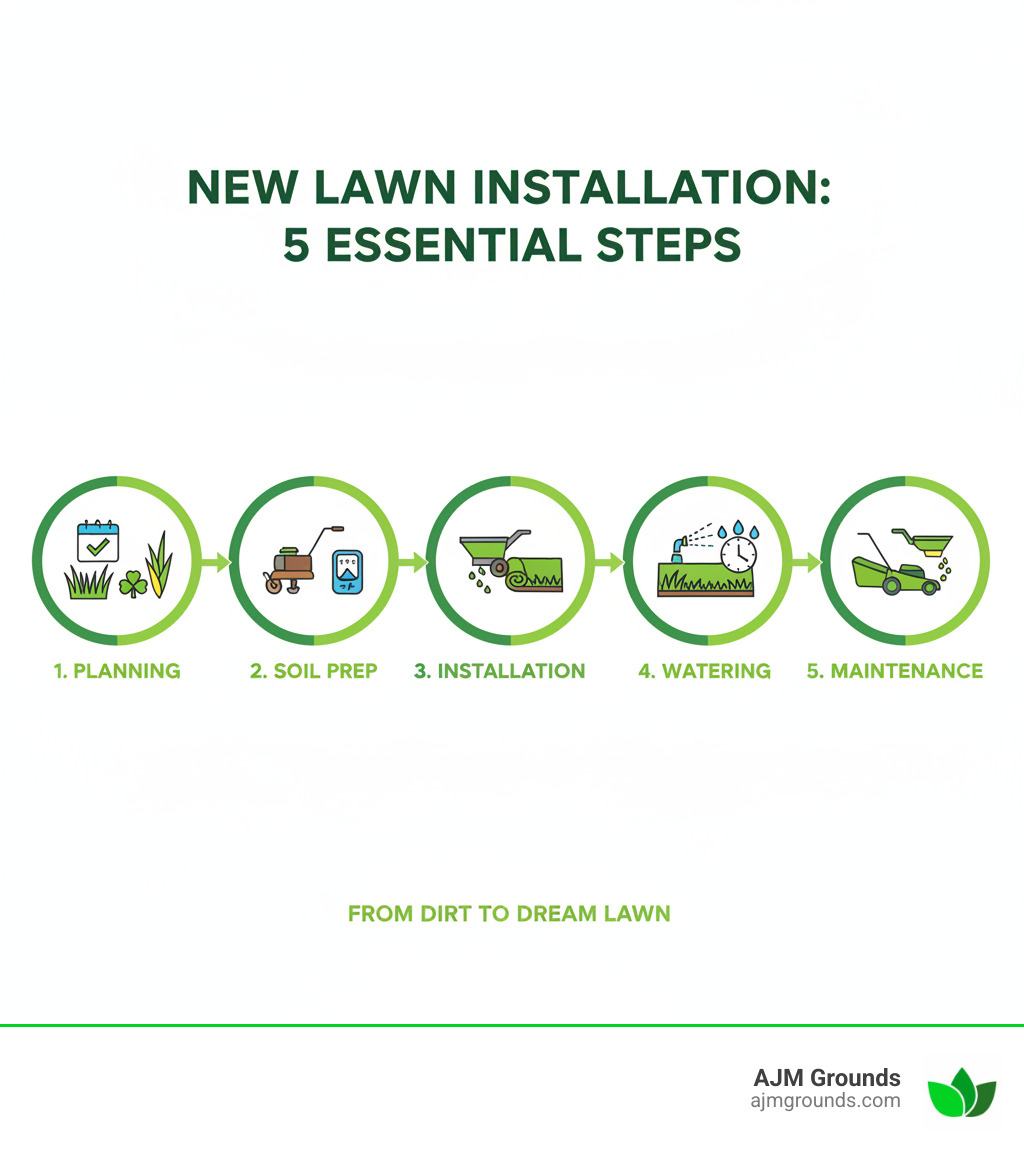
How to install a new lawn requires careful planning, proper soil preparation, and consistent aftercare to achieve the lush, green results you’re dreaming of. Whether you’re starting from bare dirt or replacing an existing lawn, the process involves five essential steps:
Essential Steps for New Lawn Installation:
- Plan and Time It Right – Choose the best season and grass type for your climate
- Prepare Your Soil – Test pH, add amendments, and create a smooth surface
- Install Seed or Sod – Apply using proper techniques for good establishment
- Water Consistently – Follow specific schedules for seeds vs. sod
- Maintain Properly – First mow at correct height and avoid common mistakes
Installing a new lawn is one of the most rewarding home improvement projects you can tackle. It transforms your property’s curb appeal, creates usable outdoor space, and adds significant value to your home. However, success depends on understanding that patience is absolutely critical – as research shows, new lawns require 6-8 weeks of careful attention before they’re truly established.
You have two main options: tackle this as a DIY project or hire professionals. DIY installation can save money upfront, but requires significant time, physical effort, and knowledge to avoid costly mistakes. Professional installation ensures proper techniques, saves you time, and often comes with guarantees.
The process isn’t complicated, but it is detail-oriented. Poor soil preparation, wrong timing, or inconsistent watering can lead to patchy results, weed problems, or complete lawn failure. That’s why understanding each step thoroughly is essential for success.
As John Caplis, owner of AJM Grounds LLC, I’ve helped countless Woburn-area homeowners successfully steer how to install a new lawn over my years in the landscaping industry. My experience has shown that proper planning and execution in the initial stages saves both time and money while delivering the beautiful, lasting results every homeowner wants.
Terms related to how to install a new lawn:
A Step-by-Step Guide on How to Install a New Lawn
Starting on a new lawn installation project can feel daunting, but breaking it down into manageable steps makes it much easier. Our detailed guide will walk you through each phase, ensuring you have all the knowledge needed to cultivate a thriving green space. Let’s dig in!
Step 1: Planning for Success – Timing and Grass Selection
Before you even think about getting your hands dirty, the first and arguably most crucial step in learning how to install a new lawn is proper planning. This involves figuring out the best time of year for your project and selecting the right type of grass for your specific needs and climate.
Best Time of Year to Install a New Lawn
Timing is everything when it comes to a successful lawn. Planting at the wrong time can lead to poor germination, weed infestations, or even complete failure.
For us here in Massachusetts, we primarily deal with cool-season grasses. The absolute best time to plant these is in early fall, typically from late August to mid-September. Why fall? Because soil temperatures are still warm enough for germination, but the cooler air temperatures reduce stress on new seedlings. Plus, weed competition is generally lower, and there’s often ample rainfall. This allows the grass to establish a strong root system before winter, setting it up for robust growth in the spring.
Spring planting (mid-March to mid-May) is a second-best option for cool-season grasses. While the grass will germinate, it faces more competition from weeds and the added stress of summer heat and potential drought conditions before its root system is fully mature. If you choose spring, be prepared for more vigilant watering and weed control.
If you’re in a region that favors warm-season grasses (like Zoysia, centipede, or bermudagrass), you’ll want to aim for late spring to early summer. These grasses need consistently warm soil temperatures, generally around 60°F (15°C) or higher, to germinate and thrive.
Understanding these seasonal nuances is vital for your lawn’s future. For more insights on optimal planting times, check out our guide on the Best Time to Plant a New Lawn.
Choosing the Right Type of Grass
Selecting the right grass type is like choosing the right foundation for your house – it impacts everything that follows. We need to consider a few factors:
- Climate: As mentioned, Massachusetts is prime territory for cool-season grasses. These include:
- Kentucky bluegrass: Known for its lush, deep green color and ability to self-repair, but requires more water and fertilizer.
- Fescue (Tall Fescue & Fine Fescue): Tall fescue is drought-tolerant and wear-resistant, making it great for high-traffic areas. Fine fescues are shade-tolerant and require less water.
- Perennial ryegrass: Establishes quickly and offers good wear resistance, often used in mixes with Kentucky bluegrass.
- Sunlight Exposure: Does your yard get full sun all day, or is it mostly shady? Some grasses thrive in sun, others in shade.
- Foot Traffic: Will your lawn be a playground for kids and pets, or more of an ornamental green carpet?
- Maintenance Level: How much time and effort are you willing to put into watering, mowing, and fertilizing?
- Budget: Some grass types or installation methods (like sod) can be more expensive than others.
For example, if you have a busy household with kids and pets, a durable tall fescue blend might be perfect. If you have lots of mature trees, a fine fescue blend could be your best bet for those shady spots.
For help in making these decisions, you can explore resources from trusted brands. EXPLORE TORO.COM offers a wealth of information and tools to help you create and maintain a gorgeous yard. And for a broader perspective on plant selection, our article on Choosing the Right Plants for Your Landscape provides valuable insights.
Step 2: How to Prepare the Soil for a New Lawn
Once you’ve nailed down your timing and grass choice, it’s time for some serious groundwork. Proper soil preparation is the backbone of any successful lawn installation. Skimping here is like building a house on sand – it just won’t last.
Site Clearing: Out with the Old!
Your first task is to clear the canvas. This means removing all existing vegetation, rocks, roots, and any other debris. Depending on what’s currently there, you might:
- Use an herbicide: This is effective for killing off stubborn weeds and old grass. Follow product instructions carefully.
- Solarization: Cover the area with clear plastic sheeting for several weeks during hot weather to “cook” and kill existing plants and weed seeds.
- Digging/Tilling: Physically remove old turf with a hoe or sod cutter, or till it under if it’s not too thick.
The goal is a clean slate, free from anything that could compete with your new grass for nutrients, water, and sunlight.
Soil Testing: Know Your Foundation
This step is non-negotiable. A soil test will tell you about your soil’s current pH level and nutrient deficiencies. Why is this important? Because “The ideal soil pH for most grass types is between 6.0 and 7.0.” If your pH is too low (acidic) or too high (alkaline), your grass won’t be able to absorb nutrients effectively, no matter how much you fertilize.
We recommend sending a soil sample to a local Cooperative Extension Service or a commercial soil testing lab. They’ll provide a detailed report and recommendations for amendments. This usually needs to be done a month in advance to allow time for results and action.
Amending and Tilling the Soil
Based on your soil test results, you’ll likely need to amend your soil:
- For acidic soil (pH below 6.0): Add ground limestone.
- For alkaline soil (pH above 7.0): Add compost, composted manure, or sulfur.
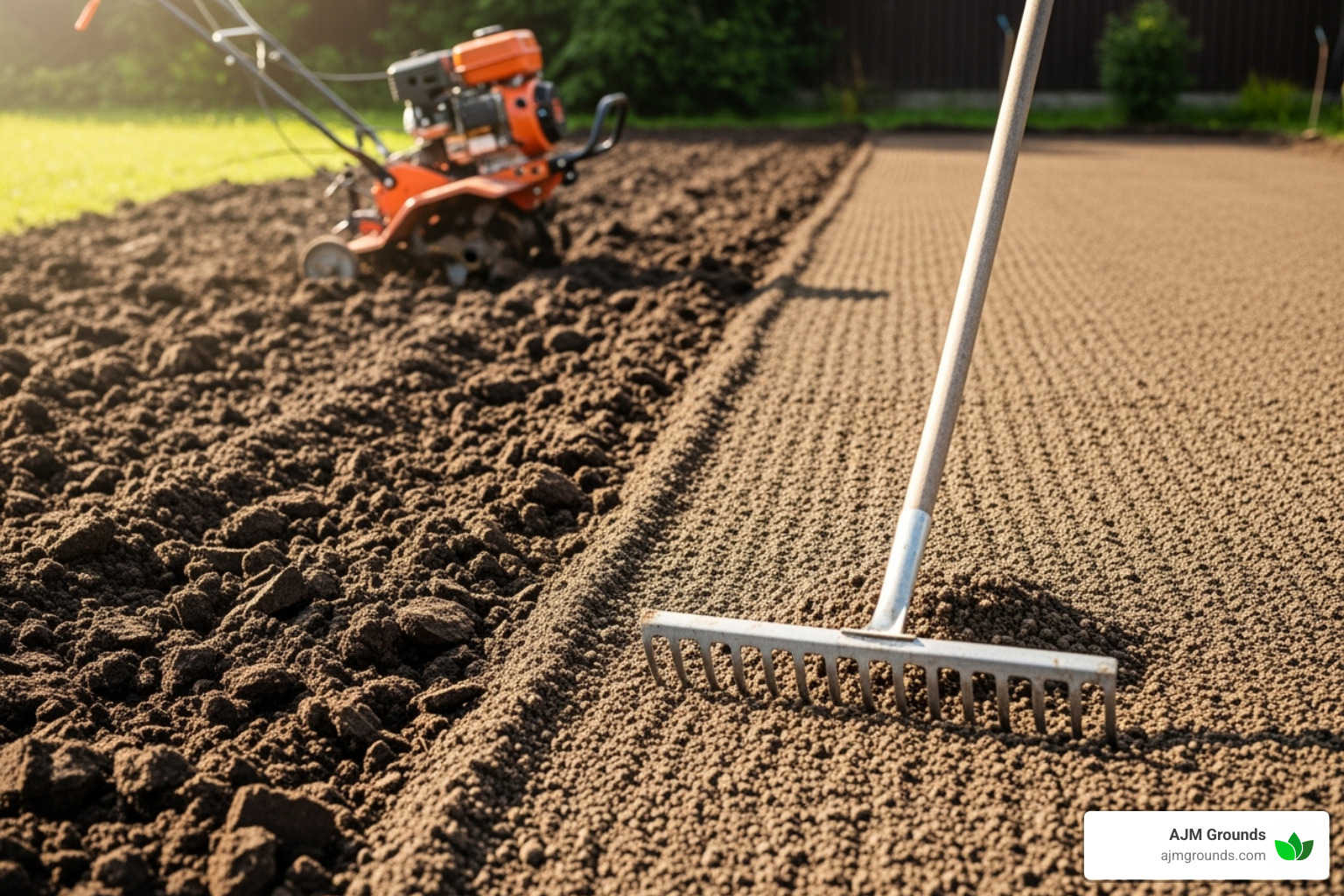
Once amendments are identified, it’s time to get your tiller out! We need to till the soil to a depth of at least 6 inches, and ideally around 7 inches. Tilling breaks up compacted soil, improves drainage, and allows for better root penetration. Aim for a texture where soil particles are like “peas or marbles.” This is also the perfect time to work in any organic matter, like compost, to boost soil health and structure.
Adding Topsoil: A Nutrient-Rich Base
If your existing soil is severely lacking or you’re starting from very poor ground, you might need to bring in new topsoil. Our research suggests you should “Bring in 2 to 5 inches of good top soil.” Some sources say to lay 4-6 inches of fresh topsoil. While some opinions suggest new topsoil can introduce weed seeds, using a high-quality, screened topsoil from a reputable supplier minimizes this risk and provides a nutrient-rich base for your new lawn. Topsoil is excellent for creating surface grades and filling uneven areas.
Grading and Raking: The Finishing Touches
After tilling and adding amendments or topsoil, it’s time to refine the surface.
- Grading: This ensures proper drainage away from your home and other structures. The ground should gently slope away. A good rule of thumb is that “The ground should be 1 inch below the level of any sidewalks, patios or protruding sprinkler heads.” If you have significant drainage issues, consider our Landscape Drainage Solutions.
- Raking: Use a landscaping rake to smooth out the surface, remove any remaining rocks or debris, and fill in low spots. You want a firm, even surface. After raking, lightly roll the area to achieve adequate firmness; your footprints should be no deeper than a ½-inch for optimal planting.
A well-prepared soil bed is half the battle won. To help with even distribution of materials like fertilizer and seed, you might want to watch this video: How Do I Use a Lawn Spreader?.
Step 3: How to Install a New Lawn with Seed or Sod
Now for the exciting part: bringing your lawn to life! You have two primary methods for installation: seeding or sodding. Each has its pros and cons, and the best choice for you depends on your budget, timeline, and patience level.
| Feature | Grass Seed | |
|---|---|---|
| Cost | Lower, but varies depending on the seed type and area covered. Our research indicates you can save money starting from seed. | Higher, but often provides instant gratification. Average costs can range from $0.15-$0.60 per sq ft for material alone, and professional installation can push this to $1.00-$2.50 per sq ft, depending on location and project complexity. |
| Time to Establish | Longer. Germination takes 1-3 weeks, and it can take 6-8 weeks for the lawn to be established enough for light foot traffic. Full maturity can take a year or more. | Shorter, often providing an “instant” lawn. It can usually handle light foot traffic within 2-3 weeks, and is fully rooted in 4-6 weeks. |
| Labor | Less intensive upfront for spreading, but requires more consistent and careful watering during germination. | with the client’s service area (e.g., Massachusetts climate considerations). |