

Why Laying New Sod Is Your Best Option for an Instant Lawn
Laying new sod is the fastest way to transform a bare yard into a lush, green lawn—often in just a weekend. Unlike seeding, which takes months to establish, sod provides instant results, immediate erosion control, and better initial resistance to weeds.
Quick Guide to Laying New Sod:
- Prepare the soil – Remove old grass, till 4-6 inches deep, and amend soil pH to 6.0-7.5.
- Level and grade – Create a smooth surface that slopes away from your house for drainage.
- Lay sod immediately – Start along a straight edge and stagger seams like bricks.
- Water thoroughly – Soak immediately after laying, then water daily for the first week.
- Wait to mow – Keep off the lawn for 2-3 weeks until rooted; set the first mow high at 3 inches.
The main trade-off is cost. Sod costs more upfront—typically $0.85 to $2.85 per square foot for materials and professional installation, based on national averages (note: these are not AJM Grounds’ actual prices). However, many homeowners find the time saved and guaranteed results are worth the investment. Proper soil preparation is the key to success; skipping this step will cause even the best sod to fail.
I’m John Caplis, owner of AJM Grounds LLC. I’ve spent years helping homeowners in Woburn and surrounding towns achieve beautiful lawns. This guide shares what I’ve learned about laying new sod so you can get professional results.
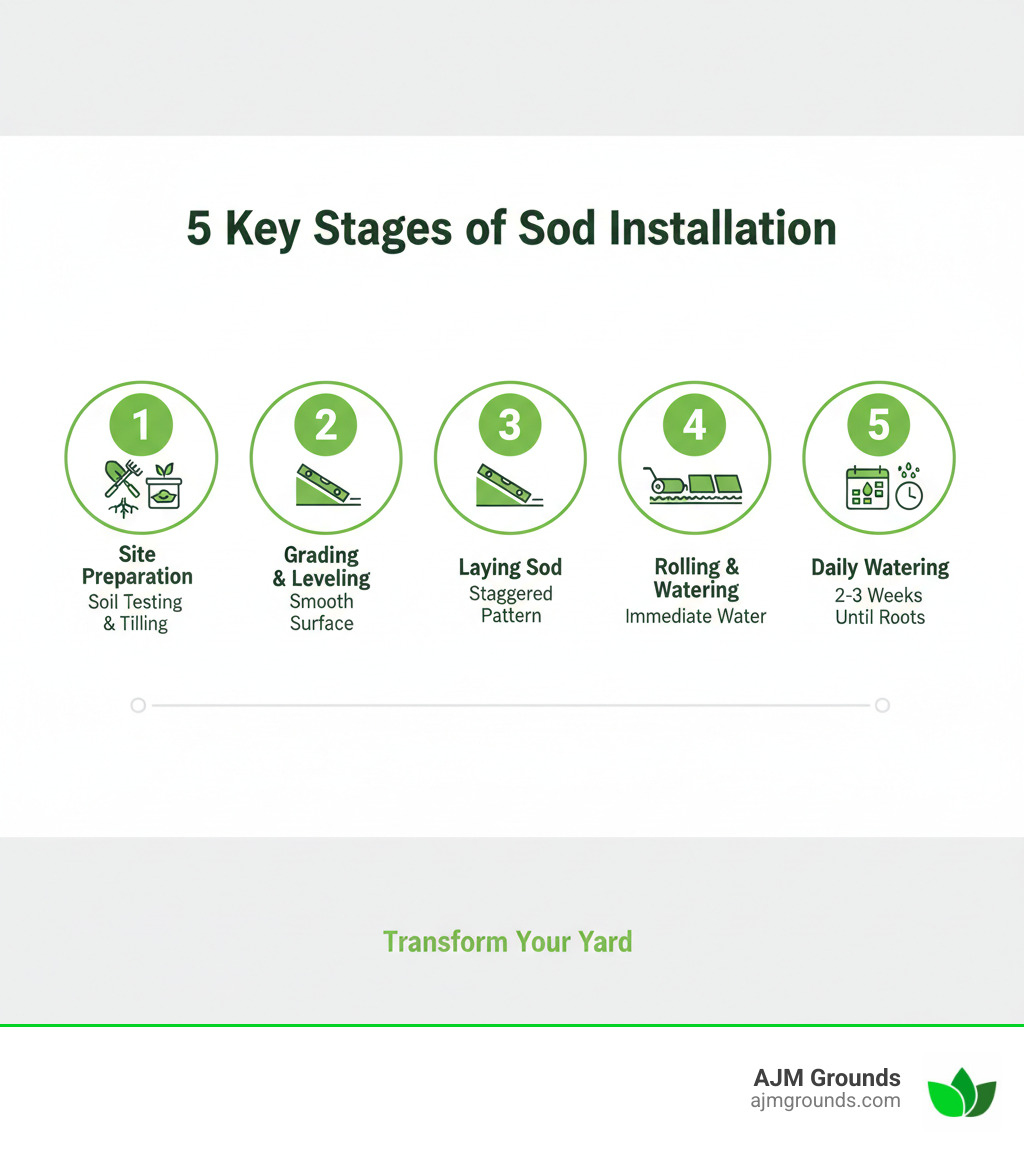
Laying new sod terms to learn:
When is the best time of year to lay sod?
While sod can be installed anytime the ground isn’t frozen, spring and fall are ideal in Massachusetts. The mild temperatures and natural rainfall help roots establish without the stress of summer heat or winter frost. If you must lay sod in summer, be prepared for intensive watering. For more insights, explore our guide on the Best Time to Plant a New Lawn.
Cost and Time Commitment for DIY Sod Installation
A DIY sod installation is a great weekend project. For a 1,000-square-foot yard, the cost could range from $850 to $2,850 for professional installation and materials, based on national averages. If you do it yourself, you’ll mainly pay for sod, amendments, and tool rentals. Please note these are average costs and do not reflect actual pricing for AJM Grounds. For a precise quote, contact us directly. You can learn more about the Cost to Re-sod Yard on our site.
Two people can typically prep or lay about 1,000 square feet in a day, making it a 1-2 weekend project.
Table: Sod vs. Seeding Comparison
| Factor | Sod | Seeding |
|---|---|---|
| Time | Instant lawn; usable in 1-3 weeks. | Weeks to germinate; months to establish; usable in 6-12 months. |
| Cost | Higher upfront cost ($0.85-$2.85/sq ft for materials & install). | Lower upfront cost (seeds, amendments). |
| Labor | Moderate to intensive for prep & laying; less long-term weed control. | Less intensive for initial planting; more long-term weed control & care. |
| Results | Immediate lush, green lawn; excellent erosion control. | Gradual growth; susceptible to erosion & weeds initially; patchy spots common. |
The Step-by-Step Guide to Laying New Sod
Thorough preparation is the difference between a lawn that thrives and one that struggles. Let’s explore the steps for laying new sod correctly.
Step 1: Preparing Your Yard for Success
This is the most crucial part of the project. Don’t rush it!
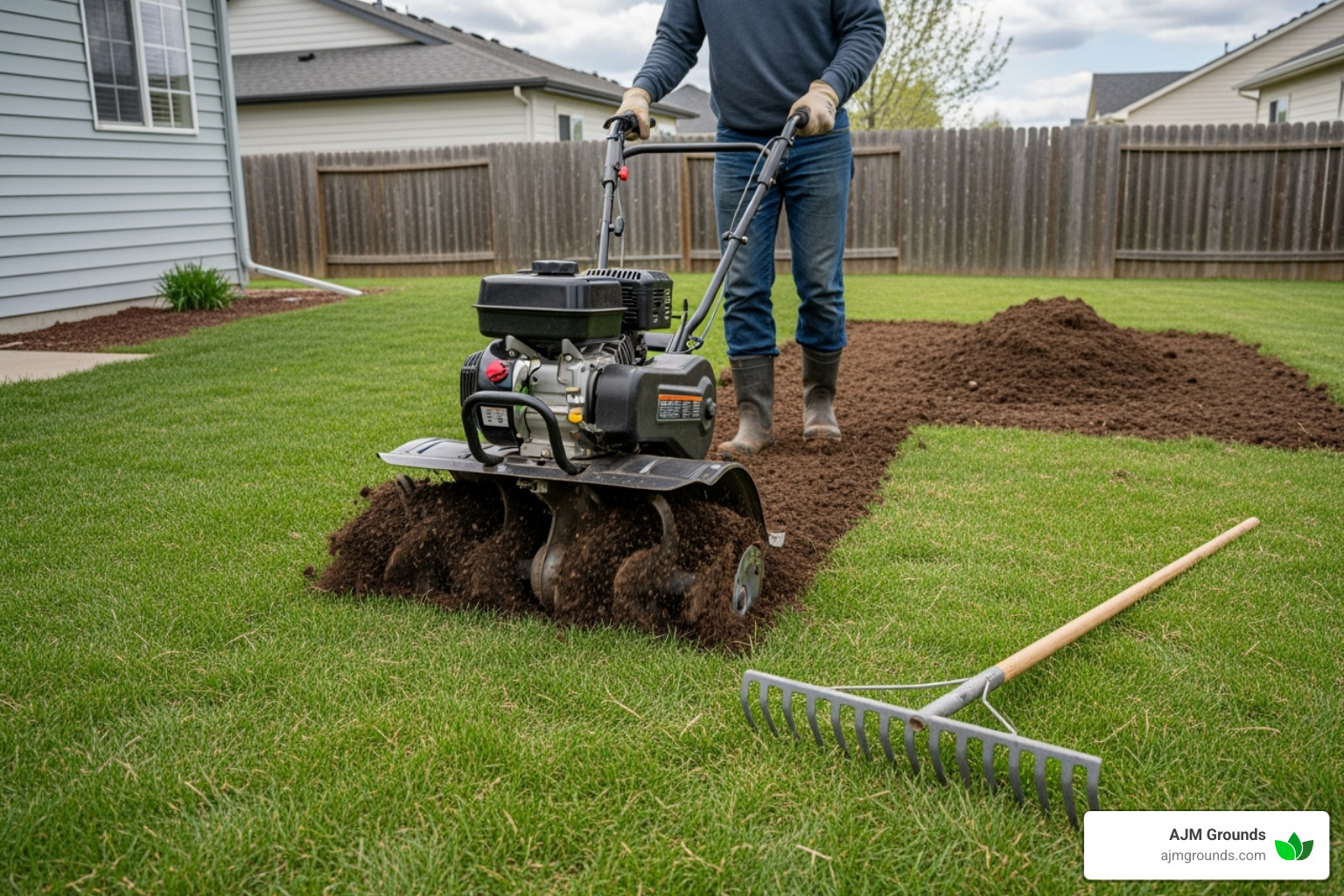
1. Measure and Order: Measure your yard’s square footage using a measuring wheel or an online Lawn Area Calculator. Order 5-10% extra sod to account for cuts and oddly shaped areas. It’s better to have too much than not enough.
2. Remove Old Grass and Weeds: You cannot lay new sod over existing grass. For a thorough job, use a non-selective herbicide several days in advance. For a chemical-free approach, use a grub hoe to strip the turf. For large areas, renting a sod cutter is the most efficient method.
3. Test and Amend the Soil: Once the old vegetation is gone, clear away any rocks or debris. Then, till the soil to a depth of 4 to 6 inches to improve drainage and reduce compaction. Before adding anything, get a soil test from your local extension service. This will tell you your soil’s pH (ideal is 6.0-7.5) and what nutrients it needs. Based on the results, till in a 2-inch layer of compost or quality topsoil. Add lime to raise pH or sulfur to lower it. Finally, apply a starter fertilizer high in phosphorus to promote root growth.
4. Grade and Level: The final prep step is creating a smooth, even base. Grade the soil so it slopes away from your house foundation (a fall of 1 foot every 50 feet is a good rule of thumb) to ensure proper drainage. Rake the surface smooth, making sure the final soil level is about 1 inch below sidewalks and driveways. Lightly compact the area with a lawn roller so your footprints sink no more than half an inch.
Step 2: Choosing and Laying New Sod Like a Pro
With your yard prepped, it’s time to lay the sod.
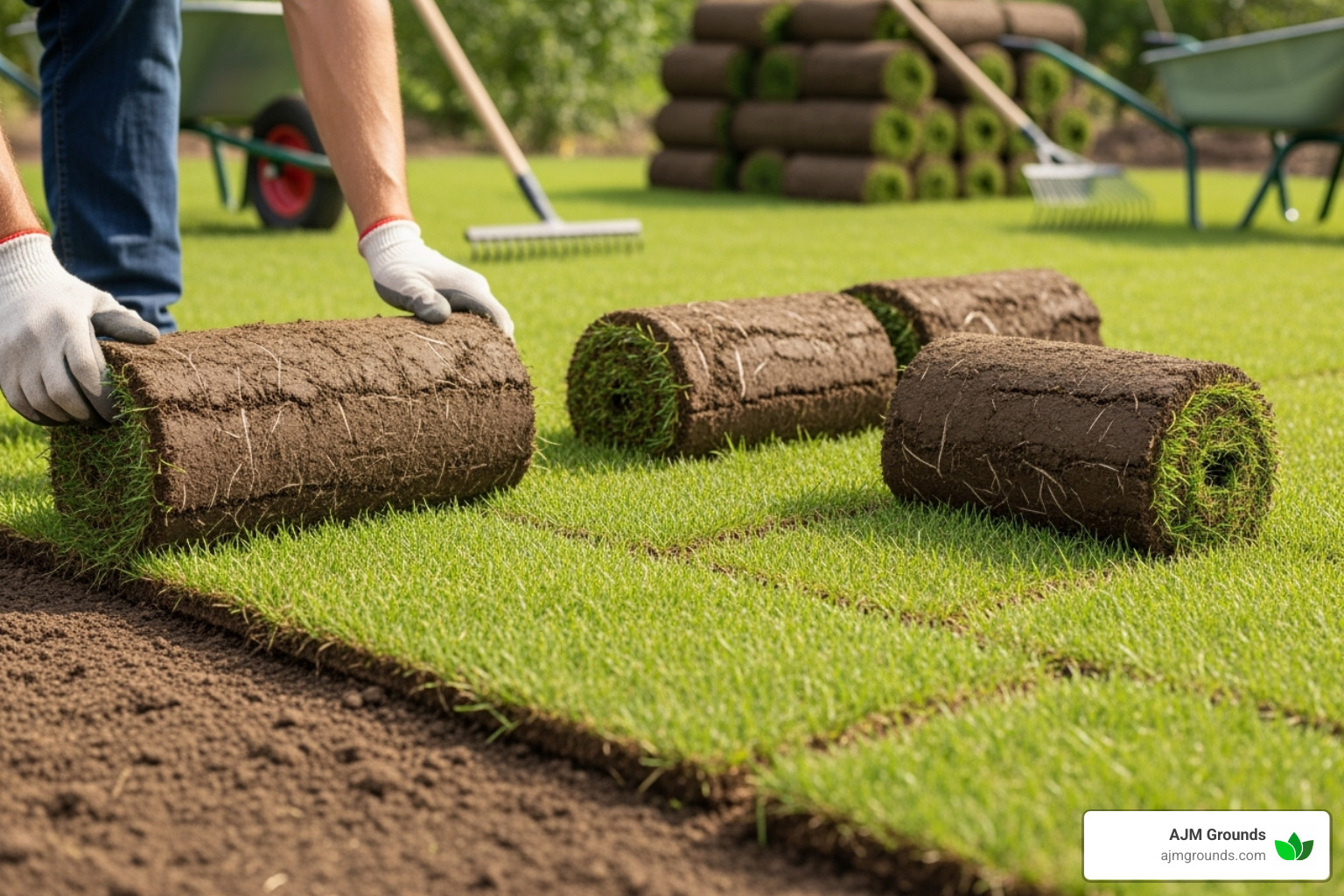
Choosing the Right Sod: Select a sod type that suits your climate and sun exposure. In our Massachusetts climate, cool-season grasses like Kentucky Bluegrass or Tall Fescue are ideal. For shady areas, be sure to choose a shade-tolerant variety. Our guide on Choosing the Right Plants for Your Landscape can help. Sod is perishable and should be installed the same day it’s delivered.
Laying Technique:
- Start Straight: Begin laying new sod along a long, straight edge like a driveway or patio.
- Use a Brick Pattern: Stagger the seams in a brick pattern to avoid visible lines and improve drainage.
- Ensure Tight Seams: Push the edges of each piece tightly together, but do not overlap or stretch the sod.
- Cut to Fit: Use a sharp utility knife to trim sod to fit around curves, sprinkler heads, and other obstacles.
- Roll for Contact: After laying a section, go over it with a lawn roller to press the sod firmly against the soil and eliminate air pockets.
- Handle Slopes Carefully: When laying new sod on a slope, start at the bottom and lay the rolls horizontally across the hill. Use sod pins or stakes to hold the pieces in place until they root.
Aftercare: Nurturing Your New Sod Lawn
The work isn’t over once the sod is down. The next few weeks are critical for establishing a healthy, long-lasting lawn.
Step 3: The Critical First Month: Watering and Mowing
Consistency is key during this initial period.
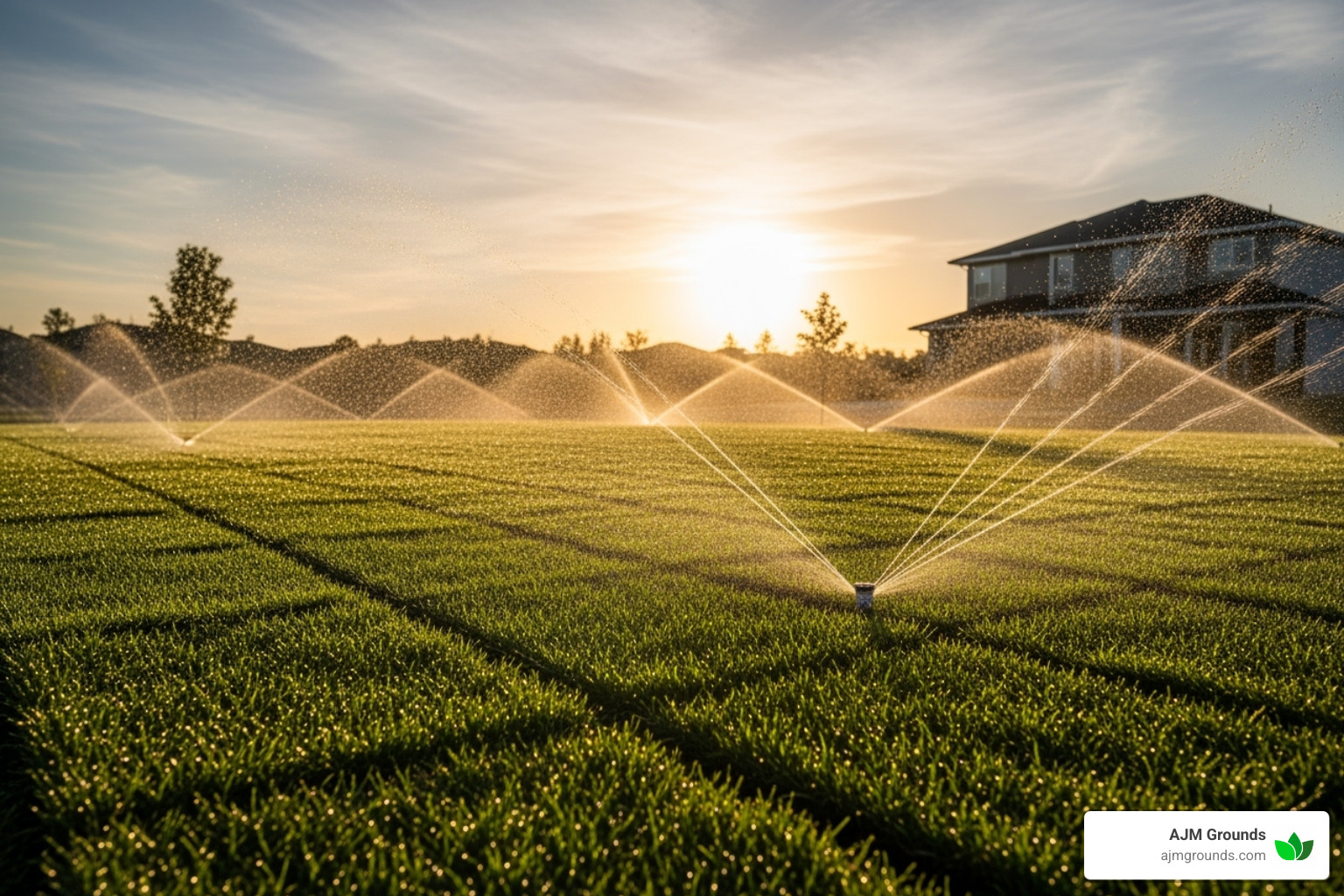
Watering Schedule: Proper watering after laying new sod is the most important factor for success. Immediately after installation (within 30 minutes), soak the entire lawn for at least 45 minutes to saturate the sod and the soil beneath.
- Week 1: Water daily for 15-20 minutes, preferably in the early morning.
- Week 2: Water every other day, but for a longer duration to encourage deeper root growth.
- Week 3 & Beyond: Reduce watering to twice a week, giving the lawn a deep soak each time. After a month, your lawn should be established enough for a typical schedule of 1 inch of water per week.
Rooting and Foot Traffic: Your new sod should start rooting in 10 to 14 days. You can check by gently lifting a corner—if you feel resistance, the roots are taking hold. Minimize walking on the new lawn for at least 1 to 3 weeks to avoid damaging the delicate new roots.
First Mowing: Wait to mow until the grass reaches 3 inches and the sod is firmly rooted. For the first cut, set your mower to its highest setting and use a lightweight push mower with a sharp blade. Never remove more than one-third of the grass blade at a time, and bag the clippings for the first few mows.
Step 4: Long-Term Care and Troubleshooting After Laying New Sod
Once your lawn is established, focus on maintaining its health.
Fertilizing: The starter fertilizer you applied during prep will feed the sod for the first 4 to 6 weeks. After you’ve mowed a few times, you can apply a balanced lawn food. Always water thoroughly after fertilizing to prevent burning. For more on lawn nutrition, see our Fertilization and Weed Care services.
Troubleshooting Common Problems:
- Dry Patches: Usually indicates poor water coverage or air pockets. Increase watering in these spots and press the sod down firmly to ensure soil contact.
- Yellowing Grass: Often caused by too much or too little water. Check soil moisture and adjust your watering schedule. It can also be temporary stress from transplanting.
- Gaps Between Seams: If sod shrinks and leaves gaps, fill them with topsoil and matching grass seed. Keep the patches moist until the seed germinates.
- Weeds: Hand-pull any weeds that appear. Avoid using any herbicides for at least 30-60 days, as they can damage developing roots.
Long-Term Maintenance: Once your sod is fully established (after 6-8 weeks), you can settle into a regular care routine. Maintain a mowing height of 2-3 inches and follow a seasonal fertilization schedule. Consider core aeration 3 to 6 months after installation to improve air, water, and nutrient flow to the roots.
Feeling overwhelmed? While laying new sod is a rewarding DIY project, it’s also physically demanding. If you’re in Woburn, Lexington, or surrounding Massachusetts towns, our team at AJM Grounds can handle the installation for you, ensuring a strong foundation for a beautiful lawn.
Click here to download our PDF installation supply list to get started, or learn more about our Lawn Installation Services to have our experienced team do the work for you.
