

Introduction: Your Backyard Campfire Awaits
A stone fire pit installation is a rewarding DIY project that creates a cozy backyard gathering space. It adds ambiance, warmth, and a focal point for entertaining that can even increase your property’s value.
Quick Answer: How to Install a Stone Fire Pit
- Plan & Prepare: Check local codes, choose a safe location (10-25 feet from structures), and gather materials.
- Excavate: Dig a hole 6-12 inches deep and 2 feet wider than your pit.
- Build the Base: Add 4-6 inches of compacted gravel for drainage and stability.
- Stack the Walls: Lay stones in staggered courses (3-4 rows), using heat-resistant adhesive.
- Add Protection: Install fire bricks or a steel ring to protect stones from heat.
- Finish: Apply capstones and let the adhesive cure for 2-7 days.
Average Project Stats:
- Time: 1-2 days
- Difficulty: Beginner to Intermediate
- DIY Cost: $150-$1,500
- Professional Cost: $300-$3,000+
I’m John Caplis, owner of AJM Grounds LLC. We specialize in creating stunning outdoor living spaces, including custom stone fire pit installations, in the Woburn area. This guide provides the essential steps to build a safe and beautiful fire pit that will last for years.
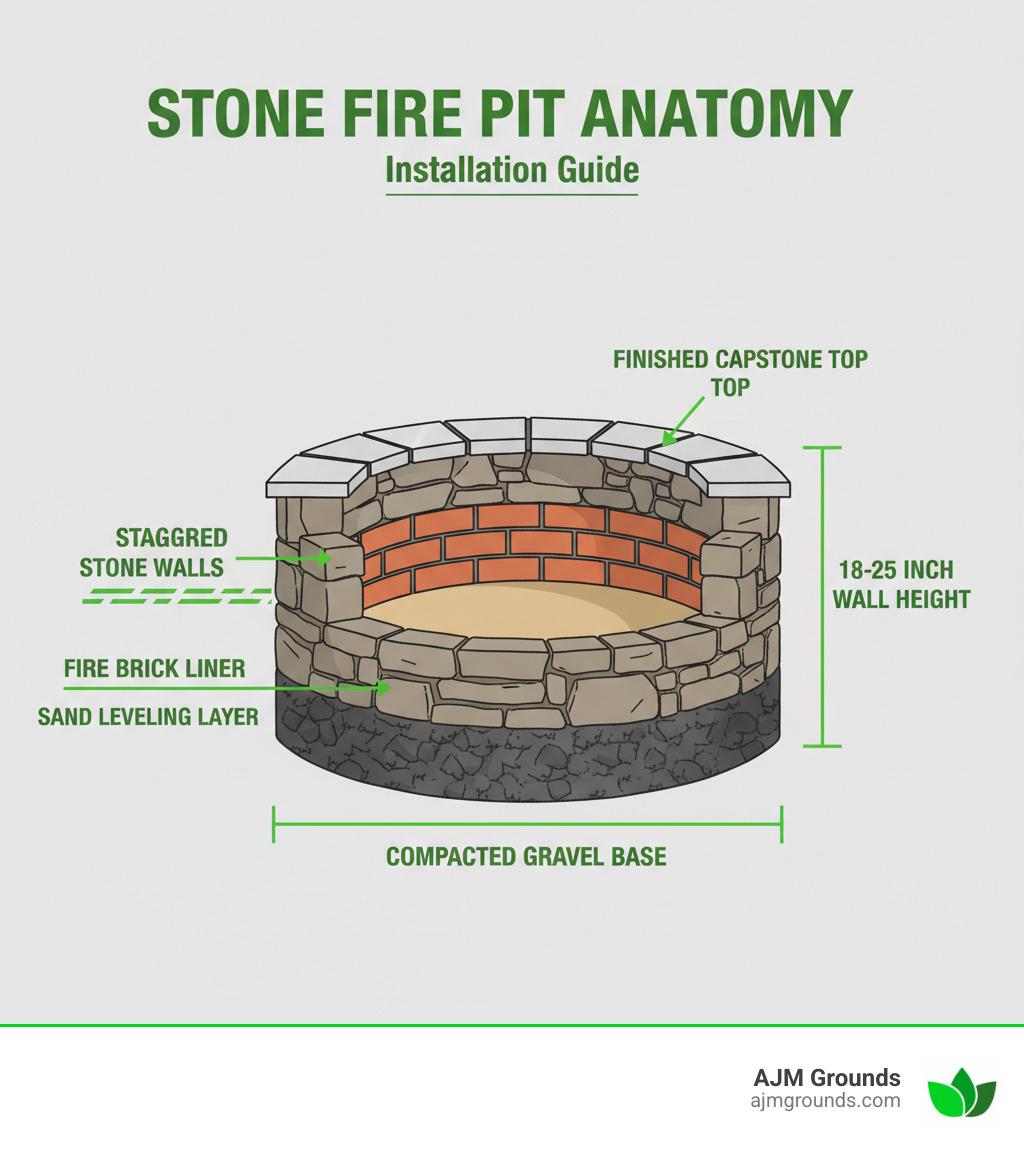
Essential Stone fire pit installation terms:
Planning Your Perfect Stone Fire Pit Installation
A successful stone fire pit installation begins with careful planning. This phase ensures your fire pit is safe, functional, and beautiful.
Choosing Your Style: Stone Types, Designs, and Costs
Your choice of stone and design defines the fire pit’s look and feel.
Stone Types:
- Natural Stone: Includes fieldstone, flagstone, and granite. It offers a rustic, organic look and excellent durability. Natural stone blends beautifully with New England landscapes, which is why we often use it in our projects in Lexington and Burlington. Learn more about The Advantages of Hardscaping with Natural Stone.
- Manufactured Blocks: Also called retaining wall or patio blocks, these are engineered concrete blocks that mimic natural stone. Their uniform size and shape simplify stacking, making them a great choice for DIY projects.
Design & Customization:
- Shape: Round fire pits are classic, but square or rectangular designs can be equally striking. Explore Custom Fire Pit Ideas for inspiration.
- Height: Choose between a subtle in-ground pit or a prominent above-ground feature.
- Finishing Touches: Add capstones for a finished look and a surface for drinks. Consider integrating a Firepit Seating Area for added comfort.
Cost of a Stone Fire Pit Installation:
- DIY Cost: A DIY project using basic materials can range from $150 to $500. More elaborate designs with premium stone can cost up to $1,500.
- Professional Installation Cost: Hiring a professional typically ranges from $300 to $1,000 or more. Complex designs with premium materials can exceed $3,000.
Please note, average costs are based on national data. A DIY project can range from $150 to over $1,500, while professional installation can range from $300 to over $3,000 depending on materials and complexity.
Gathering Your Tools and Materials for the Build
Having everything on hand before you start makes the stone fire pit installation process much smoother.
Essential Materials:
- Wall Stones/Blocks: Natural stone or manufactured blocks.
- Fire Bricks or Steel Ring Liner: Protects the outer stones from direct heat.
- Gravel/Paver Base: Crushed gravel (10-20mm aggregate) for a stable, draining foundation.
- Leveling Sand: A 1-inch layer to help level the first course.
- Heat-Resistant Construction Adhesive: To bond the stone courses together.
- Capstones: For the top finishing layer.
Essential Tools:
- Shovel & Wheelbarrow
- Hand Tamper or Plate Compactor
- Spirit Level (long and short)
- Rubber Mallet
- Tape Measure
- String Line and Stakes
- Safety Glasses & Gloves
- Trowel & Utility Knife
For a visual guide, check out this article on How To Build a Fire Pit with Landscaping Stones.
Site Prep and Safety: The Foundation of Your Project
Proper site preparation is critical for safety and stability.
1. Check Local Regulations:
Before digging, contact your local building department in Bedford, Billerica, or your respective town. Verify local codes, permit requirements, and rules for fire pit placement. Also, check with your Homeowner’s Association (HOA) and inform your insurance agent.
2. Select and Mark Your Site:
- Location: Choose a level spot at least 10 to 25 feet away from your house, fences, sheds, and low-hanging trees. Consider prevailing wind direction to minimize smoke issues.
- Marking: Use a stake, string, and spray paint to mark a circle for a round pit. For a square pit, lay out the first course of blocks to define the perimeter and mark it.
3. Excavate and Prepare the Base:
- Dig: Remove the sod and excavate a foundation 6 to 12 inches deep and about 2 feet wider than the final pit diameter.
- Compact Soil: Use a hand tamper to compact the dirt at the bottom of the hole to prevent settling.
- Add Gravel: Fill the hole with a 4 to 6-inch layer of crushed gravel. Compact it thoroughly. This provides drainage and a stable, non-combustible base.
- Add Sand: Spread a 1-inch layer of leveling sand over the gravel. Compact and level this layer to prepare for your first course of stones.

For more details on planning, see our guide on What to Know About Building an Outdoor Fire Pit.
The Step-by-Step Construction Guide
With your site prepped, it’s time to build. This section covers the construction of your stone fire pit, from the base to the finishing touches.
Laying the First Course for a Stable Base
The first course of stones is the most critical part of your stone fire pit installation. A level base ensures a stable, long-lasting structure. Take your time on this step.
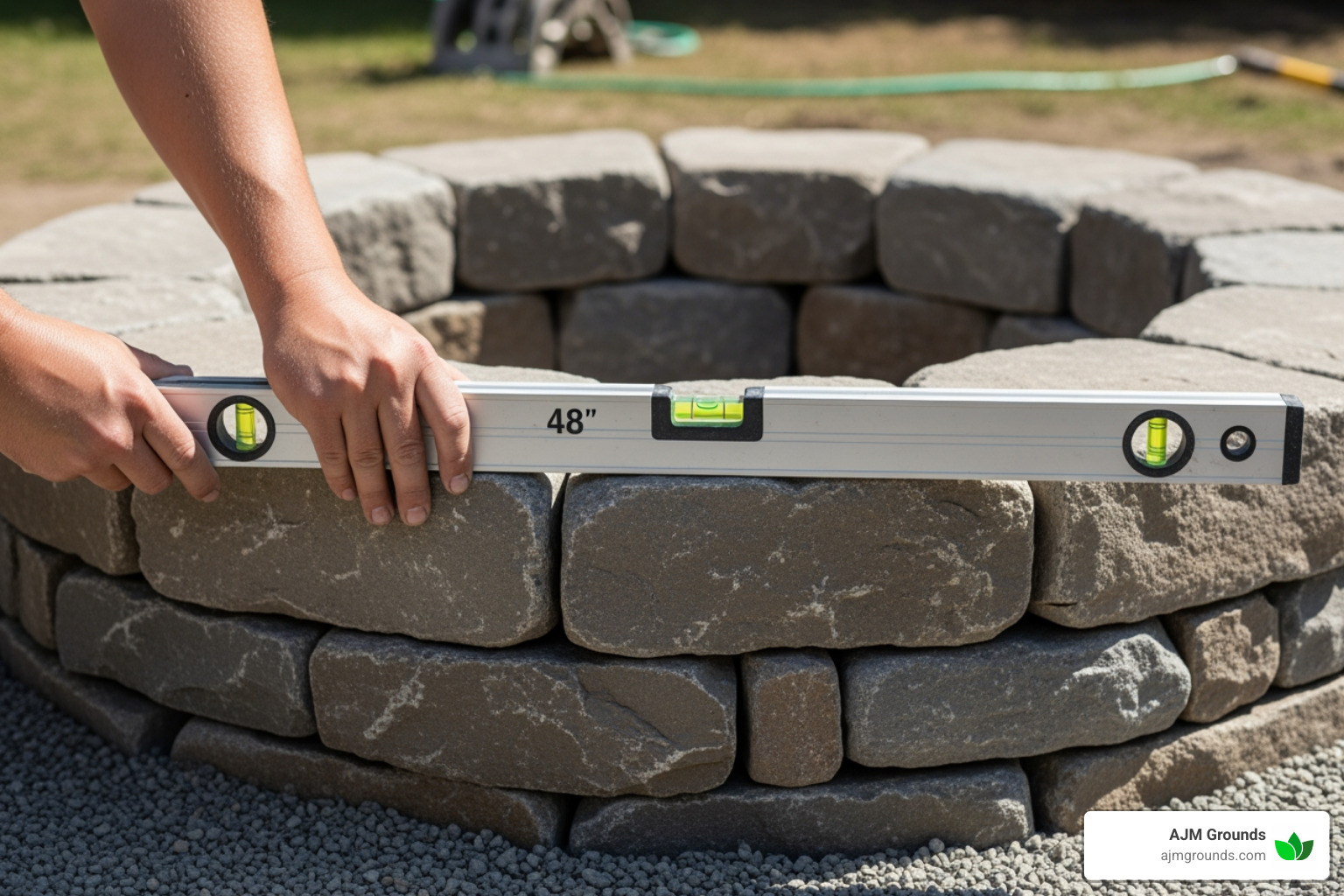
- Place the Stones: Position your first course of blocks directly on the leveled sand base, ensuring they touch snugly.
- Set and Level: Use a rubber mallet to gently tap each stone into place. Use your spirit level to check that each block is level from front-to-back and side-to-side.
- Check the Course: Use a long level across several blocks to ensure the entire ring is perfectly level. “Ensure each block in the first course is level before placing another.”
- Backfill: Once the course is level, backfill around the outside of the blocks with gravel and tamp it down to lock the base in place.
A common mistake is rushing this step, resulting in an uneven base that leads to a wobbly, unstable fire pit. Also, avoid using wet river rocks, which can crack or explode when heated.
Building the Walls: A Guide to Stone Fire Pit Installation
With a solid base, you can now build up the walls.
Stacking and Securing:
The key to a strong wall is to stagger the joints. Each new course of stones should overlap the joints of the course below it, like a brick wall. This distributes weight and creates a stable structure. For a permanent build, apply a bead of heat-resistant construction adhesive between each course. Dry-stacking without adhesive can work for interlocking blocks but is less rigid over time.
Installing a Protective Liner:
A liner is essential to protect your stonework from direct heat, which can cause cracking and degradation.
- Fire Bricks: Line the interior of the pit with specialized fire bricks, set in place with refractory mortar. They offer maximum heat protection.
- Steel Ring: A simpler option is to insert a metal fire pit ring. It creates a durable barrier between the fire and the stones. “A metal insert…helps the fire pit last longer.”
For more details on this phase, see our guide on Building a Backyard Fire Pit.
Finishing Touches for Your Stone Fire Pit Installation
These final steps complete your stone fire pit installation and prepare it for use.
Finishing and Curing:
- Add Capstones: Secure flat capstones to the top of the wall with heat-resistant adhesive. This provides a finished look and a handy surface.
- Cure the Adhesive: This is crucial. Allow the adhesive or mortar to cure for 2 to 7 days before lighting your first fire. Lighting a fire too soon can weaken the bonds.
First Fire and Ongoing Maintenance:
- First Fire: Start with a small, modest fire to allow the materials to acclimate to the heat. Always have a water source nearby and never leave a fire unattended.
- Maintenance: Clean out ash regularly after it has cooled. Periodically check for cracked stones, especially after winter, and replace them if needed. Consider using a cover during harsh weather to prolong the life of your fire pit.
Project Conclusion: Enjoy Your New Fire Pit
Building your own fire pit is a deeply satisfying project. For those in Woburn, Stoneham, and our surrounding service areas, an intermediate DIYer can achieve a fantastic result with careful planning.
However, if your design is complex, involves a gas line, or you simply prefer to leave the work to an expert, it’s wise to call a professional. At AJM Grounds, we handle everything from permits to construction, ensuring a high-quality, safe installation. We can help you design the perfect Firepit Seating Area to complement your new feature.
Ready to create the ultimate backyard gathering spot? Explore our Custom Outdoor Fire Pits services.
