

Why Landscape Retaining Walls Are Essential for Your Property

Landscape retaining walls are sturdy structures built to hold back soil when there’s a change in ground elevation. If you’re choosing the right retaining wall for your property, here’s what you need to know:
Quick Selection Guide:
- Purpose – Determine if you need erosion control, level space, or decorative features.
- Height – Walls under 3-4 feet are simpler; taller walls require engineering.
- Materials – Choose from concrete blocks ($1.25-$4 per block), natural stone ($20-$100/sq ft), wood ($15-$30/sq ft), or brick ($20-$25/sq ft).
- Drainage – All retaining walls need proper drainage to prevent failure.
- Installation – DIY is possible for short walls; professional help is recommended for walls over 3 feet.
Key Benefits:
- Prevents soil erosion and manages water runoff
- Creates usable flat space on sloped properties
- Adds visual interest and can increase property value
- Provides structural support for features like patios or garden beds
These walls solve practical problems like slope management and erosion while adding aesthetic value. A well-built retaining wall can transform an unusable slope into a functional area for a garden, play space, or outdoor dining.
However, landscape retaining walls are complex. Poor drainage is a common cause of failure, as water pressure can lead to bulging, cracking, or collapse. A solid foundation, proper backfill, and engineering for walls over 3-4 feet are also crucial.
Material choice also matters, with options like durable concrete blocks, neat natural stone, rustic wood, and classic brick each having trade-offs in cost, longevity, and installation.
I’m John Caplis, owner of AJM Grounds LLC. With years of experience designing and installing landscape retaining walls in the Greater Woburn area, I’ve helped homeowners turn challenging slopes into beautiful, functional spaces. This guide covers everything you need to know.
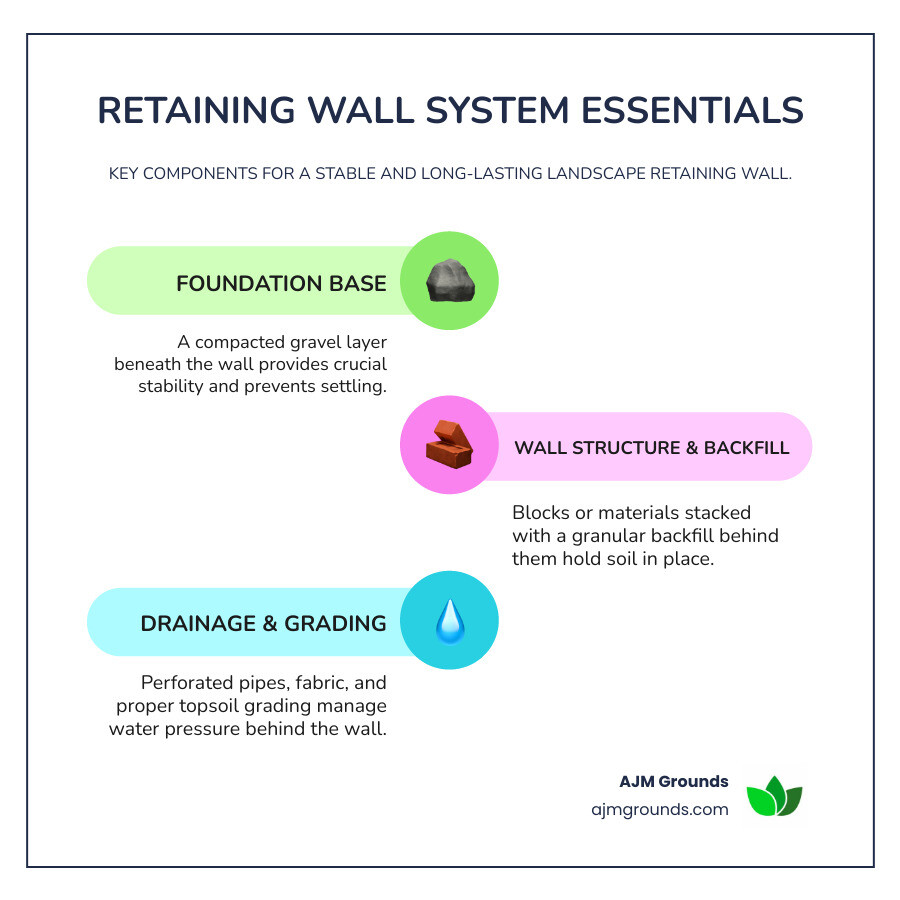
Know your landscape retaining walls terms:
Key Considerations for Your Landscape Retaining Walls
When planning for landscape retaining walls, several fundamental aspects must be considered. These walls are essential structural components that impact the functionality and beauty of your outdoor living areas.
Understanding the Core Purpose and Benefits
A retaining wall’s primary purpose is to hold back soil and create level areas on sloped sites. For properties in Woburn, MA, and surrounding towns with uneven terrain, a retaining wall can be a game-changer, turning unworkable inclines into usable surfaces.
A key benefit is increased usable space. A steep slope can become a terraced garden, a play area, or an outdoor dining space. Low retaining walls can also serve as built-in seating around patios or fire pits, seamlessly connecting different levels of your landscape.
Landscape retaining walls are also crucial for drainage and erosion control. They hold back soil, reduce flooding risk, and manage water runoff—vital during heavy New England rains—to protect your landscape’s integrity.
Aesthetically, retaining walls add texture, depth, and visual interest, improving curb appeal and property value. A well-designed wall can frame a garden, define a patio, and create a more inviting outdoor environment. Unlike freestanding walls used for dividing flat areas, retaining walls are structural, built on slopes with footings to withstand soil pressure.
Comparing Materials for landscape retaining walls
The choice of material for your landscape retaining walls impacts their durability, cost, and aesthetic appeal. We work with a variety of materials, each offering unique advantages.
Here’s a comparison of common materials:
| Material | Durability | Cost (Material per sq ft) | Maintenance | Aesthetics |
|---|---|---|---|---|
| Concrete Blocks | High (50-100 years) | $1.25-$4 per block | Low | Versatile, many styles/colors, modern to rustic |
| Natural Stone | Very High (50-100 years) | $20-$100 | Low | Timeless, neat, natural, unique |
| Wood | Moderate (20-40 years) | $15-$30 | Moderate (treatment) | Rustic, natural, blends with greenery |
| Brick | High (50-100 years) | $20-$25 | Low | Classic, refined, traditional |
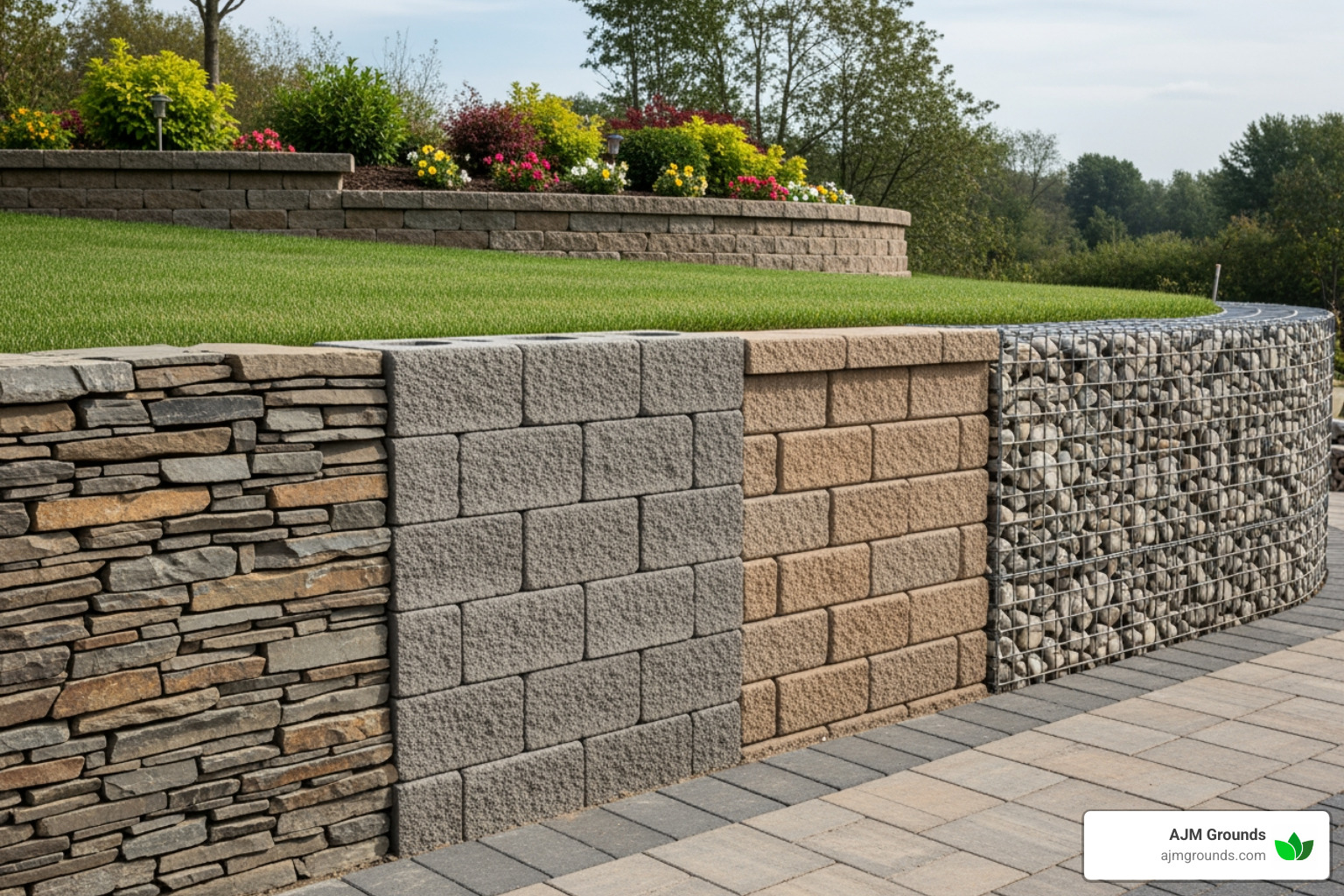
Concrete Blocks: A popular choice for their versatility and strength, concrete blocks are durable, easy to install (especially interlocking systems), and come in many styles. Many are engineered for superior performance and resistance to New England’s freeze/thaw cycles. They can feature systems for quick, precise stacking. Material costs typically range from $1.25 to $4 per block.
Natural Stone: For a timeless look, natural stone offers exceptional durability and low maintenance. Its unique patterns create a stunning visual that blends with the natural environment. However, it is more expensive and often requires professional masonry skills for installation, with material costs from $20 to $100 per square foot.
Wood: Wood walls offer a rustic aesthetic and are often an inexpensive choice, with material costs from $15 to $30 per square foot. However, they have a shorter lifespan (20-40 years) and require regular maintenance.
Brick: Brick offers a classic, refined look that is durable and low-maintenance. Material costs are typically $20 to $25 per square foot, and like stone, brick walls often require skilled installation.
Other options include gabion walls (wire cages filled with stone), which are affordable and permeable, and steel walls for a modern, rustic look.
The average retaining wall project cost ranges from $3,202 to $9,203, depending on materials, height, and labor. While DIY can save money, professional installation is recommended for most walls. Please note: these are average costs from internet research, not AJM Grounds pricing. We provide personalized estimates for every project.
Critical Design and Structural Factors
Proper engineering is essential for a stable, long-lasting retaining wall. We focus on four critical elements: the base, backfill, drainage, and height.
Wall Height and Engineering: Wall height is a crucial factor. Walls over 3-4 feet require engineering to withstand soil pressure. In areas like Woburn and Reading, walls over 4 feet often need permits and specialized design to prevent failure. For tall slopes, a series of shorter, terraced walls is often a better solution than one massive wall.
Structural Support: Walls should lean slightly into the earth they retain (a “batter”). A portion of the wall must be buried for stability. Larger walls may need reinforcement like tie-backs. In Massachusetts, footings must be below the frost line to prevent movement from frost heave.
Base: A stable wall needs a solid, level base. This involves a trench filled with a compacted layer of angular gravel. Round rocks should be avoided as they don’t compact well.
Backfill: Proper backfill is as important as the wall. We use granular material like crushed gravel or sand behind the wall, not dirt. Gravel doesn’t swell with water, which reduces pressure. The backfill is compacted in layers for stability and drainage.
Drainage Systems: Neglecting drainage is a primary cause of wall failure. Hydrostatic pressure builds up and causes damage. A robust drainage system is essential and often includes:
- Perforated Pipe: A fabric-wrapped pipe at the wall’s base collects and diverts water.
- Gravel Backfill: Granular backfill allows water to filter down to the drainpipe.
- Weep Holes: Small holes in the wall that allow water to escape.
- Waterproof Membranes: Applied to the back of the wall for added moisture protection.
Erosion Control and Geogrid Reinforcement: Proper grading to divert surface water is vital. For taller walls, geogrid fabric is often used to reinforce the soil behind the wall, distributing pressure and improving stability, especially for walls over 4 feet. For a deeper dive, we recommend checking out Retaining Wall Drainage & Backfill Basics.
Design, Installation, and Professional Guidance
Designing and installing landscape retaining walls is a significant investment that adds lasting value and beauty to your home. We create solutions that are structurally sound, aesthetically pleasing, and integrated into your landscape.
Integrating Walls and Planning Your Installation
Landscape retaining walls can transform your outdoor living spaces by integrating with other landscape features:
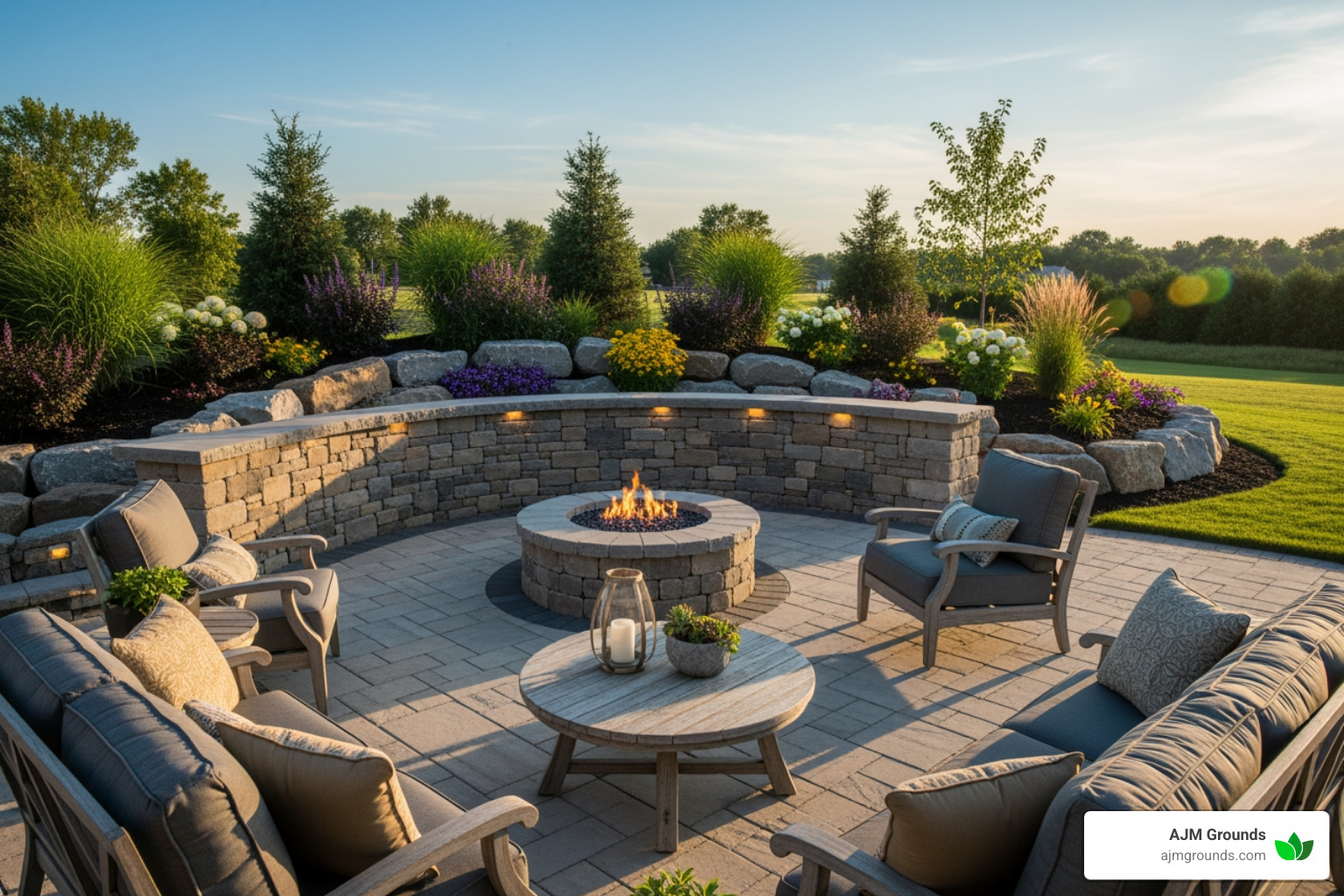
- Patios and Outdoor Kitchens: Retaining walls can define and create a stable, level base for patios and outdoor kitchens. Low walls can serve as built-in seating around a fire pit or dining space.
- Terraced Gardens and Planters: On sloped properties, tiered retaining walls create stunning terraced gardens. Small walls can also function as raised planters.
- Walkways and Steps: Retaining walls are essential for creating safe walkways and steps on uneven terrain, gracefully connecting different levels of your yard.
- Aesthetic Harmony: The key is choosing materials and a design that blend with your home’s architecture for a cohesive look, such as matching stone or using accent banding.
DIY Considerations: A small retaining wall (under 3 feet) can be a DIY project for homeowners in areas like Woburn or Stoneham. Interlocking blocks are often recommended for their ease of use. However, proper planning, a solid base, and good drainage are still non-negotiable.
Here’s a list of essential tools for a basic retaining wall project:
- Safety glasses
- Hammer and rubber mallet
- Spade or shovel
- Masonry chisel
- Power saw with a diamond blade
- Levels (line, torpedo, 4-foot)
- Power tamper or hand compactor
- Tape measure
- 2×4 and 2×6 boards
- Stakes and string line
Before digging, always call 811 to locate buried utility lines. Also, check with your local building authority for permit requirements. Many Massachusetts towns require permits for walls over a certain height (often 3-4 feet). Ignoring these steps can be costly and dangerous.
Partnering with Experts for Lasting Results
While DIY is appealing, building landscape retaining walls over 3 feet or on complex terrain is challenging. Common mistakes like poor drainage or an unstable base can lead to wall failure, requiring costly repairs. Poorly built walls often lose the battle against gravity and water pressure.
Partnering with professionals like us at AJM Grounds is invaluable. Our expertise ensures structural integrity and adherence to local building codes in areas like Bedford and Winchester. We understand Massachusetts’ unique soil and climate challenges, ensuring footings are below the frost line and drainage is robust.
We specialize in designing and installing durable, functional, and beautiful landscape retaining walls that add value to your property. Our attention to detail and personalized service ensure a result that meets your needs, from design to final installation. For more information, please visit our dedicated page: More info about retaining wall construction.
Choosing the right landscape retaining wall is a long-term decision affecting your property’s function and beauty. By understanding the purpose, materials, and design factors, you can ensure a successful project. Whether you opt for DIY or professional installation for your Greater Woburn home, we’re here to help you create the outdoor space you envision.