

Why Your Retaining Wall’s Success Depends on Its Foundation
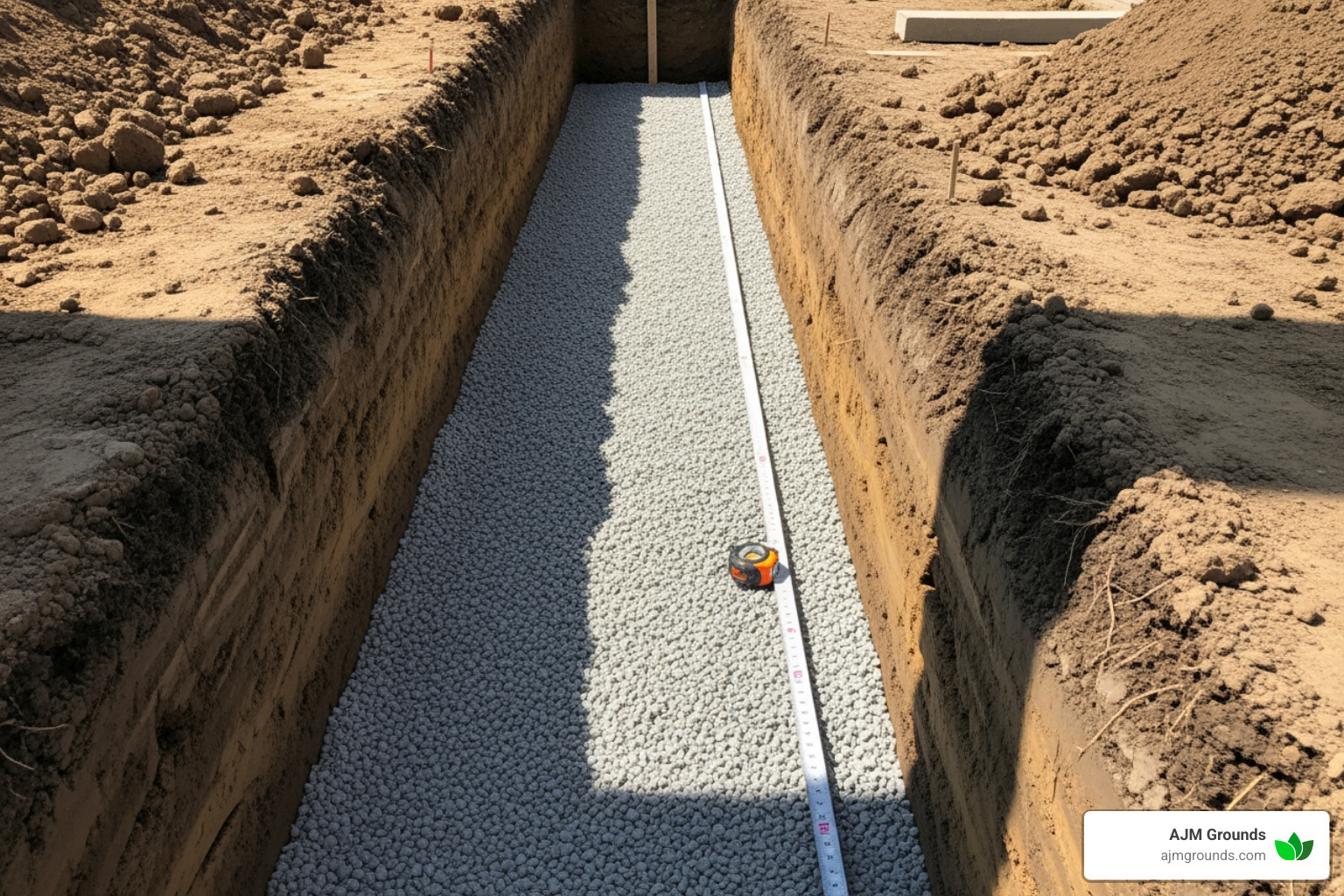
Retaining wall base preparation is the most critical step in building a wall that lasts. A properly prepared base prevents the most common retaining wall failures, such as bulging, tilting, and settling.
Quick Answer: Key Elements of Professional Retaining Wall Base Preparation
- Proper Excavation – A trench must be dug to a specific depth and width to properly support the wall’s total weight and height.
- Soil Assessment – Any soft soil, organic material, or slick clay that cannot provide a stable footing must be removed.
- Correct Base Material – A thick layer of crushed, angular gravel is installed to create a firm, interlocking, and well-draining foundation.
- Thorough Compaction – The gravel base is compacted in layers using professional equipment to eliminate air pockets and prevent future settling.
- Precision Leveling – The final base must be perfectly level, as any imperfection will be magnified as the wall gets taller.
As a landscaping professional often says: “Stacking retaining wall blocks is easy. However, keeping them stacked for years is difficult.” This captures the core challenge of retaining wall construction. The difference between a wall that stands for decades and one that fails in a few years lies in the unseen foundation beneath it.
Without a solid, level foundation, even the best blocks won’t save your wall. The good news is that base preparation follows clear, proven steps that ensure stability. Understanding these fundamentals will help you appreciate the work that goes into a lasting landscape feature and avoid costly mistakes.
I’m John Caplis, owner of AJM Grounds LLC, and I’ve overseen numerous hardscaping projects throughout Greater Woburn, MA where professional retaining wall base preparation was the key to success. The techniques professionals use come from hands-on experience and industry best practices that ensure a durable, beautiful result.
Essential retaining wall base preparation terms:
The Step-by-Step Guide to Retaining Wall Base Preparation
The purpose of a retaining wall base is to anchor the entire structure. It distributes the immense weight of the wall and the soil it retains, preventing sinking and shifting. A proper foundation is the key to a wall that remains level, straight, and structurally sound for years to come.
Step 1: Planning and Excavating the Trench
Before any dirt is moved, meticulous planning is essential. This stage sets the foundation for a successful project.
Safety First: Call 811 Before You Dig
This is a critical safety measure. Before excavation begins, you must contact 811 to have all underground utility lines marked. Hitting a gas, electric, or water line is dangerous and can lead to costly repairs. Professionals always wait for utility companies to mark their facilities before breaking ground.
Marking the Layout and Calculating Dimensions
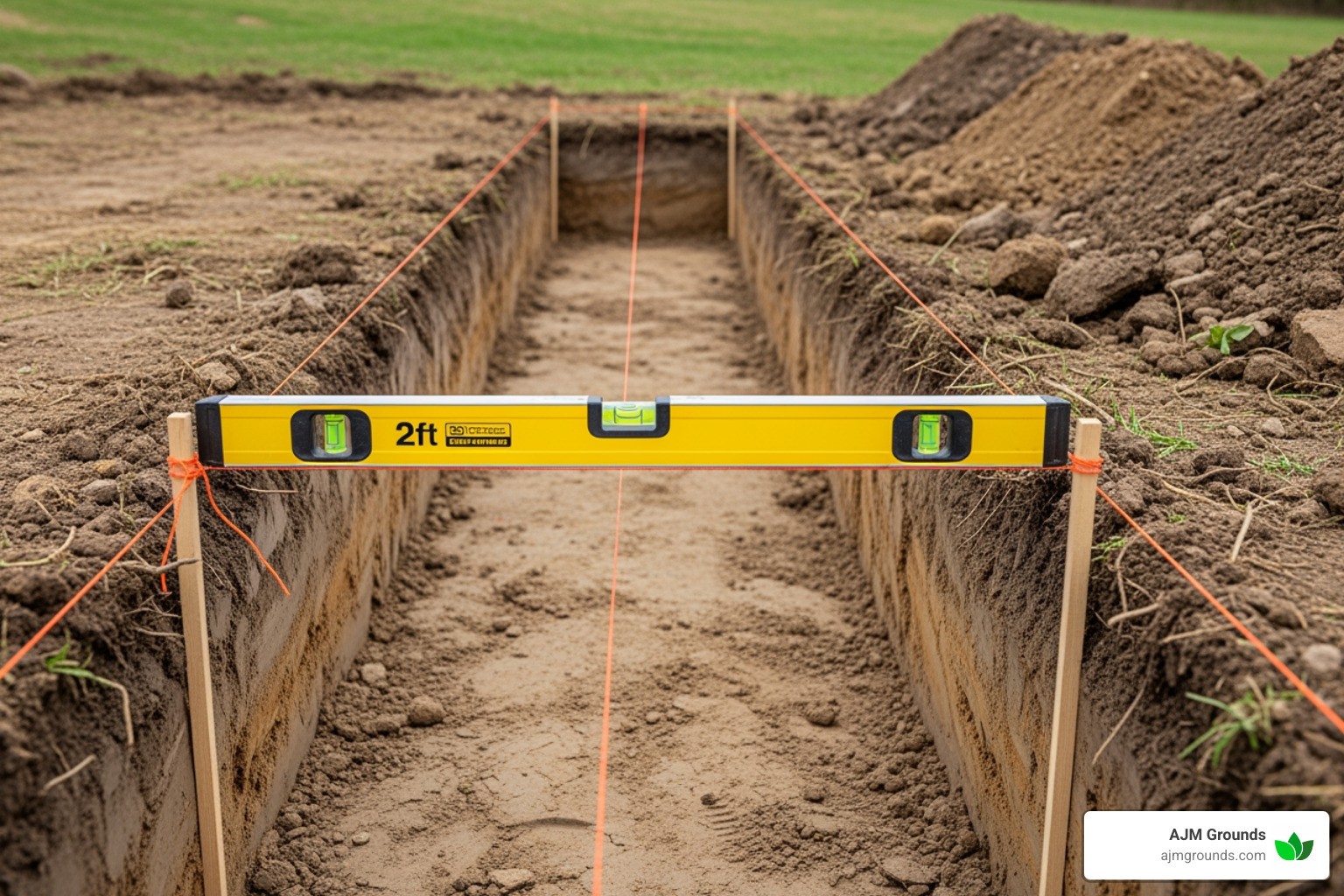
Once the area is confirmed to be safe, the wall’s footprint is marked out using stakes and string lines or paint. The size of the base trench is then determined by the wall’s planned height and the type of blocks being used.
- Trench Width: The trench must be wider than the retaining wall blocks themselves. This provides a stable platform that extends beyond the wall’s footprint, ensuring ample space for the compacted base material that supports the structure.
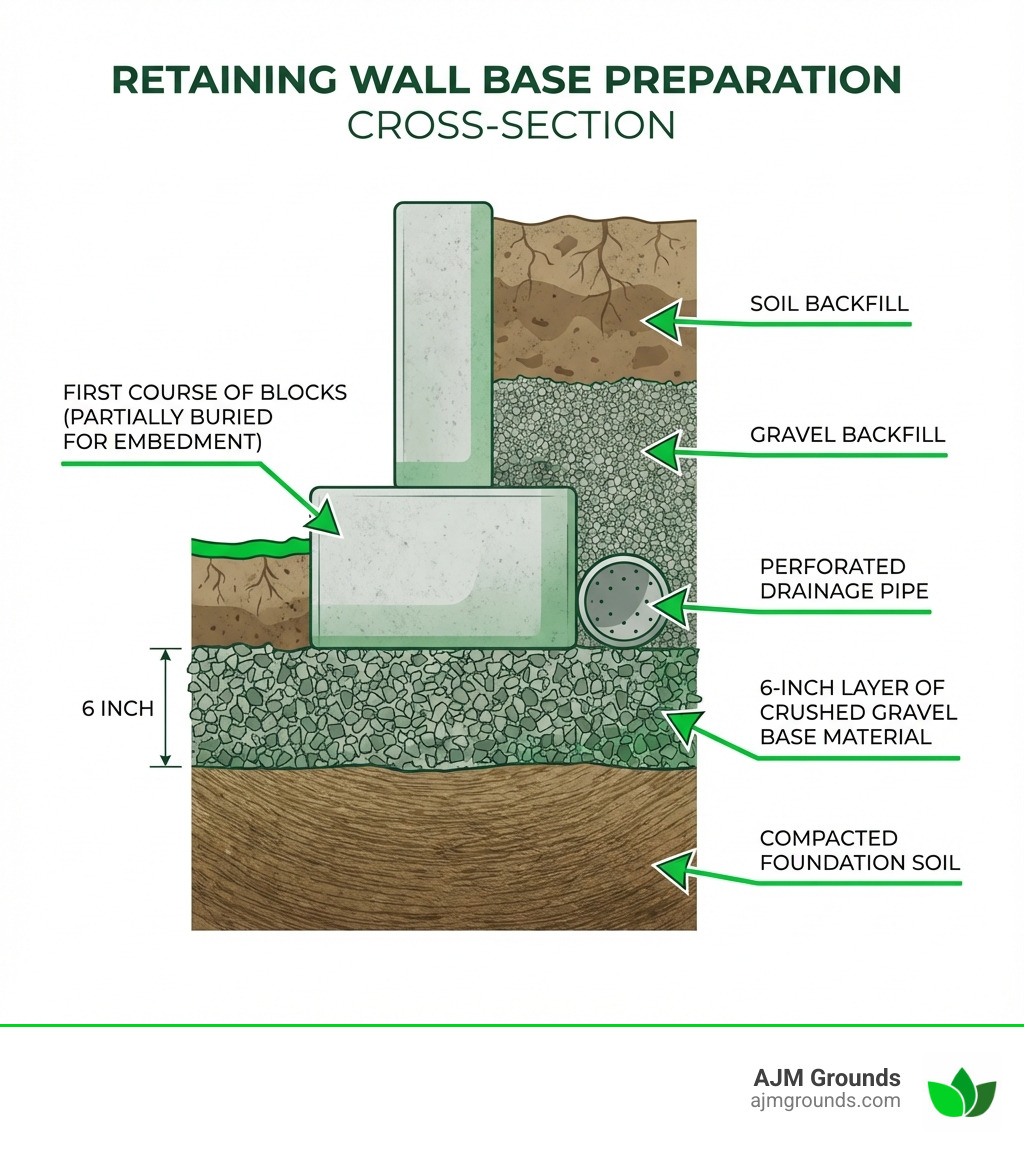
- Trench Depth and Embedment: The total trench depth is carefully calculated to accommodate both the base material and the “embedment” of the first course of blocks. Embedment is the crucial practice of burying the bottom portion of the wall below grade. This provides stability, prevents the base of the wall from being pushed out, and protects against erosion. The required embedment depth increases with the wall’s height and is a critical calculation in any professional design.
Handling Slopes and Unsuitable Soil
If a wall is built on a slope, the trench must be “stepped” to follow the grade, ensuring each section of the base is perfectly level. This is a complex task that requires precision. For more on this topic, see our guide on Retaining Walls for Slopes.
During excavation, remove any soft topsoil, organic material like roots, or slick clays. These materials are unstable and will compress or shift over time, causing the wall to settle unevenly and fail.
Step 2: Choosing and Installing the Base Material
With the trench excavated, the next step is installing the base material. This layer is key to stability and drainage.
Suitable Materials for a Retaining Wall Base
The ideal material is angular, compactable, and permeable. It interlocks to create a firm, stable layer that allows water to drain away freely.
- Good Choices: Crushed angular gravel (often called “Wall Rock”), #57 stone, and engineered paver base are all excellent options. These materials lock together tightly when compacted.
- Materials to Avoid: Round materials like smooth river rock or pea gravel should never be used. They act like marbles and cannot be properly compacted, leading to an unstable base. Uniform sand is also a poor choice as it can wash out over time.
For more details, see our guide on Paver Base for Retaining Wall.
Installation and Depth
A sufficient depth of base material is required to provide adequate support, typically a minimum of 6 inches for many walls, but this can increase for taller walls or in areas with poor soil. The material is spread evenly throughout the trench to prepare for compaction.
Step 3: The Critical Art of Compaction and Leveling
This is where the strength of the foundation is truly built. Skimping on compaction or leveling guarantees future problems.
The Power of Compaction
Compaction removes air pockets from the base material, creating a dense, solid foundation that won’t settle.
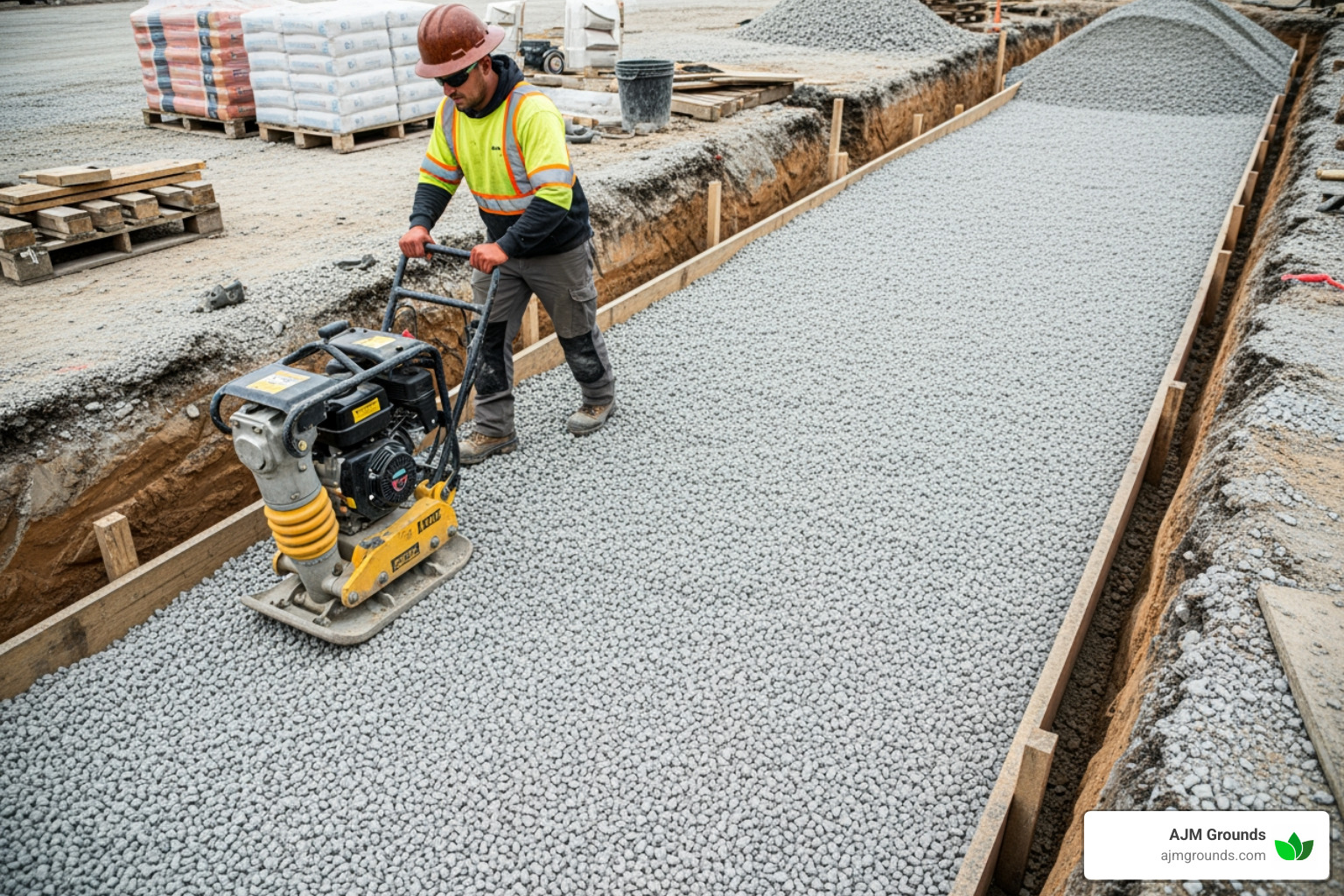
- Professional Equipment: For any significant retaining wall, a walk-behind plate compactor is essential. It delivers the powerful vibration needed to lock the gravel particles together. A hand tamper is only suitable for the smallest garden borders.
- Compacting in Lifts: To achieve maximum density, professionals compact the base material in thin layers, or “lifts.” Spreading and compacting the gravel 2-3 inches at a time ensures the entire base is uniformly solid, from bottom to top.
Achieving a Perfectly Level Base
A perfectly level base is non-negotiable. Any unevenness will be magnified with each course of blocks, resulting in a crooked, unstable wall.
Professionals use tools like 4-foot levels and taut string lines to check the base carefully. The surface must be perfectly flat side-to-side and front-to-back. This precision at the foundation stage is what allows for a flawless first course of blocks, which in turn dictates the quality of the entire wall.
Common Mistakes and When to Call a Professional
Even with good intentions, improper retaining wall base preparation can lead to significant problems. Understanding these pitfalls and knowing when to seek expert help can save you considerable time, money, and frustration.
Consequences of Improper Retaining Wall Base Preparation
If the foundation is weak, the entire structure suffers. Here are the common results of a poorly prepared base:
- Wall Bulging or Leaning: An unstable base can’t resist the immense pressure from the soil, causing sections of the wall to shift, bulge, or lean forward.
- Cracking: As the weak base settles unevenly, it puts extreme stress on the wall blocks, leading to cracks that compromise the wall’s integrity and appearance.
- Sinking or Settling: If the base material isn’t fully compacted or was built on soft soil, the wall will sink over time, creating an uneven top and reducing its stability.
- Complete Collapse: In severe cases, a faulty base can lead to catastrophic failure. This is especially common during heavy rain, when water pressure builds up behind the wall.
- Water Damage: A poor base often accompanies inadequate drainage. Trapped water creates hydrostatic pressure, a leading cause of wall failure, and can erode soil at the base, further undermining the structure.
These consequences highlight why professional retaining wall base preparation is so important. For more on fixing these issues, our Retaining Walls Repairs Guide offers valuable insights.
When to Call a Pro for Your Retaining Wall Base Preparation
While a very small garden wall can be a rewarding project, there are clear signs that professional expertise is essential for a safe, durable structure.
- Wall Height Over 4 Feet: This is the most critical indicator. Walls taller than 4 feet exert immense pressure and almost always require professional engineering and a building permit.
- Poor Soil Conditions: If your site has heavy clay, loose sand, or a lot of organic material, a standard base won’t be sufficient. A professional can assess the soil and design a foundation that can properly support the wall.
- Steep Slopes: Building on or near a steep slope introduces complex forces. A professional can design a stepped foundation and incorporate the necessary reinforcement to ensure stability.
- Complex Designs: If your vision includes curves, tiers, or integrated steps, the base preparation becomes much more complicated and requires a high degree of precision.
- Permit Requirements: Always check with your local building department in Greater Woburn, MA, or surrounding towns like Bedford, Burlington, Lexington, or Winchester. Many municipalities require permits for walls over a certain height, which often necessitates a professional plan.
- Engineering Needs: Any significant load above the wall (like a driveway or patio) or challenging site conditions will require a professional engineer to create a stamped design that ensures the wall meets all safety and structural codes. Further reading on professional wall design.
At AJM Grounds, we specialize in designing and installing retaining walls that are both beautiful and structurally sound. Our team has the expertise to handle everything from complex designs to challenging site conditions in the Greater Woburn, MA area, ensuring your retaining wall base preparation is executed flawlessly. If you’re unsure about your project, don’t hesitate to reach out. Get help with your Retaining Wall Construction.
