

Why Growing Grass from Seed Works for Massachusetts Homeowners
Growing grass from seed is an economical way to establish a beautiful lawn or repair bare patches. It offers more variety and flexibility than sod at a fraction of the cost.
Quick Answer: The 5 Essential Steps
- Choose the Right Time – Seed in late summer (mid-August to mid-September) for best results.
- Prepare the Soil – Test pH, add organic matter, and create a smooth seedbed.
- Plant Properly – Apply seed evenly and ensure good seed-to-soil contact.
- Water Consistently – Keep the soil surface moist until germination.
- Maintain Patiently – Wait for grass to reach 3 inches before the first mow.
Success depends on timing and preparation. Cool-season grasses thrive in Massachusetts when soil temperatures are 50-65°F. Late summer is ideal because warm soil speeds germination while cooler air and less weed competition encourage strong root growth.
I’m John Caplis, owner of AJM Grounds LLC. We’ve helped many homeowners in Greater Woburn establish healthy lawns. Growing grass from seed requires patience, but the long-term results are worth it.
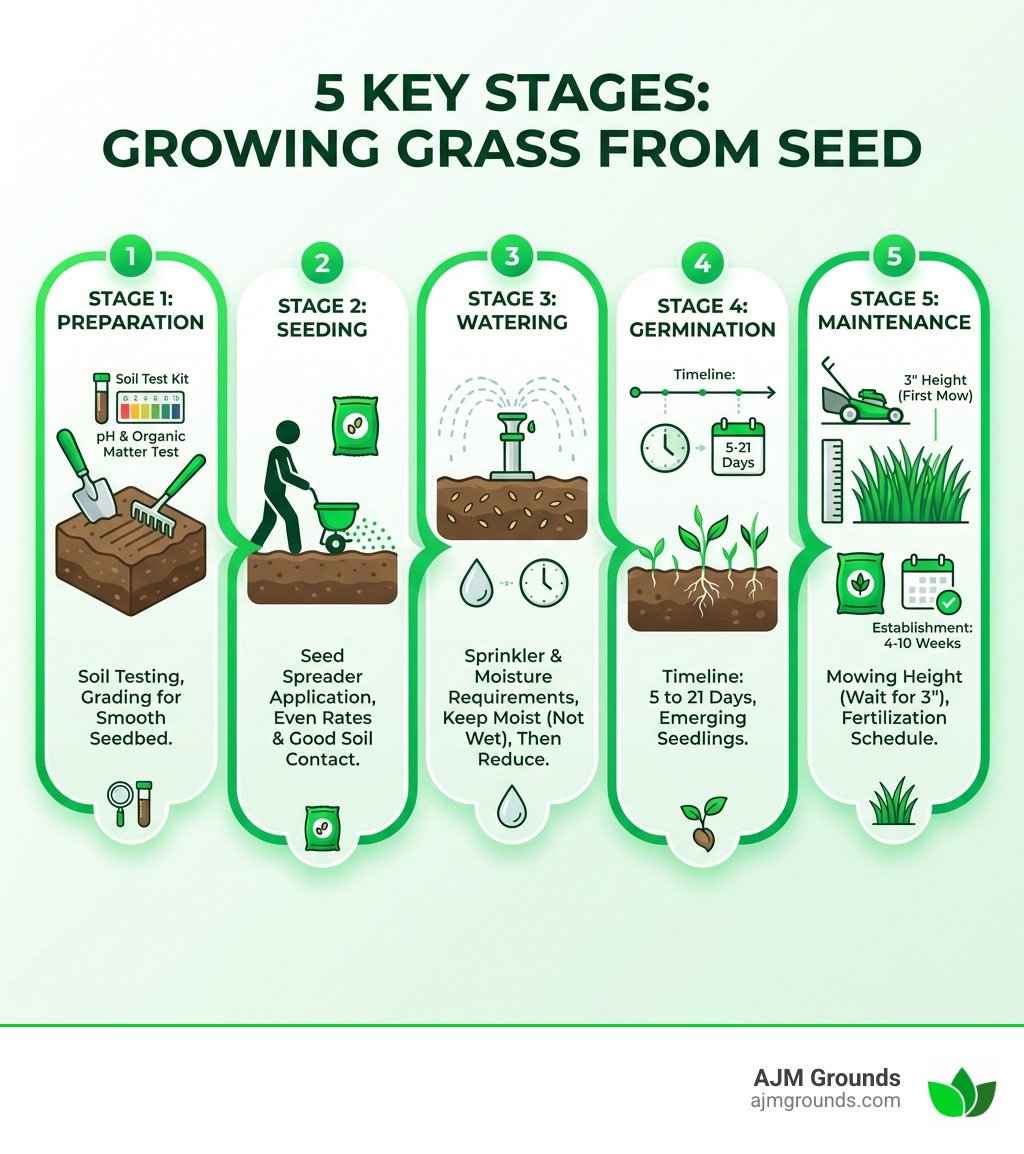
Growing grass from seed basics:
A Step-by-Step Guide to Growing Grass from Seed
At AJM Grounds, we know a beautiful lawn is the foundation of a stunning landscape. This guide will help you master growing grass from seed in Massachusetts.
Choosing the Right Time and Seed for Massachusetts Lawns
Success starts with planting the right seed at the right time. Homeowners in Woburn, MA, and surrounding areas deal with cool-season grasses that thrive in our climate.
When is the Best Time to Plant Grass Seed in Massachusetts?
The best time to plant cool-season grass in Massachusetts is late summer (mid-August to mid-September). This period offers the perfect combination of warm soil for fast germination and cool air for strong root growth, with minimal competition from weeds.
Spring (mid-March to mid-May) is a second option, but it presents challenges. Your new grass will have to compete with spring weeds and face the stress of summer heat before its root system is fully established.
Choosing the Best Grass Seed for Your Massachusetts Lawn
Selecting the right seed mix is crucial. Consider these factors when advising clients in areas like Reading, Stoneham, and Wilmington:
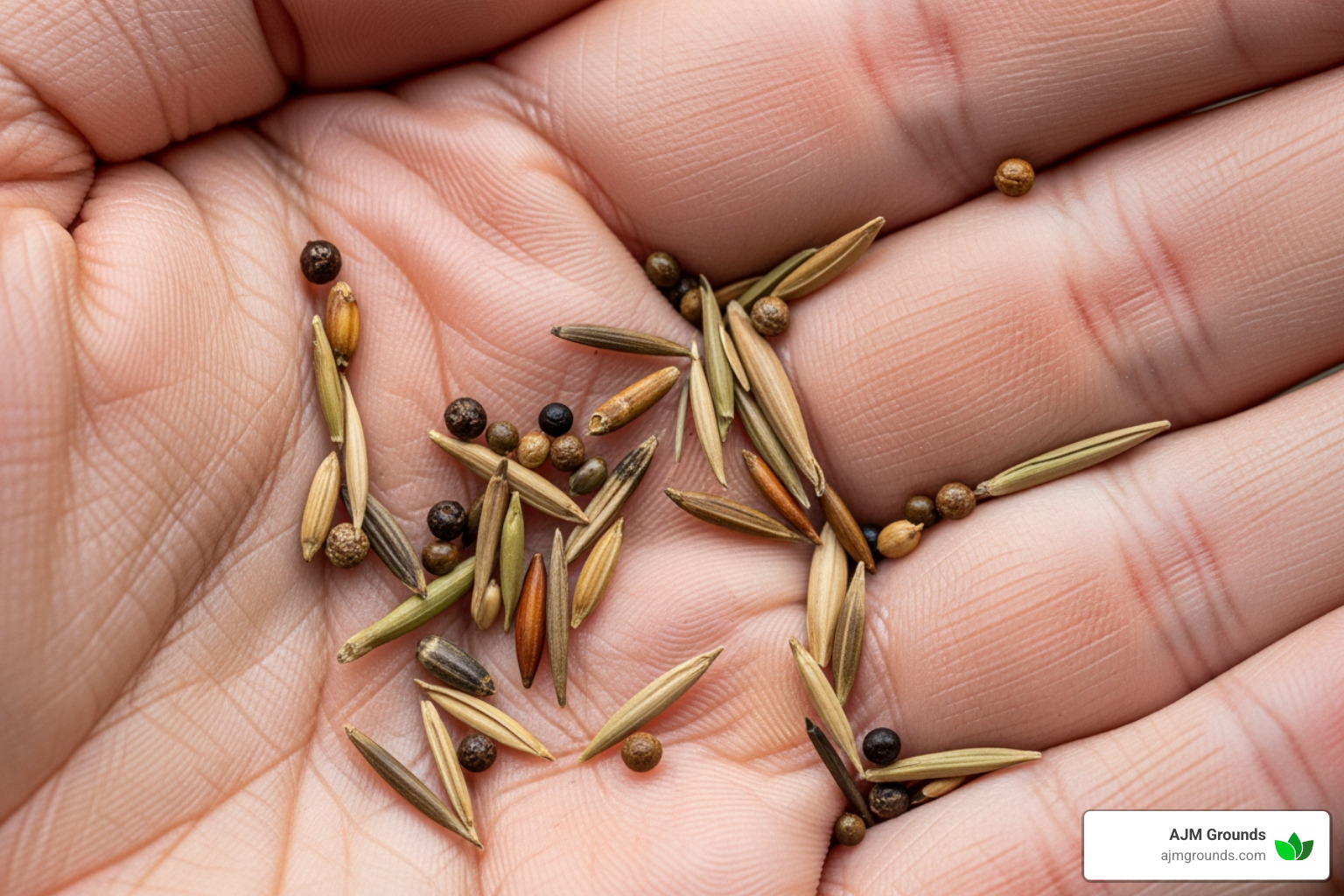
- Sun Exposure:
- Full Sun (6+ hours): Kentucky bluegrass is a great choice for its color and self-repairing ability.
- Shade (4-6 hours): Fine fescues (like creeping red fescue) tolerate lower light and require less water.
- Mixed Sun/Shade: A blend of Kentucky bluegrass, fine fescue, and perennial ryegrass is ideal for most lawns, offering a balance of beauty, shade tolerance, and quick establishment.
- Traffic Tolerance: For high-traffic areas, include perennial ryegrass and tall fescue in your mix for durability.
- Maintenance Level: Tall fescue is a good low-maintenance option, while Kentucky bluegrass requires more care.
- Seed Quality: Always buy high-quality seed. Check the label for purity and weed content, and avoid cheap fillers.
For more detailed information on selecting plants, explore our guide on choosing the right plants for your landscape. You can also consult useful online climate maps to better understand your growing zone.
How to Prepare the Soil for Optimal Germination
Proper soil preparation is the most critical step in growing grass from seed. A strong foundation is essential for a healthy lawn.
- Clear and Grade the Area: Remove all weeds, rocks, and debris. Ensure the ground slopes gently away from buildings (a 1-2% grade) for proper drainage.
- Loosen the Soil: Use a tiller to loosen compacted soil to a depth of 3-5 inches. This improves aeration and water penetration.
- Test and Amend the Soil: Get a soil test to check the pH and nutrient levels. Most cool-season grasses prefer a pH between 6.0 and 6.5. Add lime to raise acidic soil pH or sulfur to lower alkaline soil pH. Learn more from this resource on soil testing for lawns.
- Add Organic Matter: Work 2-4 inches of high-quality compost into the top 4-6 inches of soil. This improves soil structure, drainage, and nutrient content. If your topsoil is thin, add at least 4-6 inches of new, weed-free topsoil.
- Create a Smooth Seedbed: Rake the area to create a smooth surface with soil particles no larger than a pea. Lightly roll or walk over the area to firm the soil, so your shoe sinks in about half an inch.
For more insights, refer to our tips for successful garden bed preparation and planting.
The Correct Method for Planting Grass Seed
With the soil prepared, it’s time to plant.
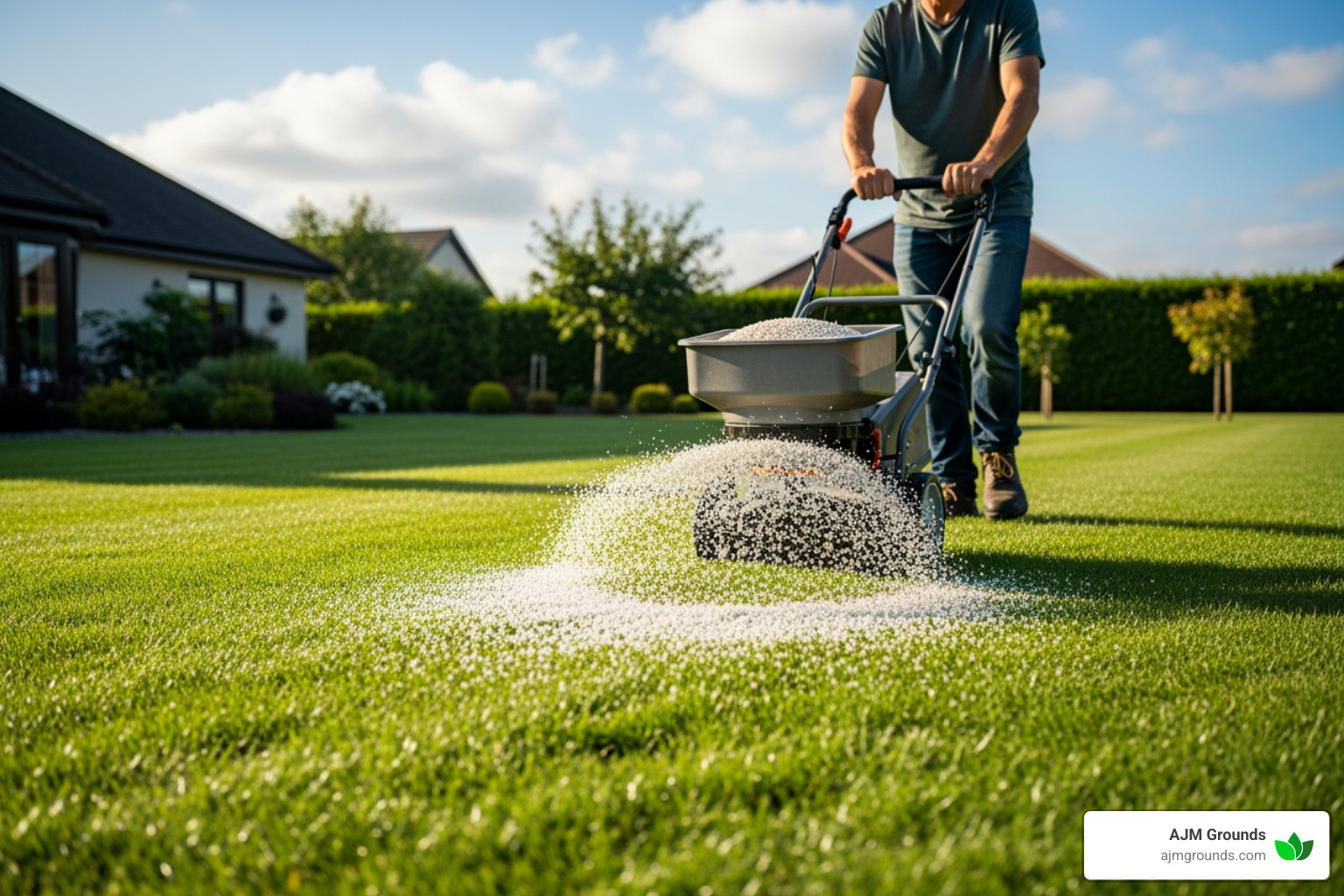
- Apply Starter Fertilizer: Before seeding, apply a starter fertilizer high in phosphorus to promote strong root development. Follow the product’s application rates. For more on fertilization, visit our page on lawn fertilizing service.
- Spread the Seed: Use a broadcast or drop spreader for even coverage. To avoid missed spots, set the spreader to half the recommended rate and make two passes at right angles to each other.
- Ensure Seed-to-Soil Contact: Lightly rake the area to cover the seeds with about 1/8 inch of soil. Then, use a light lawn roller to gently press the seeds into the soil. This contact is vital for germination.
- Apply Mulch: Spread a thin layer of clean, weed-free straw (about one bale per 1,000 sq. ft.). This helps retain moisture, prevent erosion, and protect seeds from birds.
Watering and Early Care for New Seedlings
The first few weeks are critical for your new lawn.
1. Watering for Germination
Keep the top inch of soil consistently moist, but not soggy, until the seeds sprout. This may require light watering 2-4 times a day. Avoid creating puddles, which can wash seeds away. Germination can take anywhere from 5 days (ryegrass) to 3 weeks (Kentucky bluegrass).
2. Watering for Establishment
Once the grass is about 2 inches tall, reduce watering frequency to once or twice a week, but water more deeply. This encourages roots to grow deeper, creating a more drought-tolerant lawn. An established lawn needs about 1 inch of water per week. Our irrigation system installation services can help ensure your lawn gets the right amount of water.
3. First Mowing and Maintenance
- First Mow: Mow for the first time when the grass reaches 3 inches. Set your mower high and cut it back to 2-2.5 inches.
- Mowing Height: Always follow the “one-third rule”—never remove more than one-third of the grass blade at once. Keep your mower blades sharp.
- Foot Traffic: Keep traffic off the new lawn for the first growing season.
For more advice, refer to our best practices for lawn care and maintenance.
4. Fertilizing the New Lawn
Apply a slow-release, high-nitrogen fertilizer about 4-6 weeks after germination to encourage lush growth. After that, you can switch to a regular fertilization schedule.
Troubleshooting Common Issues and Comparing to Sod
Even with great preparation, you might encounter a few issues.
1. Dealing with Weeds and Pests
Some weeds are inevitable. Hand-pull them when possible. Avoid using most broadleaf herbicides until your new lawn has been mowed at least 3-4 times, as these products can harm young grass seedlings. For comprehensive solutions, explore our lawn service weed control options.
2. Seed vs. Sod: Which is Right for You?
While this guide focuses on growing grass from seed, sod is another option. The best choice depends on your budget, timeline, and goals.
| Factor | Growing Grass from Seed | Sod Installation |
|---|---|---|
| Cost | Significantly lower (most economical option) | Higher (instant lawn comes at a premium) |
| Time to Lush Lawn | Longer (4-10 weeks for establishment, full season for maturity) | Instant (immediate green carpet) |
| Labor | Moderate (preparation, seeding, consistent watering) | High initial labor (installation), less post-installation |
| Variety Selection | Wide variety of grass types and mixes available | More limited selection (depends on what’s available locally) |
| Vulnerability | More vulnerable to weeds, erosion, and dry-out in early stages | Less vulnerable (mature grass is more resilient) |
| Root System | Develops a deeper, more natural root system over time | Roots must knit into native soil, can be slower to establish deep roots |
| Best For | Budget-conscious, patient homeowners, large areas, specific grass types | Instant gratification, erosion control, sloped areas, high-traffic areas |
For homeowners in Woburn, MA, growing grass from seed offers incredible value. However, if you need an instant lawn, sod can be an excellent solution.
If you’re considering sod, our team at AJM Grounds specializes in professional sod installation. You can learn more about our services here: More info on sod installation.
Conclusion: Achieving a Lasting, Lush Lawn
Growing grass from seed is a rewarding project that creates a vibrant, inviting lawn. Success requires choosing the right seed, preparing the soil, and providing consistent care. While it takes patience—a new lawn can take a full season to mature—the result is a healthy, resilient lawn that boosts your home’s curb appeal.
For homeowners in the Greater Woburn, MA area who want flawless results without the guesswork, professional installation is the answer. The team at AJM Grounds provides the attention to detail and personalized service needed to create the lawn of your dreams.
Learn more about our Lawn Installation Services and let us help you achieve the lawn of your dreams.