

Why Choosing the Right Walkway Installers Can Make or Break Your Investment
Walkway installers are specialized hardscaping professionals who design, build, and maintain safe, durable pathways for residential and commercial properties. Finding reliable contractors requires careful vetting of credentials, comparing detailed estimates, and understanding material options to ensure your investment delivers lasting value.
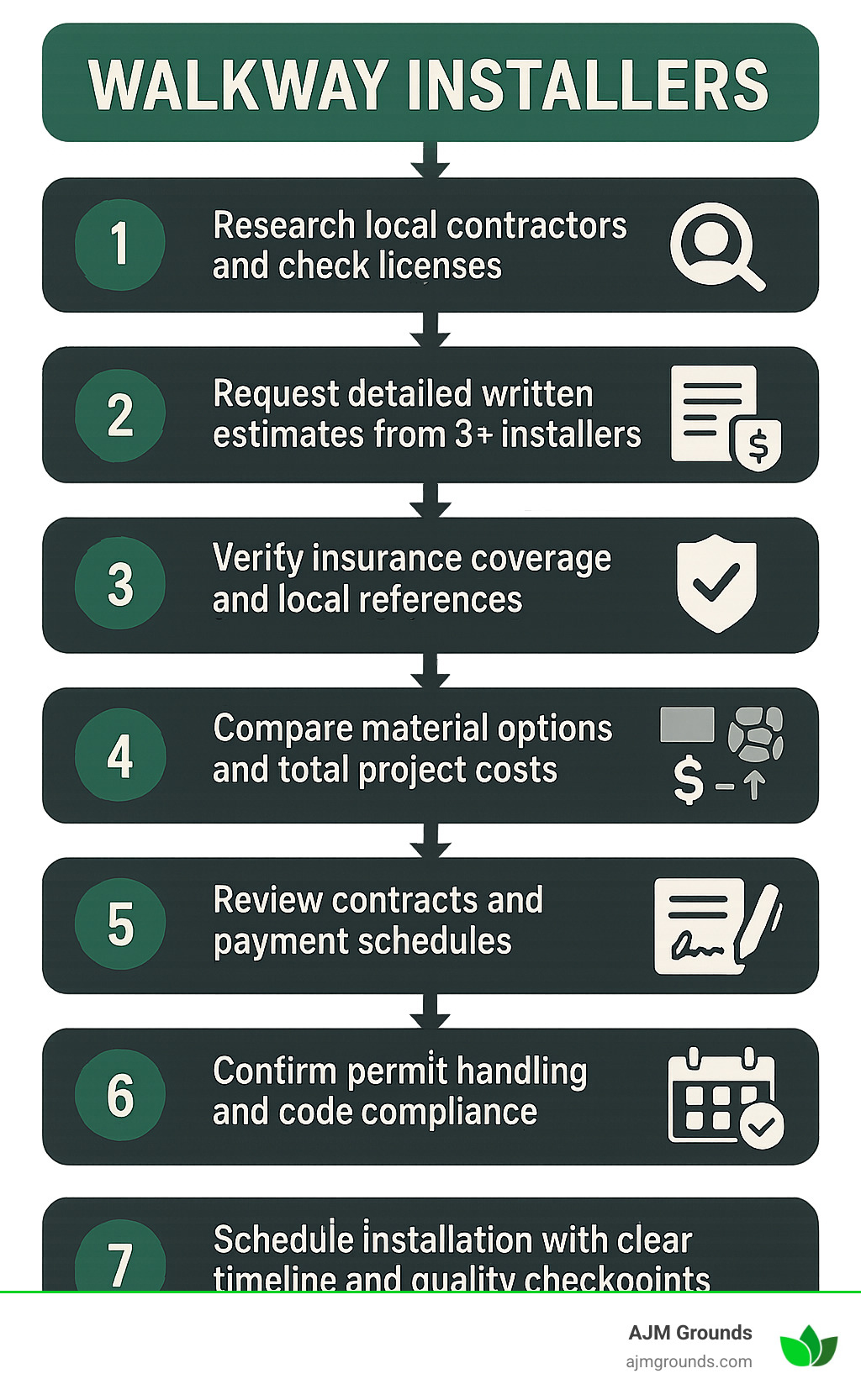
Quick Guide to Finding Reliable Walkway Installers:
- Verify licenses and insurance – Check state contractor license, liability coverage, and workers’ compensation
- Compare 3+ detailed estimates – Look for line-item breakdowns, material costs, and labor rates ($8-$105 per sq ft average range based on internet data)
- Check local references – Contact recent customers and review BBB ratings
- Confirm permit handling – Ensure they manage local code compliance and ADA requirements
- Review written contracts – Avoid verbal-only agreements and large upfront payments
- Inspect past work – Ask for portfolio photos and visit completed projects when possible
Your walkway creates the first impression visitors have of your property. A professionally installed stone walkway can yield approximately 80% return on investment when selling your home, while poor installation can create safety hazards and costly repairs. The difference between a pathway that lasts 20-30 years versus one that cracks within seasons often comes down to proper excavation depth, base compaction, and drainage design.
Know your Walkway Installers terms:
– installing a garden path
– dry laid flagstone walkway
– patio installation company
Why Professional Walkway Installers Matter
When it comes to creating pathways that last, walkway installers with professional training make all the difference. Professional installers understand the science behind what keeps a walkway stable through New England’s brutal freeze-thaw cycles, torrential spring rains, and everything Mother Nature throws our way.
Path safety becomes the foundation of everything we do. A properly installed walkway isn’t just level when we finish—it stays level for decades. This happens because professional walkway installers know how to achieve that critical 95-98% compaction rate using specialized equipment. We create the proper drainage slope (typically 1/4-inch drop per foot) and install edge restraints that prevent shifting over time.
Code compliance and ADA requirements aren’t just bureaucratic problems—they’re safety standards that protect everyone who uses your walkway. For commercial properties, ADA compliance is mandatory, requiring minimum 36-inch widths and slopes no steeper than 5%. Professional installers handle all the permit paperwork and inspections, saving you from potential headaches down the road.
Drainage design prevents the most expensive walkway failures we see. Poor drainage causes frost heave in winter, which can completely destroy even premium materials. Professional walkway installers excavate to proper depths—typically 6-8 inches in our area—and install adequate base materials that direct water away from structures.
First Impressions Matter With Walkway Installers
Your walkway creates the welcome path that sets the tone for your entire property. Professional walkway installation typically delivers about 80% return on investment when homeowners sell their properties. But the real value goes beyond dollars and cents—it’s about creating that “wow” moment when guests first arrive.
Business entrances require even more strategic thinking. Commercial walkway installers must balance aesthetic appeal with heavy foot traffic durability while ensuring full ADA compliance. The investment in professional installation pays dividends through reduced liability risks and improved customer impressions.
Walkway Installers Protect You From Expensive Errors
Foundation depth mistakes rank among the costliest errors from DIY installations. Massachusetts walkways need excavation depths of 6-8 inches to prevent frost heave damage. Compaction errors create problems that sneak up on you—everything looks perfect for the first year or two, then pavers start sinking and concrete develops cracks.
Permit requirements vary dramatically between municipalities, and violations can cost serious money. Professional walkway installers steer these requirements as part of our service, ensuring your project meets local codes from day one. Insurance protection becomes critical when installation errors cause injuries. Professional installers carry comprehensive liability insurance and workers’ compensation coverage, protecting homeowners from potential lawsuits. Scientific research on aluminium walkway safety demonstrates how proper installation techniques prevent slip-and-fall accidents.
Ultimate Walkway Installers Checklist
When you’re ready to hire walkway installers, having a solid checklist makes all the difference between a smooth project and a costly headache. The foundation of any reliable contractor relationship starts with proper credentials. Your walkway installer should have a current Massachusetts Home Improvement Contractor license, a permanent business address, liability insurance with at least $1 million coverage and workers’ compensation for their crew members.
Professional certifications from organizations like ICPI (Interlocking Concrete Pavement Institute) or NCMA (National Concrete Masonry Association) show that your installer stays current with industry best practices. A solid BBB rating doesn’t hurt either.
The contract details separate the pros from the pretenders. You want a written contract that spells out every material, timeline, and cost. The payment schedule should never require more than 10-15% upfront, with the bulk paid upon completion. Your installer should provide local references from projects completed within the past two years. Finally, insist on lien waiver documentation when making final payment. For comprehensive Walkway Installers services that meet all these standards, we ensure complete documentation and transparency throughout every project.
Verify Your Walkway Installers’ Paperwork
State license numbers are your first line of defense against fly-by-night operators. Massachusetts requires contractors doing work over $1,000 to hold a valid Home Improvement Contractor license. Liability and workers’ compensation insurance might seem like boring details, but they become critically important if someone gets hurt on your property. Request insurance certificates directly from the insurance company, not photocopies that could be months out of date.
Permit handling separates true professionals from handymen trying to expand their services. Experienced walkway installers understand local building codes and handle all permit applications, inspections, and approvals.
Compare Detailed Estimates From Walkway Installers
A professional estimate tells a story about your project, while a vague quote leaves you guessing what you’re actually buying. Line-item labor costs should be clearly separated from materials. Material unit costs vary dramatically based on quality and supplier relationships. Excavation extras frequently blindside homeowners who accepted vague estimates. A professional quote specifies excavation depth, disposal of removed soil, and any additional charges for rock removal or utility complications.
Smart contractors build in contingency planning for 10-15% cost overruns. Change order procedures should be crystal clear in your contract. For detailed comparisons of local options, check out our Walkway Contractors Near Me resource page.
Red Flags That Disqualify Walkway Installers
Some warning signs should immediately disqualify any contractor from consideration. No permanent address tops this list—legitimate businesses maintain established locations. Vague pricing without detailed breakdowns makes it impossible to understand what you’re purchasing. Large upfront cash payments are unnecessary and risky. Pushy sales tactics and pressure to sign immediately indicate unprofessional practices. Verbal-only warranties provide zero protection when problems arise.
Comparing Materials, Costs & ROI
Choosing the right walkway material feels overwhelming when you’re staring at dozens of options and wildly different price tags. Material selection impacts everything from your initial investment to how much time you’ll spend maintaining your walkway over the decades.
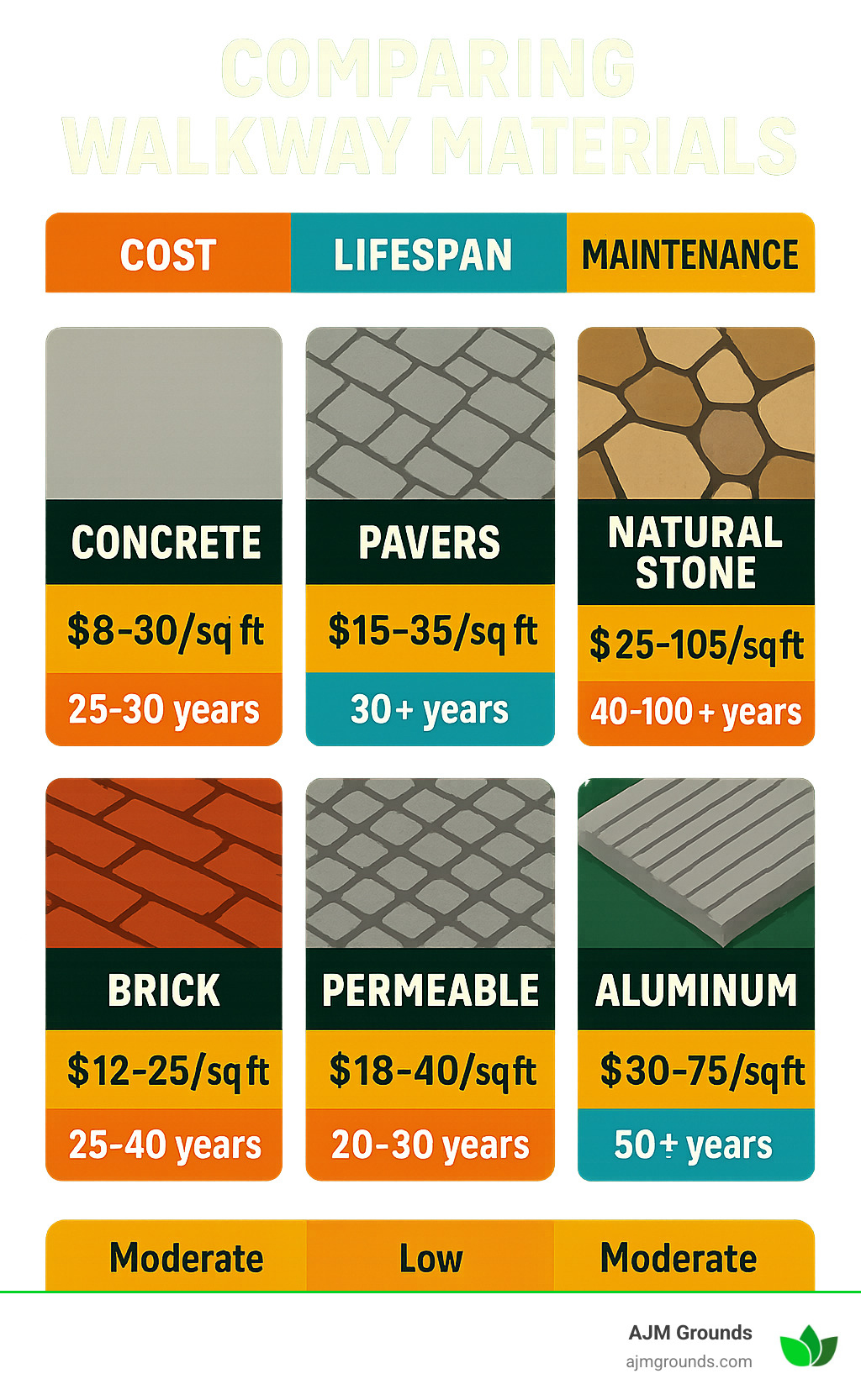
Material Comparison Table (Average Internet-Based Pricing):
| Material | Cost Range* | Lifespan | Maintenance Level | ROI Potential |
|---|---|---|---|---|
| Basic Concrete | $8-30/sq ft | 25-30 years | Low | Good |
| Concrete Pavers | $15-35/sq ft | 30+ years | Medium | Excellent |
| Natural Stone | $25-105/sq ft | 40-100+ years | Medium | Premium |
| Brick Pavers | $12-25/sq ft | 25-40 years | Medium | Good |
| Permeable Systems | $18-40/sq ft | 20-30 years | Medium-High | Excellent |
| Aluminum Systems | $30-75/sq ft | 50+ years | Very Low | Premium |
*These are average costs based on internet data and not actual costs for AJM Grounds services.
Basic concrete remains the workhorse of walkway materials—reliable, affordable, and when properly installed, can serve your family for 25-30 years. Concrete pavers hit the sweet spot for many homeowners, offering incredible design flexibility and easier repairs. Natural stone represents the premium choice that can outlast your mortgage, with quality installations serving 40-100+ years. Brick pavers bring timeless charm, typically lasting 25-40 years. Permeable systems solve drainage problems while meeting stormwater regulations. Aluminum systems require minimal maintenance over their 50+ year lifespan.
Pros & Cons of Concrete vs Paver Walkway Installers
Concrete walkways win on simplicity and budget-friendliness. Modern concrete techniques like stamping and coloring create attractive surfaces. But concrete’s weakness is repair difficulty—when cracks appear, fixes often leave visible patches that never quite match.
Paver walkways shine in versatility and repairability. Damage one paver? Pop it out and replace it. The design flexibility with pavers is incredible, from simple patterns to elaborate designs. Installation complexity favors concrete for DIY enthusiasts, though we strongly recommend professional installation for both materials.
Premium Stone & Specialty Surfaces
Flagstone walkways create natural beauty that makes neighbors stop and stare. Each piece brings unique colors and textures that can’t be replicated. Bluestone offers more uniform appearance while keeping natural stone appeal. Cobblestone transports you straight to colonial New England with distinctive patterns perfect for historic properties.
Stamped concrete textures let you achieve premium looks at concrete prices. Specialty non-slip surfaces become essential for areas that stay wet or icy. The investment in premium materials pays dividends in both daily enjoyment and resale value.
Step-by-Step Installation & Timeline From Trusted Walkway Installers
When you hire professional walkway installers, you’re getting a systematic approach refined through years of experience dealing with Massachusetts weather and soil conditions.
Every quality installation starts with thorough site survey and utility location. We call Dig Safe (811) to mark all underground utilities before breaking ground. Excavation is where many DIY projects go wrong—we typically excavate 6-8 inches deep to get below the frost line and prevent heave damage.
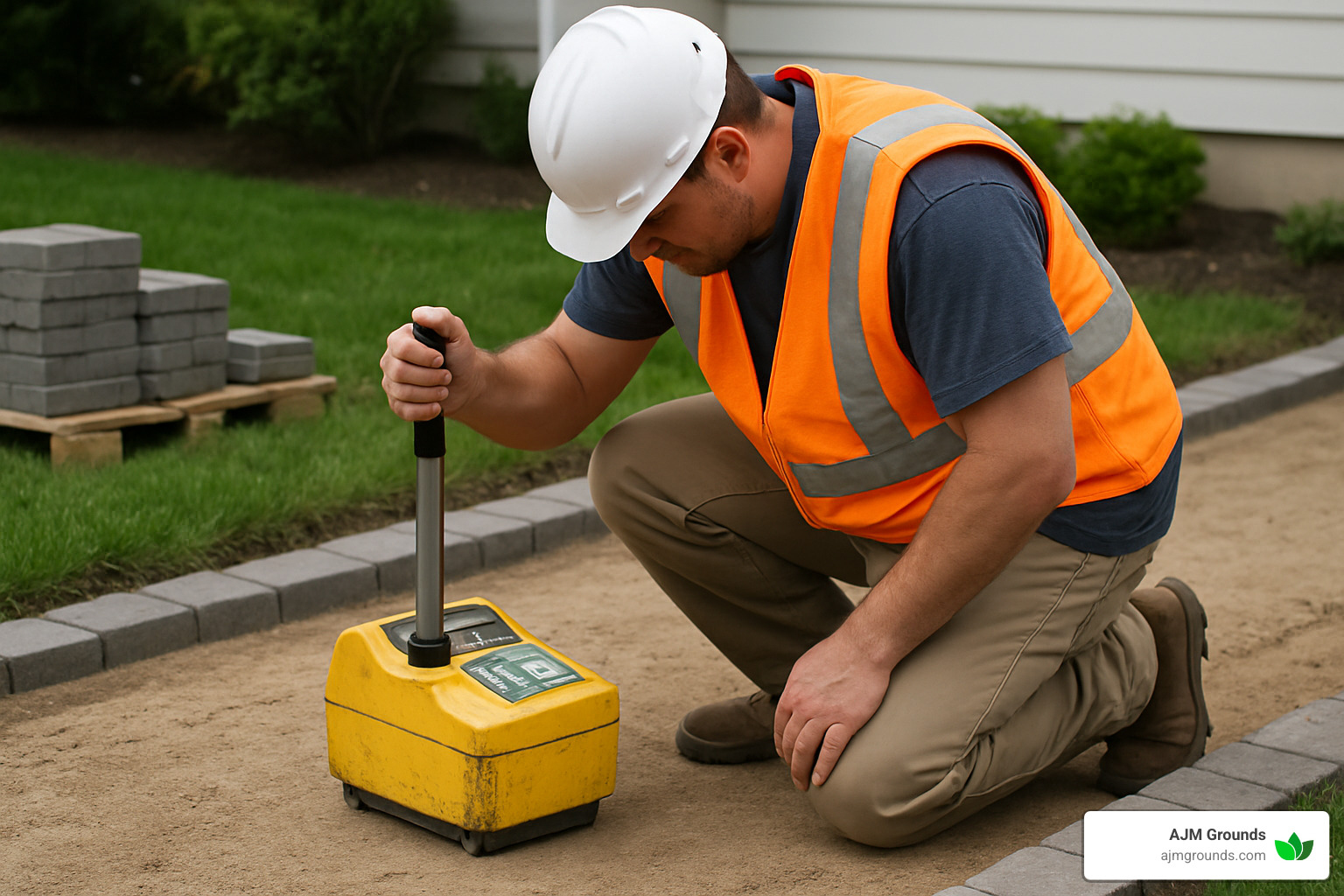
Base preparation involves installing crushed stone in carefully compacted lifts. We achieve 95-98% compaction using gas plate compactors. For paver installations, bedding sand provides the level surface for precise placement. Professional walkway installers maintain consistent joint spacing and plan for cuts at edges or curves.
Edge restraint installation prevents lateral movement that could destabilize your walkway. Jointing sand installation locks everything in place—we use polymeric sand that hardens when activated with water. When sealing is appropriate, we apply high-quality sealers that penetrate surfaces without creating slippery conditions.
Day-By-Day Schedule Most Walkway Installers Follow
Understanding the typical timeline helps you plan around installation. The consultation and design phase usually takes 1-3 days for meetings, site evaluation, and estimate preparation. Design development and permitting can stretch 1-2 weeks depending on project complexity and municipal requirements.
The actual on-site installation usually requires 3-5 days for typical residential walkways. Day one involves excavation and base preparation. Day two includes base compaction and sand installation. Days three and four cover paver installation and edge restraints. Day five includes jointing sand application and final cleanup.
Curing and sealing add another 48-72 hours to the timeline. Weather buffers are essential in New England—we build flexibility into schedules to accommodate rain delays or extreme temperatures.
Quality Checks Your Walkway Installers Should Perform
Professional walkway installers perform specific quality checks throughout installation. We specify minimum 4,000 PSI concrete for Massachusetts walkways, with appropriate air entrainment for freeze-thaw protection. Compaction testing ensures your base provides adequate stability—we use density gauges to verify 95-98% compaction rates.
Slope verification prevents drainage problems using builder’s levels, ensuring 1/4-inch per foot minimum slope away from structures. For concrete walkways, we install rebar or wire mesh according to specifications. Polymeric sand application requires careful technique to avoid surface hazing while ensuring complete joint filling.
Post-Installation Care & Maintenance
Proper maintenance extends walkway lifespan significantly and preserves your investment value. Annual washing removes dirt, stains, and organic growth that can damage surfaces over time. Resealing schedules vary by material—concrete typically requires resealing every 2-3 years, while some pavers benefit from sealing every 3-5 years.
Weed control becomes important for paver installations despite polymeric sand joints. Winter de-icer alternatives protect walkway surfaces from salt damage—we recommend calcium magnesium acetate or specialty ice melts designed for decorative surfaces. Crack monitoring allows early intervention before minor issues become major problems.
DIY Maintenance vs Hiring Walkway Installers for Repairs
Surface cleaning and routine maintenance can typically be handled by homeowners with proper techniques. Joint re-sanding for paver walkways requires some skill but can be DIY projects for small areas. Resurfacing and major repairs usually require professional walkway installers with specialized equipment. Overlay options can extend walkway life when replacement isn’t immediately necessary.
Extending Lifespan of Every Material
Concrete walkways lasting 25-30 years require proper sealing, crack monitoring, and winter protection. Paver installations can exceed 30+ year lifespans with proper maintenance—individual paver replacement allows spot repairs. Stone walkways offer 40-100+ year lifespans depending on stone type. Aluminum walkway systems require minimal upkeep but benefit from occasional cleaning and fastener inspection.
Frequently Asked Questions About Hiring Walkway Installers
How much will a new walkway cost?
The truth is, walkway installers pricing varies dramatically based on what you’re looking for and what challenges your property presents. Based on internet data, you’ll typically see ranges from $8-105 per square foot installed, with most homeowners spending between $1,600-$10,500 for typical residential pathways. These are average costs based on internet data and not actual costs for AJM Grounds services.
Basic concrete walkways start around $8-12 per square foot for straightforward installations. Decorative stamped patterns or custom colors run $12-30 per square foot. Concrete pavers generally run $15-35 per square foot installed. Natural stone installations command premium pricing at $25-105 per square foot, but can last 40-100+ years with minimal maintenance.
Here’s what really affects your final cost: excavation requirements, site accessibility, permit fees, and seasonal timing. Complex curves, steps, or integration with existing landscaping add to base pricing. Get detailed estimates from multiple qualified walkway installers to understand actual costs for your specific project.
Do I need a permit for a residential walkway?
This depends entirely on where you live and what you’re planning to build. Commercial walkways almost always require permits and must meet ADA accessibility standards. For residential walkways, permits may be required if your project involves excavation deeper than 2 feet, work within utility easements, drainage modifications, or installations in historic districts.
Permit fees typically range $100-500 based on project scope. Professional contractors include these costs in estimates and handle all applications. Check with your local building department before beginning any walkway project—unpermitted work can create serious problems during home sales.
Can Walkway Installers overlay new paths on existing concrete?
Absolutely! Overlay installations can be excellent solutions when existing concrete is structurally sound but looks dated. The key is professional evaluation to determine whether existing surfaces can support overlay materials. We look for significant cracking, settlement issues, or drainage problems.
Concrete overlays offer decorative coatings, stamped surfaces, and thin stone veneers. Paver overlays require adequate thickness for base materials and proper edge restraints. Height transitions become important considerations—we evaluate door thresholds and drainage patterns to ensure increased height doesn’t create problems.
Conclusion
Choosing the right walkway installers doesn’t have to be overwhelming. By following the steps we’ve outlined, you’ll find qualified professionals who deliver quality work that lasts for decades. The key is taking time to do your homework upfront rather than rushing into a decision you might regret later.
Your final checklist should include verifying state licenses and insurance coverage, comparing detailed estimates from at least three qualified contractors, and checking local references plus BBB ratings. Review written contracts carefully and establish reasonable payment schedules. Most importantly, plan for proper drainage and frost protection—this is where many DIY projects fail in our New England climate.
A professionally installed walkway represents one of the safest investments you can make in your property. That 80% return on investment reflects the real value that quality walkways add to homes throughout Massachusetts. The difference between hiring quality walkway installers and cutting corners often becomes apparent within the first winter.

At AJM Grounds, we’ve seen how the right walkway transforms not just properties, but how homeowners feel about their homes. Whether you’re in Bedford, Billerica, Burlington, or any of the communities we serve throughout Massachusetts, we bring the same attention to detail and personalized service that has made us a trusted name in the industry.
Ready to move forward with your walkway project? Visit our Installing a Walkway resource page for additional guidance, or contact us directly for a detailed consultation. Your home deserves a walkway that reflects the care you put into every other aspect of your property. Use this guide to find walkway installers who share your commitment to quality, and you’ll enjoy the results for decades to come.
