

From Forgotten Space to Functional Pathway
A Side yard walkway transforms a neglected strip of land into a safe, accessible path connecting your front and back yards. Here’s what you need to know:
Quick Answer: Creating Your Side Yard Walkway
- Measure your space – Minimum 36″ wide for comfortable passage
- Choose your material – Gravel ($1-3/sq ft), pavers ($5-15/sq ft), or natural stone ($10-30/sq ft)
- Plan for drainage – Ensure 2% slope away from your house to prevent water damage
- Consider your use – High traffic areas need durable materials like pavers or stone
- Add lighting – Low-voltage or solar lights improve safety and curb appeal
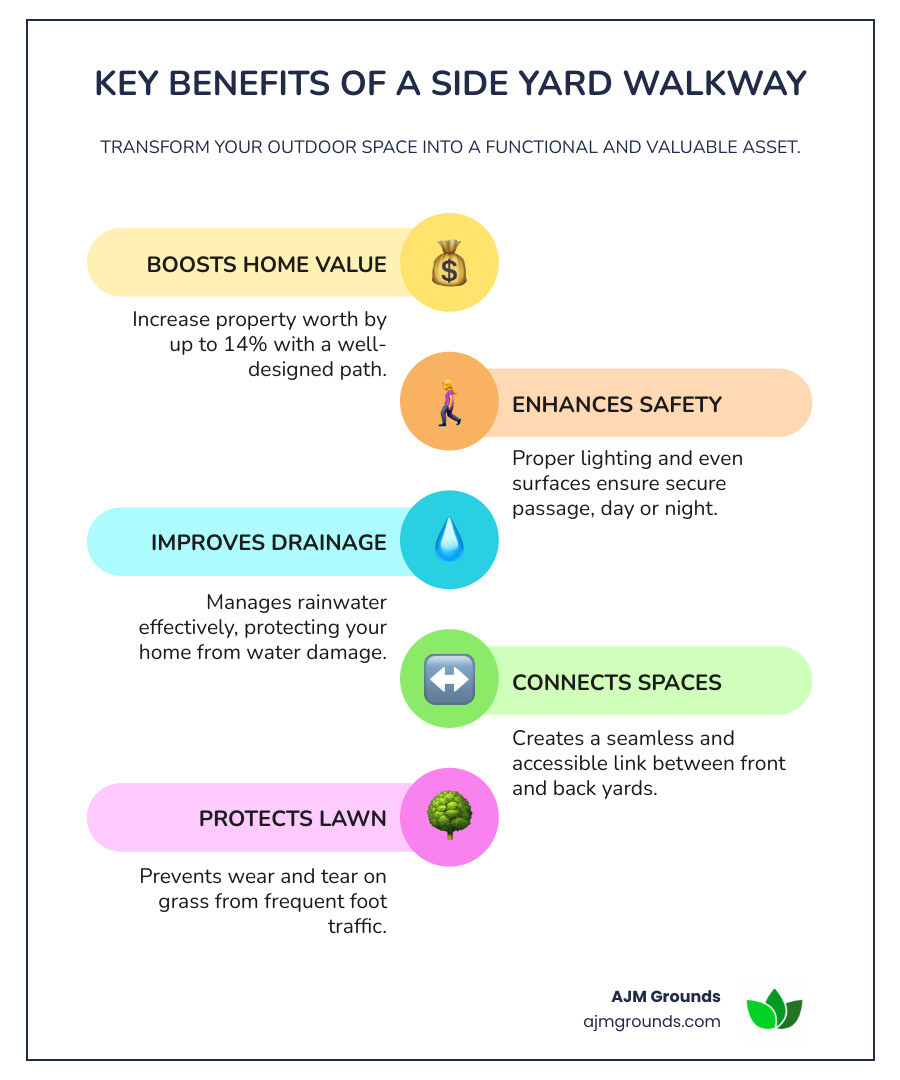
Side yards are often afterthoughts—narrow strips for garbage cans and weeds. But these spaces hold real potential. A well-designed side yard walkway doesn’t just look better; it makes your property safer, improves drainage, and can even increase your home’s value.
A side yard walkway solves problems like muddy shoes, poor backyard access, or lawn damage from foot traffic. The key is choosing the right materials and design for your specific space, considering factors like slope, drainage, foot traffic, and budget.
I’m John Caplis, owner of AJM Grounds LLC. I’ve helped countless homeowners in Greater Woburn, MA, transform their side yards into beautiful, functional pathways. My experience designing and installing Side yard walkways in New England has taught me what works.
Related content about Side yard walkway:
Key Considerations for Your Side Yard Walkway Design
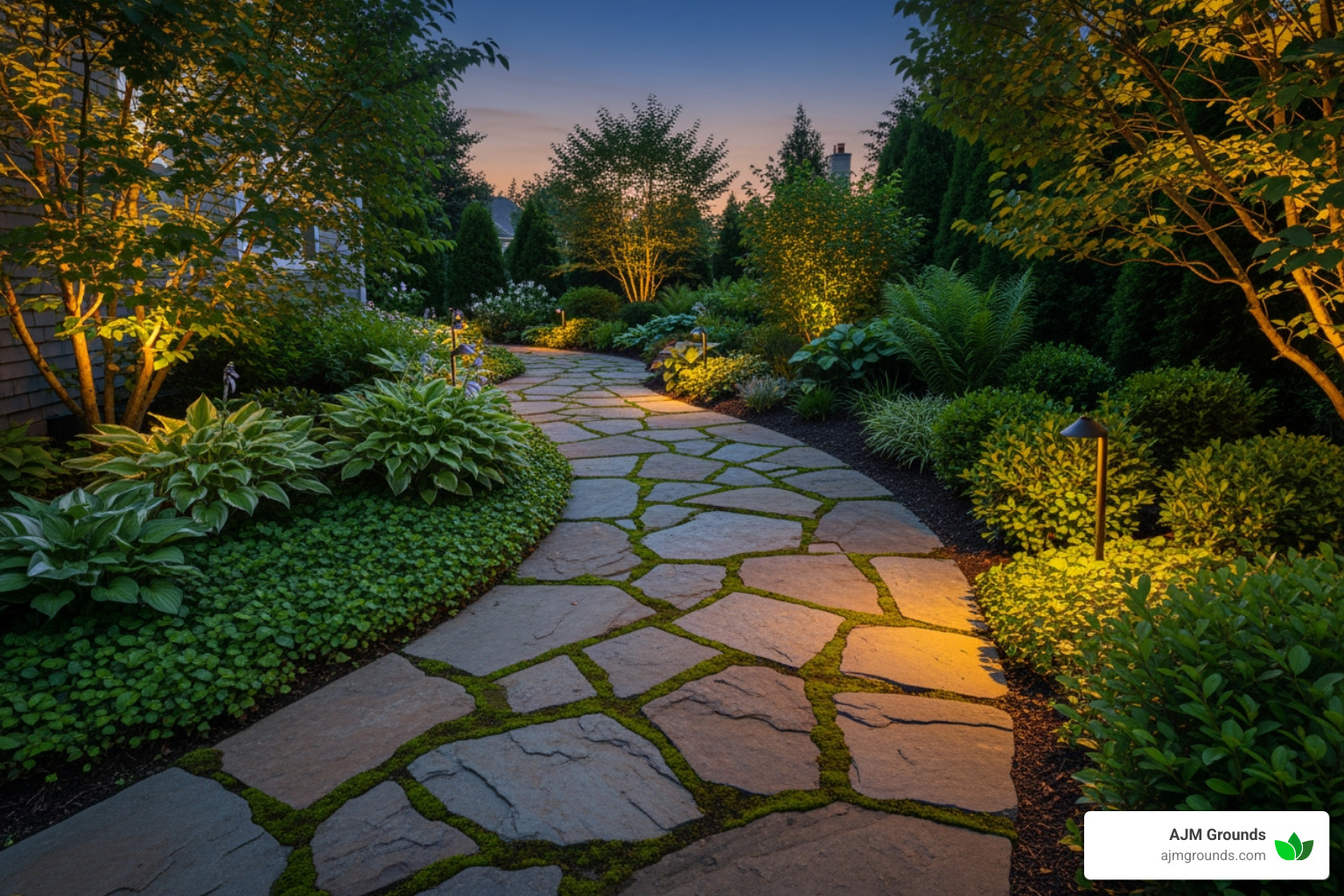
Successful side yard walkway projects begin with thoughtful planning. This stage lays the groundwork for functionality and aesthetics, ensuring your new path complements your home and meets your needs. We’ll cover navigating slopes, choosing materials, and adding lighting.
Planning for Functionality, Slope, and Drainage
When designing a side yard walkway, its purpose is the first question. Is it a high-traffic route or a leisurely garden path? The answer determines width and material durability. For comfortable passage, we recommend a minimum width of 36 inches, though primary walkways should be 48 inches or more.
Navigating slopes is a common challenge in Woburn, MA. A steep slope can be treacherous in icy New England winters. Gentle slopes (2-5% grade) are fine, but steeper ones need steps (6-7 inches high) to prevent trips. For significant slopes, we might use tiered sections supported by retaining walls for slopes to create level, safe landings.
Water management is critical to prevent erosion and foundation damage. We design walkways with a slight slope (1/8 inch per foot) to direct water away from your house. For heavy runoff, we can integrate permeable materials or French drains. This proactive approach protects your property. Find more info about Landscape Drainage Solutions on our site.
Choosing the Right Materials for Your Side Yard Walkway
The material you choose for your side yard walkway impacts its look, durability, cost, and maintenance. Each option has its own charm and practical considerations for the Massachusetts climate.
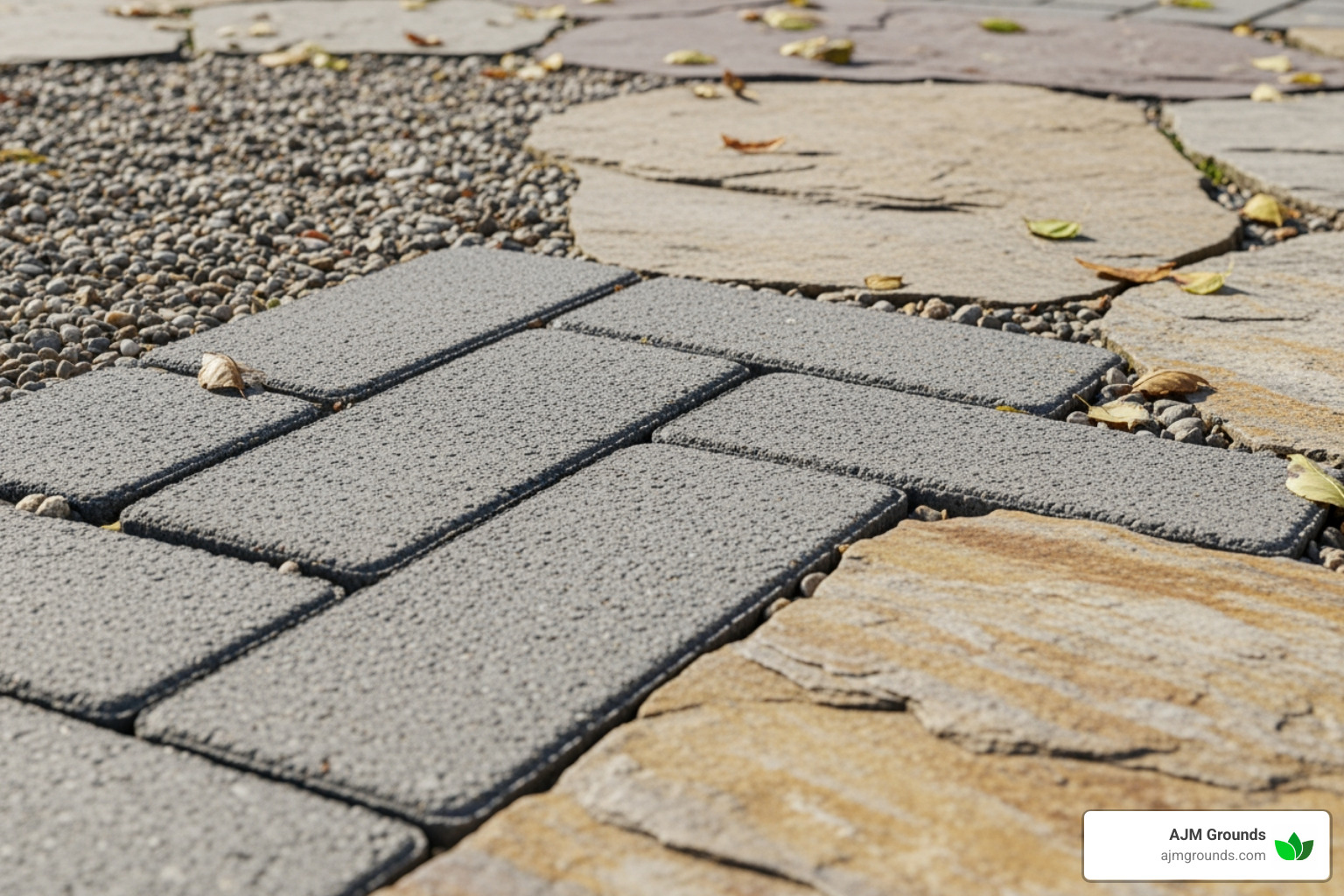
Here’s a comparison of some popular choices:
| Material | Durability | Cost (per sq ft, average) | Maintenance | DIY-Friendliness |
|---|---|---|---|---|
| Gravel | Moderate; can shift, needs replenishment | $1 – $3.15 | Moderate; needs weeding, raking, occasional topping up | High |
| Pavers | High; resistant to freeze-thaw cycles | $5 – $15 | Low to Moderate; occasional cleaning, weed removal from joints, sealing | Moderate |
| Natural Stone | Very High; extremely long-lasting | $10 – $30 | Low; occasional cleaning, weed removal from joints; can be uneven | Low to Moderate |
| Wood | Moderate; susceptible to rot, weathering, splintering | $5 – $20 | High; requires sealing/staining, potential for repairs/replacement | Moderate |
Note: These are average costs based on internet research and not actual AJM Grounds pricing. Actual costs can vary widely depending on material quality, project complexity, and labor.
Gravel is an affordable, permeable option for a rustic look. On slopes, it needs significant edging and stabilization to prevent shifting. We recommend classic gravel over pea gravel, which can track indoors.
Pavers (concrete or brick) are durable and versatile, with many colors and shapes. They handle New England’s freeze-thaw cycles well. See our guide on Installing a Brick Paver Walkway.
Natural stone (bluestone, flagstone) offers a timeless, durable aesthetic. It’s heavier, more expensive, and usually requires professional installation. Learn more about Installing Stone Walkway.
Wood or decking creates a warm path, especially on slopes. However, it requires regular maintenance to prevent rot and slippage.
Enhancing Curb Appeal with Design and Lighting
A side yard walkway is more than a path; it’s a chance to boost curb appeal. A well-designed landscape, including a walkway, can increase your home’s value by up to 14%.
The best designs blend with your home’s style. A traditional Woburn home might suit a classic paver path, while a modern home may call for clean lines. Irregular flagstones create a more natural, informal feel.
Edging defines the path and contains materials like gravel. Options range from metal to decorative stone. Plants soften the look, add color, and can provide privacy. Columnar evergreens or climbing vines work well in narrow spaces, and native plants are a low-maintenance choice for our climate.
Lighting is crucial for safety and ambiance. Low-voltage lighting along your side yard walkway is key for navigating steps at night and highlighting features. Solar lights are an easy, wire-free option. For more ideas, explore our Landscape Design Installation services.
Building and Maintaining Your Perfect Side Yard Walkway
Once the design is finalized, it’s time to build your side yard walkway. While a basic path can be a rewarding DIY project, knowing when to call a pro is key to a long-lasting result. After it’s built, a little care will preserve its beauty.
A Basic DIY Guide to Building a Simple Walkway
Building a simple gravel or stepping stone side yard walkway can be a satisfying project. Prioritize safety by wearing gloves, eye protection, and sturdy shoes.
Here’s a basic overview:
- Safety First: Call 811 before digging to have underground utilities marked. This is crucial to avoid accidents.
- Gather Basic Tools: You’ll need a shovel, rake, string, stakes, tape measure, level, tamper, and a wheelbarrow.
- Site Preparation and Layout: Map your path with stakes and string. Decide on a straight or winding design and clear the area of grass and weeds.
- Excavation: Dig a trench to the correct depth (e.g., 4-6 inches for gravel). Ensure the base is level with a slight slope for drainage (1/8 inch per foot away from your house).
- Base Layer: For gravel paths, lay landscape fabric to suppress weeds. Add a few inches of compactible gravel as a sub-base and compact it thoroughly.
- Laying Stepping Stones: Place stones on the sub-base, ensuring they are level and evenly spaced. Tap them into place and fill gaps with soil, sand, or small gravel. Find more info about Installing a Stepping Stone Walkway on our site.
- Add Main Material (Gravel): Pour 2-3 inches of gravel over the compacted sub-base and rake it evenly. Install edging to contain the gravel.
- Finishing Touches: Double-check the slope with a level. Water the area lightly to help the materials settle.
This is a basic guide. Complex materials like pavers or projects on slopes involve more detailed techniques.
Walkway Maintenance for Longevity and Appearance
Even the most durable side yard walkway needs regular care to stay safe and beautiful, especially with New England’s weather.
- Regular Sweeping: Keep the path free of debris to prevent weed growth.
- Weed Prevention: Weed regularly by hand or use a hardscape-safe weed killer. Landscape fabric is a big help.
- Topping Up Loose Fill: Periodically rake and replenish gravel paths, as material can shift over time.
- Checking for Unevenness: Promptly address uneven pavers or stones caused by freeze-thaw cycles to prevent trip hazards. This may require lifting the stone and adding more base material.
- Sealing Surfaces: Periodically sealing concrete or pavers protects against staining and weathering. Use a sealant appropriate for your material.
- Seasonal Care: Clear leaves in the fall to prevent slippery spots. In winter, clear snow promptly and use de-icing agents that are safe for your walkway and plants.
For comprehensive care, our Landscape Maintenance Services can keep your outdoor spaces in top condition.
When to Hire a Professional for Your Side Yard Walkway
While DIY is rewarding, hiring a professional for your side yard walkway is sometimes the smartest move, especially for complex projects.
Consider hiring a pro if:
- Complex Slopes: A professional can safely manage steep slopes with steps, retaining walls, and proper drainage to ensure stability.
- Significant Drainage Problems: Expert assessment is needed for existing water issues. Professionals can install custom solutions like French drains to protect your foundation.
- Intricate Designs: Installing complex paver patterns or heavy natural stone requires specialized tools and precision for a durable, level finish.
- Guaranteed Durability: A professional installation is built to withstand New England weather, ensuring longevity.
- Lack of Time or Tools: Building a walkway is physically demanding. If you lack the time or tools, a professional team can do it efficiently and safely.
- Integrated Design: For walkways that are part of a larger landscape design, a professional ensures a cohesive result.
- Local Regulations: Professionals are familiar with local hardscaping regulations and permit requirements in Woburn, MA, and surrounding towns.
Hiring a professional like AJM Grounds for your side yard walkway is an investment in expertise and a beautiful, long-lasting result. We pride ourselves on attention to detail and personalized service. For a professional consultation, consider a Walkway Installation.
