

Why Stone Walls Remain a Timeless Investment for Your Property
Stone wall contractors are skilled professionals who design, build, and restore stone walls—offering homeowners a durable, beautiful, and functional solution for managing slopes, defining spaces, and enhancing curb appeal. Here’s what you need to know when hiring one:
| What to Look For | Why It Matters |
|---|---|
| Experience & Portfolio | A proven track record with diverse stone wall projects ensures quality craftsmanship. |
| Proper Licensing & Insurance | This protects you from liability and guarantees professional standards. |
| Material Knowledge | Understanding local stone types and sourcing leads to better durability and aesthetics. |
| Drainage & Engineering Expertise | This prevents wall failure from water damage and ensures structural integrity. |
| Clear Estimates & Warranties | Transparent pricing and guarantees protect your investment. |
Stone walls have been around for millennia, and for good reason. They’re one of the most durable landscape features you can add to your property—outlasting nearly every other material when built correctly. Whether you need a retaining wall to manage a slope or a decorative border for your garden, the right stone wall can transform your outdoor space while adding lasting value.
But not all stone walls are equal, and neither are the stone wall contractors who build them. The difference between a wall that stands for generations and one that fails within a few years often comes down to the expertise and attention to detail of the builder. True craftsmanship can make new construction look timeless, blending artistry with structural integrity.
I’m John Caplis, owner of AJM Grounds LLC, and my team has worked extensively with homeowners in the Greater Woburn, MA area on hardscaping projects, including natural stone retaining walls. We understand what separates exceptional stone wall contractors from the rest—and what you should look for when choosing the right partner for your project.
Stone wall contractors terms to learn:
Understanding Stone Walls and the Role of Stone Wall Contractors
At AJM Grounds, we view creating a stone wall as an art form that combines skilled craftsmanship with sound engineering. When you hire experienced stone wall contractors, you’re investing in structural integrity, aesthetic beauty, and long-term functionality. The careful placement of each stone and the vision to blend the wall into your landscape are key. This is why we emphasize attention to detail for our clients in areas like Woburn, Lexington, and Burlington, MA. Understanding what is hardscape is the first step to appreciating the value a well-built stone wall brings.
Types of Stone Walls and Construction Methods
Stone wall contractors build several types of walls, each with its own benefits:
Dry Stone Walls: Constructed without mortar, these walls rely on the interlocking of stones for stability. This ancient technique allows for excellent drainage and flexibility, making them incredibly durable and giving them a rustic charm. Organizations like The Stone Trust are dedicated to preserving this craft through education and DSWA certification opportunities.
Mortared Stone Walls: These walls use mortar to bind stones, creating a solid, rigid structure suitable for taller retaining walls or formal architectural features. They require careful construction to ensure longevity and prevent issues like crumbling mortar.
Retaining Walls: Designed to hold back soil and prevent erosion on slopes, these are a common and crucial application for both dry-stacked and mortared methods. We frequently build these in areas like Reading and Stoneham, MA. For more details, explore our guide on retaining wall construction.
Freestanding & Veneer Walls: Freestanding walls are decorative barriers, while stone veneer applies a layer of stone to an existing structure for aesthetic appeal without the full cost of a solid wall.
Here’s a quick comparison of dry stone versus mortared stone walls:
| Feature | Dry Stone Walling | Mortared Stone Walls |
|---|---|---|
| Durability | Extremely durable and flexible; self-draining and resistant to freeze-thaw damage. | Very durable, but mortar may require repointing over time. |
| Cost | Often higher labor cost due to the skill and time required for precise fitting. | Labor costs can vary; material costs include mortar. |
| Aesthetic | Rustic, natural, and organic look that blends well with landscapes. | Formal, clean, and structured appearance. |
| Maintenance | Low maintenance; individual stones can be replaced if needed. | Requires periodic inspection and repointing of mortar joints. |
| Drainage | Excellent natural drainage prevents pressure buildup. | Requires integrated drainage systems like weep holes. |
Common Materials and Design Considerations
The materials chosen for your stone wall significantly impact its look and durability. Stone wall contractors in our region, including Bedford and Winchester, MA, commonly work with:
- Fieldstone: Rounded, irregular stones that provide a rustic look.
- Granite: A very hard and durable rock, excellent for strong retaining walls.
- Limestone & Bluestone: Softer stones that offer uniform or distinctive blue-gray appearances, popular for caps and decorative elements.
- Manufactured Stone: A man-made, cost-effective alternative that replicates the look of natural stone.
Natural stone offers a timeless quality and durability that synthetic alternatives cannot match. Design considerations include sourcing local stone to blend with the regional aesthetic, choosing capstones for a finished look, and integrating the wall harmoniously with your landscape. For inspiration, see these backyard retaining wall ideas.
The Construction Process: From Foundation to Finish
Building a durable stone wall is a precise process. Our stone wall contractors follow key steps to ensure longevity:
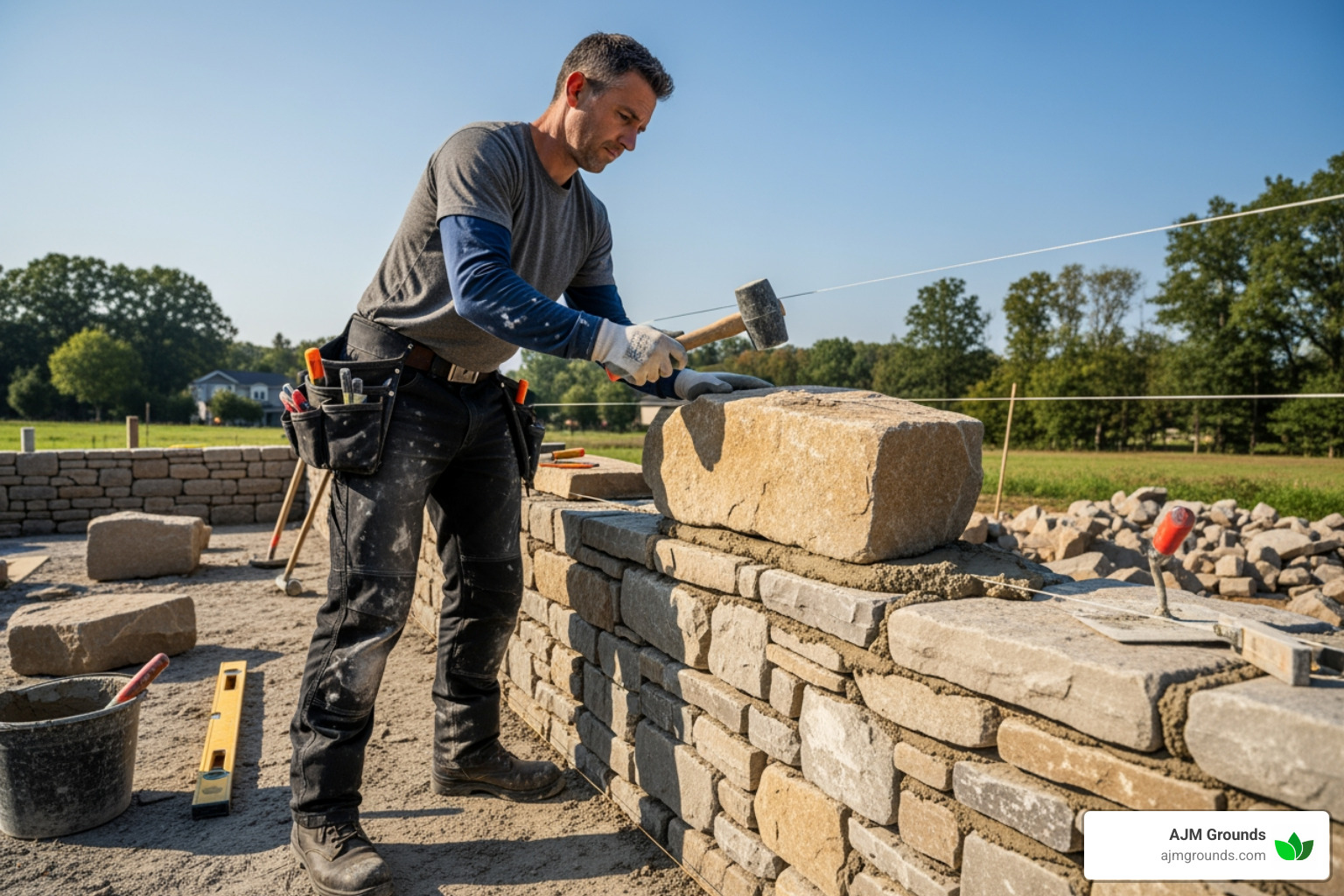
Foundation and Excavation: A stable base is critical. This involves excavating a trench and creating a solid footing, often of crushed stone, to prevent settling. Proper paver base for retaining wall principles apply here.
Drainage and Reinforcement: Water is the enemy of any wall. Effective drainage, using gravel backfill and perforated pipes, is crucial to prevent pressure buildup. For taller retaining walls, geogrid reinforcement is added to hold soil in place.
Stone Laying and Capping: This is where craftsmanship shines. Each stone is carefully placed to ensure a tight fit. Finally, capstones are installed to provide a finished look and protect the wall’s interior. Learn more about installing cap stone on retaining wall.
Regulations and Permits: Permits are often required for retaining walls over a certain height (e.g., 4 feet). These requirements vary by municipality, so we always advise clients on local building codes to ensure full compliance.
Hiring the Right Professional: A Checklist for Homeowners
Choosing the right stone wall contractors is the most critical decision for your project. The quality of their work determines the wall’s beauty, durability, and safety, ensuring you receive a high-quality product and peace of mind.
How to Choose the Right Stone Wall Contractor
To ensure the success of your project, look for these qualities in stone wall contractors:
Experience and Specialization: Seek contractors with extensive, specific experience in stone wall construction. Specialization in different types (e.g., dry-stack, mortared) is a significant advantage.
Portfolio and References: A strong portfolio demonstrates craftsmanship and aesthetic sensibility. Ask for local references, especially for projects in areas like Wilmington, Stoneham, and Winchester, MA.
Licensing and Insurance: Always verify that the contractor is fully licensed and insured. This protects you from liability in case of accidents or damage.
Professional Certifications: For dry stone walling, certifications from organizations like the Dry Stone Walling Association signify a commitment to high standards and traditional techniques.
For more tips, our retaining wall installer complete guide offers additional valuable insights.
Key Questions to Ask Potential Stone Wall Contractors
Before hiring, have a thorough conversation with potential stone wall contractors. Discuss these key topics:
- Long-Term Stability: How will they ensure the wall’s stability and longevity, especially given the local climate in the Greater Woburn, MA area? A good answer will detail their approach to foundations, drainage, and reinforcement.
- Materials and Sourcing: What materials do they recommend for your project, and can they source local stone to match your landscape?
- Timeline and Budget: Ask for a detailed estimate and a clear project timeline to avoid unexpected costs or delays.
- Warranties and Guarantees: Do they offer any warranties on their workmanship and the materials used? A reputable contractor will stand behind their work.
- Permits and Regulations: Are they familiar with local codes in your specific town (e.g., Lexington, Winchester, or Burlington, MA) and can they help steer the permitting process?
Understanding Costs, Maintenance, and Long-Term Value
Investing in a stone wall is a significant decision. Here’s what to consider regarding cost, care, and value.
Factors Influencing Cost: The cost of a stone wall varies based on labor, materials, site accessibility, and wall complexity. Labor is often the largest component, especially for intricate dry stone work. For a general overview, our retaining wall installation cost guide can provide more context. Please note that any cost estimates are based on internet research and are not actual AJM Grounds pricing. Actual costs can vary widely.
Maintenance Requirements: A well-built stone wall is relatively low-maintenance.
- Dry Stone Walls: Rarely need more than resetting a dislodged stone.
- Mortared Stone Walls: May require repointing (replacing old mortar) over time to prevent water damage.
- Drainage: Periodically check that weep holes are clear of debris.
For more on upkeep, consult our retaining walls repairs guide.
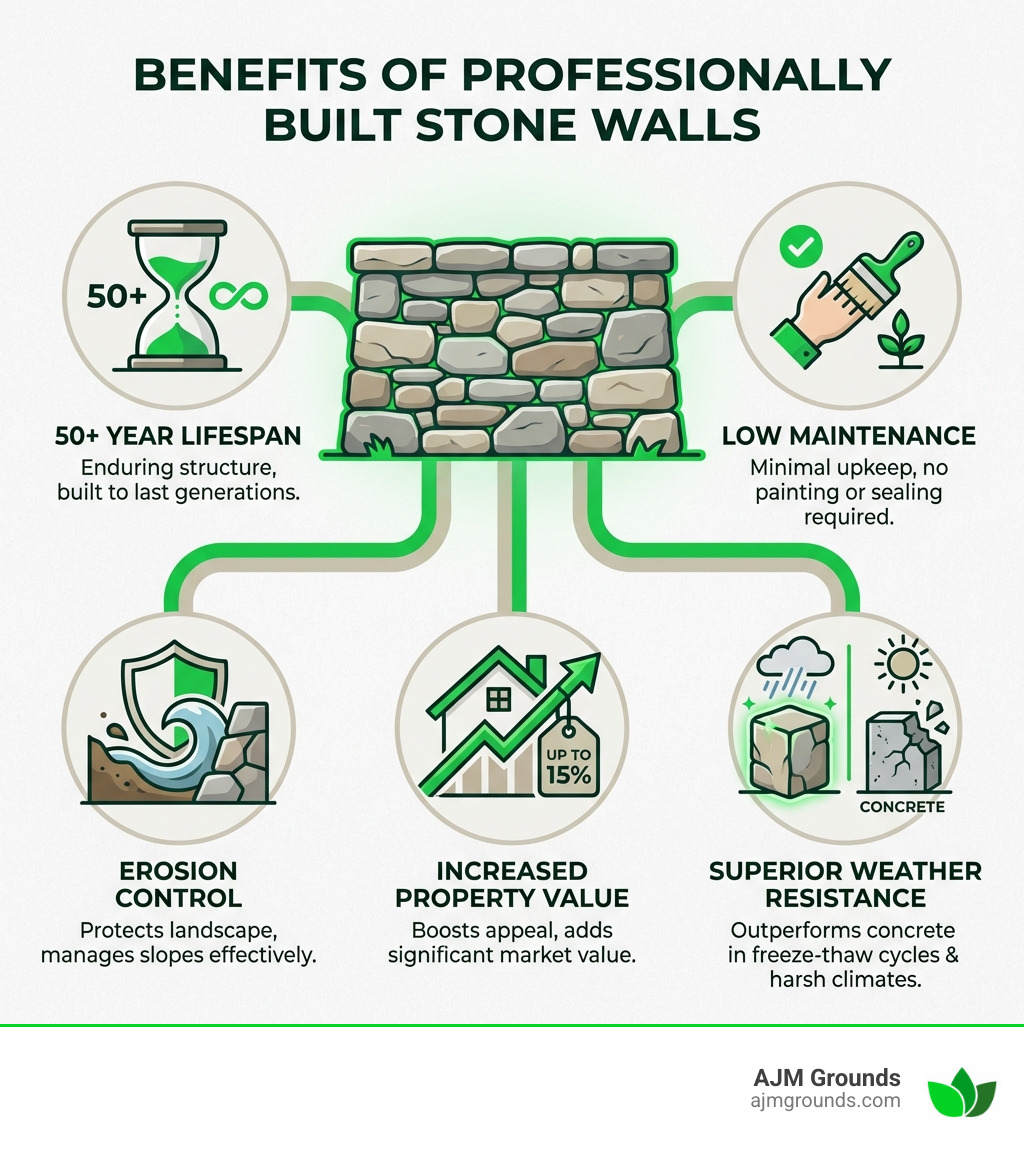
Lifespan and Long-Term Value: A properly constructed stone wall can last for generations, making it a true long-term investment. The benefits extend beyond aesthetics:
- Erosion Control & Slope Management: Stone walls are highly effective at preventing soil erosion and creating usable, level areas on sloped properties.
- Durability: Stone is incredibly resilient to weather and requires minimal upkeep compared to other materials.
- Curb Appeal and Property Value: A beautifully crafted stone wall significantly improves your property’s visual appeal and can increase its market value.
Common problems like bulging or loose stones are typically due to poor drainage or structural issues and should be addressed by a professional to prevent further damage.
At AJM Grounds, we pride ourselves on our attention to detail and personalized service for all our hardscaping projects, including landscape retaining walls. We ensure that every stone wall we build in the Greater Woburn, MA area is a testament to quality, stability, and enduring beauty.
