

Why a Paver Patio is the Perfect DIY Weekend Project
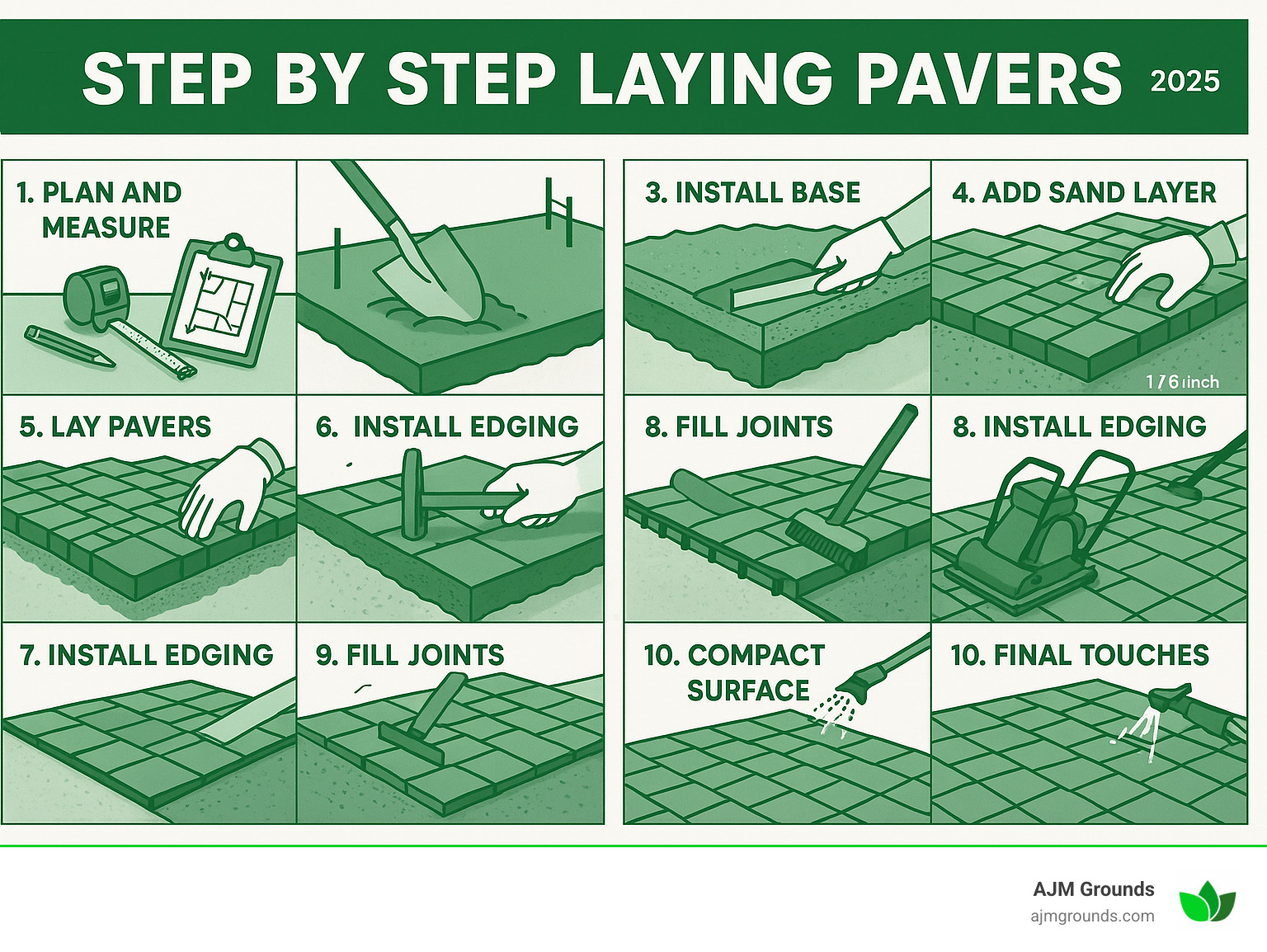
Learning step by step laying pavers can transform your backyard into an outdoor oasis and add significant value to your home. Here’s the process at a glance:
Essential Steps for Laying Pavers:
- Plan and measure – Calculate materials and mark the area.
- Excavate – Dig 7-11 inches deep.
- Install base – Add 4-6 inches of compacted gravel.
- Add sand layer – Spread and level 1 inch of bedding sand.
- Lay pavers – Start from a corner, maintaining small gaps.
- Cut edge pieces – Use a masonry saw for custom fits.
- Install edging – Secure with restraints and spikes.
- Fill joints – Sweep polymeric sand between pavers.
- Compact surface – Use a plate compactor to lock pavers.
- Final touches – Activate sand with a light water mist.
A well-executed paver patio creates a stunning outdoor living space. While it requires physical effort, following proper techniques ensures professional-quality results. The key to a long-lasting patio is proper base preparation.
I’m John Caplis, owner of AJM Grounds LLC. With years of experience in hardscaping, I’ve seen that motivated DIYers can achieve excellent results with the right guidance.
Find more about step by step laying pavers:
Step 1: Planning and Preparation for Laying Pavers
Meticulous planning is the first and most crucial step. This phase determines what you need, how much, and where it will go.
Essential Tools and Materials
- Tools: Shovel, rake, wheelbarrow, tape measure, level, rubber mallet, plate compactor (rentable), masonry saw, stakes, string line, marking paint, 2×4 screed board, and a push broom.
- Materials: Pavers, crushed gravel base (e.g., 3/4 minus), coarse concrete sand, edge restraints, polymeric sand, and optional (but recommended) geotextile fabric.
Calculating Material Needs
First, calculate your patio’s square footage (length x width). When ordering, add 5-10% extra pavers to account for cuts and waste. For the base materials, a rough estimate is:
- Gravel Base: For a 6-inch depth, you’ll need about 1.85 cubic yards per 100 sq ft.
- Bedding Sand: For a 1-inch depth, you’ll need about 0.3 cubic yards per 100 sq ft.
Site Layout and Drainage
Use stakes and string lines to mark the patio perimeter. Ensure square corners using the 3-4-5 triangle method. Most importantly, establish a proper drainage slope away from your house. The standard is about 1 inch of fall for every 4-8 feet, which prevents water from pooling.
Before you dig, call your local utility marking service (e.g., Miss Utility). This is a free and non-negotiable safety step.
For more inspiration, explore our Patio and Walkway Ideas.
Step 2: Building a Rock-Solid Foundation
A stable base is the most critical part of the step by step laying pavers process, ensuring the longevity of your patio.
Excavation and Compaction
Your total excavation depth is the sum of your paver height (typically 2-3″), the 1-inch sand bed, and the gravel base.
- Patios/Walkways: Use a 4-6 inch compacted gravel base.
- Driveways: Use a 6-8 inch compacted gravel base.
For a typical patio, this means digging 7.5 to 9.5 inches deep. After excavating, use a plate compactor to compact the exposed soil (subgrade).
Laying the Base
After compacting the subgrade, lay down geotextile fabric to separate the soil from the gravel and improve stability. Spread your gravel base in 2-inch layers (lifts). Lightly mist each layer with water and compact it thoroughly with the plate compactor before adding the next layer. Repeat until you reach your desired base depth.
Creating the Sand Bedding Layer
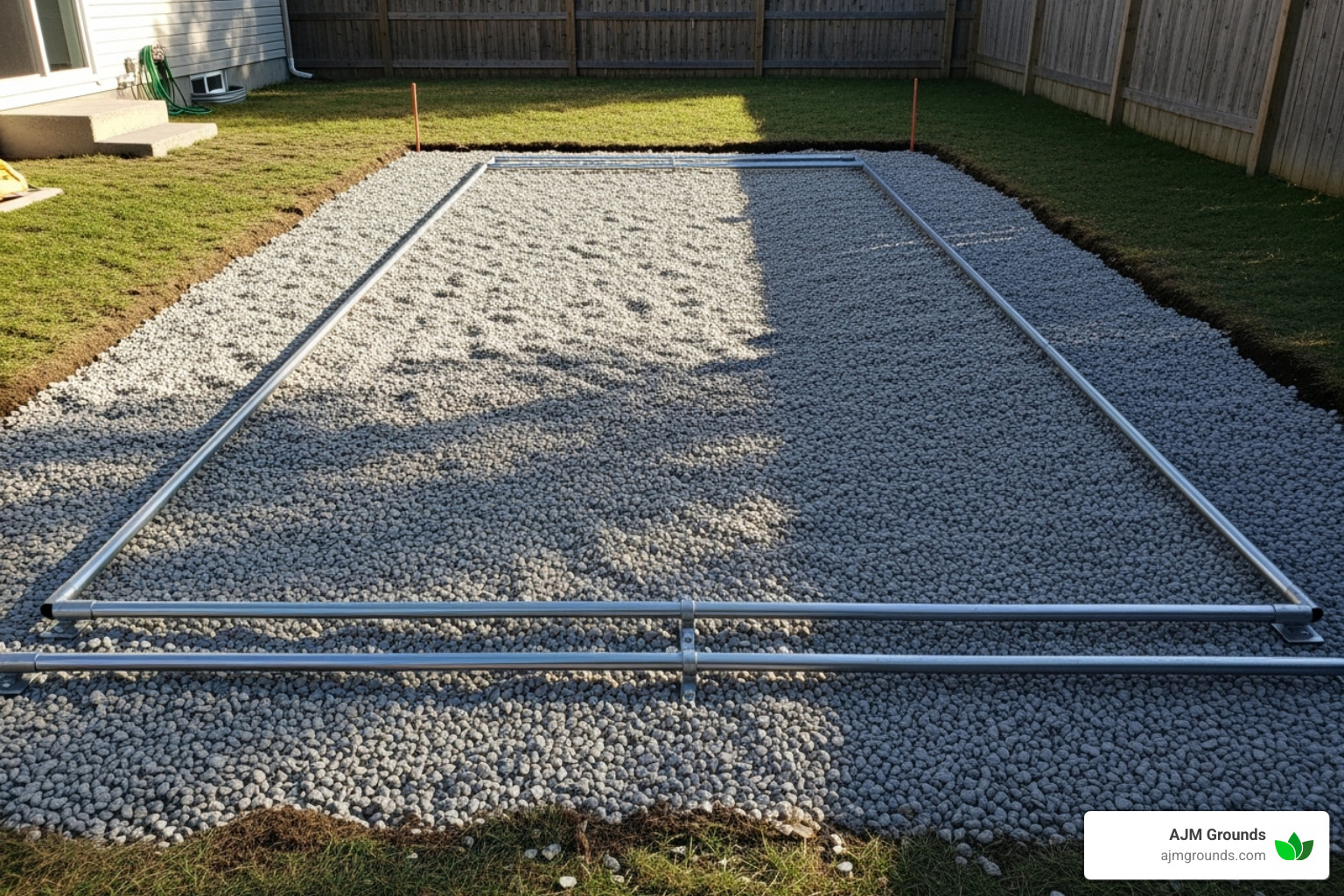
On top of the compacted gravel, you’ll create a uniform 1-inch layer of coarse sand. To do this, lay 1-inch diameter pipes (screed rails) on the base. Spread sand between them and drag a straight 2×4 board across the rails to level the sand perfectly. Carefully remove the rails and fill in the gaps. Do not walk on or compact this sand layer.
This meticulous base preparation is the secret to a professional-grade DIY project and the foundation of our Hardscape Construction Service.
The Ultimate Step by Step Laying Pavers Guide
With a robust foundation complete, it’s time for the most rewarding part of our step by step laying pavers journey: placing the pavers.
Step 3: Laying, Cutting, and Edging
This phase is where your patio’s design comes to life. Precision and patience are key to creating a strong, beautiful surface.
Choosing a Paver Pattern
Your pattern affects both aesthetics and stability. Running bond patterns create clean lines, while basketweave offers a classic look. For maximum stability and a stunning visual, consider a herringbone pattern, which is especially effective for driveways.
Placing the Pavers
Begin laying pavers from a 90-degree corner, usually the one most visible from the house. Work outward in rows.
- Place, Don’t Slide: Set each paver straight down onto the sand bed. Sliding will disturb the level surface.
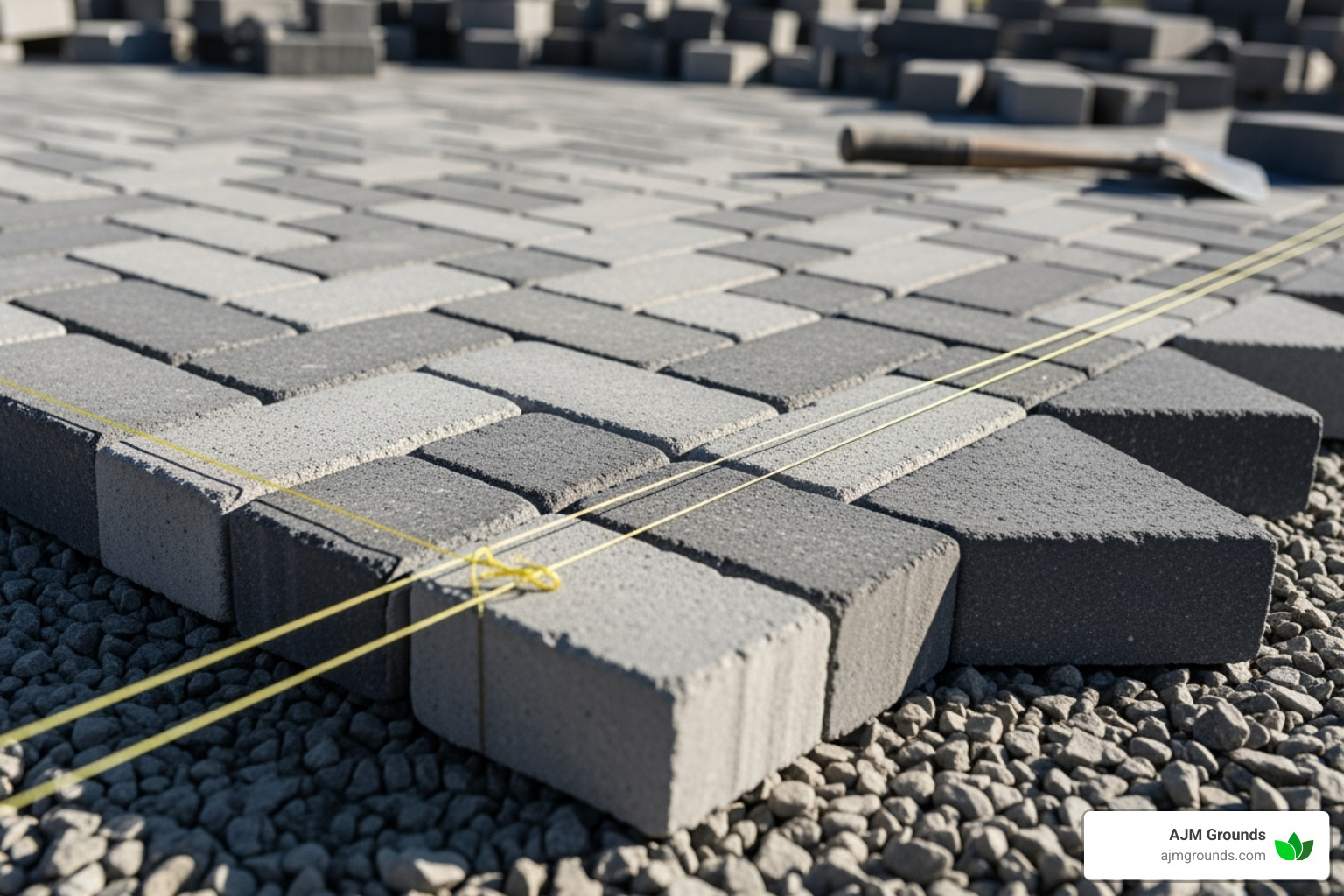
- Level and Gap: Gently tap each paver with a rubber mallet to set it. Maintain consistent 1/8-inch gaps between pavers. Many pavers have built-in spacer bars to help with this.
- Stay Straight: Use string lines stretched across your work area every few feet to ensure your rows remain perfectly straight.
Cutting Pavers
You will need to cut pavers to fit along the edges. For straight cuts, a paver splitter is fast and effective. For precise or curved cuts, a masonry saw with a diamond blade provides the cleanest results. Always wear safety glasses when cutting.
Installing Edge Restraints
Once all pavers are laid, install edge restraints along all open perimeters. This is a critical step that prevents pavers from shifting or spreading over time. Place plastic or metal restraints against the pavers on top of the gravel base and secure them firmly with long spikes.
This detailed approach is how we ensure lasting quality in our Installing a Brick Paver Walkway projects.
Step 4: The Finishing Touches: Joint Sand and Compaction
These final steps lock everything together, changing individual pavers into a solid, unified surface.

The Role of Joint Sand
Joint sand is a crucial structural component that locks pavers together. We strongly recommend polymeric sand, which contains polymers that harden when activated with water. This special sand prevents weeds, deters insects, and resists erosion, significantly improving your patio’s stability.
Applying and Compacting
- Sweep Sand: Ensure the paver surface is completely dry. Spread polymeric sand over the patio and use a push broom to sweep it into all the joints until they are full.
- Compact: Use a plate compactor with a protective pad to vibrate the pavers, settling them into the sand bed and working the joint sand deep into the gaps. You may need to sweep in more sand and compact a second time until the joints remain full.
- Clean: Sweep any excess sand off the paver surfaces.
Activating the Polymeric Sand
Using a garden hose with a shower nozzle, lightly mist the entire patio. The goal is to saturate the sand in the joints without washing it out. Allow the patio to dry for 24-48 hours, during which the sand will cure and harden, locking your pavers in place.
For more information on sand options, Learn more about polymeric sand options is a helpful resource.
Beyond the Basics: Maintenance, Mistakes, and Professional Help
You’ve completed the step by step laying pavers process, but knowing how to avoid common pitfalls and maintain your work is key to long-term success.
Common Mistakes to Avoid When Laying Pavers
Many DIY projects suffer from the same avoidable errors. Watch out for these common mistakes:
- Inadequate Base: Skimping on the 4-6 inch gravel base depth or failing to compact it in layers will lead to settling and an unstable surface.
- Poor Drainage: Forgetting to slope the patio away from structures (1 inch per 4-8 feet) causes water to pool, which can damage the base.
- Uneven Sand Layer: A sand bed that isn’t a consistent 1-inch thick will result in “lippage,” where some pavers sit higher than others.
- Skipping Edge Restraints: Without edge restraints, pavers will shift and spread apart over time, ruining the integrity of your patio.
- Improper Polymeric Sand Use: Applying it to a wet surface can cause staining, while not using enough water during activation means it won’t harden properly.
- No Expansion Joints: Butting pavers directly against a house foundation can cause pressure damage. Leave a small gap for expansion.
Paver Maintenance and When to Call a Pro
A little care will keep your patio looking great for years.
- Regular Maintenance: Sweep debris off the surface regularly. Spot clean spills to prevent stains. Every few years, top off the joints by sweeping in new polymeric sand and misting with water.
- Sealing: Applying a sealer every 2-3 years is optional but can improve color and add stain protection.
DIY vs. Professional Installation
A DIY project saves on labor costs, but it’s a physically demanding job that involves moving tons of material. It also requires renting equipment and a significant time commitment. Professionals bring experience, specialized tools, and a warranty, ensuring a high-quality result without the risk of costly errors or personal injury. They are equipped to handle challenges like poor drainage or difficult soil conditions.
Based on internet data, average professional installation costs can range from $15 to over $45 per square foot, but this varies widely based on materials, site complexity, and location. For an accurate quote for your Woburn, MA property, it’s best to consult a local expert.
For those who value a flawless finish and peace of mind, consider the Patio Installation services from AJM Grounds. We handle everything, ensuring your dream patio becomes a reality without the backache.
