

What Are Retaining Walls and Why Do You Need Them?
Retaining walls are structures designed to hold back soil on sloped properties. By resisting the lateral pressure of the earth, they prevent erosion and create level, usable outdoor space where steep slopes once made landscaping impossible.
Key functions of retaining walls include:
- Holding back soil on steep slopes
- Preventing erosion from rainfall
- Creating usable, terraced areas for patios or gardens
- Managing water runoff and improving property drainage
- Enhancing landscape aesthetics with structural support
Properly designed retaining walls can transform unusable terrain into functional outdoor living areas, adding significant value and utility. Whether you’re in Woburn or a neighboring community, understanding these basics is the first step. At AJM Grounds LLC, we specialize in turning challenging slopes into beautiful, functional landscapes with expertly constructed retaining walls that are both practical and attractive.
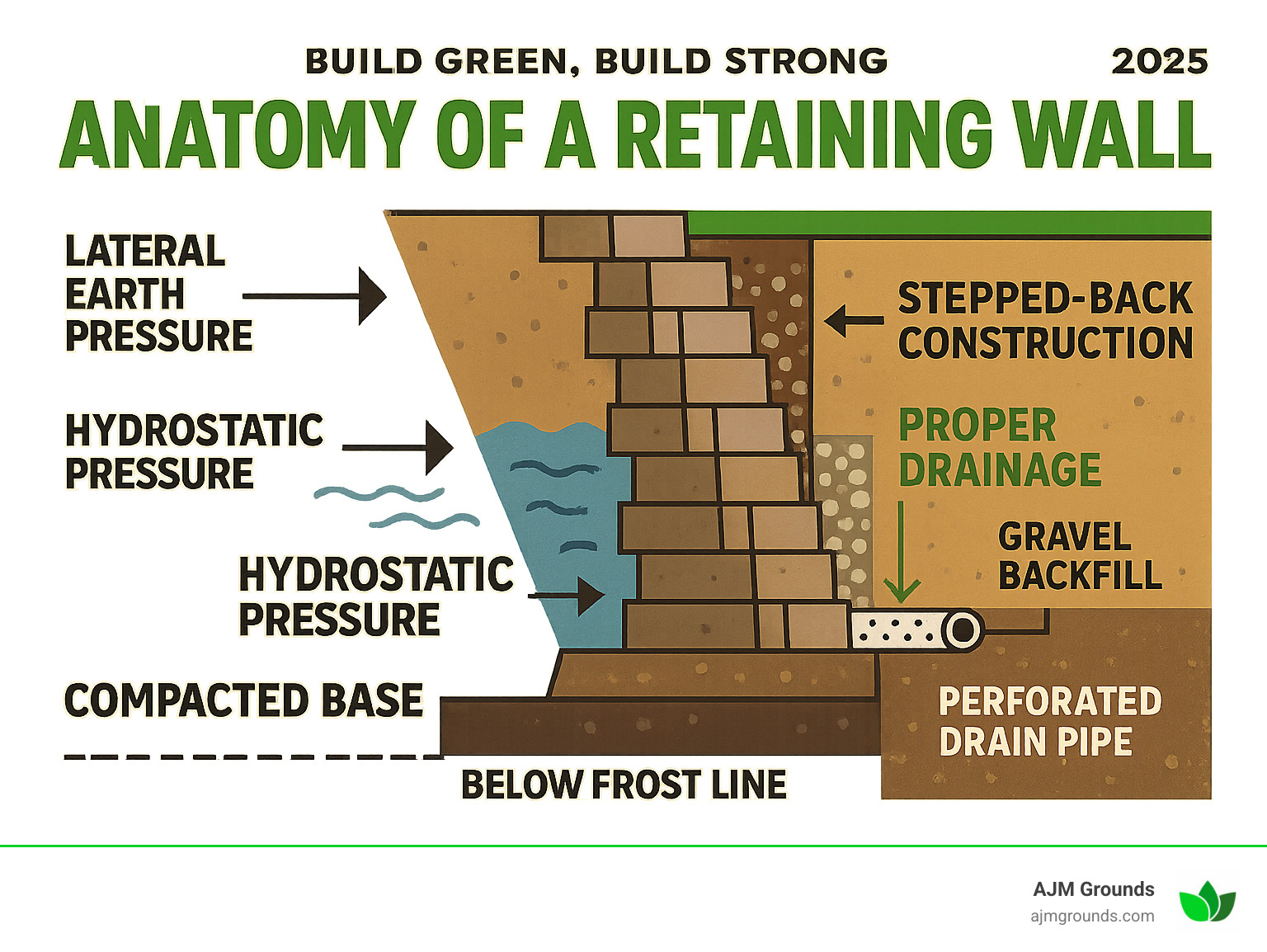
Key retaining walls vocabulary:
Understanding the Types and Materials for Retaining Walls
Not all retaining walls are created equal. Choosing the right type and materials for your Woburn-area property is critical for a wall that lasts for decades. Think of it as choosing the right tool for the job; a gravity wall is not a substitute for a cantilever system when one is required.
Gravity walls rely on their sheer weight and mass to hold back soil. Built from heavy materials like stone or concrete, they are wider at the base and lean into the hillside for stability. They are effective for walls up to about 10 feet tall, but can become impractically thick and expensive beyond that height.
Cantilever walls use an L-shaped or inverted T-shaped reinforced concrete foundation. This design cleverly uses the weight of the soil above the base to help stabilize the wall, allowing for taller walls (up to 16 feet) that are relatively slender. Your home’s basement wall is likely a cantilever wall.
Reinforced soil walls, also known as Mechanically Stabilized Earth (MSE) walls, are a modern solution. These systems integrate layers of polymer grids (geogrids) within the soil backfill, creating a single, stable soil mass. This method can significantly cut construction costs and time, and with proper design, these walls can last over 100 years. For detailed specifications, the Commercial Installation Manual for Allan Block Retaining Walls is a comprehensive resource.
It’s also important to distinguish between retaining walls and freestanding walls. A freestanding wall is decorative and separates spaces on level ground, while a retaining wall is an engineering structure constantly battling soil and water pressure. It requires a proper foundation and drainage to prevent failure.
Choosing Your Building Blocks: From Classic to Eco-Friendly
The material you choose for your retaining wall impacts its appearance, longevity, and maintenance. Here are the most popular options:
- Natural stone offers a timeless, permanent look that blends beautifully with landscapes. It can last indefinitely but requires skilled, labor-intensive installation. Learn more about the advantages of hardscaping with natural stone and our natural stone retaining walls services.
- Interlocking concrete blocks are versatile, durable, and come in many colors and textures. They are engineered to fit together easily, making them a popular choice. Our guide on how to install a block retaining wall explains the process.
- Pressure-treated timber is a budget-friendly option with a rustic look. However, it has a limited lifespan of 20-40 years and the chemical treatments can be an environmental concern.
- Gabion walls are wire cages filled with rocks. They provide excellent drainage, are flexible, and can be an eco-friendly and affordable option, especially when using local stone.
What are the key material considerations for retaining walls?
When planning your retaining walls project, consider these five factors:
- Aesthetics: The wall should complement your home and personal style. Browse our retaining walls ideas gallery for inspiration.
- Durability: Natural stone and concrete can last indefinitely, while timber has a shorter lifespan. Consider the total cost of ownership.
- Budget: Balance upfront costs with long-term value. The cheapest option isn’t always the most economical.
- Site conditions: Steep slopes, drainage, and soil type can dictate the best material choice.
- Maintenance: Requirements vary from virtually maintenance-free concrete to timber that may need periodic sealing.
| Material Type | Average Cost (per sq ft)* | Average Lifespan | Eco-Friendliness | Key Characteristics |
|---|---|---|---|---|
| Natural Stone | $10.00 – $35.00+ | Indefinite | High | Timeless aesthetic, durable, blends well with natural landscapes. Can be labor-intensive to install. |
| Concrete Blocks | $5.00 – $20.00+ | Indefinite | Moderate | Versatile, easy to install (especially interlocking types), wide range of colors and textures. Good for DIY projects for smaller walls. |
| Timber | $6.00 – $20.00+ | 20-40 years | Variable | Often the cheapest option upfront, natural look. Shorter lifespan than masonry/concrete. Pressure-treated varieties are essential for ground contact but introduce chemicals. |
| Gabion | $10.00 – $40.00+ | Long (50-100+ years) | High | Wire cages filled with rocks, offers excellent drainage, rustic/industrial look, flexible (can tolerate some movement), often very affordable. Good for slopes and can use locally sourced fill. |
Please note: These are average costs based on internet data and not actual costs for AJM Grounds. Actual project costs will vary significantly based on design complexity, site conditions, material availability, and labor rates in your specific area (e.g., Woburn, MA or surrounding communities like Bedford, Burlington, Lexington, Reading, Stoneham, Wilmington, Winchester, Billerica). We recommend contacting us for a personalized estimate.
Choosing Your Building Blocks: From Classic to Eco-Friendly
Selecting the right material for your retaining walls is a critical decision that balances aesthetics, durability, and budget. Let’s explore the most common choices for your landscape project.
From Natural Beauty to Modern Versatility
- Natural Stone: For a timeless look, natural stone is best. It offers superior durability and becomes a permanent part of the landscape. We build Natural Stone Retaining Walls designed to last for generations. For more on stone’s versatility, see our guide on the advantages of hardscaping with natural stone.
- Interlocking Concrete Blocks: These segmental blocks are incredibly versatile, require no mortar, and come in a vast array of colors and textures. While smaller projects can be DIY-friendly, professional installation is recommended for walls over three feet. Our guide on How to Install a Block Retaining Wall details the process.
- Pressure-Treated Timber: Timber offers a classic, rustic look and is often the most budget-friendly option upfront. However, its lifespan is shorter (20-40 years), and proper drainage is critical in New England’s climate.
- Gabion Walls: These wire cages filled with stones are practical and visually interesting. They offer excellent natural drainage and are flexible, making them ideal for areas prone to settling.
- Recycled Materials: For an eco-conscious choice, consider reclaimed stone, brick, or using crushed concrete as backfill. These options reduce waste and create unique, character-rich walls.
What are the key material considerations for retaining walls?
Every project begins with understanding your priorities:
- Aesthetics: Your wall should improve your property. It can be a focal point or blend seamlessly into the landscape. Find inspiration in our Retaining Walls Ideas gallery.
- Durability: In Massachusetts, durability is key. Stone or concrete block walls can last indefinitely, offering better long-term value than less permanent options.
- Budget: We believe in honest conversations about cost. A higher initial investment in a durable material can save you from replacement costs down the road.
- Site Conditions: Local factors like clay soils and freeze-thaw cycles in the Woburn area influence which materials will perform best on your property.
- Maintenance: Understand the upkeep required. Concrete is low-maintenance, while timber may need periodic sealing. Choose a material that fits your lifestyle.
The Blueprint for a Lasting Wall: Design and Installation
Building a retaining wall is a precise engineering process. A well-built wall is a long-term asset, while a poorly constructed one is a dangerous liability.
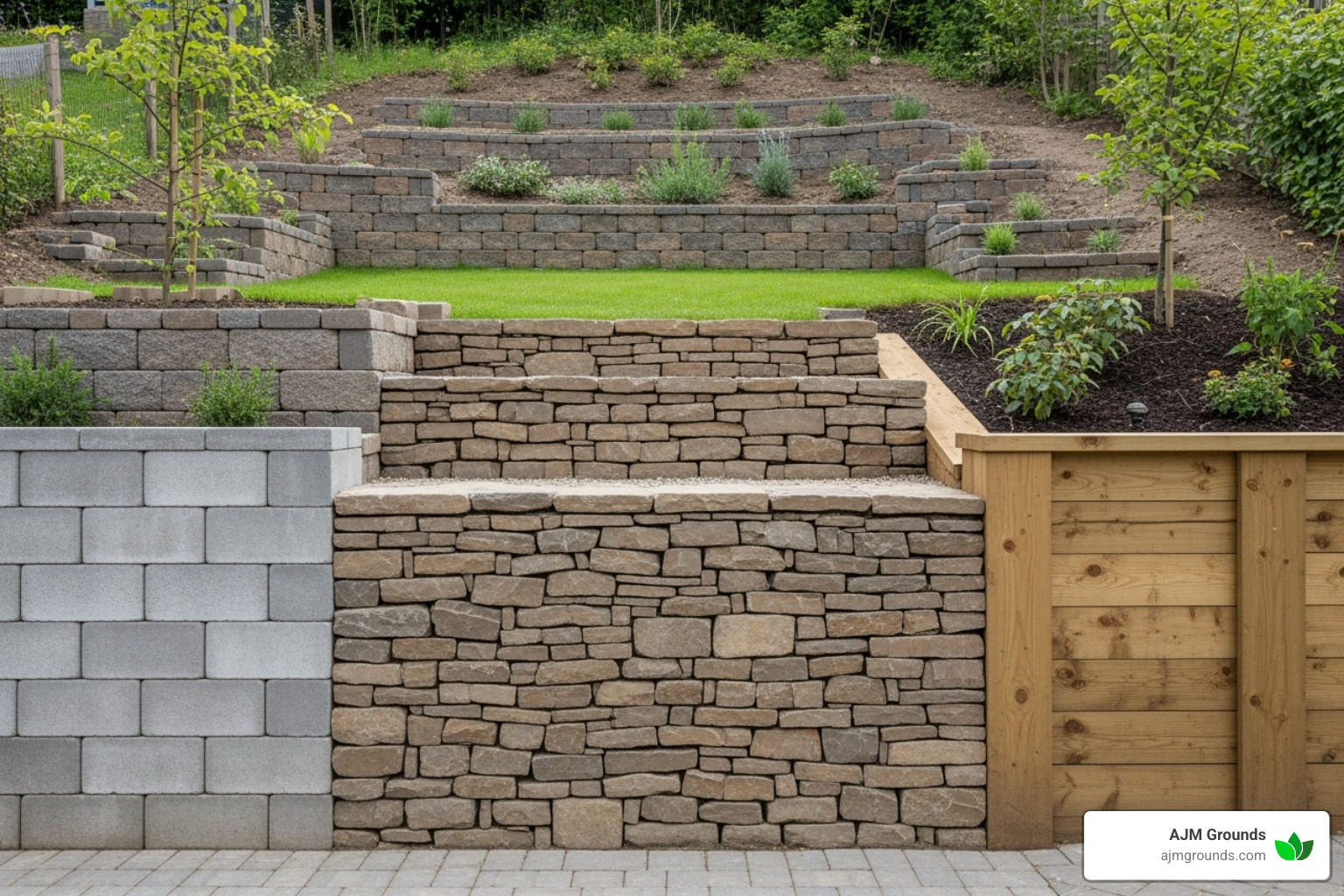
Proper installation begins with meticulous site preparation. We always call 811 to mark underground utilities before any digging begins—a critical safety step. The process involves:
- Trench Excavation: We dig a trench wide enough for stability and deep enough to bury the first course of blocks, preventing the wall from being pushed out over time.
- Base Preparation: This is a critical step. We lay and compact several inches of granular material to create a perfectly level foundation. A crooked base means a crooked wall. Our guide on Paver Base for Retaining Wall explains this in detail.
- First Course Installation: The first layer of blocks is set on the prepared base, ensuring it is perfectly level. At least half of this course is typically buried for maximum stability.
- Building & Backfilling: We build subsequent courses with staggering joints for strength. After each course, we immediately backfill with gravel and compact it in thin layers to prevent future settlement.
- Finishing: The final step is to secure the top layer using techniques from our Installing Cap Stone on Retaining Wall guide for a professional finish.
The Critical Role of Drainage and Backfill
Most retaining walls fail not from soil pressure, but from water pressure. Saturated soil exerts immense hydrostatic pressure, which is why proper drainage is non-negotiable.
- Perforated Drain Pipe: Installed at the base of the wall, this pipe collects water and directs it safely away.
- Gravel Backfill: We place at least a foot of free-draining gravel directly behind the wall, allowing water to move down to the drain pipe instead of building up pressure.
- Weep Holes: In solid concrete or masonry walls, these small openings allow trapped water to escape.
- Landscape Fabric: This filter barrier separates the gravel from the soil, preventing clogs in the drainage system. For more on this topic, Retaining Wall Drainage & Backfill Basics is an excellent resource.
Real-world challenges like rock formations or heavy rains are why professional expertise is vital. What appears to be a simple stacking job is a complex project requiring knowledge of soil mechanics and water management to ensure your retaining wall lasts for generations.
Ensuring Structural Integrity and Aesthetic Appeal
A well-built retaining wall combines sound engineering with thoughtful design, enhancing both the function and beauty of your outdoor space.
Recognizing Structural Failure Signs
Knowing the warning signs of a failing wall can prevent costly repairs or a dangerous collapse. Look for:
- Bulging: Sections of the wall pushing outward indicate excessive pressure, often from poor drainage.
- Cracking: While tiny hairline cracks may be cosmetic, large, continuous, or stair-step cracks signal structural movement.
- Leaning: A wall that is visibly tilting is a serious red flag, often pointing to foundation failure.
If you spot these issues, don’t wait. A small problem can quickly become a major safety hazard. Our guide on Retaining Wall Repairs offers more information.
Geogrid Use for Improved Stability
For taller retaining walls (over four feet) or on challenging sites, we use geogrid reinforcement. These high-strength polymer sheets are layered within the backfill, locking the soil and wall together into a single, stable mass. This modern technique is key to achieving a design life of over 100 years.
Enhancing Usability and Aesthetics
Retaining walls are transformative, turning unusable slopes into valuable outdoor spaces.
- Terraced Gardens: Create multiple level planting areas on a steep hillside. Our Retaining Walls for Gardens page shows stunning examples.
- Expanded Outdoor Living: A retaining wall can create level ground for a patio or outdoor kitchen. A Retaining Wall with Paver Patio is a popular combination.
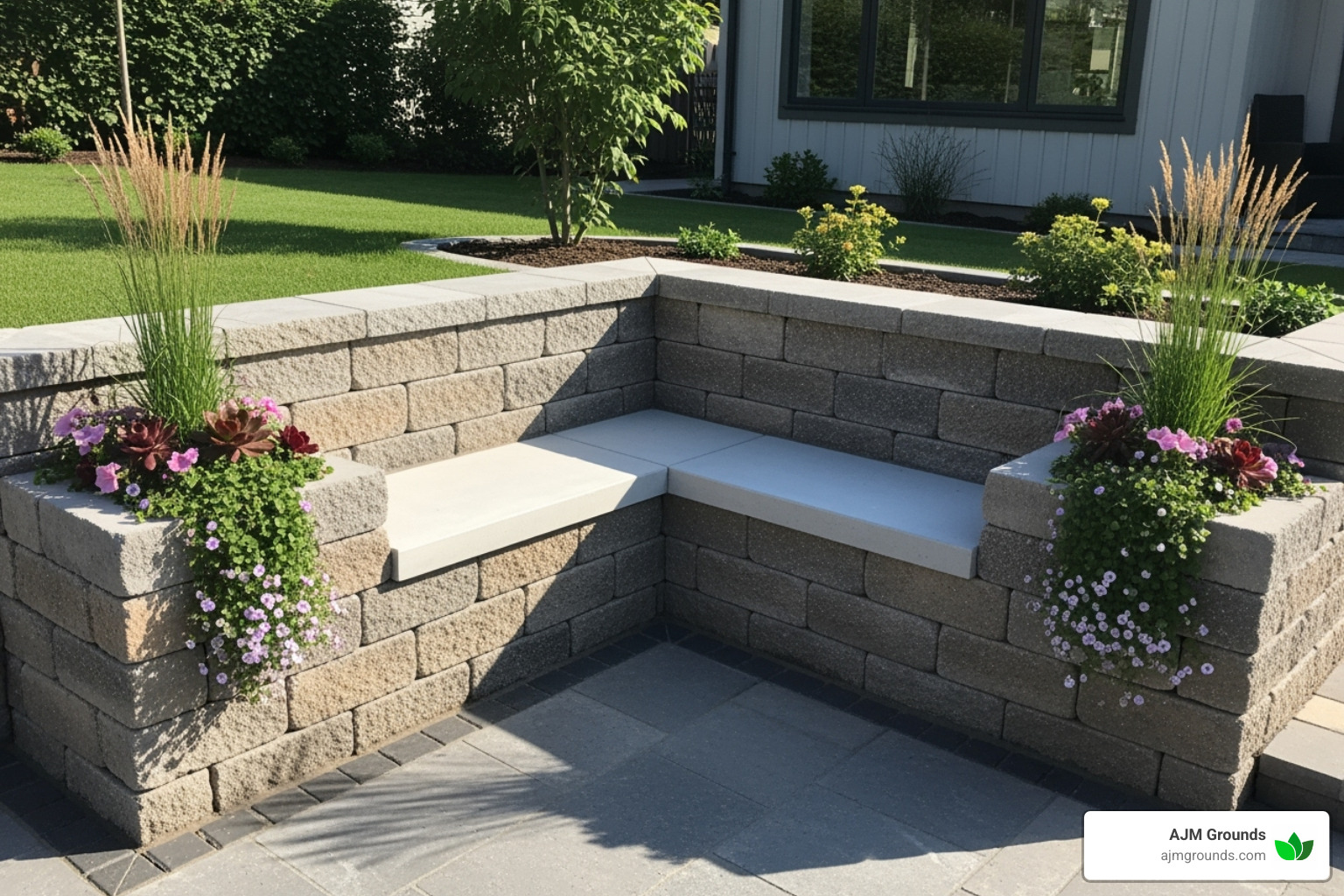
- Built-in Features: Low walls can double as seating, and we can integrate planters, lighting, or water features directly into the design.
- Aesthetic Integration: The best walls look like they belong. We select materials and designs that complement your home’s architecture and the natural surroundings, ensuring the wall is an intentional feature, not an afterthought.
Budgeting Your Project and Knowing When to Call a Pro
Understanding costs and recognizing when to seek professional help are crucial for a successful retaining wall project.
Cost Implications of Different Retaining Wall Types and Materials
The cost of a retaining wall varies widely. National averages suggest projects can range from $1,677 to $6,765, but your final price depends on several factors:
- Wall Height and Length: These are the biggest cost drivers. Taller walls require more material, labor, and engineering.
- Materials: Costs per square foot vary. Poured concrete can be $4.00-$15.00+, interlocking blocks $5.00-$20.00+, timber $6.00-$20.00+, and natural stone $10.00-$35.00+.
- Labor and Site Conditions: Skilled installation is the largest part of the budget. Difficult site access or complex excavation will increase costs.
- Permits: Fees vary by location, and requirements differ across towns like Woburn, Bedford, or Lexington.
For a detailed look at pricing factors, see our guide on Retaining Wall Construction Cost.
Please note: These are average costs based on internet data and not actual costs for AJM Grounds. Your specific project cost will depend on your unique situation.
When Is Professional Engineering or Design Assistance Necessary?
While some small walls are DIY-friendly, professional engineering is essential for safety in many cases:
- Walls over 4 feet in height: Most building codes in Massachusetts require an engineer’s design for walls exceeding this height due to the significant soil pressure.
- Complex Soil Conditions: Properties with expansive clay, loose sand, or a high water table need an expert who understands soil mechanics.
- Surcharge Loads: If you plan to build a driveway, patio, or other structure above the wall, an engineer must calculate the additional load to ensure the wall is designed to handle it.
- Local Building Codes: A professional will know the specific codes for your town, ensuring your project is compliant and safe.
The investment in professional design is minor compared to the cost of wall failure and provides invaluable peace of mind.
Frequently Asked Questions about Retaining Walls
Homeowners often have similar questions when planning retaining walls. Here are answers to the most common ones we hear at AJM Grounds.
What is the most affordable type of retaining wall?
The “cheapest” option depends on balancing upfront cost with long-term value. Pressure-treated timber often has the lowest initial material cost ($6.00-$20.00+ per sq ft) but has a limited lifespan of 20-40 years, requiring future replacement. Poured concrete ($4.00-$15.00+) and interlocking concrete blocks ($5.00-$20.00+) offer more permanence for a moderate price. Gabion walls ($10.00-$40.00+) can be very cost-effective if you have access to free or inexpensive rock fill.
Please remember: These are average costs based on internet data and not actual costs for AJM Grounds. Your real project cost depends on height, length, site conditions, and labor.
While DIY installation saves on labor, professional installation ensures a retaining wall is built to last, which is often the best value in the long run.
How high can a retaining wall be without a permit?
In most Massachusetts towns, including Woburn and surrounding communities, you can typically build a retaining wall up to 4 feet tall without a building permit, provided the ground behind it is level.
However, this rule has critical exceptions. Some towns have a 3-foot limit, and there are always rules about property line setbacks. Always check with your local building department first.
A permit is almost always required regardless of height if the wall supports a surcharge (like a driveway), if the ground behind it slopes upward, or if you plan to add a fence on top. It’s far easier to get permits upfront than to deal with violations later.
How do you fix a failing retaining wall?
Fixing a failing retaining wall requires diagnosing the root cause, which is often poor drainage. Water pressure, or hydrostatic pressure, is the number one enemy of retaining walls. Other common culprits include an inadequate foundation, overloading from a structure built above it, or damage from freeze-thaw cycles.
For minor hairline cracks, a quality masonry caulk can prevent water intrusion, but this is a temporary fix.
If your wall shows serious warning signs—bulging, significant leaning, or large cracks—it’s time to call professionals immediately. These are not DIY repairs. The solution often involves major work like excavating to install proper drainage or rebuilding sections of the wall. If you see these signs, contact us for Retaining Wall Repairs before the problem gets worse.
Transform Your Landscape with a Professionally Built Wall
A professionally built retaining wall can completely transform a challenging landscape into a spectacular and functional asset. It’s a game-changing investment in your property’s potential.
The structural support from retaining walls makes new possibilities a reality, solving erosion problems and turning steep, unusable slopes into level ground for patios and gardens. This creation of usable space can feel like adding an entire outdoor room to your home.
Beyond function, a well-designed wall adds significant aesthetic value, becoming a beautiful focal point that improves curb appeal and ties your landscape together. Whether using the timeless look of natural stone or clean concrete blocks, the result is transformative.
However, the importance of proper construction cannot be overstated. A correctly built retaining wall will serve you for generations, while a poorly built one is an expensive and dangerous liability. The difference is professional expertise in design, drainage, and installation.
For homeowners in Woburn, MA, and surrounding areas like Bedford, Burlington, and Lexington, AJM Grounds provides expert Hardscaping Services built to last. We don’t cut corners on the details that matter.
Ready to open up your property’s potential? Contact us for your retaining wall construction needs and let’s turn your landscape challenges into your greatest assets.
