

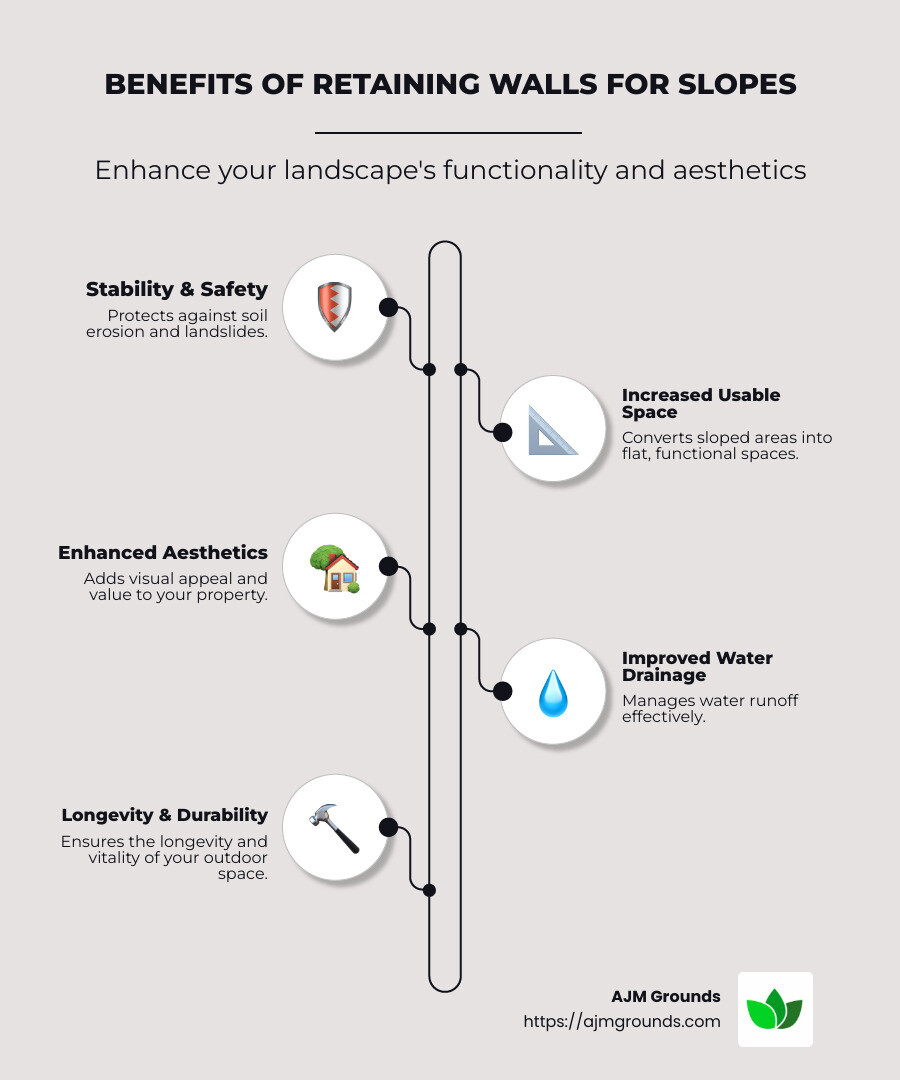
Retaining walls for slopes transform challenging landscapes into functional and beautiful spaces. These structures are essential not only for enhancing your outdoor aesthetics but also for combating issues like soil erosion and land instability. In areas with sloped terrains, retaining walls provide critical support to prevent soil from slipping away. Here’s a quick look at their benefits:
- Stability & Safety: Protects against soil erosion and landslides.
- Increased Usable Space: Converts sloped areas into flat, functional spaces.
- Improved Aesthetics: Adds visual appeal and value to your property.
- Improved Water Drainage: Manages water runoff effectively.
Retaining walls are a fusion of landscaping and hardscaping techniques aimed at creating a balance between the natural and built environment. By effectively managing soil and water, retaining walls ensure the longevity and vitality of your outdoor space.
As someone with experience in retaining walls for slopes, I am John Caplis. Throughout my career, I’ve helped shape numerous Massachusetts properties into sustainable and captivating landscapes, ensuring each one stands the test of time against the natural elements.
Let’s dive deeper into the nuances of retaining walls and understand how they work to fortify your property.
Understanding Retaining Walls for Slopes
When dealing with sloped terrains, retaining walls for slopes are crucial for maintaining soil retention and ensuring slope stability. These structures are not merely decorative; they serve a vital function in preventing soil erosion and managing water drainage.
Soil Retention and Slope Stability
Soil retention is the primary function of retaining walls. Without these structures, rain and gravity can cause soil to move downhill, leading to erosion and instability. By holding the soil in place, retaining walls provide stability and prevent the potential hazards of landslides.
Slope stability is essential for both safety and aesthetics. A well-designed retaining wall can transform a steep, unusable slope into a terraced garden or a flat play area, enhancing the functionality and beauty of your outdoor space.
The Role of Geotechnical Engineering
Geotechnical engineering plays a key role in the design and construction of retaining walls. Engineers assess soil conditions, slope gradients, and environmental factors to determine the best type of retaining wall for a specific location.
The use of geogrid reinforcement is a common practice in geotechnical engineering. Geogrids are materials used to stabilize slopes by reinforcing the soil, providing additional support to the retaining wall structure. This technique is particularly beneficial for steep slopes where additional stability is required.
Key Considerations
- Soil Type: Different soils have varying stability and drainage characteristics. Understanding the soil type is crucial for designing effective retaining walls.
- Water Management: Proper drainage solutions must be integrated to prevent water accumulation, which can undermine the wall’s stability.
- Structural Design: The design must consider the wall’s height, the slope angle, and the load it will bear.
By combining the principles of geotechnical engineering with practical design and construction techniques, retaining walls can effectively stabilize slopes and improve the usability of your landscape.
Next, we’ll explore the various types of retaining walls and how they can be used to address different landscaping challenges.
Types of Retaining Walls
When it comes to retaining walls for slopes, there are several types to consider, each with its own advantages and best-use scenarios. Let’s explore the most common types: cantilever walls, stone and concrete walls, and reinforced slopes.
Cantilever Walls
Cantilever walls are a popular choice for retaining walls. They are designed with a vertical stem and base slab, forming an L-shape. This design uses the weight of the soil above the base to hold the wall in place.
Advantages:
- Strength and Stability: Cantilever walls are robust and can support a significant amount of soil.
- Cost-Effective for Taller Walls: While they might be more expensive upfront, they become more economical for taller walls due to their efficient use of material.
Considerations:
- Construction Complexity: Building a cantilever wall can be complex, requiring precise engineering and construction techniques.
- Foundation Needs: A strong foundation is essential for the stability of cantilever walls.
Stone and Concrete Walls
Stone and concrete walls offer a classic and durable solution for retaining walls. They can be built using natural stone, concrete blocks, or poured concrete.
Advantages:
- Aesthetic Appeal: Stone walls provide a natural look, while concrete can be shaped and colored to match any design.
- Durability: Both materials are long-lasting and can withstand harsh weather conditions.
Considerations:
- Cost: The cost can vary widely. Average prices range from $15 to $60 per square foot, depending on the materials and complexity.
- Installation Time: These walls can take longer to build due to the need for precise placement and alignment.
Reinforced Slopes
Reinforced slopes are an innovative approach that combines soil and reinforcement materials, like geogrids, to stabilize slopes.
Advantages:
- Flexibility: They adapt well to natural landscapes and can be designed to blend seamlessly with the environment.
- Cost-Effective: They often cost less than traditional concrete walls because they use less material.
Considerations:
- Design Expertise Needed: Proper design and installation are crucial to ensure stability and effectiveness.
- Maintenance: Regular inspections are necessary to ensure the reinforcement materials remain intact.
Each type of retaining wall has its unique benefits and challenges. The choice depends on the specific needs of your landscape, the soil conditions, and your aesthetic preferences.
In the next section, we will dig into the process of building a retaining wall on a slope, addressing construction challenges and cost considerations.
Building a Retaining Wall on a Slope
Building retaining walls for slopes involves several key challenges and considerations. Let’s break down the main aspects, including construction challenges, cost considerations, and the role of geogrid reinforcement.
Construction Challenges
Constructing a retaining wall on a slope is no small feat. The terrain can be uneven, which complicates excavation and foundation work.
Key Challenges:
- Uneven Terrain: Sloped areas require careful planning to ensure the wall is built level and remains stable over time.
- Soil Stability: The type of soil impacts the design. Loose or sandy soils may need additional support or drainage solutions.
- Access Limitations: Working on slopes often means limited access for machinery, which can slow down the construction process.
Cost Considerations
Building a retaining wall can be a significant investment, but understanding the costs involved can help in planning.
Average Costs:
- Material Costs: Materials like stone, concrete, and timber vary in price. Average costs range from $15 to $60 per square foot, with some high-end projects reaching up to $180 per square foot.
- Labor Costs: The complexity of building on a slope can increase labor costs due to the need for skilled workers and longer construction times.
- Additional Expenses: Excavation, drainage solutions, and potential landscaping around the wall can add to the total cost.
Geogrid Reinforcement
Geogrid reinforcement is a game-changer for retaining walls on slopes. It provides additional stability and can significantly extend the life of the wall.
Benefits of Geogrid Reinforcement:
- Improved Stability: Geogrids distribute the load more evenly and resist lateral soil pressure.
- Cost Efficiency: By reducing the need for extensive materials, geogrids can lower overall costs.
- Long-Term Durability: They improve the wall’s resistance to environmental stressors, like seismic activity and heavy rainfall.
Geogrid systems, like those offered by Tensar, combine high-strength materials with wall blocks to create a robust and reliable structure. This approach not only saves time and money but also offers a cohesive system that ensures all parts work seamlessly together.
In the next section, we will explore the different materials used in constructing retaining walls, helping you choose the right option for your project.
Retaining Wall Materials
When it comes to building retaining walls for slopes, the choice of materials can make a big difference in both the functionality and aesthetics of the wall. Let’s explore the main materials: stone, concrete, and timber.
Stone
Stone is a classic choice for retaining walls, offering a natural and timeless look that blends well with most landscapes.
Benefits of Stone:
- Durability: Stone is incredibly strong and can withstand harsh weather conditions.
- Aesthetic Appeal: It provides a rustic and neat appearance, perfect for gardens and natural settings.
- Low Maintenance: Stone walls require little upkeep, making them a cost-effective option in the long run.
However, stone can be one of the more expensive materials, with average costs ranging from $30 to $90 per square foot, and some high-end projects reaching up to $270 per square foot.
Concrete
Concrete is a versatile and popular material for retaining walls, known for its strength and flexibility in design.
Advantages of Concrete:
- Versatility: Concrete can be molded into various shapes and sizes, allowing for custom designs.
- Strength: It’s ideal for supporting heavy loads and is often used in larger retaining wall projects.
- Cost-Effective: Compared to stone, concrete is generally more affordable, with average costs ranging from $20 to $70 per square foot, with higher-end projects going up to $210 per square foot.
Concrete walls can be plain or textured to mimic the appearance of natural stone, providing both functional and aesthetic benefits.
Timber
Timber is an attractive option for those seeking a more natural and warm look for their retaining walls.
Pros of Timber:
- Affordability: Timber is usually the most budget-friendly option, with average costs ranging from $15 to $50 per square foot, and high-end designs reaching up to $150 per square foot.
- Ease of Installation: Timber walls are generally easier and faster to install, which can reduce labor costs.
- Natural Look: Timber blends seamlessly with outdoor environments, making it a popular choice for gardens and parks.
However, timber may require more maintenance over time to prevent rot and insect damage, especially in wet climates.
Choosing the right material for your retaining wall depends on your budget, aesthetic preferences, and the specific needs of your landscape. In the next section, we will address some frequently asked questions about retaining walls for slopes, helping you make informed decisions for your project.
Frequently Asked Questions about Retaining Walls for Slopes
What is the best retaining wall for a slope?
When it comes to choosing the best retaining wall for a slope, cantilever walls often stand out. These walls use a reinforced concrete slab or beam to hold back soil, making them ideal for steep slopes. Their design allows them to support significant weight by converting horizontal pressure from the slope into vertical pressure on the foundation.
Cantilever walls are particularly effective because they offer both strength and durability, essential for maintaining slope stability. However, they can be more expensive to construct due to the need for specialized materials and engineering expertise.
Can you build a retaining wall on a steep slope?
Yes, you can build a retaining wall on a steep slope, but it requires careful planning and expertise. Consulting with a geotechnical engineer is crucial in these cases. These professionals assess soil conditions and ensure the wall’s design will maintain global stability, which is the overall stability of the slope and the retaining structure.
For steep slopes, reinforced walls, which may include geogrid reinforcement, are often recommended. This reinforcement helps the wall resist the lateral pressure from the soil, providing additional strength and stability. Proper drainage is also critical to prevent water buildup behind the wall, which can compromise its integrity.
What is the cheapest retaining wall to build?
If you’re looking for a budget-friendly option, stone and concrete retaining walls are worth considering. Among these, timber is usually the most affordable, but for more durable options, stone and concrete are preferred.
- Stone Walls: While natural stone can be costly, using locally sourced stones or opting for smaller walls can reduce expenses. Stone walls offer a timeless look and require minimal maintenance, making them cost-effective over time.
- Concrete Walls: Concrete is typically more affordable than stone, especially for larger projects. Precast or poured concrete walls offer flexibility in design and can be textured to mimic stone, providing a blend of aesthetics and functionality.
These are average costs based on internet data and not actual costs for AJM Grounds. Prices can vary widely depending on materials, labor, and site conditions, with high-end projects potentially costing three times the average pricing.
Understanding the different types of retaining walls and their suitability for various slope conditions will help you make informed decisions for your landscape project.
Conclusion
At AJM Grounds, we understand that every landscape is unique, and that’s why we offer personalized services custom to meet your specific needs. Whether you’re dealing with a steep slope or looking to improve your outdoor space, our team is here to help with expert advice and top-notch execution.
Our commitment to attention to detail sets us apart. From the initial consultation to the final touches, we focus on every aspect of your project to ensure that the results exceed your expectations. Our team of skilled professionals is trained to assess soil conditions and slope gradients, ensuring that your retaining wall not only looks great but also stands the test of time.
We pride ourselves on providing a seamless experience from start to finish. Our personalized approach means we work closely with you to understand your vision and bring it to life. Whether you’re interested in a natural stone wall for a rustic look or a sleek concrete design for a modern feel, we have the expertise to make it happen.
If you’re considering retaining walls for slopes, we invite you to explore our landscape retaining wall services. Let us transform your landscape into a functional and beautiful space that adds value to your property.
At AJM Grounds, your satisfaction is our priority. Contact us today to discuss your project and find how our personalized service and attention to detail can make a difference in your outdoor space.
