

Transform Your Outdoor Space with Functional Beauty
A retaining wall with paver patio combines structural support with neat outdoor living space, creating both practical and aesthetic benefits for your property. If you’re looking to maximize your yard’s potential, this integrated approach offers an ideal solution.
Quick Answer: Retaining Wall with Paver Patio Benefits
| Benefit | Description |
|---|---|
| Erosion Control | Prevents soil erosion on sloped properties |
| Expanded Usable Space | Increases flat, functional areas by up to 50% |
| Improved Property Value | Adds both aesthetic appeal and structural improvements |
| Improved Drainage | Proper installation reduces soil pressure by up to 30% |
| Durability | Well-constructed installations can last 50+ years |
| Design Flexibility | Offers countless material and style combinations |
“Plain and simple, we wanted more outdoor entertaining space, so we could have our extended family and friends over,” explains one homeowner who transformed their sloped backyard with a retaining wall and paver patio combination.
Creating a seamless integration between a retaining wall and paver patio requires careful planning and execution. The wall provides structural support for sloped terrain while the patio extends your living space outdoors. Together, they create a cohesive outdoor area perfect for entertaining, relaxing, or simply enhancing your property’s visual appeal.
When done correctly, this combination can dramatically transform unusable slopes into your favorite part of your home. The key is understanding how these two elements work together to solve drainage issues, maximize space, and create a beautiful outdoor environment.
I’m John Caplis, owner of AJM Grounds LLC, and I’ve helped countless homeowners in Woburn transform their challenging outdoor spaces with custom retaining wall with paver patio projects that combine beauty and functionality. My team specializes in creating hardscape solutions that stand the test of time while enhancing your property’s value.
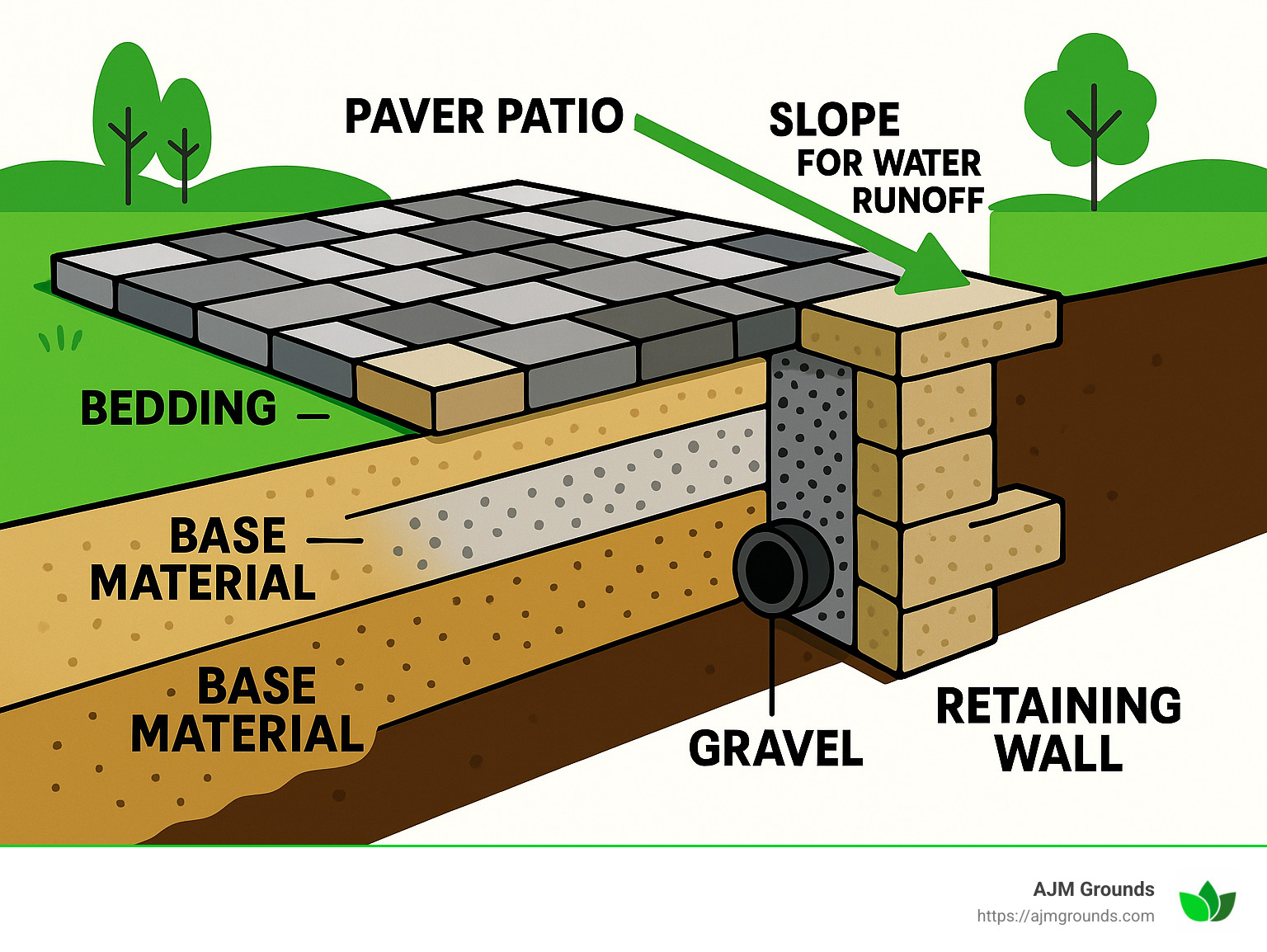
Easy retaining wall with paver patio glossary:
Benefits of a Retaining Wall with Paver Patio
When you combine retaining walls with paver patios, you’re not just building hardscape—you’re creating an outdoor sanctuary that works as hard as it looks beautiful. I’ve seen how these projects transform problematic yards into family favorites throughout Woburn and our Massachusetts communities.
Soil Erosion Control
Here in New England, we face some serious weather challenges that can wreak havoc on sloped properties. Heavy spring rains, winter snow melt, and summer downpours all contribute to soil washing away over time.
A retaining wall with paver patio acts as your property’s defender against these natural forces. The wall literally holds your landscape in place, preventing that gradual soil migration that can lead to bigger problems down the road.
One of our Winchester clients told me, “Before our retaining wall, we’d find soil washed across our driveway after every heavy rain. Now everything stays right where it belongs—even during those intense summer thunderstorms.”
Increased Usable Space
I love the moment when clients first realize just how much usable space they’ve gained from their project. That sloped, awkward section of yard that was essentially wasted space? It’s now prime real estate for entertaining, relaxing, or playing.
On average, a thoughtfully designed retaining wall with paver patio can increase your usable outdoor space by up to 50% on sloped properties. That’s not just a statistic—it’s the difference between having an outdoor dinner party for four versus fifteen friends and family members.
A client in Lexington recently shared, “Our backyard was practically unusable because of the steep slope. After installing a retaining wall with paver patio, we gained an additional 300 square feet of flat space that’s now our favorite spot for summer gatherings.”
Aesthetic Improvement
Beyond the practical benefits, there’s something undeniably beautiful about a well-designed hardscape. The textural contrast between the vertical retaining wall and horizontal patio creates visual interest that flat landscapes simply can’t match.
Modern materials give us endless creative possibilities. From the warm tones of natural stone to the precise lines of manufactured blocks, your retaining wall can complement your home’s architecture perfectly. Pair that with pavers in coordinating colors and patterns, and you’ve got an outdoor space that looks like it was designed by a professional—because it was!
Property Value Boost
If you’re thinking about the financial side of things, you’ll be pleased to know that a retaining wall with paver patio typically offers excellent return on investment. Landscape industry data shows well-designed hardscaping projects can recover 100-200% of their cost at resale time.
What makes this combination particularly valuable is that it addresses both function and beauty. Real estate agents consistently note that outdoor living spaces are high on buyers’ wish lists, and a thoughtfully designed patio backed by a sturdy retaining wall checks multiple boxes for potential purchasers.
“Our clients in Winchester saw their property appraisal increase by $15,000 after we completed their retaining wall and paver patio project,” our design team has noted. “The change from an eroding slope to a neat outdoor living space made their property significantly more attractive to potential buyers.”
Long-Term Durability
Unlike wooden decks that need regular maintenance and eventual replacement, a properly built retaining wall with paver patio is remarkably durable. Industry data shows well-constructed retaining walls can last over 50 years with minimal maintenance, while quality pavers maintain their structural integrity and appearance for decades.
At AJM Grounds, we focus on building these structures to stand the test of time—using proper base materials, drainage solutions, and installation techniques that ensure your investment lasts for generations, not just seasons.
This combination of erosion control, expanded usable space, beauty, increased property value, and long-term durability makes the retaining wall with paver patio one of the smartest landscape investments you can make for your Massachusetts home.
Planning Your Retaining Wall with Paver Patio Project
The foundation of any stunning outdoor change begins long before the first shovel hits the ground. As we often tell our clients at AJM Grounds, careful planning is what separates a good retaining wall with paver patio from a great one that will serve your family for decades.
Site Assessment
Every yard tells a story, and we need to understand yours before we begin designing. When I visit your property, I’ll take time to thoroughly evaluate what we’re working with.
First, we’ll walk your property together to measure the existing slope. This helps us determine exactly how much earth needs to be retained and what wall height will work best. The soil composition matters tremendously too—clay soils behave differently than sandy ones, and this influences our structural decisions.
“I remember a project in Winchester where the homeowner was surprised when I spent nearly an hour just observing how water moved across their property after a rainstorm,” shares John from our design team. “But that attention to drainage patterns saved them thousands in potential repairs down the road.”
We’ll also carefully identify any existing features that need protection or incorporation—from underground utilities to cherished trees. One call to 811 before we begin can prevent costly mistakes and service interruptions.
Design Considerations
Once we understand your property’s unique characteristics, the fun part begins—designing your outdoor space.
Rather than thinking of the wall and patio as separate elements, we approach them as integrated components of a cohesive design. The materials should complement each other while reflecting your home’s architectural style. During our design consultation, we’ll discuss everything from color coordination to texture variations that create visual interest.
We think about functionality too—how you’ll move through the space, where you might want built-in seating, and whether you need steps integrated into your wall design. Many clients don’t initially consider how outdoor lighting might improve their space, but thoughtful illumination can extend your enjoyment well into the evening hours.
To help you visualize the finished project, we often create digital renderings. There’s nothing quite like seeing your future outdoor space come to life before construction even begins!
Permits and Regulations
Navigating regulations might not be the most exciting part of your project, but it’s certainly one of the most important. In most Massachusetts communities, retaining walls over 4 feet high require permits and possibly engineering approval.
Local zoning ordinances also dictate setback requirements—how close to your property lines you can build. And if your property is near wetlands or in a conservation district, additional considerations come into play.
The good news? You don’t have to figure this out alone. At AJM Grounds, we handle the entire permit process for you, ensuring all regulatory requirements are met before the first block is placed. We’ve developed strong relationships with local building departments across Woburn and surrounding towns, which helps streamline this sometimes complex process.
Budget Planning
Let’s talk about everyone’s favorite subject—money! Creating a realistic budget is essential for project success, and we believe in transparent conversations about costs from day one.
Different wall systems and pavers vary significantly in price, from basic concrete blocks to premium natural stone. Labor requirements increase with design complexity—curves, steps, and multiple tiers all add to the installation time.
Site access challenges can impact costs too. A backyard that requires materials to be transported by wheelbarrow will require more labor than one with direct machine access. And don’t forget about potential drainage solutions, which are absolutely critical in our New England climate.
“I was very satisfied with the contractor from the beginning. He took measurements, provided a prompt proposal, and his estimate was the best price with a professional approach,” reports Tim D., a satisfied customer from our service area.
We’ll help you understand both the initial investment and long-term value of different options. Sometimes spending a bit more upfront on premium materials can save significant money in maintenance costs over time.
Materials Needed for Your Retaining Wall with Paver Patio
Selecting the right materials isn’t just about appearance—it’s about creating a structure that will withstand New England’s challenging climate for decades to come.
For retaining walls, interlocking concrete blocks offer excellent structural stability with the bonus of faster installation—industry data suggests they can reduce construction time by up to 40% compared to traditional methods. These come in various colors and textures to match your aesthetic preferences. For a more luxurious or natural look, natural stone creates timeless appeal, while segmental retaining wall systems provide engineered consistency with built-in drainage features. Don’t forget about coping or cap stones—these finishing pieces not only look polished but also protect the top of your wall from water infiltration.
For your patio surface, options abound. Concrete pavers offer incredible versatility in shapes, colors, and textures at a moderate price point. Clay brick pavers bring classic appeal with exceptional durability, while natural stone pavers like bluestone or granite create a premium look that’s hard to beat. In environmentally sensitive areas, permeable pavers allow water to filter through rather than run off, reducing puddles and helping with stormwater management.
Beneath the surface, the foundation materials are equally important. We’ll install crushed stone/gravel for a stable, well-draining foundation, typically using 3/4-inch clean stone. A layer of sand creates a perfect leveling bed for your pavers, while geotextile fabric prevents soil migration into your base material. Everything rests on properly compacted base material, often called “road base” or “crusher run” in the industry.
For more information on the technical aspects of wall construction, check out our detailed guide on Retaining Wall Construction.
Designing Your Retaining Wall with Paver Patio for Proper Drainage
If there’s one thing I emphasize to every client, it’s this: proper drainage isn’t just important—it’s everything. Water is both the beauty and bane of landscaping, and managing it correctly will determine whether your retaining wall with paver patio lasts for decades or fails prematurely.
When it comes to slope considerations, both your wall and patio need careful grading. We typically design patios with a 1-2% slope (about 1/4 inch per foot) away from structures. This subtle grade is barely noticeable to the eye but makes all the difference in preventing water accumulation. The retaining wall base must be perfectly level for structural integrity, while the backfill behind it should slope away to direct surface water from the wall.
Behind every retaining wall we install, you’ll find a comprehensive drainage system. This typically includes perforated pipe placed at the base of the wall, carefully wrapped in filter fabric to prevent clogging. This drainage must have a planned outlet—either daylight or connection to an existing drainage system. According to industry studies, proper drainage behind retaining walls can reduce soil pressure by up to 30%, significantly enhancing wall stability.
The material directly behind your wall—what we call gravel backfill—is as important as the visible blocks. We use 3/4-inch clean stone without fine particles, typically installing at least 12 inches of this drainage stone behind the wall. This material is carefully layered and compacted to prevent future settling while allowing water to flow freely.
In areas with significant water challenges, we might recommend additional measures like swales and berms to direct surface water, French drains to capture subsurface water, or tiered drainage systems for taller walls. These features might be invisible once your project is complete, but they’re working hard beneath the surface.
As one case study of a failed retaining wall noted, “Another winter freeze-thaw cycle may have been the ‘straw that broke the camel’s back.'” At AJM Grounds, we design our drainage systems specifically for New England’s challenging climate, where water can freeze and expand with destructive force.
For more in-depth information about drainage solutions for your retaining wall, visit our detailed guide on Landscape Retaining Walls.
With careful planning and attention to these critical details, your retaining wall with paver patio will not only be beautiful but built to stand the test of time—giving you decades of enjoyment with minimal maintenance.
Step-by-Step Guide to Building a Retaining Wall with Paver Patio
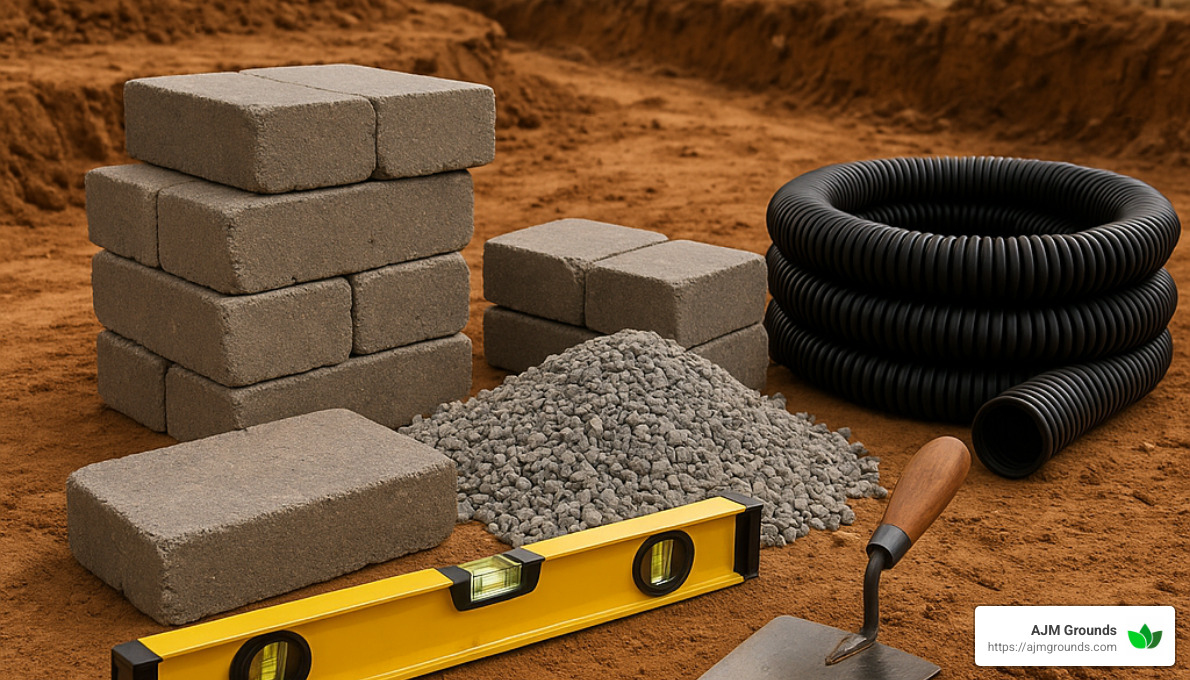
Building a retaining wall with paver patio is like creating a beautiful outdoor story for your home. It’s one of my favorite projects at AJM Grounds because we get to see such dramatic changes. Let me walk you through our tried-and-true process that turns sloped, unusable yards into gorgeous outdoor living spaces.
Step 1: Preparing the Site
Think of site preparation as laying the foundation for your outdoor success story. This is where many DIY projects go wrong, but with careful attention, you’ll set yourself up for a lasting installation.
First things first – always call 811 before you dig. I can’t tell you how many headaches this simple step prevents! Underground utilities are nothing to mess around with, and this free service marks them all for you.
For marking the layout, we use stakes and string to outline where the wall will go. For the patio area, I like to use a garden hose for curved designs – it lets you play with the shape until it feels right. One homeowner told me, “I changed my mind three times on the curve before we started digging, and I’m so glad you were patient with me!”
When it comes to excavation, thoroughness pays off. We remove all grass, plants, and topsoil completely. For the patio area, we typically dig down about 6 inches plus the thickness of your pavers. The wall trench needs to be at least 24 inches wide and 6 inches deep, with an additional inch of depth for each foot of planned wall height.
Leveling the base might seem tedious, but it’s absolutely crucial. We add 4-8 inches of compactable base material to the wall trench, then compact it thoroughly with a plate compactor. I always tell my crew to make at least two passes – you can’t over-compact a base! For the patio area, we ensure a slight slope (1-2%) away from any structures to prevent water issues down the road.
As one of our clients in Winchester wisely noted, “The day you spend getting the base perfect saves years of headaches later.”
Step 2: Building the Retaining Wall
Now comes the visible change that will start to bring your outdoor vision to life.
We begin with a compacted gravel base that extends at least 6 inches beyond where the wall will sit. This foundation needs to be perfectly level and well-compacted – it’s supporting everything above it, after all!
When laying the first course of blocks, precision is everything. This initial layer should be partially buried – typically half the block height – which provides essential stability. I check each block with a level both front-to-back and side-to-side, making adjustments by adding or removing base material as needed.
For ensuring level and alignment as we build upward, we use a string line along the back of the blocks. This simple trick helps maintain a perfectly straight wall, or for curved designs, helps us create a smooth, consistent curve using the built-in setback of the blocks.
The secret to long-lasting walls is proper backfilling with drainage materials. After the first course is set, we install drainage stone behind the wall along with filter fabric against the soil to prevent migration. The perforated drain pipe goes in on a slight slope toward the outlet. As we continue stacking courses, we backfill with drainage stone and compact in layers no greater than 8 inches.
“My neighbor’s wall failed after just two years,” one Woburn homeowner told me. “Seeing your team take so much care with the drainage gave me confidence our wall would last decades.”
For walls over 4 feet tall, we often incorporate geogrid reinforcement and may need engineering approval. At AJM Grounds, we never cut corners on these safety measures.
Step 3: Installing the Paver Patio
With your retaining wall standing proud, we move on to creating your beautiful patio space.
For adding paver base and sand, we install 4-6 inches of compacted base material over the entire patio area. This base needs that same 1-2% slope away from structures to ensure proper drainage. On top of this goes a 1-inch layer of concrete sand, which we carefully screed to create a smooth, even surface.
When laying pavers, we typically start from a fixed edge (often the retaining wall) and work outward. We maintain tight joints while following your chosen pattern, using a rubber mallet to set each paver firmly into the sand bed. Regular checks for level and proper slope ensure a professional finish.
The trickiest part often comes when cutting to fit curves. We use a masonry saw for precise cuts, measuring carefully before making any cuts. For curves against the retaining wall, we sometimes make templates to ensure perfectly accurate fits. There’s something satisfying about seeing those custom-cut pieces fit perfectly into place!
The final step is compacting the surface. Once all pavers are placed, we spread polymeric sand over the surface and use a plate compactor with a rubber pad to vibrate the pavers into the sand bed. This not only levels the surface but also works the polymeric sand into the joints. After sweeping additional sand as needed and compacting again, we mist with water to activate the polymeric sand according to the manufacturer’s instructions.
One of my favorite moments is watching a client’s face when they see their finished retaining wall with paver patio for the first time. As one Lexington homeowner put it, “It’s like we gained an entire room outside our house. I can’t believe this is the same yard!”
At AJM Grounds, we believe that building these outdoor spaces isn’t just about moving earth and laying stones – it’s about creating the backdrop for your family’s memories for years to come.
Ensuring Longevity: Maintenance Tips for Your Retaining Wall and Paver Patio
Let’s be honest – you’ve invested good money in your retaining wall with paver patio, and you want it to look gorgeous for years to come. The good news? With some simple care, these hardscape features can last decades while maintaining their beauty and functionality.
Regular Inspections
I always tell my clients that prevention is much easier than repair. That’s why I recommend setting calendar reminders for bi-annual check-ups of your outdoor spaces:
When spring arrives in Massachusetts, take a leisurely stroll around your retaining wall with paver patio looking for any winter damage. Our freeze-thaw cycles can be brutal! Pay close attention to any blocks that might have shifted, drainage areas that could be clogged with debris, or pavers that may have heaved during those January freezes.
“I missed a small crack in my retaining wall during one spring inspection,” shares a homeowner in Winchester. “By fall, that tiny crack had become a significant bulge that required professional repair. I learned my lesson about being thorough!”
Come autumn, do another thorough inspection before snow blankets everything. Clear out any leaves or debris from drainage areas, and address small issues before winter magnifies them. Look specifically for any signs of bulging or leaning in the wall, cracked pavers, erosion behind the wall, or dips in your patio surface that could indicate settling underneath.
Cleaning
Keeping your retaining wall with paver patio clean isn’t just about appearances – it’s about longevity too.
A gentle pressure washing once a year works wonders for removing accumulated dirt, pollen, and any algae that’s trying to take up residence. Be careful though – too much pressure can damage the surface or wash out joint materials. When we clean our clients’ installations, we use appropriate pressure settings and maintain a consistent distance from the surface.
For those inevitable spills (hello, barbecue sauce and red wine!), prompt spot cleaning with the right products makes a huge difference. Different materials require different cleaning approaches, so check manufacturer recommendations or give us a call for guidance.
Don’t forget about your drainage system! Those drain outlets need to remain clear of leaves, mulch, and other debris that might prevent water from escaping properly. A clogged drainage system behind a retaining wall is like a ticking time bomb – the pressure builds up until something gives way.
“I make cleaning my patio a family affair,” one Woburn client told me. “We have a spring cleaning day where everyone helps sweep, rinse, and inspect. The kids actually enjoy it, and it teaches them about maintaining what we have.”
Resealing
Different materials have different sealing needs, but most benefit from periodic reapplication:
For concrete pavers, you’ll typically want to reseal every 3-5 years. A quality sealer improves color, prevents staining, and helps lock in joint sand. You’ll know it’s time when water no longer beads up on the surface but instead soaks in quickly.
Natural stone might require specialized sealers – bluestone, for example, needs different treatment than limestone. Most wall blocks don’t require sealing unless specifically noted by the manufacturer, but the caps or copings often benefit from protection.
Think of sealer as sunscreen for your retaining wall with paver patio – it provides essential protection against the elements. Without it, surfaces become more porous, colors fade faster, and materials become more susceptible to damage.
Addressing Settling Issues Early
Small problems rarely resolve themselves – they usually grow into bigger ones. That slight dip in your patio that appeared this spring? By next year, it could be a significant trip hazard or drainage problem.
When you notice minor settling in your paver patio, it’s often a straightforward fix. The affected pavers can be removed, additional base material added and compacted, and then the pavers reinstalled. It’s much simpler than waiting until a large section needs complete reconstruction.
For wall movement, even small shifts warrant professional evaluation. What looks minor to the untrained eye might indicate serious underlying issues with drainage or soil pressure. At AJM Grounds, we provide complimentary evaluations of existing walls to help catch problems before they require major repairs.
“My neighbor ignored a small section of settling pavers by their pool for years,” shares a client in Lexington. “What would have been a simple fix eventually required completely rebuilding that section because water had been pooling and washing out the base underneath. The lesson? Don’t procrastinate on hardscape maintenance!”
At AJM Grounds, we offer seasonal maintenance programs specifically designed for retaining wall with paver patio installations. These scheduled check-ups and maintenance visits help ensure your outdoor investment remains beautiful and functional for decades – often saving you money in the long run by preventing costly repairs. After all, the outdoor spaces we create aren’t just projects to us – they’re lasting relationships with our clients and their homes.
Cost Considerations for Building a Retaining Wall with Paver Patio
When homeowners ask me about the cost of a retaining wall with paver patio project, I always smile and say, “Well, that depends on how fancy you want to get!” The truth is, these projects vary tremendously in price based on your specific needs, property conditions, and design choices.
Material Costs
The materials you select will have the biggest impact on your budget. I’ve seen projects transform dramatically just by shifting from basic materials to something with more character.
Economy materials like standard concrete blocks and basic pavers offer good functionality at the lowest price point. These workhorses get the job done without breaking the bank. Mid-range materials introduce more decorative elements and colors, giving your space more personality. At the premium end, natural stone, clay brick, and architectural-grade products create truly stunning spaces with timeless appeal.
Based on internet data, not actual costs for AJM Grounds, material expenses typically range as follows:
| Material Type | Economy Range (per sq ft) | Premium Range (per sq ft) |
|---|---|---|
| Retaining Wall Blocks | $15-25 | $45-75 |
| Paver Materials | $6-12 | $18-36 |
| Base Materials | $2-5 | $6-15 |
| Drainage Systems | $3-7 | $9-21 |
I’ve found that many homeowners start browsing materials with a budget in mind, only to fall in love with something slightly more expensive. There’s nothing wrong with that! Just remember that upgrading materials affects both the material and labor costs.
Labor Costs
Professional installation typically represents about half to 60% of your total project cost. This isn’t just about placing blocks and pavers – it includes proper excavation, base preparation, drainage installation, and ensuring everything is structurally sound.
Site accessibility plays a huge role in labor costs. A backyard with tight access might require materials to be moved by wheelbarrow rather than machinery, significantly increasing labor hours. Similarly, design complexity with curves, patterns, and multiple levels requires more skilled craftsmanship and time.
I remember one project in Winchester where we had to steer a narrow side yard with a 90-degree turn to access the backyard. What would normally be a three-day project became five because of the access challenges. The finished result was gorgeous, but the labor component was higher than a comparable project with straight truck access.
Soil conditions and wall height also impact labor costs considerably. Rocky soil or heavy clay takes longer to excavate properly, and taller walls require additional engineering considerations and safety measures during construction.
Comparing DIY and Professional Installation
Many homeowners consider the DIY route to save money. While this can work for small projects, be realistic about your skills, available time, and the equipment needed.
| Aspect | DIY | Professional Installation |
|---|---|---|
| Materials Cost | $3,000-9,000 | $3,000-9,000 |
| Labor Cost | Your time | $4,500-13,500 |
| Equipment Rental | $500-1,500 | Included |
| Design Service | Limited | Included |
| Warranty | None | Typically 3-5 years |
| Timeline | Weeks/Months | Days |
| Total Cost Range | $3,500-10,500 | $7,500-22,500 |
Note: These are average costs based on internet data and not actual costs for AJM Grounds.
One of our clients in Lexington initially planned to build his own retaining wall with paver patio. After spending two weekends just on excavation, he called us to finish the job. “I didn’t realize how physical and technical this work would be,” he admitted. “The equipment rental alone was costing me more than I expected.”
Professional installation not only saves your back and weekends but also provides peace of mind. As another customer shared: “I was very satisfied with the contractor from the beginning. He took measurements, provided a prompt proposal, and his estimate was the best price with a professional approach.”
Factors Affecting Pricing
Beyond the basics, several elements can significantly affect your project cost:
Wall height and length directly impact material quantities and structural requirements. A 2-foot tall decorative wall costs far less than a 6-foot structural wall that needs engineering approval and potentially permits.
Drainage needs might seem like an area to cut corners, but proper drainage is absolutely essential for the longevity of your investment. Complex drainage solutions add cost but prevent expensive failures down the road.
Additional features like built-in lighting, integrated steps, or seating areas improve functionality but increase both material and labor costs. These elements often become favorite features of the finished space, so they’re worth considering in your budget.
At AJM Grounds, we believe in transparency. When we provide an estimate for your retaining wall with paver patio project, we break down exactly what you’re paying for and why. We can also suggest ways to phase larger projects or material alternatives that might better align with your budget while still achieving your goals.
While the initial investment might seem significant, a properly constructed retaining wall with paver patio adds real value to your property while providing decades of enjoyment with minimal maintenance.
Frequently Asked Questions about Retaining Walls with Paver Patios
Do I need a permit to build a retaining wall with paver patio?
This is probably the question I hear most often when meeting with new clients. The answer isn’t always straightforward, as it really depends on where you live in Massachusetts.
Generally speaking, most towns and cities in our service area require permits for walls over 4 feet in height. However, even shorter walls might need permits depending on several factors:
Property line proximity is a big one
— if your planned wall sits close to your neighbor’s property, you’ll likely need to check local setback requirements. Drainage impact is another consideration that often triggers permit needs, especially if you’re significantly altering how water flows through your property. And if you’re near wetlands or conservation areas (which are common throughout Massachusetts), you’ll face additional requirements to protect these sensitive environments.
“Last year, a client in Winchester assumed they didn’t need a permit for their three-foot wall, only to receive a stop-work order halfway through the project,” I recall. “We quickly helped them steer the permit process, but it delayed their project by nearly three weeks.”
At AJM Grounds, we handle all permitting headaches for you. We’re thoroughly familiar with the specific requirements in Bedford, Billerica, Burlington, Lexington, Reading, Stoneham, Wilmington, Winchester, and Woburn
— so you can relax knowing everything’s being done by the book.
How do I ensure proper drainage behind my retaining wall with paver patio?
Poor drainage is the number one killer of retaining walls
— I’ve seen beautiful walls fail in just a few years because this critical aspect was overlooked. When soil becomes saturated with water, it can exert up to 33% more pressure against your wall! That’s why proper drainage isn’t just a good idea
— it’s absolutely essential.
Creating effective drainage for your retaining wall with paver patio involves several key elements working together. First, we always use clean 3/4-inch stone (without fine particles) behind the wall to create pathways for water to flow. We wrap this drainage zone with high-quality filter fabric to prevent soil from washing into and clogging the drainage stone over time.
At the base of every wall, we install perforated drainage pipe that collects water and directs it away from the wall’s foundation. This pipe must be properly sloped toward a designated outlet point
— something many DIY installations miss.
“I remember visiting a homeowner in Lexington who couldn’t understand why their DIY wall was failing,” I share with clients. “They had installed drainage stone but forgot the pipe, leaving nowhere for the water to go except to build up pressure behind their wall.”
For the patio portion, proper drainage means ensuring a slight but consistent slope (typically 1-2%) away from any structures. This seemingly minor detail makes a huge difference in preventing water pooling and potential damage to both your patio and home foundation.
When we integrate these drainage systems correctly, your retaining wall with paver patio becomes a cohesive water management system that will protect your investment for decades.
What materials are best for building a retaining wall with paver patio?
The “best” materials really depend on three main factors: your aesthetic preferences, practical needs, and budget considerations. Every project I work on is unique, and I love helping clients find that perfect balance.
For retaining walls, interlocking concrete blocks remain incredibly popular in our Massachusetts service area. They offer excellent structural integrity while providing numerous style options to match your home’s architecture. These systems are engineered specifically for retaining walls and often include built-in features like setbacks and connection methods that strengthen the wall. They’re also relatively quick to install, which can reduce your labor costs.
Natural stone creates a timeless, organic appearance that many homeowners in historic areas like Lexington and Winchester prefer. While requiring more skilled installation (and typically commanding a higher price tag), natural stone walls have an authentic character that manufactured products simply can’t match.
For paver patios, concrete pavers offer the best combination of durability, style options, and value for most of my clients. Available in countless shapes, colors, and textures, they can mimic the look of natural stone or brick at a more affordable price point.
Clay brick pavers bring classic New England charm and exceptional durability, aging beautifully over time. While slightly more expensive than concrete, many homeowners feel the authentic look is worth the investment.
For luxury installations, natural stone pavers like bluestone or granite create truly one-of-a-kind patios. Though more expensive, they offer best character and can significantly improve your property’s value.
“I always remind clients that the material is only as good as its installation,” I often explain. “Even the most expensive pavers will fail prematurely if installed on an inadequate base.”
At AJM Grounds, we help you steer these choices based on your specific property needs and design preferences, ensuring your retaining wall with paver patio combines beauty, durability, and value for years to come.
For more background on retaining wall structure and design, visit the Retaining wall Wikipedia page.
Conclusion
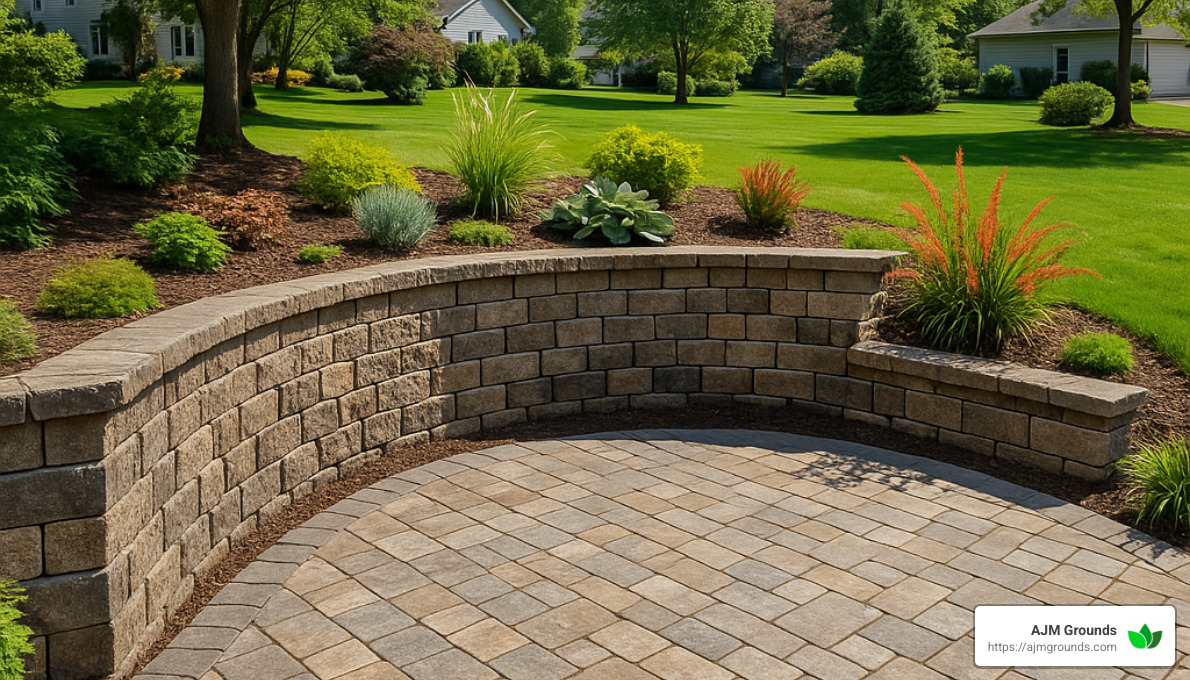
Creating a retaining wall with paver patio is truly one of the most rewarding outdoor changes you can make to your home. I’ve seen how these projects can turn problematic slopes into stunning outdoor living spaces that families use and enjoy for decades.
Throughout my years at AJM Grounds, I’ve watched clients’ faces light up when they see their finished projects – what was once an unusable hillside becoming their favorite gathering spot. The beauty of these integrated designs is how they solve practical problems while enhancing both lifestyle and property value at the same time.
As we’ve explored in this guide, successful projects don’t happen by accident. They require thoughtful planning, quality materials, and careful attention to construction details – especially when it comes to drainage. When all these elements come together under skilled hands, the result is an outdoor space that stands the test of time, both structurally and aesthetically.
“We finally have the backyard we’ve always dreamed of,” one Winchester homeowner told me after we completed their terraced retaining wall with paver patio project last summer. “Our family practically lives out here now when the weather’s nice.”
That’s ultimately what drives our work at AJM Grounds – creating spaces where life happens. Where kids play, friends gather, and quiet evenings unfold under the stars. A well-designed outdoor space becomes an extension of your home, adding usable square footage without the cost of a traditional addition.
We bring more than a decade of experience to retaining wall with paver patio projects throughout Woburn, Bedford, Billerica, Burlington, Lexington, Reading, Stoneham, Wilmington, and Winchester. Our team understands the unique challenges of New England’s climate and terrain, and we’ve developed construction techniques specifically suited to our region’s freeze-thaw cycles and soil conditions.
Whether you’re looking to solve erosion issues, reclaim unusable yard space, or simply create a beautiful outdoor area for entertaining, a retaining wall with paver patio offers the perfect solution. And with our professional design and installation services, you can be confident in both the process and the outcome.
Ready to transform your outdoor space? We’d love to help. Contact us today for a free consultation and find how our retaining wall construction and patio installation services can create a custom outdoor living area perfectly suited to your property’s unique characteristics and your family’s lifestyle.
Our comprehensive hardscaping services are designed with one goal in mind: creating beautiful, functional outdoor spaces where memories are made and everyday life is improved through thoughtful, expertly crafted design.
