

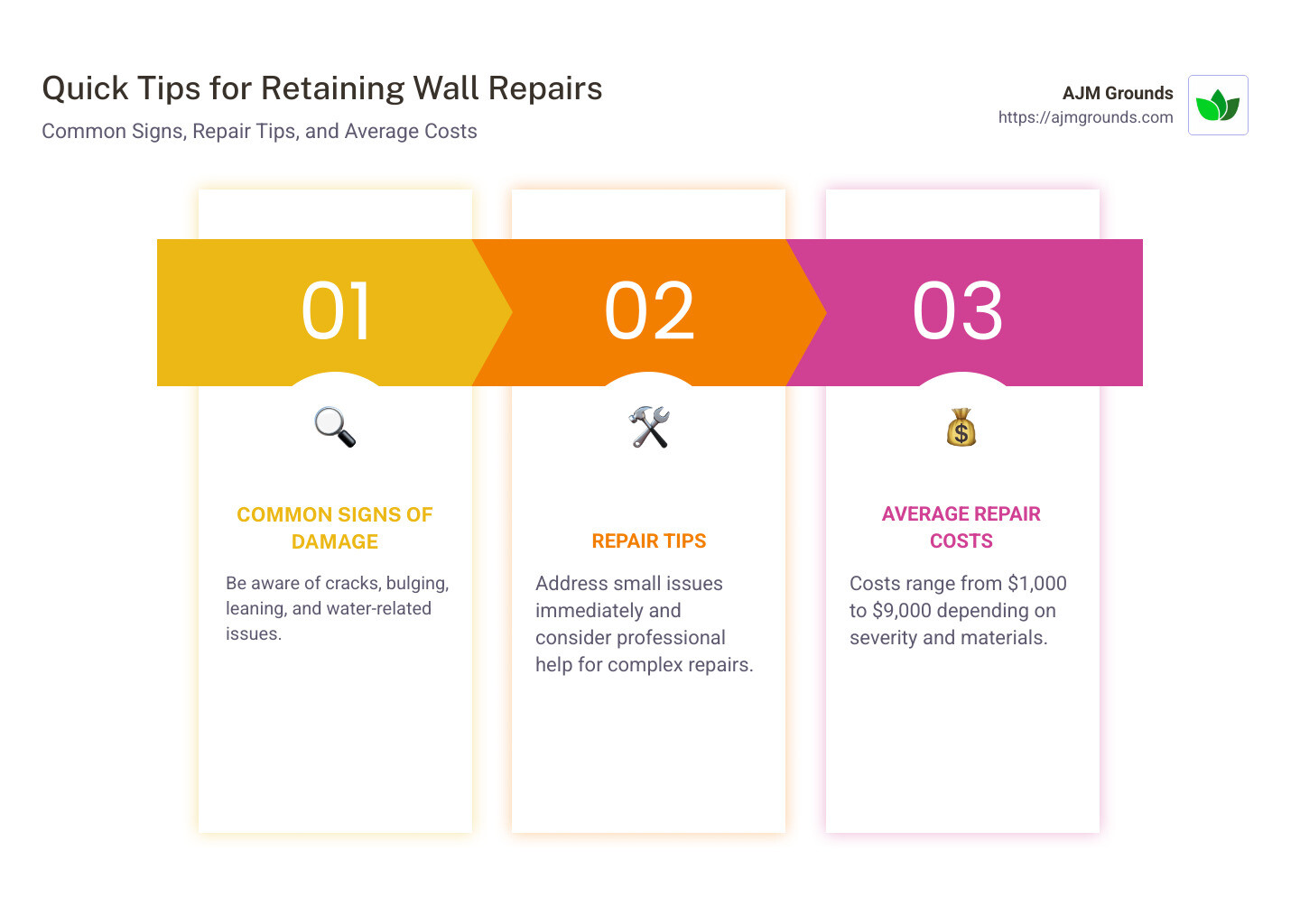
Retaining wall repairs are crucial to ensure both the structural integrity and aesthetic appeal of your property. Whether you’re noticing cracks, bulging, or water damage, addressing these issues promptly is essential to prevent further damage and maintain the beauty of your landscape. Here are a few quick things to know:
- Common signs of damage: Cracks, bulging, leaning, and water-related issues.
- Repair tips: Address small issues immediately and hire professionals for complex repairs.
- Average repair costs: Range from $1,000 to $9,000 depending on the severity and materials, based on average data.
I’m John Caplis, the owner of AJM Grounds. With years of experience changing outdoor spaces, I’m here to guide you through the complexities of retaining wall repairs. My team and I specialize in ensuring your structures are as beautiful as they are sound. Let’s dig into the critical aspects of how these repairs can improve your property.
Retaining wall repairs definitions:
– Natural stone retaining walls
– Retaining wall construction
– Hardscaping contractor
Understanding Retaining Walls
Retaining walls are essential in landscaping, offering both functional and aesthetic benefits. They help prevent soil erosion, create usable outdoor spaces, and enhance the visual appeal of your property. Let’s delve into the various types and materials used for these crucial structures.
Types of Retaining Walls
Gravity Walls
Gravity walls depend on their mass to hold back soil. Constructed from heavy materials like stone or concrete, these walls are ideal for shorter heights. They utilize their weight to counteract the pressure of the soil behind them.
Cantilevered Walls
Cantilevered walls feature a distinctive design with a base that extends into the ground. This base acts as a lever, using the weight of the soil to stabilize the wall. Typically made from reinforced concrete, these walls are suitable for taller structures.
Anchored Walls
Anchored walls incorporate cables or supports anchored into the surrounding soil or rock. This type of wall provides additional reinforcement and is often used in areas with high loads or challenging terrains.
Common Materials Used
Concrete
Concrete is a favored choice for retaining walls due to its strength and durability. It can be molded into various shapes and sizes, making it versatile for different designs. Concrete walls are low maintenance and can last for decades with proper care.
Stone
Stone walls offer a natural, timeless look that blends seamlessly with outdoor landscapes. While they require more skill to construct, the aesthetic appeal of stone walls is unmatched. However, they may need more upkeep to maintain their appearance over time.
Wood
Wooden retaining walls provide a rustic charm that can enhance the warmth of your garden. They are typically more cost-effective but require regular maintenance to prevent rot and insect damage. Using treated wood can extend the lifespan of these walls.
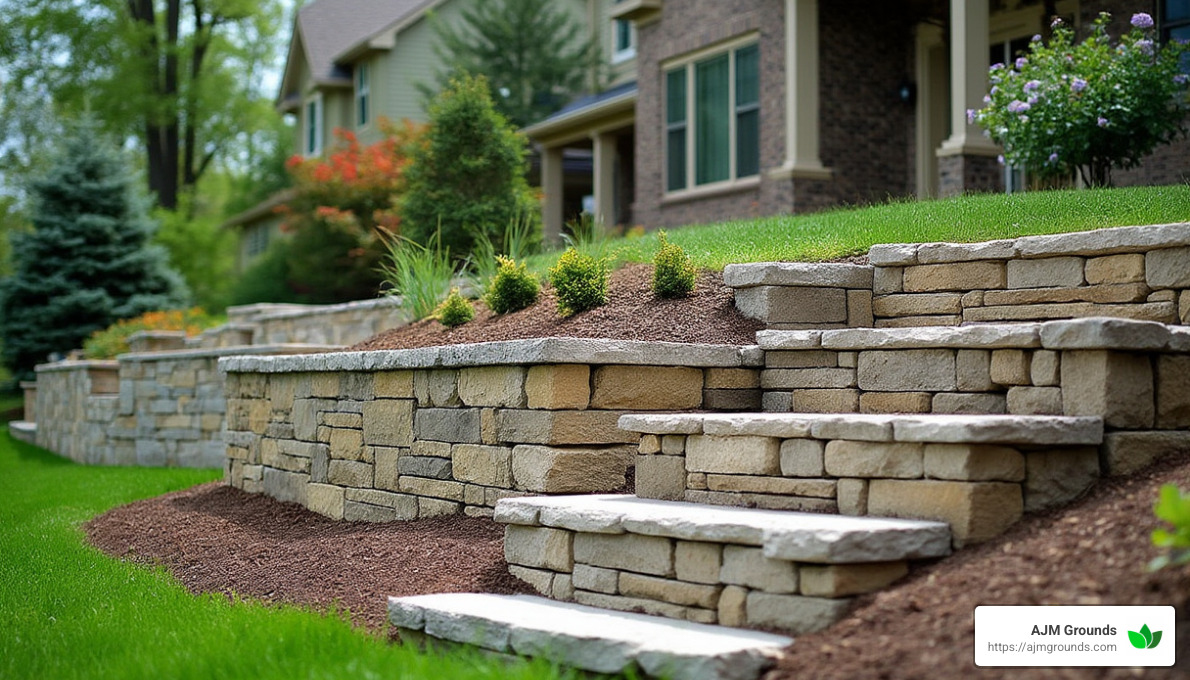
Each type of retaining wall and material has its own benefits and is suited for specific needs and environments. When planning your retaining wall, consider the landscape, the wall’s purpose, and the overall look you want to achieve.
Next, we’ll explore how to identify signs that your retaining wall needs repair and the best techniques to address them. Remember, any pricing mentioned in future sections will be average costs based on internet data and not actual costs for AJM Grounds, with a wide range to account for variability.
Signs Your Retaining Wall Needs Repair
Retaining walls are crucial for maintaining the stability and beauty of your landscape. However, like any structure, they can show signs of wear and tear over time. Recognizing these signs early can save you from costly repairs or even complete wall failure. Let’s look at the most common indicators that retaining wall repairs are needed.
Cracks and Fractures
Cracks in retaining walls are common and can vary in severity. Horizontal cracks often signal excessive pressure from the soil pushing against the wall. This pressure can be from water saturation or soil expansion. Vertical cracks, on the other hand, might indicate settling or foundational issues. These cracks can compromise the wall’s integrity if not addressed promptly.
Small Cracks: These are usually less than a quarter-inch wide and can often be repaired with epoxy or sealant.
Large Cracks: Larger cracks might require reinforcement with steel bars or hydraulic cement to restore strength.
Prevention: Regular inspection and maintenance can prevent cracks from worsening. Proper drainage and construction methods are key to avoiding future issues.
Bulging or Leaning
A bulging or leaning wall is a serious concern. This usually occurs when the wall can no longer handle the pressure from the soil behind it. Soil pressure is the main culprit, often exacerbated by inadequate drainage or foundational shifts.
Temporary Fixes: In some cases, temporary braces or supports can stabilize the wall until a permanent solution is implemented.
Permanent Solutions: Rebuilding sections of the wall, adding reinforcements like steel rods, or improving drainage can provide long-term stability.
Monitoring: Keep an eye on any signs of movement. Small shifts can escalate quickly, especially in areas with expansive soils or those prone to frost heave.
Water Damage and Drainage Issues
Water is one of the biggest threats to retaining walls. Signs of water damage include staining, efflorescence (white mineral deposits), and erosion at the wall’s base. These indicate that water is not being properly channeled away from the wall.
Identifying Damage: Look for visible signs of moisture, such as dark spots or mineral build-up. Moisture meters can help determine the extent of water infiltration.
Improving Drainage: Installing weep holes, French drains, or perforated drain tubes can significantly reduce water pressure.
Long-Term Management: Regular maintenance of drainage systems is essential. Clear debris from drainage paths and ensure they remain unblocked to prevent water build-up.
Addressing these issues promptly can preserve the structural integrity of your retaining wall and avoid more extensive damage. Up next, we’ll dive into the specific techniques and tips for repairing these common problems.
Retaining Wall Repairs: Techniques and Tips
Repairing Cracks and Fractures
Cracks in retaining walls can range from minor to severe and require different approaches for repair. Small cracks, usually less than a quarter-inch wide, can often be fixed using epoxy or sealant. Start by cleaning the crack thoroughly to ensure the repair material adheres properly. For concrete walls, a concrete patching compound might be more suitable.
For large cracks, more robust methods are necessary. Reinforcing the crack with steel bars or rods can provide additional strength. Hydraulic cement is a great choice for filling these larger gaps, as it expands when it sets, ensuring a tight bond with the existing material.
To prevent future cracks, focus on regular inspections and maintenance. Proper drainage and construction techniques are key. Ensure that the wall is built to handle soil pressure and that water is effectively diverted away from the structure.
Addressing Bulging or Leaning Walls
A retaining wall that is bulging or leaning is a red flag indicating serious structural stress. Soil pressure is often the main cause, worsened by poor drainage or foundation shifts.
For immediate relief, temporary stabilization methods like braces or supports can be used to hold the wall in place. Tiebacks and anchors can offer additional stability by securing the wall to the surrounding soil.
For a permanent repair, rebuilding affected sections might be necessary. This allows for correcting foundational issues and ensuring proper reinforcement. Adding steel rods or geogrid materials can provide long-term stability. Improving drainage by using gravel or sand during backfilling can help alleviate soil pressure.
To prevent future movement, ensure proper drainage to reduce water pressure behind the wall. Regular inspection can help catch early signs of movement, allowing for timely interventions.
Fixing Water Damage and Drainage Issues
Water is a common enemy of retaining walls, often leading to structural damage. Identifying water damage is crucial; look for signs like staining, efflorescence, and erosion at the base of the wall. Moisture meters can help assess the extent of water infiltration.
To improve drainage, consider installing weep holes at the base of the wall to allow water to escape. French drains and other drainage solutions can help divert water away from the wall, reducing pressure. Applying a waterproof membrane can also protect the wall from moisture.
Long-term water management involves regular maintenance of drainage systems. Ensure that debris is cleared and that drainage paths remain unblocked. Proper grading of the surrounding area can further help direct water away from the wall.
By addressing these issues promptly, you can maintain the structural integrity of your retaining wall and avoid more extensive damage. Up next, we’ll explore whether to tackle these repairs yourself or hire a professional.
DIY vs. Professional Retaining Wall Repairs
Deciding between a DIY approach and hiring a professional for retaining wall repairs can be tricky. Let’s break down the pros and cons of each option to help you make an informed decision.
Pros and Cons of DIY Repair
Pros:
- Cost-Effective: DIY repairs can save you money on labor costs. By handling the work yourself, you only need to cover the cost of materials.
- Satisfaction: Completing a repair on your own can be rewarding and satisfying, especially if you’re handy and enjoy working on home projects.
Cons:
- Skill Level: Retaining wall repairs often require a good understanding of structural engineering principles. Without this knowledge, you might end up with a temporary fix rather than a long-term solution.
- Time and Effort: DIY projects can be time-consuming, especially if you’re learning as you go. Consider whether you have the time and energy to commit to the project.
When to Hire a Professional
There are times when hiring a professional is the best choice:
- Complex Repairs: If your wall shows significant structural damage, such as extensive leaning or large cracks, it’s time to call in the experts. Professionals have the tools and experience to handle these complex issues safely.
- Structural Safety: Retaining walls hold back tons of soil, and improper repairs can lead to catastrophic failure. If there’s any doubt about the wall’s safety, professional intervention is crucial.
- Expertise: Professionals bring a wealth of knowledge and experience. They can diagnose underlying problems, ensure proper drainage, and use the best materials for lasting repairs.
Choosing a Qualified Contractor
When you’ve decided that professional help is necessary, selecting the right contractor is key.
- Local Contractors: Start by looking for contractors in your area, such as those in Bedford, Billerica, or Woburn, MA. Local professionals are familiar with regional soil conditions and weather patterns, which can impact the repair process.
- Credentials: Check the contractor’s credentials, including licenses and insurance. While there’s no official certification for retaining wall repair, look for contractors with experience in soil stabilization and foundation repair.
- Quotes: Obtain multiple quotes to compare services and costs. That while the cheapest option might be tempting, quality should not be sacrificed. Investing in quality materials and workmanship will save you money in the long run.
By weighing the pros and cons of DIY repairs against the benefits of hiring a professional, you can make the best decision for your retaining wall project. Up next, we’ll dive into some frequently asked questions about retaining wall repairs.
Frequently Asked Questions about Retaining Wall Repairs
What causes retaining walls to crack?
Cracks in retaining walls can be alarming. They often arise from a few common causes:
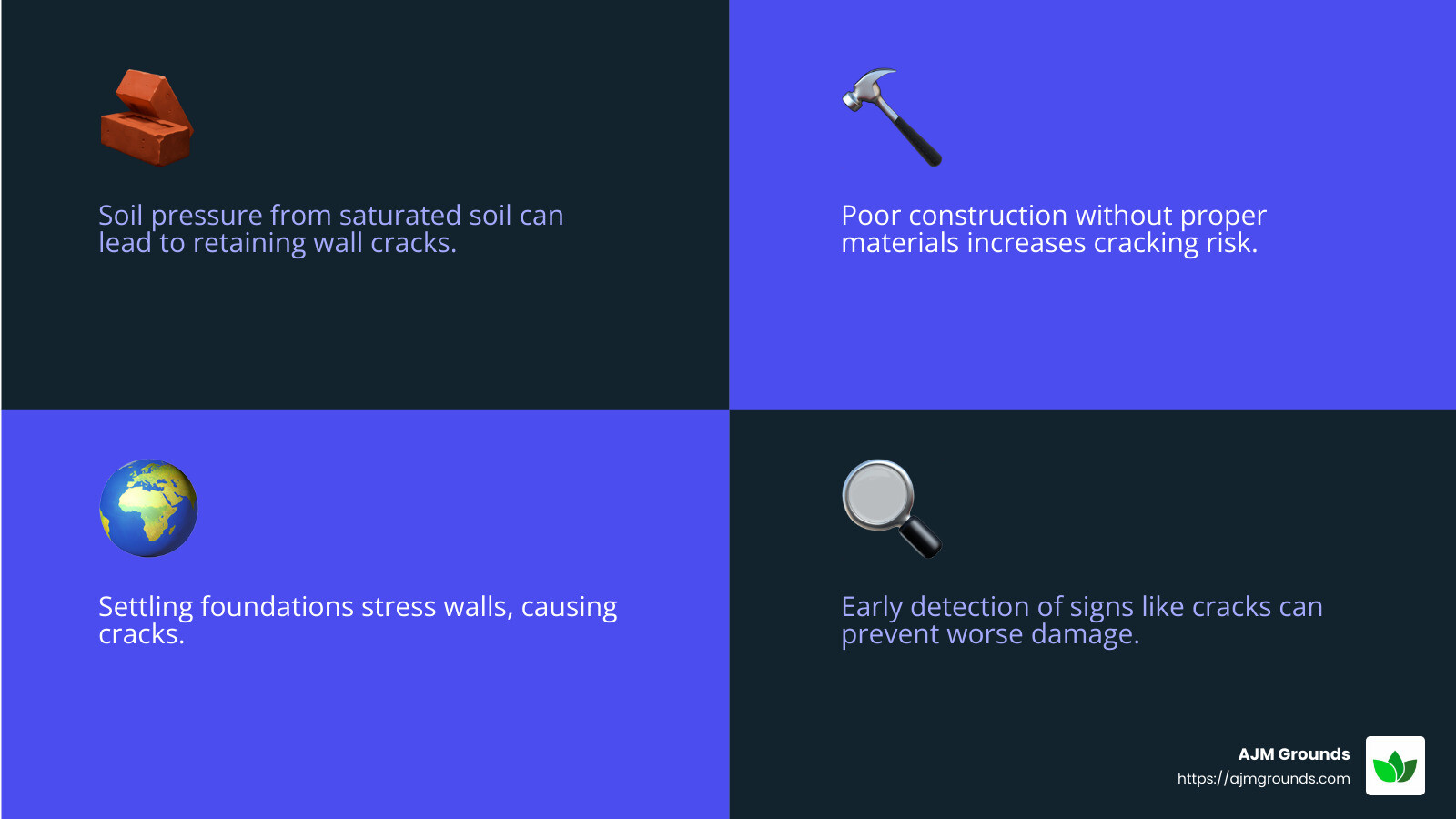
- Soil Pressure: Over time, the soil behind a retaining wall exerts pressure that can lead to cracks. This pressure is especially high after heavy rains when the soil becomes saturated and expands.
- Poor Construction: If a retaining wall isn’t built correctly, it may not withstand the natural forces acting on it. Using incorrect materials or inadequate reinforcement can lead to premature cracking.
- Settling Foundations: As the ground settles, so too can your retaining wall. This settling can cause stress on the wall, leading to cracks over time.
How can I tell if my retaining wall needs repair?
Identifying the need for retaining wall repairs early can save you from more significant problems later. Look for these signs:
- Cracks: Both horizontal and vertical cracks are indicators of underlying issues. Horizontal cracks often suggest soil pressure, while vertical ones may point to settling.
- Bulging or Leaning: If your wall is bulging or leaning, it may be losing its ability to hold back soil. This can be a serious structural concern.
- Water Damage: Look for signs of water damage, like staining or efflorescence (white mineral deposits). Water can weaken the wall and lead to erosion at its base.
Can I repair a retaining wall myself?
You might wonder if you can handle repairs on your own. Here’s what to consider:
- Minor Repairs: If the damage is minimal, such as small cracks or slight water damage, a DIY approach might be feasible. Just ensure you have the right materials and tools.
- Professional Expertise: For significant issues, like large cracks or leaning walls, it’s wise to hire a professional. They have the expertise to diagnose root causes and ensure repairs are done safely and effectively.
- Safety: Retaining walls hold back a lot of weight. Improper repairs can lead to failure, which might be dangerous. If there’s any doubt about the wall’s integrity, it’s best to consult with a professional.
By understanding these common questions, you’re better equipped to maintain your retaining walls effectively. Next, we’ll explore in detail some advanced techniques for retaining wall repairs.
Conclusion
At AJM Grounds, we understand that retaining walls are more than just functional structures—they are key elements that improve the beauty and stability of your landscape. Our commitment to personalized service and attention to detail ensures that every project we undertake meets the unique needs of our clients.
Whether you’re facing minor cracks or significant structural issues, our team of experts is ready to help. We take the time to assess your specific situation, providing solutions that not only address the immediate problem but also prevent future issues. Our approach combines traditional craftsmanship with modern engineering techniques, ensuring that your retaining wall repairs are both effective and long-lasting.
Choosing AJM Grounds means choosing a partner who cares about your property as much as you do. We pride ourselves on delivering quality workmanship and exceptional customer service. Our team is dedicated to making sure your retaining walls remain strong, safe, and visually appealing for years to come.
If you’re in Woburn, MA, or any of the surrounding areas such as Bedford, Billerica, or Lexington, and need professional assistance with your retaining wall, contact us today. Let us bring our expertise and passion for landscaping to your project.
For more information on our hardscaping services and how we can assist you, visit our hardscaping page. Let’s transform your landscape together!
