

Transform Your Property with Professional Retaining Wall Lighting
Retaining wall lights installation can completely transform your outdoor space, turning functional structures into stunning nighttime focal points that improve safety, security, and curb appeal. Whether you’re building a new wall or retrofitting an existing one, proper lighting installation requires careful planning and the right techniques.
Quick Installation Overview:
- Plan your layout – Space lights 6-8 feet apart for even illumination
- Choose your method – Install during construction (easiest) or retrofit existing walls
- Use low-voltage systems – 12V or 24V systems are safest for DIY installation
- Focus on waterproofing – All connections must be weatherproof for longevity
- Test before finalizing – Verify all lights work before securing capstones
The benefits are clear: LED retaining wall lights can last up to 50,000 hours while consuming up to 80% less power than traditional bulbs. These installations improve safety by illuminating pathways and steps, boost security by eliminating dark areas, and can significantly increase your property value.
Most homeowners prefer warm white lighting in the 2700K-3000K range for a cozy, inviting atmosphere. The key is proper spacing – lights should be placed about six feet apart to ensure consistent lighting without dark spots.
I’m John Caplis, owner of AJM Grounds LLC, and I’ve been helping Woburn homeowners improve their properties with professional landscape lighting for years. My experience with retaining wall lights installation has taught me that the right combination of planning, quality materials, and proper techniques creates lighting systems that perform beautifully for decades.
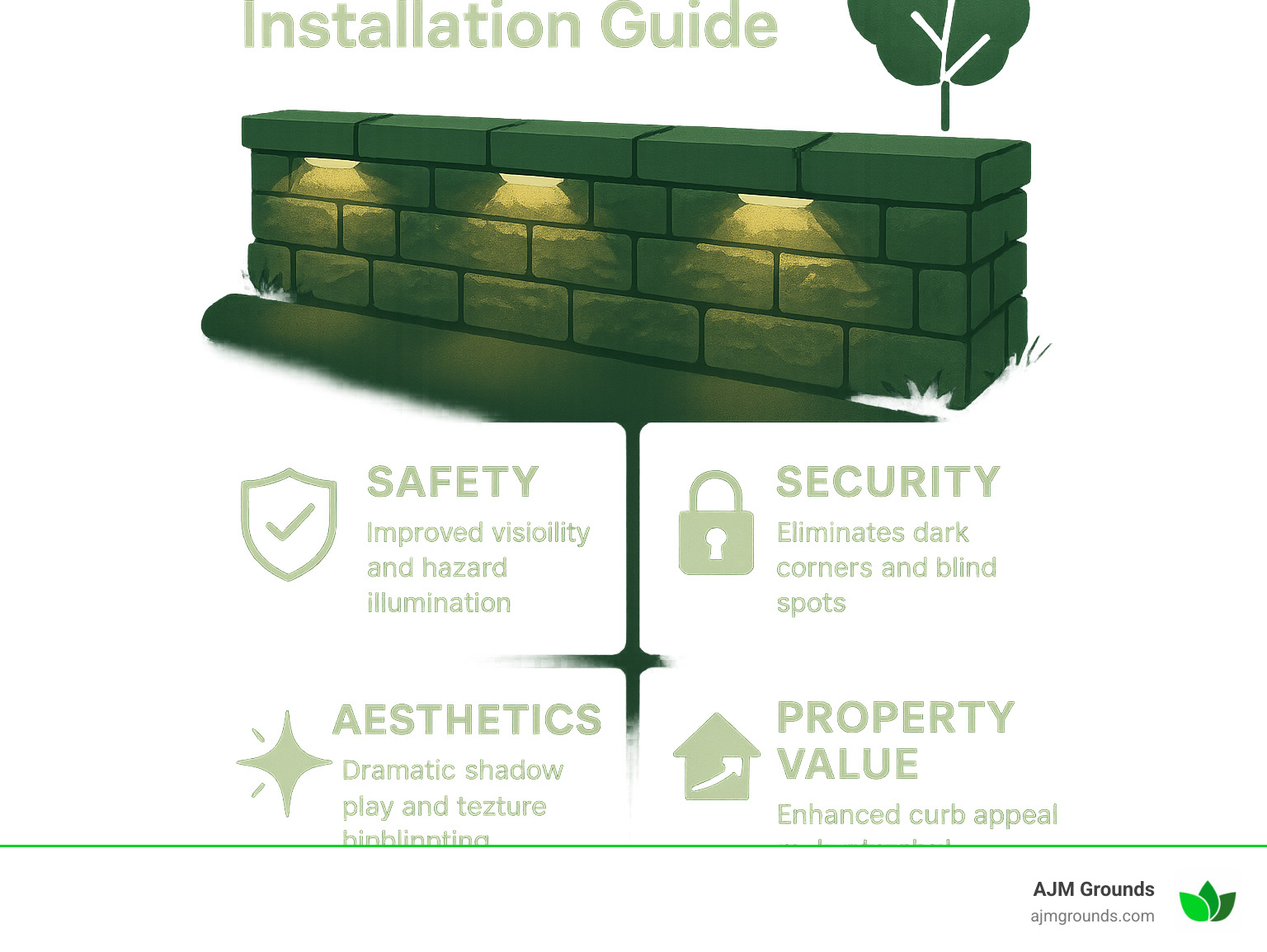
Retaining wall lights installation vocab explained:
Planning Your Retaining Wall Lighting Project
Success in retaining wall lights installation starts with smart planning. This initial step ensures your lighting project delivers stunning results that improve both safety and beauty for years to come.
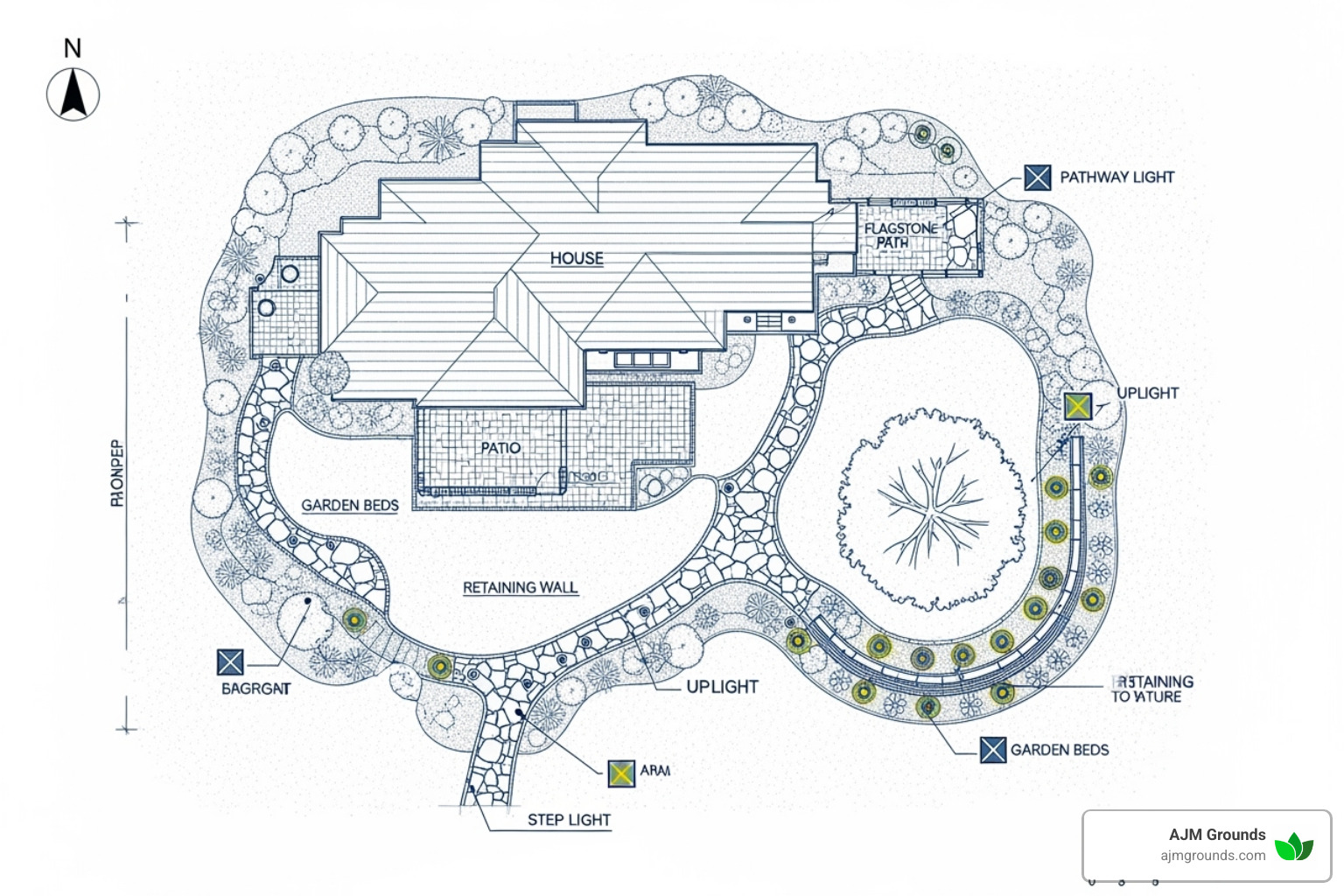
When I work with homeowners throughout Woburn and the surrounding areas, we always start by imagining how the space will look after dark. What mood are we trying to create? Which architectural features deserve the spotlight? Where do people walk that needs better visibility? These questions guide every decision we make about fixture types, placement, and power requirements.
Proper planning prevents common issues like uneven lighting, mismatched fixtures, or electrical problems that require expensive fixes. For comprehensive guidance on creating cohesive outdoor lighting schemes, check out our Hardscape Lighting Design insights.
Choosing the Right Lights for Your Wall
Not all retaining wall lights are created equal. Matching the right fixture to your wall material and desired effect is key to a successful project.
Under-cap lights create a sophisticated ambiance. These LED strips or small fixtures tuck neatly beneath the capstone, casting a downward glow that highlights the wall’s texture while hiding the light source. Choose fixtures with at least an IP65 waterproof rating for durability.
Recessed puck lights offer a sleek, built-in appearance. Embedded directly into the wall face, they create distinct pools of light. Brass or stainless steel fixtures with frosted lenses provide a professional look, especially in concrete block walls where recesses can be planned during construction.
For pure drama, uplighting fixtures are best. These ground-mounted spotlights shine upward from the wall’s base, creating a “wall grazing” effect. This technique reveals texture and creates captivating shadow patterns. For the most striking results, position them 12-24 inches from the wall base with narrow beam angles of 15-30 degrees.
Your wall material helps determine the best lighting approach. Concrete blocks have clean lines and hollow cores that simplify wire routing. Natural stone walls come alive with uplighting or under-cap fixtures that reveal each stone’s character; we love helping homeowners showcase their Natural Stone Retaining Walls. Wood walls require moisture protection but offer warm lighting effects. Gabion walls (wire cages filled with rocks) create fascinating patterns when lit from within or with uplights.
Designing for Ambiance and Safety
Great retaining wall lights installation balances beauty with function. You want lighting that’s gorgeous to look at but also makes your outdoor spaces safer to steer after dark.
Spacing is everything when it comes to professional-looking results. I recommend placing lights 6-8 feet apart to ensure even coverage without annoying dark spots. Most retaining wall fixtures spread their light about 4 feet in each direction, so this spacing creates that seamless, overlapping glow that screams quality installation.
Color temperature is about mood. Warm white lighting in the 2700K-3000K range creates a cozy, inviting atmosphere most homeowners love, perfect for relaxing outdoors.
Beam spread determines whether you get dramatic shadows or gentle washes of light. Narrow beams (15-30 degrees) create stunning texture reveals, especially with the wall grazing technique. Wider beams (60+ degrees) provide more even coverage for general illumination.
We want to light your property beautifully without creating light pollution that bothers neighbors or impacts the night sky. Our designs focus light exactly where it’s needed while respecting the broader environment. You can learn more about this important topic through scientific research on light pollution.
Understanding Power: The Case for Low-Voltage Systems
When it comes to outdoor electrical work, safety is everything. That’s why I exclusively recommend low-voltage systems (12V or 24V) for residential retaining wall lighting projects.
Low-voltage systems dramatically reduce shock hazards, making them much safer for homeowners and ideal for DIY retaining wall lights installation. This safety factor makes them far more user-friendly than high-voltage alternatives.
Energy-efficient LEDs pair perfectly with low-voltage systems, consuming up to 80% less power than traditional bulbs and lasting up to 50,000 hours. This means lower electric bills and virtually no bulb replacements for decades.
Transformer sizing requires simple math but is crucial for system reliability. Add up the total wattage of all your planned fixtures, then choose a transformer with at least 20% more capacity. For example, 80 watts of lights needs at least a 100-watt transformer. This overhead prevents overloading and extends equipment life.
Every outdoor lighting system must plug into a GFCI-protected outlet – no exceptions. This safety device detects electrical problems and shuts off power instantly, preventing dangerous situations.
One critical consideration: your lighting installation should never interfere with your wall’s drainage system. Proper water management is essential for retaining wall longevity, and our lighting designs always respect these requirements. For more insights on this topic, explore our Landscape Drainage Solutions guide.
The planning phase is the difference between a lighting system that wows visitors for decades and one that becomes a constant source of frustration. Take the time to plan it right, and you’ll thank yourself every time you flip that switch.
The Complete Guide to Retaining Wall Lights Installation
Now for the hands-on part: the retaining wall lights installation. This is where careful planning meets craftsmanship. Whether for a new or existing wall, success depends on the right approach, quality materials, and attention to detail.
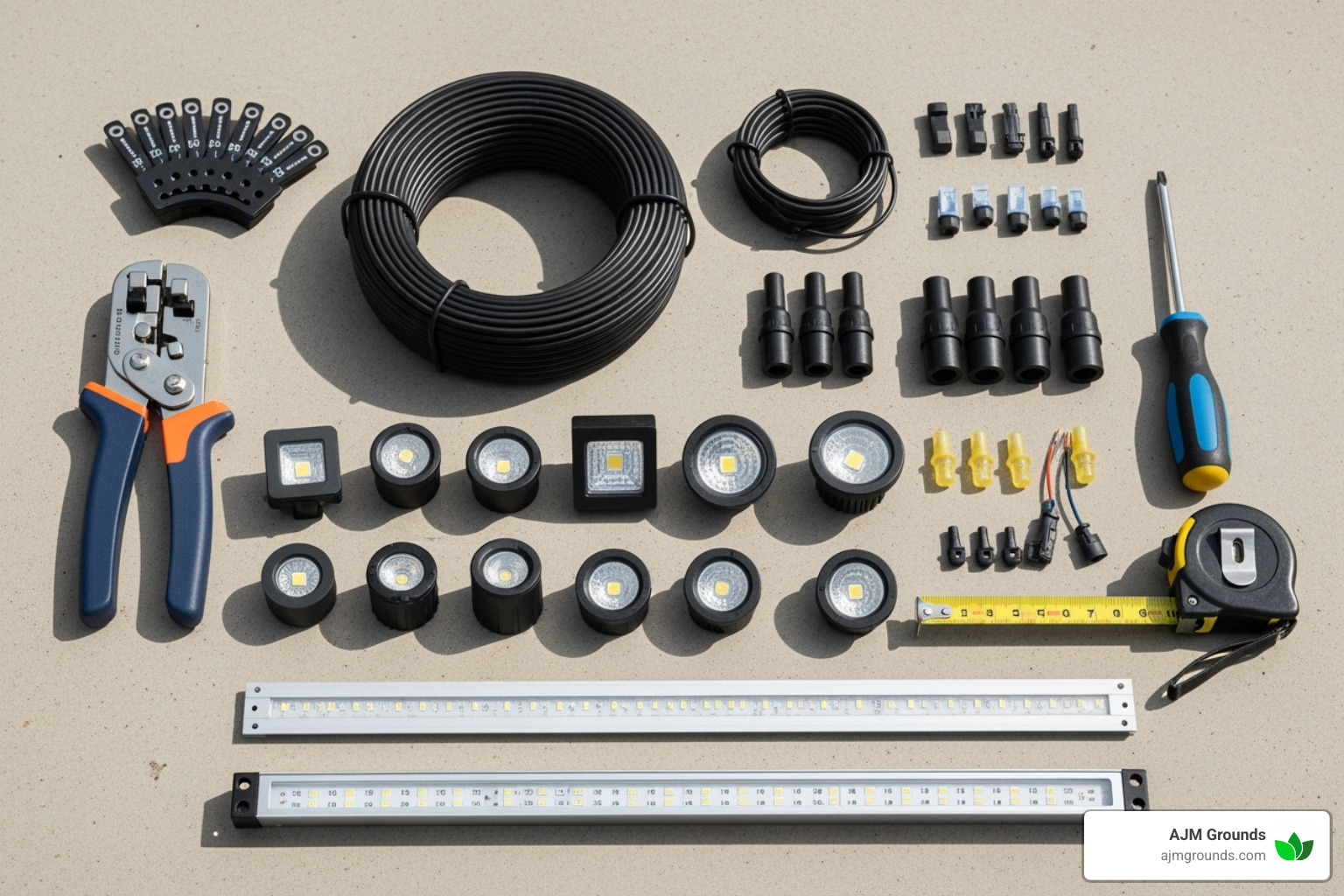
Preparation is half the battle. Arriving with organized tools ensures a smooth installation. Safety is paramount, so always use protective gear with power tools. Proper waterproofing is also critical, making the difference between a system that lasts for decades and one that fails after the first heavy rain.
Essential Tools and Materials for your Retaining Wall Lights Installation
Getting the right equipment before starting saves time and frustration. Over the years, I’ve refined our tool list to include exactly what’s needed for professional results.
For cutting and drilling, you’ll need an angle grinder with a diamond-tipped blade, a hammer drill with various masonry bits, and a masonry chisel and hammer for delicate work.
The assembly and finishing tools include a caulking gun for masonry adhesive, wire strippers, a tape measure, level, and screwdrivers. Don’t forget safety glasses and ear protection—I never compromise on safety gear.
Material selection is critical for any retaining wall lights installation. Your light fixtures must have an IP65 rating or higher. The low-voltage wire should be UL-listed, direct-burial cable. Waterproof connectors—either silicone-filled wire nuts or heat shrink tubing—are essential for watertight seals. Finally, quality masonry adhesive and anchors ensure everything stays securely in place.
Step-by-Step Retaining Wall Lights Installation During Construction
Installing lighting during new wall construction is the cleanest, most professional approach. It allows for seamless wire integration, creating a built-in look. We encourage clients to consider lighting during initial planning when we discuss How to Install a Block Retaining Wall.
Planning fixture placement happens as the wall takes shape. We mark exact locations on each block, maintaining that crucial six to eight-foot spacing. With modern block systems, especially those with hollow cores, running wire is surprisingly straightforward. We feed the low-voltage cable through these hollow spaces as each course goes up, bringing it out precisely where each light will sit.
This approach simplifies fixture preparation. For recessed lights, we cut holes in block faces while they’re accessible. Under-cap lights are positioned so wires emerge perfectly beneath the capstone location. Making waterproof connections is also much easier at this stage.
A crucial step is testing everything before final installation. Connect the transformer and verify every light works. Finding a faulty connection after the capstones are glued down is a major headache. The Lighting in Retaining Walls resource from Allan Block provides more technical details for block-specific installations.
Securing the capstones completes the process. We apply masonry adhesive, then carefully position each capstone for perfect alignment. The result is a completely integrated and professional lighting system.
How to Retrofit Lights into an Existing Wall
Don’t worry if your retaining wall is already built—we’ve transformed plenty of existing walls for homeowners throughout Billerica, Stoneham, and beyond. While retrofitting requires more precision than new construction, the results are worth the effort.

Removing capstones demands care and patience. We use a masonry chisel and hammer to gradually break the adhesive bond, working slowly to preserve the stones. If any damage occurs, our Retaining Wall Repairs service can address those issues.
Once capstones are removed, cutting wire channels is the main task. An angle grinder with a diamond blade creates precise, shallow channels along the top course for the wire to sit flush.
Mounting fixtures in retrofits often requires masonry anchors for extra security. We combine mechanical fasteners with quality masonry adhesive for the most reliable attachment. Creating waterproof connections is even more critical here.
The drip loop technique is a professional touch. We create a small downward loop in the wiring before each connection. This simple detail directs water away from the splice, preventing future problems.
Reinstalling capstones requires the same care as removal. We apply fresh masonry adhesive and position each stone for proper alignment. Excess wiring is buried to maintain a clean, professional appearance.
Retrofit work takes more patience, but watching an ordinary wall transform into a dramatic nighttime focal point makes it all worthwhile.
Advanced Features and Long-Term Maintenance
Your retaining wall lights installation is just the beginning of a beautiful relationship with your outdoor space! Modern technology has opened up exciting possibilities for smart controls, while simple maintenance practices will keep your lights performing beautifully for decades. Think of it as the cherry on top of your lighting sundae – these features transform a great installation into an absolutely fantastic one. For a broader perspective on enhancing your outdoor space, consider our guide on Incorporating Outdoor Lighting into Your Landscape Design.
Integrating Smart Controls for Modern Convenience
The world of smart home technology has completely changed how we interact with our outdoor lighting, and honestly, once you experience the convenience, there’s no going back! We love helping our clients in Winchester and Burlington find just how easy modern lighting control can be.
Wi-Fi transformers are absolute game-changers for retaining wall lights installation projects. These clever devices connect directly to your home’s Wi-Fi network, putting complete control right in your pocket through smartphone apps. Want to turn your lights on while you’re still at work? Done. Need to dim them for a romantic dinner on the patio? Easy as pie.
For existing installations, smart plugs offer a budget-friendly entry into smart lighting. Simply plug your current transformer into one of these devices, and suddenly you can control your entire lighting system remotely. It’s like giving your old system a brain transplant!
The real magic happens with scheduling and automation. Modern smart systems can automatically turn your retaining wall lights on at dusk and off at dawn, adjusting throughout the seasons. Some homeowners love creating different schedules for weekdays versus weekends, or even integrating motion sensors for added security. Imagine never having to remember to turn your lights on again!
Voice control integration brings us into the future we dreamed about as kids. Compatible systems work seamlessly with Amazon Alexa or Google Assistant, so you can simply say “turn on the patio lights” and watch your retaining wall come to life. It never gets old, trust me.
For the creative types, smart RGB LED strips open up a rainbow of possibilities. Change colors for holidays, create different moods for parties, or simply enjoy something new each evening. Your retaining wall becomes a canvas for expression. Explore more about how we blend functionality with aesthetics in our Residential Hardscape Design services.
Best Practices for Maintaining Your Wall Lights
While LED retaining wall lights boast an impressive lifespan of up to 50,000 hours, a little tender loving care ensures they’ll look and perform their absolute best throughout their long lives. Think of maintenance as an investment in keeping your beautiful installation shining bright.
Cleaning fixture lenses might seem obvious, but it’s amazing how much brighter your lights become after a simple wipe-down. Dirt, pollen, and dust love to accumulate on those surfaces, gradually dimming your beautiful illumination. A soft, damp cloth every few months works wonders – it’s like giving your lights a refreshing spa day.
Checking wire connections annually gives you peace of mind and catches small issues before they become big problems. Even though we use top-quality waterproof connectors, nature has a way of testing everything over time. Look for any signs of wear, corrosion, or moisture where you can see connections, and don’t hesitate to call us if something looks off.
Your landscape grows and changes, which means trimming plants around your lights becomes an ongoing dance. Shrubs and perennials that were perfectly sized during installation might eventually block your fixtures or create unwanted shadows. A little pruning keeps your lighting performing exactly as designed while maintaining that crisp, professional appearance.
Understanding LED lifespan helps set proper expectations. Those 50,000 hours translate to roughly 20-25 years of typical residential use – pretty incredible! However, extreme voltage fluctuations or constant exposure to excessive heat can shorten their lives. This is why proper transformer sizing and good ventilation matter so much.
Regular nighttime inspections might sound formal, but really it’s just taking a pleasant evening stroll around your property. Are there any dark spots where lights have failed? Do any fixtures seem loose? Are all your lights creating the ambiance you love? Catching issues early prevents bigger headaches later and keeps your retaining wall lights installation looking professionally maintained.
By following these straightforward practices, your lighting investment continues enhancing your Woburn home’s beauty and functionality season after season. For comprehensive tips on maintaining your entire outdoor space, check out our guide on The 5 Most Important Things to Do to Maintain and Care for Your Landscape and Hardscape Over Time.
Frequently Asked Questions about Retaining Wall Lighting
Over the years, I’ve noticed that homeowners considering retaining wall lights installation tend to ask similar questions. Whether you’re chatting with us at a consultation in Woburn or calling from Burlington, these three topics come up almost every time. Let me share what I’ve learned from hundreds of installations!
What is the safest voltage for retaining wall lights?
Here’s something that might surprise you: low-voltage systems using 12V or 24V are dramatically safer than standard household current. I always recommend these systems to homeowners because they practically eliminate the risk of serious electrical shock.
Think of it this way – your household outlets deliver 120V, which can be dangerous if something goes wrong. But with low-voltage lighting, a simple transformer (that plugs into a regular outlet) steps down the power to a much gentler 12V or 24V. You could literally touch the wires without getting hurt, though I still don’t recommend it!
This safety factor makes low-voltage systems ideal for residential projects and DIY installation. The transformer does all the heavy lifting, converting your home’s power to something much more forgiving. It’s like having a safety net that lets you focus on creating beautiful lighting instead of worrying about electrical hazards.
Can I add lights to my existing retaining wall without rebuilding it?
Absolutely! This is probably the question I get asked most often, and I love giving this answer because it opens up so many possibilities for homeowners.
While installing lights during new construction is definitely easier (like baking ingredients into a cake versus frosting it later), retrofitting lights to existing walls is completely doable. We’ve done it countless times with great results.
You have several smart options for retrofitting. Under-cap lighting is often our go-to method – we carefully remove the capstones, install the fixtures and wiring underneath, then secure everything back in place. The result looks like the lights were always meant to be there. Our guide on Installing Cap Stone on Retaining Wall covers the capstone work in detail.
Surface-mounted fixtures offer another route, attaching directly to the wall’s face. While more visible than hidden options, quality fixtures can actually become attractive design elements themselves.
For a completely non-invasive approach, ground-mounted uplighting creates dramatic effects without touching the wall at all. We position fixtures in the soil near the wall’s base, angling light upward to create stunning shadow patterns and highlight the wall’s texture.
The beauty of many modern block walls is that they often have hollow cores, making wire running surprisingly straightforward even in existing structures. It’s like having secret passages already built into your wall!
What are the most common installation mistakes to avoid?
After years of retaining wall lights installation projects across areas like Wilmington and Reading, I’ve seen pretty much every mistake in the book. The good news? They’re all preventable with a little knowledge.
Over-lighting is probably the biggest culprit I encounter. More lights don’t always mean better results – too much illumination creates a harsh, airport-runway effect that actually detracts from your landscape’s natural beauty. Think subtle improvement, not stadium lighting!
Uneven spacing is another dead giveaway of amateur installation. When lights are placed randomly, you get distracting bright spots and dark zones that break up the visual flow. Sticking to our recommended 6-8 feet spacing creates that smooth, professional look that makes people wonder how you achieved such perfect results.
Here’s where things get technical but crucial: poor waterproofing kills more outdoor lighting systems than anything else. Every connection must be completely sealed against moisture. We’re talking IP65+ rated fixtures and proper waterproof connectors – no shortcuts allowed. And those drip loops I mentioned earlier? They’re like tiny umbrellas for your electrical connections, directing water away before it can cause problems.
Compromising your wall’s drainage is a mistake that can have serious consequences beyond just lighting issues. Your retaining wall needs proper water management to maintain its structural integrity, so fixture placement and wiring channels should never interfere with natural water flow.
Finally, using indoor-rated components outdoors might seem like an obvious mistake, but it happens more often than you’d think. Everything – fixtures, wires, connectors – needs to be specifically designed for outdoor conditions. Your lighting system needs to handle whatever New England weather throws at it!
The key is taking your time and doing things right the first time. A well-installed system will reward you with years of reliable, beautiful illumination.
Illuminate Your Landscape with Professional Installation
When you step back and admire a beautifully lit retaining wall at dusk, there’s something truly magical about how the right lighting transforms an ordinary structure into a stunning focal point. A well-executed retaining wall lights installation doesn’t just add beauty – it creates a safer outdoor environment, boosts your home’s security, and can significantly increase your property value.
The best part? This is absolutely a manageable project for DIY enthusiasts who enjoy weekend projects. With the right planning, quality materials, and attention to detail, you can create a lighting system that performs beautifully for decades. The low-voltage systems we’ve discussed throughout this guide are specifically designed to be homeowner-friendly while delivering professional results.
That said, there’s something to be said for the peace of mind that comes with professional installation. When you work with experienced professionals, you’re not just paying for labor – you’re investing in years of expertise, access to commercial-grade materials, and the assurance that every connection will be perfectly waterproofed and every fixture precisely positioned.
At AJM Grounds, we’ve seen how the right retaining wall lights installation can completely transform a property. Whether we’re working with clients in Woburn who want to highlight their natural stone walls, or homeowners in Bedford looking to improve safety around their pool area, the results are consistently impressive. Our attention to detail means we consider everything from optimal light spacing to long-term maintenance access, ensuring your investment pays dividends for years to come.
The beauty of professional installation lies in the seamless integration. When done right, the lighting looks like it was always meant to be there – no visible wires, perfectly aligned fixtures, and that warm, inviting glow that makes you want to spend more time outdoors even after sunset.
If you’re ready to illuminate your landscape and find what your property looks like when it truly shines, we’d love to help. Our team serves clients throughout Billerica, Burlington, Lexington, Reading, Stoneham, Wilmington, and Winchester, bringing creative lighting solutions that complement each property’s unique character.
Ready to get started? Learn more about our comprehensive approach to Retaining Wall Construction and find how we can help you create an outdoor space that’s as beautiful at night as it is during the day.
