

The Foundation of Great Landscape Design
Retaining wall landscaping transforms sloped yards into functional outdoor spaces, preventing erosion and adding stunning visual appeal. These structures hold back soil, prevent water runoff damage, create usable flat areas for gardens or patios, and add architectural interest to your property.
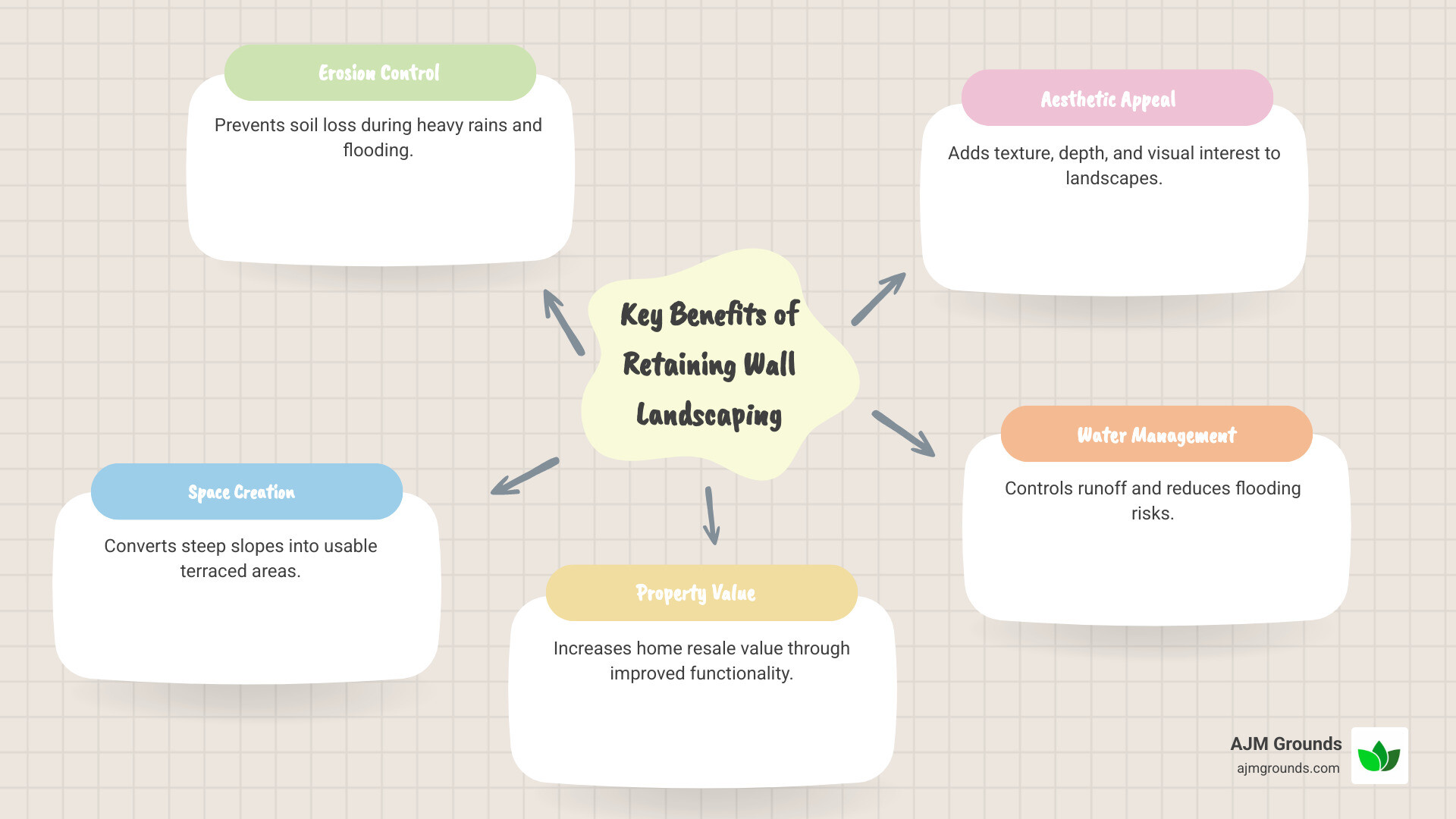
Key Benefits of Retaining Wall Landscaping:
- Erosion Control – Prevents soil loss during heavy rains and flooding
- Space Creation – Converts steep slopes into usable terraced areas
- Property Value – Increases home resale value through improved functionality
- Aesthetic Appeal – Adds texture, depth, and visual interest to landscapes
- Water Management – Controls runoff and reduces flooding risks
The main difference is structural: retaining walls hold back soil, while garden walls are freestanding and primarily decorative.
According to national data, retaining wall projects typically cost between $114-$173 per linear foot, though complex designs can range from $100 to over $500 per linear foot depending on materials and site conditions.
I’m John Caplis, owner of AJM Grounds LLC. For years, I’ve helped homeowners in Woburn, Massachusetts, transform challenging slopes into beautiful, functional outdoor spaces. My team specializes in combining structural engineering with creative design to deliver durable and visually stunning walls.
Retaining wall landscaping terms you need:
Key Elements of Retaining Wall Landscaping
This section covers the essential choices and considerations for designing a functional and beautiful retaining wall.
Choosing Your Materials: Pros, Cons, and Costs
Choosing the right material for your retaining wall landscaping project is crucial. It needs to look great, fit your budget, and last. After years of building walls across Woburn, I’ve learned each material has unique pros and cons.
Concrete blocks are a popular choice for homeowners. These modular systems offer diverse styles, colors, and textures, mimicking natural stone or modern designs. Their interlocking system ensures stability, and they’re built to last for decades with minimal maintenance.
The main drawback is their weight. For walls over three feet, professional installation is essential for structural integrity. Our concrete block retaining wall construction projects are moderately priced and deliver exceptional long-term value.
Natural stone walls offer an organic, timeless beauty. Using materials like fieldstone, granite, or limestone, natural stone retaining walls have a unique character that improves with age.
The trade-off is cost and time. Natural stone requires skilled craftspeople to select, fit, and secure each piece. It’s labor-intensive work, but for clients who want something truly special, it’s worth the investment.
Timber walls are a budget-friendly option for shorter walls or garden borders. Treated lumber provides a rustic look that suits wooded settings, and the straightforward installation appeals to DIY enthusiasts.
However, wood has a shorter lifespan. Even treated lumber will eventually succumb to rot and insects, requiring maintenance and eventual replacement. Railroad ties, while popular, may have chemical concerns due to creosote treatment.
Gabion walls are wire cages filled with stone or gravel. These industrial-chic walls provide excellent drainage and can be attractive with carefully selected stones. They are a budget-friendly option, especially for DIY projects. Their modern appearance works well in contemporary landscapes, and our installing a gabion retaining wall projects are popular with clients seeking unique, cost-effective solutions.
Poured concrete offers maximum strength and customization. It’s ideal for curves, integrated planters, custom textures, and tall walls requiring high structural integrity. The complexity and cost reflect its capabilities, requiring extensive formwork and professional expertise. Our concrete retaining wall installation projects are a significant investment but create walls that can last for generations.
| Material | Cost (Relative) | Lifespan | Maintenance | Aesthetic |
|---|---|---|---|---|
| Concrete Blocks | Moderate | Very Long (50+ years) | Low | Versatile, modern to traditional |
| Natural Stone | High | Very Long (100+ years) | Low to Moderate | Organic, rustic, neat, timeless |
| Wood/Timber | Low to Moderate | Short to Moderate (10-20 years) | Moderate to High | Rustic, natural, blends with foliage |
| Gabion Walls | Low | Long (25-50 years) | Low | Industrial, modern, unique |
| Poured Concrete | High | Very Long (75+ years) | Low | Modern, sleek, highly customizable |
Cost data is based on national averages found online and may range from $114 to over $500 per linear foot depending on complexity and materials; these are not quotes from AJM Grounds.
Creative Ideas for Retaining Wall Landscaping
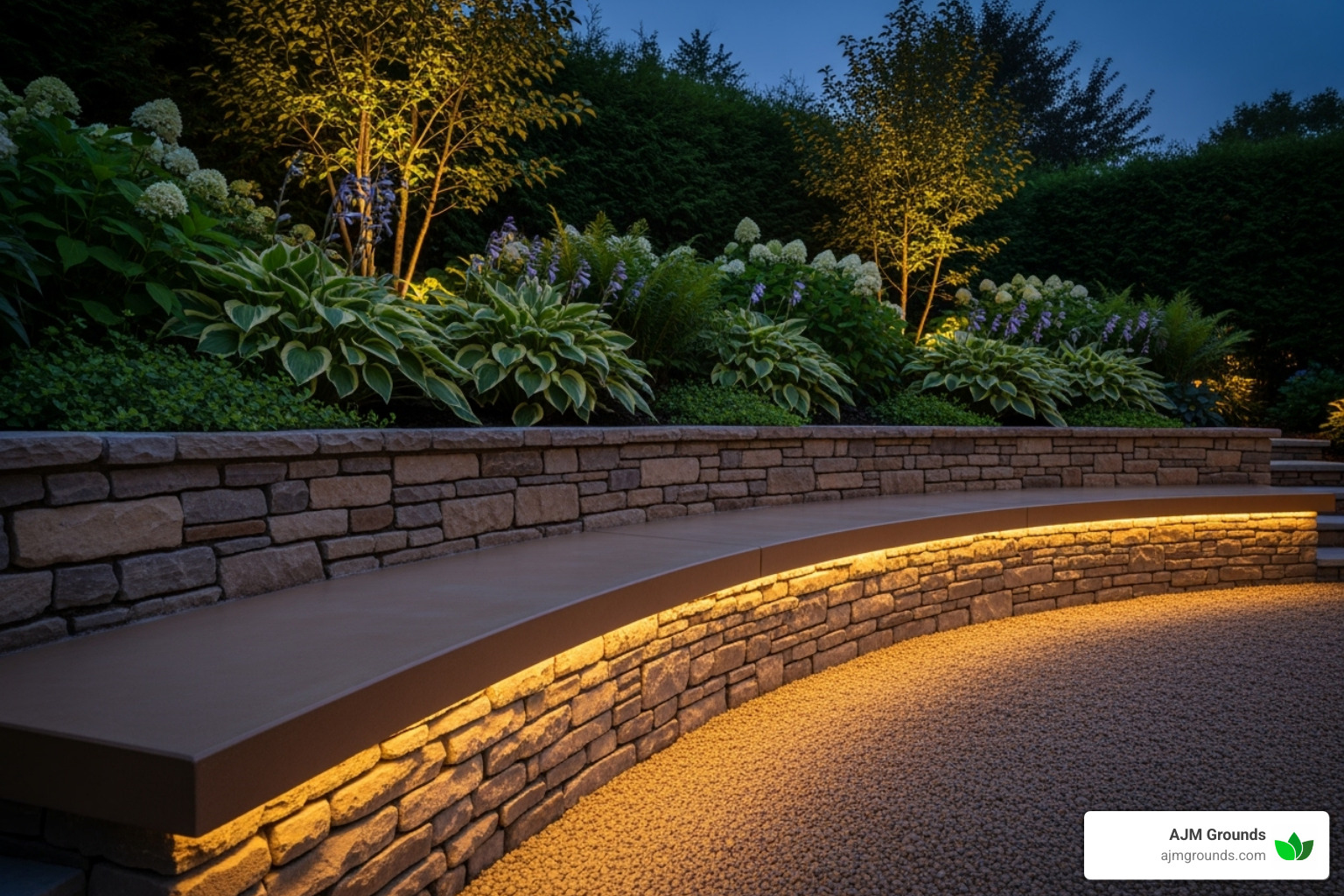
The best retaining wall landscaping projects are more than just functional; they become the backbone of your outdoor living space. Creative approaches can turn a necessity into a stunning focal point.
Tiered walls create dramatic changes. Instead of one imposing structure, a series of smaller, stepped walls feel more organic and create multiple planting opportunities. Structurally, multiple shorter walls are easier to build, require less engineering, and are often more cost-effective than a single tall wall.
Curved walls bring a different energy to the landscape. While straight walls can feel rigid, curves flow naturally with the land’s contours. We’ve found that curved walls can make smaller yards feel larger by eliminating harsh sight lines.
Integrating features directly into the wall adds another dimension. Built-in planters soften the hardscape, while wall seating transforms walls into gathering spots. We often incorporate fire pit areas where the wall creates a natural amphitheater setting. In larger projects, retaining walls can define outdoor kitchen areas, providing support for countertops and storage.
Lighting integration extends your wall’s beauty past sunset. Subtle LED strips under capstones or recessed lights create a warm glow that highlights textures and improves safety.
For more inspiration, explore our backyard retaining wall ideas to see how creative design can lift your entire property.
Essential Considerations for Slopes and Construction
Building retaining walls on sloped backyards means managing unseen forces like water pressure and soil movement. In New England, successful retaining wall landscaping is as much about engineering as aesthetics.
Slope management depends on your goal, whether creating a patio or building garden beds. Steep slopes create enormous pressure, which is why walls over three feet typically need professional engineering and reinforcement like geogrid fabric.
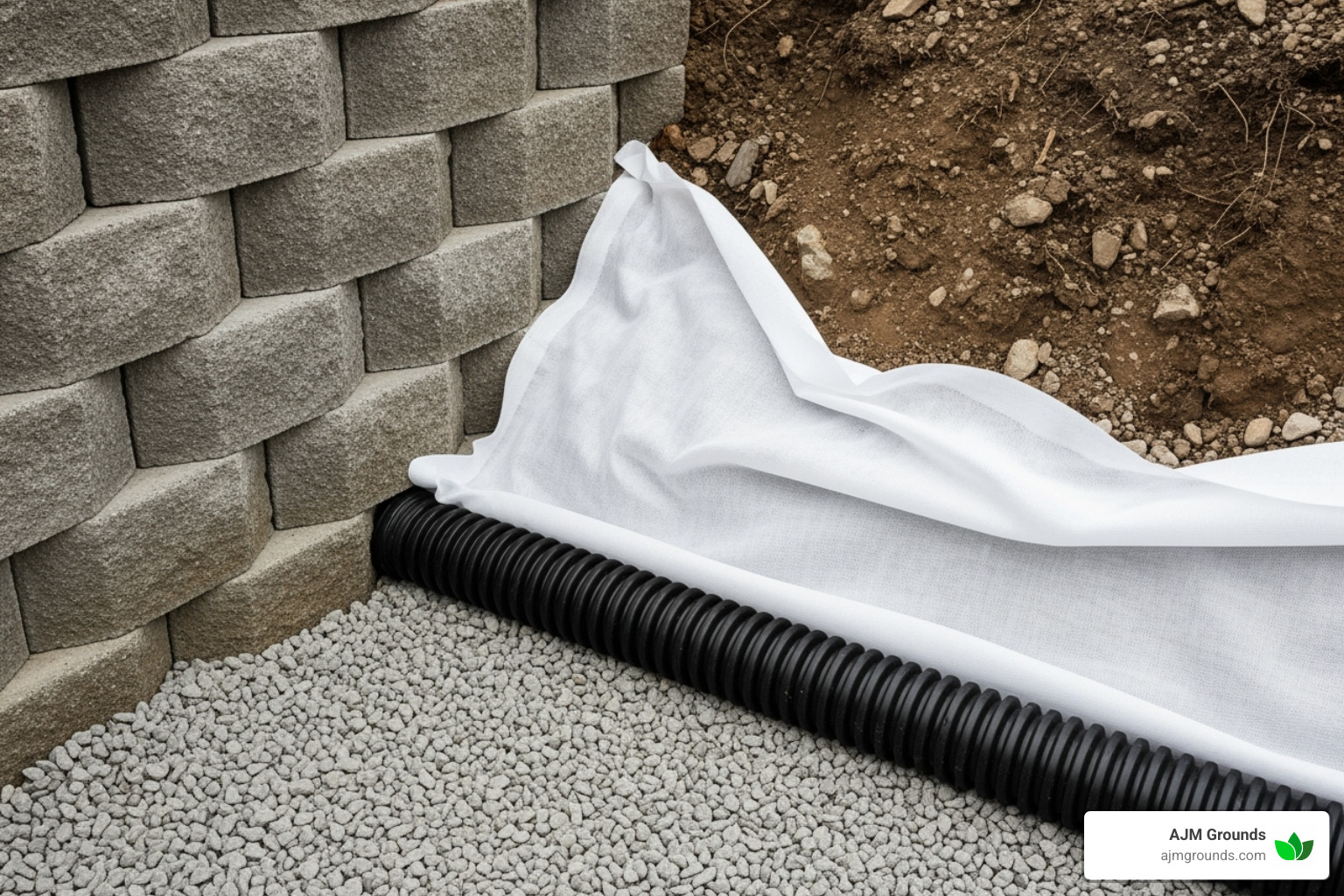
The most critical element is drainage. Hydrostatic pressure from trapped water can cause even well-built walls to fail.
A proper drainage system starts with gravel backfill behind the wall, a perforated drain pipe at the base, and filter fabric to prevent clogs. We also incorporate weep holes—small openings in the wall face—to allow minor water seepage. Understanding the 5 most important reasons why proper drainage in your landscape is so important can save you thousands in future repairs.
Wall height and local regulations go hand-in-hand. Most municipalities require permits for walls over 3-4 feet high. Taller walls require engineering to ensure safety. You may need a permit depending on your wall’s height and local requirements.
Base preparation is crucial. We excavate below the frost line and create a compacted, level gravel base. This foundation distributes weight evenly and prevents settling.
While DIY installation might seem appealing for small projects, structural walls require expertise. For walls over two feet or on significant slopes, professional installation by experienced retaining wall builders near me is essential. If you’re tackling a small project, start with something like installing landscape blocks for garden borders. For structural walls, our install retaining walls service ensures your investment is built to last.
Bringing Your Vision to Life
This section focuses on the finishing touches that integrate your wall into the landscape and the value of professional execution.
Perfect Pairings: Plants to Complement Your Wall
Adding plants is where the magic happens in retaining wall landscaping. The right plants transform a structure into a living part of your landscape.
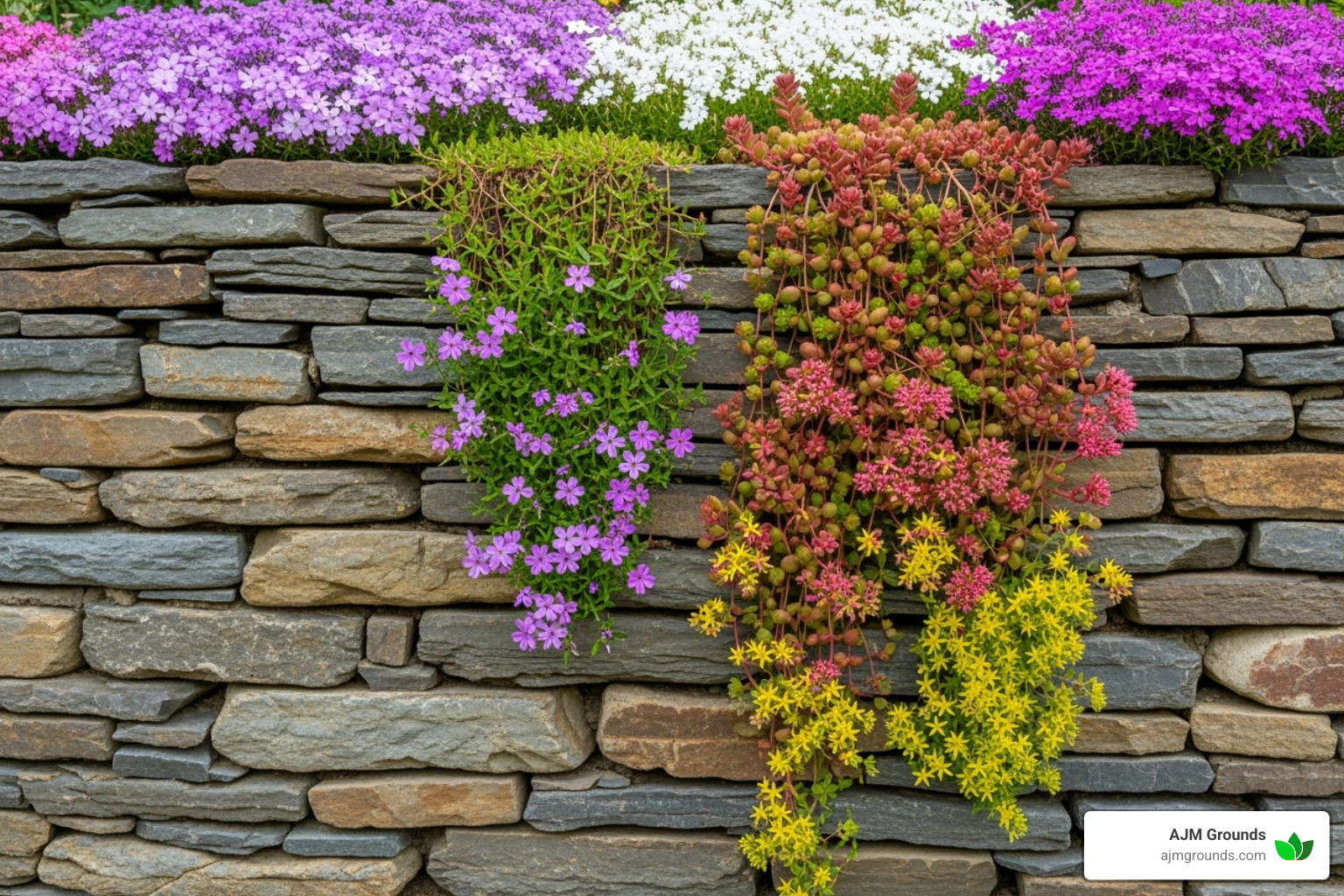
Cascading plants like creeping phlox and sedum are game-changers. They soften harsh edges and create an “established” look that makes new construction feel like it has been there for years.
For busy homeowners, low-maintenance plants are ideal. Drought-tolerant options like sedum varieties thrive once established, especially in sunny spots where other plants might struggle.
Groundcovers create smooth transitions at the base of walls, while ornamental grasses add movement, texture, and year-round interest.
My top 5 low-maintenance plants for retaining walls are: Creeping Thyme (fragrant with delicate flowers), Sedum (countless varieties), Creeping Phlox (dense spring blooms), Ivy (classic evergreen coverage; choose non-invasive types), and Dwarf Fountain Grass (graceful texture).
For more plant pairing inspiration, explore our guide to retaining walls for gardens.
The Value of Professional Retaining Wall Landscaping
Retaining wall landscaping is one of the best investments for your property. After building hundreds of walls across Bedford, Burlington, and the greater Boston area, I’ve seen them transform both the functionality and value of homes.
Increased property value is a compelling reason for professional installation. Well-designed retaining walls can significantly boost your home’s value, and properties with them often sell faster. The improved functionality is also key—an unusable slope becomes terraced gardens, and erosion problems are solved.
The structural integrity of a professionally built wall is a permanent solution that will serve your family for decades. While modular retaining wall systems offer strength and endless aesthetic options, their success depends on proper installation, including base preparation and drainage.
Working with a trusted hardscaping contractor like AJM Grounds means you get more than just installation. We handle permits, ensure code compliance, and design drainage systems that work. The peace of mind that comes with professional installation is invaluable, especially when New England weather tests your wall.
For homeowners in the Woburn, MA area seeking expert guidance, learn more about our professional retaining wall construction services. We’re here to turn your challenging slopes into beautiful, functional outdoor spaces.
