

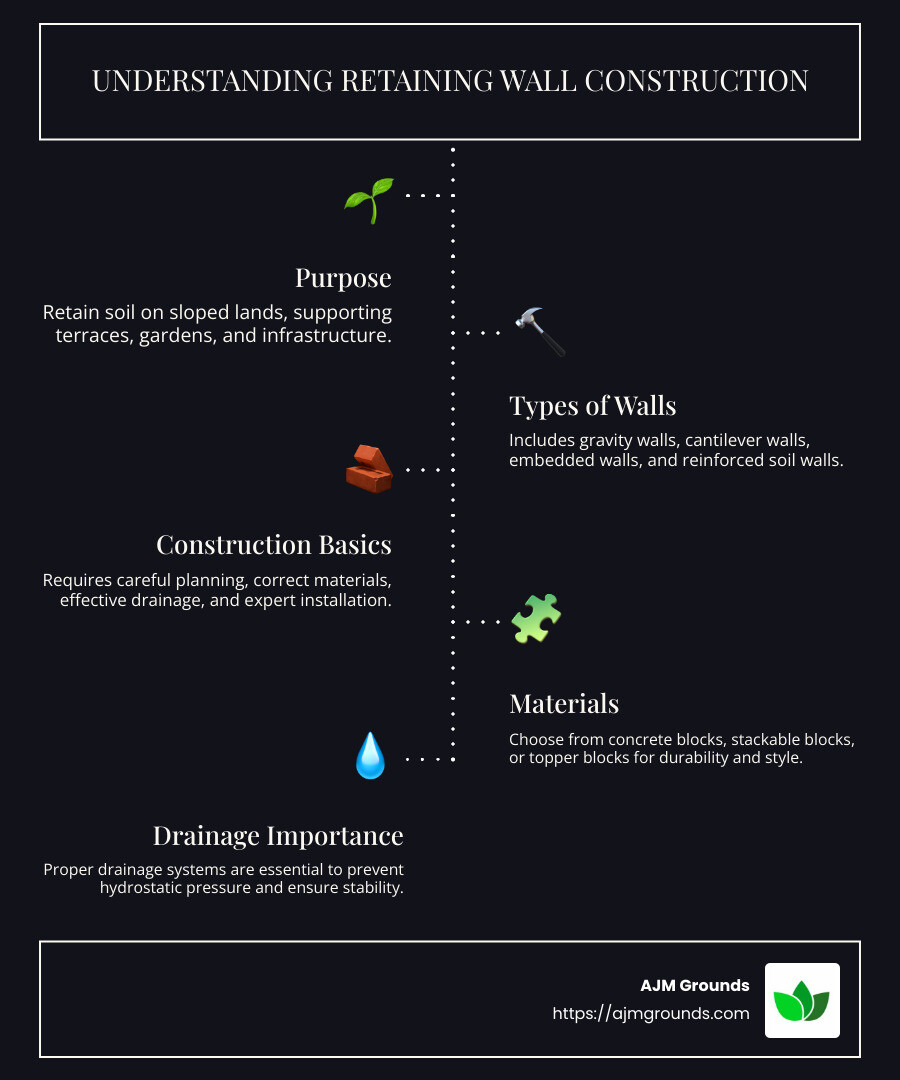
Retaining wall construction is an essential aspect of geotechnical engineering, especially for managing sloping landscapes and maximizing space in urban areas. These structures are versatile solutions for holding back soil, leveling steep gradients, and preventing erosion. Here’s a quick overview:
- Purpose: Retain soil on sloped lands, supporting terraces, gardens, and infrastructure.
- Types: Includes gravity walls, cantilever walls, embedded walls, and reinforced soil walls.
- Construction Basics: Requires careful planning, correct materials, effective drainage, and expert installation.
At AJM Grounds, we specialize in creating custom retaining walls that seamlessly blend with your outdoor environment while providing the necessary structural support.
I’m John Caplis, owner of AJM Grounds LLC, with years of experience in retaining wall construction. Our mission is to transform outdoor spaces in Woburn, MA, by combining beauty and functionality, ensuring lasting results.
Retaining wall construction terms made easy:
– Natural stone retaining walls
– hardscape design near me
– hardscaping contractor
Understanding Retaining Walls
When it comes to retaining wall construction, understanding the different types of walls is crucial. Each type serves a specific purpose and is chosen based on the site conditions and project requirements. Let’s explore the main types of retaining walls you might consider:
Types of Retaining Walls
- Gravity Walls
Gravity walls rely on their own weight to hold back soil. They are made from heavy materials like concrete, stone, or brick. These walls are typically used for shorter heights due to their simplicity and cost-effectiveness.
- Materials: Concrete, stone, brick
- Key Feature: Uses mass to resist earth pressure
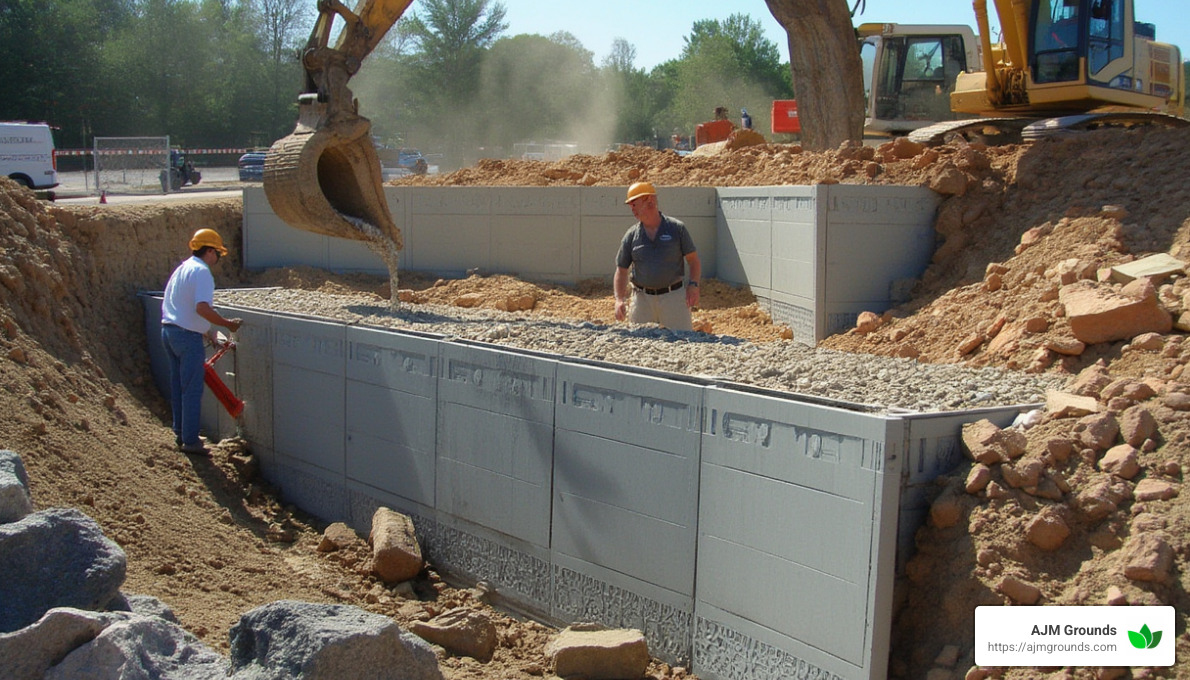
- Cantilever Walls
Cantilever walls are designed like an inverted “T” or “L” and use less material compared to gravity walls. They are reinforced with steel bars to provide additional strength. These walls are suitable for medium to tall wall heights.
- Materials: Reinforced concrete
- Key Feature: Uses leverage to hold back soil
- Embedded Walls
Embedded walls, such as sheet pile walls or bored pile walls, are driven deep into the ground. They are often used in tight spaces or where the ground conditions are challenging, like in urban construction projects.
- Materials: Steel, concrete
- Key Feature: Partially buried for stability
- Reinforced Soil Walls
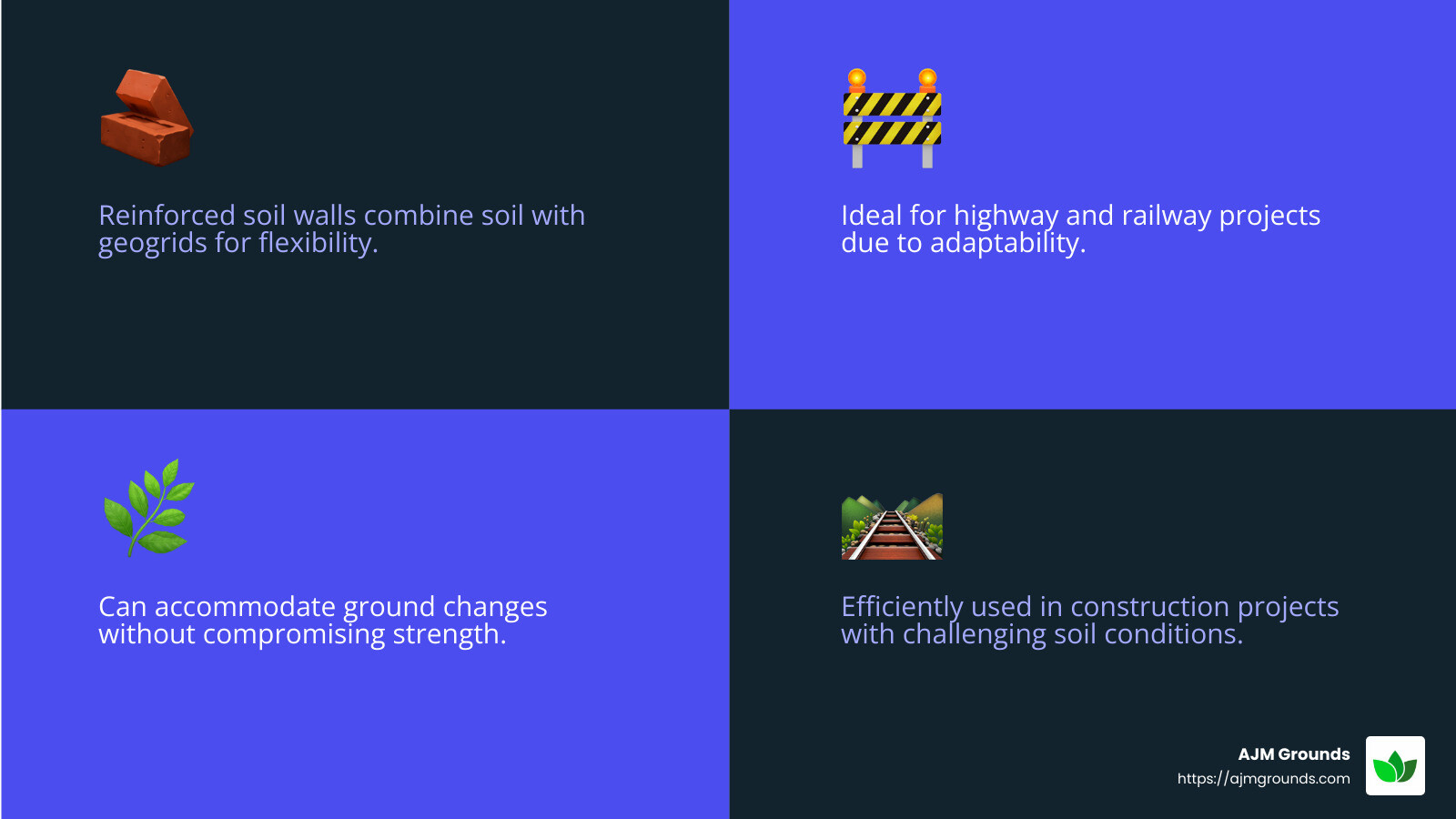
Reinforced soil walls combine soil with reinforcement materials like geogrids. These walls are flexible and can accommodate changes in the ground. They are often used in highway and railway projects.
- Materials: Geogrids, soil
- Key Feature: Reinforcement within the soil mass
Choosing the Right Wall Type
Selecting the right type of retaining wall depends on several factors:
- Soil Conditions: The type and stability of soil will influence wall choice.
- Height of the Wall: Taller walls may require more robust solutions like cantilever or reinforced soil walls.
- Available Space: Embedded walls are great for areas with limited space.
- Budget: Gravity walls are cost-effective for small projects, while reinforced soil walls can save costs on larger scales.
At AJM Grounds, we carefully assess each site to recommend the best retaining wall option, ensuring both functionality and aesthetics are seamlessly integrated into your landscape.
Retaining Wall Construction
Choosing the Right Materials
When it comes to retaining wall construction, selecting the right materials is essential for durability and aesthetics. One popular choice is stackable concrete blocks. These blocks are not only strong but also designed to look like natural stone or aged masonry. They feature a groove on top and a lip on the bottom, which interlock to add strength and guide the construction process.
In addition to the main blocks, topper blocks are used to finish the top of the wall, giving it a polished appearance. These blocks come in various designs, ensuring you can find a style that matches your home’s architecture.
Here’s a quick look at the materials you’ll need:
- Stackable Concrete Blocks: For the main structure.
- Topper Blocks: To cap the wall.
- Concrete Adhesive: To secure blocks together.
- Gravel: For foundation and backfill.
- Corrugated Drainage Pipe: To manage water flow.
Step-by-Step Construction Process
Building a retaining wall involves several crucial steps. Here’s a simple guide to help you through the process:
- Marking Placement
Start by marking the area where the wall will be installed. Use stakes and string to outline the wall’s path and ensure it’s level with a line level. This step is crucial for achieving the desired height and alignment.
- Digging the Trench
Dig a trench about eight inches deep and slightly wider than the blocks. This trench will house the first row of blocks, anchoring the wall for stability. After digging, use a soil tamper to compact the soil, then add four inches of gravel and level it.
- Laying the First Course
Begin laying your first row of blocks in the trench. It’s important to start at the most visible end or the lowest point if the wall is on a slope. Check each block with a level to ensure it’s even from front to back and side to side. Fill any hollow cores with gravel for added strength.
- Installing Drainage
Once the first course is set, install a drainage pipe behind the wall. Cover it with a sleeve to prevent clogging. Proper drainage is key to preventing water buildup, which can cause wall failure.
- Adding Layers and Backfilling
Continue adding rows of blocks, ensuring each layer is offset from the one below for stability. As you build, backfill with gravel to support the wall and improve drainage. Compact the gravel after each layer to maintain a solid structure.
By following these steps, you can create a stable and attractive retaining wall that improves your landscape. Whether you’re using stackable blocks or another material, attention to detail during each phase of construction is crucial for long-lasting results.
Design Considerations
Aesthetic and Functional Design
When planning retaining wall construction, it’s crucial to consider both aesthetics and functionality. A well-designed wall not only holds back soil but also improves your landscape. Here are some key factors to keep in mind:
Lateral Earth Pressure
Retaining walls must withstand lateral earth pressure. This pressure varies based on soil type, moisture content, and wall height. Engineers categorize this pressure into three types: at rest, active, and passive. For stable walls, calculate these pressures accurately to prevent toppling or sliding.
Groundwater Management
Groundwater can be a wall’s worst enemy. It increases lateral pressure and can lead to wall failure. Proper drainage systems, like corrugated drainage pipes, are vital. They help direct water away from the wall, reducing hydrostatic pressure. Always ensure drainage systems are free-draining and well-maintained.
Geotechnical Considerations
Understanding the soil conditions is key. Sandy soils drain well but may not provide enough support, while clay soils can retain water and increase pressure. A geotechnical analysis will guide the choice of materials and wall type, ensuring stability and durability.
Landscape Integration
Retaining walls should blend seamlessly with their surroundings. Consider using modular block systems that mimic natural stone for a cohesive look. These blocks come in various colors and textures, allowing for customization that matches your landscape’s theme.
Terraced Walls
For steep slopes, consider using terraced walls. These create multiple levels, offering both structural support and aesthetic appeal. Terracing can transform a steep, unusable slope into a series of flat, functional spaces for planting or seating.
Modular Block Systems
Modular block systems are versatile and easy to install. They interlock, providing strength and stability without the need for mortar. This system not only speeds up construction but also allows for creative designs, like curves or steps, enhancing both function and beauty.
By focusing on these design considerations, you can create a retaining wall that is both practical and visually appealing. The right blend of engineering and artistry will ensure your wall stands the test of time while complementing your outdoor space.
Frequently Asked Questions about Retaining Wall Construction
What are the main types of retaining walls?
Retaining walls come in four main types, each suited for different conditions and needs:
- Gravity Walls: These walls rely on their own weight to resist the pressure from the soil behind them. They’re typically made from heavy materials like concrete or stone. Their massive structure makes them ideal for holding back large amounts of soil.
- Cantilever Walls: Designed to use less material than gravity walls, cantilever walls have an L-shape. The base of the L extends into the earth, providing stability by balancing the weight of the soil above. They are often reinforced with steel to add strength.
- Embedded Walls: These walls are anchored deep into the ground, providing excellent support. They are commonly used for basements or when space is limited. Their design helps resist both lateral and vertical forces.
- Reinforced Soil Walls: These walls use layers of soil and geogrids to create a stable structure. The geogrids reinforce the soil, allowing for steeper slopes and reducing the need for heavy materials. They are a cost-effective option for many projects.
How important is drainage in retaining wall construction?
Drainage is crucial in retaining wall construction. Without it, water can accumulate behind the wall, leading to increased hydrostatic pressure. This pressure can cause walls to bulge, crack, or even collapse.
Key drainage components include:
- Perforated pipes: These are placed at the base of the wall to collect and redirect water away from the structure.
- Gravel backfill: This helps water flow down to the drainage pipes, reducing pressure on the wall.
- Weep holes: These small openings allow water to escape from behind the wall, preventing buildup.
Proper drainage is not just a recommendation—the longevity and stability of any retaining wall depend on it.
What are common mistakes to avoid when building a retaining wall?
Building a retaining wall might seem straightforward, but several common mistakes can lead to failure:
- Using the Wrong Materials: Not all materials are suitable for retaining walls. It’s important to choose materials that can withstand the local climate and soil conditions.
- Inadequate Drainage: As mentioned, poor drainage can lead to increased pressure and eventual wall failure. Always plan for effective water management.
- Insufficient Footing: The base of the wall must be deep and wide enough to support the structure. A shallow footing can lead to instability and collapse.
Avoiding these mistakes ensures your retaining wall will be both functional and durable, standing strong for years to come.
Conclusion
At AJM Grounds, we believe that every successful project begins with a personalized approach and a keen attention to detail. Our commitment to excellence in retaining wall construction is no exception. Whether you’re looking to stabilize a slope, create a stunning landscape feature, or prevent erosion, we’re here to guide you through every step of the process.
Our team takes pride in understanding your unique needs and crafting solutions that blend seamlessly with your environment. We work closely with you to select the right materials, design the perfect layout, and ensure proper drainage to protect your investment for years to come. With our expertise, you can be confident that every detail is handled with precision and care.
Experience the difference that personalized service and dedication to quality can make. Let us transform your landscape with a custom-designed retaining wall that improves both the beauty and functionality of your property.
Ready to get started? Explore our Hardscaping Services and see how we can help bring your vision to life.
