

Why Permits Matter for Your Retaining Wall
Planning a residential retaining wall in Woburn or the surrounding area? Understanding permit requirements is crucial to avoid costly mistakes, legal headaches, and structural failures. Most municipalities require permits for walls that meet certain criteria, especially since a four-foot-high, 15-foot-long wall can hold back as much as 20 tons of saturated soil—a serious engineering challenge that building departments want to ensure is handled correctly.
Quick Permit Checklist for Residential Retaining Walls:
- Height over 3-4 feet – Most towns require permits above this threshold
- Supporting a surcharge – Walls holding back driveways, patios, or fences need permits
- Near property lines – Setback requirements trigger permit review
- Changing drainage – Altering water flow patterns requires approval
- Engineered design – Walls requiring structural engineering need permits
I’m John Caplis, owner of AJM Grounds LLC, and I’ve guided dozens of homeowners through the permit process for residential retaining walls in the Greater Woburn area. My team works closely with local building departments and structural engineers to ensure every wall we build meets code requirements and stands the test of time.
Quick Residential retaining walls definitions:
Navigating Permit Requirements for Residential Retaining Walls
Building a residential retaining wall in Woburn, MA, or neighboring communities like Bedford, Billerica, and Burlington involves navigating local regulations to ensure your structure is safe and legal. Before starting, you must determine if a permit is needed—a vital step for safety, not just red tape.
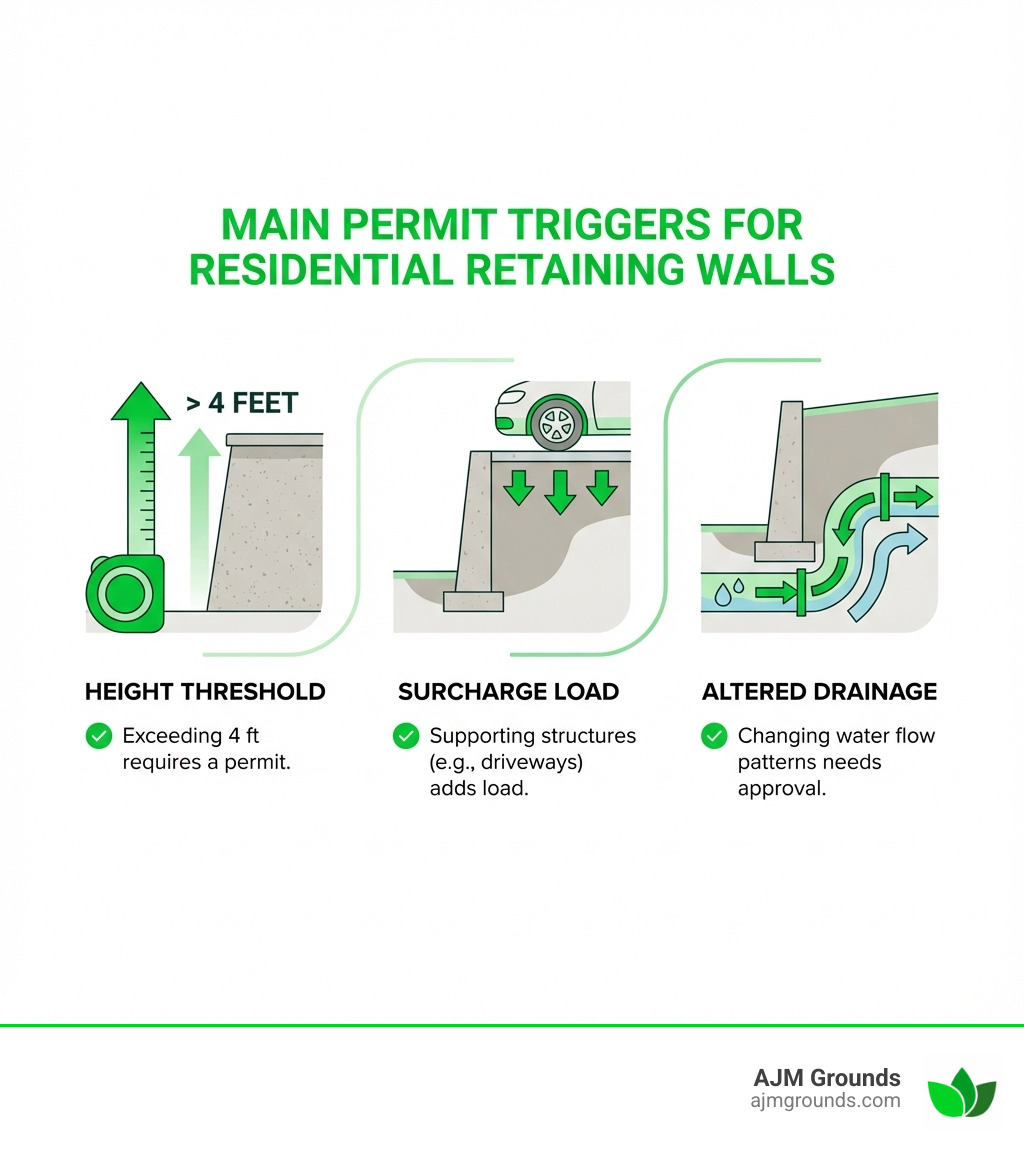
Key Triggers: When Do Residential Retaining Walls Need a Permit?
The most common trigger for a permit is the wall’s height. A general rule is that residential retaining walls over 3 to 4 feet tall require a building permit, a standard noted by This Old House and reflected in local guidelines like the Lexington, MA Fence and Retaining Wall Information Sheet PDF.
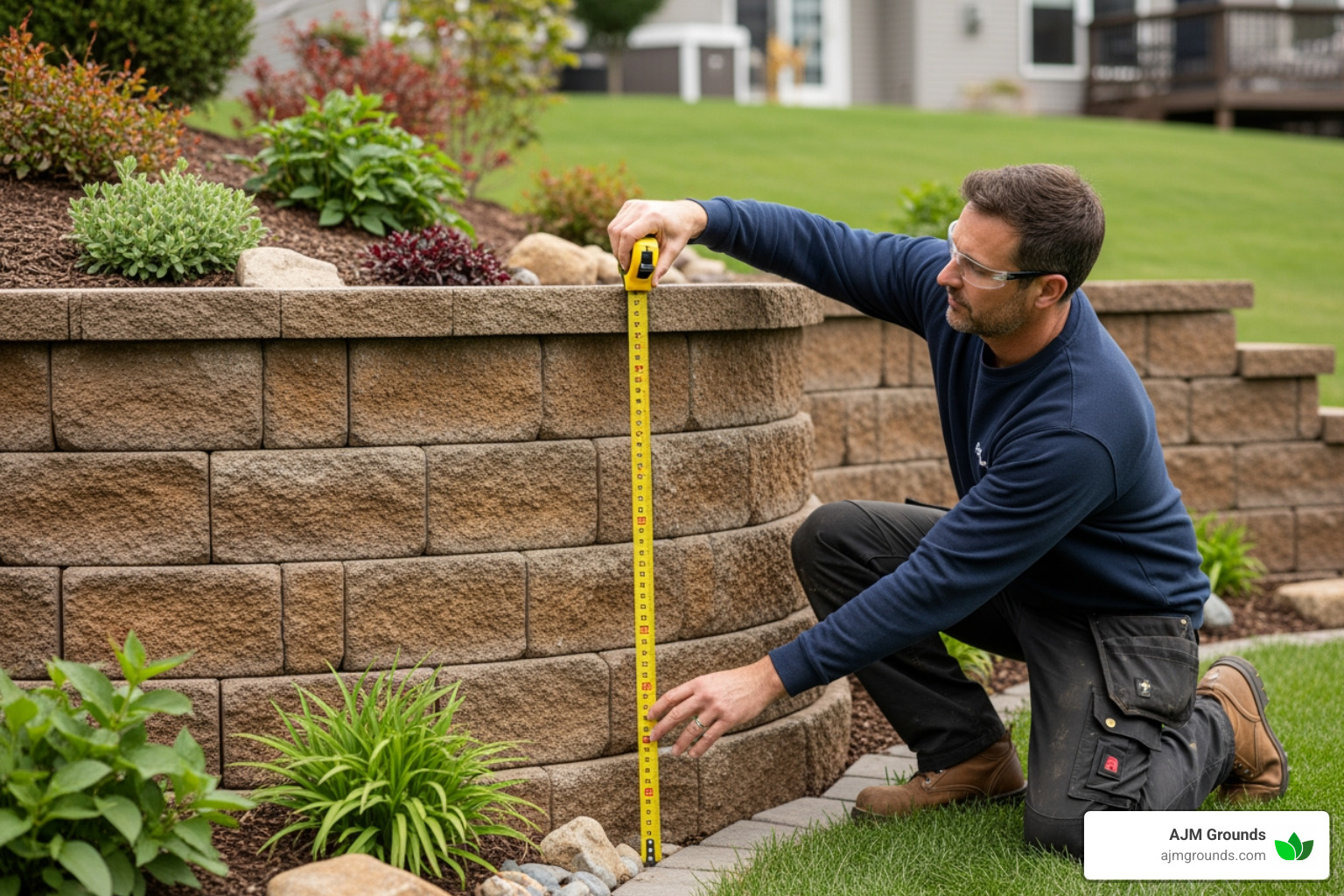
Beyond height, several other factors can necessitate a permit:
- Surcharge Loads: A permit is almost always needed if the wall supports extra weight (a “surcharge”), such as a driveway, patio, or fence. Adding these loads without proper engineering is a recipe for failure.
- Proximity to Property Lines: Walls built near property lines often require a permit to ensure they comply with local setback requirements and don’t encroach on neighboring land.
- Altering Drainage Patterns: Permits are typically required if the wall will alter water flow. Proper drainage is critical to prevent erosion and wall failure from hydrostatic pressure, as emphasized by This Old House.
- Local Building Codes: Always check with your local building department in Woburn, Reading, Stoneham, Wilmington, or Winchester. Their codes are the final authority on permit requirements, materials, and construction standards.
For more information on how retaining walls can help manage slopes and drainage, explore our guide on retaining walls for slopes.
The Role of Engineering in Securing a Permit
If your residential retaining wall needs a permit, it will almost certainly require a professional engineer’s design. An engineer ensures the wall is designed to safely withstand immense soil and water (hydrostatic) pressure, preventing catastrophic failure.
An engineer will:
- Analyze Soil Pressure: Assess soil type to calculate pressure, as clay exerts more force than sand.
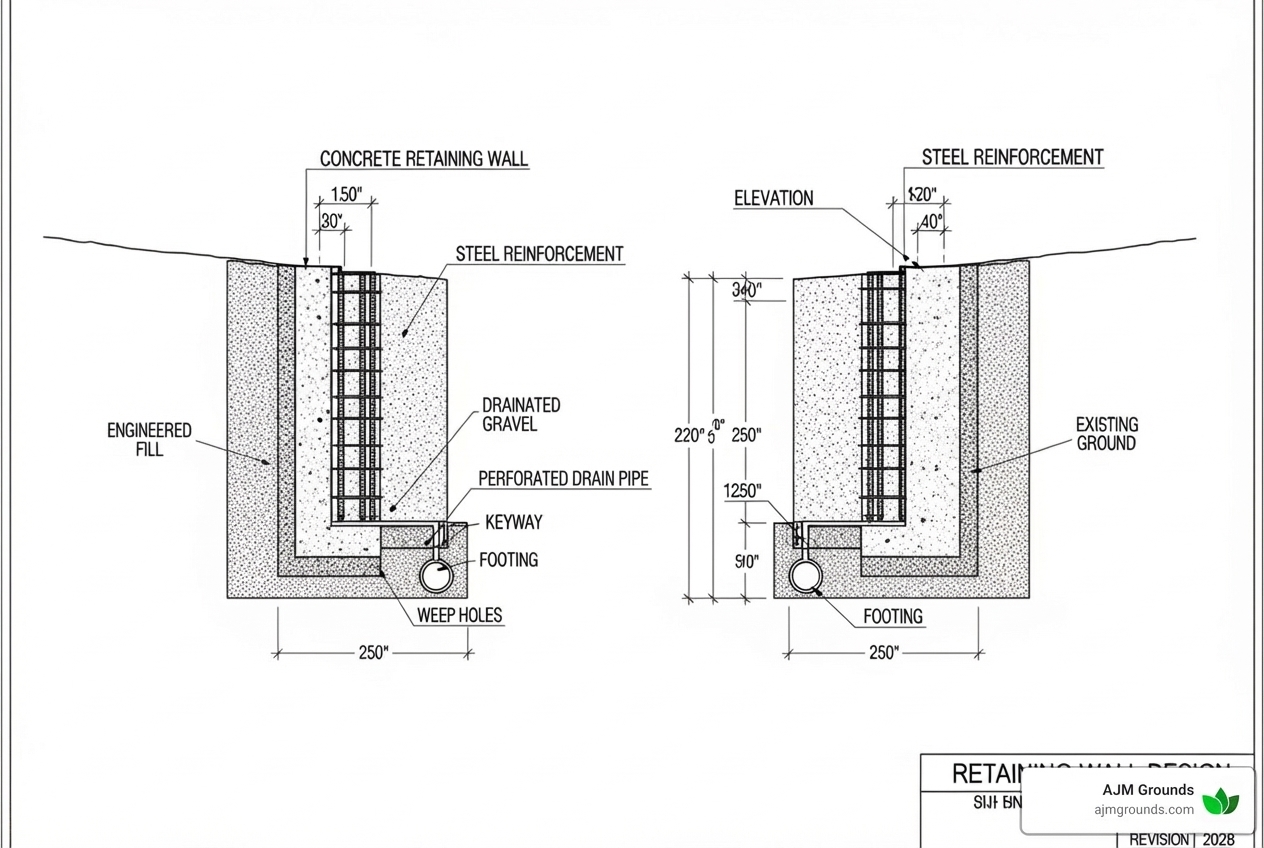
- Design for Structural Integrity: Specify the wall’s dimensions, foundation depth, and necessary reinforcement (like rebar or geogrid) based on height, soil, and surcharge loads.
- Develop Drainage Solutions: Design a critical drainage system—including gravel backfill, drain pipes, and weep holes—to prevent hydrostatic pressure, the #1 cause of wall failure.
- Conduct Geotechnical Investigation: For complex projects, they may conduct a geotechnical investigation to analyze soil and groundwater conditions in detail.
Our team works hand-in-hand with licensed engineers to develop designs that meet permit requirements and guarantee long-term stability. For a deeper dive, learn more about engineering a Retaining Wall and explore our guide on retaining wall construction.
What to Expect During the Application and Inspection Process
Once your design is engineered, the next step is the permit application and inspection process. Our experience across Woburn and its surrounding towns helps streamline this for you.
Here’s a general overview:
- Site Plan Submission: Submit a detailed site plan showing the wall’s location, dimensions, and materials, along with property lines and existing structures.
- Engineered Drawings: Provide stamped drawings from a licensed engineer detailing the wall’s structure, reinforcement, and drainage system.
- Application Forms: Complete your town’s specific application forms.
- Review Period: The building department will review your application for compliance with local codes and safety standards.
- Permit Issuance: Once approved, the permit is issued and must be displayed at the construction site.
- Foundation Inspection: An inspector will check the foundation’s depth, compacted base, and the levelness of the first course before backfilling.
- Drainage Inspection: A separate inspection may be required to verify the proper installation of the drainage system (pipe, gravel, weep holes) before backfilling.
- Final Inspection: A final inspection confirms the completed wall matches the approved plans and meets all code requirements.
We work closely with inspectors to ensure a smooth process. For more detail, see our retaining wall installation complete guide.
How Permits Prevent Common Failures in Residential Retaining Walls
The permit process is specifically designed to mitigate common failures in residential retaining walls. Here’s how it helps:
- Poor Drainage: Permits enforce proper drainage design (gravel backfill, drain pipes), preventing water buildup and hydrostatic pressure—the #1 cause of wall failure, according to experts like This Old House and the Oregon State Extension.
- Inadequate Foundation: Permit requirements mandate a deep, compacted foundation that extends below the frost line to prevent shifting and settling, a major concern in Massachusetts.
- Improper Backfill: Permits specify the use of proper backfill material, like clean gravel, which drains freely and compacts well, unlike dirt which retains water and adds pressure.
- Frost Heave: In our cold climate, permits help prevent frost heave by requiring foundations below the frost line and mandating drainage to keep soil dry.
- Code Compliance & Structural Failure: The permit process ensures your wall is built to code, preventing dangerous structural failures like bulging, cracking, or collapse.
A permit is your assurance that a wall is planned and built to last. Ignoring it can lead to expensive repairs or a complete rebuild. If you have a failing wall, our team specializes in retaining wall repairs.
Ensuring Your Project is Safe, Legal, and Built to Last
Building a residential retaining wall is a significant investment. Ensuring it’s safe, legal, and durable requires careful planning, especially when permits are involved.
DIY vs. Professional Help for Permitted Projects
The allure of a DIY project is strong, but when a residential retaining wall requires a permit, the complexity and safety risks make professional help essential.
Here’s why we recommend professionals for permitted projects:
- DIY Limitations: While DIY is feasible for small, decorative walls, permitted projects are rarely simple. They involve complex engineering, drainage, and structural forces (like needing geogrid for walls over 4 feet) that are best left to experts.
- Professional Expertise: Professionals like AJM Grounds understand local codes, engineering principles, and construction best practices. As This Old House advises, our expertise in soil mechanics and drainage is critical for a wall’s longevity.
- Licensed Contractors: Municipalities often require a licensed and insured contractor for permitted work. This protects you and ensures the contractor is familiar with the local permit and inspection process.
- Engineering Coordination: A professional contractor ensures the engineer’s stamped plans are executed precisely, from foundation to geogrid placement, guaranteeing structural integrity.
- Liability and Insurance: A professional carries liability insurance, protecting you from financial risk in case of accidents during construction.
Trying to DIY a permitted wall can lead to costly mistakes and dangerous failures. For anything beyond basic decorative walls, professional expertise is an investment in safety. If you’re looking for assistance, our page on retaining wall builders near me can help.
Partnering with Local Experts for a Successful Project
Choosing the right partner for your permitted residential retaining wall project is paramount. At AJM Grounds, we are the local experts trusted by homeowners across Woburn, Bedford, Billerica, Burlington, Lexington, Reading, Stoneham, Wilmington, and Winchester.
We prioritize safety by adhering strictly to engineered designs and local codes, ensuring your investment adds long-term value and is built to last. A properly built wall of concrete block or natural stone can last 50-100+ years, far outstripping weaker materials. While average national costs for professionally installed walls can range from $2,000-$8,000, and $114-$350+ per linear foot (with complex projects potentially reaching $159-$500+), remember these are average costs based on internet research and not actual AJM Grounds pricing. The investment ensures durability and peace of mind.
We manage the entire process—from permit applications and engineering coordination to final inspection—so you don’t have to. Our deep familiarity with local soil conditions and municipal requirements ensures a compliant, beautiful, and functional outcome. Let us transform your terrain into a safe and exceptional outdoor living space.
For more inspiration, explore our comprehensive guide on landscape retaining walls. Contact us today for a consultation and let’s build something truly exceptional together.
