

Changing Outdoor Spaces: The Impact of Hardscape Design
When I walk through a beautifully designed outdoor space, I’m always struck by how the right combination of stone, wood, and concrete can completely transform a property. That’s the magic of residential hardscape design – it creates the backbone of your outdoor living experience.
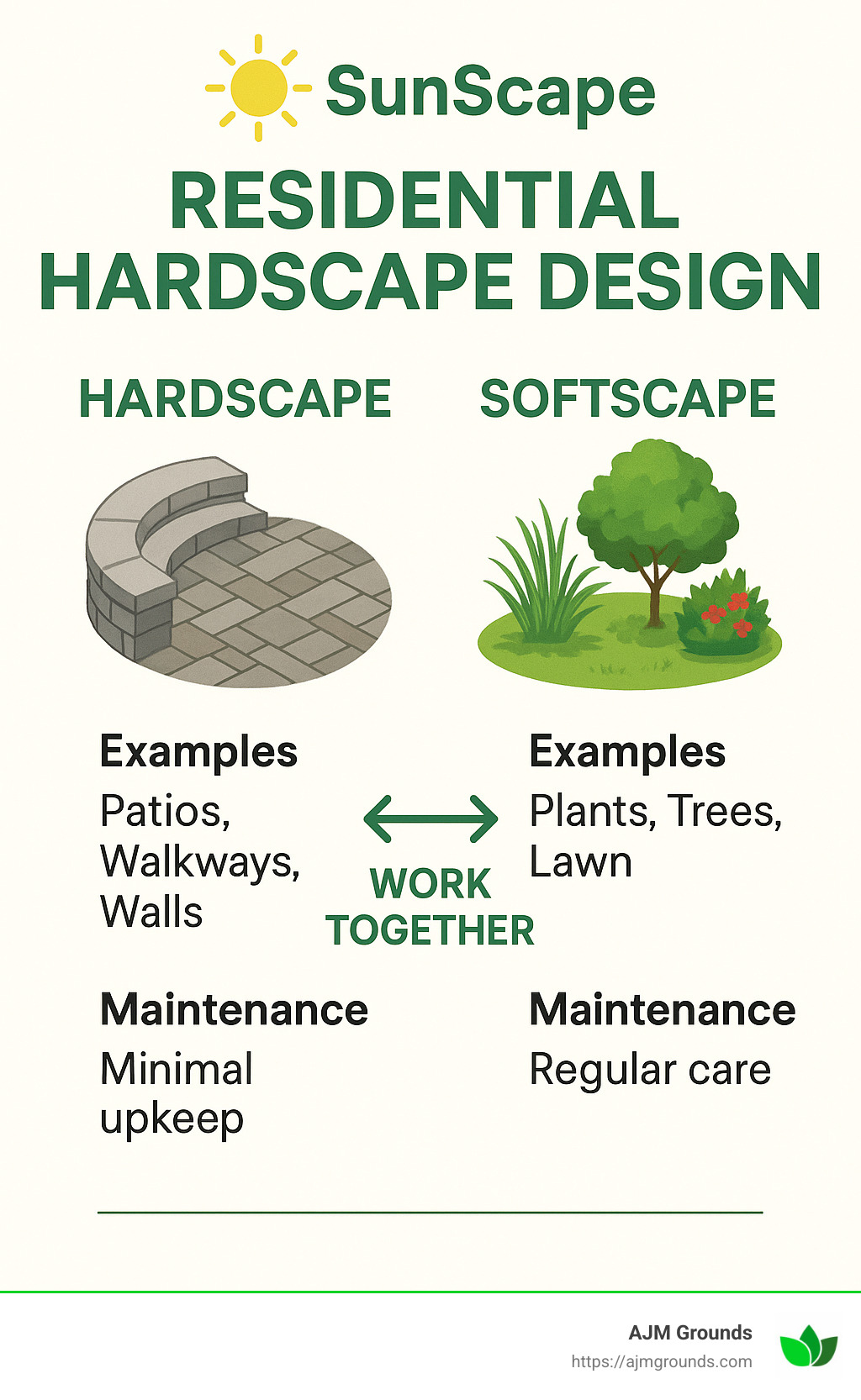
Residential hardscape design is all about incorporating non-living elements like patios, walkways, and retaining walls into your home’s outdoor spaces. Think of it as the “bones” of your landscape that work alongside your plants and greenery (the softscape) to create outdoor spaces that aren’t just pretty to look at, but actually improve how you live.
At its core, hardscaping creates structure. Your patio becomes an outdoor dining room. That winding stone path guides visitors through your garden. A well-placed retaining wall can solve drainage issues while creating a beautiful terraced effect. These permanent elements form the foundation upon which your entire landscape rests.
The benefits go far beyond just good looks. A thoughtfully designed hardscape can boost your property value by up to 20%, significantly reduce your yard maintenance time, extend your usable outdoor living space, and dramatically improve your home’s curb appeal. Unlike plants that go dormant or lose their leaves, your hardscape features provide structure and function throughout all seasons.
As landscape architects often note, “Landscape design is the art of developing a property for its greatest use and enjoyment.” This is especially true for hardscaping, which creates the framework that makes your outdoor living experience truly exceptional.
I’ve seen this change countless times. I’m John Caplis, owner of AJM Grounds LLC, and I’ve spent years helping homeowners throughout Massachusetts transform ordinary yards into stunning outdoor retreats. What I’ve learned is that thoughtful residential hardscape design isn’t just about placing a few stones or building a patio – it’s about creating outdoor spaces that feel like natural extensions of your home.
The best part? When your hardscape is designed right, it works in perfect harmony with your home’s architecture and natural surroundings. A rustic stone patio might complement your colonial home, while clean-lined concrete pavers might better suit your modern dwelling. Every choice – from materials to layout – should reflect both your practical needs and aesthetic preferences.
Want to see how we’ve transformed other properties with beautiful hardscape elements? Check out some of our specialized work:
– Natural stone retaining walls
– Retaining wall construction
– Retaining wall with paver patio
Whether you’re looking to create an outdoor kitchen for summer entertaining or solve persistent drainage issues with a beautiful terraced landscape, thoughtful residential hardscape design provides the structure that makes it all possible.
What Is Hardscape & How Does It Differ From Softscape?
Think of your outdoor space as a story with two main characters: hardscape and softscape. These elements work together to create the outdoor oasis you’ve been dreaming about, each playing a distinct but complementary role.
Hardscape refers to all the non-living, solid elements in your landscape. These are the bones of your outdoor space – the patios where you’ll host summer barbecues, the stone walls that define your garden beds, and the winding pathways that guide visitors through your yard. Hardscape elements include patios, decks, walkways, driveways, retaining walls, fire pits, water features, pergolas, outdoor kitchens, and decorative stone installations.
In contrast, softscape is everything that grows and changes in your landscape – the trees that provide shade on hot summer days, the flowering perennials that bring color throughout the seasons, lush lawns where children play, and the vegetable gardens that bring fresh produce to your table. These living elements breathe life into your outdoor space and soften the hard edges of your hardscape features.
The magic happens when these elements work in harmony. As Samuel Salsbury, a landscape design professional, wisely notes: “Research really pays off, especially when you consider that a fixed object in the landscape is not going to move easily — and you don’t want to put in a lot of effort and then have your materials or design fail within a couple of years.”
When it comes to adding value to your home, well-designed hardscaping is a solid investment. Industry data shows that quality landscapes can boost property values by up to 20%, with hardscape elements providing the most durable and long-lasting contribution to that increase.
The Hardscape–Softscape Balance
Finding the right balance between hard and soft elements is like composing a beautiful piece of music – it requires thoughtful consideration of rhythm, proportion, and harmony.
Here in Massachusetts, we enjoy four distinct seasons, and your landscape should shine in each one. During our vibrant summers and colorful falls, softscape takes center stage. But when winter blankets our region, it’s the residential hardscape design that maintains visual interest and functionality.
The perfect balance depends on several factors unique to your property and lifestyle. If you’re an avid gardener, you might want more planted spaces. If entertaining is your passion, larger patio areas make sense. For busy professionals, hardscape elements require less maintenance than expansive gardens and lawns.
In Bedford, Lexington, Winchester and the other communities we serve, we often recommend creating defined “outdoor rooms” with hardscape elements while preserving strategic green spaces. These softer areas cool your property during hot summer months and provide safe play surfaces for children and pets.
Climate considerations play a crucial role too. Our New England weather demands hardscape materials that can withstand freeze-thaw cycles, while proper drainage becomes essential to prevent ice buildup and erosion during our wet springs.
Why Hardscape Belongs First in the Build Order
There’s a reason construction crews don’t plant flowers before pouring the foundation of a house. The same logic applies to your landscape – hardscape elements should be installed before softscape for several practical reasons.
First, installing patios, walls, and walkways often requires heavy equipment that could damage existing plants. By completing the “heavy lifting” first, you protect your investment in softscape elements.
Second, proper drainage is absolutely critical for landscape success. As Samuel Salsbury emphatically states, “I’ve seen more hardscapes messed up by people ignoring drainage requirements than by all the other errors combined.” Establishing the right slopes and drainage systems is much easier before plants are in place.
Third, many hardscape installations require access to utility lines for outdoor lighting, irrigation systems, or gas lines for fire features. This trenching work becomes much more complicated and potentially damaging once plants are established.
Scientific research on drainage benefits confirms the importance of integrating proper drainage into your hardscape design. According to Dwell Magazine, using “crushed stone between pavers to enable drainage through otherwise impermeable surfaces” and adding “targeted drainage at low points or edges of paved areas in wet climates” are essential practices for long-term landscape success.
At AJM Grounds, we carefully sequence our landscape installation projects, ensuring hardscape elements are properly established before adding vulnerable plantings. This thoughtful approach protects both your investment and the integrity of the design, creating outdoor spaces that will bring joy for years to come.
Residential Hardscape Design 101: Planning Your Project
Planning your perfect outdoor space is a bit like putting together a puzzle – you need all the right pieces in the right order. At AJM Grounds, we’ve helped countless homeowners transform their properties through thoughtful residential hardscape design, and it all starts with proper planning.
Let’s walk through how to approach your hardscape project to ensure it’s both beautiful and functional.
When we meet with clients in Bedford, Lexington, or any of our Massachusetts service areas, we begin with a thorough site analysis. We’ll examine your property’s unique characteristics – the slopes, soil conditions, drainage patterns, and existing features. We look at how the sun moves across your yard throughout the day and where water naturally flows. This detective work helps us identify both the opportunities and challenges your property presents.
Your goals and preferences are equally important. Are you dreaming of a cozy fire pit for family gatherings? A spacious patio for entertaining? Or perhaps a series of beautiful stone walkways that connect different areas of your yard? We’ll talk about who will use the space, when you’ll use it most, and what style speaks to you – whether that’s rustic and natural or sleek and modern.
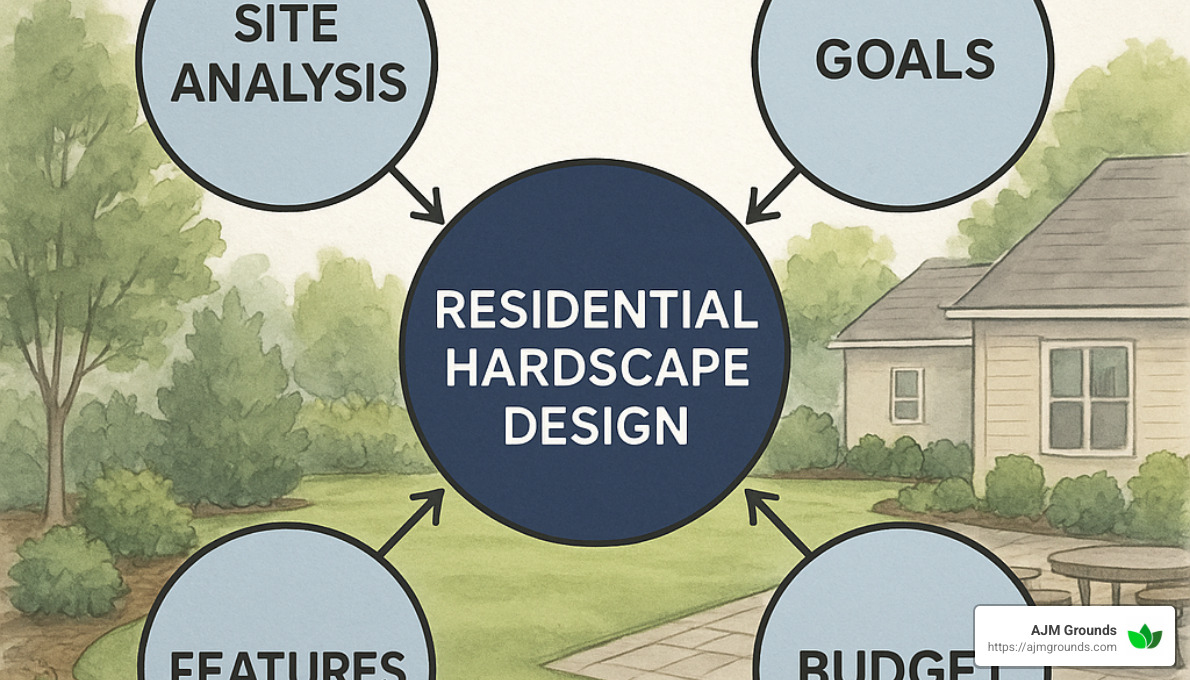
Budgeting realistically is crucial for hardscape projects. Industry data suggests homeowners typically invest about 10% of their home’s value in landscaping, with hardscaping often taking the largest chunk of that budget. The national average for a professionally designed landscape is around $30,000, though projects commonly range from $15,000 to $150,000 depending on features and yard size. (These figures reflect national averages based on internet data, not actual costs for AJM Grounds.)
When we help you plan your budget, we consider material costs (which can vary dramatically between options like concrete and natural stone), labor requirements, site preparation needs, and those finishing touches like lighting that really make a space shine. If your dream exceeds your current budget, we can often suggest phasing options that allow you to build your ideal outdoor space over time.
Most substantial hardscape projects in Massachusetts require permits, especially for retaining walls over 4 feet, structures like pergolas, or projects that affect drainage. Each town has its own regulations, and many neighborhoods have HOA guidelines too. Don’t worry – we’ll help you steer this paperwork maze so your project stays on the right side of local regulations.
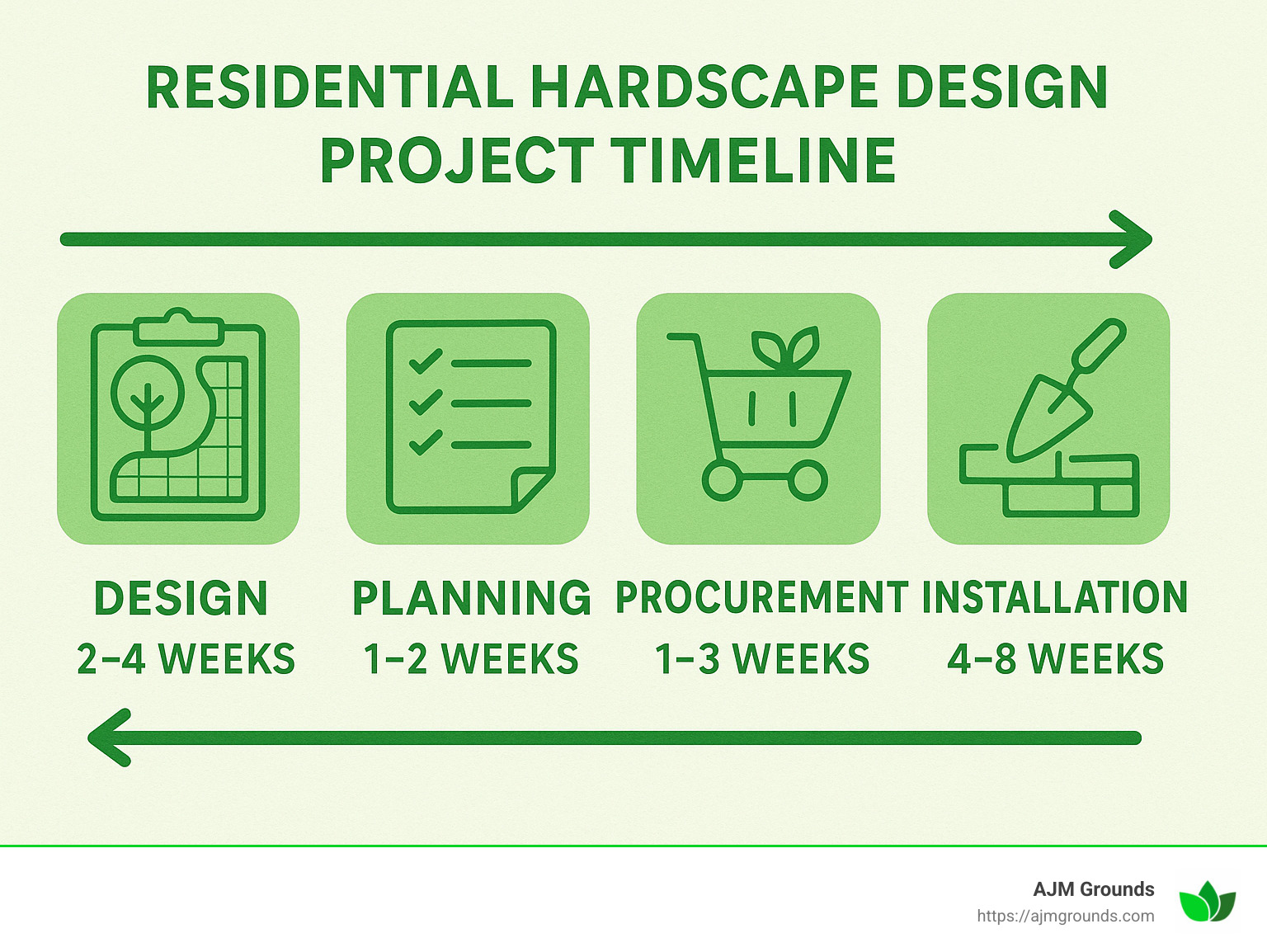
For more detailed guidance on specific features, check out our guide on Planning and Building a Custom Deck or Patio.
Residential Hardscape Design Checklist
A well-planned project is a successful project. That’s why we work through a comprehensive checklist with our clients before breaking ground:
Start by defining your must-haves versus nice-to-haves. This helps prioritize where to allocate your budget and what could potentially be added in future phases. Next, decide what level of professional help you need – some clients want full design-build services, while others may just need design guidance for certain aspects.
Visualizing your design is crucial – it’s hard to get excited about lines on paper! We can provide 3D renderings or detailed drawings to help you see how your space will function. We’ll also bring material samples to view in your actual space, as colors and textures can look very different in various lighting conditions.
Plan for the unexpected by building a 10-15% contingency into your budget. New England weather can be unpredictable, and sometimes we find surprises once we start digging. Having this buffer helps keep your project on track even when challenges arise.
Finally, think about the long-term maintenance your new hardscape will require. Some materials need regular sealing, while others develop a beautiful patina over time. We’ll help you understand how your choices will age and what care they’ll need.
For specific project types like walkways, which create essential connections throughout your property, see our guide on Walkway Installation.
Mapping Function & Flow
One of the most important aspects of residential hardscape design is creating spaces that flow naturally and intuitively. Think about how you’ll move through your yard – those pathways become the circulatory system of your outdoor space.
Primary walkways should be generous – at least 4 feet wide so two people can stroll side by side comfortably. Secondary paths can be narrower at 2-3 feet. We pay close attention to where people naturally want to walk (landscape architects call these “desire lines”) and design accordingly. There’s no point creating a beautiful curved path if everyone will just cut across the lawn anyway!
Creating focal points helps draw the eye and guide movement through your landscape. A striking fire pit, a beautiful water feature, or even a specimen tree can serve as these visual anchors. But like any good design principle, moderation is key – too many focal points compete for attention and create visual chaos.
We also think carefully about public versus private zones in your yard. Front yards typically serve as your property’s “public face” and first impression. Side yards often function as transitional or service areas, while backyards usually provide more private spaces for family activities and relaxation.
Accessibility is something we consider for every project. Gentle slopes (under 5%) for main pathways, adequate lighting for evening safety, and smooth transitions between different surfaces all contribute to a space that works for everyone, regardless of age or mobility.
By thoughtfully mapping these functional aspects, we create hardscape designs that not only look beautiful from every angle but work seamlessly for the families who use them every day. After all, the most beautiful outdoor space in the world isn’t worth much if it doesn’t work with your lifestyle.
Popular Hardscape Features for Homes
When homeowners dream about changing their outdoor spaces, certain residential hardscape design elements consistently top their wish lists. These popular features don’t just make your yard more functional—they create beautiful outdoor living spaces that boost your property’s value and curb appeal.
Most Popular Hardscape Elements
The most requested hardscape features we install at AJM Grounds reflect what homeowners truly value in their outdoor spaces. Patios serve as the foundation of outdoor living, essentially creating an open-air room for dining, relaxing, and entertaining. Industry research shows a well-designed patio can return 80% or more of its investment when selling your home—making it both a lifestyle and financial win.
Walkways and paths do more than just connect different areas of your yard—they guide the eye, create a sense of journey, and add character to your landscape. Whether straight and formal or winding and casual, paths help define how people experience your outdoor space.
Retaining walls might start as a practical solution for managing slopes, but they quickly become design features that add dimension and visual interest. Many of our Massachusetts clients use terraced retaining walls to transform challenging hillsides into usable garden space.
Fire features consistently rank among the most beloved backyard additions, with good reason. There’s something primal about gathering around a flame that creates instant atmosphere and extends your outdoor season well into the cooler months.
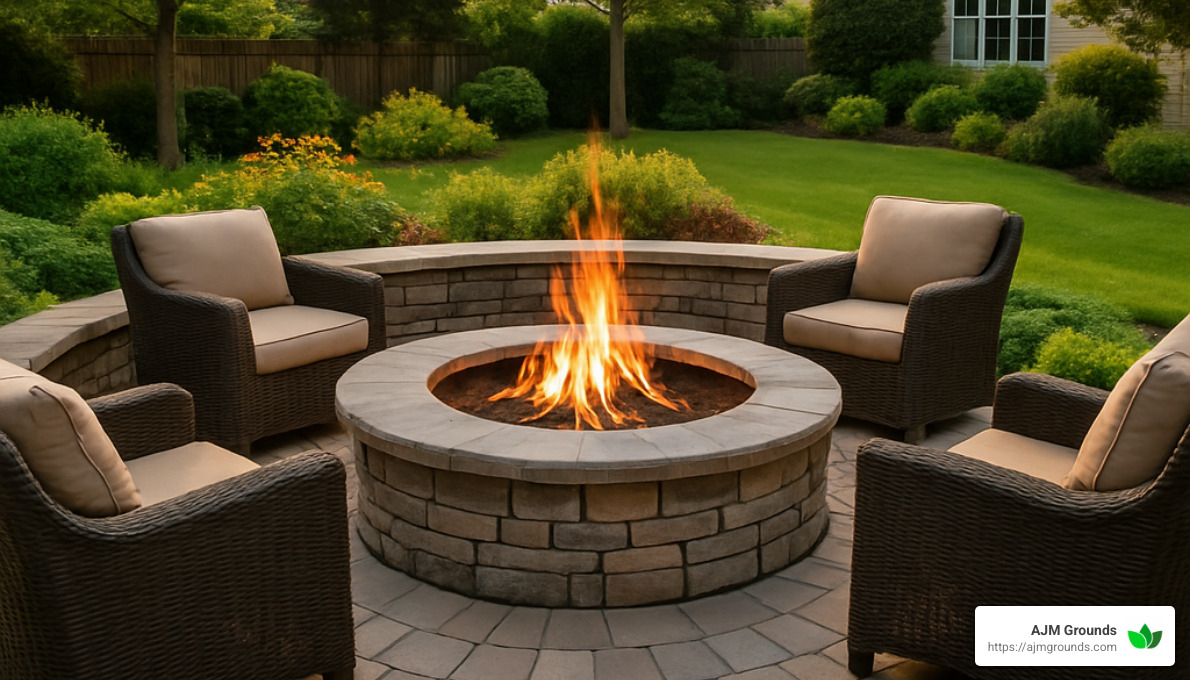
Other popular hardscape elements include outdoor kitchens for the ultimate entertainment space, water features that add soothing sounds and movement, pergolas for defined outdoor rooms with filtered shade, and thoughtfully designed driveways that improve curb appeal. Even seemingly simple elements like steps and stairs can become dramatic focal points when crafted with care. And while technically an accessory, landscape lighting dramatically extends the usability and enjoyment of all these hardscape features.
Patios & Decks
Your patio or deck serves as your home’s outdoor living room—a place where memories are made around meals, conversations, and quiet moments enjoying nature.
When choosing materials for patios, concrete pavers offer versatility with moderate cost, while natural stone provides best character and longevity. For a more budget-conscious approach, stamped concrete offers many design possibilities, and traditional brick ages beautifully with classic appeal. Those seeking excellent drainage might consider gravel or crushed stone as economical options.
For decks, materials range from economical pressure-treated wood (which requires regular maintenance) to beautiful cedar or redwood with natural decay resistance. Composite decking costs more initially but saves time and money on maintenance over the years. For those seeking premium options, tropical hardwoods offer exceptional durability and distinctive grain patterns.
When planning your patio or deck, consider how you’ll actually use the space. For comfortable dining, allow at least 144 square feet (12′ x 12′) for a table and chairs. Think about whether a geometric or organic shape better suits your style and home architecture. Multiple levels can help define different functional areas—perhaps a dining space near the house with a lower lounge area beyond. Don’t forget to plan for shade options like pergolas or umbrellas and privacy elements if your yard is exposed to neighbors.
The best patios feel like natural extensions of your home, with materials and colors that complement your house. For inspiration and guidance on creating your perfect outdoor living space, check out our detailed guide on Patio Installation.
Fire & Gathering Spots
There’s something magical about gathering around a fire. In our residential hardscape design projects, fire features consistently create the most enthusiastic reactions from homeowners when completed.
Fire pits offer versatile gathering spots where people can circle completely around the flame, making them perfect for larger groups and marshmallow roasting. For a more architectural statement, outdoor fireplaces create dramatic focal points and often provide more wind protection. Fire tables blend function and ambiance by combining a dining or coffee table with a gas flame element, while decorative fire bowls can be placed on tables or pedestals for flexibility.
When considering fuel options, traditional wood-burning features provide authentic crackling sounds and that unmistakable campfire aroma. For convenience, natural gas features light with the flip of a switch and provide consistent flames without smoke. Propane options offer portability when permanent gas lines aren’t feasible, while bioethanol provides a clean-burning alternative requiring no chimney or venting.
Comfortable seating transforms a fire feature from a visual element into a true gathering space. Built-in seating walls provide permanent, space-efficient options—allow about 24″ of width per person for comfort. Position seating to capture both the warmth of the fire and any available views. Including some movable furniture gives you flexibility to adjust based on group size and weather conditions.
Safety always comes first with fire features. Maintain proper clearance from structures and combustible materials (typically at least 10-15 feet for wood-burning features). Install spark screens for wood-burning elements, ensure proper ventilation for gas units, and consider prevailing wind patterns when positioning your fire feature.
For more details on adding the perfect fire element to your landscape, browse our Firepit Installation guide with examples of our Massachusetts installations.
Structural Elements & Walls
In the rolling topography common throughout Massachusetts, walls often become essential elements in residential hardscape design. These structural features solve practical problems while adding visual interest and usable space to your landscape.
Retaining walls transform challenging slopes into usable flat areas, making them among the most functional hardscape elements we install. Beyond their practical purpose, they add depth and dimension to flat landscapes. Seating walls—typically 18-24″ high—provide casual perches that don’t require furniture and help define outdoor rooms. For privacy concerns, taller screen walls create secluded spaces and block unwanted views. Even purely decorative walls can serve important design functions by defining spaces or creating artistic focal points.
The material you choose for your wall dramatically affects both appearance and performance. Natural stone offers timeless beauty and exceptional durability, though it requires skilled installation. Engineered concrete block systems provide consistent strength with various facing options that mimic natural materials. Brick complements traditional home styles with its classic appearance, while contemporary gabion walls (wire cages filled with stone) offer a modern aesthetic with excellent drainage. For shorter, informal walls, wood can be an appropriate and cost-effective choice.
In our Massachusetts climate, proper wall construction is crucial. Walls over 4′ typically require engineering and permits to ensure safety. Proper drainage behind retaining walls prevents water pressure buildup that can cause failure. Due to our freeze-thaw cycles, footings must extend below the frost line (typically 4′ deep) to prevent heaving and shifting. When managing significant elevation changes, consider terracing with multiple shorter walls rather than one tall one—this creates visual interest and provides planting opportunities between levels.
For properties with challenging slopes, well-designed retaining walls can transform previously unusable areas into valuable outdoor living space. Learn more about this transformative approach in our guide on Retaining Walls for Slopes.
Choosing Materials & Budgeting Costs
Selecting the right materials is perhaps one of the most exciting—yet challenging—decisions you’ll make in your residential hardscape design journey. The materials you choose do much more than just look pretty; they determine how long your outdoor space will last, how much maintenance you’ll need to do, and of course, how deep you’ll need to dig into your wallet.
Common Hardscape Materials
When I’m walking clients through material options, I like to start with the most common choices and their unique characteristics.
Concrete offers incredible versatility at a reasonable price point. Standard concrete provides a clean, simple look, but don’t let that fool you—with stamping techniques, we can transform it to mimic stone or brick patterns. Exposed aggregate concrete reveals the decorative stones within the mix, creating a textured, non-slip surface that’s perfect for pool decks. And with integral coloring, we can match virtually any palette to complement your home.
Pavers have become increasingly popular in Massachusetts because they handle our freeze-thaw cycles beautifully. Concrete pavers come in endless shapes and colors, allowing for creative patterns and borders. Clay brick pavers offer that timeless, traditional look that ages gracefully over time. For play areas, rubber pavers made from recycled materials provide a forgiving surface that’s easier on little knees.
Natural stone represents the premium end of hardscaping materials, and for good reason. Bluestone, with its characteristic blue-gray coloration, is a New England favorite that stands up to our harsh winters. Limestone offers warmer, neutral tones that complement many architectural styles. Granite is practically indestructible, perfect for high-traffic areas or steps. Fieldstone, with its naturally weathered surfaces, creates a rustic, timeless appeal. Travertine, though less common in our region, provides a distinctive, neat look with its natural pitting.
For more informal pathways or transitional areas, gravel and aggregates offer budget-friendly solutions. Crushed stone locks together for stable footing, while river rock creates a decorative, though less functional, surface. Decomposed granite, when properly installed and compacted, makes for wonderful, natural-looking pathways.
For liftd spaces like decks, wood and composites each have their place. Pressure-treated lumber keeps costs down but demands regular maintenance. Cedar and redwood resist decay naturally and weather to a beautiful silver-gray. Tropical hardwoods like ipe offer best durability but at a premium price. Composite decking has revolutionized the industry with its minimal maintenance requirements and increasingly natural appearance.
| Material | Durability | Maintenance | Initial Cost Range* | Lifespan |
|---|---|---|---|---|
| Concrete | High | Low | $8-$20/sq ft | 20-30 years |
| Pavers | Very High | Low-Medium | $15-$30/sq ft | 25-50+ years |
| Natural Stone | Highest | Low | $25-$75/sq ft | Lifetime |
| Gravel | Medium | Medium-High | $3-$9/sq ft | 5-10 years before refreshing |
| Wood | Medium | High | $15-$35/sq ft | 10-30 years depending on species |
| Composite | High | Very Low | $25-$45/sq ft | 25-30 years |
*Cost ranges are broad averages based on internet data, not actual costs for AJM Grounds. Prices can vary significantly based on specific materials, site conditions, and design complexity.
If you’re drawn to the timeless beauty of stone, check out our article on The Advantages of Hardscaping with Natural Stone for a deeper dive into why it might be worth the investment.
Residential Hardscape Design Cost Factors
When budgeting for your hardscape project, the materials themselves are just one piece of the puzzle. Several other factors significantly impact your bottom line:
Labor intensity varies dramatically between materials. While concrete pavers install relatively efficiently in a modular system, natural stone often requires skilled masons to hand-fit each unique piece—a beautiful but time-consuming process.
Site access and preparation can make or break your budget. A backyard that’s only accessible through a narrow gate might require materials to be wheelbarrowed in by hand instead of delivered by machine—significantly increasing labor costs. Similarly, if we need to remove an old concrete patio, extensive tree roots, or deal with poor soil conditions, your preparation costs will increase accordingly.
Drainage solutions might not be the sexiest part of your project, but they’re absolutely critical. As landscape designer Samuel Salsbury emphatically notes, “I’ve seen more hardscapes messed up by people ignoring drainage requirements than by all the other errors combined.” In our Massachusetts climate, proper drainage isn’t optional—it’s essential for preventing frost heave and ensuring your investment lasts.
Custom details add personality but also cost. Curved designs require more cutting and fitting than straight lines. Inlaid patterns, borders, or mixing materials create visual interest but demand more labor. Integrated lighting or audio systems improve usability but require careful planning and installation.
If budget constraints are a concern, project phasing offers a practical solution. We can help you develop a master plan that breaks your dream outdoor space into manageable phases. While this approach may increase the total cost slightly over time (due to remobilization costs and potential material price increases), it allows you to spread the investment while still working toward a cohesive end result.
Scientific research on material longevity confirms what we’ve learned through experience—proper installation methods, particularly adequate base preparation and drainage, dramatically impact how long your hardscape will last. According to HGTV’s experts, “Most hardscape failures stem from improper drainage planning” and “A 4-foot frost footing is required in some cold climates to prevent heaving.”
At AJM Grounds, we never cut corners on the invisible but critical elements like proper base preparation, compaction, and drainage—because we know they’re the foundation of a hardscape that will look beautiful for decades, not just seasons.
Selecting the Right Material for Your Climate
Living in Massachusetts means our hardscapes face some serious challenges—from summer heat to winter freeze-thaw cycles. Choosing materials that can handle our specific climate is essential.
Freeze-thaw durability tops the list of considerations in our region. Some materials expand and contract with temperature changes more than others. Dense pavers and certain types of natural stone (like granite) handle these cycles beautifully, while more porous materials might crack or spall over time. This is particularly important for anything water-adjacent, like pool decks or hot tub surrounds.
Slip resistance becomes crucial during our wet springs and icy winters. Materials that become dangerously slippery when wet should be avoided in high-traffic areas or treated with anti-slip finishes. Textured concrete, naturally rough-surfaced stones, and pavers with slightly textured surfaces provide better traction when wet. We also carefully plan for proper slope to ensure water doesn’t pool and create hazards.
Color and heat absorption might seem like purely aesthetic concerns, but they have practical implications too. Darker materials absorb more heat—beneficial in early spring when you’re eager to get outside, but potentially uncomfortable during peak summer months. That dark charcoal paver that looks so sleek might be too hot for bare feet in July! On the flip side, those heat-absorbing properties can help melt light snow in winter, extending your outdoor season.
Sustainability matters more than ever to many of our clients. Locally sourced materials reduce transportation impacts and often connect better visually with our regional architecture. Permeable paving systems allow water to infiltrate rather than run off, reducing strain on stormwater systems and helping recharge groundwater. Recycled or reclaimed materials give new life to old resources. These choices not only feel good but often perform exceptionally well in our climate.
By thoughtfully matching materials to our unique New England conditions, we create hardscapes that not only look beautiful on installation day but continue to perform beautifully through all four seasons and many years to come.
Design Principles & Integration with Landscape
Creating a stunning residential hardscape design isn’t just about selecting beautiful materials—it’s about how those elements work together to create a cohesive outdoor space that feels connected to your home and the natural landscape. When we design hardscapes at AJM Grounds, we rely on time-tested design principles that ensure your new outdoor spaces will look and function beautifully for years to come.
Core Design Principles
Think of your landscape design as a composition—just like a painting or photograph needs structure to be pleasing to the eye, so does your outdoor space.
Balance creates visual stability in your landscape. You might choose formal symmetry, where elements mirror each other on either side of a walkway or entrance. Or you might prefer the more relaxed feel of asymmetrical balance, where different elements create equal visual weight without perfect mirroring. For circular patios or fire pits, radial balance—where elements radiate from a central point—creates a natural gathering space that draws the eye.
When we talk about scale and proportion, we’re making sure everything feels “right-sized” for your space. A tiny patio next to a large home will feel insignificant, while an oversized water feature might overwhelm a small yard. We often use the “rule of thirds” to divide spaces into pleasing proportions that feel naturally balanced to the human eye.
Unity and harmony come from thoughtful material selection. By limiting your hardscape to 2-3 complementary materials and repeating elements throughout your design, we create a sense of cohesion. Your bluestone patio feels connected to your granite steps because we’ve incorporated similar colors or textures that tie everything together.
Creating rhythm and repetition guides movement through your landscape. Like musical notes that repeat in a pleasing pattern, your pavers, plantings, or lighting fixtures can create a visual tempo that leads visitors through your outdoor spaces.
Every great design needs focal points—those special elements that catch the eye and create interest. Whether it’s a dramatic fire pit, a bubbling fountain, or a uniquely shaped tree, focal points give the eye a place to rest. We carefully position these elements where they’ll be most visible from key spots, like your kitchen window or favorite seating area.
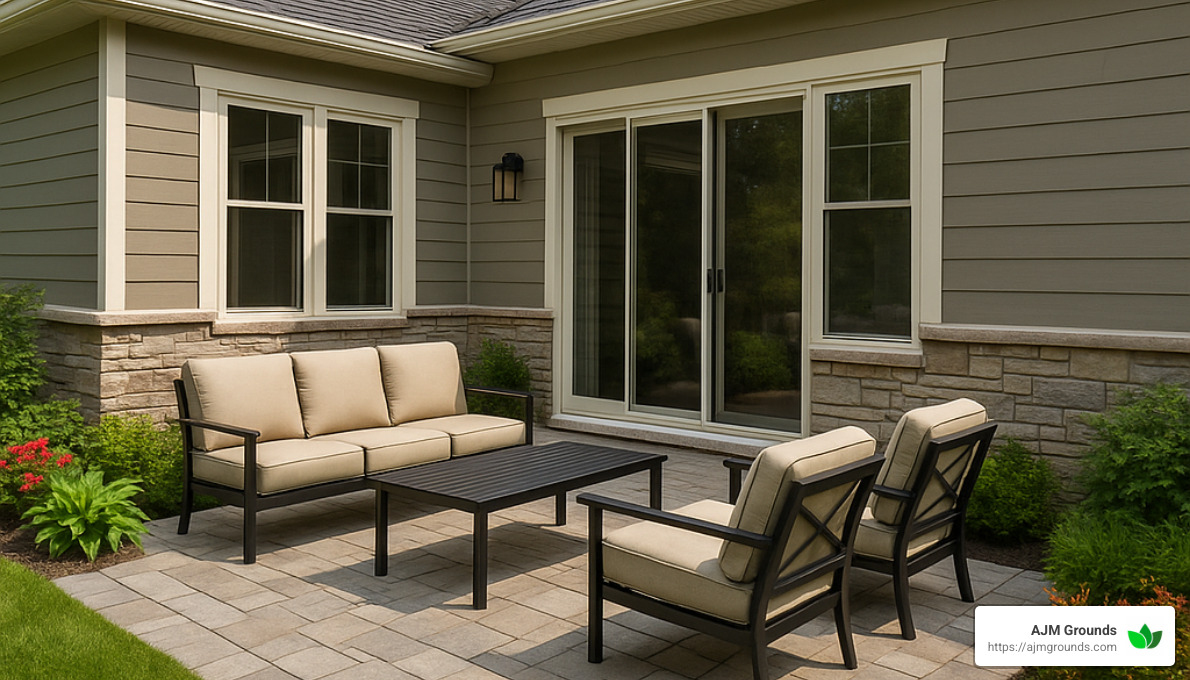
Integrating with the Natural Environment
The most successful hardscapes don’t fight against nature—they work with it. Here in Massachusetts, we’re blessed with beautiful natural landscapes, and your hardscape should improve rather than detract from these natural features.
Respecting your property’s topography means working with the natural contours of your land whenever possible. Sometimes that means terracing a steep slope with beautiful stone walls rather than trying to force a flat patio where it doesn’t belong. Other times, it means positioning a deck to capture an amazing view that your property naturally offers.
Water is both friend and foe in hardscape design. Working with drainage patterns is absolutely essential—I’ve seen beautiful patios turn into swimming pools because drainage wasn’t properly considered. We carefully observe how water moves across your property and design hardscape elements that channel it beneficially rather than creating puddles or erosion.
Your existing trees and plantings are valuable assets. Complementing existing vegetation means designing hardscape that preserves significant trees and their root zones while creating thoughtful transitions between paved areas and planted spaces. Those plant pockets within your patio? They’re not just decorative—they soften the hardscape and create a more natural feel.
Massachusetts weather gives us everything from hot summer days to freezing winters. Considering microclimates in your design means positioning your patio to catch the morning sun but offer afternoon shade, or creating a stone wall that blocks cold winter winds while reflecting warmth from the sun.
For more insights on blending hardscape with your existing landscape, check out our article on The Art of Hardscaping: Incorporating Stone and Pavers into Your Massachusetts Landscape.
Residential Hardscape Design & Existing Architecture
Your home and landscape should tell the same design story. When we create hardscapes that connect visually with your home’s architecture, the result feels intentional and harmonious.
Material echo is one of our favorite techniques—if your home features brick accents, incorporating that same brick into your walkway creates an immediate connection. If your home has granite foundation elements, using similar granite in your landscape creates a subtle but powerful link.
Color palette coordination doesn’t mean everything has to match exactly. Rather, we look for complementary colors that work with your home’s exterior. A fieldstone wall with hints of the same warm tones found in your siding creates a pleasing relationship between house and landscape.
Lines and geometry from your architecture can inspire your landscape design. A contemporary home with strong horizontal lines might be complemented by long, linear planters and straight-edged walkways. A more traditional home might call for curved pathways and softer transitions.
The places where your home and landscape meet—what we call transitional spaces—deserve special attention. These thresholds between indoor and outdoor living should flow naturally, with steps, landings, and material changes that guide you comfortably from one space to another.
As our research has shown, “Treat hardscape elements as extensions of indoor architecture by matching materials and geometry.” When your outdoor spaces feel like a natural extension of your home, you’ve achieved the ultimate goal of great residential hardscape design.
Regulations, Codes & Permits
Let’s be honest—navigating permits and regulations isn’t the most exciting part of creating your dream landscape, but it’s absolutely essential. In Massachusetts communities, several types of regulations affect hardscape projects, and overlooking them can lead to costly mistakes.
Local building codes establish requirements like how close to your property line you can build and how much of your lot can be covered with impervious surfaces. They also dictate height restrictions for walls and structures, which is particularly important for retaining walls or pergolas.
With increased focus on environmental protection, stormwater management regulations have become more stringent. Many towns now have specific requirements for managing runoff from impervious surfaces, which might mean incorporating permeable pavers or rain gardens into your design.
Massachusetts has strong environmental protections, so conservation considerations may affect your project if you’re near wetlands or have protected trees on your property. We help steer these requirements to ensure your project respects these natural resources while still achieving your goals.
Accessibility standards might seem relevant only for commercial properties, but they provide valuable guidelines for residential projects too. Properly designed walkways with appropriate slopes make your outdoor spaces more comfortable and usable for everyone.
Our freeze-thaw cycles in Massachusetts mean that frost depth requirements are critical. Footings for walls and structures typically need to extend 48″ deep to prevent seasonal heaving that can damage your hardscape investments.
Many projects require inspections at various stages—particularly for retaining walls over a certain height, structural elements like pergolas, or anything involving electrical or gas lines. At AJM Grounds, we handle the entire permitting process for our clients, ensuring all necessary approvals are obtained before work begins and that all installations meet or exceed local code requirements.
By addressing these regulatory considerations early in the design process, we can avoid unpleasant surprises and ensure your project proceeds smoothly from concept to completion.
Maintenance, Sustainability & Trends
Every beautiful hardscape doesn’t just happen—it lives on through thoughtful maintenance and forward-thinking design. I’ve seen how the right approach to upkeep and sustainability can transform a hardscape from a mere installation into a lasting part of your home’s legacy.
Maintenance Considerations
Let’s face it—different materials need different kinds of love over time. Understanding these needs upfront helps you make smarter choices for your lifestyle.
Concrete and pavers give you incredible durability, but they do ask for some attention. A fresh coat of sealer every 2-3 years keeps them looking their best and resistant to stains. I always recommend a gentle power washing in spring to remove winter’s remnants, and checking those joints between pavers annually—fresh sand keeps everything locked tight. When I visit clients years after installation, it’s always the well-maintained hardscapes that still look almost new.
Natural stone brings timeless beauty with surprisingly little fuss. Some stones benefit from sealing, while others develop a gorgeous patina naturally over time. When cleaning, gentle is better—harsh chemicals can damage the very character you paid for. For mortared stonework, keep an eye on those joints; repointing every few years prevents water from working its way in where it shouldn’t be.
For deck lovers, the maintenance story varies dramatically. Wood decking asks for regular cleaning and staining every 1-3 years, depending on exposure. It’s a relationship that requires commitment but rewards you with warmth and character. Composite decking, meanwhile, needs little more than occasional cleaning—perfect for busy homeowners. Either way, don’t forget to check those fasteners and structural elements yearly.
Gravel and loose materials have their own rhythm—rake and level periodically, control those persistent weeds (landscape fabric underneath works wonders), and add a fresh layer every few years to keep the surface looking fresh. Good edging prevents the frustrating “migration” that can make these materials high-maintenance.
For walls and vertical elements, watch for any signs of movement or bulging—early intervention prevents costly failures. Always keep drainage systems behind retaining walls clear and functioning, and clean off that whitish efflorescence that sometimes appears on masonry with appropriate cleaners.
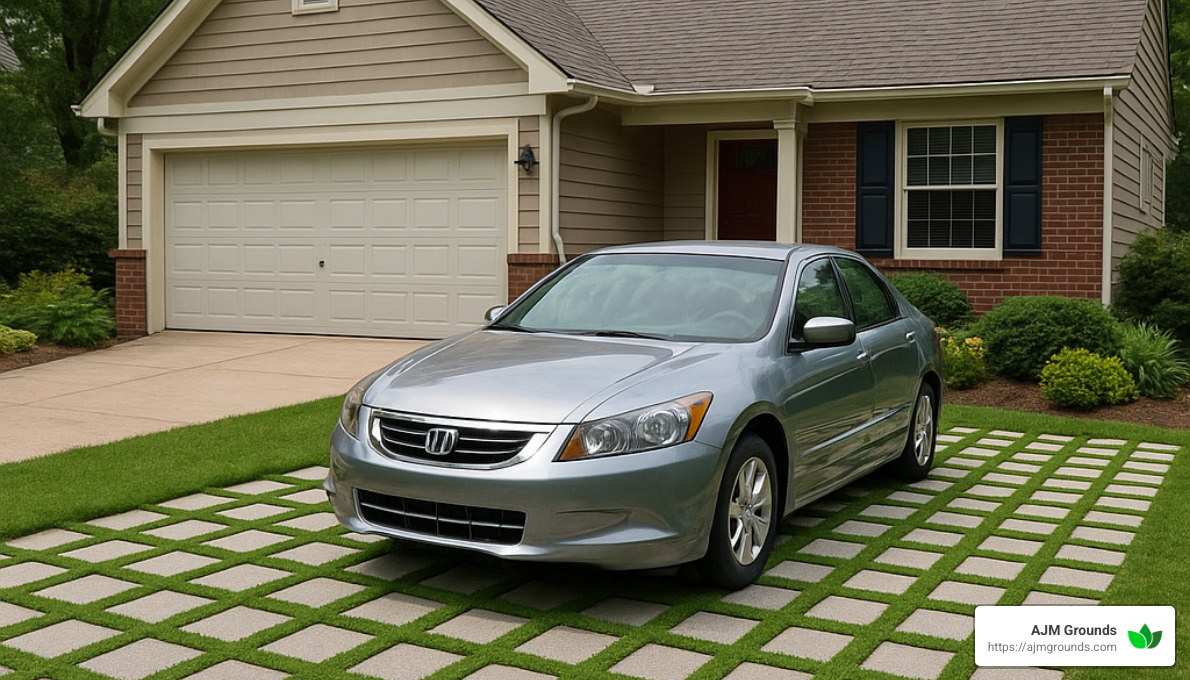
Sustainable Hardscape Practices
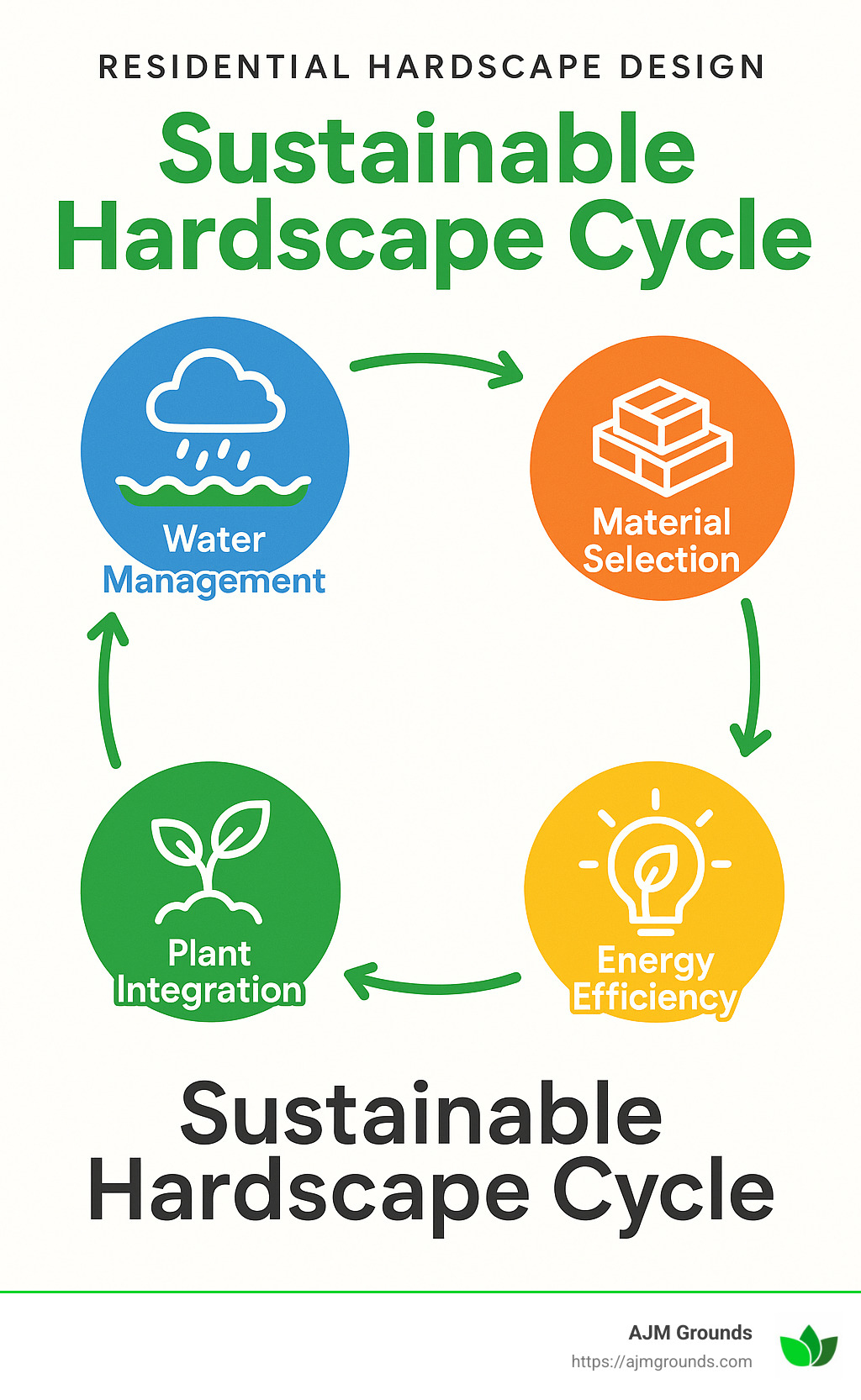
Sustainability isn’t just a buzzword in hardscaping—it’s becoming central to how we approach every project. In Massachusetts, where we experience everything from summer downpours to winter snowmelt, water management tops our sustainability concerns.
Permeable pavements have revolutionized how we think about driveways and patios. Instead of creating more runoff, these surfaces allow rainwater to filter through into the ground below. I’ve seen properties transform from having persistent puddles to handling even heavy rains with grace. Alongside permeable surfaces, thoughtfully placed rain gardens capture water from traditional hardscapes, creating beautiful planted areas that serve a crucial environmental function.
Material selection makes a huge difference in your hardscape’s environmental footprint. Locally sourced stone from New England quarries not only looks authentically regional but dramatically reduces transportation impacts. When we can incorporate reclaimed materials—old brick, salvaged granite curbing, or repurposed wood—we bring character and history while keeping perfectly good materials out of landfills.
Energy considerations might seem secondary, but they matter greatly in our region. Light-colored materials reflect rather than absorb heat, keeping outdoor spaces more comfortable in summer and reducing the heat island effect around your home. Strategic placement of hardscape elements like pergolas provides shade exactly where needed, potentially reducing your cooling costs during hot months.
Integrating plants within your hardscape doesn’t just look beautiful—it creates a more resilient, lower-maintenance environment. Native groundcovers between stepping stones or at the edges of patios reduce mowing and weeding while supporting local ecology. Even small touches, like leaving space for pollinator-friendly plants alongside a patio, contribute to a healthier ecosystem around your home.
Current Trends in Residential Hardscape Design
The world of residential hardscape design continues to evolve, blending timeless principles with fresh innovations. I’m particularly excited about how outdoor spaces are becoming true extensions of indoor living.
The concept of outdoor living rooms has moved far beyond a simple patio table and chairs. Today’s outdoor spaces feature comfortable, weather-resistant furniture, outdoor rugs that define conversation areas, and accessories that truly make these spaces feel like rooms without walls. The distinction between “inside” and “outside” continues to blur in the most delightful ways.
Technology has transformed how we interact with our outdoor spaces. Smart lighting systems adjust automatically as evening falls, irrigation responds to actual weather conditions rather than just timers, and even fire features can be controlled from your phone. These innovations make outdoor living more convenient while often conserving resources.
Material mixing has become an art form in itself. Where once we might have used a single material throughout a hardscape, today’s designs confidently blend stone with metal accents, wood with concrete, or traditional pavers with contemporary glass elements. This creates rich visual interest and allows each material to showcase its unique strengths.
Perhaps my favorite trend is the move toward designing for genuine year-round use. In New England, our outdoor season traditionally felt limited, but with thoughtfully designed covered areas, strategic wind protection, and the judicious use of heating elements, many clients now enjoy their outdoor spaces from early spring through late fall—or even during milder winter days.
Water conservation has become a priority even in our relatively water-rich region. Designs that minimize irrigation needs while maximizing enjoyment make environmental and financial sense. This approach pairs beautifully with the growing interest in edible landscapes, where raised beds, herb gardens, and fruit trees become integral parts of the overall hardscape design.
For more insights on creating spaces that minimize maintenance headaches, I often direct clients to resources on reducing maintenance requirements through smart plant selection and design choices.
The best hardscapes don’t just look good on installation day—they mature beautifully, function seamlessly, and bring joy for decades to come. That’s always our goal at AJM Grounds, where sustainability and long-term thinking guide every project we undertake.
Frequently Asked Questions About Residential Hardscape Design
How much does a residential hardscape project cost on average?
When clients ask about the cost of a residential hardscape design project, I always explain that it’s like asking “how much does a car cost?” The answer depends on what you’re looking for and the features you want.
Based on what we see in the industry, most basic patios or walkways typically range from $15-$45 per square foot installed. If you’re dreaming of that gorgeous natural stone patio, expect to invest between $35-$105 per square foot for premium materials and craftsmanship.
Retaining walls, which solve slope issues while adding visual interest, generally run $50-$150 per linear foot depending on height and materials chosen. That outdoor kitchen you’ve been envisioning? Those can range from $10,000 for a simple setup to $100,000 for a chef’s dream with all the bells and whistles.
Fire pits, one of our most requested features, typically cost between $2,000-$15,000 installed, while pergolas and shade structures range from $5,000-$25,000 depending on size and materials.
These figures reflect national averages based on internet data and not actual costs for AJM Grounds. The wide ranges account for all the variables that make each project unique – from material choices to site challenges to design complexity.
For many of our clients in Massachusetts, we recommend a phased approach. Start with the core elements like your patio this year, then add the fire pit next season, and perhaps the outdoor kitchen the following year. This strategy makes larger projects more manageable while still working toward your complete outdoor vision.
Do I need a permit for my new patio or retaining wall?
The permit question often causes confusion, and for good reason – requirements vary significantly between Bedford, Billerica, Burlington and the other communities we serve.
Generally speaking, you’ll likely need permits for retaining walls over 4 feet in height, any structures with roofs like pergolas or gazebos, and installations involving electrical or gas lines. Projects that significantly alter drainage patterns or are located near wetlands typically require approvals as well.
On the flip side, simple patios at grade level, low retaining walls, basic walkways, and landscape beds often don’t require municipal permits – though I always verify this for each specific location.
Don’t forget about those HOA approvals! If you live in a neighborhood with a Homeowners Association, you’ll likely need to submit your plans for review regardless of municipal requirements. Historic districts have their own review processes, and work near environmentally sensitive areas may need Conservation Commission approval.
The good news? At AJM Grounds, we handle all this paperwork for you. We’ve steerd the permitting process countless times throughout Middlesex County and know exactly what’s needed in each town. Our clients appreciate being able to sit back while we manage all the bureaucratic details.
What should I look for when hiring a hardscape contractor?
Finding the right contractor might be the single most important decision you’ll make for your hardscape project. I’ve seen beautiful designs ruined by poor installation, and I’ve seen simple designs liftd by exceptional craftsmanship.
First, examine their credentials and experience. How long have they been in business? Do they carry proper licensing and insurance? Look for industry certifications like ICPI (Interlocking Concrete Pavement Institute) or NCMA (National Concrete Masonry Association) that indicate specialized training.
Next, review their portfolio carefully. Ask to see completed projects similar to what you’re envisioning. Before and after photos tell a powerful story about change. Don’t be shy about requesting client references you can contact, or even visiting past projects in person.
Design capability matters too. Can they translate your vision into reality? Do they offer 3D renderings to help you visualize the final result? A contractor who suggests thoughtful alternatives shows they’re thinking about your project, not just going through the motions.
The contract and warranty reveal a lot about a company’s confidence in their work. Look for detailed specifications, clear payment schedules, and comprehensive warranty coverage. A vague contract often leads to disappointment later.
Finally, pay attention to communication style from the very first interaction. Are they responsive? Do they explain technical aspects clearly? Do they listen more than they talk?
As one of our clients recently shared, “What I appreciated most was how John suggested materials I hadn’t considered that ended up being perfect for our property’s conditions.” This kind of guidance comes from experience and a genuine interest in creating the best possible outcome for each homeowner.
At AJM Grounds, we believe that attention to detail and truly listening to our clients sets us apart. Your outdoor space should reflect your lifestyle and preferences, not ours, and we’re committed to making that happen through every step of the process.
Conclusion
Residential hardscape design transforms ordinary outdoor spaces into beautiful, functional extensions of your home. When thoughtfully planned and expertly installed, these non-living elements create the framework for outdoor living that improves both your daily life and your property’s market value.
The Value of Well-Designed Hardscape
Quality hardscaping delivers rewards on multiple levels that go far beyond mere aesthetics. Research consistently shows that well-designed landscapes can increase property values by 6-15%, with hardscape elements providing the most durable and long-lasting contribution to that value.
The functional benefits are equally impressive. From solving persistent drainage problems to creating usable entertaining space on challenging sloped sites, hardscape elements provide practical solutions that make your property more livable and enjoyable throughout the seasons.
Beyond dollars and functionality, there’s an emotional value that’s harder to quantify but just as important. Spaces designed for gathering, relaxing, and connecting with nature improve quality of life in ways that transcend monetary measures. Many of our clients tell us their new outdoor spaces have become the heart of family life during New England’s beautiful warm months.
The Importance of Thoughtful Planning
The most successful hardscape projects always begin with comprehensive planning. While it might be tempting to rush through this phase and start seeing immediate changes, taking time for thoughtful consideration pays dividends for decades to come.
Effective planning considers how the space will be used and by whom—whether that’s for quiet morning coffee, active play areas for children, or sophisticated entertaining spaces for adults. It examines how hardscape elements will relate to your home’s architecture, ensuring a seamless visual connection between indoors and out.
Proper planning also addresses technical concerns like how water moves through the property, how materials will perform in our challenging New England climate with its freeze-thaw cycles, and how the design will evolve and mature over time as surrounding plantings grow.
The AJM Grounds Approach
At AJM Grounds, we bring our expertise in residential hardscape design to every project in Bedford, Billerica, Burlington, Lexington, Reading, Stoneham, Wilmington, Winchester, and Woburn. Our approach combines personalized attention to your specific needs with technical knowledge of materials and installation best practices.
We pride ourselves on creative problem-solving for site challenges that might seem impossible. Our team delivers meticulous craftsmanship in every detail, from the invisible but crucial drainage systems to the final placement of each stone. And unlike many contractors, we provide ongoing support after project completion to ensure your investment continues to perform beautifully.
We believe the most successful hardscape designs are those that feel like they’ve always belonged there—seamlessly blending with existing architecture and landscape while creating new opportunities for outdoor enjoyment. Whether you’re dreaming of a simple patio for family dinners or envisioning a complete outdoor living suite with kitchen, fire features, and water elements, we approach each project with the same dedication to quality and client satisfaction.
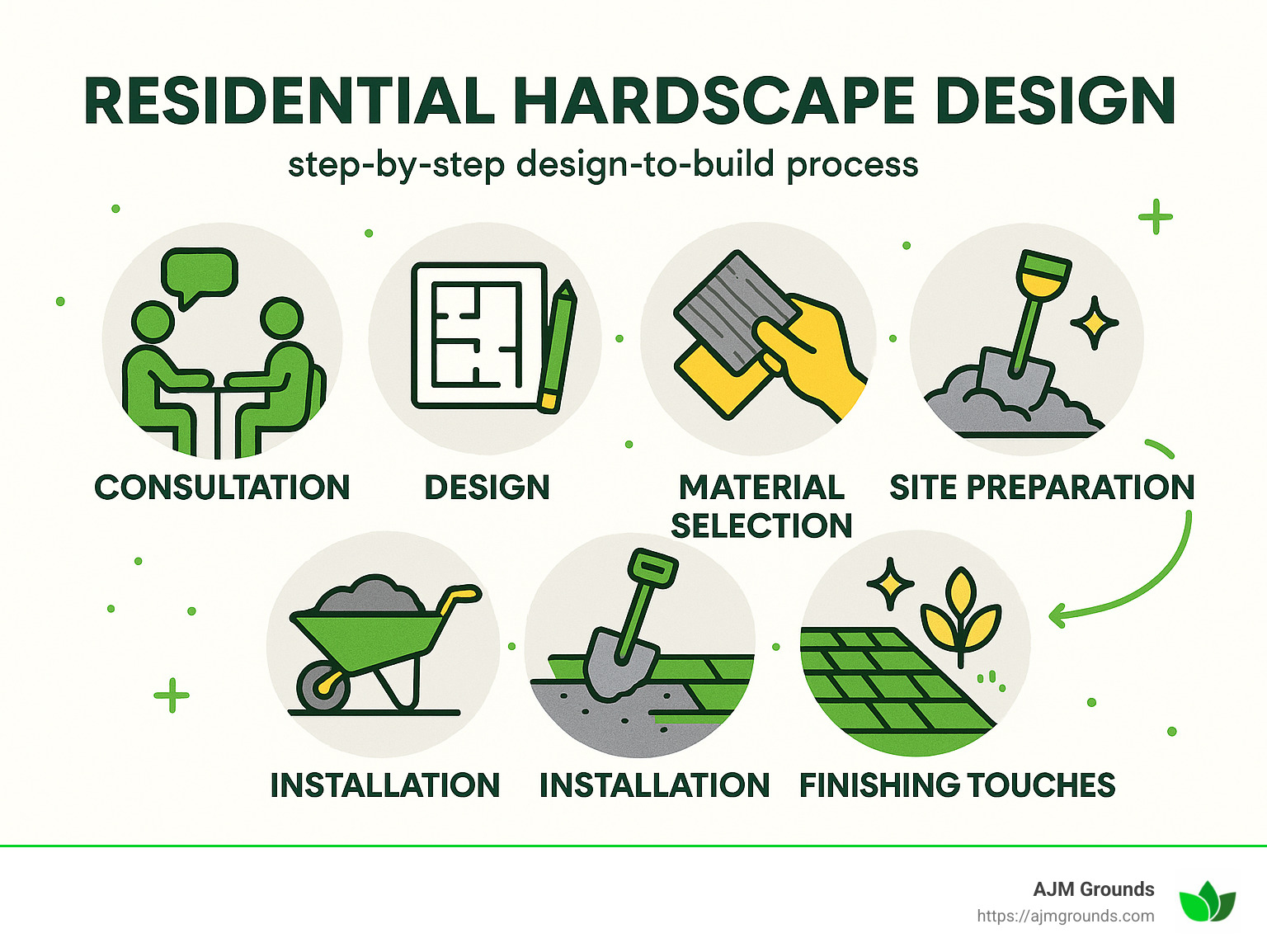
Ready to transform your outdoor space with professional residential hardscape design? Contact AJM Grounds today to schedule a consultation and take the first step toward creating the outdoor living area you’ve always wanted.
For more information about our hardscaping services, visit More info about hardscaping services.
