

Plowing residential driveways can be a daunting task, especially during the harsh winters in Woburn, MA, and surrounding areas. Whether you’re tackling this job yourself or running a residential snow removal business, proper planning, preparation, and safety measures are crucial for efficiency and effectiveness.
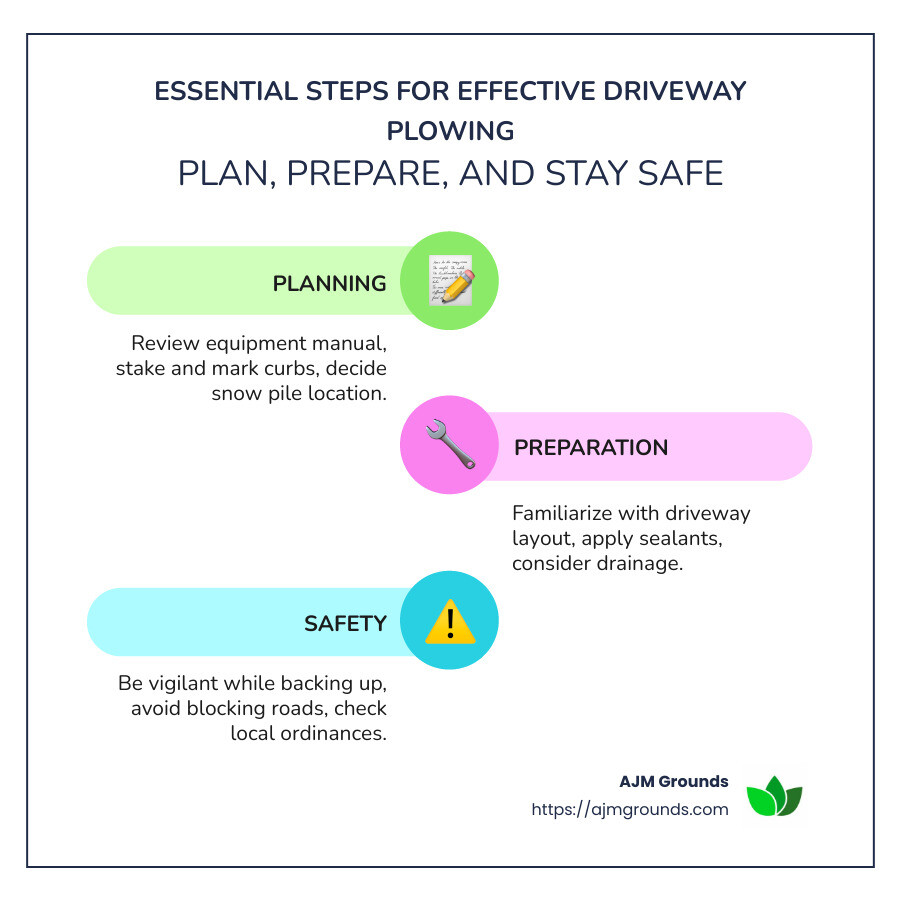
- Planning: Understand the equipment by reading the owner’s manual. Stake and mark curbs to protect lawns and landscape. Decide in advance where to pile the snow.
- Preparation: Familiarize yourself with the driveways. Apply sealants to prevent cracks. Consider potential drainage issues when the snow melts.
- Safety: Turn your head when backing up and be vigilant of pedestrians. Prevent piling snow in areas that could block drives or roads. Check local ordinances regarding snow placement.
I’m John Caplis, the owner of AJM Grounds LLC. With years of experience in plowing residential driveways, my team and I are devoted to delivering quality service that combines expertise with a detailed understanding of local needs.
Preparing Your Driveway for Plowing
Preparing your driveway before the snow hits is essential for a successful plowing experience. Here’s how you can get ready:
Staking Your Driveway
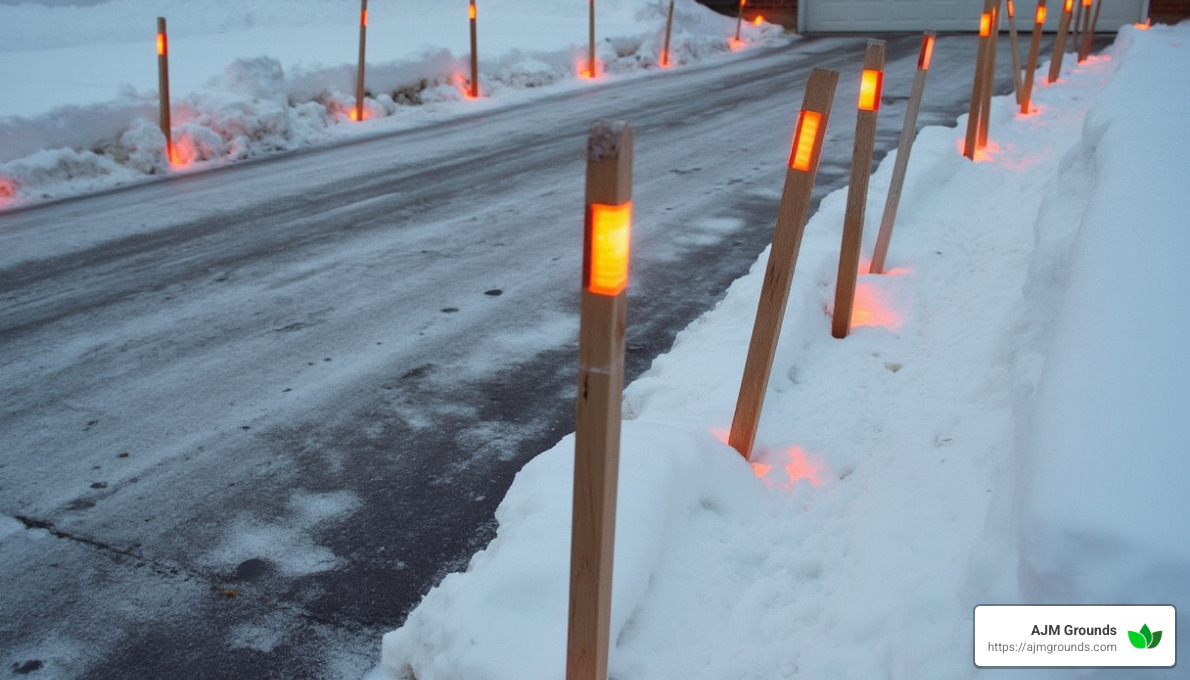
Stake your driveway as soon as snow is forecasted. This helps prevent damage to both landscaping and plowing equipment. Use wooden or fiberglass stakes at the driveway entrance and then every ten to fifteen feet along the sides. Place additional markers at curves and expansions.
Tip: If the ground is hard, make an initial hole with a screwdriver or drill to insert the stakes easily. Reflective markers are a great choice if you plan to plow during early mornings or late nights.
Marking Curbs
Marking curbs is crucial, especially in areas like Bedford, MA, where heavy snowfall can obscure boundaries. Use bright, weather-resistant markers to highlight curbs. This helps avoid damaging your vehicle or the curb itself during plowing.
Applying Sealants
Sealants play a significant role in maintaining driveway integrity. Applying asphalt fillers and concrete sealants prevents water from seeping into cracks, which can expand and worsen during freeze-thaw cycles. This step is crucial for protecting your investment, as normal deterioration is inevitable over time.
By following these steps, you’ll ensure your driveway is well-prepared for plowing. This preparation not only protects your property but also improves the efficiency of the plowing process.
Plowing Residential Driveways
When it comes to plowing residential driveways, efficiency and technique are key. Here are some strategies to help you manage the snow effectively and keep your driveway clear all winter long.
Back Dragging
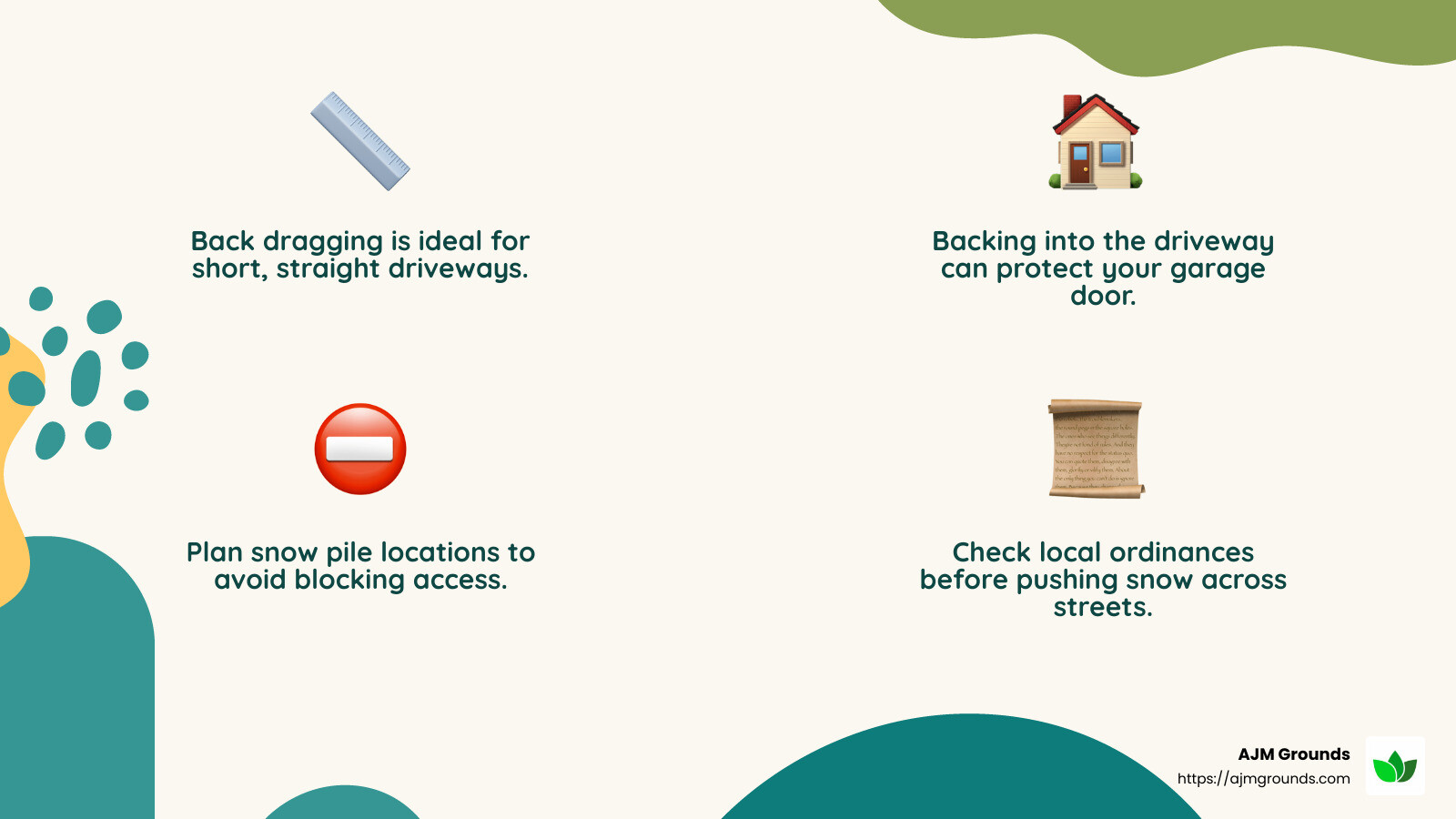
Back dragging is an essential technique, especially for short and straight driveways. Begin by positioning your vehicle close to the top of the driveway. Lower your plow and pull the snow backward toward the street. This method is excellent for removing snow without creating large piles near the garage or house entrance.
Tip: For best results, ensure your plow blade is flat against the surface to avoid leaving a thin layer of snow behind.
Backing Into the Driveway
For driveways that end in a garage, backing into the driveway can be a game-changer. Start by pulling up close to the garage, lower the plow, and drag the snow back. Once you’ve cleared enough space, lift the plow, back out, and turn around in the street. This gives you a clear path to push the remaining snow toward the end of the driveway.
This approach not only clears the driveway efficiently but also minimizes the risk of damaging the garage door or surrounding structures.
Strategic Snow Piling
Deciding where to pile snow is crucial for both aesthetics and practicality. Before the first snowstorm, plan your snow pile locations. Ideally, these should be at the edges of the driveway, ensuring they don’t block access to mailboxes or obstruct views.
Remember: In some areas, like Ouray County, Colorado, pushing snow across the street might be against local ordinances. Always check local rules to avoid fines or penalties.
By mastering these techniques, you’ll not only keep your driveway clear but also ensure the snow is managed safely and legally. Next, we’ll explore how to adapt these strategies for different types of driveways, whether they’re gravel, long, or have garages.
Techniques for Different Driveway Types
Plowing residential driveways requires different techniques depending on the driveway type. Let’s explore the best methods for handling gravel driveways, garage driveways, and long driveways.
Gravel Driveways
Plowing gravel driveways can be tricky. The key is to avoid scraping away the gravel along with the snow. Marking the driveway with stakes is crucial. Use them to highlight any rises or dips in the surface. This helps prevent your plow blade from digging into the gravel.
Tip: Keep the plow blade slightly raised to avoid picking up gravel. Consult with the homeowner on where to pile the snow, ensuring it won’t cause drainage issues when it melts.
Garage Driveways
Driveways that end in a garage require a careful approach. The goal is to clear snow without blocking access to the garage. Begin by pulling up close to the garage and back dragging the snow at least two vehicle lengths away. This minimizes the pile size near the garage.
After clearing enough space, lift the plow and back out. Turn around in the street and back into the cleared area. This method allows you to push the snow to the end of the driveway without obstructing the garage entrance.
Safety Note: Always be cautious when backing up. Turn around and look directly out the rear window instead of relying solely on mirrors or cameras.
Long Driveways
For longer driveways, multiple passes may be necessary. Start by working from the center outward. Tilt the plow to the right and left to push snow to the sides. This methodical approach saves time and ensures even distribution of snow piles.
Planning Tip: Before the snow season begins, decide on snow pile locations. Ensure there’s enough space for multiple snowfalls without blocking access to key areas like mailboxes.
By using these custom techniques, you’ll efficiently manage snow on any driveway type, keeping them clear and accessible throughout the winter. Next, we’ll discuss how to prevent damage during the plowing process.
Avoiding Damage During Plowing
When plowing residential driveways, protecting the surface is just as important as removing the snow. Here are some essential tips to avoid damage:
Use a Soft Plow Edge
One of the most effective ways to prevent damage is by using a plow with a soft edge. Polyurethane or rubber edges are excellent choices. They clear snow effectively without scraping or scratching asphalt or concrete surfaces. This simple switch can greatly extend the life of your driveway.
Pro Tip: Avoid using bare metal edges. They can dig into the surface, causing chips and cracks.
Set the Blade High
Another key technique is to set the plow blade slightly above the surface. Aim for about a half-inch clearance. This setting allows the plow to move most of the snow away without direct contact with the driveway, reducing the risk of damage.
- Why it Works: A small layer of snow left behind is often safe to walk or drive on. It usually melts quickly when temperatures rise, minimizing any inconvenience.
- Adjust for Uneven Surfaces: If your driveway has high or low spots, adjust the blade height accordingly to prevent scraping.
Use Snow Blowers Whenever Possible
For smaller snowfalls or delicate surfaces, consider using a snow blower instead of a plow. Snow blowers are gentler on driveways and can effectively clear snow without the risk of damage.
- Quick Action: Use a snow blower soon after the snow falls, before it hardens. This approach eliminates the need for harsh scraping and keeps the surface intact.
By employing these strategies, you can keep your driveway in great condition throughout the winter. Next, we’ll address some frequently asked questions about driveway plowing.
Frequently Asked Questions about Plowing Residential Driveways
What is the average cost to plow a driveway?
The cost of plowing residential driveways can vary based on several factors, including the size of the driveway, the amount of snow, and the frequency of service. On average, homeowners can expect to pay between $30 and $100 per plow visit. Larger driveways or those with complex layouts may incur higher costs.
- Tip: Some snow removal companies offer seasonal contracts, which can be more cost-effective if you expect frequent snowfalls.
Does my landlord have to plow my driveway?
The responsibility for snow removal can vary depending on your lease agreement and local regulations. In many cases, landlords are responsible for clearing common areas, including driveways, especially in multi-unit properties. However, tenants may be responsible for their own driveways in single-family rentals.
- Check Your Lease: Always review your lease agreement to understand your responsibilities. If it’s not clear, have a conversation with your landlord to avoid misunderstandings.
- Local Laws: Some municipalities have specific ordinances about snow removal responsibilities for landlords and tenants, so it’s wise to be informed about local rules.
Can you plow a driveway with heavy snow?
Absolutely! Plowing residential driveways with heavy snow requires a bit more attention and technique. Heavy, wet snow can be challenging, but it’s manageable with the right approach.
- Multiple Passes: Start by making a few passes with the plow blade set higher. This technique removes the top layers of snow without overloading the plow. Gradually lower the blade for subsequent passes to clear the remaining snow.
- Equipment Matters: Consider using a plow with a strong engine and a durable blade. This setup can handle the weight and density of heavy snow more effectively.
- Safety First: Be cautious of ice underneath heavy snow. Applying ice melt or sand can improve traction and make plowing safer.
By understanding these aspects, you can ensure your driveway remains clear and safe throughout the winter months. Next, we’ll explore more about AJM Grounds’ personalized service and attention to detail.
Conclusion
At AJM Grounds, we pride ourselves on delivering personalized service and meticulous attention to detail for all your snow removal needs. We understand that plowing residential driveways is not just about moving snow—it’s about ensuring safety, accessibility, and peace of mind for our clients.
Our team is dedicated to crafting solutions custom to the unique needs of each property. Whether it’s a gravel driveway requiring special care or a long driveway that needs efficient clearing, we have the expertise and equipment to handle it all. Our attention to detail means we don’t just clear your driveway; we consider the best techniques and strategies to prevent damage and maintain your property’s integrity.
We serve a wide range of locations, including Woburn, Lexington, and Reading, MA, and are committed to providing the same high level of service across all these areas. Our approach is simple: listen to your needs, assess the situation, and execute a plan that exceeds your expectations.
Choosing AJM Grounds means choosing a partner who values your property as much as you do. We aim to make every winter storm a little less daunting, with services you can rely on time and again.
For more information on our residential snow removal services, or to schedule a consultation, visit our Residential Snow Removal page. Let us handle the snow, so you can enjoy the beauty of winter without the hassle.
