

Finding the Right Paver Experts for Your Home
Searching for paver contractors near me can feel overwhelming, but finding the right professional makes all the difference between a stunning outdoor space and a disappointing investment. Think of this search as the foundation of your project—just as important as the foundation beneath the pavers themselves!
When you’re ready to transform your outdoor living area, here’s what you should keep in mind:
| Quick Guide: Finding Paver Contractors |
|---|
| 1. Check online reviews (Google, Yelp, Angi) |
| 2. Verify licensing and insurance |
| 3. Request and compare multiple written estimates |
| 4. Review portfolios of completed projects |
| 5. Ask about material warranties (typically 20-100 years) |
| 6. Confirm installation guarantees (typically 2 years) |
| 7. Get a detailed timeline and payment schedule |
Did you know that a professionally installed paver project can boost your home’s value by 65-70% of what you spend? That’s a significant return on investment! Whether you’re dreaming of a cozy patio for summer barbecues, a grand driveway that makes a statement, or charming walkways that guide visitors through your garden, the right contractor turns those dreams into reality.
The durability of pavers is impressive when properly installed. Traditional brick pavers typically last 20+ years, while natural stone options like travertine can stand strong for over a century with proper care. This longevity makes the initial investment worthwhile, even when professional installation costs range from $10-$90 per square foot (remember, actual prices vary widely based on materials, design complexity, and site conditions).
Most homeowners are pleasantly surprised that the average paver project wraps up in just 1-3 days. Of course, if you’re planning something elaborate or working with challenging terrain, it might take longer. A true professional handles everything—from proper base preparation to perfect paver placement and final sealing—ensuring your outdoor space stands the test of time and weather.
I’m John Caplis, owner of AJM Grounds LLC. I’ve spent years connecting homeowners with qualified paver contractors near me throughout Woburn, Massachusetts and surrounding communities. My team is passionate about changing outdoor spaces through expert hardscaping and thoughtful landscape design that complements your home’s unique character.
If you’re just starting your research, these related terms might help you find exactly what you’re looking for:
– Patio Installation – Everything you need to know about creating the perfect outdoor living space
– Dry Lay Flagstone – A beautiful, natural option for pathways and patios
– Lay Patio on Soil – Understanding the proper foundation for lasting results
Tip 1: Start With Local Research for “Paver Contractors Near Me”
Finding the right paver contractors near me begins with some good old-fashioned detective work. As Diane from Ontario shared about her experience: “The Unilock Authorized Contractor that we hired was excellent right from the get-go. His communication skills were very good, he stuck to his pricing module, and he was very flexible in terms of meeting our needs on the fly. It was a seamless experience using him.”
Your search for the perfect paver pro doesn’t have to be complicated. Start by pulling up Google Maps and typing in “paver contractors near me” to see who’s serving your neighborhood. Pay special attention to those with plenty of positive reviews – they’ve earned their stars for a reason!
Don’t stop at Google, though. Hop over to platforms like Angi, HomeAdvisor, Thumbtack, and Yelp where homeowners share detailed experiences. These real-world stories can tell you a lot about what to expect.
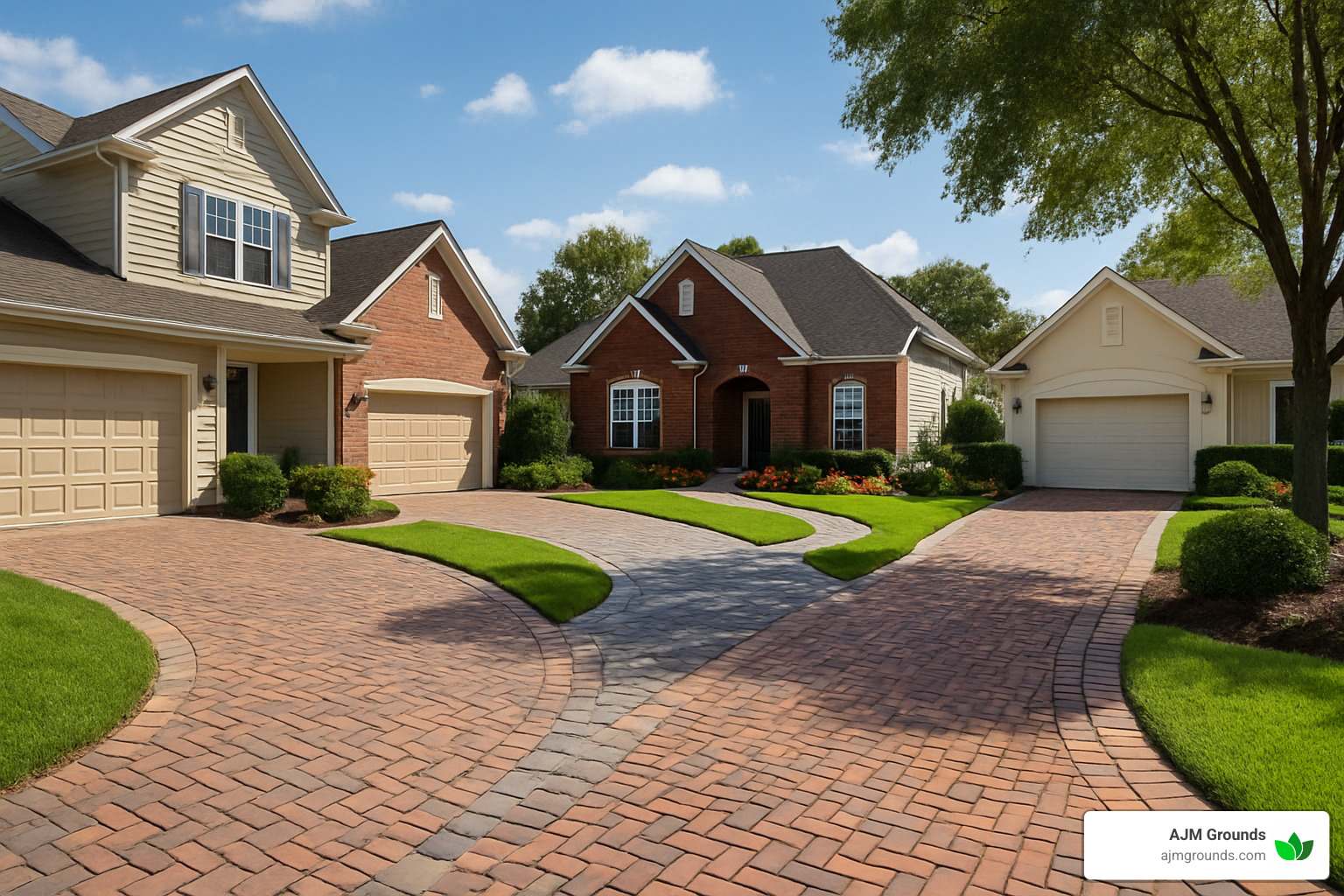
Some of the best leads often come from right next door. That gorgeous paver driveway you’ve been admiring? Ask your neighbor who installed it! People love sharing their experiences, especially when they’re pleased with the results.
The Better Business Bureau is another valuable resource that can reveal a contractor’s track record. And don’t forget to check local Facebook community groups – they’re goldmines for recommendations and warnings about contractors in your area.
Build a Shortlist of “Paver Contractors Near Me”
Once you’ve gathered some names, it’s time to narrow down your options. When building your shortlist, focus on quality indicators rather than just collecting a long list of possibilities.
Look for contractors with at least 10-15 reviews to ensure you’re seeing a meaningful pattern rather than just one or two opinions. Response time speaks volumes about a company’s professionalism – if they’re quick to answer your initial inquiry, chances are they’ll be responsive throughout your project.
Don’t overlook the importance of a contractor’s service radius. Some may technically cover your area but might charge extra if you’re on the edge of their territory. And if you’re planning a specific type of project – whether it’s a patio, driveway, or pool deck – find someone who specializes in that particular installation.
Aim for 3-5 solid candidates to contact. This gives you enough choices to compare without getting overwhelmed by too many options.
Verify Digital Footprints & Physical Addresses
A legitimate paver contractor near me should have a professional online presence. A well-designed website with clear contact information and a portfolio of their work tells you they’re invested in their business.
Be wary of contractors who can’t or won’t share photos of previous projects. Before-and-after shots of local installations not only demonstrate their experience but also show what they can achieve in similar conditions to your property.
A real business should have a real address – not just a P.O. box. Take a moment to verify this address against their Google Business listing. While you’re at it, check if they’re properly registered with your state’s Secretary of State or local business registry.
Consider how long they’ve been serving your community too. Contractors with deep roots in your area have reputations to protect and are typically more reliable than fly-by-night operations.
As Mike E. shared in February 2025: “Excellent! The work was done quickly (less than a day!). Made a couple of minor improvements (at no extra cost) that really made it even better. Left the site cleaner than it was before they started work!”
Taking the time to research thoroughly now can save you headaches later. After all, your paver project is an investment in your home that should last for decades – finding the right contractor is the crucial first step toward making that investment pay off.
Tip 2: Confirm Licensing, Insurance & Professional Certifications
When you’re searching for paver contractors near me, checking credentials isn’t just a box to tick—it’s your safety net. This step is what separates the true professionals from the guys who might disappear when problems arise.
I remember talking to a homeowner in Woburn who skipped this step and ended up with a nightmare situation: damaged property and a contractor who wouldn’t return calls. Don’t let this happen to you!
Essential Credentials to Verify:
Your ideal paver contractor should have their paperwork in perfect order. State contractor licenses are required in most areas, usually specific to masonry or hardscaping work. These licenses mean they’ve met minimum standards of knowledge and experience.
General liability insurance is non-negotiable—it protects your property if something goes wrong. Look for at least $1 million in coverage, though $2 million offers better protection for larger projects. Similarly, worker’s compensation insurance keeps you from being financially responsible if someone gets injured while working on your property.
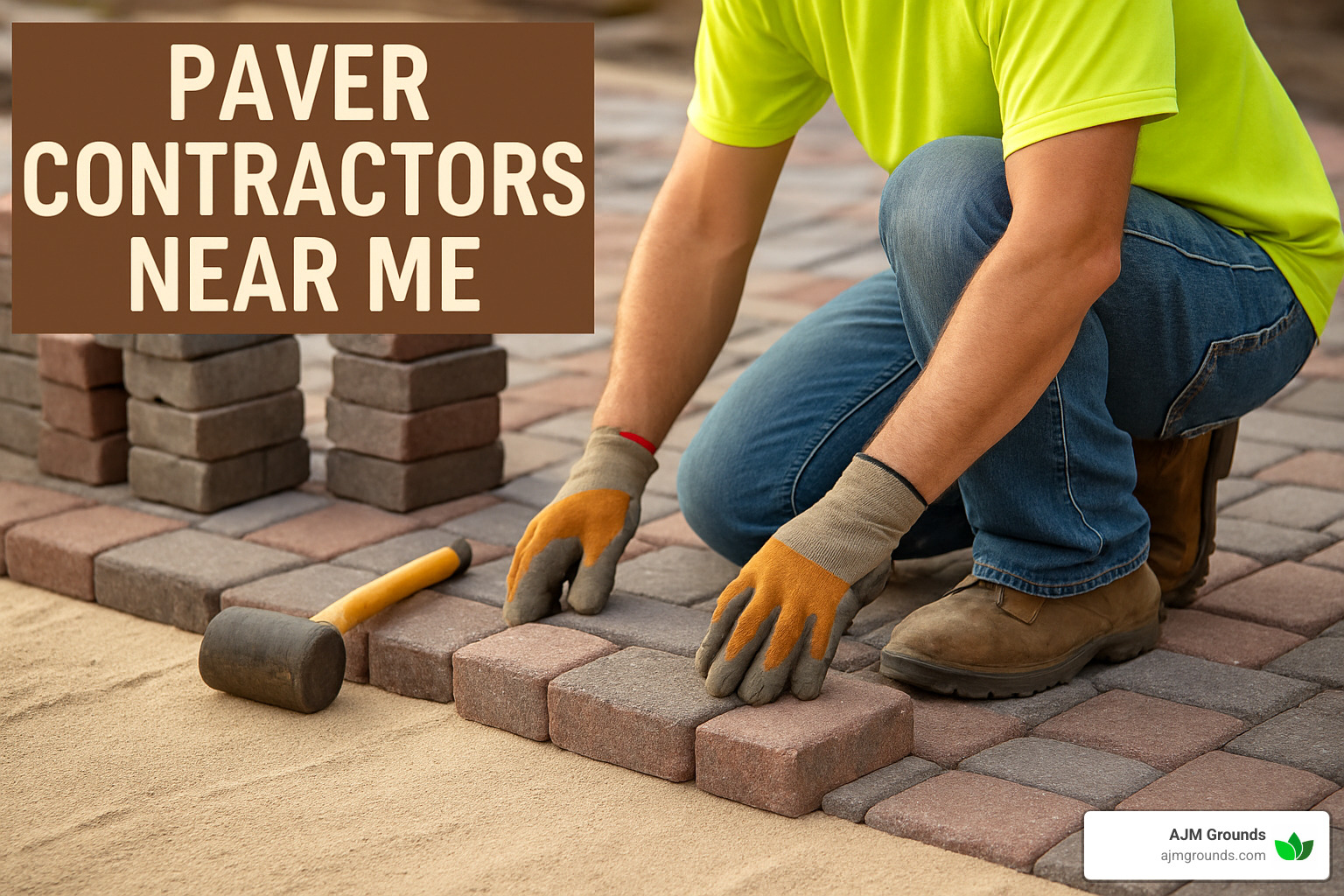
Professional certification matters too. Contractors certified by the Interlocking Concrete Pavement Institute (ICPI) have received specialized training in paver installation techniques. According to ICPI research, properly installed pavers by certified professionals significantly outperform amateur installations when it comes to withstanding freeze-thaw cycles and heavy loads—critical considerations for our New England winters!
A quality contractor will also handle permit acquisition for your project. They should know the local building codes inside and out, saving you the headache of navigating municipal requirements.
How to Cross-Check Credentials for paver contractors near me
Don’t just take their word for it when a contractor says they’re properly credentialed. Here’s how to verify everything yourself:
Most states maintain online databases where you can check contractor licenses—just search for “[your state] contractor license verification” to find yours. For insurance, request a Certificate of Insurance (COI) that names you as an “additional insured” for your project’s duration. This isn’t an unusual request, and reputable contractors will provide it without hesitation.
Check with your local building department about specific requirements for paver installations in your area. Some towns have additional certification requirements or specific codes that must be followed. You can also verify ICPI certification through their online directory of certified contractors.
As one local homeowner shared with me: “Checking credentials saved me from hiring an uninsured contractor. When I asked for proof of insurance, they couldn’t provide it. I later heard they had left another homeowner with a damaged water line and no recourse.”
Any contractor who hesitates or refuses to provide this documentation should be immediately crossed off your list. A true professional has nothing to hide and will be proud to show you their credentials.
Tip 3: Compare Written Estimates & Hidden Costs
When you’re typing paver contractors near me into your search bar, getting detailed written estimates should be at the top of your priority list. These estimates aren’t just numbers—they’re your roadmap to avoiding those dreaded “surprise” costs that can pop up halfway through your project.
Understanding Paver Installation Costs
Most homeowners are surprised by the wide range in paver pricing. Typically, you’ll see costs between $10 and $30 per square foot, though this can stretch anywhere from $10 to $90 depending on what materials you choose, how complex your design is, and what your yard is like to begin with. These are average costs based on internet data and not actual costs for AJM Grounds.
To put this in perspective:
– That cozy 12′ x 12′ patio you’ve been dreaming about? Budget between $1,400 and $13,000
– A standard driveway (200-400 sq ft) might set you back $2,000 to $36,000
– Even a simple walkway to your front door could range from $800 to $7,200
These are just industry averages to give you a ballpark idea. Your actual project might land higher or lower depending on your specific needs and location.
Key Cost Factors to Consider:
That gorgeous paver project you saw on Pinterest? The visible parts are just the tip of the iceberg. Below the surface are several factors that significantly impact your final bill.
Site preparation is often the hidden cost that catches homeowners off guard. If your yard has a significant slope or poor drainage, or if there’s existing concrete that needs removal, your costs will climb. Material quality creates another big swing in pricing—concrete pavers ($8-$25/sq ft) are typically more budget-friendly than natural stone ($15-$60/sq ft) or brick pavers ($10-$30/sq ft).
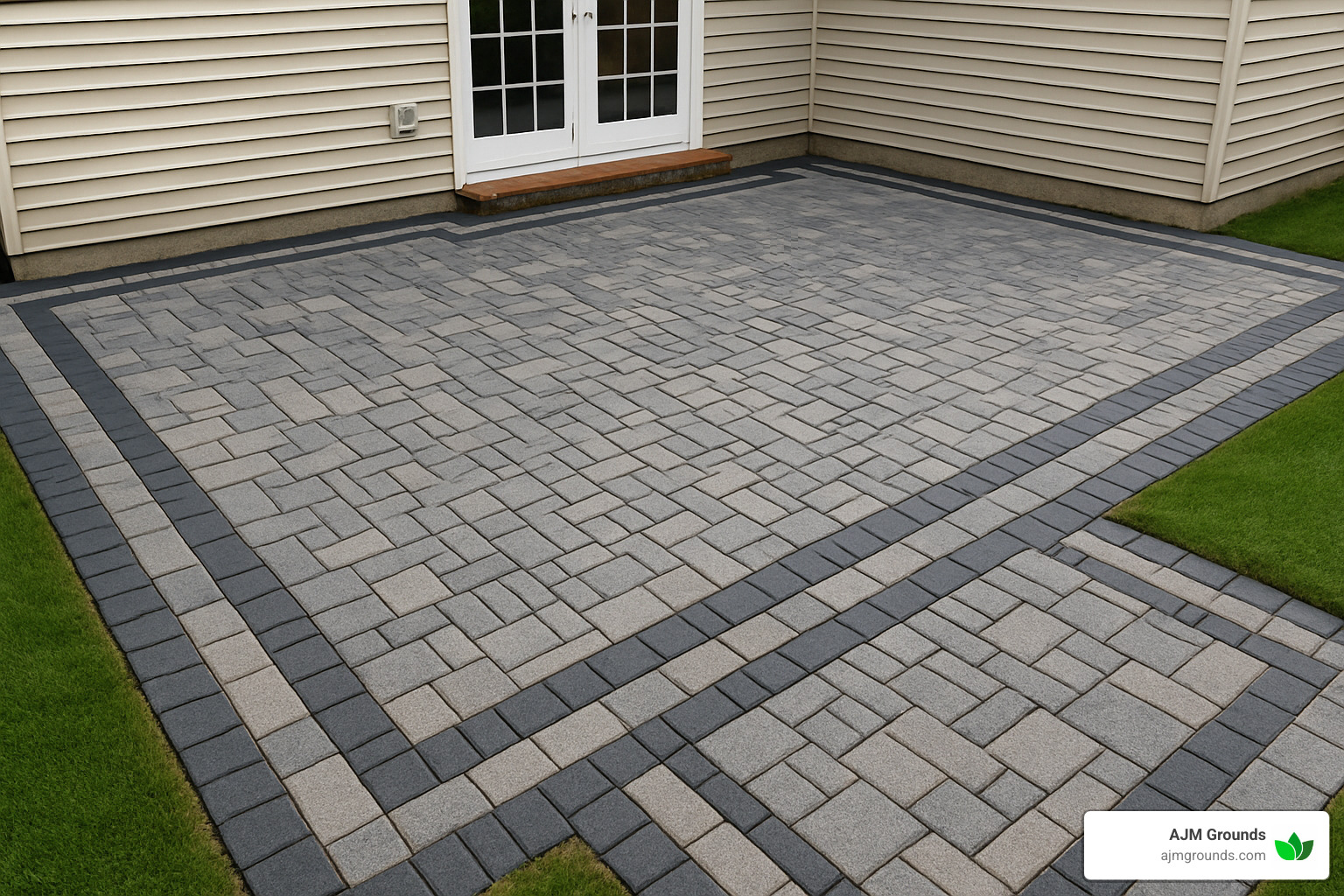
Your design choices matter too. Those complex patterns and borders that make your neighbors jealous? They require more cuts, more skilled labor, and often result in more material waste. And don’t forget about disposal fees—hauling away old concrete or soil can easily add $500-$1,500 to your project total.
Reading Line-Item Quotes for “paver contractors near me”
A proper estimate isn’t just a bottom-line number—it should tell a complete story of your project. When comparing quotes, look for these critical details:
Material grade should be specifically named—not just “pavers” but the exact brand, model, and quality tier. Labor hours give you insight into how much time they expect to spend and how many people will be working. This affects not just cost but how long your yard will be a construction zone.
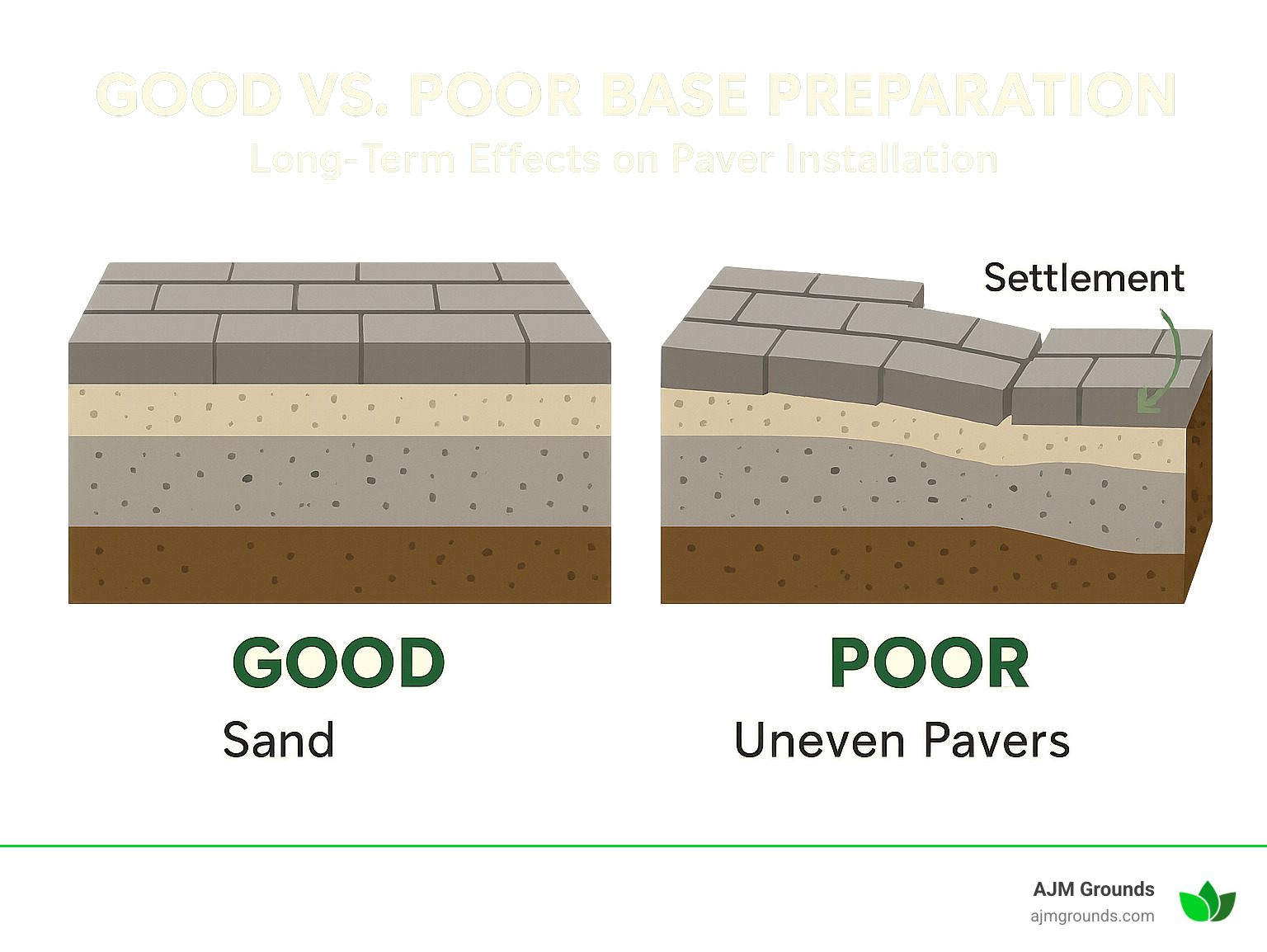
Pay special attention to base materials. A proper estimate specifies the thickness (typically 4-8 inches), type of aggregate, and compaction methods. This is where quality contractors never cut corners, because a proper base is the foundation of a lasting installation.
Edging details might seem minor, but the type of edge restraints (plastic, aluminum, or concrete) affects both appearance and longevity. And always check the change-order policy—how will price adjustments be handled if you decide to expand the patio or switch materials mid-project?
“The most common surprise costs come from inadequate base preparation,” one veteran contractor told me. “A proper estimate should include at least 4-6 inches of compacted base material for walkways and patios, and 8-12 inches for driveways.”
Here’s a word of caution: if one estimate is significantly lower than the others, it’s usually not because you found a bargain. It’s more likely that corners will be cut—especially in that critical base preparation—leading to settling, shifting, and premature failure of your beautiful new pavers.
Tip 4: Review Portfolios & Visit Completed Projects
When searching for paver contractors near me, seeing is believing. A contractor’s portfolio isn’t just a collection of pretty pictures—it’s your window into their craftsmanship, creativity, and attention to detail.
Evaluating Portfolios
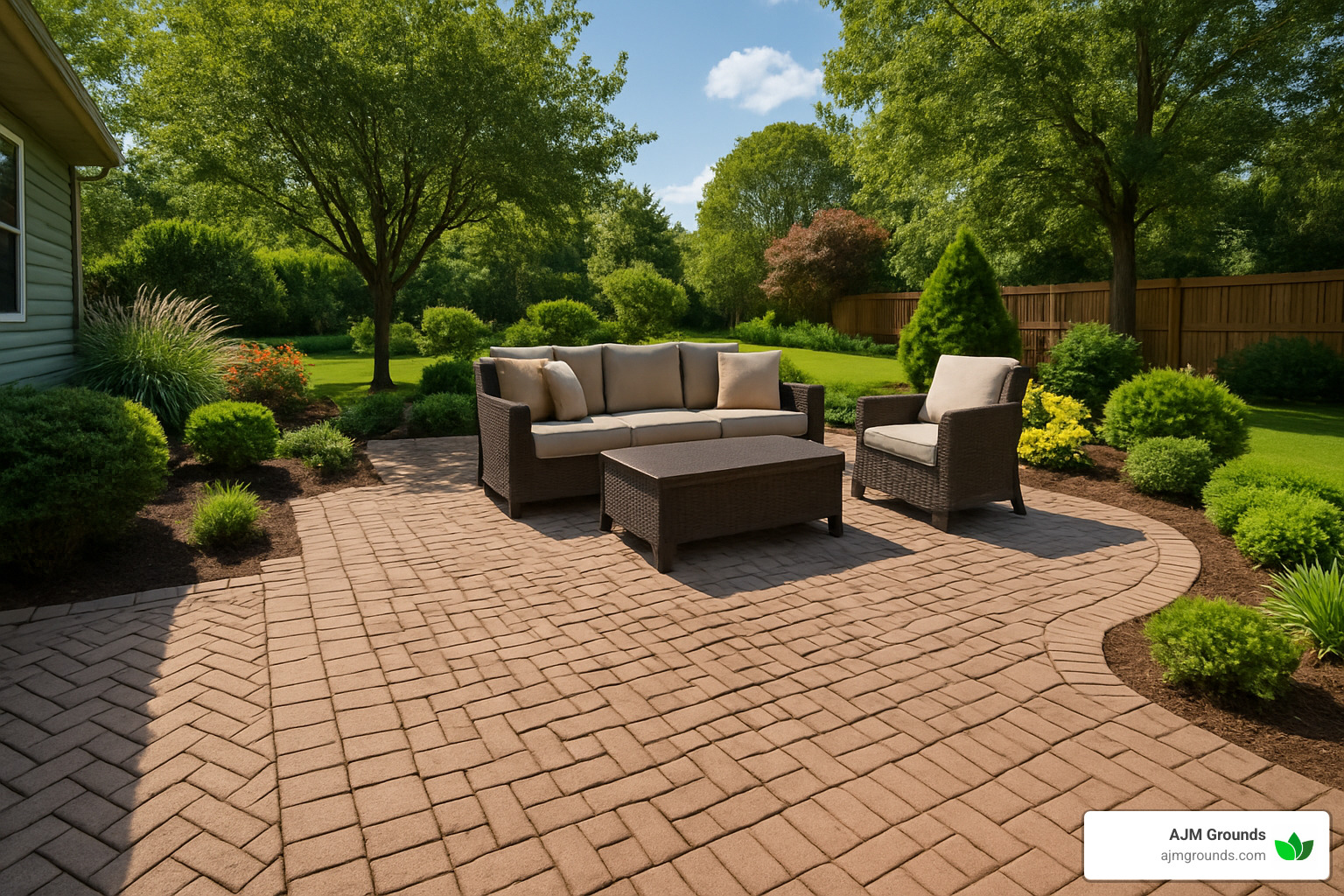
The best contractors showcase diverse projects that demonstrate their range and expertise. Look for portfolios that display style versatility across traditional, contemporary, and custom designs. You want someone who can handle different pattern options like running bond, herringbone, basketweave, and circular patterns with equal skill.
Pay attention to how they blend colors and materials together. A skilled contractor creates color blends that complement your home’s exterior while adding visual interest to your outdoor space. Their portfolio should include projects similar to yours in scope and complexity—after all, you wouldn’t hire someone who’s only done small walkways to install your expansive outdoor living area.
“The contractor showed us photos of a project similar to what we wanted,” shared one homeowner. “When we visited that site in person, we noticed details that weren’t visible in photos—like how the pavers transitioned perfectly to the lawn edge and how level everything was even three years later.”
Questions to Ask During a Site Visit
Nothing beats seeing completed projects in person. When you visit previous installations, take time to really inspect the work. Walk across the surface and feel for any dips or uneven areas that might indicate improper installation. Look at how water flows after rain—proper drainage is crucial for long-lasting pavement.
Take a peek at the edges where you can often see the base depth. A proper installation should have 4-8 inches of compacted base material. Are the joints consistently filled with polymeric sand? Are they weed-free? These details reveal the contractor’s commitment to quality.
If possible, chat with the homeowner about their experience. Ask how the pavers have held up through seasonal changes and whether the contractor was responsive to any concerns after installation.
One satisfied customer, Charisse E., noted in November 2024: “The three-person team put down a double layer of pond vinyl after clearing out the necessary large rocks, pebbles, and bamboo. They built up the sides more. They worked well together and made some adjustments where I wanted them to. The end result was very satisfying!”
The best contractors will be proud to show off their work and happy to connect you with previous clients. They understand that their past projects are their best advertisements.
For more inspiration and information about creating your perfect outdoor space, check out our hardscape design services.
Tip 5: Ask About Materials, Warranties & Guarantees
When searching for paver contractors near me, understanding materials and warranties might not seem exciting, but trust me—it’s what separates a patio that lasts for decades from one that falls apart after a few seasons.
Material Options and Lifespans
I’ve seen homeowners get overwhelmed when contractors start talking about different paver materials. Let me break it down for you in plain English:
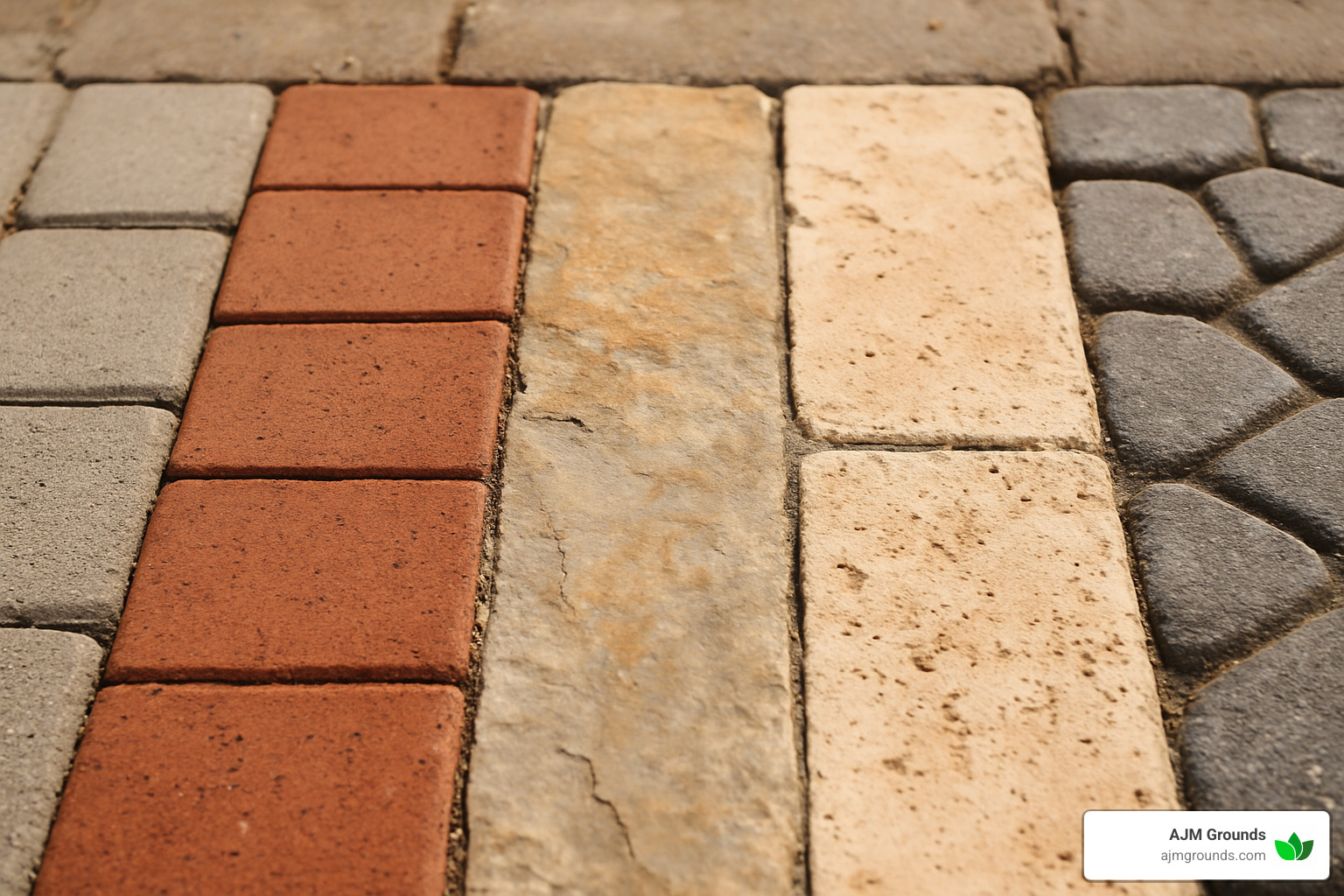
| Paver Type | Lifespan | Average Cost* | Best For |
|---|---|---|---|
| Concrete | 25-50 years | $8-$25/sq ft | Versatility, color options |
| Clay Brick | 20-35 years | $10-$30/sq ft | Traditional look, rich color |
| Natural Stone | 50-100+ years | $15-$60/sq ft | Luxury appearance, uniqueness |
| Travertine | 100+ years | $20-$60/sq ft | Pool decks, heat resistance |
| Cobblestone | 75-100+ years | $20-$50/sq ft | Old-world charm, extreme durability |
*These are average costs based on internet data and not actual costs for AJM Grounds.
A well-installed paver patio can become a family gathering spot for generations. Most quality pavers last 20-100 years depending on the material and installation quality. As Cambridge Pavingstones likes to boast, they’ve sold over 3 billion pavingstones, many still performing beautifully decades later.
Understanding Warranties and Guarantees
When it comes to protecting your investment, you’ll want to understand the two types of warranties that should come with your paver project:
Manufacturer’s Material Warranty covers the actual pavers themselves. These typically range from 20 years to lifetime and protect against the pavers cracking, fading excessively, or breaking down structurally. Companies like Unilock offer transferable lifetime guarantees on their concrete pavers for residential use—which can actually add value if you ever sell your home.
Contractor’s Workmanship Guarantee is equally important but often overlooked. This typically covers 1-5 years (with 2 years being standard) and protects you against installation problems like settling, drainage issues, or edge restraints failing. This is where hiring reputable paver contractors near me really pays off.
Understanding Manufacturer vs Contractor Warranties
Here’s what you need to know about these warranties in practical terms:
The coverage scope is critical to understand. Manufacturer warranties only cover defects in the actual pavers—not how they were installed. If your pavers are sinking because the contractor skimped on base preparation, the manufacturer won’t help you. That’s where the contractor warranty comes in.
Pay attention to registration steps too. Some warranties require you to register within 30-90 days after installation. Ask if your contractor handles this or if it’s your responsibility.
The claim process is something to discuss before signing any contract. If problems arise, will the contractor inspect first? Do you need to document with photos? Understanding this process upfront prevents headaches later.
If you might sell your home in the next few years, ask about transferability of warranties. A transferable warranty can be a nice selling point and gives the next homeowner peace of mind.
As one homeowner told me: “When we had some settling after the first winter, our contractor came back and fixed it immediately because of their two-year workmanship guarantee. They even took before and after photos for our records.”
Pro Tip: Get all warranty information in writing as part of your contract. Those verbal promises about “we’ll take care of any problems” are much harder to enforce when they’re not documented.
Tip 6: Clarify Timeline, Crew Size & Jobsite Etiquette
When searching for paver contractors near me, understanding the logistics of your project can save you from headaches and surprises. A clear timeline and expectations about how the work will unfold makes for a much smoother experience.
Typical Project Timeline
Most residential paver projects move along fairly quickly once they begin. A small walkway or patio might take just 1-2 days, while a standard-sized patio or short driveway typically requires 2-4 days. Larger or more complex projects like extensive driveways or intricate designs might stretch to 4-7 days.
But as any experienced homeowner knows, several factors can throw a wrench in even the best-planned schedule:
Weather can be your project’s best friend or worst enemy. A sudden downpour can delay excavation and base preparation since proper compaction requires relatively dry conditions. As one homeowner shared with us: “Our contractor was upfront about potential weather delays in our contract. When we had three days of rain during our scheduled installation week, they communicated clearly about the adjusted timeline and still completed the project within a reasonable timeframe.”
Site access challenges, surprise obstacles like hidden utilities or stubborn tree roots, and even material availability can all impact your timeline. Those gorgeous specialty pavers you’ve been eyeing? They might come with a 2-6 week lead time, so plan accordingly!
Crew Size & Jobsite Etiquette
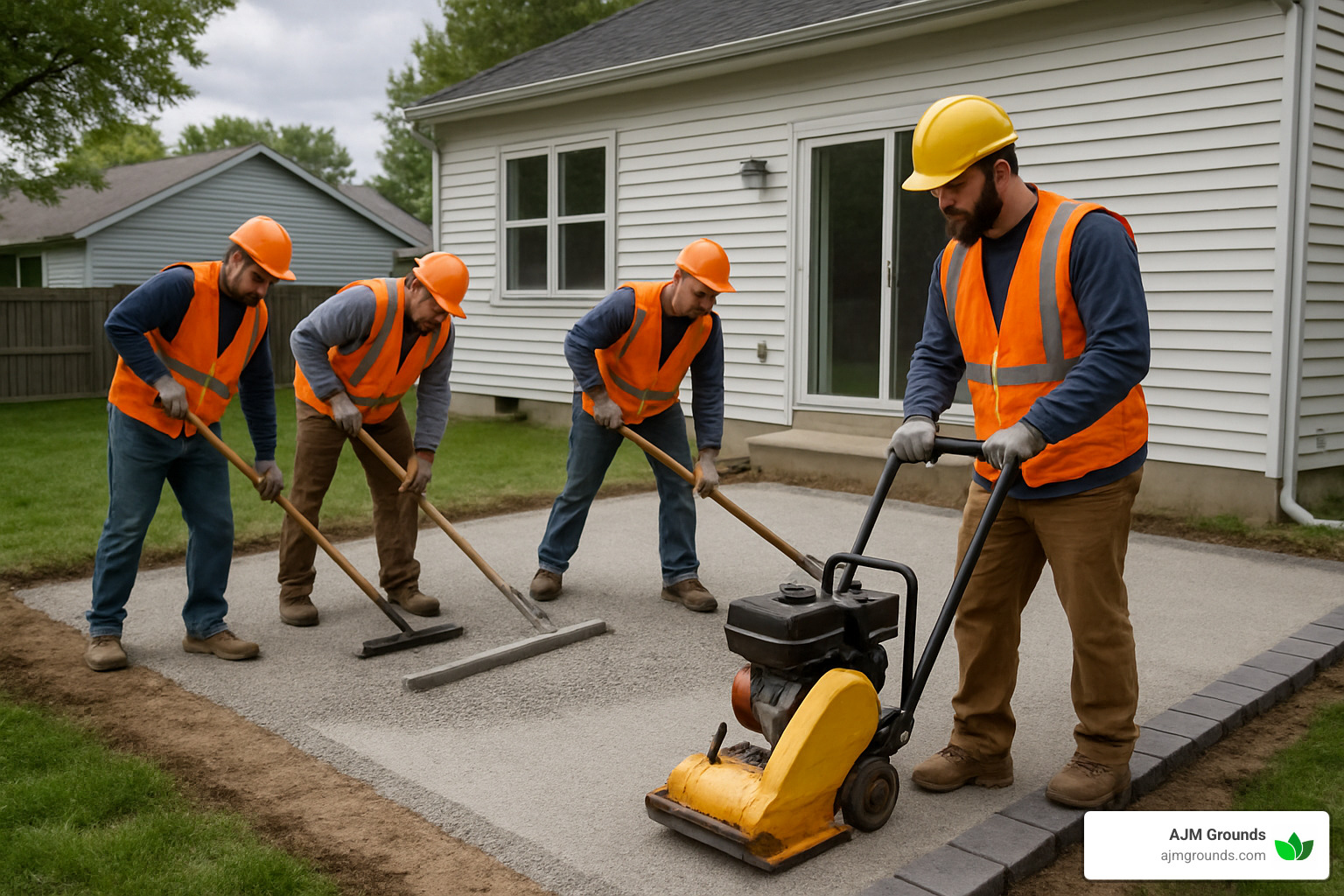
Professional paver contractors near me should be transparent about what to expect during the installation process. A typical crew ranges from 2-5 workers depending on your project’s size. While a larger crew might finish faster, they’ll also have a bigger footprint on your property.
Work hours typically run from 8 AM to 5 PM on weekdays, but it’s worth confirming whether any weekend work might be needed. You’ll also want to discuss where materials will be staged—those pallets of pavers and mounds of gravel need somewhere to go!
Don’t be shy about asking how your existing landscaping, sprinkler systems, and structures will be protected during the work. A good contractor will have a plan for this. Similarly, clarify expectations about daily cleanup and final site restoration.
Mike E., a recent customer, was particularly impressed with his experience: “Excellent! The work was done quickly (less than a day!). Made a couple of minor improvements (at no extra cost) that really made it even better. Left the site cleaner than it was before they started work!”
One often overlooked detail? Bathroom access. Will workers need to use your facilities, or will they bring portable options? It’s better to discuss this upfront than deal with awkwardness later.
Milestone Checklist to Keep Projects on Schedule
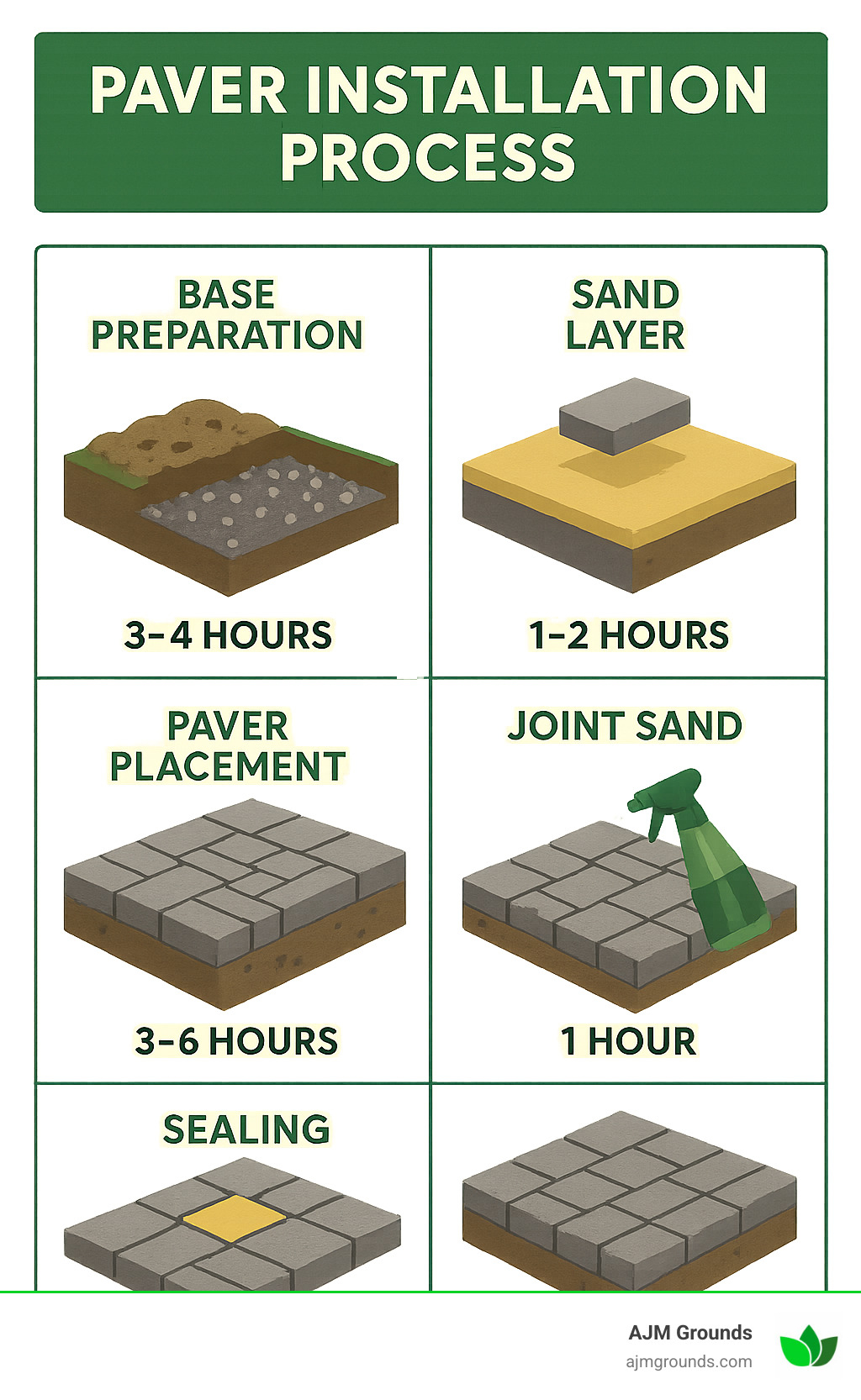
A well-organized paver installation typically follows a logical sequence of events. Understanding these milestones helps you track progress and know what to expect each day:
Demo Day kicks things off with removal of existing materials and excavation, usually on day one. Base Preparation follows with installation and compaction of the gravel base, which might span days 1-2. The Sand Bedding layer gets screeded perfectly flat on day 2 or 3, creating the foundation for the actual Paver Installation in your chosen pattern (days 2-4).
As the project nears completion, attention turns to Cutting & Edging for a clean finish, followed by Joint Sand Application where polymeric sand is swept between pavers. Finally, Compaction & Sealing puts the finishing touches on your new hardscape, though you’ll need to allow 24-48 hours for proper sealer curing.
For more detailed information about our approach to creating beautiful outdoor spaces, visit our patio installation company page.
Tip 7: Evaluate Financing, Contracts & Payment Terms
When searching for paver contractors near me, understanding the financial aspects of your project is just as important as evaluating the contractor’s technical skills. After all, a well-structured payment plan and clear contract can make the difference between a stress-free experience and a financial headache.
Payment Structure and Financing Options
Most reputable paver contractors follow a predictable payment structure that protects both parties. Typically, you’ll encounter:
An initial deposit of 10-30% upon signing the contract. Be cautious if anyone asks for more than a third upfront—this is often a red flag. As one contractor explained to me, “The deposit covers our initial material orders and scheduling commitment, but shouldn’t burden the homeowner with too much risk.”
Progress payments tied to specific milestones give you leverage throughout the project. These might come after excavation is complete or when the base is installed, allowing you to verify quality before releasing additional funds.
A final payment of 10-20% should be held until you’re completely satisfied with the work. This gives the contractor incentive to address any punch list items to your satisfaction.
Many homeowners don’t realize that financing options are often available for paver projects. From contractor-offered payment plans to home improvement loans with competitive rates, you have options. Some homeowners tap into home equity through HELOCs for larger projects, while others simply use credit cards (though contractors may charge processing fees).
According to industry sources, the average cost of a 280-square-foot paver patio is $3,800, with a range from $2,400 to $21,000 or more. These are average costs based on internet data and not actual costs for AJM Grounds. Having flexible payment options can make these investments more manageable for many families.
Contract Essentials and Lien Waivers
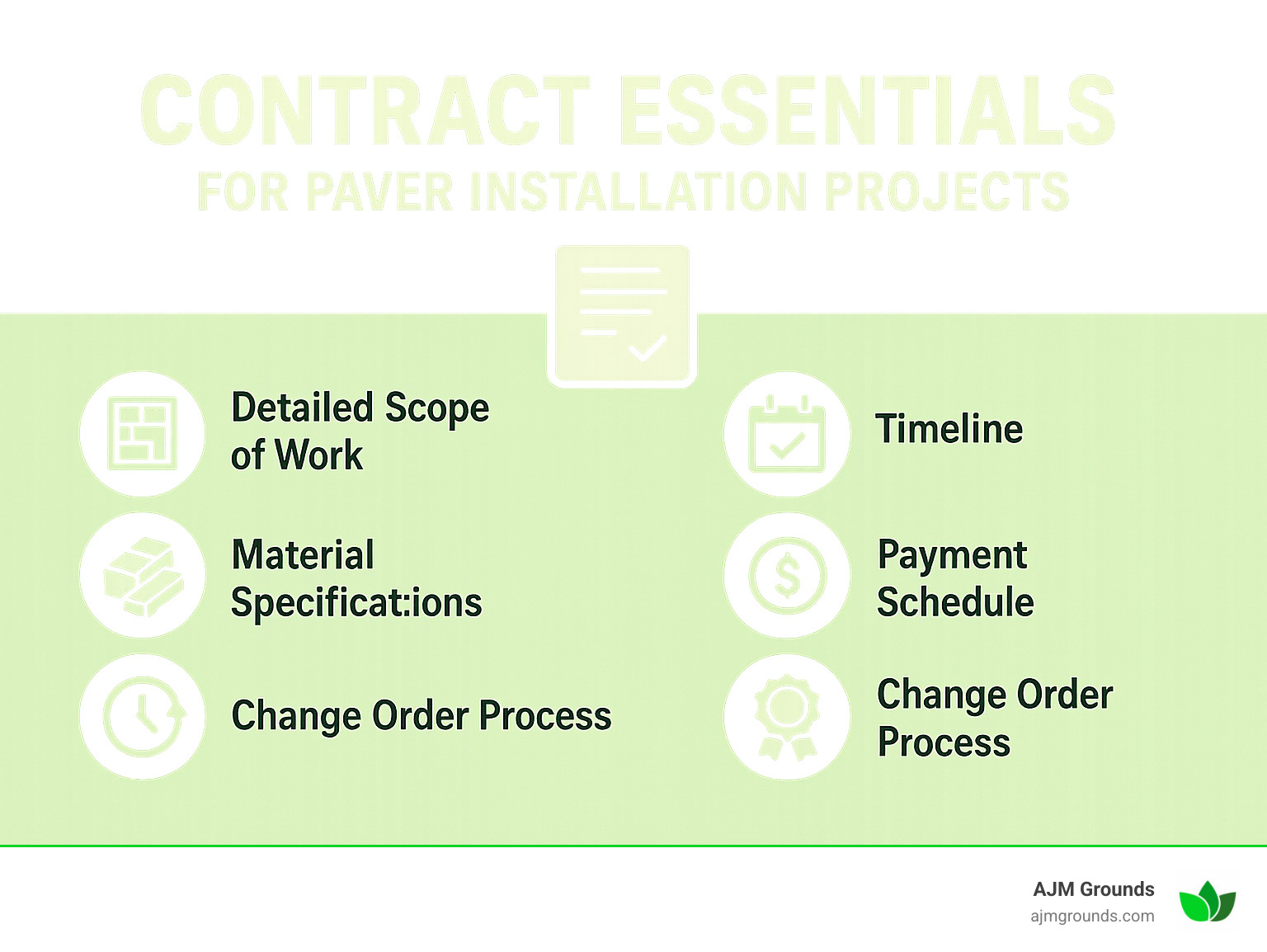
A thorough contract is your roadmap and protection throughout the project. When evaluating contracts from paver contractors near me, make sure they include:
Detailed scope of work that leaves nothing to interpretation. Your contract should specify exact dimensions, materials, patterns, and any special features. “Install paver patio” isn’t enough—you want “Install 320 sq ft Unilock Guide Hill Smooth patio in Tuscany color with soldier course border in Midnight Charcoal.”
Material specifications down to the brand, style, color, and quantity ensure you get exactly what you paid for. This also prevents the old bait-and-switch where premium materials are promised but budget options are installed.
Timeline expectations with both start and completion dates give you clarity on project duration. Smart contracts also include contingency plans for weather delays or material shortages.
Payment schedule with clear breakdowns of amounts and timing helps you budget and protects both parties from disputes.
Change order process details how modifications will be handled and priced. This is crucial since nearly every project encounters some changes along the way.
Warranties covering both manufacturer defects and workmanship give you long-term peace of mind. A typical workmanship warranty should last at least 2 years.
Lien waivers are another important protection that many homeowners overlook. These documents verify that suppliers and subcontractors have been paid, preventing them from placing a lien on your property if the contractor fails to pay them. Request partial lien waivers with each progress payment and a final lien waiver before making your final payment.
Red Flags in Paver Installation Contracts
When reviewing contracts from paver contractors near me, watch out for these warning signs:
Cash-only payments should immediately raise eyebrows. Legitimate businesses should accept checks or electronic payments that create a paper trail. As one homeowner told me, “When a contractor insisted on cash payments with no receipts, I knew something wasn’t right.”
Vague scope descriptions leave too much room for interpretation and disputes. If your contract doesn’t specify exact materials, dimensions, and preparation details, you’re asking for trouble.
Missing warranty clauses suggest the contractor may not stand behind their work. Quality paver professionals should offer written guarantees of at least 1-2 years on workmanship.
Excessive deposit requirements can put you at financial risk. If a contractor disappears after collecting 50% upfront, you’ll have limited recourse.
Incomplete contact information makes it hard to track down the contractor if issues arise. Contracts should include the full business name, physical address, phone number, and license number.
A happy customer recently shared, “Our contractor provided a detailed 7-page contract that specified everything from the exact paver model to the depth of our base materials. This level of detail gave us confidence and prevented any misunderstandings during the project.”
For more information about combining retaining walls with paver patios for sloped yards, visit our retaining wall with paver patio page.
Frequently Asked Questions about Hiring Paver Contractors
How much does paver installation cost on average?
When searching for paver contractors near me, understanding cost ranges helps you prepare a realistic budget. The truth is, paver installation costs vary widely depending on several factors.
Most homeowners can expect to pay between $10 and $30 per square foot for standard paver installation, though prices can range from $10 to $90 per square foot when you factor in premium materials or complex designs. These are average costs based on internet data and not actual costs for AJM Grounds.
If you’re planning a basic 12′ x 12′ patio, you might budget around $1,400 to $2,500 for standard pavers. For those dreaming of something more luxurious, a cobblestone patio might run $4,000 to $20,000 for a 200-400 square foot area, while granite pavers typically cost between $3,800 and $12,800 for a similar space.
What drives these price differences? As one contractor put it, “The biggest cost variable is often what happens below the pavers. Proper base preparation might not be visible in the finished product, but it’s what determines whether your patio lasts 5 years or 25 years.”
Other significant cost factors include site preparation (especially if you have a sloped yard), the quality of materials you choose, pattern complexity, and how accessible your installation area is for equipment and materials.
Do pavers really increase my home’s resale value?
Yes! Investing in professional paver installation typically provides a 65-70% return on investment when it comes to your home’s resale value. That means a $10,000 paver project could potentially add $6,500-$7,000 to your home’s value when it’s time to sell.
Beyond just the numbers, paver installations offer significant marketing advantages when selling your home. Improved curb appeal helps your home make a stronger first impression in listings and showings. Expanded outdoor living space has become a major selling point, especially since the pandemic increased our appreciation for functional outdoor areas. Better drainage and durability compared to wood decks also appeals to buyers looking for low-maintenance options.
As one real estate agent shared, “Homes with well-designed hardscaping typically photograph better for listings and create strong first impressions during showings. In competitive markets, this can be the difference between a quick sale and a property that sits on the market.”
Can I install pavers myself, or should I always hire a pro?
While DIY paver installation is technically possible, there are good reasons why most homeowners ultimately choose professional installation.
A typical paver project demands 40-50 hours of labor for an experienced DIYer—that’s several weekends of intense physical work moving literally tons of materials. You’ll need specialized equipment like plate compactors and wet saws for cutting pavers. Perhaps most critically, precision in base preparation and grading is essential for proper drainage and long-term stability.
One homeowner who attempted DIY installation shared this reality check: “What I thought would be a weekend project took three weekends, cost more than expected in tool rentals, and still doesn’t look as professional as I’d hoped. For my backyard patio, I’ll definitely hire a pro.”
Professional paver contractors near me bring several advantages to your project:
Expert knowledge of proper base depths for your specific soil and climate conditions helps prevent future settling issues. Commercial-grade equipment makes short work of tasks that would take a DIYer days to complete. Experience with complex patterns ensures your design looks exactly as you envisioned. Most professional installations take just 1-3 days, and perhaps most importantly, they typically come with warranties on both materials and workmanship.
For simple projects like a small garden path, DIY might be reasonable. But for patios, driveways, or any project where drainage and structural integrity are crucial to long-term success, professional installation is typically the wiser investment.
Conclusion
Finding the right paver contractors near me feels like a journey worth taking when you know what to look for. Throughout this guide, we’ve walked through seven essential steps that transform what could be an overwhelming process into a manageable path toward your dream outdoor space.
Think of your search as building a relationship – one that begins with research, grows through verification of credentials, and solidifies with clear communication about costs, materials, and timelines. The care you put into finding the right contractor mirrors the care they’ll put into your project.
A quality paver installation isn’t just a construction project; it’s an investment in your home that will welcome family gatherings, quiet morning coffees, and evening relaxation for decades to come. The time you spend now finding the right partner for this journey pays off in beautiful, durable hardscaping that improves both your lifestyle and potentially your property value.
At AJM Grounds, we’ve seen how transformative a well-executed paver project can be for homeowners throughout Woburn, Bedford, Billerica, Burlington, Lexington, Reading, Stoneham, Wilmington, and Winchester, MA. Our approach centers on listening first, then bringing your vision to life with the attention to detail that turns good projects into great ones.
Remember these cornerstone principles as you make your decision:
The foundation matters most – proper base preparation is often invisible in the finished project but determines whether your pavers last for years or decades. Get everything in writing – from warranties to change orders, clear documentation protects everyone involved. Never compromise on credentials – proper licensing and insurance aren’t just formalities; they’re your safety net if things go wrong. And perhaps most importantly, value trumps initial price – the lowest bid rarely delivers the best long-term results.
For more information about our approach to creating beautiful, lasting paver installations or to schedule your free on-site consultation, visit our patio installation page. We’re happy to answer your questions and help bring your outdoor vision to life.
Even after installation, your paver project will benefit from some simple care: a gentle annual cleaning with mild detergent, refreshing the polymeric sand every few years, reapplying sealer if used, and staying on top of seasonal weed prevention. These small efforts maintain the beauty and integrity of your investment.
By taking the time to find qualified professionals who share your commitment to quality, your paver project will become more than just an addition to your home – it will be a lasting space where memories are made for years to come.
