

Transform Your Outdoor Space with Hardscapes
Patios and hardscapes are the foundation of beautiful, functional outdoor living spaces. If you’re exploring options for your yard, here’s what you need to know:
What are hardscapes?
* Definition: Non-living landscape elements like patios, walkways, retaining walls, and driveways
* Function: Create usable outdoor surfaces and define spaces
* Materials: Stone, brick, concrete pavers, gravel, and wood composites
* Benefits: Increase property value, reduce maintenance, extend living space
Popular hardscape features:
1. Patios (gathering spaces for furniture and activities)
2. Walkways and paths (connect different areas)
3. Retaining walls (manage slopes and create planting areas)
4. Fire pits and outdoor kitchens (entertainment features)
5. Water features (aesthetic elements)
According to the American Institute of Architects, outdoor living spaces like patios and hardscapes have been among the top requested home features for several years, with 70% of architects reporting increased demand. It’s no wonder the U.S. hardscape market is projected to reach $18.5 billion by 2027.
“Rather than upgrading to a larger home, many people are looking to expand their living space outdoors,” notes a recent industry report. A well-designed patio or hardscape can recover up to 95% of the project cost at resale, making it both a lifestyle improvement and a smart investment.
With the right design and materials, your outdoor space can become an extension of your home – a place for relaxation, entertainment, and connection with nature.
I’m John Caplis, owner of AJM Grounds LLC, and I’ve spent years helping homeowners in Woburn, Massachusetts create stunning patios and hardscapes that transform their properties into functional outdoor retreats. My team specializes in designing and installing custom hardscape solutions that blend seamlessly with your home’s architecture and your personal style.
Patios and hardscapes glossary:
– Natural stone retaining walls
– Retaining wall repairs
– hardscape construction service
1. Hardscape 101: Building Blocks of Outdoor Living
Think of hardscaping as the backbone of your outdoor space—the solid, non-living elements that give your landscape structure and purpose. At AJM Grounds, we see hardscapes as the architectural framework that transforms your yard from a flat, open space into a functional outdoor living area.
Your hardscape system typically includes several key elements working together. Retaining walls do more than just look attractive—they tame sloped properties, prevent soil erosion, and create level areas where you can actually use your yard. Walkways and paths guide visitors through your landscape, connecting your home to patios, gardens, and other outdoor destinations with purpose and style. Driveways and parking areas provide durable surfaces for vehicles while significantly boosting your home’s curb appeal and first impression.
Perhaps most importantly, well-designed hardscapes include proper drainage solutions that protect both your landscape and home foundation. Water management might not be the most exciting topic, but it’s one of the most valuable aspects of professional hardscaping.
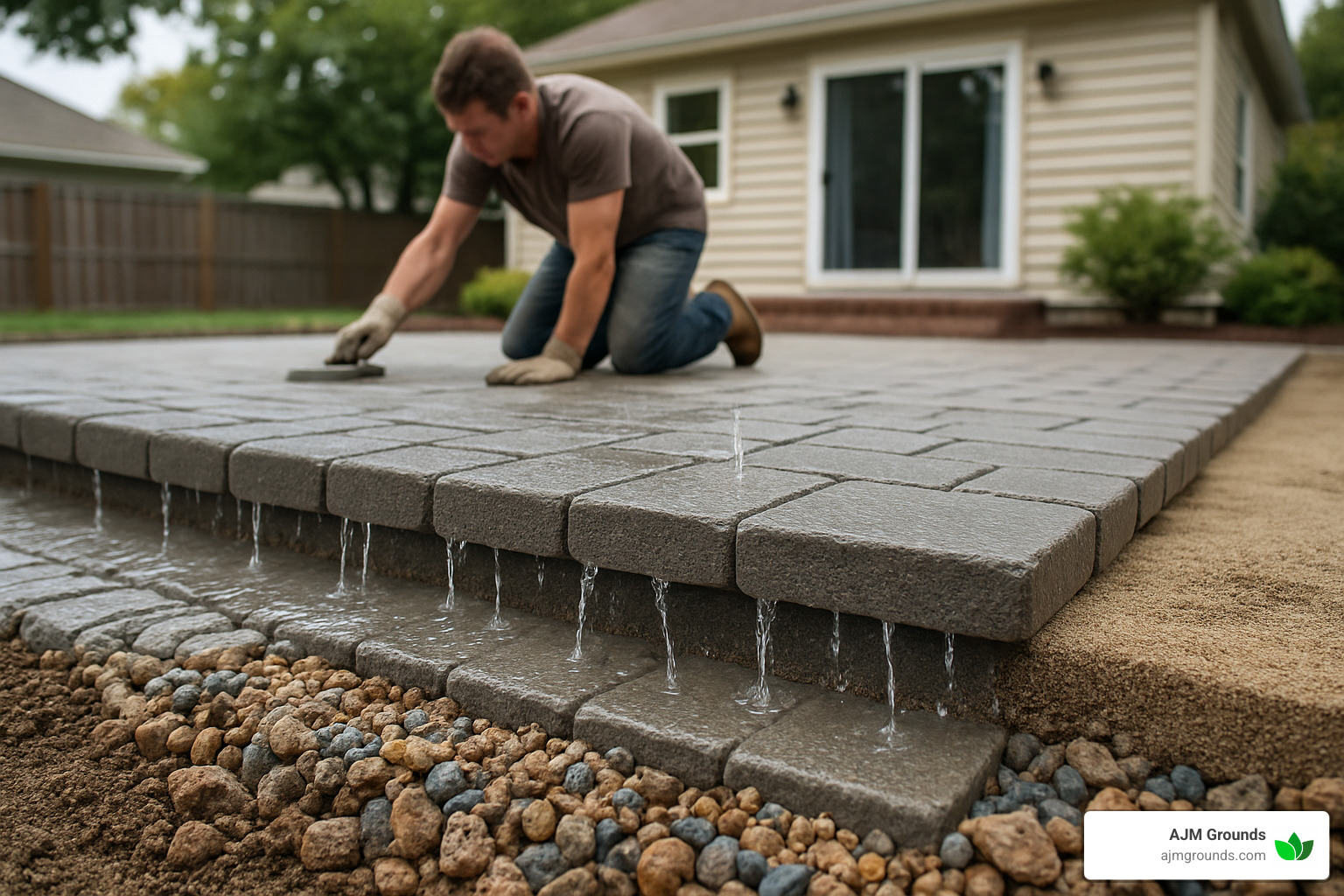
The environmental benefits are impressive too. According to scientific research on urban runoff, permeable pavers can reduce stormwater runoff by up to 100% compared to traditional concrete surfaces. This isn’t just good for the planet—it protects your property from water damage and can even help you avoid costly drainage remediation down the road.
How Patios & Hardscapes Transform a Yard
Patios and hardscapes don’t just make your property look prettier—they fundamentally change how you experience your outdoor space.
When you add a thoughtfully designed patio, you’re essentially adding usable square footage to your home. As one landscape architect puts it, “If you walk out your back door and don’t have a designated spot to comfortably sit, you probably would not go outside very often.” It’s simple but true—we use spaces that feel welcoming and functional.
With the right elements like fire features, pergolas, and weather-resistant materials, your outdoor space becomes useful throughout much more of the year. I’ve had clients in Winchester tell me they’re enjoying their patios from early spring well into late fall—effectively extending their living space for 6-8 months annually.
Hardscaping naturally creates boundaries between different outdoor functions. Your cooking area stays separate from your lounging space, which stays distinct from the kids’ play zone. This organization makes your yard feel more purposeful and well-thought-out.
One unexpected benefit? Patios and hardscapes significantly reduce lawn maintenance. A Bedford client recently told me, “Before our patio installation, I spent every weekend mowing. Now I actually have time to enjoy my yard instead of just maintaining it.”
Property Value & ROI Facts
Investing in quality patios and hardscapes makes financial sense too. According to the 2023 Remodeling Impact Report by the National Association of Realtors, adding a new patio can recover up to 95% of the project cost when you sell your home.
But the value goes beyond just recouping your investment. In today’s market, outdoor living spaces have become major selling points. A Belgard survey found that 78% of homeowners consider their outdoor space more important now than ever before. This shift in priorities means well-designed hardscapes can significantly increase buyer interest.
In competitive housing markets like those in Bedford, Lexington, and Winchester, professional hardscaping helps your property stand out. Local real estate professionals tell us that homes with thoughtfully designed outdoor living spaces typically sell faster and closer to asking price than similar homes without these features.
When you calculate value on a cost-per-square-foot basis, adding outdoor living space through hardscaping is typically much more affordable than building home additions. You’re essentially adding functional rooms to your home at a fraction of the cost of traditional construction.
One Middlesex County homeowner summed it up perfectly: “Our patio didn’t just improve our daily lives—it turned out to be one of the smartest investments we’ve made in our property.”
2. Material & Style Playbook for Patios & Hardscapes
Choosing materials for your patios and hardscapes isn’t just about looks—it’s about creating a space that fits your lifestyle, complements your home, and stands up to New England weather. At AJM Grounds, we help homeowners steer these choices with an eye toward both beauty and practicality.
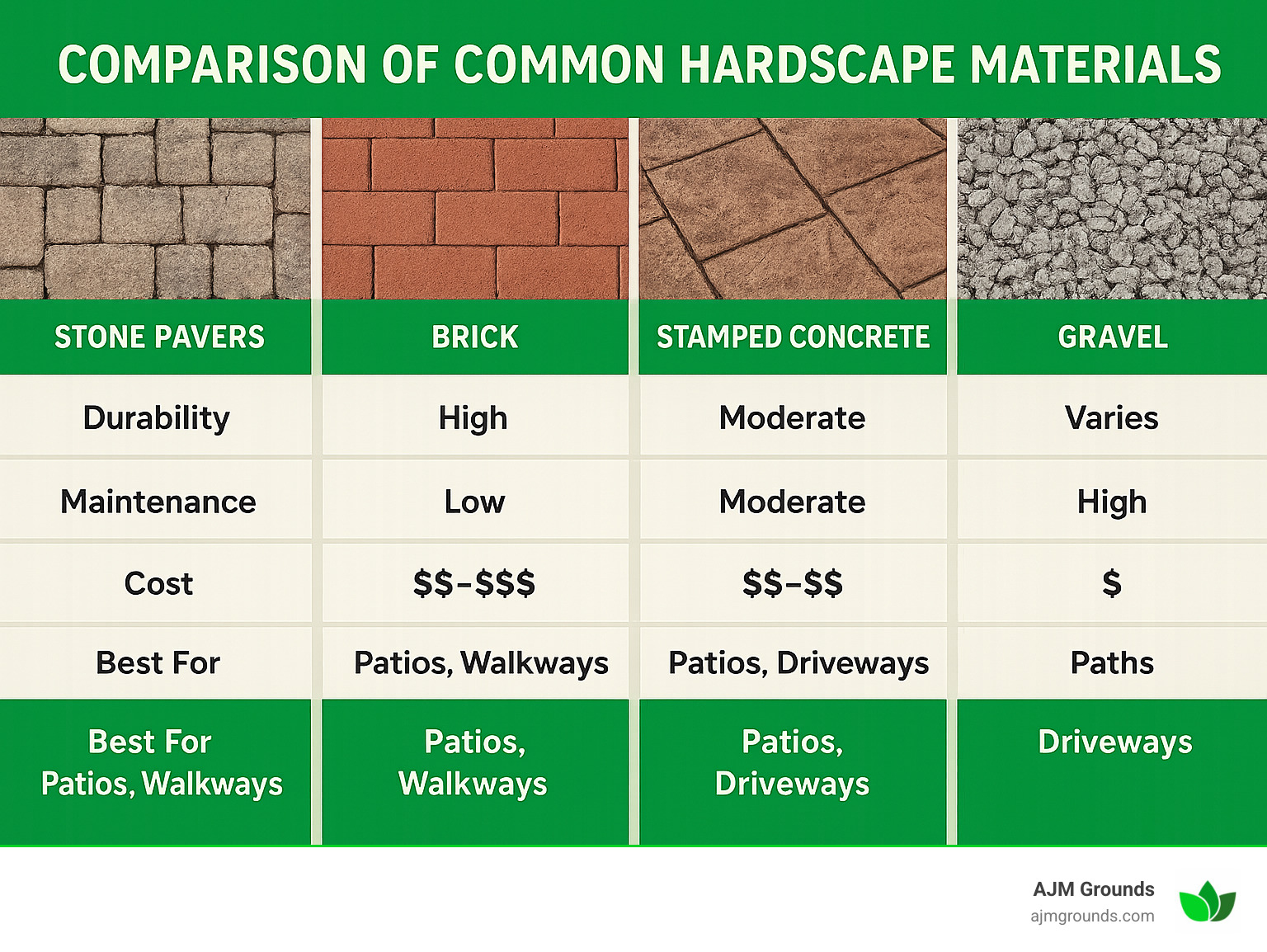
The material palette for outdoor living spaces has expanded dramatically in recent years, giving you more options than ever before:
Natural stone brings best character and longevity to any project. Whether it’s the cool blues and grays of bluestone, the warm earthy tones of flagstone, or the timeless elegance of granite, natural stone creates a sense of permanence and connection to the landscape. While it represents a higher investment upfront, many of our Woburn clients see it as a lifetime purchase that ages beautifully.
Brick pavers offer that classic New England charm that feels right at home in our historic neighborhoods. The warm reds and browns create inviting spaces, while the smaller unit size allows for intricate patterns like herringbone or basketweave. One client in Lexington told us, “Our brick patio feels like it’s always been part of our 1920s home—exactly what we wanted.”
Concrete pavers have come a long way from the basic blocks of yesteryear. Today’s options include everything from tumbled pavers that mimic ancient European cobblestones to sleek, contemporary slabs with integrated color. The versatility, durability and price point make these the most popular choice among our customers.
Porcelain pavers are the new kid on the block, offering incredible durability with virtually no maintenance. They resist fading, staining, and scratching, making them perfect for pool decks and outdoor kitchens. Their ability to convincingly mimic wood or exotic stone has made them increasingly popular for contemporary designs.
Composite decking often works alongside hardscape elements to create multi-level outdoor living spaces. While technically not hardscaping, these materials frequently appear in our comprehensive outdoor designs, especially when transitioning between indoor and outdoor spaces.
Gravel and decomposed granite provide budget-friendly options with excellent drainage and a casual, crunchy-underfoot texture that many find appealing for secondary pathways or transitional areas.
Classic vs. Contemporary Finishes
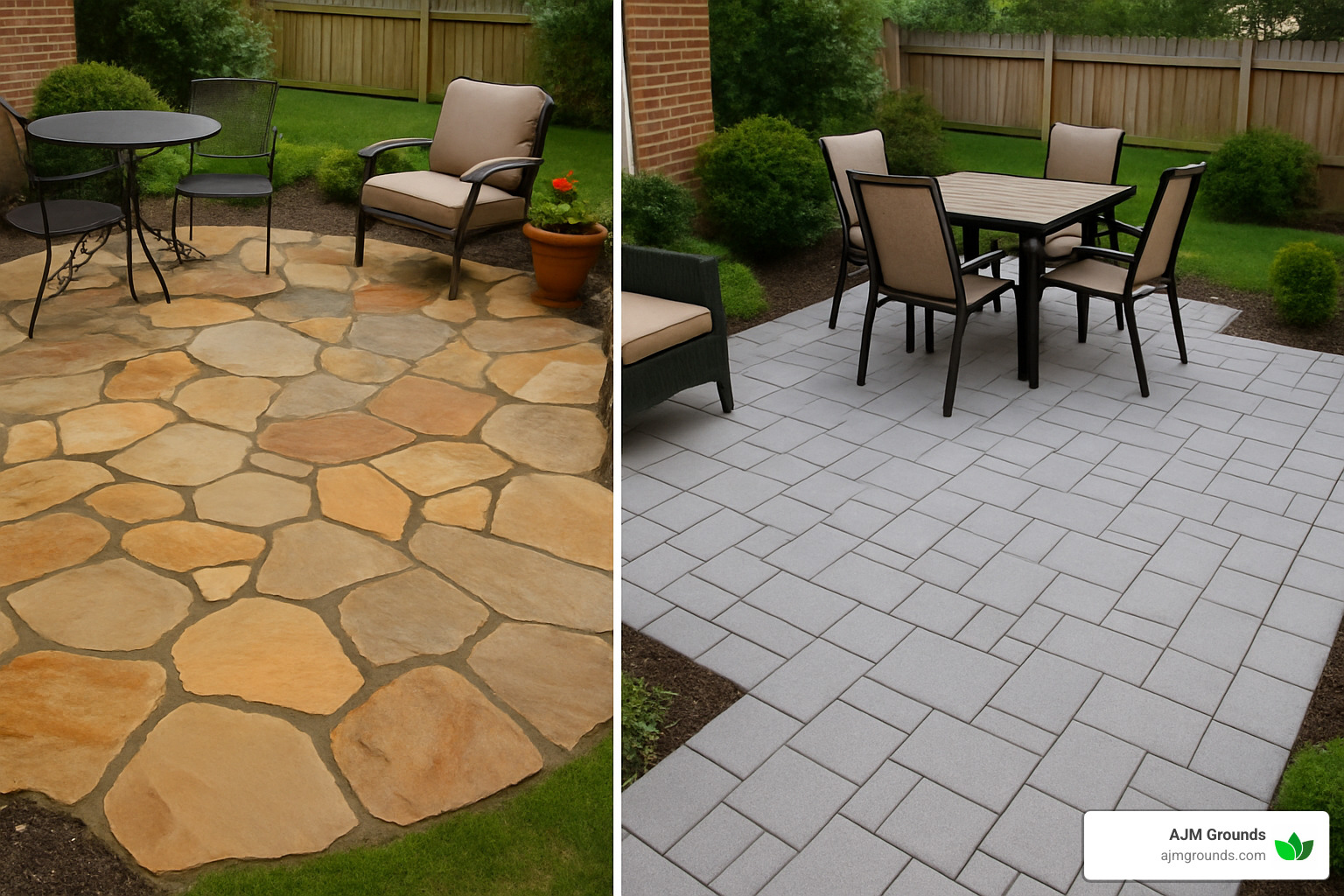
When designing patios and hardscapes, the finish you choose sets the mood for your entire outdoor space. Think of it as choosing between a comfortable pair of broken-in jeans or a crisp, custom suit—both have their place, but create very different impressions.
Classic finishes accept texture and variation. The tumbled “cobble” pavers with their slightly irregular edges bring old-world charm to suburban settings. Natural stone with split faces or thermal finishes showcase the material’s natural character, while traditional patterns like herringbone create visual interest through arrangement rather than contrast. Earth tones—the warm browns, russets, and tans—blend naturally with the landscape and architectural elements like brick or wood.
Contemporary finishes celebrate clean lines and bold statements. Large-format slabs create fewer joint lines and a more seamless appearance. The smooth, uniform textures reflect modern architectural trends, while monochromatic color schemes (think cool grays or stark black and white combinations) create dramatic visual impact. Geometric patterns and minimalist designs emphasize order and intentionality in the landscape.
The beauty of today’s hardscape materials is their flexibility. We recently completed a project in Winchester where we used contemporary large-format pavers with a subtly tumbled finish—creating a space that felt both modern in its clean lines but warm and inviting in its texture. The homeowner commented, “It feels contemporary without being cold—exactly what we wanted.”
Texture contrasts can transform an ordinary design into something remarkable. Pairing smooth pavers with a rough-faced retaining wall creates visual tension that draws the eye, while integrating sections of decorative gravel between sleek concrete slabs adds both visual and tactile interest to the space.
Pavers vs. Poured Concrete: A Comparison
| Feature | Concrete Pavers | Poured Concrete |
|---|---|---|
| Cost Range* | $15-45 per sq ft | $8-30 per sq ft |
| Installation Time | 3-7 days for average patio | 5-10 days (includes curing time) |
| Durability | Extremely durable; individual units can be replaced if damaged | Prone to cracking over time; repairs are visible |
| Maintenance | Joint sand may need occasional replenishment; can be cleaned with pressure washer | Requires sealing every 2-3 years; stains can be difficult to remove |
| Freeze-Thaw Resistance | Excellent; individual units allow for ground movement | Fair to good; control joints help but cracks are common in New England |
| Design Flexibility | Unlimited patterns, colors, and textures; easy to create curves and unique shapes | Limited to color and stamped patterns; custom designs more difficult |
| Repair Ease | Individual pavers can be lifted and replaced | Patching is visible and rarely matches original |
*Note: These are average costs based on internet data, not actual costs for AJM Grounds. Pricing can vary widely based on site conditions, material selection, and design complexity, with high-end installations potentially costing 3x or more than average pricing.
“After 20 years in this business, I’ve seen countless concrete patios crack and settle in our harsh New England winters,” explains John from AJM Grounds. “That’s why I often recommend pavers to my clients. Yes, they cost more upfront, but they’re designed to flex with frost heave and can be easily repaired if damage does occur.”
This durability factor is why many of our clients in Woburn, Lexington, and Bedford see pavers as the smarter long-term investment, especially considering our challenging freeze-thaw cycles.
Internal Resource
Looking for more inspiration? Visit our Hardscape Patio Designs page, where we’ve gathered examples from projects throughout the Woburn area. You’ll find ideas ranging from classic to contemporary, modest to luxurious—all designed to help you envision possibilities for your own backyard change.
3. Design Selection Guide: Matching Home, Climate & Budget
Finding the perfect hardscape design isn’t just about picking pretty materials – it’s about understanding your unique property, our New England climate, and what fits your budget. When I meet with clients around Woburn, I always start with a thorough look at what we’re working with.
We’ll walk your property together, noting where the sun hits throughout the day, how water moves across your yard during rainstorms, and any slopes that need addressing. These details matter tremendously! A patio that gets blazing afternoon sun without shade might look great but become unusable during summer months.
Your property tells its own story through existing soil conditions, drainage patterns, natural slopes, and even views you might want to highlight or screen. We’ll also identify practical matters like access points from your home, utility locations, and any special trees or plants you cherish.
Before we get too excited about designs, we always check the not-so-exciting (but crucial) regulatory boxes:
– Local permit requirements
– Building codes specific to your town
– Zoning restrictions that might limit what we can build
– HOA requirements if applicable
– Required setbacks from property lines
– Limitations on impervious surfaces
Let’s talk honestly about budget – it’s the framework for everything we do. In my experience serving communities like Bedford and Lexington, basic patio installations might start around $4,000 for simple designs with standard materials. Comprehensive outdoor living spaces with premium materials and custom features typically range from $12,000 to $30,000. And those magazine-worthy outdoor kitchens with fire features and extensive lighting? Those high-end installations can range from $45,000 to well over $100,000.
Climate-Smart Choices
New England throws everything at our patios and hardscapes – freezing winters, humid summers, and everything in between. That’s why climate-smart design is essential for lasting results.
Those freeze-thaw cycles we experience? They’re brutal on hardscapes. We combat this with proper base preparation, typically digging 8-12″ deep (deeper than many other regions require) to create a stable foundation. We’re also particular about jointing materials that resist frost heave and incorporate drainage systems that prevent water from pooling underneath where it can freeze and cause damage.
I always talk with clients about snow management too. Where will you push or pile snow during winter? We design with designated snow storage areas, recommend materials that can handle snow removal equipment, and incorporate slip-resistant surfaces for safer winter navigation.
The sun’s seasonal patterns affect your comfort dramatically. A patio that’s perfectly shaded in summer might be too cold in spring and fall. We orient spaces to maximize winter sun exposure and incorporate wind protection elements to extend your outdoor season as long as possible.
For properties with drainage concerns (which are common in Middlesex County), permeable paving systems can be a game-changer. These specialized installations allow water to filter through the paving surface into a prepared stone base below, reducing runoff while helping recharge groundwater naturally.
Budgeting Like a Pro
After years of building patios and hardscapes throughout Massachusetts, I’ve gathered some practical budgeting wisdom I share with all my clients:
Prioritize based on daily use. The spaces you’ll enjoy every day deserve the largest portion of your budget. For many families, this means investing in a well-designed main patio, while perhaps using more budget-friendly options for secondary pathways.
Consider phased construction. Your dream outdoor space doesn’t have to happen all at once. We can design with future phases in mind, building the core elements now and adding features like outdoor kitchens or fire pits in coming seasons.
Never skimp on the foundation. The base preparation and structural components of your hardscape are nearly impossible to fix later without starting over. This is where experience matters – proper drainage and compaction prevent costly issues down the road.
Be strategic with premium materials. Using high-end materials as borders or accents can give you the luxurious look you want without breaking the budget. We often combine materials creatively to maximize visual impact where it matters most.
Think long-term about maintenance. Sometimes spending more upfront saves significant money over time. Certain materials require regular sealing or special cleaning, while others need virtually no maintenance for decades.
For more guidance on planning your project budget, check out our detailed resource on Planning and Building a Custom Deck or Patio.
4. Creative Add-Ons That Wow Guests
Let’s talk about taking your outdoor space from functional to fantastic. Once you’ve got the basic patio in place, it’s these special touches that will make your friends say “wow” when they visit your backyard.
The right add-on features don’t just look impressive—they transform how you actually use your outdoor space. Think about those perfect summer evenings that stretch into night, where conversations flow easily around a crackling fire. Or imagine weekend brunches where you’re cooking outdoors instead of being stuck in the kitchen while everyone else enjoys the sunshine.
Fire pits and fireplaces have become the heart of many outdoor spaces we create in Woburn and surrounding towns. There’s something primal about gathering around flames that makes conversation flow more easily. Plus, they extend your outdoor season by weeks or even months in our New England climate. One client told us their fire pit area became “the most used room in the house” from April through November.
Outdoor kitchens range from simple to spectacular. You might start with just a built-in grill and some counter space, or go all-out with refrigeration, a sink, pizza oven, and more. The joy of cooking outdoors while still being part of the gathering is something many homeowners tell us they wish they’d finded sooner.
Seating walls are one of my favorite features to include in patios and hardscapes. These integrated masonry walls serve double-duty—defining your space while providing casual seating without cluttering your patio with extra furniture. They’re perfect for those summer parties when you suddenly have more guests than chairs!
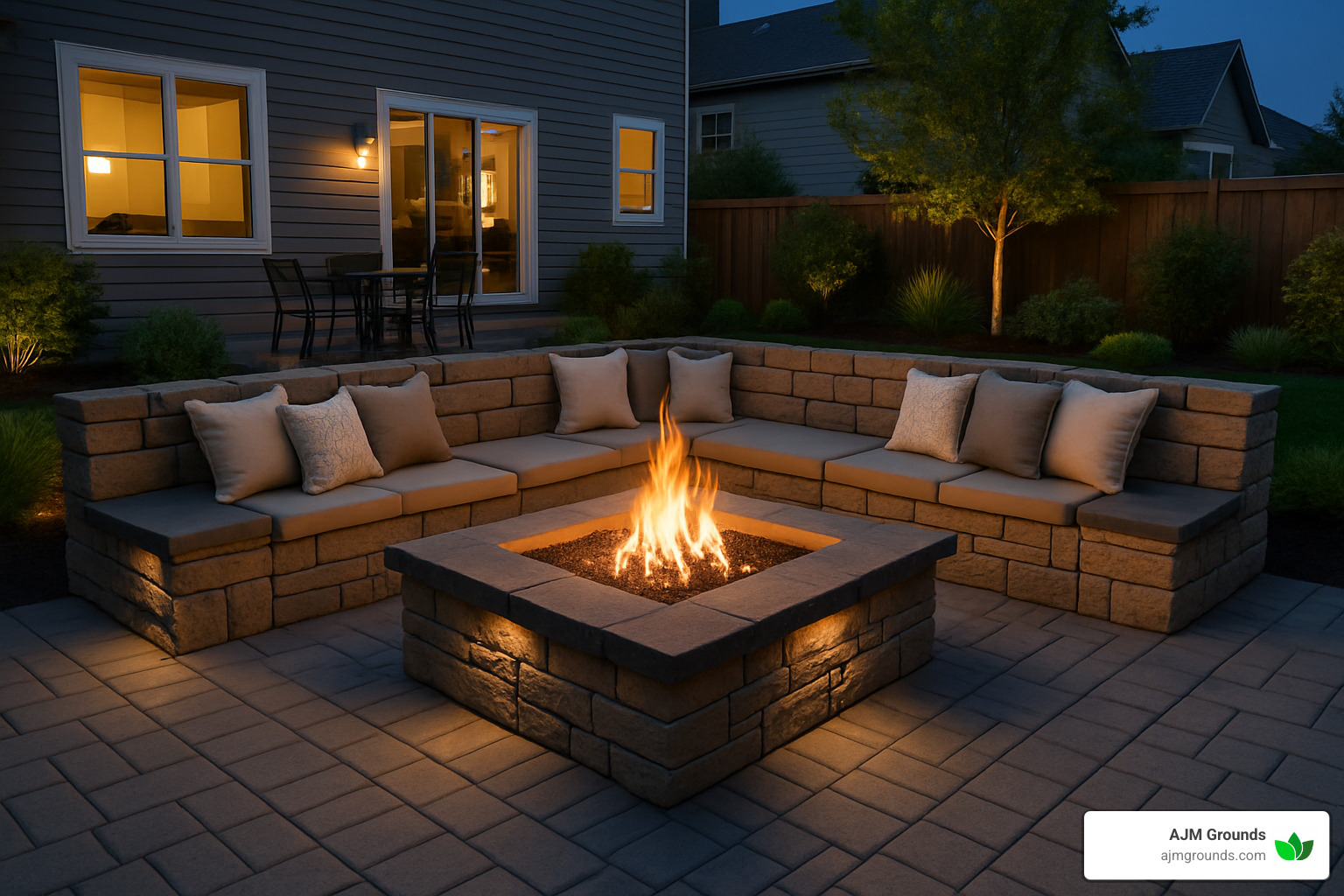
A project we completed in Lexington featured this sunken fire pit lounge with built-in stone seating. It created such an intimate conversation area that our clients say it’s become the natural gathering spot whenever they entertain. The slightly lower elevation creates a cozy “room” feeling while still maintaining connection with the rest of the patio.
Lighting is often overlooked but makes a tremendous difference in both safety and ambiance. Low-voltage systems can highlight pathways, illuminate steps, accent landscape features, and create a magical atmosphere after sunset. Smart lighting systems can even be controlled from your phone, allowing you to adjust the mood with a tap.
Pergolas and shade structures offer relief from summer sun while defining outdoor “rooms.” They can support climbing plants like wisteria or grape vines, or be fitted with retractable canopies for adjustable shade. One Burlington client told us their pergola-covered dining area became usable even during light rain, essentially extending their outdoor dining season.
Water features add a sensory dimension that transforms a space. The sound of moving water masks road noise and creates a relaxing backdrop. Options range from simple bubbling rocks to elaborate waterfalls or reflecting pools. Water features also attract birds and beneficial wildlife, adding life to your outdoor space.
Layout Ideas & Traffic Flow
Creating a beautiful hardscape is only half the battle—it needs to function well too. Good traffic flow makes the difference between a patio that looks nice in photos and one that actually works for everyday living.
When we design patios and hardscapes at AJM Grounds, we think carefully about how spaces connect. Cooking areas should be adjacent to but separate from dining spaces—nobody wants smoke blowing over the table during dinner. Conversation areas work best when positioned away from high-traffic pathways so discussions aren’t constantly interrupted.
Furniture spacing is surprisingly technical. For dining areas, you’ll need at least 36 inches from the table edge to any obstacle to allow comfortable seating and passage. Conversation areas need about 18 inches between seating and coffee tables for comfortable leg room. Main walkways should be at least 36 inches wide (we prefer 48 inches) for comfortable side-by-side walking.
Steps need consistent dimensions for safety—typically 11-12 inch treads with 6-7 inch risers. Inconsistent steps are a major trip hazard, especially at night or for older guests.
I remember a project in Winchester where the homeowners were frustrated with their existing patio. It looked fine but felt cramped because furniture blocked natural walking paths. By reshaping the space and creating subtle elevation changes to define different zones, we transformed it into a flowing, functional area that comfortably accommodated twice as many people.
DIY vs. Prefab Components
When adding special features to your patios and hardscapes, you’ll need to decide between custom-built elements and prefabricated options. Each has its advantages.
Custom-built features like stone fireplaces or outdoor kitchens perfectly match your specific materials and design. They offer unlimited size and configuration options, and typically feature higher-quality construction with proper foundations. The downside? They’re more expensive and take longer to install.
Prefabricated or modular options cost less and install much faster. They have a consistent factory-finished appearance and often include integrated utilities like gas lines or electrical connections. The trade-offs are limited customization options and they may not perfectly match your other hardscape materials.
To put this in perspective: a custom masonry fireplace might take 1-2 weeks to build on site, while a prefabricated unit could be installed in just 1-2 days. However, that custom option will likely integrate better with your overall design and provide superior durability for decades to come.
Lead times matter too, especially if you’re planning for a specific event. During our busiest seasons (spring and early summer), custom masonry features may add several weeks to your project timeline. Many prefabricated components, on the other hand, can be ordered and delivered within days or a few weeks.
At AJM Grounds, we help clients steer these decisions based on their priorities, timeline, and budget. Sometimes the perfect solution combines both approaches—perhaps a custom stone base with a prefabricated fire pit insert for the best balance of aesthetics, function, and value.
5. Care, Cost & Sustainability Cheat-Sheet
Taking care of your patios and hardscapes doesn’t have to be complicated, but a little regular attention goes a long way toward preserving their beauty and functionality. Think of your hardscape like a fine car—routine maintenance prevents costly repairs down the road.
Most hardscapes require simple care: regular sweeping to keep debris from accumulating, occasional washing with appropriate cleaners (skip the harsh chemicals that can damage surfaces), and staying on top of weeds that try to establish themselves in joints. When spills happen—whether it’s barbecue grease or red wine—prompt cleaning prevents permanent staining.
“The biggest mistake I see homeowners make is neglecting their joint sand,” I often tell my Woburn clients. “That sand isn’t just decorative—it’s structural. When it washes away, pavers can shift and surfaces become uneven.” A quick inspection each spring can tell you if it’s time for replenishment.
Depending on your materials, you might need sealing every 2-5 years. Natural stone and concrete particularly benefit from this protective layer, which improves colors while preventing staining and wear.
Winter brings special challenges in Massachusetts. Metal shovels can chip and scratch pavers, so opt for plastic alternatives when clearing snow. And be cautious with ice melt products—rock salt is particularly harmful to concrete and natural stone surfaces. Instead, look for calcium chloride-based products that are gentler on your investment.
For eco-conscious homeowners, your hardscape choices can significantly impact sustainability. We’ve helped many clients in Lexington and Bedford incorporate permeable pavers that allow rainwater to filter naturally into the ground rather than contributing to stormwater runoff. Recycled aggregates make excellent base materials, while locally sourced stone reduces transportation emissions and supports regional businesses.
Integrating xeriscaping—drought-resistant plantings—alongside your hardscape not only reduces water usage but creates beautiful contrast between built and natural elements. For an in-depth look at eco-friendly options, check out our article on The Advantages of Hardscaping with Natural Stone.
Annual Maintenance Calendar
Your patios and hardscapes need different attention as the seasons change. Here’s a simple calendar we share with our Massachusetts clients:
Spring is cleanup time. Once the snow melts, give everything a thorough washing to remove winter grime and salt residue. Check for any pavers that might have shifted during freeze-thaw cycles, replenish joint sand where needed, and set up your outdoor furniture. If your hardscape needs sealing, spring’s mild temperatures make it the perfect time.
Summer maintenance is minimal—just regular sweeping, occasional rinsing, and staying on top of any weeds that try to establish in joints. After cookouts, clean spills promptly to prevent staining. Heavy summer storms provide a good opportunity to check that your drainage systems are working properly.
Fall preparation is crucial before winter arrives. Remove fallen leaves regularly as they can stain surfaces when wet. Give everything a deep cleaning, check joints one last time, and either store or properly cover outdoor furniture. If you have water features, now’s the time to winterize them.
Winter requires careful snow removal. Use plastic shovels rather than metal ones that can damage surfaces, and choose ice melt products specifically formulated for hardscapes. During January thaws, take a quick look for any issues that might need addressing in spring.
This simple seasonal approach keeps your outdoor living space looking its best year-round while protecting your investment.
Sustainable Upgrades
For environmentally minded homeowners, there are wonderful ways to make your hardscape more sustainable without sacrificing beauty or function.
Rain gardens are becoming increasingly popular among our Woburn and Winchester clients. These strategic plantings capture and filter runoff from hardscape surfaces, reducing pollution while creating vibrant landscape features that attract butterflies and birds. One Burlington homeowner told us, “Our rain garden not only solved our drainage issues but became our favorite garden feature.”
Solar lighting has come a long way in recent years. Today’s options provide reliable illumination for safety and ambiance without complex wiring or electricity costs. They’re particularly effective along pathways and steps, where safety lighting is essential.
There’s something special about incorporating reclaimed materials into your hardscape. Whether it’s century-old brick from a demolished factory or weathered stone from an old farm wall, these elements bring instant character and history while giving materials a second life. They tell a story that newly manufactured products simply can’t match.
Native plants are the perfect companions to hardscape elements. They require less water and maintenance while supporting local wildlife and ecosystems. The contrast between structured hardscape and natural plantings creates visual interest that evolves beautifully through the seasons.
One of my favorite recent projects in Lexington showcased these principles beautifully. We installed a permeable paver patio surrounded by native New England plantings, with solar path lights providing gentle evening illumination. A small but effective rain garden captured roof runoff, changing what would have been a drainage problem into a vibrant garden feature.
By thoughtfully combining these sustainable approaches, your patios and hardscapes can be as environmentally friendly as they are beautiful and functional.
6. From Dream to Reality: Timeline, Install & Hiring Tips
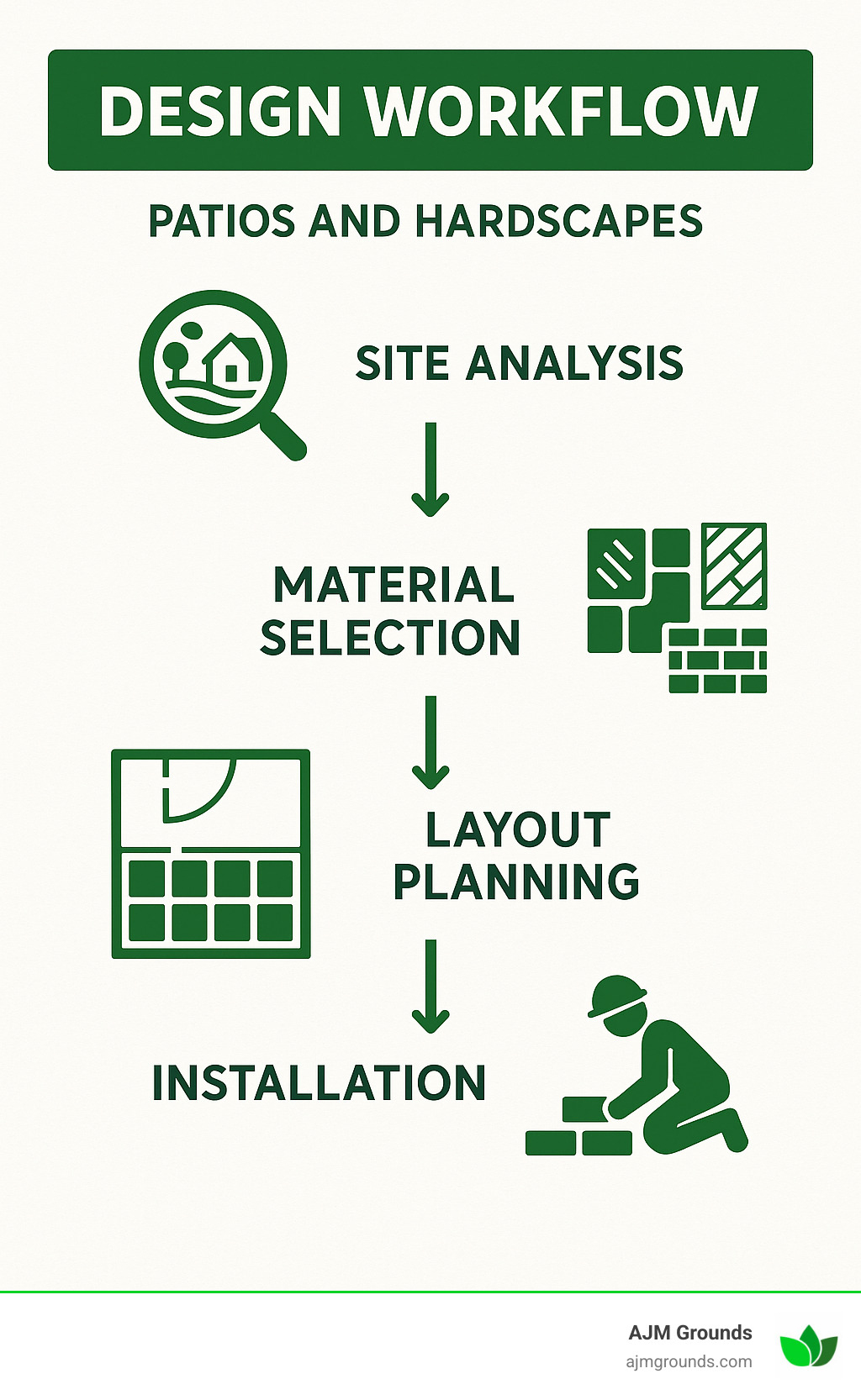
Turning your hardscape vision into reality follows a journey that’s both exciting and predictable. While each project is unique, understanding the typical timeline helps set realistic expectations for your outdoor change.
Most hardscape projects move from concept to permits in about 2-4 weeks, followed by a build phase lasting anywhere from 3-10 days depending on complexity. At AJM Grounds, we’ve refined this process to ensure your experience is as smooth as the pavers we install.
The typical journey looks something like this:
Our planning phase begins with an initial consultation where we walk your property together, discuss your vision, and assess site conditions. We then develop design concepts, help you select materials that complement your home, and prepare a detailed proposal. Once you’re completely satisfied and contracts are signed, we handle any necessary permit applications – a step that’s absolutely crucial but often overlooked by inexperienced contractors.
Before breaking ground, we carefully order materials (accounting for delivery lead times), schedule utility marking, and finalize measurements. This pre-construction phase typically takes 1-3 weeks and sets the foundation for smooth execution.
The actual construction timeline varies significantly based on project scope. A simple patio might take just 3-5 days, while a comprehensive outdoor living space with multiple features could extend to 2-4 weeks. Weather can certainly affect this timeline – something we’re quite familiar with in Massachusetts!
It’s worth noting that we operate on a “first-come, first-serve” basis for our crews. During peak seasons (especially April-June), our schedule often fills 4-6 weeks in advance, so planning ahead is definitely in your best interest if you’re hoping to enjoy your new space during the prime outdoor months.
When selecting a hardscape contractor, credential checks should be at the top of your priority list. Look for proper licensing and insurance, industry certifications (like ICPI or NCMA), and a substantial portfolio of completed projects similar to yours. Don’t hesitate to request referrals from past clients – reputable contractors will be happy to provide them. Also ensure you receive written warranties and detailed contracts that clearly specify materials, dimensions, and installation methods.
Working With a Pro vs. DIY
There’s something satisfying about completing a project with your own hands, but hardscaping presents unique challenges that often exceed typical DIY capabilities.
While small stepping stone paths, simple gravel patios, or installing a pre-fabricated fire pit might be reasonable weekend projects, larger installations demand professional expertise. Structural retaining walls over 2′ tall, large patios requiring significant excavation, complex drainage solutions, and projects on steep slopes all warrant professional installation to ensure safety, compliance, and longevity.
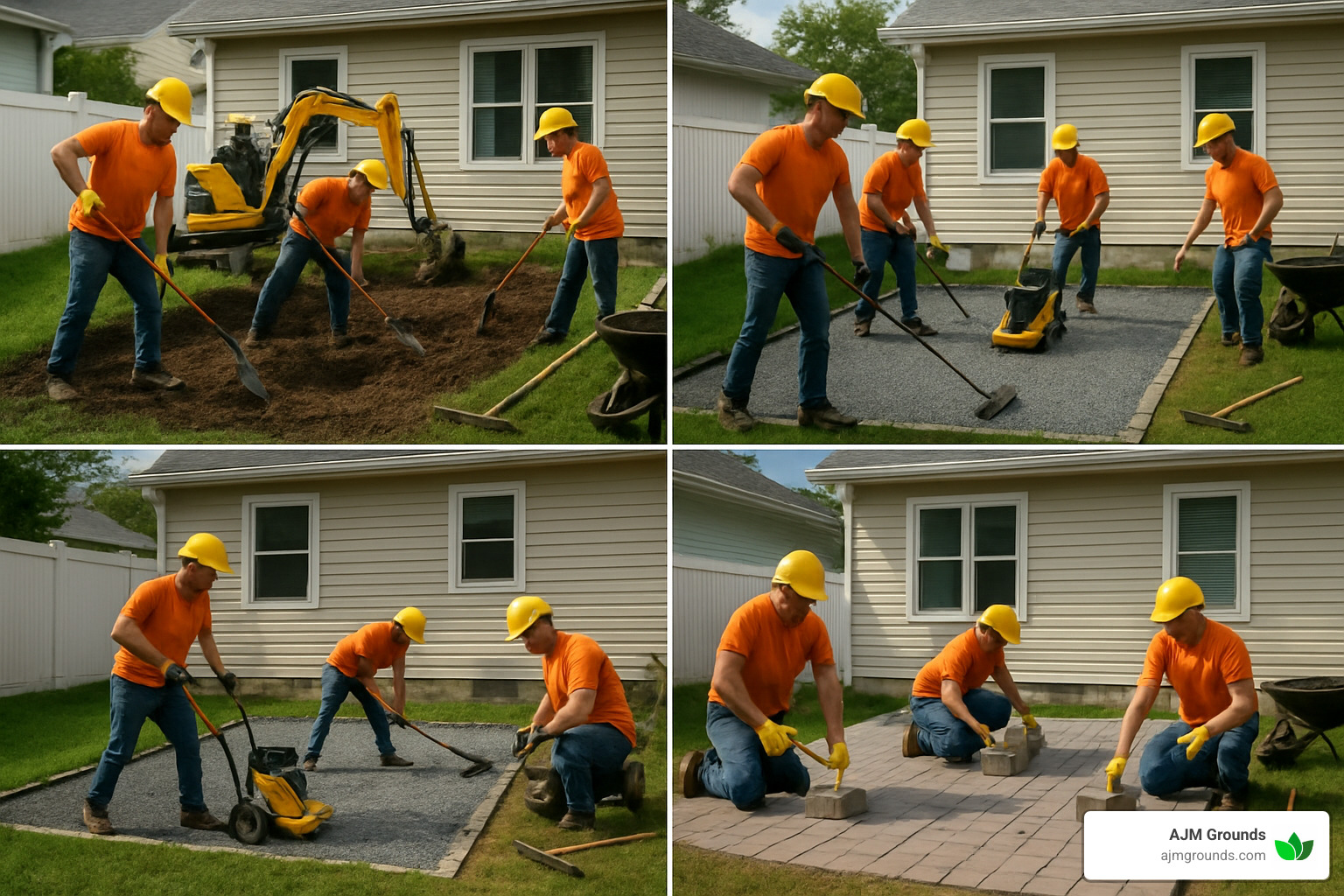
The equipment requirements alone can make DIY prohibitive. Proper installation typically requires mini-excavators, skid steers, plate compactors, masonry saws, and specialized tools – equipment that’s expensive to rent and challenging to operate without training.
But perhaps most importantly, professional installation ensures proper base preparation. As I often tell clients visiting our Woburn showroom, “The parts you don’t see matter most.” A beautiful paver surface is only as good as the unseen layers beneath it. Proper excavation depth, compaction, drainage, and edge restraints are critical factors that determine whether your patio will last for decades or begin failing after just a few seasons.
For more about our professional approach and equipment, visit our Hardscape Contractor page.
Average Installation Timeline
For those who appreciate seeing the process broken down day-by-day, here’s what a typical patios and hardscapes installation looks like with our team:
The process begins with site preparation, where we carefully protect existing landscape features, excavate to the proper depth (typically 8-12″ in our New England climate), and establish rough grading for drainage. This critical first day sets the stage for everything that follows.
Days two and three focus on base installation – laying geotextile fabric, delivering and installing base material, compacting in layers for stability, and creating the final grade with proper slope for drainage. These days might not produce the most visible progress, but they’re absolutely crucial for long-term performance.
By days four and five, the change becomes more apparent as we install edge restraints, prepare the setting bed, and begin placing pavers or stone. This phase includes initial compaction, cutting edge pieces for a perfect fit, and the project really starts to take shape.
The sixth day brings everything together with joint material installation, final compaction, cleaning, sealing (if applicable), and comprehensive site cleanup. We pride ourselves on leaving your property cleaner than we found it.
We conclude with a thorough walkthrough, explaining care instructions, providing warranty documentation, and discussing potential future projects. This education component ensures you have everything needed to maintain your investment for years to come.
Weather, project size, complexity, and unforeseen site conditions can all affect this timeline, which is why we always build flexibility into our scheduling. Our commitment is to quality rather than rushing through to meet an arbitrary deadline – another reason why planning ahead with your hardscape project is always recommended.
Frequently Asked Questions About Patios & Hardscapes
What are the benefits of pavers compared with stamped concrete?
I get this question all the time from homeowners in Woburn and surrounding towns. Both options can create beautiful outdoor spaces, but there are some meaningful differences worth considering.
Flexibility and durability is where pavers truly shine. Unlike stamped concrete, which tends to crack when the ground shifts during our harsh New England freeze-thaw cycles, individual pavers can move slightly without damage. I’ve seen stamped concrete patios develop unsightly cracks within just a few seasons, while properly installed paver patios remain intact for decades.
When it comes to repairs, pavers offer a huge advantage. Last year, a client in Lexington had to replace a few pavers after a tree branch fell during a storm. We simply lifted the damaged units and dropped in new ones – you couldn’t even tell work had been done. With stamped concrete, repairs are almost always visible and rarely match the original surface.
Another practical benefit is immediate usability. Once we finish a paver installation, you can start enjoying it right away. Stamped concrete, on the other hand, requires a curing period of 5-7 days before you can place furniture or use the space normally. This might not seem significant until you’re staring at your beautiful new patio for a week without being able to enjoy it!
Color longevity is another factor to consider. Pavers maintain their color throughout their thickness, while stamped concrete color is typically a surface treatment that can fade and wear over time, especially in high-traffic areas.
The main advantage of stamped concrete is typically the lower initial cost, though this difference often evens out over time when you factor in maintenance and potential repairs. As one of my Winchester clients put it: “I wish I’d spent the extra money on pavers from the beginning rather than replacing my cracked concrete patio five years later.”
How much maintenance will my new hardscape need each year?
Maintaining your patios and hardscapes doesn’t need to be complicated or time-consuming. With a bit of regular attention, your outdoor living space will look beautiful for many years to come.
For most of our installations, I recommend a simple maintenance routine that includes sweeping debris and rinsing the surface every few months, especially in spring after winter’s salt and sand have taken their toll. Weeds can occasionally sprout in joints, but they’re easy to remove when caught early. I suggest doing a quick inspection every month during the growing season to catch any issues before they become problems.
Every year or two, you might need to add some polymeric sand to the joints if you notice it’s washing out. This is a simple DIY task that takes just an hour or two for an average patio. For natural stone patios, this maintenance might only be needed every 3-4 years.
Power washing can brighten up most hardscape surfaces, but it’s important to use the right pressure and technique. I’ve seen well-intentioned homeowners damage their pavers with excessive pressure. When in doubt, start with a lower setting and a wider nozzle.
Some materials benefit from sealing every 2-5 years, particularly lighter-colored concrete products that might show staining from leaves or barbecue drippings. Natural stone typically requires the least maintenance, which is one reason it commands a premium price.
One of my clients in Burlington keeps a reminder in her phone calendar for a “patio check-up” each April and October. She says this simple habit has kept her outdoor space looking “installation-day fresh” for over seven years now.
Can hardscapes be installed in winter or shoulder seasons?
While those perfect spring and summer days might seem like the only time for outdoor projects, I’ve actually completed successful hardscape installations during nearly every month of the year here in Massachusetts.
Fall installations (September through November) often work out beautifully. The cooler working conditions can actually be a benefit for my crew, and the soil is typically still workable. Plus, you’ll beat the spring rush and have your new patios and hardscapes ready to enjoy the moment the weather warms up. Many of my most satisfied clients chose fall installation for exactly this reason.
Winter installations are more challenging but not impossible during milder periods. We sometimes need to use ground heaters to thaw frozen soil, and mortar work requires temperature control. That said, I’ve completed several successful projects during Massachusetts winters, particularly hardscape elements that don’t require deep excavation. The biggest benefits? Better contractor availability and sometimes more favorable pricing during what’s traditionally our slower season.
Early spring (March-April) is an excellent time to get ahead of the peak season demand. The main challenge can be wet soil conditions, but with proper drainage measures, we can usually work around this. One benefit of early spring installation is the ability to coordinate your hardscape work with spring planting for a comprehensive landscape change.
A client in Bedford once told me she was grateful we installed her patio in November because “instead of spending spring waiting for construction to finish, I was already hosting garden parties while my neighbors were still getting estimates.”
At AJM Grounds, we assess each project individually to determine the best timing for your specific situation. Many clients find that winter is perfect for the planning and design phase, giving us plenty of time to source materials and schedule the installation for the earliest possible spring date.
Conclusion
Your outdoor space is waiting to be transformed. Patios and hardscapes aren’t just construction projects—they’re gateways to a whole new way of enjoying your home. They expand your living area beyond four walls, boost your property’s market appeal, and create natural gathering spots for the moments that matter most.
The beauty of hardscaping is its incredible range. Whether you’re considering a modest patio starting around $4,000 or envisioning a complete outdoor living environment that might exceed $30,000, there’s a solution that fits your lifestyle and budget. The most elaborate outdoor spaces with premium materials, custom features, and comprehensive amenities can range well above $100,000—but the value they add extends far beyond dollars and cents.
When you invest in quality materials, thoughtful design, and professional installation, you’re creating something that will improve your daily life for years, even decades to come. That morning coffee spot, the weekend barbecue zone, the quiet evening retreat—these become the backdrop for countless memories.
Here in northeastern Massachusetts, we at AJM Grounds have had the privilege of helping homeowners throughout Woburn, Bedford, Billerica, Burlington, Lexington, Reading, Stoneham, Wilmington, and Winchester reimagine their outdoor spaces. We’ve seen how the right hardscape can transform not just a property, but a family’s entire relationship with their home.
Every project begins with your unique vision. Maybe you’re picturing a simple flagstone patio where you can watch the sunset, or perhaps you’re dreaming of an elaborate outdoor kitchen and fire pit lounge where you’ll host legendary gatherings. Whatever you can imagine, we can help bring to life.
Your outdoor space should feel like a natural extension of your home and a reflection of your personal style. With the right approach, your hardscape will deliver beauty, functionality, and value through every New England season for decades to come.
Ready to explore the possibilities? Visit our hardscaping services page to learn more about changing your outdoor space into the retreat you’ve always wanted.
