

Why Your Outdoor Pathways Are Your Home’s First Impression
Patio and walkway ideas instantly boost curb appeal and set the mood for everything that happens past the front door. Whether you’re linking the driveway to your entry or carving out a gathering space out back, the surface underfoot is the very first “hello.”
Quick Answer: Top Patio and Walkway Ideas
- Brick pavers – Classic, durable, works with most home styles
- Natural stone – Premium look, unique textures, long-lasting
- Gravel paths – Budget-friendly, easy DIY installation
- Concrete slabs – Versatile, can mimic wood or stone
- Stepping stones – Great for gardens, let ground cover grow through
- Permeable pavers – Eco-friendly, help with drainage
A walkway is the red carpet of your landscape, guiding guests safely while adding instant value. Modern materials give you authentic stone looks without the upkeep, and because pavers are usually only about 20 % of the total budget, you can often afford an upgrade.
As John Caplis, owner of AJM Grounds LLC, I’ve helped hundreds of Woburn-area homeowners mix function and flair in their hardscapes. Our focus is simple: beautiful paths that last.

Further reading:
Why Paths Matter
Intentional walkways protect turf, improve safety, and extend your living space. They’re also among the highest-ROI landscape upgrades because buyers love outdoor rooms that feel finished.
Material Matters: Picking the Perfect Surface
Selecting the right material for your patio and walkway ideas feels a bit like choosing the perfect outfit – it needs to look great, fit your lifestyle, and work with what you already have. The good news? Today’s options give you incredible flexibility to match any style and budget.
Brick pavers continue to be the reliable friend of landscape design. They’ve earned their popularity through decades of proven performance, offering that timeless charm that makes guests feel instantly welcome. The natural color variations in brick create visual depth, and here’s a practical bonus – if someone drops a heavy planter and cracks a paver, you can pop out just that one piece and replace it.
When you’re ready to make a statement, natural stone delivers luxury that only gets better with age. Bluestone brings those gorgeous blue-gray tones that complement both traditional and modern homes, while flagstone offers rustic charm with its irregular shapes and earth tones. Yes, natural stone requires a bigger upfront investment, but think of it as buying a quality winter coat – you’ll appreciate that decision for decades.
Gravel walkways are having their moment, and for good reason. They’re incredibly forgiving for DIY enthusiasts and practically maintain themselves. Rain? No problem – gravel naturally drains. Weeds? Much easier to manage than with solid surfaces. Plus, that satisfying crunch underfoot adds a sensory element that many homeowners love.
Don’t overlook modern concrete options – they’re nothing like the boring gray slabs of the past. Today’s concrete can masquerade as wood planks, natural stone, or even intricate tile patterns. Wood-look concrete slabs give you all the warmth of timber decking without worrying about splinters, rot, or annual staining projects.
Stepping stones create that perfect “path through the garden” feeling. They work beautifully when you want to maintain grass or plant ground cover between stones, creating a more organic transition through your landscape.
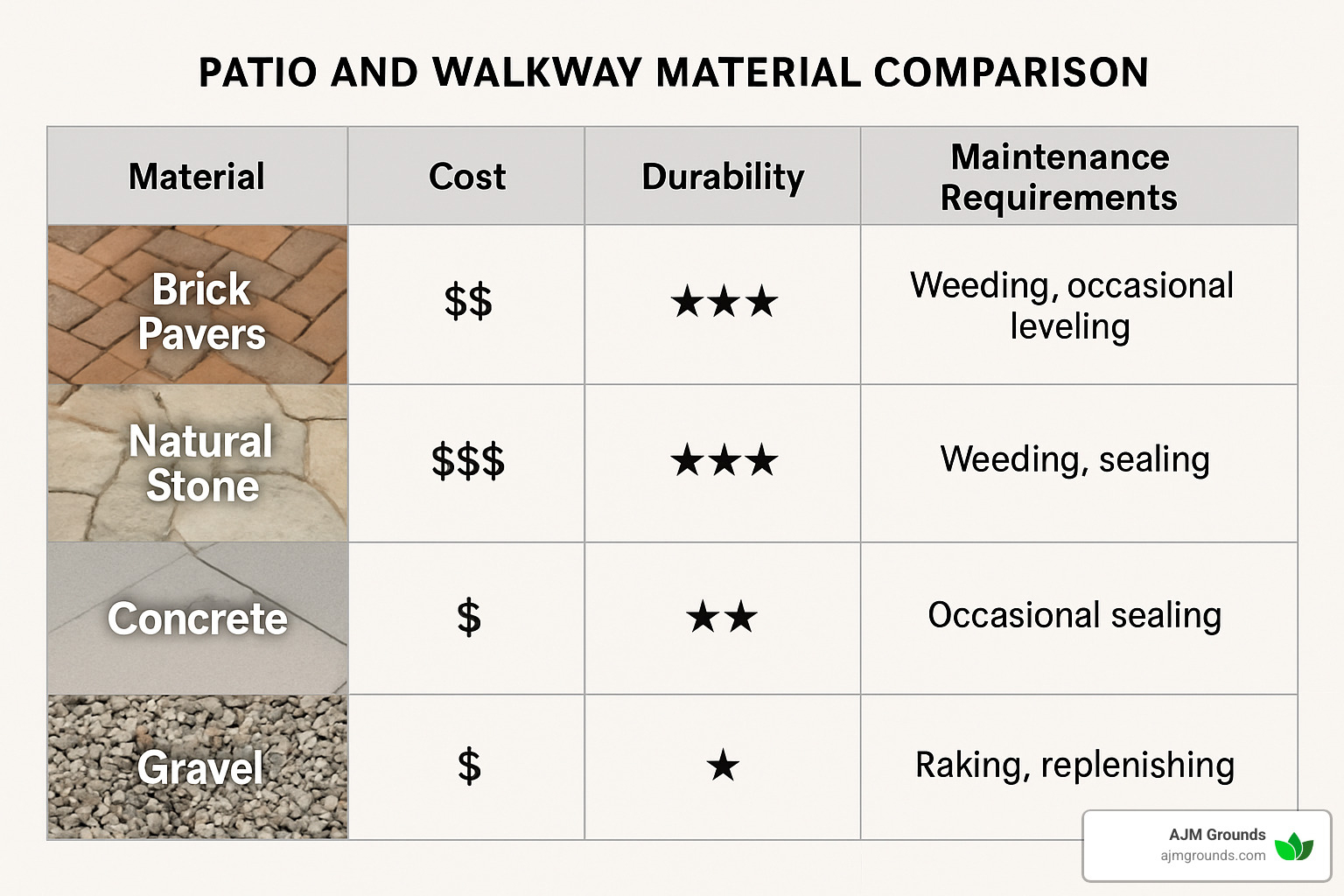
Top Surface Options for 2024
This year’s trending materials strike that sweet spot between classic appeal and modern performance. Homeowners want surfaces that look established and timeless but perform like the advanced materials they are.
Brick-look concrete pavers are stealing the show because they solve brick’s biggest challenges. You get that beloved traditional appearance with improved consistency and durability. These pavers laugh at freeze-thaw cycles and maintain their rich colors year after year.
Bluestone remains the sophisticated choice for homeowners who appreciate understated elegance. The natural slip resistance makes it practical for New England weather, while those subtle blue-gray tones complement everything from white colonial homes to modern glass-and-steel designs.
Decomposed granite works beautifully with contemporary and Mediterranean-inspired homes. It provides a smooth, comfortable walking surface that feels more refined than regular gravel but maintains that natural, organic appearance.
Wood-look slabs satisfy that desire for warmth and texture without the maintenance headaches. These concrete products capture wood’s grain patterns and natural variations so convincingly that guests often do a double-take.
Permeable & Eco-Friendly Choices
Sustainability isn’t just good for the environment – it’s becoming good for your wallet too. Permeable pavers allow rainwater to filter naturally through the surface instead of rushing toward storm drains, helping prevent the flooding issues that many communities face during heavy rains.
Many towns and cities now offer tax incentives or rebates for permeable paving installations, recognizing their role in reducing stormwater management costs. These systems perform double duty – they look just as attractive as traditional hardscaping while actively helping your local environment.
The environmental benefits extend beyond your property lines. According to the EPA’s green infrastructure research, permeable surfaces significantly reduce pollutants reaching local waterways while helping recharge groundwater supplies.
Patio and Walkway Ideas to Match Any Home Style
The key to successful patio and walkway ideas lies in complementing your home’s architecture while expressing your personal style. Pattern choices can dramatically impact the overall feel of your space.
Herringbone patterns are currently the most popular choice in landscape design. This classic pattern works with both traditional and contemporary styles, creating visual interest without overwhelming the space.
Basket-weave patterns offer a more subtle texture that works particularly well with colonial and traditional home styles. The alternating orientation creates movement while maintaining a structured appearance.
Curving layouts can soften harsh architectural lines and create a more natural feel. Rather than fighting your property’s natural contours, curved walkways can highlight existing landscape features and create a more dynamic journey through your space.
Mixed materials allow you to create visual zones and add complexity to your design. Combining stone steps with matching slabs creates smooth transitions between elevation changes while maintaining design continuity.

12 Design Inspirations That Wow
Here are our favorite patio and walkway ideas that consistently impress:
- Modern Minimal: Large-format concrete slabs with clean lines and minimal joint spacing create an uncluttered, contemporary look.
- Rustic Cottage: Irregular flagstone with moss or thyme planted in wide joints brings natural charm and softens hard edges.
- Coastal Relaxed: Light-colored stone or concrete with sea glass accents captures beachside serenity.
- Farmhouse Warmth: Reclaimed brick with wide mortar joints creates authentic, lived-in character.
- Zen Garden: Smooth river rock borders with rectangular stepping stones provide meditative simplicity.
- Urban Chic: Dark pavers with LED strip lighting create sophisticated nighttime drama.
- Slope with Steps: Natural stone treads with staggered joints handle elevation changes beautifully while ensuring safety.
- Floating Boardwalk: Wood-look concrete planks create the illusion of floating above planted areas.
- Geometric Rugs: Contrasting paver colors create defined patterns that act as outdoor area rugs.
- Planter Edges: Integrated planters along walkway edges soften hard surfaces and add seasonal color.
- Water Feature Intersect: A small fountain or water feature mid-walkway creates a stunning focal point.
- Courtyard Connect: Multiple pathways converging on a central patio space create natural gathering areas.
Visual Resources
For additional inspiration, browse extensive galleries of walkway design photos showcasing various materials and styles.
Sustainable, Safe & Smart Upgrades
Smart patio and walkway ideas today combine beauty with brains, creating outdoor spaces that work harder while treading lighter on the environment. The best designs think beyond daytime aesthetics to consider safety, accessibility, and year-round functionality.
LED lighting has revolutionized how we use our outdoor spaces after dark. These energy-efficient fixtures transform pathways from daytime-only features into welcoming nighttime assets. Low-voltage path lights draw minimal power while providing essential safety illumination that guides guests safely to your door.
Motion sensors add another layer of smart functionality. They provide security lighting when you need it most while conserving energy when pathways aren’t in use. There’s something magical about walking up a path that lights up just for you – it’s like having your own personal red carpet.
Safety features don’t have to compromise style. Non-slip textures are crucial around water features or areas that might get wet from sprinklers or rain. The key is choosing finishes that provide grip without being uncomfortable to walk on barefoot during summer barbecues.
Native plantings along pathway edges create natural beauty while supporting local wildlife. These plants typically require less water and maintenance than exotic alternatives, making them both environmentally friendly and budget-smart choices.
Behind the scenes, edge restraints work invisibly to maintain your investment. Proper edging prevents paver creep and maintains those crisp, clean lines that make professionally installed pathways look sharp for decades.
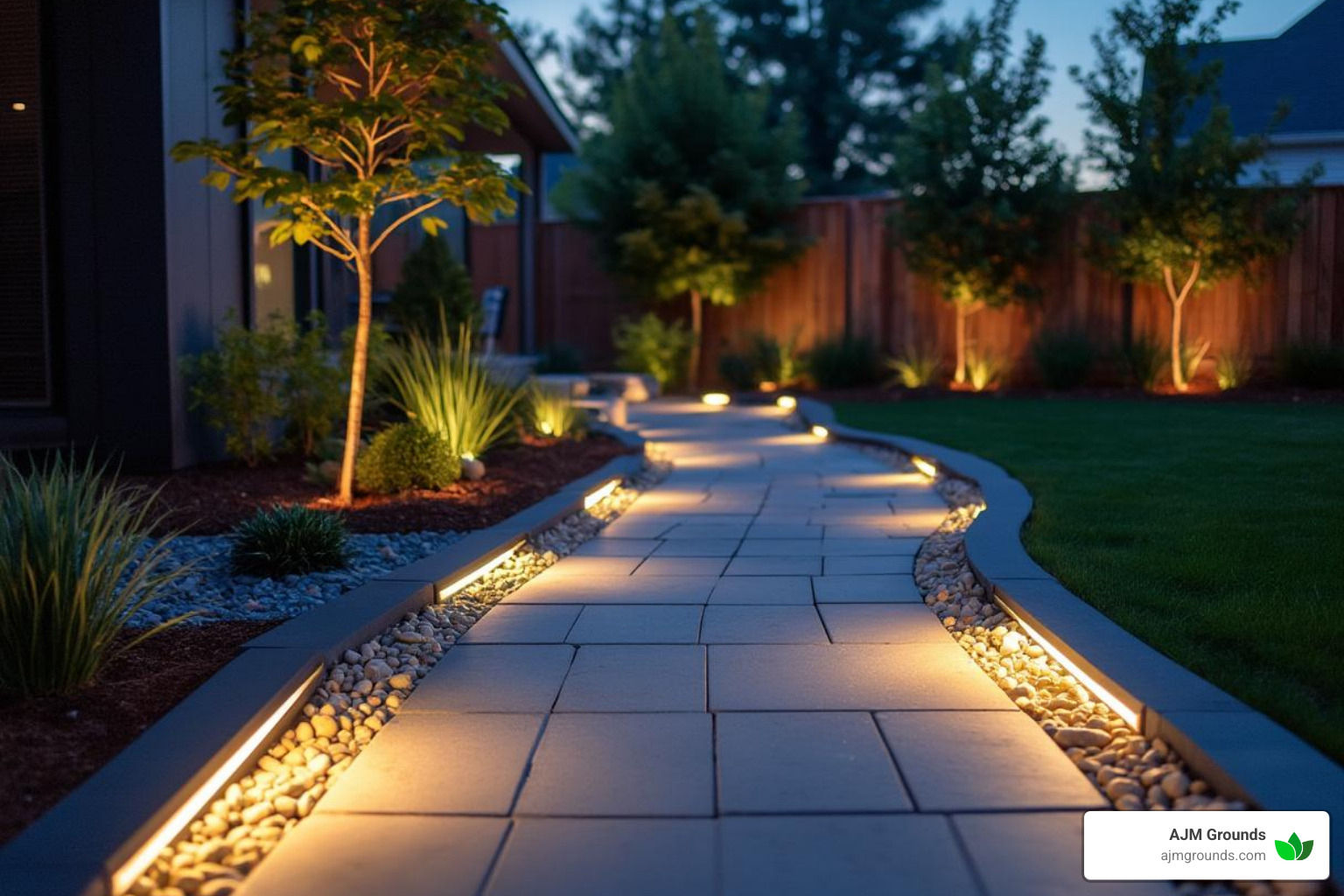
Permeable bases beneath your pathways help manage stormwater runoff naturally. Instead of sending rainwater rushing toward storm drains, these systems allow water to filter slowly through the ground, reducing erosion and flooding risks.
Lighting Layout 101
Effective pathway lighting follows the “guiding without blinding” principle. Uplights work beautifully to highlight specimen trees or architectural features, creating dramatic shadows and visual interest. Step lights provide essential safety illumination on stairs and elevation changes – nobody wants to stumble in the dark.
Fixture spacing should create gentle pools of overlapping light rather than harsh, uniform brightness. Think of it like breadcrumbs in a fairy tale – each light should guide you naturally to the next one. Generally, spacing fixtures 6-8 feet apart creates this welcoming glow without overwhelming your landscape’s natural beauty.
Designing for All Abilities
Universal design principles ensure your patio and walkway ideas welcome everyone. Wheelchair access requires smooth surfaces and gentle slopes – the standard 1:20 slope rule means no more than one foot of rise for every twenty feet of horizontal distance.
Tactile pavers with raised dot or linear patterns help visually impaired visitors steer safely. These specialized pavers can be integrated subtly into your design while providing crucial guidance. Consistent handrail heights and reliable non-slip surfaces benefit users of all abilities, from grandparents with mobility challenges to kids running around in wet sneakers.
The beauty of accessible design is that it often makes spaces more comfortable for everyone. Gentle slopes are easier for anyone carrying groceries or pushing a stroller. Wide pathways accommodate wheelchairs while also feeling more spacious and welcoming for all your guests.
Budget & Planning: DIY vs. Pro
Let’s get real about numbers. Based on public internet averages—not AJM Grounds pricing—you might spend $8-15 per sq. ft. for basic concrete and $25-75+ per sq. ft. for premium natural stone. The wide range reflects differences in preparation, complexity, and material quality.
Here’s the surprise: pavers themselves are only about 20 % of the total cost. Most of the budget goes to excavation, a proper base, and skilled labor. That’s why splurging on a higher-end surface often raises the overall price far less than people expect.
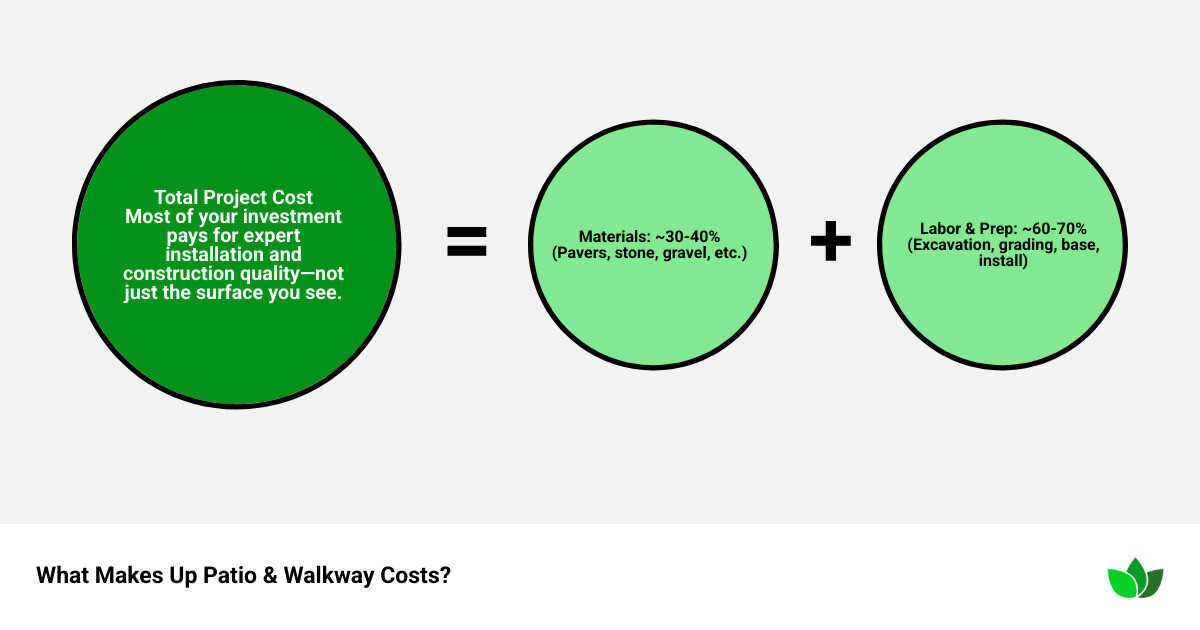
Crunching the Numbers
• Design fees (10-15 %) prevent costly mid-project changes.
• Base prep is not glamorous but stops settling and frost heave.
• Sealing every 3-5 years is inexpensive insurance.
• Build in a 10-15 % contingency for soil or drainage surprises.
When to Call the Pros
Projects that involve drainage fixes, big grades, or tying into existing structures usually warrant professional help. The right crew brings laser levels, plate compactors, and warranties that protect your investment.
For details on AJM’s end-to-end process, visit our hardscaping services page.
Year-Round Care & Maintenance
Taking care of your patio and walkway ideas doesn’t have to be complicated, but a little regular attention goes a long way toward protecting your investment. Think of it like caring for your car – small, consistent efforts prevent big problems down the road.
Regular sweeping is your first line of defense against wear and staining. Leaves, dirt, and debris can actually scratch surfaces over time, especially when they get wet and gritty. A quick sweep once a week keeps things looking fresh and prevents buildup in joints where weeds love to take root.
For deeper cleaning, gentle soap and water work better than harsh chemicals. Most homeowners are surprised how well a simple garden hose and soft brush can restore their walkways to like-new condition. The key is staying ahead of stains rather than letting them set in.
Seasonal stain removal requires different approaches depending on what you’re dealing with. Fall leaves can leave tannin stains if left sitting too long, but they usually come up easily with a gentle scrub. Winter salt residue needs to be rinsed away regularly to prevent surface damage – it’s much easier to prevent salt buildup than to remove heavy deposits later.
Weed control in paver joints is one of those maintenance tasks that’s either really easy or really frustrating, depending on how you approach it. Proper joint sand maintenance is your best friend here. When sand levels stay full, weeds have a much harder time getting established. Polymeric sand creates a firmer barrier than regular sand and helps prevent both weeds and ant hills.
Re-sealing every 3-5 years might seem like a hassle, but it’s actually one of the most cost-effective things you can do to maintain your outdoor spaces. Sealed surfaces resist staining, maintain their color better, and clean up more easily. It’s like applying sunscreen – a little prevention saves a lot of repair work later.
Winter Wisdom
Winter presents unique challenges for patio and walkway ideas, but with the right approach, your surfaces can handle whatever New England weather throws at them.
Ice melt choices make a real difference in how your pavers age. Calcium chloride and sodium chloride (regular rock salt) work well without damaging most paver surfaces. Avoid magnesium-based products, which can cause surface pitting and discoloration over time. When in doubt, sand provides traction without any chemical concerns.
The blower versus shovel debate usually comes down to your specific situation. Snow blowers work great for powder, but when you need to shovel, plastic shovels or rubber blade guards protect decorative surfaces from scratches. Metal blades and concrete don’t play well together, especially when you’re working quickly in cold weather.
Summer Shine
Summer maintenance focuses on keeping things clean and addressing any settling or joint issues before they become bigger problems.
Power washing can be incredibly satisfying, but keep those pressure settings reasonable. High pressure can blast joint sand right out of your pavers, creating more work for yourself later. A gentle rinse setting usually handles most cleaning needs without causing damage.
Joint sand replenishment is normal maintenance, especially in high-traffic areas. Weather, foot traffic, and occasional power washing gradually reduce sand levels. Adding fresh sand annually keeps joints tight and prevents weeds from getting a foothold.
Frequently Asked Questions about Patio and Walkway Projects
These are the questions I hear most often from homeowners considering new patio and walkway ideas for their properties. After years of helping Woburn families transform their outdoor spaces, I’ve learned that addressing these concerns upfront helps create realistic expectations and better project outcomes.
How much will a new patio or walkway cost?
This is always the first question, and honestly, it’s like asking “how much does a car cost?” The answer depends entirely on what you’re looking for.
Based on general internet research averages (not AJM Grounds specific pricing), you’re looking at $8-15 per square foot for basic concrete installations, while premium natural stone projects can range from $25-75 per square foot or even higher for complex designs. These wide ranges reflect the dramatic differences in material quality, site preparation requirements, and design complexity.
Here’s what really drives costs: materials typically represent only 20% of your total project budget. The majority goes toward proper excavation, base preparation, and skilled installation – the invisible work that ensures your investment lasts for decades rather than years.
Projects with multiple elevation changes, custom drainage solutions, or integration with existing landscape features naturally cost more due to the additional planning and precision required. That’s why we always recommend getting detailed quotes that break down preparation, materials, installation, and finishing costs separately.
The good news? Quality materials often represent excellent value because installation costs remain similar whether you choose basic or premium pavers. Upgrading from standard to premium materials might only increase your total project cost by 10-15% while dramatically improving appearance and longevity.
What’s the easiest material for a DIY path?
If you’re handy with basic tools and enjoy weekend projects, gravel walkways offer the most beginner-friendly option. They require minimal excavation, no special equipment, and forgive small mistakes in layout or leveling.
Stepping stones with mulch or grass between them work beautifully for garden paths where perfect alignment isn’t critical. You can take your time with placement, adjust stones as needed, and easily modify the path as your landscape evolves.
Decomposed granite is another DIY-friendly choice that creates a more formal appearance than loose gravel while still being relatively simple to install. It compacts naturally and provides a smooth walking surface that works well with contemporary home styles.
What I’d avoid for DIY projects: anything requiring precise leveling like large-format slabs, or complex patterns like herringbone that demand mathematical precision. These patio and walkway ideas look stunning when done properly but can become frustrating headaches without professional tools and experience.
How do I keep my walkway safe and slip-free in winter?
Winter safety starts with smart material choices during installation. Textured surfaces naturally provide better grip than smooth finishes, and proper drainage prevents ice formation in the first place.
Calcium chloride or standard rock salt work well for occasional de-icing without damaging most paver surfaces. What you want to avoid are magnesium-based products that can cause surface deterioration over time.
Snow removal technique matters too. When shoveling is necessary, use plastic shovels or add rubber blade guards to prevent scratching decorative surfaces. For routine snow clearing, a leaf blower often works better than shoveling and eliminates any risk of surface damage.
Lighting makes a huge difference for winter safety. Well-placed LED path lights illuminate potential hazards and make your walkways usable even during those short December days. Motion sensors add convenience while conserving energy.
The most important factor? Keep pathways clear of debris year-round. Wet leaves become incredibly slippery, and small branches or stones create tripping hazards that are especially dangerous when hidden under snow or ice.
If you’re planning new patio and walkway ideas, consider slightly wider paths than you think you need. Extra width makes snow removal easier and provides more stable footing when conditions are less than ideal.
Conclusion
The patio and walkway ideas above can turn plain turf into inviting destinations, boost property value, and make every arrival feel special. Quality materials plus expert installation equal decades of worry-free enjoyment.
AJM Grounds has helped families in Woburn, Bedford, Billerica, Burlington, Lexington, Reading, Stoneham, Wilmington, and Winchester bring these ideas to life. If you’re ready to explore possibilities, we’d love to hear from you.
Schedule a consultation today and see how our attention to detail can transform your outdoor space. Learn more at our hardscaping services page.
