

Natural stone retaining walls combine beauty and functionality, making them an excellent choice for your landscaping needs. They:
- Prevent soil erosion by holding back soil on sloped areas.
- Create flat, usable spaces for gardens and patios.
- Improve your property’s aesthetics with their timeless appeal.
Integrating natural stone retaining walls into your landscape not only adds value but also lifts the overall design. These walls offer structural integrity while seamlessly blending with the natural environment. By choosing natural stone, you’re investing in a lasting solution that requires minimal maintenance yet delivers stunning visual results.
I’m John Caplis, the owner of AJM Grounds LLC. With experience in creating sustainable outdoor spaces, I’ve been helping homeowners improve their landscapes with natural stone retaining walls. This expertise allows us to bring your vision to life, ensuring both functionality and elegance in your outdoor projects.

Understanding Natural Stone Retaining Walls
Natural stone retaining walls are more than just functional barriers. They’re a blend of art and engineering, offering a sustainable way to improve your landscape.
Dry-Stack Method, Drainage, and Gravel Base
When building these walls, the dry-stack method is a popular choice. This technique involves stacking stones without mortar, allowing for natural movement and flexibility. It’s ideal for DIY enthusiasts and doesn’t require a concrete footing.
A key advantage of the dry-stack method is its excellent drainage. Proper drainage is crucial to prevent water buildup, which can damage the wall over time. By placing the stones on a gravel base, you ensure water can pass through easily, reducing erosion and prolonging the wall’s life.
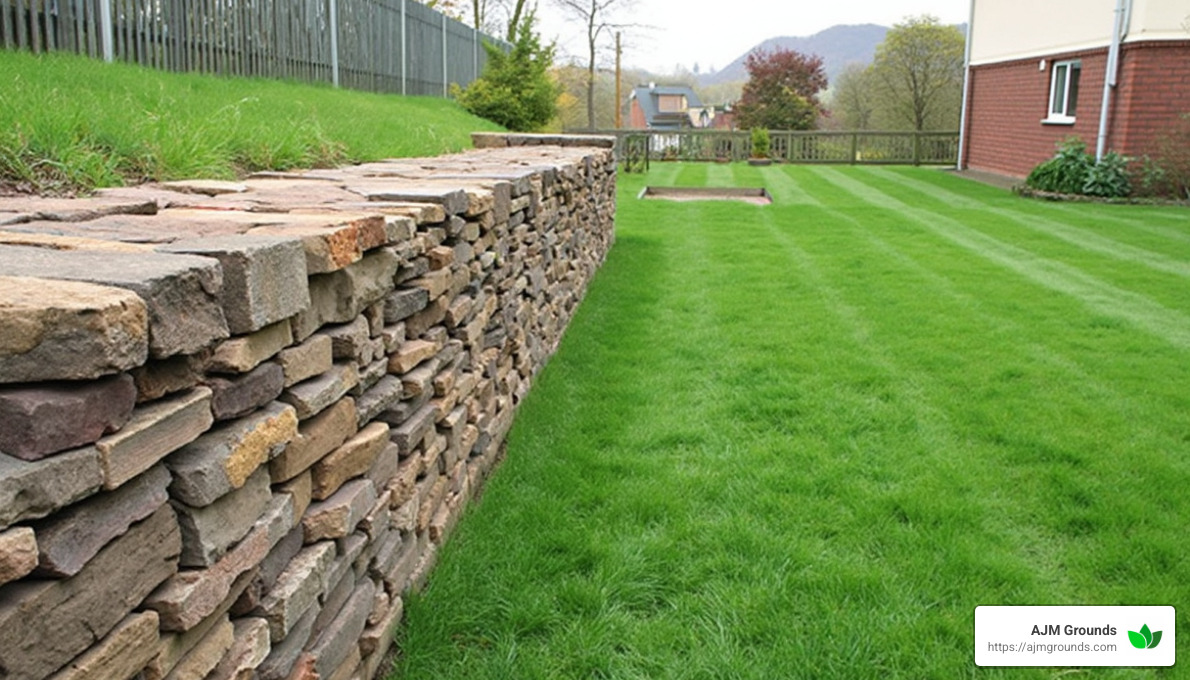
Permits are another consideration. Depending on your location, you might need a permit for walls over a certain height. For example, some areas require permits for walls taller than 30 inches. Always check local regulations before starting your project.
Types of Natural Stone
Choosing the right stone is essential for both aesthetic and functional purposes. Here are some popular options:
- Flagstone: Known for its flat shape, flagstone is perfect for creating smooth, even surfaces. Its natural look fits well in most landscapes.
- Limestone: This stone offers a classic appearance and is easy to work with due to its softer texture. Limestone ages beautifully, developing a patina over time.
- Bluestone: With its rich color and fine grain, bluestone adds elegance and durability to any wall. It’s a versatile option that complements various design styles.
- Granite: Known for its strength and resistance to weathering, granite is a long-lasting choice. Its varied colors and patterns can add a unique touch to your wall.
- Fieldstone: For a more rustic look, fieldstone provides a natural, rugged appearance. It’s often used in rural settings to blend seamlessly with the environment.
Benefits of Natural Stone Retaining Walls
Natural stone retaining walls offer several benefits:
- Durability: Stones like granite and bluestone are incredibly durable, standing up to harsh weather conditions and requiring little maintenance.
- Aesthetic Appeal: The natural beauty of stone improves any landscape. Each stone is unique, offering a range of colors and textures to fit your style.
- Longevity: Unlike other materials, natural stone doesn’t rot or decay, ensuring your wall lasts for decades. This longevity makes it a cost-effective option in the long run.
By understanding these elements, you can make informed decisions when planning your natural stone retaining wall project. With the right materials and methods, your wall will not only serve its purpose but also improve the beauty and value of your property.
How to Build a Natural Stone Retaining Wall
Building a natural stone retaining wall can be a rewarding DIY project. It combines creativity with functionality, offering a charming touch to your landscape. Here’s a step-by-step guide to get you started, along with some helpful tips.
Step-by-Step Guide
- Organize Your Stones
Start by sorting your stones by size and shape. This will make it easier to select the right stones as you build. Flat or cut stones, such as flagstone or ashlar, are easier to work with than fieldstone and create a sturdier wall.
- Dig the Area
Mark out the area where you want your wall. Dig a trench that’s about 6 to 12 inches deep, depending on the height of your wall. Make sure it’s wide enough to accommodate the width of your stones plus some extra space for drainage gravel.
- Build the Wall Base
Fill the trench with a 3-4 inch layer of gravel. This base provides stability and improves drainage. Compact the gravel to create a solid foundation.
- Lay the Courses
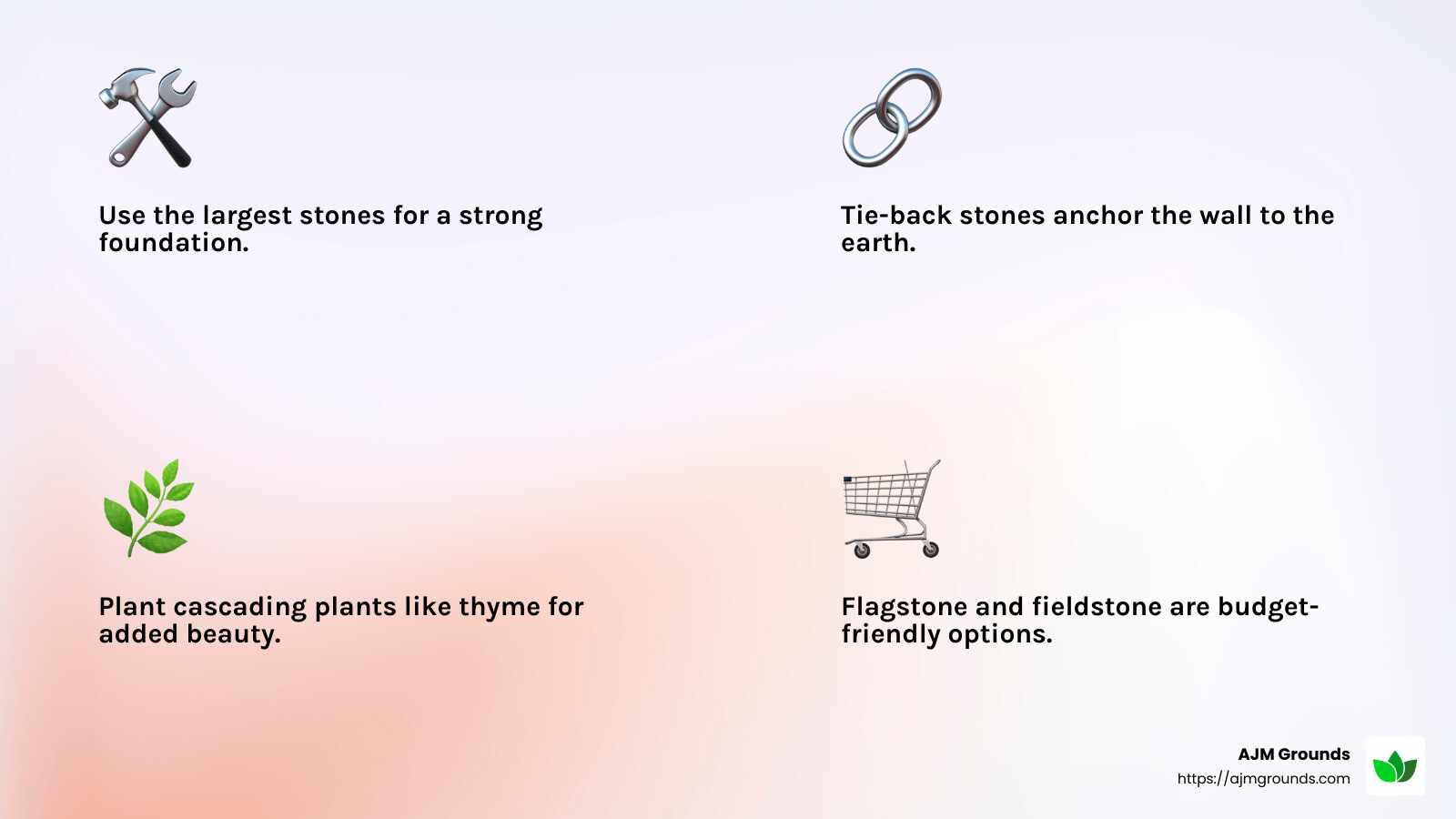
Begin laying the stones on the gravel base. Use the largest stones for the first course to provide a strong foundation. Continue stacking the stones, ensuring each layer is level. For stability, overlap the stones like bricks, offsetting the joints.
- Install Tie-Back Stones: Every 4 feet, place a tie-back stone perpendicular to the wall. These stones extend back into the slope, anchoring the wall to the earth.
- Fold Back the Fabric
As you near the top, fold the landscape fabric over the drainage gravel. This can be done before the last couple of courses or before adding capstones. It helps keep the soil in place if you plan to grow grass or plants.
- Place the Capstones
Lay the top course of stones, known as capstones, to complete your wall. For extra security, use masonry adhesive to glue the capstones to the course below.
- Backfill with Soil
Trim the landscape fabric so it sits just below the top of the wall. Backfill with soil, ensuring it’s at least 6 inches thick if you plan to grow grass.
Tips for a Successful Build
- Create Plantable Gaps: When using cut stones, plan for small gaps to plant cascading plants or herbs. These gaps shouldn’t compromise the wall’s integrity.
- Choose the Right Plants: Cascading plants like creeping thyme or annual white alyssum complement stone walls beautifully. Herbs such as rosemary or thyme also thrive in the gaps.
- Use the Right Tools: Essential tools include a shovel, level, and mason’s hammer. A wheelbarrow will help transport stones and gravel.
- Consider Budget-Friendly Options: If sourcing stones is costly, consider using flat stones like flagstone. Alternatively, use natural fieldstone found on your property.
By following these steps and tips, you can build a natural stone retaining wall that’s both beautiful and functional. Ready to dive into the details of cost considerations? Let’s explore how to make your project budget-friendly.
Cost Considerations
Building a natural stone retaining wall doesn’t have to break the bank. Let’s break down the costs and explore some budget-friendly options.
Average Costs
The cost of building a natural stone retaining wall can vary widely. On average, you might spend between $20 to $45 per square foot. This includes materials, labor, and other necessary expenses. However, these prices can fluctuate based on the type of stone you choose and the complexity of your project.
- Flagstone and Limestone: These are popular choices for retaining walls. They offer durability and a classic look, often costing around $25 to $35 per square foot.
- Fieldstone: If you’re looking for a more rustic appearance, fieldstone is a great option. It typically costs between $20 to $30 per square foot.
Budget-Friendly Options
If you’re working with a tight budget, there are several ways to save on costs:
- DIY Approach: One of the easiest ways to cut costs is by building the wall yourself. You’ll save on labor costs, which can be a significant portion of the overall expense.
- Use Local Stones: Sourcing stones locally can reduce transportation costs. Plus, local stones often blend better with the surrounding environment.
- Mix and Match: Consider using a mix of stone types. You can use more expensive stones for visible areas and less costly options for hidden parts.
Sourcing Stones
Finding the right stones is crucial for both the aesthetic and structural integrity of your wall. Here’s how you can source them:
- Local Quarries: Many quarries offer a variety of stones at competitive prices. You can often find deals on bulk purchases.
- Reclaimed Stone: Check out reclaimed stone suppliers. These stones are recycled from old buildings or other structures and can add character to your wall.
- On-Site Sources: If your property has natural stone deposits, consider using them. This not only saves money but also ensures your wall fits seamlessly into the landscape.
By understanding these cost considerations, you can plan your project effectively and make informed decisions. Next, we’ll tackle some frequently asked questions about natural stone retaining walls.
Frequently Asked Questions about Natural Stone Retaining Walls
What is the best natural stone for a retaining wall?
Choosing the right stone for your retaining wall is essential for both aesthetics and durability. Flagstone and limestone are two excellent options.
- Flagstone: Known for its flat and thin pieces, flagstone is easy to stack and gives a clean, modern look. It’s durable and can withstand weather changes, making it ideal for long-lasting walls.
- Limestone: This stone is popular due to its strength and classic appearance. It offers a softer, more natural look and blends well with various landscaping styles.
How much does a natural stone retaining wall cost?
The cost of a natural stone retaining wall can vary based on several factors, including the type of stone and labor involved.
- Cost per Square Foot: Generally, the cost ranges from $20 to $45 per square foot. This includes materials and labor.
- Budget Options: For those on a budget, consider a DIY approach to save on labor costs. Using locally sourced stones can also reduce expenses. Mixing higher-cost stones like flagstone with more affordable options in less visible areas is another way to save.
What is the disadvantage of a stone wall?
While natural stone retaining walls are beautiful and durable, they do come with some disadvantages.
- Heavy Nature: Stone walls are heavy, requiring a solid foundation. This might increase the initial construction effort and cost.
- Structural Substrate: A proper base and drainage system are crucial to prevent shifting or collapsing. This adds complexity to the building process.
Understanding these aspects can help you plan effectively and avoid common pitfalls when constructing your stone retaining wall.
Conclusion
At AJM Grounds, we believe in crafting outdoor spaces that are as functional as they are beautiful. Natural stone retaining walls are a testament to this belief, offering a blend of durability and aesthetic appeal that can transform any landscape.
Our commitment to personalized service ensures that every project is custom to meet your unique needs and vision. Whether you’re looking for a modern design with flagstone or a classic look with limestone, our team pays close attention to detail to ensure your retaining wall not only meets but exceeds your expectations.
We understand that the success of any landscaping project lies in the details. From selecting the right type of stone to ensuring proper drainage and structural integrity, our experts are dedicated to delivering results that stand the test of time. Our comprehensive approach includes assessing your landscape, discussing your goals, and crafting a custom solution that improves your property’s beauty and functionality.
Choosing AJM Grounds means choosing a partner who cares about your landscape as much as you do. We are proud to serve communities in Woburn, Bedford, Billerica, Burlington, Lexington, Reading, Stoneham, Wilmington, and Winchester, MA. Our local expertise, combined with our passion for excellence, makes us the trusted choice for all your landscaping needs.
Ready to lift your outdoor space with a natural stone retaining wall? Contact us today to bring your vision to life with our personalized service and attention to detail.
