

Transform Your Yard with a Beautiful Stone Path
Laying a stone path is a practical and visually appealing project that can improve any outdoor space. For homeowners looking to create a charming walkway, here’s a quick guide:
Basic Steps for Laying a Stone Path:
1. Measure and mark your desired path
2. Excavate 4-6 inches of soil
3. Add landscape fabric to prevent weed growth
4. Pour 2-3 inches of gravel as a base layer
5. Add 1-2 inches of sand and level
6. Place stones with 1/2 inch spacing
7. Fill gaps with sand, soil, or ground cover plants
A well-designed stone path does more than just connect two points in your yard—it adds character, increases functionality, and creates visual interest throughout your landscape. Whether you’re looking to create a formal entrance to your front door or a casual meandering path through your garden, stone walkways offer durability and timeless appeal that few other materials can match.
I’m John Caplis, owner of AJM Grounds LLC, and I’ve been designing and laying stone paths for properties throughout Woburn and surrounding areas for years, creating outdoor spaces that blend beauty with practicality.

Laying a stone path vocabulary:
– installing a garden path
– patio installation company
– brick sidewalk repair near me
Planning Your Stone Path
Laying a stone path starts long before the first shovel hits the dirt. Good planning is the foundation of every beautiful walkway we create at AJM Grounds. Whether we’re working in Bedford, Burlington, or any of the Massachusetts communities we serve, we’ve learned that taking time to plan saves headaches later.
Path Layout Considerations
Think about what you want your path to do. Is it mainly practical—getting from your driveway to your front door without muddy shoes? Or is it more for enjoyment—wandering through your garden spaces? Practical paths should be straight and wide (at least 3 feet) for comfortable walking, while garden paths can be narrower with gentle curves that invite exploration.
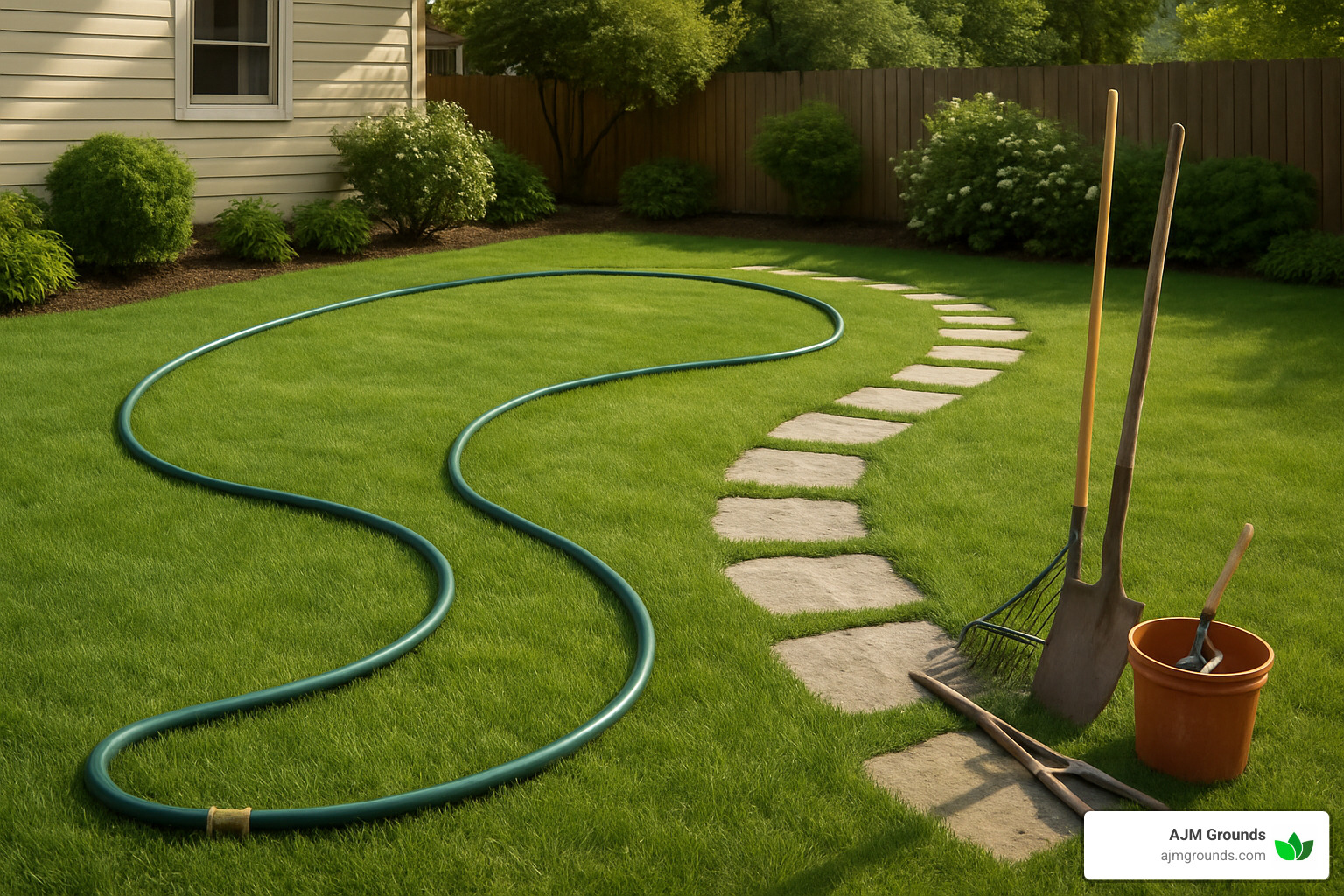
One trick we love sharing with homeowners is to lay out garden hoses or use marking paint to outline your planned path. Step back, look at it from different angles, and live with it for a day or two. You’ll be surprised how this simple step helps you visualize the finished project in your landscape!
Measurement and Spacing
Grab a tape measure and figure out the total length and width of your path. This helps calculate how much material you’ll need, saving you from frustrating mid-project supply runs. For most home walkways, we typically recommend paths about 3-4 feet wide. The stones themselves should be 1-2 inches thick for durability.
Plan to dig down about 4-6 inches total to make room for your base materials. As for spacing between stones, that’s where you can express your style. Tighter spacing (about ½ inch) creates a more formal, structured look. Wider gaps of 2-4 inches give you that casual stepping stone effect that works beautifully in natural garden settings.
Practical Considerations
New England weather demands some special attention when laying a stone path. Our freeze-thaw cycles can push improperly installed stones up and out of place over time. That’s why proper base preparation isn’t just nice—it’s necessary!
Always plan for water drainage by creating a slight slope (about ¼ inch per foot) away from your home’s foundation. This gentle grade is barely noticeable to the eye but makes all the difference in preventing pooling water.
Work respectfully around mature trees, giving their root systems plenty of space. Your path needs to serve the people using it—if elderly family members or folks with mobility challenges will use it regularly, plan for appropriate width and smooth transitions.
At AJM Grounds, we’ve seen how these planning details transform a simple stone path from “just okay” to “absolutely perfect” for your unique landscape. A little thinking ahead creates walkways that look like they’ve always belonged in your yard.
Materials Needed for Laying a Stone Path

Flat Stones
When it comes to laying a stone path, the stones themselves are truly the stars of the show. After helping countless homeowners in Woburn and surrounding areas create their dream walkways, I’ve found that people often connect with different stone options based on their home’s character and personal style.
Flagstone remains our most requested material, with its natural, irregular shapes and flat surfaces that create a rustic yet refined appearance. Many of our clients in Lexington and Winchester particularly love how flagstone complements traditional New England architecture.
If you’re looking for something more uniform, bluestone offers a distinctive blue-gray color that ages beautifully over time. For a more casual, countryside feel, fieldstone with its rounded, natural appearance works wonderfully for stepping stone paths through gardens.
Budget-conscious homeowners might consider manufactured pavers, which provide uniformity and often come at a lower price point while still offering durability.
Stone materials typically range from $2-$30 per square foot, depending on type and quality. For those seeking premium options like custom-cut bluestone, prices can reach $60-$90 per square foot. These are average costs based on internet data, not actual pricing from AJM Grounds.
Base Materials
I can’t stress enough how crucial a proper base is for your stone path’s longevity, especially here in Massachusetts where our freeze-thaw cycles can wreak havoc on poorly installed hardscaping.
Start with quality landscape fabric to create a barrier that prevents weeds from finding their way through your beautiful new path. Over this, you’ll want crushed gravel or stone (¾-inch crushed stone works beautifully) to create a stable foundation that allows for proper drainage.
A layer of leveling sand comes next, providing that smooth, even surface that makes placing your stones so much more manageable. For paths that might benefit from defined edges, consider adding metal, plastic, or stone edging to maintain those clean boundaries and prevent material migration over time.
For more detailed information about proper base preparation for hardscaping projects, the Interlocking Concrete Pavement Institute provides excellent technical resources and guidelines at ICPI Technical Library.
Tools Required
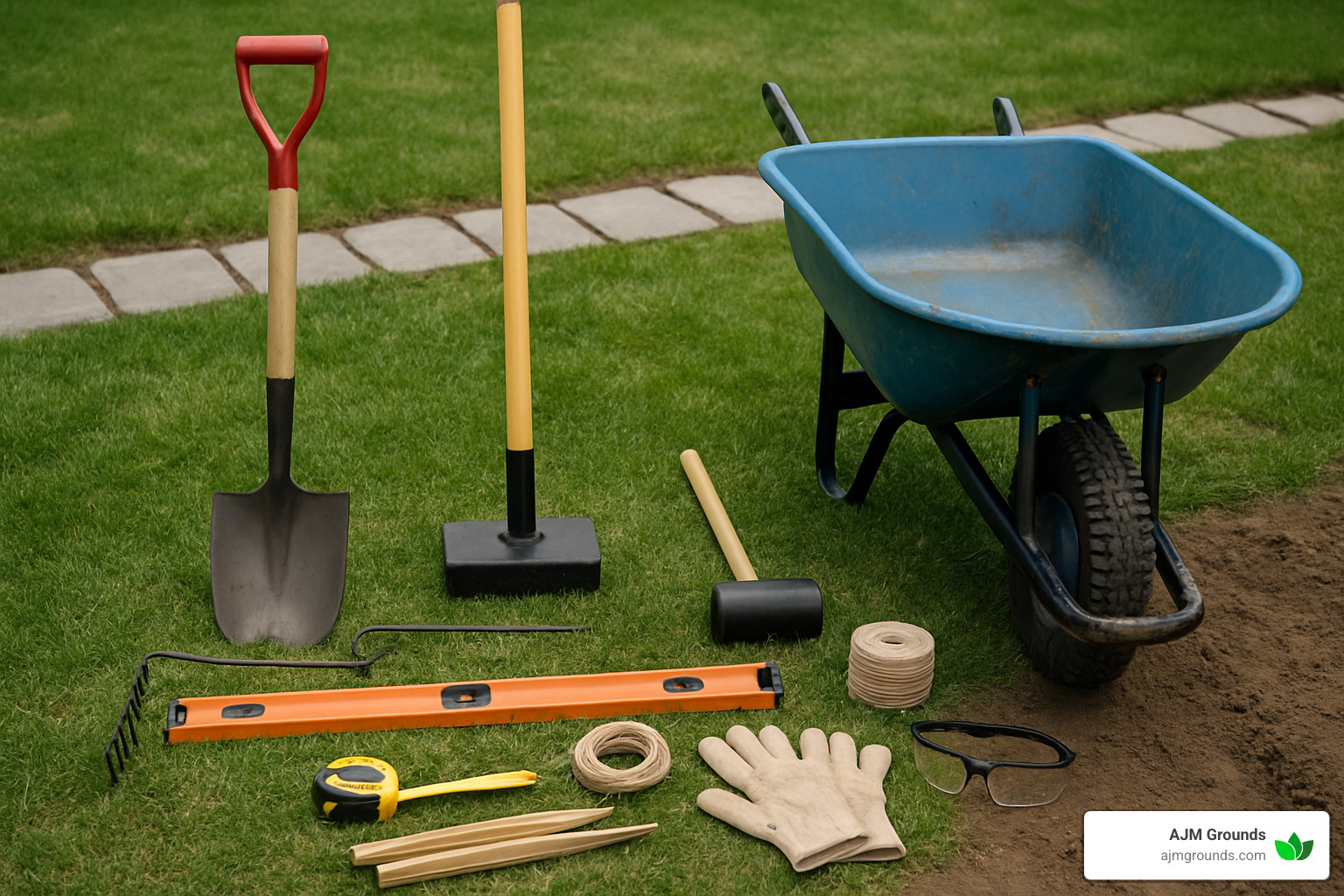
You don’t need professional-grade equipment to create a stunning stone path, but having the right tools makes all the difference in both the process and the final result. The basics include a sturdy shovel and spade for excavation, a rake for spreading and leveling materials, and a tamper (either hand or power) to compact your base layers.
A good level is absolutely essential—I’ve seen too many DIY paths with puddle issues because this simple tool wasn’t used consistently. You’ll also want a rubber mallet for gently setting stones without damaging them, a wheelbarrow for transporting materials, and a measuring tape along with string and stakes for laying out your path design.
And please don’t forget your safety gear! Good gloves and eye protection are non-negotiable when working with stone and gravel. Your hands and eyes will thank you later.
Step-by-Step Guide to Laying a Stone Path
Prepare the Area
Rolling up your sleeves for a stone path project? The foundation work makes all the difference. Start by clearly marking your intended path using stakes and string or a garden hose – this visual guide keeps you on track. Next comes the muscle work: dig out the soil to a depth of 4-6 inches, making sure to go about 2-3 inches wider than your planned path on each side to give yourself some wiggle room.
Once you’ve excavated, take time to clear away any roots, rocks, or debris hiding in the soil. Roughly level the bottom of your trench – it doesn’t need to be perfect yet, but should be relatively even.
In my years at AJM Grounds creating paths throughout Woburn and surrounding areas, I’ve noticed that proper excavation is where most DIY projects fall short. Many homeowners rush through this foundational step, but patience here prevents headaches later!
Add a Base Layer
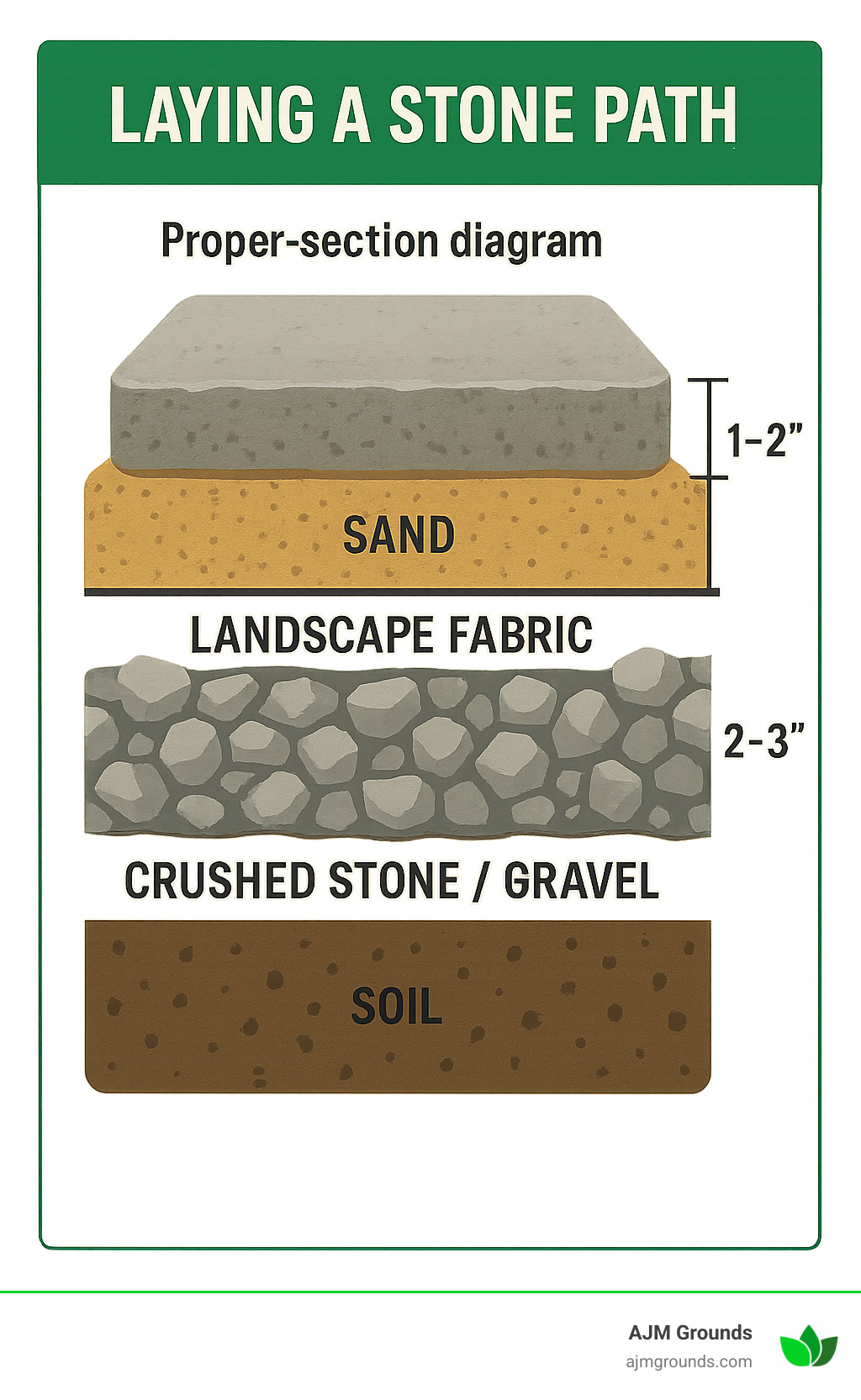
With your trench prepared, it’s time to create a stable foundation. First, roll out landscape fabric to cover the entire excavated area, extending a few inches beyond your path edges. This simple step prevents future weed growth and creates a clean separation between the soil and your base materials.
Next, add a 2-3 inch layer of crushed stone or gravel across the entire area. Use a tamper (hand or power) to firmly compact this layer – this compression prevents future settling that could make your path uneven. Once compacted, spread a 1-2 inch layer of coarse sand on top of the gravel.
The final step in base preparation is critical: use a long, straight board and a level to ensure your sand layer is even with just a slight slope for drainage (about ¼ inch per foot away from structures). This slight tilt prevents water from pooling on your finished path.
Place Your Stones
Here’s where your path begins to take shape! Before permanently setting anything, arrange your stones on the surface first. This dry run lets you experiment with patterns and spacing, solving any fit issues before stones are set in sand. Take a step back occasionally to view your layout from different angles.
Once you’re happy with the arrangement, place each stone into the sand bed one by one, pressing firmly. Use a level to check that each stone sits evenly with adjacent ones while maintaining that slight drainage slope. If a stone sits too high, tap it down gently with a rubber mallet. For low spots, lift the stone and add a bit more sand underneath.
When laying a stone path for our clients in Reading or Stoneham, we often create a mock-up first so homeowners can visualize the final result before we make anything permanent. This extra step has saved many projects from “I wish we had” regrets!
Fill in the Gaps
With your stones beautifully placed, it’s time to fill those gaps. Spread your chosen filler material – sand, fine gravel, or topsoil – across the entire path. Use a broom to work this material into all the cracks and crevices between stones. A light spray of water helps settle the filler material deeper into the gaps.
You’ll likely need to add more filler as it settles, so repeat this process until all gaps are filled to just below the stone surface. The goal is to have the filler material stabilize the stones without covering their top surfaces.
Finishing Touches
The final phase brings your path to life! Start by brushing off any excess sand or dirt from the stone surfaces to reveal their natural beauty. If desired, install edging material or create a natural edge with soil and complementary plantings to frame your new path.
For a truly enchanting look, consider planting low-growing ground covers like thyme or moss between stones. These living fillers soften the appearance while reducing maintenance needs. At AJM Grounds, we’ve found that creeping thyme works beautifully in Massachusetts’ climate and releases a lovely scent when walked upon.
Before calling the project complete, take a slow walk along your new path to check for any loose or uneven stones and make adjustments. This final inspection ensures your path is not just beautiful but safe and comfortable to use.
Common Mistakes to Avoid
When I’m working with homeowners in Woburn and neighboring towns, I see the same stone path mistakes pop up time and again. Let me share what I’ve learned over years of laying stone paths so you can avoid these common pitfalls.
Improper Area Preparation
Nothing dooms a stone path faster than skimping on the foundation work. I’ve seen beautiful stones start shifting after just one Massachusetts winter because someone didn’t dig deep enough or skipped proper base materials.
4-6 inch excavation depth isn’t just a suggestion—it’s essential, especially in our climate where freeze-thaw cycles can wreak havoc on shallow installations. That extra hour spent digging deeper now can save you days of frustration and repairs later.
Not Using a Level
I once visited a Reading home where the owner couldn’t figure out why water was pooling on their new stone path. The answer was simple: they hadn’t used a level during installation.
Each stone should sit flat with just a slight slope for drainage (about ¼ inch per foot away from structures). Uneven stones aren’t just unsightly—they create tripping hazards and collect water that can crack stones during winter freezes. A simple level is your best friend throughout the installation process.
Incorrect Filler Material
“I can just use the soil I dug up to fill between the stones, right?” This question makes every professional landscaper wince. Regular garden soil between stones is practically an invitation for weeds to take over your beautiful new path.
Instead, use sand, fine gravel, or polymeric sand designed specifically for paving. These materials lock stones in place while providing better drainage and significantly fewer weed problems. The small additional cost for proper filler materials pays dividends in reduced maintenance for years to come.
Spacing Issues
Finding the right spacing between stones requires balance. Too far apart, and your path becomes an awkward hopscotch game during evening strolls. Too close together, and stones may shift and crack against each other as the ground naturally moves with seasonal changes.
For most walkways in Burlington and Lexington homes, I recommend about a ½-inch gap between stones for a more formal look, or 2-4 inches if you’re going for a stepping stone effect. Your path should be comfortable to walk on for everyone who will use it.
Taking time to avoid these common mistakes means creating a stone path that will improve your property’s beauty and functionality for many years to come, standing up to everything our New England weather can throw at it.
Frequently Asked Questions about Laying a Stone Path
How do you prepare ground for a stone walkway?
Ground preparation is truly the foundation of a successful stone path project. Having installed countless paths across Woburn and surrounding areas, I’ve seen how proper prep work makes all the difference.
Start by carefully marking your desired path layout—I find garden hoses work wonderfully for visualizing curved paths. Next, dig down about 4-6 inches, removing all soil along with any sneaky roots, rocks, or debris that could cause problems later. Give the soil base a good compacting (a hand tamper works well for smaller projects), then lay down landscape fabric to block those persistent weeds.
The next critical layers include 2-3 inches of ¾-inch crushed stone or gravel (make sure to compact this thoroughly!) followed by 1-2 inches of coarse sand for a level setting bed.
For our New England clients in Wilmington and Winchester, we often recommend digging a bit deeper than the standard recommendation due to our significant frost line—this extra depth provides insurance against winter’s freeze-thaw cycles that can wreak havoc on poorly prepared paths.
What is the best base for a stone path?
The perfect base for your stone path is like building a sandwich, with each layer serving an important purpose. From bottom to top, you’ll want:
Compacted native soil provides your foundation, ensuring the entire structure remains stable. Landscape fabric creates a barrier that prevents weeds while allowing water to drain through. Crushed stone or gravel (about 2-3 inches, well compacted) delivers essential drainage and stability. Finally, a coarse sand layer (1-2 inches) allows for fine-tuning the level surface where your stones will rest.
This combination works beautifully in our Massachusetts climate because it provides proper drainage while resisting frost heave during our challenging winters. For areas that see heavy foot traffic or if you’re using particularly substantial stones, we sometimes mix a thin layer of dry concrete with the gravel layer. This little trick adds remarkable stability without compromising drainage—something we’ve perfected over years of laying stone paths throughout the region.
Do you put anything under stepping stones?
Absolutely! This is one of the most common misconceptions I encounter with DIY landscapers. Stepping stones might seem simpler than a continuous path, but they actually require the same careful base preparation.
Each individual stone should rest on a proper foundation of landscape fabric, compacted gravel, and leveling sand. Skipping these steps is tempting—just dig a little hole and drop in the stone, right? Unfortunately, that approach leads to unstable, rocking stones that become uneven and hazardous surprisingly quickly.
I’ve seen many beautiful stepping stone paths throughout Reading and Stoneham that look wonderful initially but become treacherous within a season when installed directly on soil. The frost-thaw cycles we experience in Massachusetts are particularly unforgiving to improperly installed stepping stones, often pushing them up at awkward angles or creating trip hazards. Taking the time to prepare a proper base for each stone ensures your path remains safe and attractive for years to come.
Conclusion
Creating a beautiful stone pathway is more than just a weekend project—it’s an investment in your home’s character and functionality. When laying a stone path correctly, you’re adding an element that will improve your landscape for years to come, standing up to New England weather while guiding visitors through your outdoor space with style.
I’ve seen how a well-designed stone walkway transforms properties throughout Bedford, Billerica, Burlington, and beyond. The natural materials blend seamlessly with the landscape, creating that perfect balance between human design and natural beauty that makes a house truly feel like home.
Patience pays off when installing stone paths. Taking time with the excavation and base preparation might not be the most exciting part, but it’s what separates paths that last decades from those that need constant maintenance after just a few seasons of Massachusetts weather.
For many homeowners in Lexington, Reading, and Stoneham, laying a stone path becomes a satisfying DIY accomplishment they can enjoy every day. Others prefer to call in professionals who bring specialized equipment and years of experience to ensure perfect results. Either approach is valid—what matters most is ending up with a path that suits your lifestyle and improves your property.
At AJM Grounds, we take pride in our attention to detail when creating hardscape elements like stone walkways. We understand that these aren’t just functional passages but important design elements that contribute to your home’s curb appeal and outdoor living experience.
Whether you’re inspired to tackle this project yourself or would prefer expert assistance, I hope this guide has given you valuable insights into creating a beautiful, durable stone path. If you have questions about your specific landscape situation or need professional help with laying a stone path that perfectly complements your Woburn area home, we’re always here to help with the personalized approach that has become our hallmark throughout Winchester, Wilmington, and neighboring communities.
