

Why Laying a New Lawn with Grass Seed is the Smart Choice
Creating a lush, green lawn from scratch is a rewarding project. While sod offers an instant fix, laying a new lawn with grass seed is a cost-effective way to cultivate a stronger, more resilient turf that’s perfectly adapted to your yard. It requires patience, but the results are worth it. Here’s a quick overview of the key steps:
Key Steps for Success:
- Test your soil and make amendments (pH 6.0-7.0 is ideal)
- Choose the right seed for your climate and conditions
- Time it right – Late summer to early fall (mid-August to mid-October) is best in Massachusetts
- Prepare the soil – Remove debris, till 3-6 inches deep, rake smooth
- Sow evenly – Use 4-6 lbs per 1,000 sq ft for most grass types
- Keep moist – Water lightly 2-4 times daily until germination
- First mow – When grass reaches 3 inches, cut only the top third
- Be patient – Full establishment takes 2-3 months; heavy traffic readiness takes about 6 months
Seeding costs significantly less than sod, offers more variety in grass types, and develops stronger root systems long-term. The trade-off is time—seeding takes weeks to germinate and months to fully establish, while sod provides an instant lawn.
I’m John Caplis, owner of AJM Grounds LLC, and I’ve spent years helping homeowners throughout Woburn, Massachusetts establish beautiful, healthy lawns through proper seeding techniques. From laying a new lawn with grass seed to ongoing maintenance, my team has transformed countless bare patches into lush green spaces.
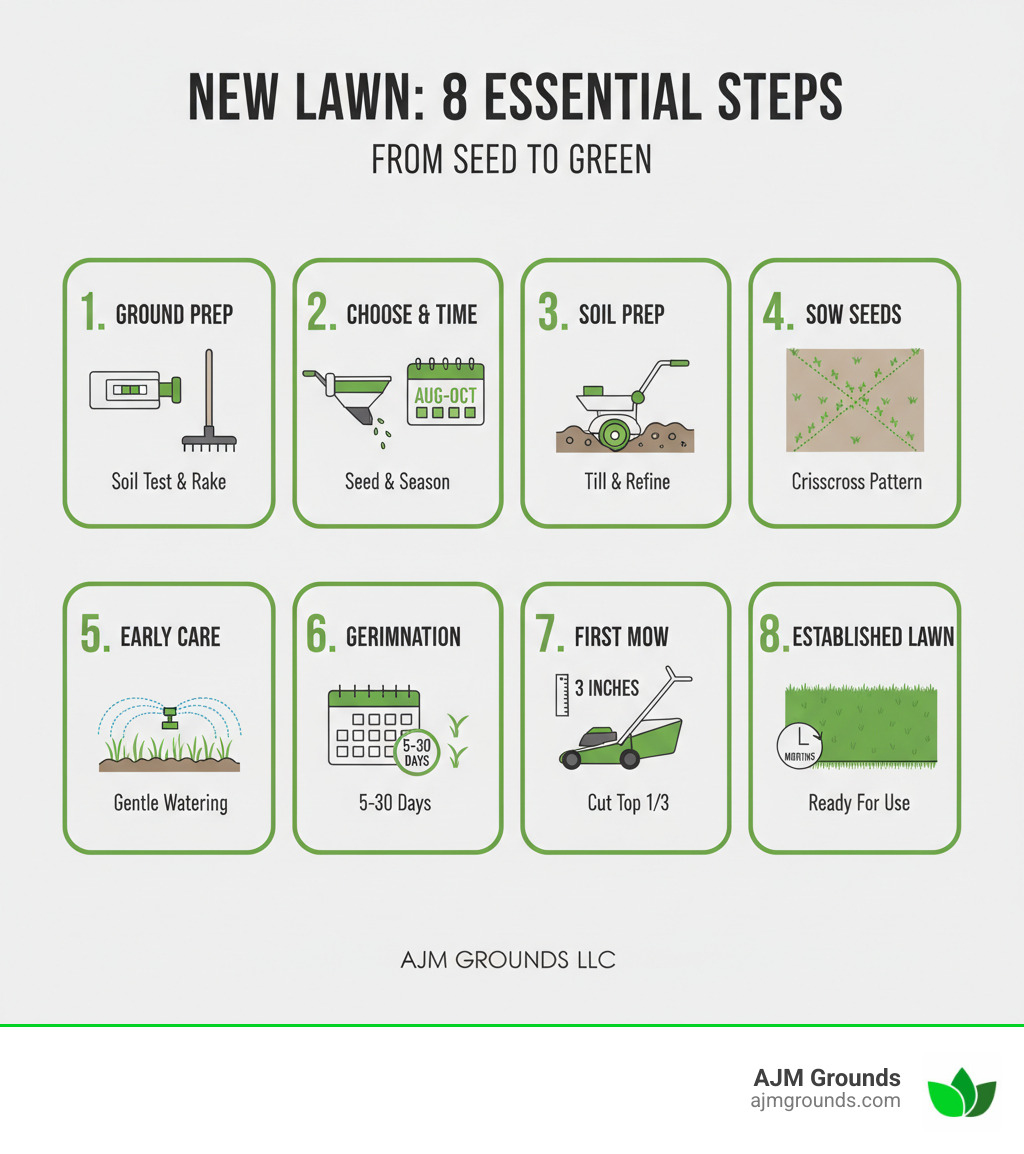
Quick laying a new lawn with grass seed definitions:
The Ultimate Guide to Laying a New Lawn with Grass Seed
When dreaming of a lush green carpet, the first question is often: seed or sod? While both lead to a beautiful lawn, laying a new lawn with grass seed offers compelling advantages in cost and long-term health.
Planning: Seed Choice and Timing
The choice between seed and sod comes down to budget, patience, and variety. Seeding is far more economical and allows the grass to develop a deeper, stronger root system naturally in your soil. Sod provides an “instant lawn” but at a significantly higher cost and with shallower initial roots.
| Feature | Seeding | Sodding |
|---|---|---|
| Cost | Less expensive (average $0.08-$0.25 per sq ft for materials) | More expensive (average $0.30-$0.95 per sq ft for materials) |
| Time to Establish | Weeks for germination, 2-3 months for establishment | Instant lawn, rooted in 10-14 days |
| Labor | Moderate (DIY-friendly, but requires consistent care) | High (heavy lifting, precise installation) |
| Variety | Wide range of grass species and mixtures | Limited to commercially available varieties |
| Root Establishment | Develops deeper, stronger root system naturally | Can have shallower roots initially |
Note: These cost figures are average estimates based on internet data and not actual costs for AJM Grounds. Actual costs can vary significantly based on location, grass type, and project scope.
Timing is everything. In Massachusetts, the best time to seed cool-season grasses (like Kentucky bluegrass, fescues, and ryegrass) is late summer to early fall (mid-August to mid-October). The warm soil and cool air create ideal germination conditions with less weed competition.
Choose the right seed by considering your yard’s sun exposure, foot traffic, and your willingness to perform maintenance. For most lawns, a seed mix is ideal, combining different species to handle varied conditions and improve disease resistance. For more guidance, check out our landscape installations page.
Step 1: Preparing the Ground for Seeding
Proper soil preparation is the foundation of a successful lawn.
- Test and Clear: Start with a soil test to check your pH and nutrient levels. Remove the old lawn, weeds, and any debris like rocks or roots. For instructions and a local lab, see the UMass Extension Soil and Plant Nutrient Testing Laboratory.
- Loosen and Grade: Use a tiller or rotovator to loosen compacted soil to a depth of at least 6 inches. Grade the area with a gentle 1-2% slope away from your house to ensure proper drainage.
- Amend and Refine: Based on your soil test, work in amendments like compost, lime, or a starter fertilizer. Rake the surface until it’s smooth and crumbly, then firm it slightly with a light roller to prevent future settling.
For more details, see our tips for successful lawn seeding.
Step 2: How to Properly Sow Grass Seed
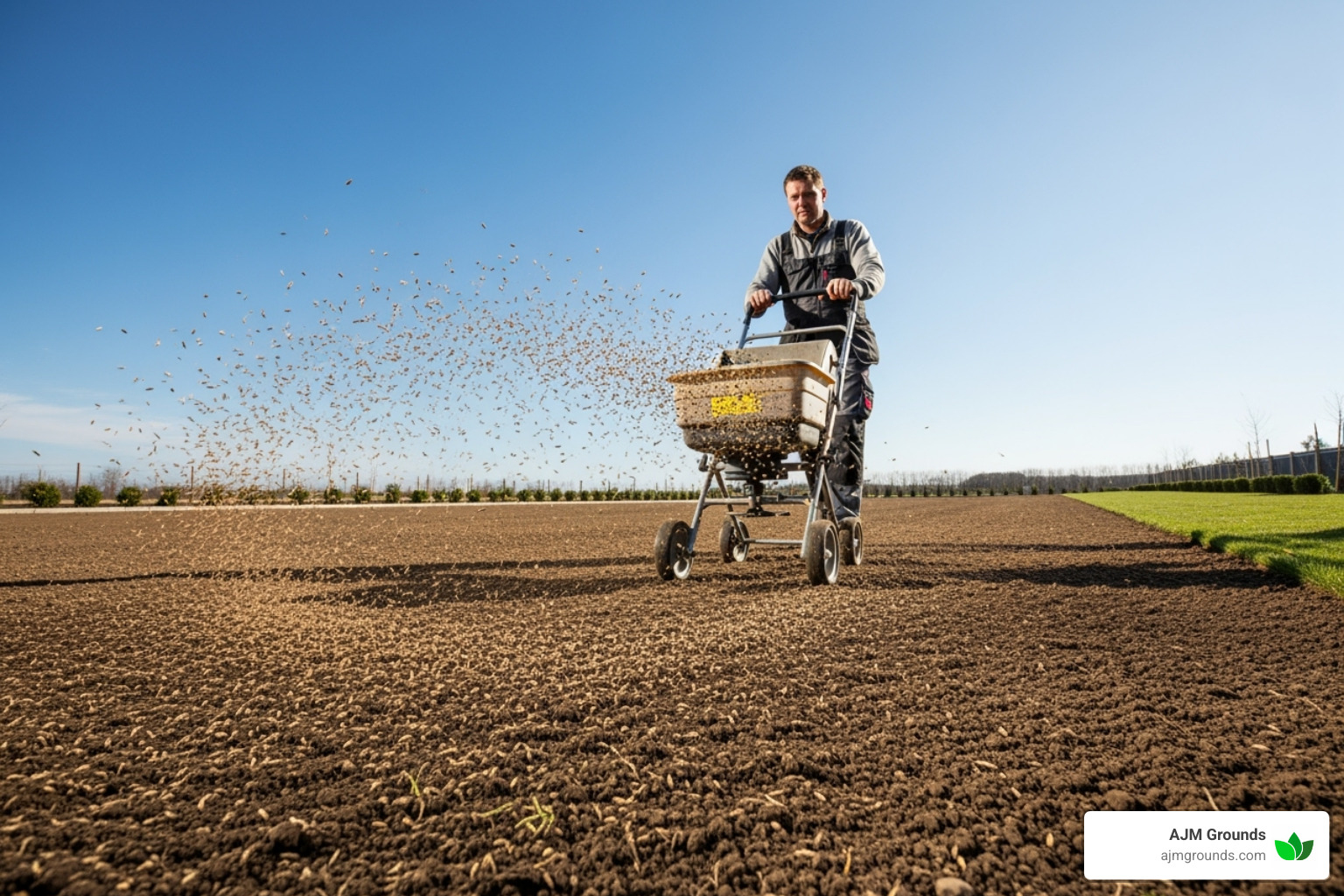
Even distribution is key to a uniform lawn.
- Use a Spreader: A broadcast or drop spreader is essential for even coverage. Follow the seeding rates on the bag (typically 4-6 lbs per 1,000 sq ft for cool-season mixes).
- Crisscross Pattern: Apply half the seed walking north-to-south and the other half walking east-to-west. This ensures you don’t miss any spots.
- Ensure Seed-to-Soil Contact: After spreading, lightly rake the seed into the top 1/4 inch of soil. Go over the area with a light lawn roller to press the seeds firmly into the ground. This step is critical for germination.
- Protect with Mulch: On slopes or in windy areas, apply a thin layer of weed-free straw to retain moisture and protect seeds from birds and erosion.
Step 3: Watering and Early Care for New Seedlings
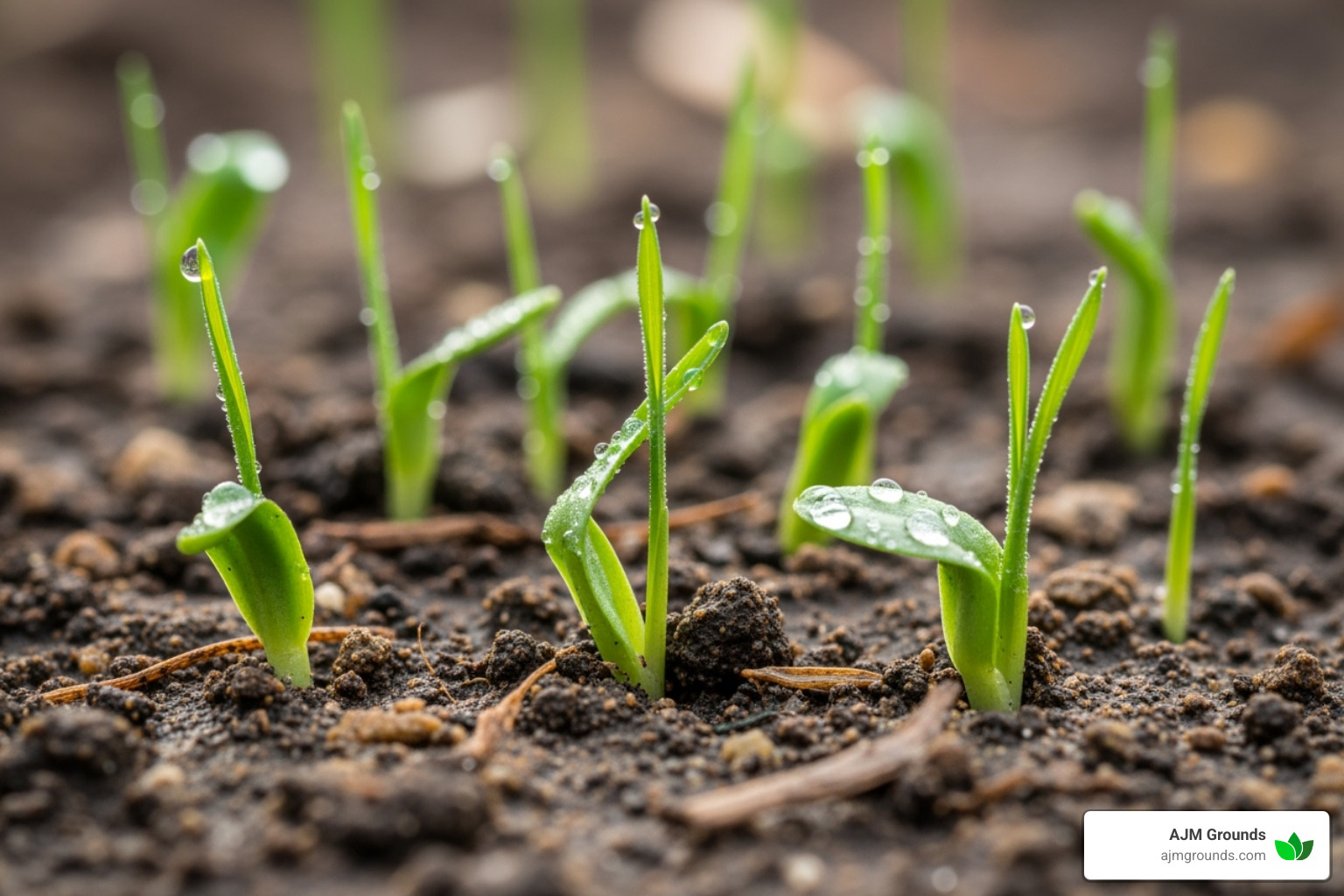
Your new seedlings need consistent care to thrive.
- Watering: Keep the top inch of soil consistently moist until seeds sprout (5-30 days). This often means light, frequent watering 2-4 times a day. Avoid creating puddles.
- First Mow: Mow for the first time when the grass reaches 3 inches tall. Use sharp blades and never cut more than one-third of the blade’s height (the 1/3 rule).
- Weed Control: Hand-pull weeds for the first few months. Do not use pre-emergent herbicides, as they will prevent your grass seed from growing. If you must use a post-emergent product, wait until you’ve mowed at least four times and choose one labeled safe for new lawns.
- Fertilizing: Apply a balanced fertilizer 2-4 weeks after seedlings emerge to provide a nutritional boost. Learn more about lawn care seeding and fertilizing.
Troubleshooting Common Seeding Problems
- Patchy Growth: Often caused by poor seed-to-soil contact or inconsistent watering. Rake bare spots lightly and re-seed, ensuring the area stays moist.
- Erosion on Slopes: Use straw mulch or an erosion control blanket to hold seed and soil in place during heavy rain.
- Fungal Disease: Seedlings rotting at the soil line (damping-off) is a sign of overwatering. Ensure good air circulation and water in the morning so blades can dry during the day.
From Seedling to Established Lawn: Long-Term Success
Watching your lawn mature from delicate seedlings into a thick, resilient carpet is the ultimate reward for laying a new lawn with grass seed. Reaching that goal requires continued care and patience as your lawn becomes fully established.
Key Milestones and Ongoing Maintenance
While you’ll see green shoots in 1-3 weeks, a lawn isn’t truly established overnight. It will look like a proper lawn in 2-3 months, but it takes approximately 6 months for the root system to become robust enough for heavy foot traffic. A successfully established lawn is dense, uniform, and resists a gentle tug, indicating a strong root system.
Once your lawn is established, your maintenance routine will shift to support long-term health:
- Mowing: Continue to follow the 1/3 rule, never removing more than one-third of the grass blade’s height. For cool-season grasses in Massachusetts, a mowing height of 2.5 to 3.5 inches promotes deep roots and helps shade out weeds. Always use sharp mower blades.
- Watering: Transition to a deep and infrequent watering schedule. Aim for about 1 inch of water per week (from rain or irrigation), applied in the early morning. This encourages roots to grow deeper, making your lawn more drought-tolerant.
- Fertilizing: After the initial starter fertilizers, transition to a regular feeding program. For our local grasses, fertilizing in the spring and fall provides the essential nutrients needed for a dense, green, and resilient turf that can better resist pests and diseases.
At AJM Grounds, we’ve seen how proper care transforms a newly seeded area into an outdoor space that families in Woburn, Burlington, Lexington, and Winchester enjoy for years. Our expertise goes beyond the initial seeding to ensure your turf remains healthy through every season.
For homeowners who want expert guidance, our professional lawn fertilizing services provide customized nutrition programs for your lawn’s specific needs.
Ready for a professional touch? Contact us for lawn installation services and let our team handle everything from soil preparation to that first mow. We’ll help you achieve the lawn you’ve been dreaming of with the expertise and attention to detail that sets AJM Grounds apart.
