

Why Laying a Flagstone Path Transforms Your Property
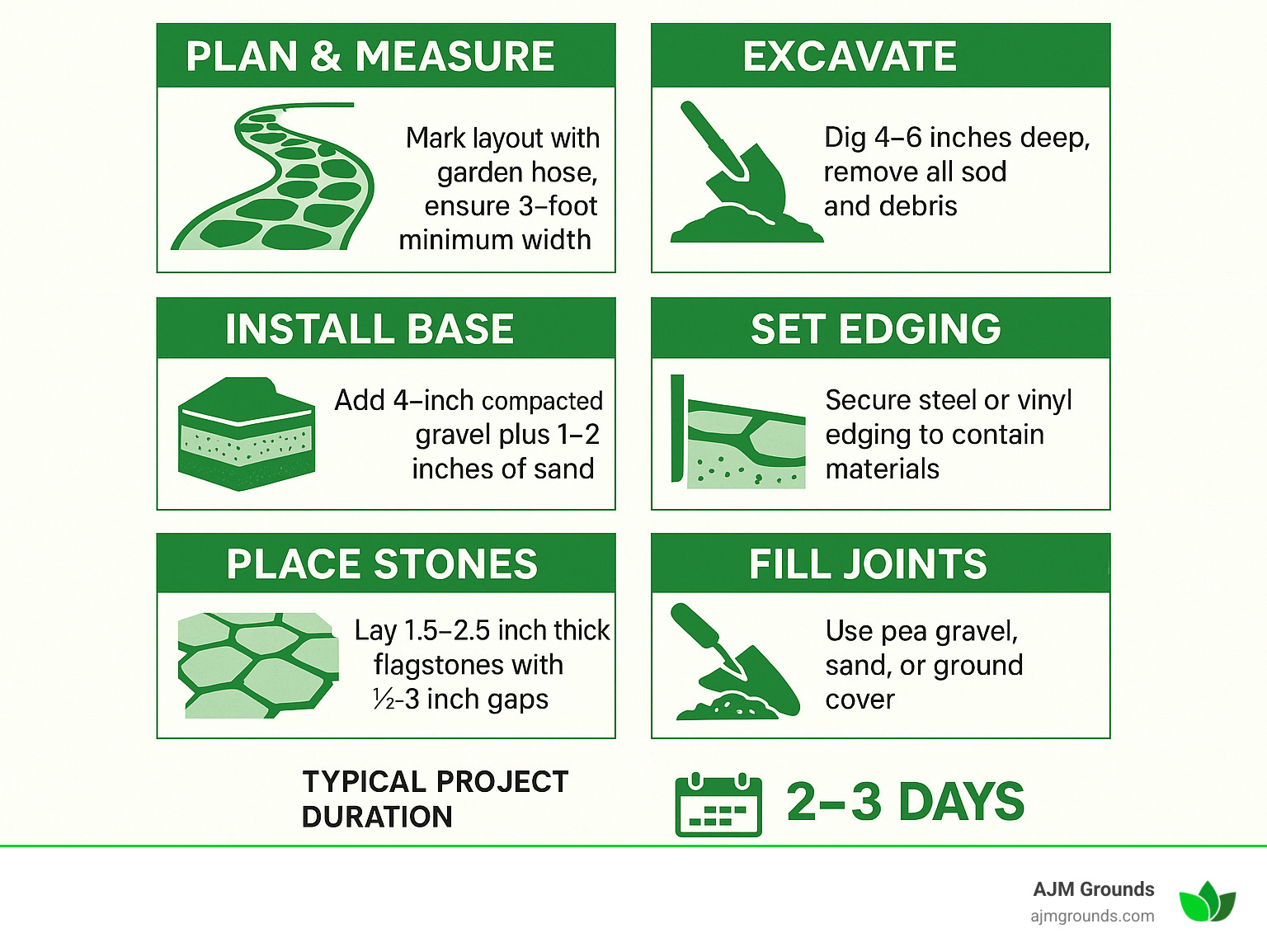
Laying a flagstone path creates one of the most striking and functional improvements you can make to your outdoor space. Here’s the essential process for building a durable flagstone walkway:
Key Steps for Laying a Flagstone Path:
1. Plan & measure – Mark layout with garden hose, ensure 3-foot minimum width
2. Excavate – Dig 4-6 inches deep, removing all sod and debris
3. Install base – Add 4-inch compacted gravel layer plus 1-2 inches of sand
4. Set edging – Secure steel or vinyl edging to contain materials
5. Place stones – Lay 1.5-2.5 inch thick flagstones with ½-3 inch gaps
6. Fill joints – Use pea gravel, sand, or ground cover between stones
A well-built flagstone path offers superior traction even when wet and can last decades with minimal maintenance. Professional installation typically costs $15-$45 per square foot based on internet data, while DIY materials range from $8-$18 per square foot.
Natural stone adds permanent value to your property while creating an inviting entrance that complements any landscape style. Unlike concrete or asphalt, flagstone weathers beautifully and can be easily repaired if individual stones shift over time.
The secret to success? Proper base preparation and choosing stones at least 1.5 inches thick to prevent cracking under foot traffic.
I’m John Caplis, owner of AJM Grounds LLC, and I’ve helped dozens of Woburn homeowners create stunning outdoor spaces through expert hardscaping projects. My team specializes in laying a flagstone path installations that combine durability with natural beauty, ensuring every walkway improves both function and curb appeal.
Laying a Flagstone Path: Tools, Materials & Planning
Getting ready for laying a flagstone path feels a bit like preparing for a cooking project – having the right ingredients and tools makes all the difference between success and frustration. After years of helping homeowners in Woburn and surrounding areas create beautiful walkways, I’ve learned that the planning phase is where most projects succeed or fail.
Let’s start with the foundation of any great flagstone path: choosing stones that are 1.5 to 2.5 inches thick. I can’t stress this enough – thinner stones might save you money upfront, but they’ll crack under foot traffic faster than you can say “warranty void.” Think of it as buying good shoes; you want something that’ll last.
Your gravel base acts like the foundation of a house. We typically use 4 inches of compacted crushed stone, topped with 1-2 inches of coarse sand for the bedding layer. Landscape fabric goes down first to keep weeds from pushing through your beautiful work, and steel edging holds everything in place like the frame around a picture.
Don’t forget your safety gear – work gloves and safety glasses aren’t optional when you’re moving heavy stones and swinging tools. Your rubber mallet becomes your best friend during installation (never use a regular hammer – you’ll chip the stone), while a hand tamper or plate compactor ensures your base stays solid for years to come.
Here’s a planning trick I share with all my clients: use your garden hose to lay out the path before you dig a single shovelful. Walk it, adjust it, live with it for a few days. This simple step prevents the “why didn’t I make it curve there?” regrets later.
Stride spacing matters more than most people realize. We measure based on the shortest regular user of the path – usually around 24 inches between stone centers. Path width should be at least 3 feet for comfortable walking, though 4-5 feet works better if you want people to stroll side by side.
Before you break ground, make that utility check call to 811. It’s free, it’s required, and it prevents the kind of expensive surprises that turn a weekend project into a major headache.
More info about Laying a Stone Path
Choosing Stone for Laying a Flagstone Path
Walking through a stone yard for the first time can feel overwhelming – so many colors, textures, and types to choose from. Each stone has its own personality and practical strengths.
Sandstone brings warmth to any landscape with its rich reds, browns, and golden tones. It’s relatively soft, which makes it forgiving to work with when you need to trim pieces to fit.
Bluestone is my go-to recommendation for New England weather. This tough stone laughs at our freeze-thaw cycles and offers excellent grip even when wet. The blue-gray to buff colors work beautifully with most home styles.
Slate splits naturally into flat, uniform pieces that create clean, formal lines. It comes in sophisticated grays, greens, and purples that photograph beautifully. Just be aware that wet slate can be slippery.
Quartzite is the overachiever of the flagstone world – incredibly durable and available in stunning colors. Yes, it costs more, but if you want a “set it and forget it” installation, quartzite delivers.
Limestone offers those soft, neutral tones that seem to work with everything. It’s easy to cut and shape, making it friendly for DIY projects.
I always tell clients to visit their local quarry if possible. Photos never capture the true character of stone – the subtle color variations, the texture, the way light plays across the surface.
Your color palette should complement your home’s exterior and existing landscape. Warm earth tones create an inviting, casual feel, while cooler grays and blues lean more formal and contemporary.
Measuring & Mapping the Walkway
This is where your flagstone path transforms from a daydream into a real plan. Good measuring and mapping prevent those “oops” moments that can derail a project.
Start with that garden hose layout I mentioned earlier. Drag it around, try different curves, experiment with width changes. Once you’re happy with the flow, grab some spray paint and mark those edges permanently.
Now comes the precision work. Stakes and string help you maintain consistent width and establish your path boundaries. Check your measurements frequently – paths have a sneaky way of gradually widening or narrowing as you work.
Here’s something many DIYers miss: every walkway needs a slight slope of about ¼ inch per foot to shed water properly. Standing water leads to ice in winter and can undermine your carefully constructed base.
Gait-based spacing sounds fancy, but it’s simple common sense. If you’re installing stepping stones rather than a continuous path, measure the natural stride of whoever will use the path most. The average adult stride runs 24-30 inches, but I always recommend spacing based on the shortest regular user.
Ground Preparation & Edging Essentials
Here’s the truth about laying a flagstone path – the foundation determines everything. I’ve seen beautiful stone selections ruined by poor base preparation, and I’ve watched simple paths built on solid foundations outlast expensive installations with shortcuts.
The foundation is more important than the stone itself. That might sound surprising, but after years of repairs and rebuilds, I can tell you that proper ground prep separates paths that last decades from those needing fixes within a few seasons.
Starting with a Clean Slate
Remove all sod, roots, and organic material to a depth of 4-6 inches below your desired finished grade. This step tempts many DIYers to cut corners, but organic matter is your enemy here. As roots and grass decompose underground, they create voids that cause stones to settle unevenly.
I use a sharp spade to cut clean edges and remove sod in manageable sections. It’s physical work, but doing it right the first time saves you from digging up settled stones later.
Building Your Foundation Layers
Install landscape fabric over the excavated area, overlapping seams by 4-5 inches. This prevents weeds from growing up through joints while still allowing water to drain properly.
Next comes your 4-inch layer of compacted gravel or crushed stone. I prefer crusher run (also called 21-A) because it compacts to a firm, stable surface that won’t shift under foot traffic. Spread this material in 2-inch lifts, compacting each layer thoroughly before adding the next.
Here’s where many projects go wrong – inadequate compaction. A hand tamper works for small paths, but larger projects need a plate compactor. The rental cost pays for itself in long-term stability.
The Critical Sand Layer
Top your gravel base with 1-2 inches of coarse sand. This creates a level surface for setting stones and allows for minor adjustments during installation. The key word here is coarse – fine sand washes away during heavy rains, leaving your stones wobbling on uneven gravel.
I always specify coarse mason’s sand or concrete sand. It costs a bit more than fine sand, but it stays put through New England’s challenging weather cycles.
| Base Type | Pros | Cons | Best Use |
|---|---|---|---|
| Gravel + Sand | Excellent drainage, stable, adjustable | More expensive, requires compaction equipment | High-traffic areas, freeze-thaw climates |
| Sand Only | Lower cost, easier installation | Less stable, stones may shift over time | Light-traffic garden paths |
| Decomposed Granite | Compacts well, natural appearance | Limited availability, may require periodic renewal | Dry climates, informal paths |
Edging That Actually Works
Steel edging resists sun damage and breakage far better than plastic alternatives. I install edging along both sides of the path, securing with spikes every 8 feet. The edging should sit flush with your desired finished grade – not sticking up where people can trip over it.
Pro tip from years of installations: Use a 2×4 spacer board to maintain consistent width during edging installation. This simple jig prevents the gradual widening that somehow occurs during construction.
Drainage Details That Matter
Create a slight crown (higher center) in your base materials to encourage water runoff. This prevents pooling and reduces freeze-thaw damage that’s inevitable in our Massachusetts climate. Even a ¼ inch per foot slope makes a significant difference in how well your path handles winter weather.
The investment in proper ground preparation might seem excessive when you’re eager to start placing stones, but it’s the difference between a path that improves your property value and one that becomes an ongoing maintenance headache.
More info about Dry Laid Flagstone Walkway
Step-by-Step Stone Setting & Joint Finishing
Now comes the fun part – laying a flagstone path by placing your carefully selected stones into their permanent home. Think of this phase like working on the world’s most rewarding jigsaw puzzle, where every piece contributes to creating something beautiful and functional for your family.
Start with the dry-fitting process before committing any stones to the sand bed. We always arrange stones on nearby grass or the driveway first, which helps you spot the best combinations and plan where you might need to make cuts.
Begin placing stones with your largest, most attractive pieces at prominent spots like your front entrance or where the path meets your patio. These anchor stones set the tone for the entire walkway. Work systematically from one end rather than jumping around randomly.
Maintain consistent gap widths between stones, typically ranging from ½ to 3 inches depending on your design goals. Wider gaps work beautifully for ground cover plantings that soften the path’s appearance, while narrower gaps suit gravel or sand filling for a more formal look.
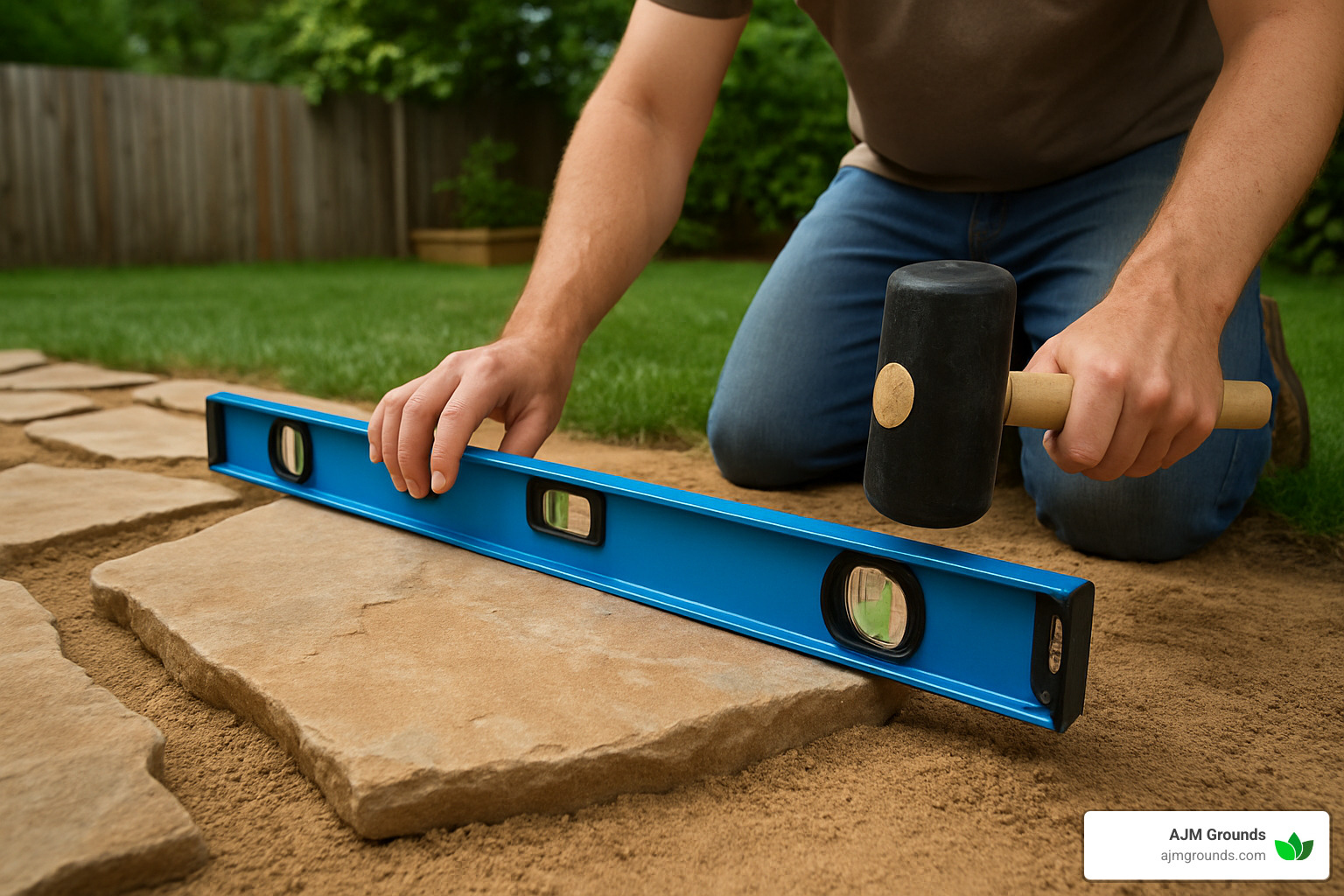
When setting each stone, place it gently onto the sand bed and tap into position with your rubber mallet. Never use a regular hammer or steel mallet on natural stone – we’ve seen too many beautiful flagstones crack from this common mistake.
Check level frequently using your 4-foot level, both along the path length and across the width. Small height differences create trip hazards and immediately signal amateur installation. Adjust elevation by adding or removing sand beneath individual stones until everything aligns properly.
Sometimes stones need minor shaping to fit perfectly. Use a stone chisel with safety glasses to remove small protrusions or create better fits. Work on a stable surface and let tools cool between cuts to prevent blade damage from overheating.
Joint filling transforms your stone collection into a cohesive walkway. Pea gravel remains our most popular choice because it provides excellent drainage, stays reasonably well in place, and offers attractive texture contrast against most stone types.
Polymeric sand works exceptionally well for formal installations where you want stable, weed-resistant joints. This material hardens when wetted, creating firm connections between stones. It costs more than regular sand but requires significantly less maintenance over the years.
Ground cover plants create living joints that many homeowners love for their natural appearance. Creeping thyme releases wonderful fragrance when stepped on, while Irish moss stays green throughout our New England winters. Mazus reptans produces charming purple flowers each spring and tolerates foot traffic well.
Limestone chips match beautifully with most stone colors and provide firm, stable footing. We often apply clear mulch glue to lock chips in place for up to one year, reducing maintenance needs significantly.
After filling joints with your chosen material, lightly mist the entire path with water from your garden hose. This settles loose materials into their final positions and reveals how your finished walkway will look.
For wheelchair or walker accessibility, choose smoother stone surfaces and maintain tighter joints throughout your path. Consider using cut flagstone rather than irregular fieldstone pieces to create more uniform, navigable surfaces.
Maintenance, Cost & Climate Tips
Taking care of your flagstone walkway doesn’t require a green thumb or special skills – just a little regular attention. After installing dozens of paths throughout Woburn and surrounding communities, I’ve learned that the homeowners who follow simple maintenance routines enjoy beautiful walkways for decades.
Regular upkeep is surprisingly straightforward. A quick weekly sweep removes leaves and debris that can stain stone surfaces. Monthly weed-pulling prevents plants from establishing deep root systems in joints. When you notice joint materials settling or washing away, simply add fresh pea gravel or sand.
The biggest maintenance mistake we see? Using rock salt or harsh chemical deicers during winter. These products can damage natural stone surfaces and accelerate weathering. Instead, use sand for traction or choose deicers specifically labeled as safe for natural stone.
Seasonal pressure washing brings out the natural colors in your stones and removes built-up grime. Most homeowners find this oddly satisfying – there’s something rewarding about seeing those rich stone colors emerge from under a year’s worth of dirt.
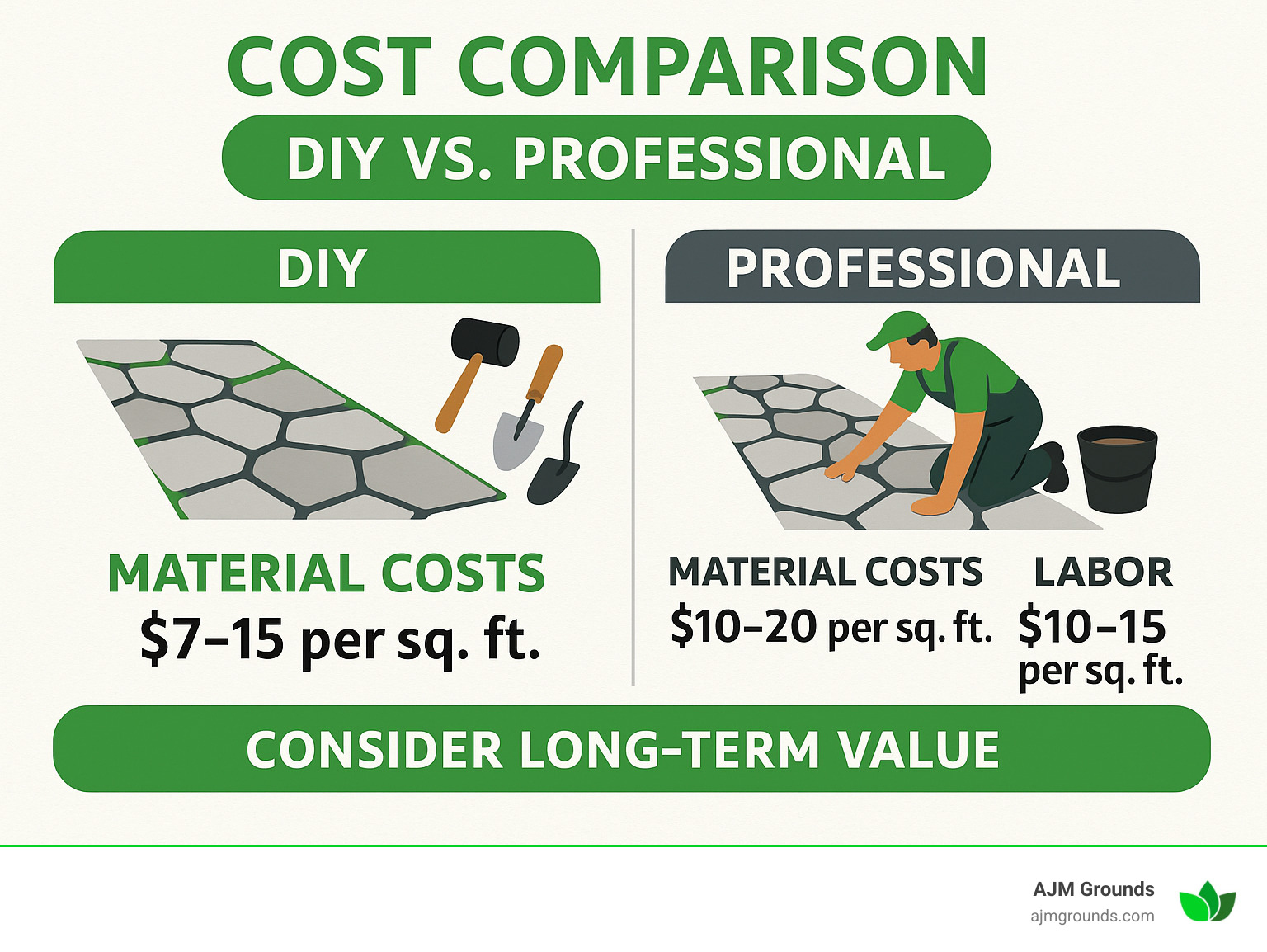
Understanding project costs helps you make informed decisions about laying a flagstone path. Based on internet research, DIY material costs typically range from $8-18 per square foot, while professional installation averages $15-45 per square foot. These are average costs based on internet data and not actual costs for AJM Grounds.
Material expenses break down into several categories. Flagstone itself runs $3-8 per square foot depending on type and thickness. Base materials like gravel and sand add another $1-2 per square foot. Edging, spikes, and joint materials contribute another $1-2 per square foot.
Professional installation costs vary significantly based on complexity and material choices. Basic installations typically cost $15-27 per square foot, while premium materials or complex designs can reach $25-45 per square foot. These are average costs based on internet data and not actual costs for AJM Grounds.
A typical flagstone pallet covers 70-110 square feet depending on stone thickness and type. We always recommend ordering 10-15% extra material to account for cuts, breakage, and the inevitable “perfect stone” that cracks just as you’re setting it in place.
New England’s climate presents unique challenges that affect both installation and long-term performance. Our significant freeze-thaw cycles can shift stones over time, making proper base preparation absolutely critical.
Clay soils require deeper excavation and more aggressive drainage measures to prevent frost heave. Sandy soils drain well naturally but may need geotextile fabric to prevent base materials from migrating. Rocky soils often require mechanical excavation but provide excellent natural drainage once you get through them.
Regional delivery fees can add $100-300 to material costs, especially if you’re located outside the main service areas of stone suppliers. Factor this into your budget early – it’s one of those “hidden” costs that can surprise first-time builders.
How Much Do Flagstone Patios Cost?
Budgeting Before Laying a Flagstone Path
Smart budgeting prevents those awkward moments when you’re halfway through a project and realize you’ve underestimated costs. I’ve helped enough homeowners through this process to know where budget surprises typically lurk.
Start with accurate measurements. Calculate your path length times width for total square footage, then add 10-15% for waste and cuts. Stone quantity planning involves dividing your total square feet by pallet coverage, which typically ranges from 70-110 square feet per pallet.
Base materials require cubic yard calculations rather than square footage. Multiply your path’s square footage by the depth in feet (typically 0.4-0.5 feet for a 5-6 inch base), then divide by 27 to get cubic yards needed.
Tool rental versus purchase decisions depend on your future plans. For one-time projects, renting expensive items makes financial sense. Plate compactors rent for $40-60 per day versus $300-500 to purchase. Stone saws cost $50-80 daily to rent versus $200-400 to buy.
Hidden costs catch many DIYers off-guard. Delivery fees vary widely based on distance and material quantity. Disposal fees for excavated soil can add $100-200 to your project if you can’t use it elsewhere on your property.
Improvements, Common Errors & FAQs
Once your flagstone walkway is complete, you might find yourself admiring it from your kitchen window every morning. That’s exactly what happened to one of our clients in Woburn – and then she started thinking about ways to make it even better.
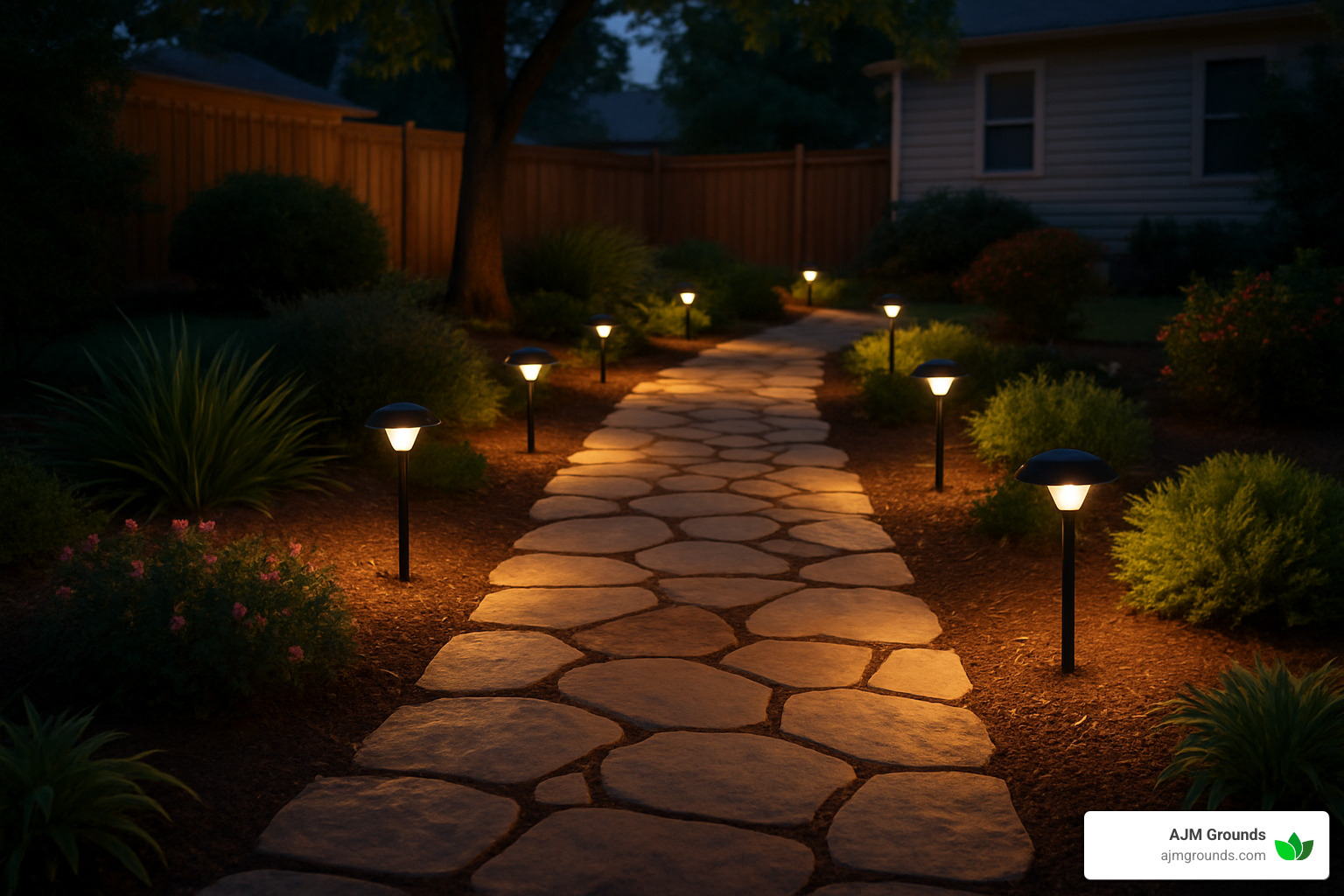
Lighting transforms everything. Solar LED path lights are the easiest upgrade you can make. They charge during the day and automatically illuminate your walkway at dusk, creating that magical evening ambiance that makes neighbors stop and ask questions. The best part? No wiring required, and they’ll run for years without maintenance.
Border plantings turn a simple walkway into a garden feature. Low-growing perennials like hostas, coral bells, or ornamental grasses soften the stone edges and help your path blend naturally into the landscape.
If you have the space, widening certain sections creates natural gathering spots. We often design small seating areas where the path curves or meets other landscape features.
Stepping stone art adds personality to longer paths. Some homeowners incorporate decorative stones with fossils, interesting colors, or unique textures as focal points.
Now, let’s talk about the mistakes that keep us busy with repair calls. Using thin stones is the biggest culprit – we’ve replaced countless paths where homeowners chose stones under 1.5 inches thick to save money. These crack under normal foot traffic faster than you’d believe.
Inadequate base compaction is another expensive mistake. We’ve seen gorgeous stone work fail within a year because the installer didn’t properly compact each layer of base material. When stones start shifting and settling unevenly, the only real fix is starting over.
Ignoring drainage might not seem important during installation, but our freeze-thaw cycles here in Massachusetts are brutal. Poor drainage causes frost heave that can turn a smooth path into a roller coaster.
Inconsistent gap sizes immediately mark a path as amateur work. Random spacing not only looks unprofessional but creates maintenance headaches when some joints hold their filler while others wash out constantly.
The mistake we see most often? Skipping the edging entirely. Without proper edging, your carefully prepared base materials slowly migrate into the surrounding soil, undermining everything above.
More info about Installing a Garden Path
Frequently Asked Questions about Flagstone Walkways
How thick should my stones be?
For laying a flagstone path that will last, choose stones at least 1.5 inches thick, with 2-2.5 inches being even better for areas with heavy foot traffic. We’ve learned this lesson the hard way – thinner stones might save money upfront, but they’ll crack under normal use and cost much more to replace later.
What’s the best joint filler?
Pea gravel wins for most situations. It drains well, stays put reasonably well, and looks great with almost any stone color. Polymeric sand works beautifully for formal installations with narrow joints – it hardens when wet and really locks everything in place. For something special, consider ground cover plants like creeping thyme or Irish moss.
Can I build on a slope?
Absolutely, but slopes over 10% usually need steps or terracing to be safe and functional. We often create shallow stone steps within sloped paths – basically level sections connected by single-step risers.
Conclusion
Building a beautiful flagstone walkway is one of those projects that seems intimidating at first but becomes incredibly rewarding once you see the finished result. Laying a flagstone path transforms not just your landscape, but how you and your guests experience your outdoor space.
The secret to success really comes down to patience and preparation. We’ve seen countless DIY projects over the years, and the ones that still look amazing decades later all share the same characteristics: thorough base preparation with proper drainage, stones that are at least 1.5 inches thick, and consistent attention to detail during installation.
Your flagstone path will actually get more beautiful with time. Unlike concrete that cracks and stains, or asphalt that deteriorates, natural stone develops character and patina that improves your landscape’s appeal year after year.
Here in Massachusetts, we deal with some pretty harsh conditions – from bitter winters with freeze-thaw cycles to humid summers that encourage weed growth. That’s why proper base construction and drainage become even more critical for our climate.
While laying a flagstone path is absolutely doable as a weekend project, it’s also physically demanding work that requires some specialized knowledge about drainage and base preparation. The difference between a path that looks great for a few years versus one that remains beautiful for decades often comes down to those technical details that aren’t immediately obvious.
At AJM Grounds, we bring years of hardscaping experience to every project. We understand exactly how our local soils behave, which materials work best in our climate, and how to create installations that actually improve with age. Our attention to detail means your walkway will improve your property value while providing safe, beautiful access for years to come.
Whether you decide to tackle this project yourself or work with professionals, a well-planned flagstone path will become one of your favorite landscape features. There’s something special about walking on natural stone that connects you to your outdoor space in a way that manufactured materials simply can’t match.
More info about Flagstone Walkway Installation
