

Lay patio on soil can transform your backyard into a stunning space without the hassle of complex construction. For homeowners eager to start a DIY project, laying stones directly on soil offers a simple but impactful backyard renovation. Here’s how to do it right:
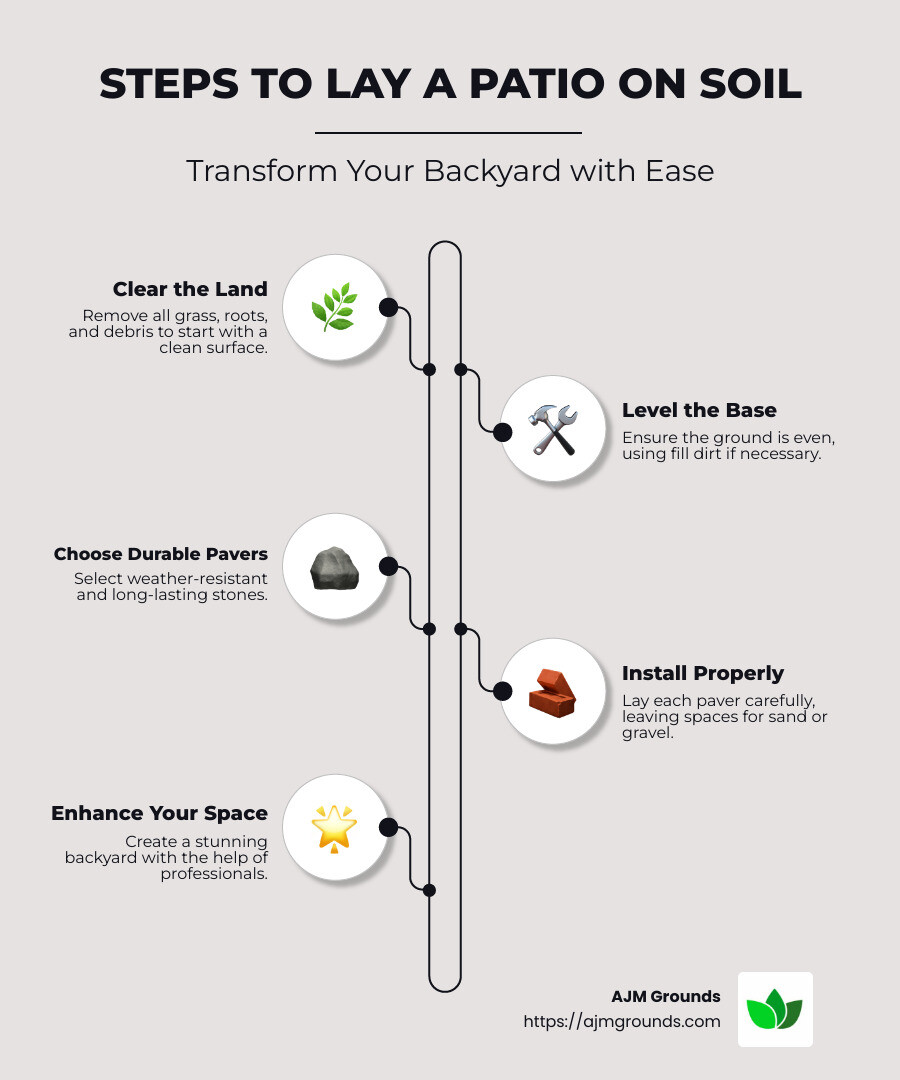
- Clear the Land: Remove grass and roots completely to prevent unwanted regrowth between pavers.
- Level The Base: Ensure your ground is even. This often involves using fill dirt for the best results.
- Choose the Right Pavers: Select durable and weather-resistant stones for longevity.
- Install Properly: Carefully lay each paver, leaving enough space for sand or gravel in between.
Revamping your outdoor area doesn’t have to be daunting. With the right preparation and materials, a personalized service like AJM Grounds can guide you in creating a patio that truly improves your home’s charm.
As John Caplis, owner of AJM Grounds in Massachusetts, I’ve been changing outdoor spaces with expertise in hardscaping and landscaping. From laying patio on soil to complete outdoor makeovers, my team and I pride ourselves on delivering sustainable and visually appealing results.
Preparing the Ground for Patio Installation
Before you start to lay patio on soil, it’s crucial to prepare the ground properly. This ensures your patio will be stable and last for years. Here’s a simple guide to get you started:
Remove Grass
First, clear the area where you plan to install your patio. Use a spade to dig deep enough to remove not just the grass, but also its root system. This prevents regrowth that can disrupt your pavers. You can transplant this grass to other areas of your yard that might need it.
Level the Ground
For a smooth and level patio, the ground must be even. Uneven ground can lead to unstable pavers that shift over time.
- Use Fill Dirt: Opt for clean fill dirt, like the Virginia fill dirt mentioned in our research, to level the ground. This type of dirt is free from toxins and organic matter, ensuring a stable base.
- Avoid Topsoil: Topsoil contains organic matter that decomposes over time, which can cause your patio to become uneven.
Compact the Soil
Once the ground is level, it’s time to compact the soil. Compacting the soil ensures a firm foundation for your pavers, reducing the risk of shifting.
- Use a Compactor: A hand tamper or mechanical compactor can be used to press the fill dirt firmly into place.
- Check for Stability: Walk over the area to ensure it’s solid and doesn’t give underfoot.
Preparing your ground correctly is essential for a successful patio installation. It sets the stage for a durable and visually appealing outdoor space. With these steps, you’re well on your way to changing your backyard into a beautiful retreat.
Steps to Lay Patio on Soil
Once your ground is prepared, it’s time to move on to the next steps in creating a beautiful patio. Laying a patio on soil requires careful planning and execution to ensure stability and longevity. Here’s how to do it:
Remove Obstructions
Before starting, clear the area of any obstacles like rocks, roots, or debris. These can interfere with the lay patio on soil process. Use a shovel or rake to ensure the area is smooth and free from anything that might cause unevenness.
Mark the Area
Outline the perimeter of your patio with stakes and string. This helps you visualize the space and ensures your measurements are accurate. Clearly marked boundaries will guide you in laying the patio evenly.
Compact Fill Dirt
After marking, it’s time to compact the fill dirt. This step is crucial for a stable base:
- Add Extra Fill Dirt: Place additional fill dirt slightly higher than your desired level, as it will settle when compacted.
- Compact Thoroughly: Use a hand tamper or mechanical compactor to press the dirt down. This prevents future shifting and maintains the patio’s integrity.
Geotextile Fabric
Lay down geotextile fabric over the compacted fill dirt. This material improves stability and improves drainage, reducing the risk of weeds growing through your patio.
- Secure the Edges: Use spikes to keep the fabric in place. This prevents it from moving when you lay the pavers.
Edge Restraints
Use wood or metal edge restraints to keep the patio pavers in place. These restraints help maintain the shape and structure of your patio.
- Fasten Securely: Use long nail spikes to anchor the restraints through pre-drilled holes. This ensures they remain firm over time.
By following these steps, you’re setting up a strong foundation for your patio. Each step is designed to improve the durability and appearance of your outdoor space, ensuring your patio remains a beautiful feature of your home.
Why Not to Lay Pavers Directly on Dirt
While it might seem tempting to lay patio on soil directly, especially if you’re in a hurry, this shortcut can lead to a host of problems down the road. Let’s explore why skipping the proper base preparation isn’t the best idea.
Moisture Issues
Dirt tends to hold moisture, and when pavers are laid directly on it, this can lead to unsightly discolorations. Over time, moisture can wick up through the pavers, leading to stains and even moss or mold growth in very wet climates. Keeping your patio dry is crucial for maintaining its look and structural integrity.
Freeze-Thaw Cycles
If you live in a region with cold winters, the freeze-thaw cycle can wreak havoc on pavers laid directly on dirt. As the ground freezes, it expands, causing the pavers to heave. When it thaws, the ground contracts, leading to an uneven surface. This not only looks bad but can also create tripping hazards.
Weed Growth
One of the most common complaints from those who lay pavers on dirt is the rapid growth of weeds. Without a proper base, dirt allows weeds to easily sprout through the gaps between pavers. This not only affects the aesthetic appeal of your patio but also requires constant maintenance to keep it looking neat.
Uneven Surface
Dirt is not a stable base. Over time, it can shift due to natural settling or weather conditions, causing the pavers to become uneven. This instability can lead to cracks and a bumpy surface, detracting from the beauty and functionality of your patio.
To avoid these issues, invest in a proper base for your patio. This includes using compacted gravel and a sand layer to ensure stability and drainage. By taking the time to prepare the ground correctly, you’ll enjoy a patio that not only looks great but stands the test of time.
Best Practices for Laying Patio on Soil
When you’re ready to lay patio on soil, following best practices is crucial to ensure a beautiful and long-lasting outdoor space. The key to success lies in preparing a solid base, which includes using the right materials and techniques.
Proper Base Material
Start with a strong foundation by using MOT Type 1 as your sub-base. This material is a blend of crushed stone and gravel that compacts well, providing a stable layer for your patio. Aim for a depth of about 100mm to 150mm, depending on the intended use of your patio. For areas with heavier loads, like driveways, a thicker sub-base is necessary.
Drainage
Proper drainage is vital. Without it, water can pool under your patio, leading to a host of problems like erosion and instability. To ensure effective drainage, slightly slope the patio away from your home. This way, water will naturally flow away, preventing potential damage.
Compacted Gravel
After laying the MOT Type 1 sub-base, compact it thoroughly using a compactor plate or roller. Compacting the gravel helps to eliminate air gaps, making the base more solid and less likely to shift over time. This step is critical for preventing future settling and maintaining a level surface.
Sand Layer
On top of the compacted gravel, spread a layer of sharp sand. This layer acts as a bed for the pavers, allowing for minor adjustments and ensuring a snug fit. Aim for a thickness of about 30mm. Mix the sand with cement in a 1:6 ratio for added stability. Once spread, level the sand using a straight edge and compact it lightly.
By adhering to these best practices, you’ll create a patio that not only looks great but also endures the elements. Proper preparation and material selection are the foundation of a successful patio installation.
Frequently Asked Questions about Laying Patio on Soil
Can you lay a patio on soil?
Yes, you can lay a patio on soil, but it requires careful preparation to ensure long-term stability and durability. Paving slabs should not be placed directly on bare soil without proper groundwork. Start by removing any grass or vegetation and leveling the ground. This step is essential to create a stable base and prevent future shifting or uneven surfaces.
What is the best base for laying a patio?
The best base for laying a patio is a well-prepared sub-base using MOT Type 1 material. This mixture of crushed stone and gravel compacts easily and provides a sturdy foundation for your patio. The quality of the sub-base is crucial—it should be even and well-compacted to support the weight of the paving slabs and any additional loads. A depth of 100mm to 150mm is typically recommended, depending on the patio’s intended use.
Can you build a patio on dirt?
Building a patio directly on dirt is not advisable due to potential issues with compaction and stability. Dirt lacks the structural integrity needed to support paving slabs over time. Without a solid base, the patio may suffer from uneven surfaces and increased weed growth. Proper soil preparation, including compaction and the use of a sub-base, is vital to ensure a stable and long-lasting patio. Compacting the soil helps to remove air pockets and provides a firm foundation for the sub-base materials.
By following these guidelines, you can create a patio that not only improves your outdoor space but also stands the test of time. Proper preparation and material selection are key to a successful installation.
Conclusion
At AJM Grounds, we believe that a well-laid patio can transform your outdoor space into a functional and beautiful area for relaxation and entertainment. Our commitment to attention to detail ensures that every patio project we undertake meets the highest standards of quality and durability.
When it comes to professional landscaping, our team excels in providing personalized service custom to your unique needs. We understand that every property is different, and we work closely with you to bring your vision to life. Whether you’re dreaming of a cozy retreat or an expansive entertainment area, our skilled professionals are here to help you achieve your goals.
We pride ourselves on using only the finest materials and techniques to ensure your patio stands the test of time. From the initial preparation of the soil to the final laying of the pavers, we handle every aspect of the installation process with precision and care. Our expertise in creating stable, durable bases using materials like MOT Type 1 guarantees a patio that will remain beautiful and functional for years to come.
If you’re ready to improve your outdoor living space with a stunning patio, trust AJM Grounds to deliver exceptional results. Our dedication to quality and customer satisfaction makes us the ideal choice for your landscaping needs.
For more information on our services and to get started on your patio project, visit our Patio Installation page. Let’s create a space you’ll love for years to come!
