

Why Fall is Your Lawn’s Best Friend for Recovery and Growth
Lawn care seeding and fertilizing in the fall creates the foundation for a thick, healthy lawn that can withstand Massachusetts winters and emerge vibrant in spring. Fall is the ideal time because it combines warm soil, cool air, and reduced competition from weeds, giving new grass seed the perfect environment to germinate and establish roots before winter.
As research confirms, fall’s cooler temperatures prevent seeds from drying out, while there’s still enough sun and rain for germination without the threat of crabgrass and other weeds that die off this time of year.
Many homeowners struggle with timing these tasks. Spring seeding often fails due to summer heat, and fertilizing at the wrong time can harm new seedlings.
I’m John Caplis, owner of AJM Grounds LLC. I’ve helped countless Woburn homeowners achieve beautiful lawns with proper lawn care seeding and fertilizing techniques. Success in the fall depends on understanding your grass type, soil conditions, and the correct sequence of steps.
Key lawn care seeding and fertilizing vocabulary:
- average cost of lawn fertilization service
- fertilization and pest control
- fertilization and weed care
The “Why” and “When”: Opening up Your Lawn’s Potential
The combination of lawn care seeding and fertilizing is the key to a gorgeous, thick lawn. Let’s explore why these two practices work so well together in Massachusetts.
Benefits of Seeding Your Lawn
Overseeding your lawn improves lawn density by adding fresh grass plants to fill in thin areas. A denser lawn leaves less room for weeds to grow, boosting your lawn’s natural weed resistance and reducing the need for chemical treatments. Introducing new grass varieties through seeding also creates a more diverse ecosystem, which leads to improved disease resistance. If one type of grass is affected by a fungal problem, other varieties can keep your lawn looking great.
Benefits of Fertilizing Your Lawn
Fertilizing provides the essential nutrients your lawn needs to thrive. Nitrogen delivers that gorgeous green color, phosphorus promotes strong root development, and potassium improves overall plant health. Proper nutrition helps grass develop deep, robust root systems that can survive New England’s unpredictable weather, from summer droughts to harsh winters. A well-fed lawn also naturally fights off diseases and recovers quickly from stress.
Understanding Cool-Season vs. Warm-Season Grass
In Massachusetts, we have cool-season grass varieties like Kentucky Bluegrass, Tall Fescue, and Perennial Ryegrass. These grasses thrive in our climate, growing most actively in the spring and fall when temperatures are between 60 and 75 degrees. Unlike warm-season grasses, they can handle our winters, which makes the timing of your lawn care seeding and fertilizing crucial. For detailed guidance, see our guide on the Best Time to Plant a New Lawn.
Optimal Fall Timing: Why Autumn is Prime Time
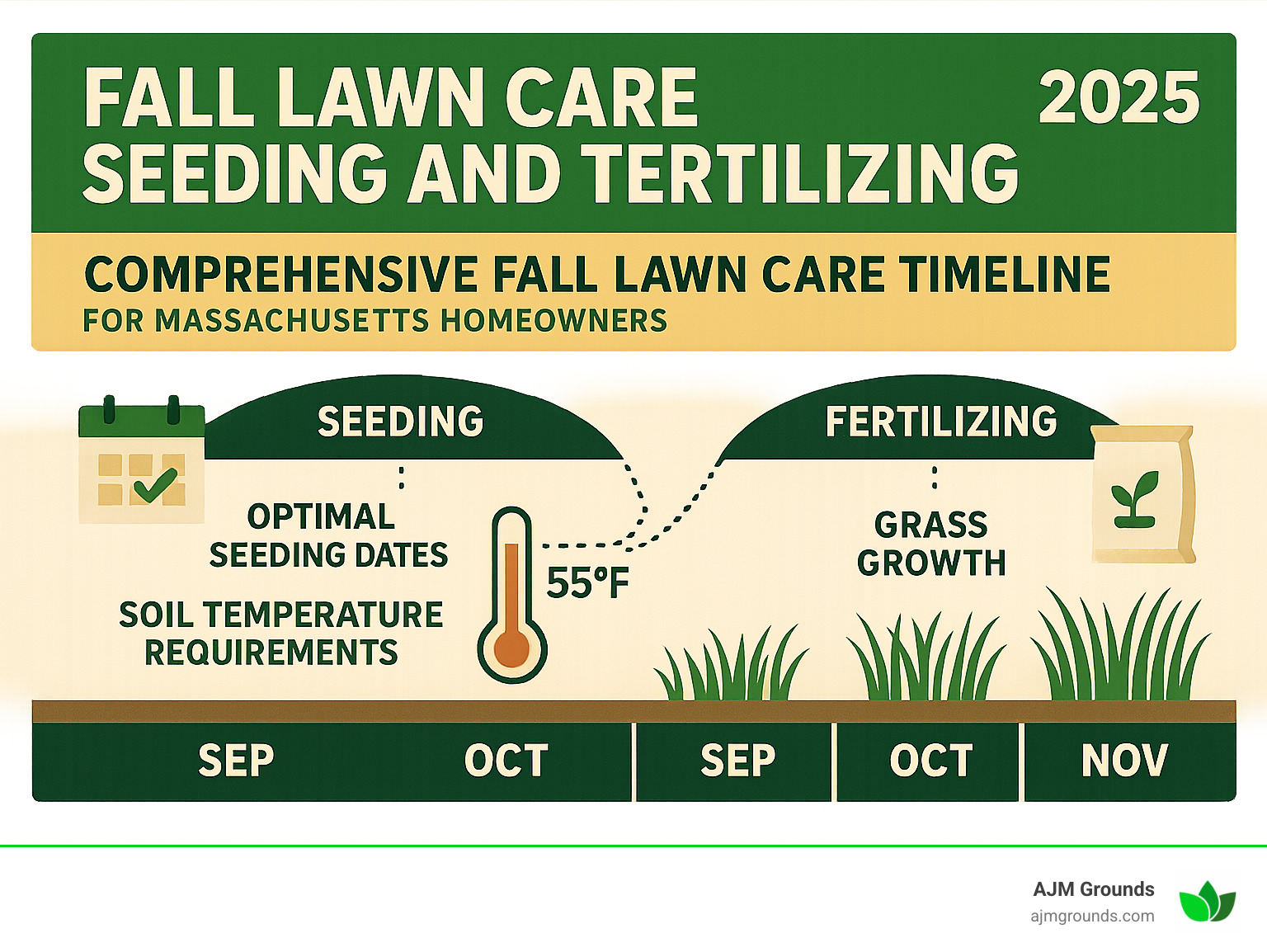
Fall is the magical season for lawn care in the Woburn area. The cooler temperatures of September and October are ideal for new seedlings, while the warm soil left over from summer creates perfect germination conditions. Most importantly, reduced weed competition in late summer gives your new grass a head start. Annual weeds are dying off, leaving the field open for your new grass to establish strong roots before winter.
The best time for seeding in Massachusetts is from late August through early September. This window gives new grass six to eight weeks to develop a solid root system before the first hard frost. Proper timing with fall lawn care seeding and fertilizing sets you up for a lawn that emerges thick and healthy in the spring.
Preparing for Success: Soil, Seed, and Aeration
Proper preparation is the key to success with lawn care seeding and fertilizing. Before you begin, you need to understand your soil and prepare it for new growth.
The Importance of Soil Testing
A soil test reveals your soil’s pH level and nutrient content, which directly impacts seed germination and fertilizer effectiveness. The ideal soil pH for grass is between 6.0 and 7.5. If your soil is too acidic (below 6.0), you can apply lime. If it’s too alkaline (above 7.5), peat moss or sulfur can help. You can use a home test kit or send a sample to a professional lab like the Soil & Plant Testing Lab for comprehensive results.
The Role of Aeration: Giving Your Soil Room to Breathe
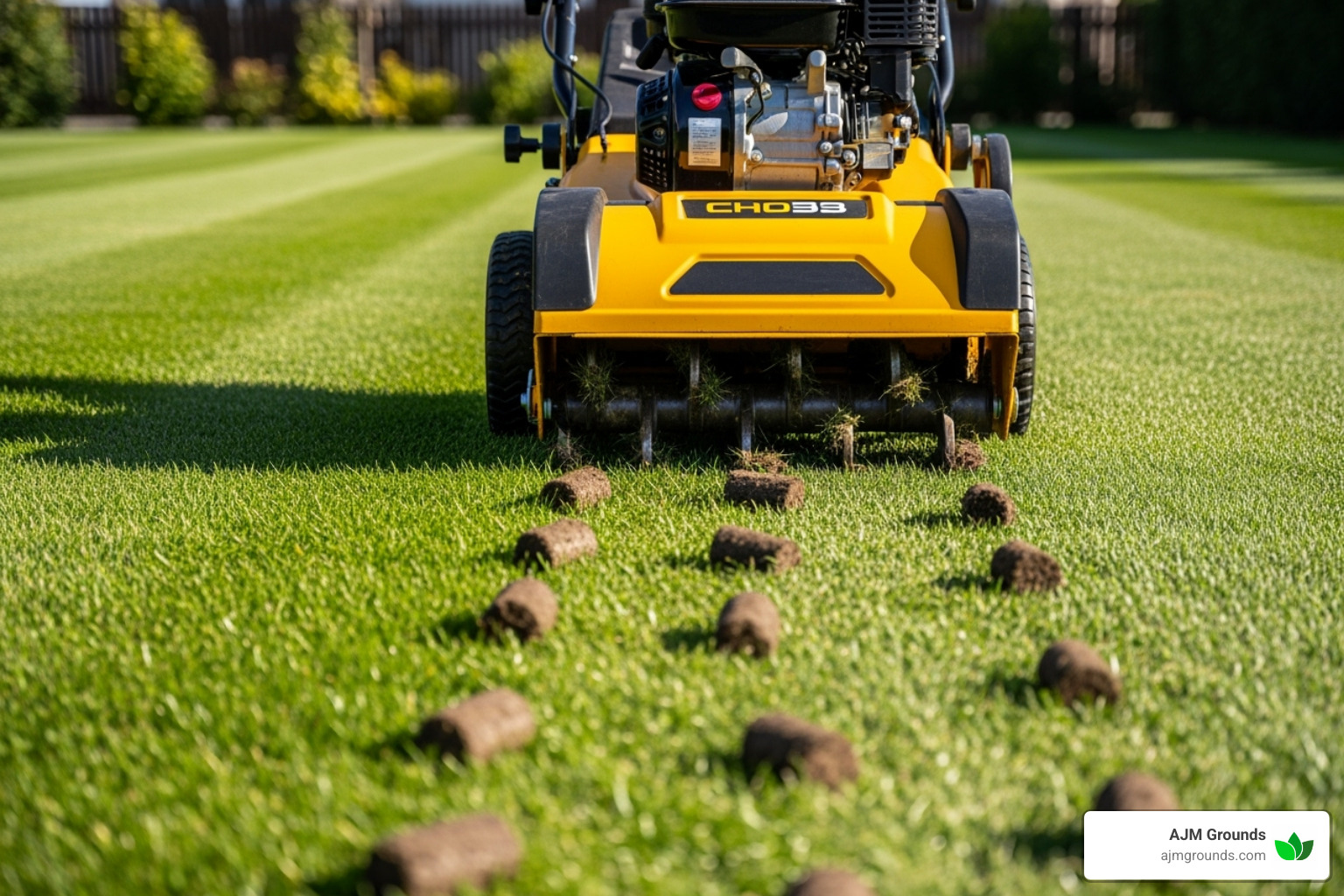
Compacted soil prevents air, water, and nutrients from reaching grass roots. Aeration solves this by creating small holes in the soil. The benefits of aeration include improved root growth, thatch breakdown, and better seed-to-soil contact. Core aeration, which pulls out soil plugs, is far more effective than spike aeration, which can increase compaction. For thick thatch layers (over half an inch), additional thatch removal may be needed before seeding.
Choosing the Right Grass Seed for Your Massachusetts Lawn
For our climate, focus on cool-season grass varieties. The right choice depends on your lawn’s sunlight exposure.
- Sunny Areas (6+ hours of sun): A mix of 80-90% Kentucky Bluegrass and 10-20% Perennial Ryegrass works well.
- Sun and Shade Mixes: For yards with varied light, use a blend of 50-60% Kentucky Bluegrass, 30-40% Fine Fescue, and 10% Perennial Ryegrass.
- Shaded Areas (less than 2 hours of sun): Fine Fescue varieties like Creeping Red, Chewing’s, or Hard Fescue are ideal.
Always check seed labels for high germination rates and avoid products marked “not stated” or “NS.” Quality seed is a worthwhile investment. For more details, see our guide on Tips for Successful Lawn Seeding and Overseeding: Transform Your Yard into a Lush Green Oasis.
The Ultimate Guide to Lawn Care Seeding and Fertilizing Application
Once your soil is prepared, it’s time to apply seed and fertilizer. Proper application technique is what separates a patchy yard from a lush, professional-looking lawn.
How to Properly Apply Grass Seed
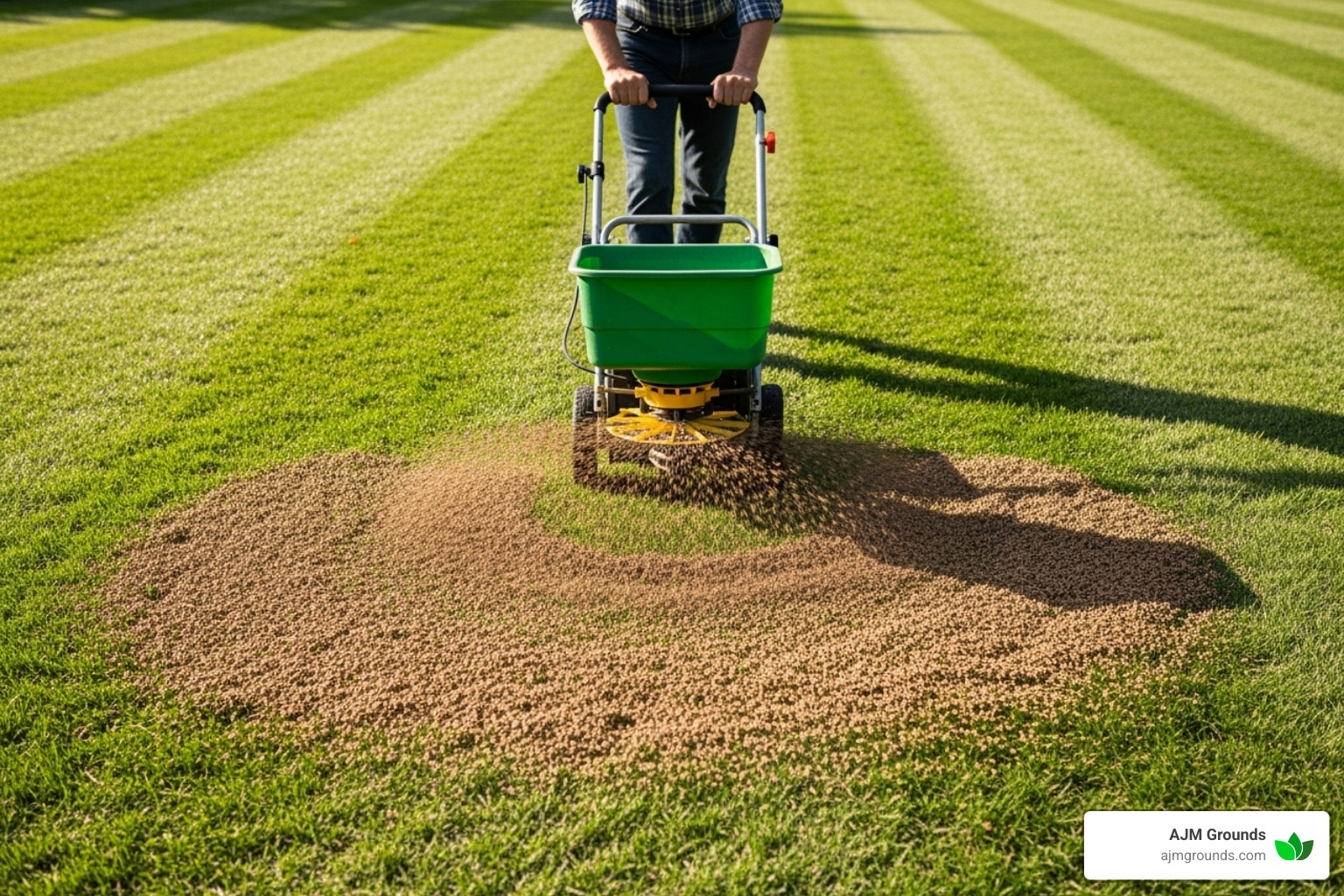
For successful lawn care seeding and fertilizing, the right tools and techniques are essential. Using a broadcast spreader is crucial for uniform coverage. To achieve even seed distribution, apply the seed in a criss-cross pattern. Spread half the seed walking north to south, then spread the other half walking east to west. This method prevents bare patches.
After spreading, ensure good seed-to-soil contact by lightly raking the area. You only need to work the seeds into the top 1/8 to 1/4 inch of soil. When overseeding an existing lawn, mow the grass shorter than usual first, then rake to remove debris. If you’ve aerated, the holes will provide perfect pockets for the new seed. For professional results, consider our New Lawn Installation Near Me services.
Choosing and Applying the Right Fertilizer for New Seed
This is where timing is critical. The biggest mistake in lawn care seeding and fertilizing is doing both at the same time. Fertilizing and seeding simultaneously can harm your new grass. The established grass will absorb the nutrients, leaving the new seedlings to struggle. Applying granular fertilizer can also displace the seeds you just spread.
Instead, wait to fertilize. Use a starter fertilizer with high phosphorus content (look for N-P-K ratios like 10-10-10 or 20-10-10) about six to eight weeks after seeding, or once the new grass has been mowed two or three times. This timing ensures seedlings are strong enough to use the nutrients and helps you avoid fertilizer burn on new seeds. While some say slow-release fertilizers are unlikely harmful if applied at seeding, waiting a few weeks guarantees better results. When you do fertilize, water immediately afterward. For ongoing lawn health, explore our guide on Fertilization and Weed Care.
Aftercare: Ensuring Your New Lawn Thrives
After seeding, proper aftercare is crucial for establishing the thick, healthy turf you envision.

The Art of Watering Your Newly Seeded Lawn
Light and frequent watering is key for the first two weeks. Water two or three times daily for 5-10 minutes to keep the top inch of soil consistently moist without creating puddles. Once sprouts appear, switch to watering once daily for 15 to 30 minutes. This deeper watering encourages roots to grow downward. As the grass reaches an inch tall, transition to a mature lawn schedule of about one inch of water per week.
First Mow Height and Mowing Best Practices
Wait until your new grass is at least 3 inches tall before its first mow. This allows the roots to anchor properly. For the first mow height, set your blades high at 2.5 to 3 inches. Always use a sharp mower blade to ensure a clean cut, which prevents disease. Leave the grass clippings on the lawn to return valuable nutrients to the soil.
Addressing Bare Spots and Controlling Weeds
It’s normal to have a few bare spots. Simply rake the area, add a little seed, and keep it moist. For weeds, be patient. Most pre-emergent weed killers will also stop grass seed from growing, with the exception of products containing Mesotrione. For broadleaf weeds that appear later, wait until the new lawn has been mowed at least three to four times before applying any weed control products.
Signs of a Healthy Lawn and Common Mistakes
After your lawn care seeding and fertilizing efforts, you’ll see a thick, healthy turf with a vibrant green color. It will grow evenly and develop natural weed and disease resistance.
Avoid these common mistakes:
- Fertilizing and seeding at the same time.
- Skipping soil preparation (testing and aeration).
- Improper watering (too much or too little).
- Mowing too soon or too short.
Full establishment takes about 6-8 weeks. For more tips, see our guide on Best Practices for Lawn Care and Maintenance.
Frequently Asked Questions about Seeding and Fertilizing
Here are answers to common questions homeowners have about lawn care seeding and fertilizing.
When can I expect to see new grass growth?
Germination time depends on the grass seed variety:
- Perennial Ryegrass: The fastest, often sprouting in 5 to 7 days.
- Fescues (Tall and Fine): Typically germinate within 7 to 14 days.
- Kentucky Bluegrass: The slowest, taking 14 to 30 days, but produces beautiful, dense turf.
Seeing sprouts is just the beginning. Full establishment, where the grass is strong enough for regular use, takes about 6 to 8 weeks. Patience during this period is essential.
What are the average costs for professional seeding and fertilizing?
Disclaimer: These are national average costs based on industry data and not the actual prices for AJM Grounds services. Costs vary based on lawn size, condition, and seed type.
Nationally, professional seeding can range from $0.09 to $0.27+ per square foot. The price depends on whether it’s a new lawn or overseeding, the quality of the seed, and the amount of site preparation required.
Fertilizing services typically run between $0.02 and $0.21+ per square foot per application. This varies based on the type of fertilizer used. Annual programs often provide the best value. For a personalized quote for your Woburn lawn, please contact us. You can learn more in our guide on the Average Cost of Lawn Fertilization Service.
Are there eco-friendly seeding and fertilizing options?
Yes, sustainable lawn care seeding and fertilizing is an excellent choice. Organic fertilizers from sources like compost or bone meal release nutrients slowly and improve soil health. Choosing low-maintenance grass varieties, such as certain fescues, can reduce the need for water and fertilizer. Smart water conservation techniques, like deep and infrequent watering, also minimize environmental impact. Some homeowners even incorporate low-growing clover into their lawns to create “bee lawns” that support local ecosystems and pollinators. Sustainable practices often lead to healthier, more resilient lawns.
Achieve Your Dream Lawn This Fall
As autumn arrives, you have the knowledge to transform your lawn. Fall lawn care seeding and fertilizing is the best way to create a lawn that will be the envy of your Woburn neighborhood. By taking advantage of cooler temperatures, warm soil, and reduced weed competition, you set your lawn up for success before spring arrives.
The benefits are clear: improved lawn density, natural weed and disease resistance, and a beautiful, thick texture that comes from proper timing and technique.
While DIY lawn care can be rewarding, achieving professional results requires precision and experience. Getting the soil preparation, seed selection, and application timing right can be challenging. Many homeowners become frustrated by patchy results or timing mishaps that a professional could have avoided.
At AJM Grounds, we have perfected our lawn care seeding and fertilizing process for Massachusetts’ unique soil and climate. We create a customized plan based on your lawn’s specific needs, taking the guesswork out of the equation. We handle the technical details so you can simply enjoy a beautiful, healthy lawn.
For a lush, resilient yard without the stress, consider our professional lawn fertilizing services. Let us help you achieve the lawn of your dreams this fall.
