

More Than Just a Wall: The Art of Landscape Change
Landscaping and retaining walls work together to solve critical challenges for Massachusetts homeowners, managing difficult terrain while creating stunning outdoor spaces. Whether dealing with a sloped yard or water runoff, retaining walls offer both function and beauty.
Key Benefits of Landscaping and Retaining Walls:
- Erosion Control: Prevents costly damage from water runoff.
- Usable Space: Transforms slopes into level areas for patios and gardens.
- Increased Property Value: Can boost home value by 5-10%.
- Visual Appeal: Adds depth, texture, and architectural interest.
- Functional Features: Incorporates seating, lighting, and planters.
The success of any retaining wall project lies in understanding that what you can’t see matters most. As one landscape professional noted, “The beauty of a retaining wall is only half the story; its real strength lies in the parts you don’t see.” Poor drainage and an inadequate foundation can turn an attractive wall into a structural liability.
Modern retaining walls can define outdoor rooms, create terraced gardens, provide built-in seating, and even incorporate water features or lighting. The key is choosing the right materials and construction methods for your site and design goals.
I’m John Caplis, owner of AJM Grounds LLC. My team and I specialize in helping Woburn area homeowners transform challenging landscapes with expertly designed landscaping and retaining walls, creating sustainable and functional outdoor spaces.
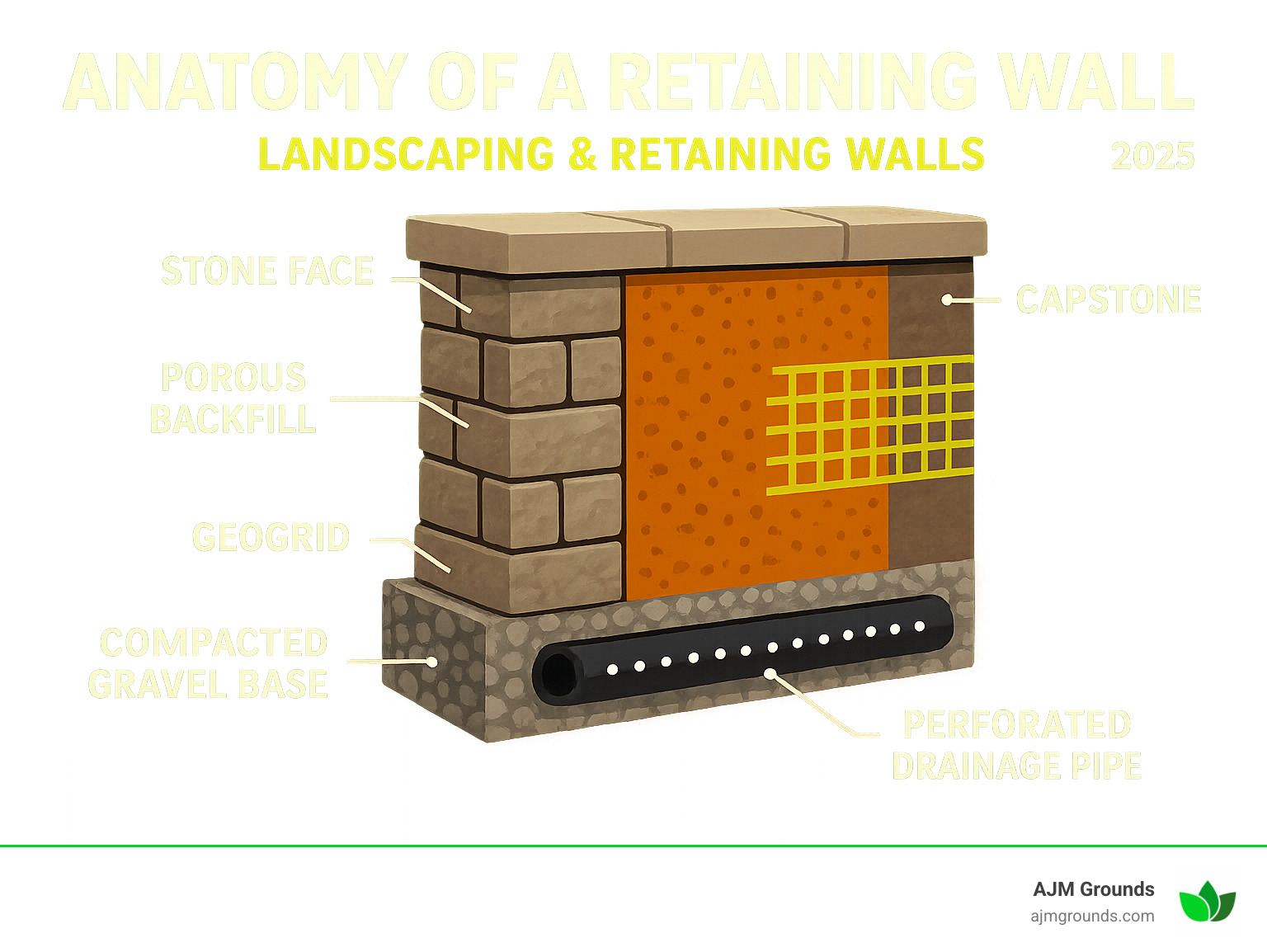
Landscaping and retaining walls terms explained:
The Foundation of Great Landscaping: Understanding Retaining Walls
When you see a beautiful landscaping and retaining walls project, you’re seeing engineering disguised as art. The primary purpose of a retaining wall is to hold back soil, but this simple statement belies the powerful forces at play.
A 4-foot-tall wall can have thousands of pounds of soil pressing against it. The real challenge is managing three forces: soil pressure pushing horizontally, gravity pulling down, and the sneakiest enemy, hydrostatic pressure—the immense force of water building up behind the wall. I’ve seen costly walls destroyed in years because hydrostatic pressure was ignored.
Beyond preventing erosion, retaining walls create usable space from steep slopes, turning them into level areas for patios or gardens. They control water runoff and open up design possibilities that can completely transform how you use your outdoor space.
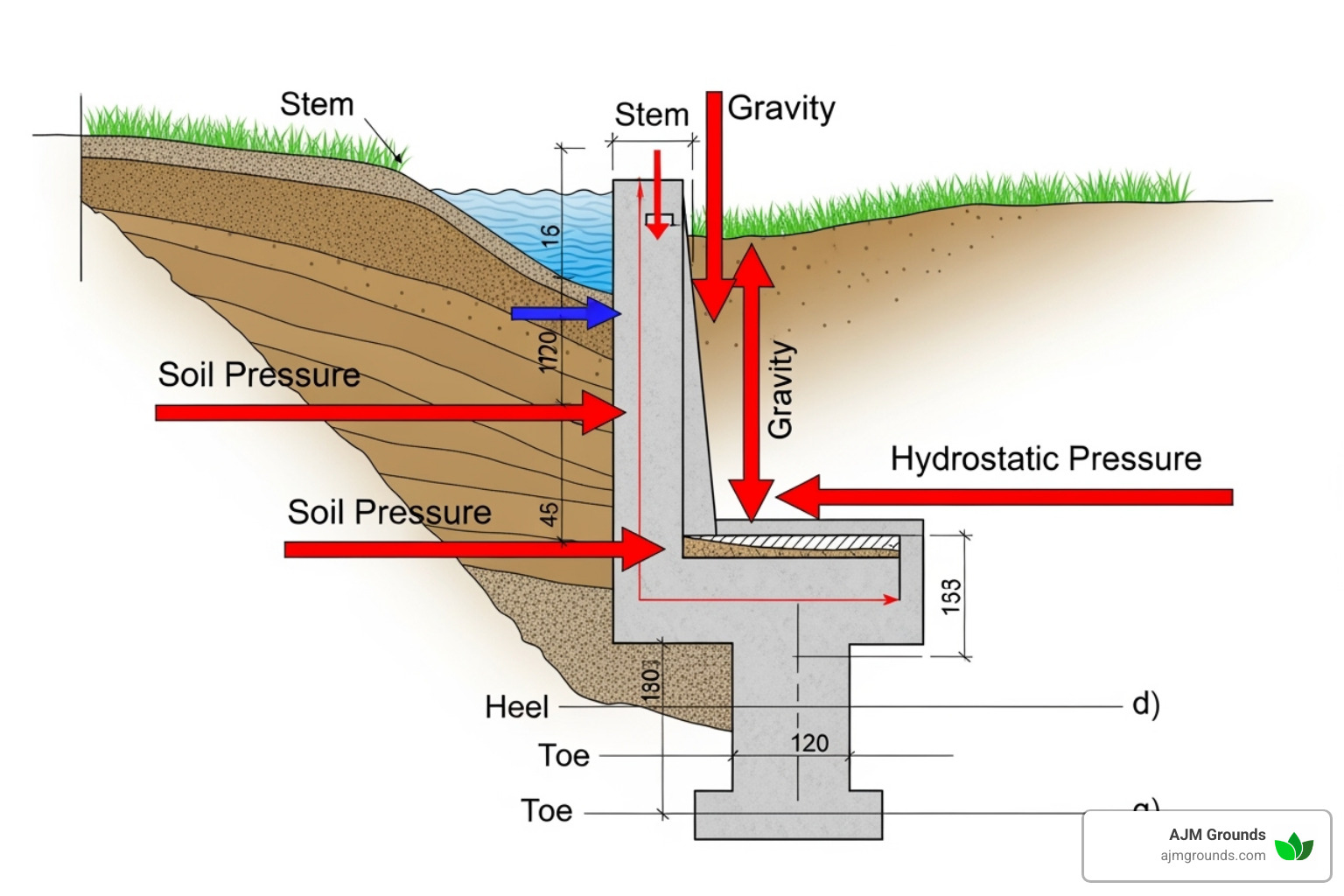
What’s the Difference Between Retaining Walls and Freestanding Walls?
This is an expensive mistake to make. Retaining walls and freestanding walls are built for different jobs. A retaining wall is a structural fortress engineered to resist thousands of pounds of soil pressure, requiring a deep foundation and proper drainage. A freestanding wall is decorative, like a garden border or privacy screen. It isn’t designed to hold back soil. Using a freestanding wall design to retain soil will lead to failure. Learn more in our guide to hardscape construction.
The Unseen Components That Guarantee Longevity
The most important parts of a retaining wall are the ones you’ll never see. If you can see everything we did, we probably didn’t do it right.
- Gravel Base: A 4-6 inch layer of compacted crushed stone creates a stable foundation that distributes the wall’s weight.
- Porous Backfill: Crushed gravel behind the wall allows water to flow freely, preventing pressure buildup.
- Perforated Drain Pipe: This pipe collects water at the base and channels it safely away.
- Geogrid Reinforcement: For taller walls, these polymer grids extend into the soil, anchoring the wall and turning the soil itself into part of the structure.
- Filter Fabric & Weep Holes: Fabric prevents soil from clogging the drain pipe, while weep holes provide extra water outlets.
These hidden components are what separate a wall that lasts for decades from one that fails in a few years. Proper drainage is critical, as explained in our guide on the importance of proper drainage in your landscape.
Choosing Your Champion: A Guide to Retaining Wall Materials
Selecting the right material is one of the most exciting decisions in a landscaping and retaining walls project. Each option offers a unique aesthetic, durability, and cost. Our goal is to help you find the champion material that best suits your landscape and lifestyle.
Natural Stone, Concrete Blocks, and Wood: A Comparison
Here’s a look at the most popular materials for landscaping and retaining walls:
| Material | Average Cost (per sq ft) | Lifespan | DIY-Friendliness | Best Use Cases |
|---|---|---|---|---|
| Natural Stone | High | 50-100+ years | Low | Formal gardens, rustic landscapes, high-end aesthetics, traditional designs, where durability and timeless beauty are paramount. Offers unique textures and colors, with types like granite and limestone providing different appeals. |
| Concrete Blocks | Medium | 50-75+ years | Medium-High | Versatile for various styles (modern, traditional), DIY projects (especially interlocking systems), where structural integrity and ease of installation are priorities. Comes in various shapes, colors, and textures, including stone-like finishes. |
| Treated Timber | Low | 15-30 years (treated) | Medium | Rustic landscapes, budget-conscious projects, where a natural, informal look is desired. Often used for garden beds or shorter walls. Requires proper treatment to resist rot and insects, and may need replacing sooner than stone or concrete. |
Natural Stone Retaining Walls: These offer unparalleled beauty and longevity. While a higher initial investment, their durability and timeless appeal make them a worthwhile choice.
Concrete Block Retaining Walls: Modern segmental retaining wall (SRW) systems are incredibly versatile, strong, and durable. They come in a vast array of styles and their interlocking design simplifies installation, making them a favorite for both professional and DIY projects. We specialize in concrete block retaining wall construction.
Treated Timber: For a rustic look, treated timber is an attractive and affordable option. It’s best for shorter walls or garden beds and requires pressure-treated wood to resist rot, though its lifespan is shorter than masonry.
What is the most affordable type of retaining wall for landscaping and retaining walls?
When budget is a primary concern, treated timber is often the most cost-effective choice for shorter walls (under 4 feet). Cinder blocks are another budget-friendly option, providing solid structure for a lower material cost. A unique and affordable choice is gabion walls—wire cages filled with stone or recycled concrete, which offer excellent drainage and a distinct look. We can assist with installing a gabion retaining wall.
“Affordable” includes more than material cost. Labor, site access, design complexity, and wall height significantly impact the total price. Taller walls require more material, engineering, and labor, increasing costs regardless of the material.
Custom-Built vs. Manufactured Retaining Wall Systems
When planning your landscaping and retaining walls, you can choose between custom-built masonry and manufactured block systems.
Custom-built walls use natural stone or brick laid by skilled masons. This method offers complete creative freedom for a unique, artisanal wall but often comes with higher labor costs and longer installation times.
Manufactured retaining wall systems use pre-engineered, interlocking concrete blocks designed for efficiency and consistency. They offer a wide range of styles that mimic natural stone and are generally more cost-effective and faster to install. These systems are robust, durable, and excellent for both large-scale projects and DIY applications. We often use these systems for their efficiency and can help with your block retaining wall design.
Inspiring Ideas for Landscaping and Retaining Walls
Well-designed landscaping and retaining walls don’t just solve problems—they create possibilities, turning challenging terrain into stunning outdoor living spaces. The key is to see beyond holding back soil and accept the creative potential these structures offer.
Modern retaining walls can incorporate seating, lighting, water features, and planting pockets, blurring the line between structure and landscape. They offer incredible design versatility, whether you’re working with a dramatic slope or a flat yard.
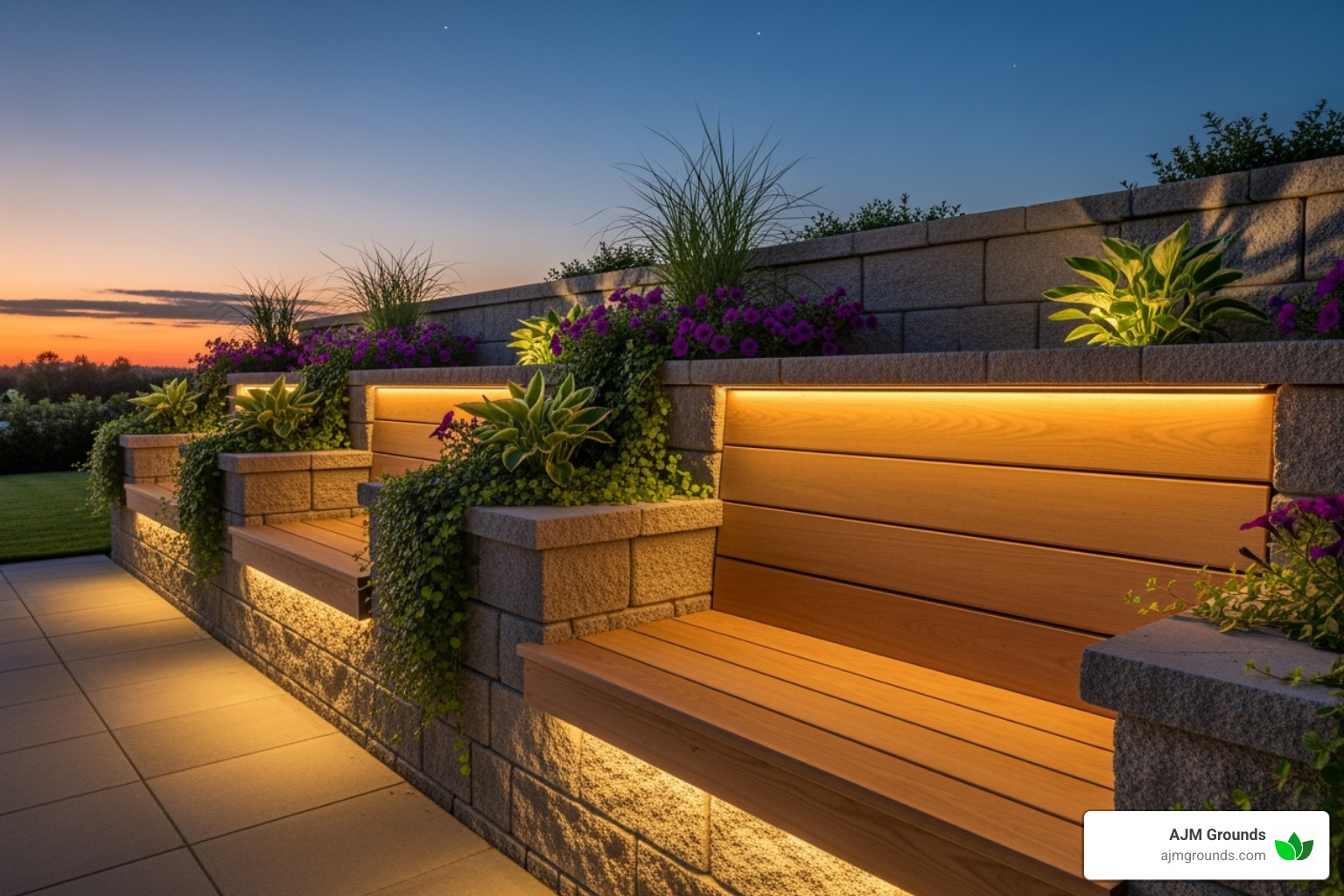
The beauty of retaining walls lies in turning landscape challenges into design opportunities. We’ve helped countless homeowners find these possibilities through our landscape retaining wall ideas that will inspire you.
Taming the Slope: Terraced Gardens and Pathways
A steep backyard is an opportunity for an interesting landscape. With properly designed retaining walls for slopes, you can create a series of gentle terraces instead of one large hill.
- Multi-level patios create distinct outdoor rooms. An upper terrace could host a dining area, while a lower level features a fire pit.
- Tiered garden beds make gardening easier, improve drainage, and create stunning visual layers.
- Integrated steps built into the walls provide seamless transitions. Consider installing a stepping stone walkway to add charm.
Terracing turns a maintenance nightmare into a landscape asset, eliminating erosion and wasted space.
Creative Uses: Integrating Seating, Lighting, and Water Features
The best landscaping and retaining walls multitask. By integrating other features, you can make your outdoor space truly special.
- Built-in bench seating is a popular feature, creating instant gathering spaces around patios or custom outdoor fire pits.
- Lighting integration transforms walls at night. We can embed LEDs under capstones or install uplights to highlight texture. Our hardscape lighting design specialists can create a magical atmosphere.
- Water features are a natural partner for retaining walls, which can serve as a foundation for a cascading waterfall or a backdrop for a pond.
- Planters and integrated greenery soften the hard lines of a wall. Built-in planting pockets can showcase flowers or herbs, creating a beautiful “living wall.”
Design ideas for landscaping and retaining walls in small backyards
In compact areas, landscaping and retaining walls are multitasking heroes that make every square foot count.
- Raised planters created with low walls organize a small space and create clean lines.
- Defining zones with low walls can separate dining and relaxation areas, making the space feel larger.
- Curved walls create a sense of movement and flow, making a small yard feel less rigid.
- Vertical gardening opportunities multiply, as wall faces can support climbing plants.
By creating different levels and defined areas, retaining walls give the illusion of a much larger space. Explore our backyard retaining wall ideas for more inspiration.
Building Your Wall: DIY Considerations and Professional Construction
Building a retaining wall can be both exciting and overwhelming. While DIY can save money, landscaping and retaining walls are deceptively complex. What you don’t see underground is just as important as the finished product.
A small mistake in the foundation or drainage can lead to expensive failures. What looks like simply stacking blocks is actually a process involving soil engineering, drainage, and structural principles.
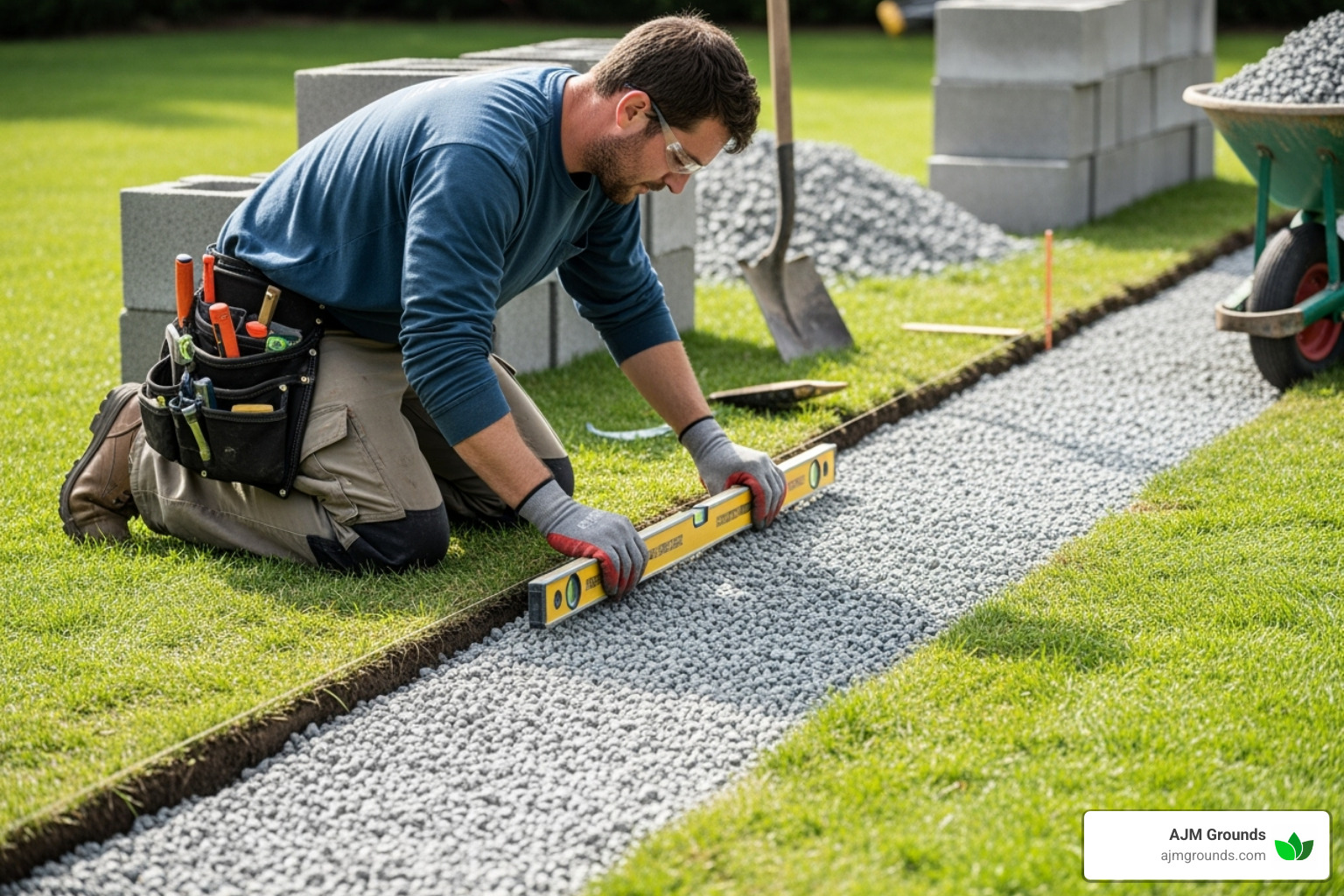
The Step-by-Step Construction Process
Building a solid retaining wall follows a precise sequence where each step is critical for your landscaping and retaining walls project.
- Site Preparation: This involves calling 811 to locate utilities, laying out the wall’s location, and checking local building codes, especially for walls over 3-4 feet tall.
- Excavation and Drainage: The trench must be deep enough for the base and the first course of blocks. This is when the perforated drain pipe is installed at the base to channel water away.
- Base and First Course: A 4-6 inch layer of compacted gravel creates a solid foundation. The first course of blocks must be perfectly level, as any error will be magnified in subsequent rows.
- Building and Backfilling: Each course is laid with staggered joints. For taller walls, geogrid reinforcement is added. Porous gravel is used as backfill and compacted after each course.
- Capping and Finishing: Capstones are secured on top with construction adhesive, typically with a 1-1.5 inch overhang for a clean, finished look.
For more details, see our guide on how to install a block retaining wall.
The Critical Role of Proper Drainage
More retaining walls fail from water pressure than from any other cause. Hydrostatic pressure—the force of water building up behind a wall—can cause it to bulge, crack, and collapse. A proper drainage system, including porous backfill and a drain pipe, is not a corner you can afford to cut. It is the best insurance for your investment. Our approach to landscape drainage solutions ensures your wall is built to last.
DIY Tips and When to Call a Professional
Smaller landscaping and retaining walls (under 3 feet) can be great DIY projects if you’re careful. Always call 811 before digging, check local codes, and focus on getting the compacted gravel base perfectly level. Don’t skimp on drainage.
However, call professionals for:
- Walls over 3-4 feet tall, which typically require permits and engineering.
- Complex slopes, unstable soil, or existing drainage problems.
- Walls supporting loads like driveways or structures.
- Walls near property lines.
Professional installation ensures both the visible and invisible parts of your wall are done right the first time. For smaller projects, see our guide on installing a small retaining wall. For expert help, find experienced retaining wall builders near me.
Frequently Asked Questions about Retaining Walls
When planning landscaping and retaining walls projects, homeowners in Woburn, MA, and surrounding areas often have the same questions. Here are answers to the most common ones we hear at AJM Grounds.
When does a retaining wall need a permit?
Permit requirements vary by town, but some general guidelines apply. Height is the primary factor. Most jurisdictions require a permit for retaining walls 3 to 4 feet or taller. At this height, the soil pressure becomes significant enough to require proper engineering.
Other factors include a “surcharge” (extra weight from a driveway or slope above the wall) or proximity to property lines and easements. For walls over 4 feet, you will almost certainly need a design stamped by a licensed engineer. Always check with your local building department before starting any project.
How much does a retaining wall cost?
This is a common question, but the answer varies greatly. Please note: these are industry averages based on internet data and not a quote from AJM Grounds.
On a per-square-foot basis, professionally installed retaining walls can range from $25 to over $75. A small, simple wall might cost a few thousand dollars, while large, complex projects can exceed $20,000. The final price depends on several key factors:
- Material Choice: Natural stone is a premium material, while concrete blocks offer a balance of cost and durability. Treated timber is often the most budget-friendly.
- Wall Dimensions: Taller and longer walls require significantly more material, labor, and engineering.
- Site Accessibility: If machinery can’t easily reach the work area, labor costs will increase.
- Design Complexity: Curves, corners, steps, and integrated features like seating or lighting will add to the total cost.
How do you cap a retaining wall for a finished look?
Capping is the finishing touch that gives a wall a polished look and protects it from the elements. We always recommend it for both aesthetics and longevity.
Capstone blocks are secured to the top course of the wall using high-quality masonry adhesive. A crucial detail is creating a proper overhang of 1 to 1.5 inches. This creates an attractive shadow line and acts as a drip edge, protecting the wall face from water runoff.
For curved walls, capstones must be precisely cut to ensure tight joints. Beyond looks, capping seals the top of the wall, preventing water from getting inside and extending its lifespan. When we handle installing cap stone on retaining wall projects, we focus on these details to create a true landscape masterpiece.
Transform Your Massachusetts Landscape with Expertly Crafted Retaining Walls
Landscaping and retaining walls do more than just hold back dirt—they are the building blocks of your dream landscape. What begins as a solution to an unusable slope can become a beautiful, multi-level outdoor living area. A well-designed retaining wall system can also increase your property value by 5-10%, making it a smart investment.
However, the difference between a wall that lasts for decades and one that fails comes down to expertise. It’s about understanding soil pressure, drainage, proper base preparation, and local building codes. Taking shortcuts on these unseen elements is a recipe for failure.
For homeowners in Woburn, MA, and the surrounding communities of Bedford, Billerica, Burlington, Lexington, Reading, Stoneham, Wilmington, and Winchester, working with experienced professionals protects your investment. At AJM Grounds, we’ve built our reputation on doing things right the first time.
Every project reflects our commitment to detail and personalized service. We don’t use one-size-fits-all solutions because every yard is unique. Whether you envision simple raised garden beds or a complex terraced landscape, we bring careful planning and expert execution to every job.
Ready to see what landscaping and retaining walls can do for your property? Contact us for your retaining wall construction project and let’s start planning your landscape change today.
