

Understanding the Battle of the Scapes: A Homeowner’s Guide
When homeowners consider landscape vs hardscape, they’re essentially choosing between two fundamental approaches to outdoor design. Here’s the key difference:
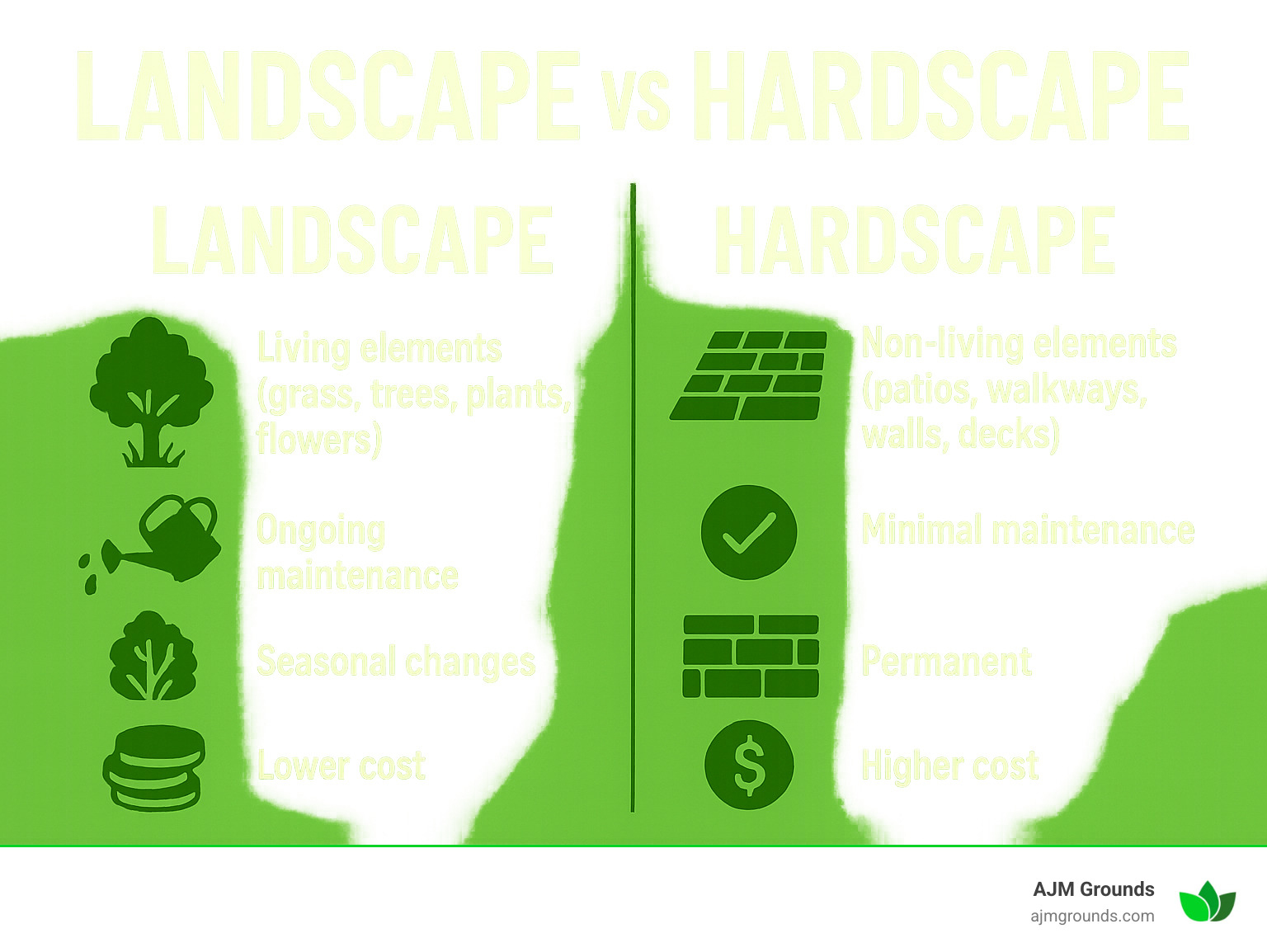
Landscape (Softscape):
- Living elements like grass, plants, trees, and flowers
- Requires ongoing maintenance (watering, pruning, seasonal care)
- Changes with seasons and weather
- Generally lower upfront cost but higher maintenance
Hardscape:
- Non-living elements like patios, walkways, walls, and decks
- Minimal maintenance once installed
- Permanent and weather-resistant
- Higher upfront cost but lower long-term maintenance
The truth is, most successful outdoor spaces aren’t about choosing one over the other – they’re about finding the right balance between both elements.
If you’re a busy homeowner in Woburn looking to improve your property’s curb appeal, understanding this distinction becomes crucial for making smart decisions about your outdoor investment. Too much hardscape can feel cold and uninviting, while too much landscape can look overgrown and require constant attention you might not have time for.
The confusion between these terms is completely understandable. Many people use “landscaping” as a catch-all term for any outdoor improvement, but the industry actually divides outdoor design into two distinct categories: the living elements that grow and change (landscape), and the structural elements that provide foundation and function (hardscape).
I’m John Caplis, owner of AJM Grounds LLC, and I’ve spent years helping homeowners steer the landscape vs hardscape decision to create beautiful, functional outdoor spaces. Through countless projects, I’ve learned that the most successful designs thoughtfully combine both elements to match each client’s lifestyle and maintenance preferences.
Explore more about landscape vs hardscape:
What is Landscaping? The Living Elements of Your Yard
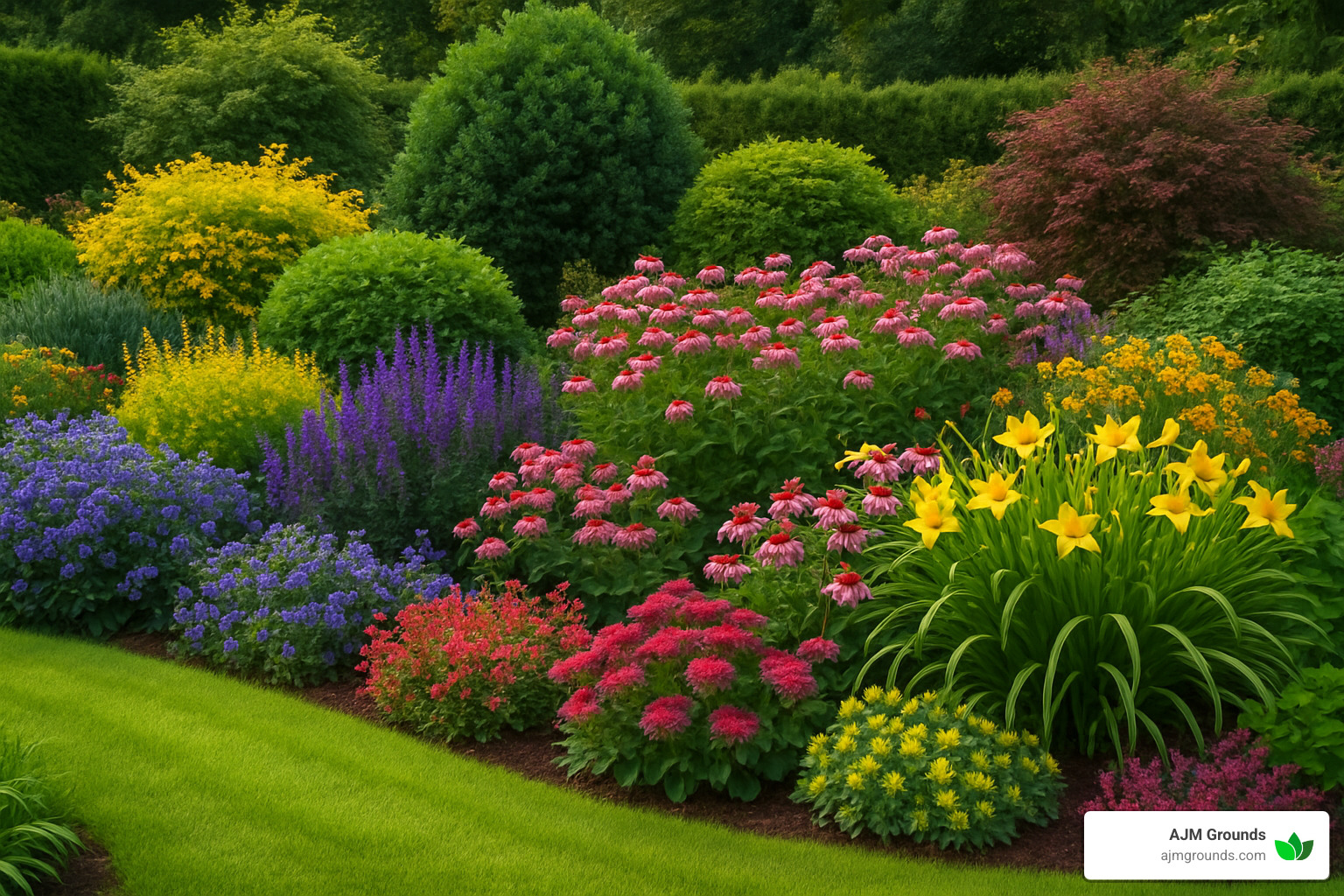
When we talk about landscape vs hardscape, landscaping (also called softscaping) covers every living, growing component of your yard. These horticultural features respond to sun, rain, and temperature, giving your property a fresh look each season.
More info about our design process.
Key Landscaping Elements
- Soil – the foundation of plant health
- Grass and turf – a soft, green play surface
- Trees – shade, privacy, and wildlife habitat
- Shrubs – structure and year-round interest
- Flowers – annuals for bold color, perennials for long-term value
- Ground cover – erosion control and weed suppression
- Mulch – moisture retention and a finished look
Benefits and Considerations of Landscaping
Beyond beauty, plants improve air quality, cool the yard, and support pollinators—plus spending time in greenery is a proven stress reducer. The trade-off is maintenance: mowing, pruning, irrigation checks, and seasonal clean-ups never truly end.
Match your plant choices to your lifestyle. Garden enthusiasts may love elaborate beds, while low-maintenance natives suit busier homeowners.
Irrigation System Installation.
What is Hardscaping? The Structural Foundation of Your Outdoor Space
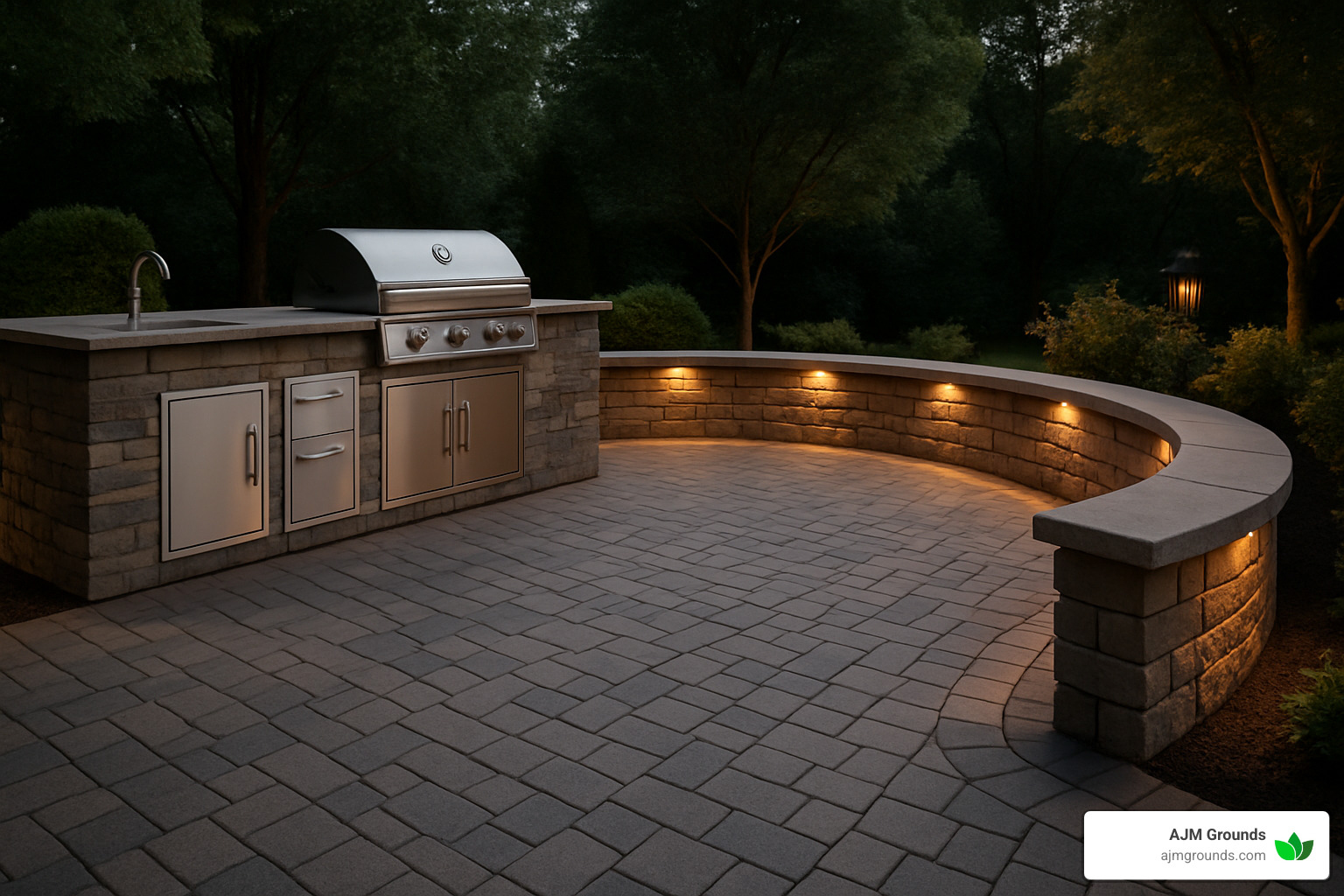
Hardscaping forms the non-living backbone of good design. Stone, concrete, brick, and wood create outdoor “rooms” that stay usable—and good-looking—through New England winters and summers alike.
The Art Of Hardscaping Incorporating Stone And Pavers Into Your Massachusetts Landscape.
Key Hardscaping Elements
- Patios and decks
- Walkways & driveways
- Retaining walls
- Pergolas & gazebos
- Outdoor kitchens & fire pits
- Water features & fences
Benefits and Considerations of Hardscaping
Durable surfaces give you year-round living space and need little more than an occasional wash or sealing. Upfront costs and the need for professional installation are higher, and because these features are hard to move, careful planning is essential—especially for drainage.
The Ultimate Comparison: Landscape vs Hardscape
When you weigh landscape vs hardscape, remember they’re partners, not rivals. Softscape offers seasonal beauty and environmental perks, while hardscape supplies structure and everyday function.
| Aspect | Landscape (Softscape) | Hardscape |
|---|---|---|
| Materials | Living plants, soil, mulch, grass | Stone, concrete, brick, pavers, wood, metal |
| Installation Cost | Generally lower upfront | Higher upfront investment |
| Maintenance | Ongoing (watering, pruning, seasonal care) | Minimal (occasional cleaning, sealing) |
| Lifespan | Varies (annuals yearly, perennials/trees decades) | 20-50+ years with proper installation |
| Seasonal Changes | Dramatic seasonal variation | Consistent year-round appearance |
| Installation Time | Can be done in phases | Often requires complete project completion |
| Weather Impact | Affected by drought, storms, temperature | Weather-resistant once installed |
| Flexibility | Can be changed relatively easily | Permanent, changes require reconstruction |
| Environmental Impact | Positive (air purification, wildlife habitat) | Neutral to negative (runoff, heat absorption) |
| ROI | Moderate, mainly through curb appeal | High for functional elements like patios |
Key Differences
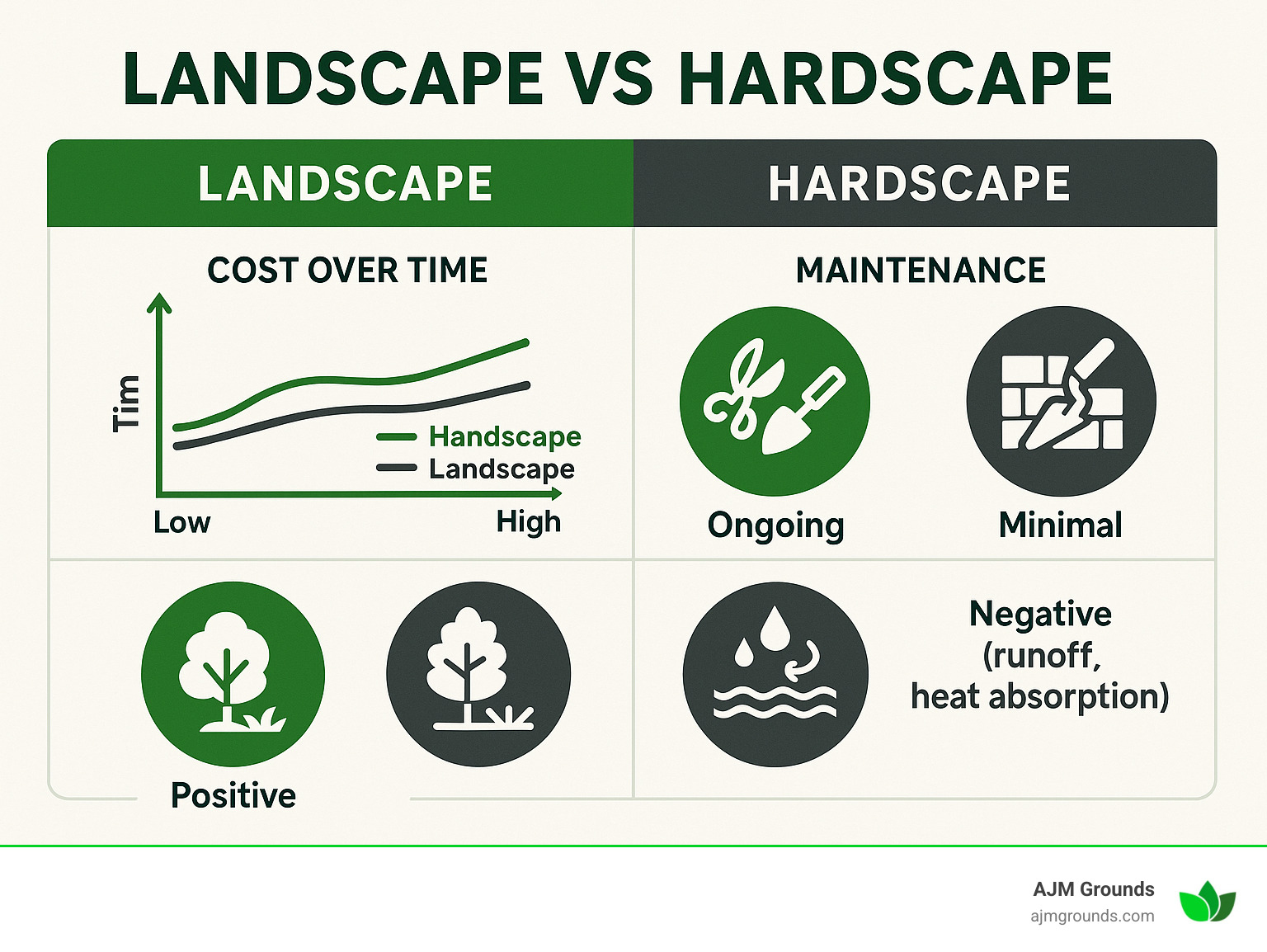
Landscaping is flexible and comparatively inexpensive to alter; hardscaping is permanent but far lower-maintenance. Planting a bed can be a weekend project, whereas installing a patio requires excavation, compaction, and drainage knowledge.
Maintenance and Cost
Plants demand weekly mowing, watering, and seasonal pruning. Hardscape needs the occasional power-wash or sealer.
Average industry costs based on public internet data—not AJM Grounds quotes—show the trade-off:
- Basic landscaping: roughly $3,000–$15,000
- Extensive planting with mature trees: $15,000–$50,000+
- Simple patio or walkway: around $5,000–$20,000
- Full outdoor kitchen & walls: $20,000–$75,000+
While hardscape starts higher, its minimal upkeep can make it more economical over 10–20 years, especially for busy Greater Boston homeowners.
Creating Harmony: How to Integrate Hardscape and Landscape
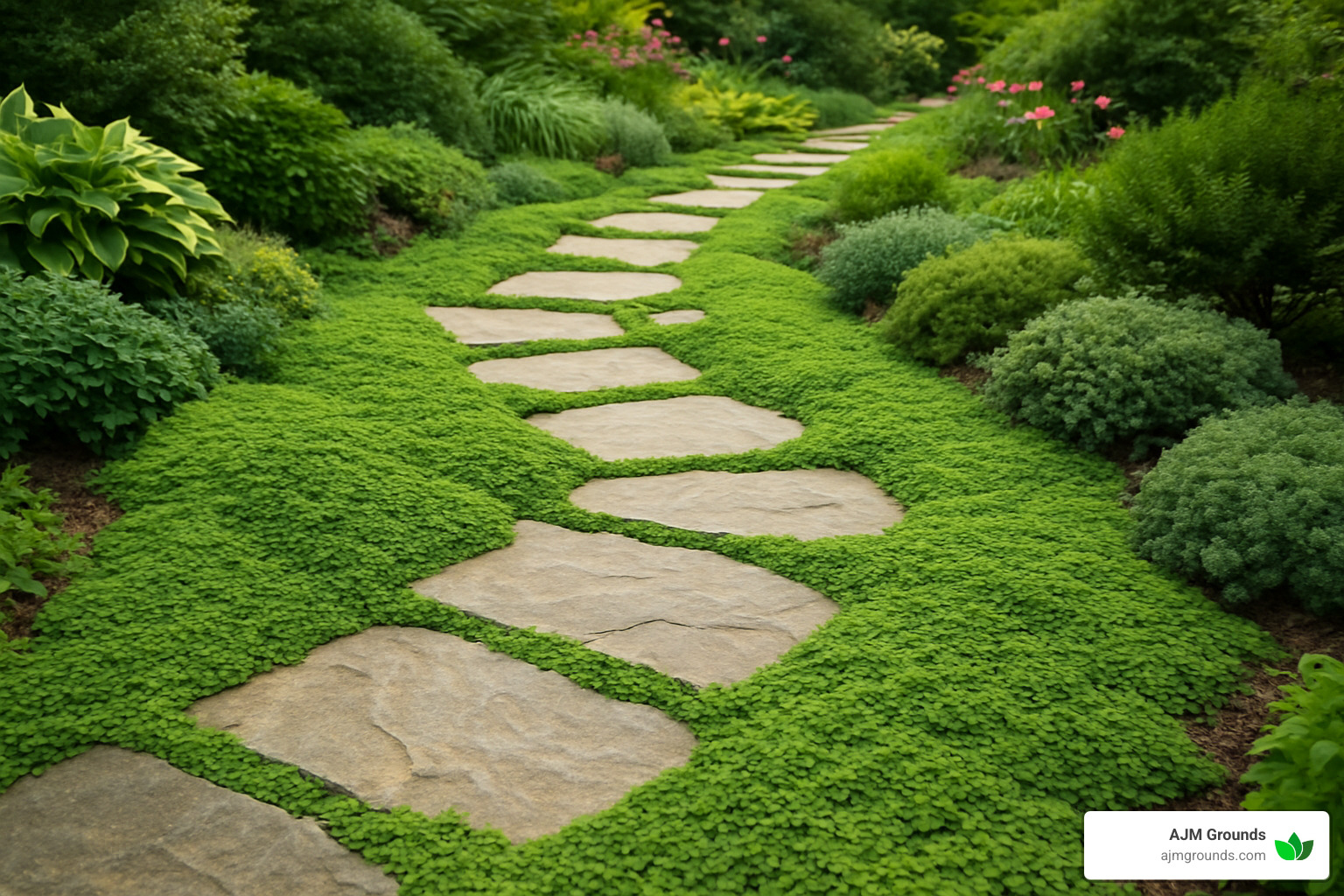
The most beautiful outdoor spaces don’t treat landscape vs hardscape as an either-or decision. Instead, they create magic by weaving both elements together into a cohesive design that feels both functional and natural.
I’ve seen too many yards that went to extremes – either sterile concrete patios that feel like parking lots, or overgrown gardens that look pretty but offer nowhere to actually sit and enjoy them. The sweet spot lies in finding the right balance for your lifestyle and space.
Balance is absolutely key in successful outdoor design. Think of hardscape elements as the bones of your outdoor space – they provide structure and function. Landscape elements are like the skin and clothing – they add beauty, softness, and personality. You need both to create a space that works.
Using hardscape to create zones transforms a flat backyard into an interesting outdoor living area. A well-placed patio becomes your outdoor dining room, while a fire pit area creates a cozy spot for evening conversations. Walkways act like hallways, connecting these different “rooms” while protecting your lawn from constant foot traffic.
The real art comes in using softscape to soften hard edges. Nothing looks more harsh than a brand-new patio sitting like an island in the middle of a lawn. But add some plantings around the edges, let groundcover peek between pavers, and suddenly that same patio feels like it belongs there.
Planning for plant growth is where many homeowners get into trouble. That cute little shrub you plant next to your new retaining wall might look perfect today, but in five years it could be pushing against the structure or blocking your view. Always consider the mature size of plants when placing them near hardscape elements.
Complementary colors and textures can make or break your design. Warm brick pavers look stunning with plants that have bronze or burgundy foliage, while cool gray stone provides a beautiful backdrop for bright flowers. The key is thinking about how these elements will look together, not just individually.
Function and flow should guide your integration decisions. Your hardscape elements need to work together to create logical movement patterns, while your landscape elements should improve rather than obstruct this flow. A pathway that winds through plantings feels more natural than one that cuts straight across an open lawn.
Avoiding extremes keeps your space feeling welcoming rather than overwhelming. Too much hardscape can make your yard feel like a commercial plaza, while too much landscape might leave you with nowhere to actually enjoy your outdoor space. The goal is creating areas where you can both appreciate nature and comfortably spend time outdoors.
How To Design A Beautiful And Functional Outdoor Space.
Frequently Asked Questions about Outdoor Design
Which adds more value to a home: hardscaping or landscaping?
Both do. Hardscape features like patios or decks often recoup 60-80% of their cost because they add usable living space. Thoughtful landscaping boosts curb appeal and typically returns 50-70%. The best resale value comes from a balanced yard that combines the two.
What’s the difference between a landscaper and a hardscaper?
Landscapers handle the living side—plant choice, soil prep, irrigation, mowing, and pruning. Hardscapers are outdoor builders, working with stone, concrete, or wood to create patios, walkways, and walls. AJM Grounds fields specialized crews for both so every project feels seamless.
Should I install hardscape or landscape elements first?
Hardscape first. Heavy machinery, grading, and drainage work can destroy fresh plantings, and permanent structures define the layout for your softscape.
Your Perfect Outdoor Space Awaits
The landscape vs hardscape discussion isn’t really about choosing sides – it’s about understanding how these two elements work together to create something beautiful and functional. When you understand the distinctions between living plants and structural elements, you can make smart decisions about your outdoor investment that will serve your family for years to come.
The most rewarding outdoor spaces don’t rely on just one approach. Instead, they thoughtfully blend both elements, using hardscape features to provide structure and year-round functionality while employing landscape elements to bring natural beauty and environmental benefits. This balanced approach creates outdoor spaces that work hard for your family while looking effortlessly beautiful.
Think about it this way: hardscape elements like patios and walkways give you the foundation to actually use your outdoor space, while landscape elements like flowering shrubs and shade trees make that space feel alive and welcoming. Neither approach alone can deliver the complete outdoor living experience most homeowners are looking for.
At AJM Grounds, we’ve helped countless homeowners throughout Woburn, Bedford, Burlington, and the greater Boston area work through these decisions. Our expertise in both landscaping and hardscaping allows us to create designs that make sense – spaces where a stone patio flows naturally into a planted garden, where walkways guide you through seasonal color, and where structural elements improve rather than compete with natural beauty.
Whether you’re naturally drawn to the low-maintenance appeal of hardscaping or the changing beauty of landscaping, the key is understanding how both elements can serve your specific needs. Your lifestyle, budget, and vision for your property all play a role in finding the right balance.
Some of our clients love the idea of extensive gardens but realize they don’t have time for intensive maintenance. Others want the functionality of outdoor living spaces but don’t want their yard to feel too structured. These aren’t problems – they’re simply design challenges that can be solved with the right combination of elements.
The beauty of understanding landscape vs hardscape is that it opens up possibilities rather than limiting them. You might find that a simple paver patio surrounded by low-maintenance native plants gives you exactly the outdoor retreat you’ve been dreaming of. Or perhaps extensive hardscaping with strategic landscape accents better fits your vision of outdoor entertaining.
Great outdoor design isn’t about winning the landscape vs hardscape debate – it’s about creating a space that improves your daily life and brings you joy every time you step outside. The right combination depends entirely on what matters most to you and your family.
For a professional consultation on creating the perfect balance in your yard, explore our Hardscaping Services.
