

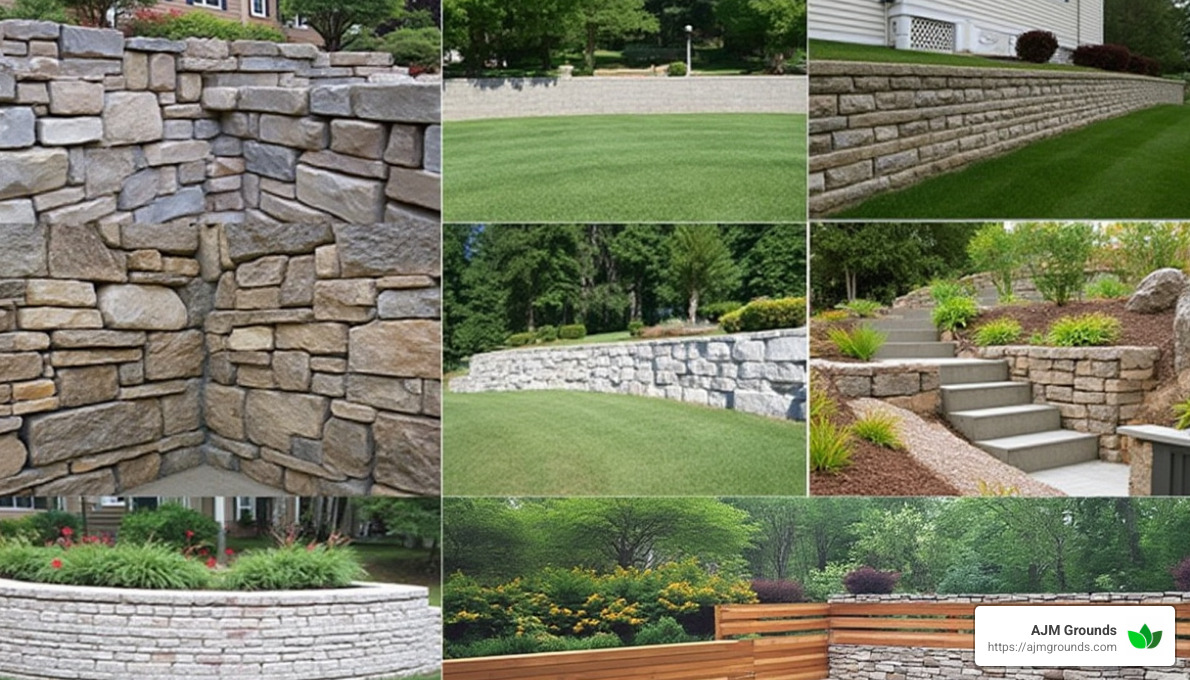
Landscape Retaining Walls offer a sophisticated way to transform your outdoor space while addressing practical landscaping needs. They prevent soil erosion, create terraced levels, and improve visual appeal, perfectly blending functionality with style. Some design ideas to consider include:
- Concrete walls with flower beds for a sleek look.
- Natural stone walls that are durable and traditional.
- Rocky retaining walls for rustic elevation.
- Incorporate steps or entryways for accessibility and charm.
From rocky natural designs to sleek, modern styles, the potential of retaining walls to lift your yard is vast.
I’m John Caplis, owner of AJM Grounds. With years of experience in creating custom landscape retaining walls, our team is committed to enhancing your property in Woburn, MA, and surrounding areas with sustainable, visually appealing solutions.
Landscape Retaining Walls terms explained:
– Retaining walls for gardens
– Retaining walls for slopes
Understanding Landscape Retaining Walls
Landscape Retaining Walls serve more than just a decorative purpose. They are essential for providing structural support and preventing soil erosion. Let’s explore the different types of retaining walls and their benefits.
Types of Retaining Walls
- Concrete Blocks: These are popular for their durability and ease of use. Concrete blocks often feature interlocking designs, making them a favorite for DIY projects. They offer a sleek, modern look and can be used to create clean lines in your landscape.
- Natural Stones: Known for their timeless appeal, natural stone walls like granite and limestone provide a traditional aesthetic. Although they can be more expensive than other materials, their durability and classic appearance make them a worthwhile investment.
- Wood: Ideal for a rustic or natural look, wood retaining walls are cost-effective and blend well with lush landscapes. However, they may require more maintenance to prevent rot and weather damage.
Benefits of Retaining Walls
Usability: Retaining walls can transform sloped areas into functional spaces. By creating terraced levels, they offer opportunities for gardens, seating areas, or even play spaces, maximizing the usability of your outdoor area.
Erosion Protection: One of the primary functions of retaining walls is to prevent soil erosion. By stabilizing the soil, they protect your landscape from erosion caused by rain and water runoff, ensuring a stable and safe environment.
Aesthetic Appeal: Beyond their practical uses, retaining walls add visual interest to your landscape. Whether you prefer the sleek look of concrete, the traditional charm of natural stone, or the rustic feel of wood, retaining walls can improve the overall aesthetic of your yard.
Landscape Retaining Walls are more than just barriers; they are a blend of form and function, offering both aesthetic appeal and practical benefits. With the right materials and design, they can significantly improve the beauty and functionality of your outdoor space.
Next, we’ll dive into design ideas for incorporating natural elements and modern styles into your retaining walls.
Design Ideas for Landscape Retaining Walls
When it comes to designing Landscape Retaining Walls, the possibilities are endless. Whether you’re looking to harmonize with nature or accept a sleek, modern aesthetic, there’s a design to suit every taste. Let’s explore some creative ideas to inspire your next project.
Incorporating Natural Elements
Stone Finishes and Plant Integration
Natural elements can transform your retaining wall into a seamless part of the landscape. Using stone finishes like granite or limestone gives your wall a timeless, neat look. These materials not only provide durability but also blend beautifully with natural surroundings.
Integrating plants into your retaining wall design adds a touch of life and color. Consider planting cascading greenery like trailing rosemary or moss phlox. These plants can spill over the edges, softening the wall’s appearance and creating a harmonious connection with the rest of your garden.
Modern and Minimalist Designs
Clean Lines and Sleek Materials
For those who prefer a contemporary look, modern designs focus on clean lines and sleek materials. Concrete blocks are a popular choice for achieving this aesthetic. Their uniformity and smooth surfaces offer a minimalist appeal that fits well with modern architecture.
Incorporating features like built-in planters or seating areas can improve the functionality of your retaining wall. These features not only add visual interest but also provide practical benefits, such as extra seating or space for your favorite plants.
Outdoor Features and Visual Interest
Adding outdoor features like pathways or steps can create a dynamic landscape. Steps integrated into your retaining wall not only provide access to different levels of your yard but also add a touch of sophistication.
Consider using contrasting materials or colors to make your retaining wall a focal point. For example, a dark concrete wall can stand out against a backdrop of lush greenery, creating a striking visual contrast.
With these design ideas, you can create a Landscape Retaining Wall that not only serves its purpose but also improves the beauty and functionality of your outdoor space. Whether you choose natural stone finishes or modern concrete blocks, the right design can transform your landscape into a stunning and cohesive environment.
Next, we’ll guide you through building a low retaining wall with concrete blocks, perfect for a DIY project.
How to Build a Low Retaining Wall with Concrete Retaining Wall Blocks
Building a low retaining wall can be a rewarding DIY project that enhances your landscape’s functionality and beauty. Here’s a simple guide to help you get started.
Tools and Materials Needed
Before you start, gather these essential tools and materials:
- Concrete Retaining Wall Blocks: Choose interlocking blocks for easy assembly.
- Gravel: For backfilling and drainage.
- Paver Base: To create a stable foundation.
- Safety Gear: Including boots, gloves, and safety glasses.
- Levels: A 4 or 6-foot level and a torpedo level for precision.
- Trenching Shovel: For digging the foundation trench.
- Hand Tamper: To compact the soil and base.
- Rubber Mallet: To adjust block placement.
- Masonry Chisel and Hammer: For cutting blocks as needed.
Step-by-Step Guide
1. Trench Digging
Start by digging a trench where your wall will sit. This trench should be:
- Depth: At least half the height of your first course of blocks, plus 3 inches for the paver base. Typically, this is 4 to 8 inches deep.
- Width: Twice as wide as a single block.
Once dug, compact the trench using a hand tamper to ensure a solid base.
2. Base Preparation
Pour the paver base into the trench and compact it. Use your levels to check that the base is even front to back and along the length.
3. Block Laying
Begin laying the first course of blocks:
- Start at the Lowest Point: This ensures stability as you build upwards.
- Use a Level: Place the first block and check for level. Adjust using the rubber mallet if necessary.
- Continue Laying: Lay the rest of the first course, ensuring each block is level.
If your blocks have flanges, either create relief in the base or remove them with the chisel and hammer.
4. Drainage Solutions
Consider adding drainage to prevent water buildup:
- Perforated Corrugated Pipe: Place behind the wall, extending the length of the wall.
- Gravel Backfill: Pour gravel behind the wall to cover the pipe and aid drainage.
5. Additional Courses and Backfilling
- Stagger Blocks: For even-numbered courses, cut end blocks in half to ensure a staggered pattern.
- Backfill Gradually: As you lay each course, backfill with gravel to improve stability.
- Tamp Down: Compact the gravel to prevent settling.
6. Finishing Touches
- Capstones: Once all courses are laid, add capstones for a finished look.
- Landscape Adhesive: Use to secure capstones, ensuring they overhang the retaining blocks slightly.
By following these steps, you can build a sturdy and attractive retaining wall that enhances your landscape. When considering the cost of retaining walls, remember that these are average costs based on internet data and not actual costs for AJM Grounds. Always plan your budget with a wide range in mind, with the high end being at least 3x the average pricing.
Cost Considerations for Retaining Walls
When planning for a Landscape Retaining Wall, understanding the costs involved is crucial. Here’s a breakdown of what you might expect to spend.
Average Pricing
The cost of building a retaining wall can vary widely, typically ranging from $1,000 to $10,000. This range depends on several factors, including the materials used, the wall’s size, and labor costs. These figures are based on internet data and reflect average expenses, not AJM Grounds’ specific pricing.
Material Expenses
The type of material you choose significantly impacts the cost. Here’s a look at some common options:
- Concrete Blocks: These are a popular choice due to their durability and ease of use. Expect to pay between $10 and $50 per block, depending on the style and quality.
- Natural Stone: For a more rustic or neat look, natural stone is a great option. However, it can be more expensive, ranging from $30 to $100 per square foot.
- Wood: Timber retaining walls are cost-effective, with prices typically between $15 and $25 per square foot. That wood may require more maintenance over time.
Labor Costs
Labor is another significant component of the overall cost. If you hire professionals, labor can range from $50 to $100 per hour. The complexity of the wall, including its height and length, will affect the total labor time required.
For DIY enthusiasts, the labor cost can be reduced, but building a retaining wall is labor-intensive and may require assistance.
Additional Costs
- Permits: In some areas, you may need a permit to build a retaining wall. Permit fees can range from $100 to $500.
- Delivery: If you’re purchasing heavy materials like stone or concrete blocks, delivery fees may apply, typically ranging from $50 to $200.
- Drainage Solutions: Proper drainage is essential to prevent water damage. Installing drainage solutions can add $200 to $500 to your project.
By considering these factors, you can better estimate the costs involved in your retaining wall project. This will help you plan your budget effectively and ensure that your investment improves both the beauty and functionality of your landscape.
Next, we’ll dive into some frequently asked questions about Landscape Retaining Walls to address common concerns and provide further insights.
Frequently Asked Questions about Landscape Retaining Walls
What materials are best for retaining walls?
Choosing the right material for your Landscape Retaining Wall depends on several factors, including aesthetics, durability, and budget. Here are some popular options:
- Concrete Blocks: Known for their strength and versatility, concrete blocks are a top choice for many homeowners. They are easy to stack and come in various shapes and colors, making them suitable for different designs.
- Natural Stone: If you’re aiming for a more organic and timeless look, natural stone is an excellent option. It blends well with natural surroundings and offers a unique texture, though it can be pricier than other materials.
- Wood: Timber walls, often made from pressure-treated wood, provide a rustic charm and are cost-effective. However, they may require more maintenance and have a shorter lifespan compared to stone or concrete.
Each material has its pros and cons, so consider your landscape’s specific needs and your personal preferences before making a decision.
How do I ensure proper drainage?
Proper drainage is crucial for the longevity of your retaining wall. Without it, water can accumulate behind the wall, causing pressure that may lead to damage or collapse. Here are some steps to ensure effective drainage:
- Gravel Base: Start with a well-compacted gravel base to facilitate water flow away from the wall.
- Drainage Pipes: Install perforated drainage pipes at the base to channel water away efficiently.
- Landscape Fabric: Use landscape fabric behind the wall to prevent soil from clogging the drainage system while allowing water to pass through.
- Backfill with Gravel: Backfill the space behind the wall with gravel instead of soil to improve water drainage.
By implementing these solutions, you can protect your retaining wall from water-related issues and improve its durability.
Do I need a permit to build a retaining wall?
Whether you need a permit to build a retaining wall depends on your local regulations and the wall’s specifications. Here are some general guidelines:
- Height Restrictions: Walls over a certain height, typically around 4 feet, often require a permit.
- Location: If your wall is near property lines or structures, permitting might be necessary to ensure safety and compliance.
- Local Regulations: Always check with your local city or county authorities to understand the specific requirements in your area.
Permit fees can range from $100 to $500, so it’s wise to factor this into your project planning. Ensuring compliance with local regulations not only prevents legal issues but also ensures the safety and stability of your wall.
By addressing these frequently asked questions, we hope to clarify some common concerns and help you make informed decisions for your Landscape Retaining Wall project. Next, let’s explore how to build a low retaining wall with concrete retaining wall blocks, a perfect DIY project for enhancing your outdoor space.
Conclusion
At AJM Grounds, we understand that creating the perfect landscape is more than just installing a retaining wall—it’s about crafting a space that reflects your personal style and meets your unique needs. Our commitment to personalized service and attention to detail sets us apart in the landscaping industry.
Whether you’re in Woburn, Bedford, or any of our other service areas in Massachusetts, our team is dedicated to delivering custom solutions that improve the beauty and functionality of your outdoor spaces. We take the time to listen to your ideas and assess your landscape, ensuring that every project we undertake is a true reflection of your vision.
Our expertise in designing and installing Landscape Retaining Walls means you can trust us to deliver high-quality results that stand the test of time. From selecting the right materials to ensuring proper drainage, we handle every aspect of the project with precision and care.
We believe that a successful project is one where the details are seamlessly integrated into the overall design. That’s why we prioritize the structural integrity and aesthetic appeal of each retaining wall we build, ensuring it not only serves its functional purpose but also improves the visual harmony of your landscape.
If you’re ready to transform your outdoor space with a custom-designed retaining wall, contact us at AJM Grounds. We’re here to bring your vision to life with our expert guidance and unwavering commitment to excellence.
