

The Essentials of Landscape Drainage Solutions
Landscape drainage solutions are the key to changing a soggy, unusable yard into a functional and inviting outdoor space. Whether you’re facing standing water after a storm, dealing with a poor lawn slope, or managing gutter runoff, understanding and implementing effective drainage solutions can save your property from potential damage.
Here’s a quick overview for effective landscape drainage:
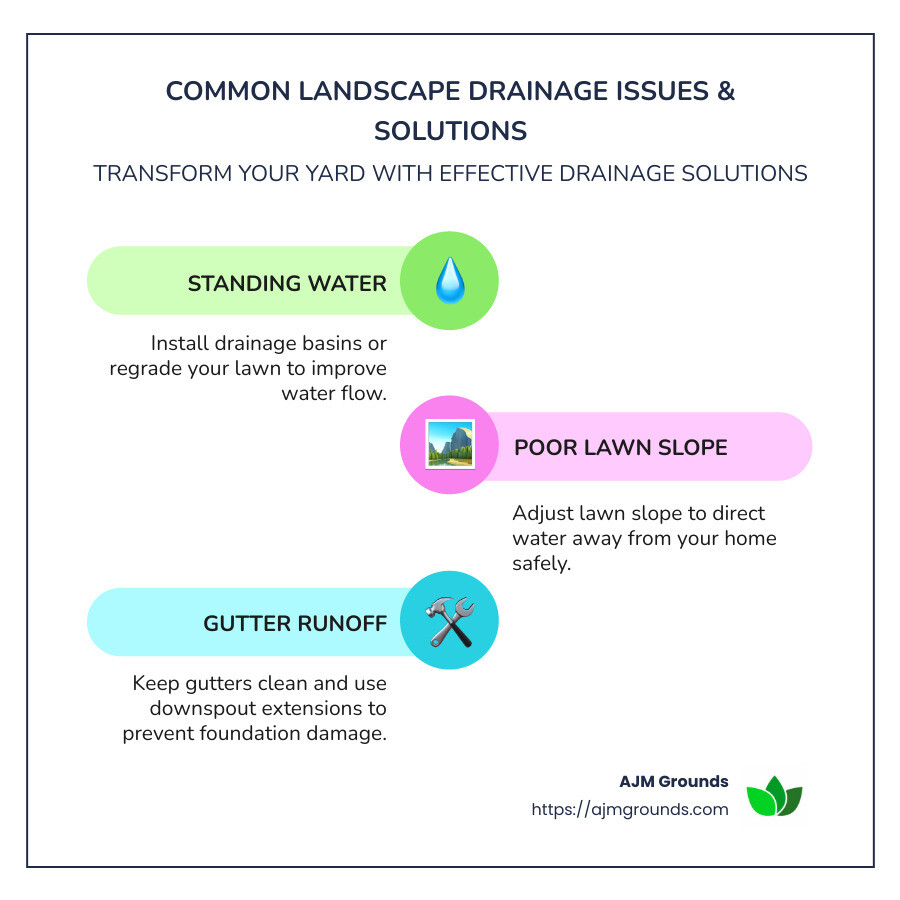
- Standing Water: Use drainage basins or regrade your lawn for better water flow.
- Poor Lawn Slope: Adjust the slope to direct water away from your home, typically 2 to 3 inches per 10 feet.
- Gutter Runoff: Keep gutters clean, and add downspout extensions to carry water away from the foundation.
I’m John Caplis, the owner of AJM Grounds LLC, where we specialize in landscape drainage solutions. With years of experience changing landscapes in Woburn and surrounding areas, my team excels in creating efficient, sustainable, and visually appealing outdoor environments.
Understanding Landscape Drainage Solutions
When it comes to managing water in your yard, landscape drainage solutions are essential. Let’s explore three popular options: French drains, dry wells, and surface drains.
French Drains
French drains are a classic choice for effective water management. They consist of a trench filled with gravel and a perforated pipe that redirects water away from problem areas. This system is particularly useful for preventing standing water in your yard.
Why Choose French Drains?
- Cost-Effective: French drains are relatively inexpensive to install compared to other drainage solutions.
- Water Management: They efficiently divert water away from your home’s foundation, preventing potential damage.
- Low Maintenance: Once installed, they require minimal upkeep, mainly ensuring that the gravel remains clear of debris.
French drains can be a great option for both residential gardens and larger commercial landscapes. They blend seamlessly with the natural aesthetics of your yard, often hidden beneath decorative rocks or garden paths.
Dry Wells
Dry wells are another effective solution, especially in areas prone to heavy rainfall. These underground structures collect excess water and allow it to percolate into the ground, promoting groundwater recharge.
Benefits of Dry Wells:
- Flood Control: Ideal for managing large volumes of water, dry wells help prevent surface flooding.
- Groundwater Recharge: They support the natural water cycle by replenishing local aquifers.
- Space Efficiency: Installed underground, they free up surface space for other landscaping features.
Dry wells are particularly advantageous for properties with limited space, as they do not take up any visible area.
Surface Drains
Surface drains, also known as catch basins, are designed to efficiently collect and manage rainwater runoff. These systems consist of a grate on the surface that channels water into an underground drainage system.
Advantages of Surface Drains:
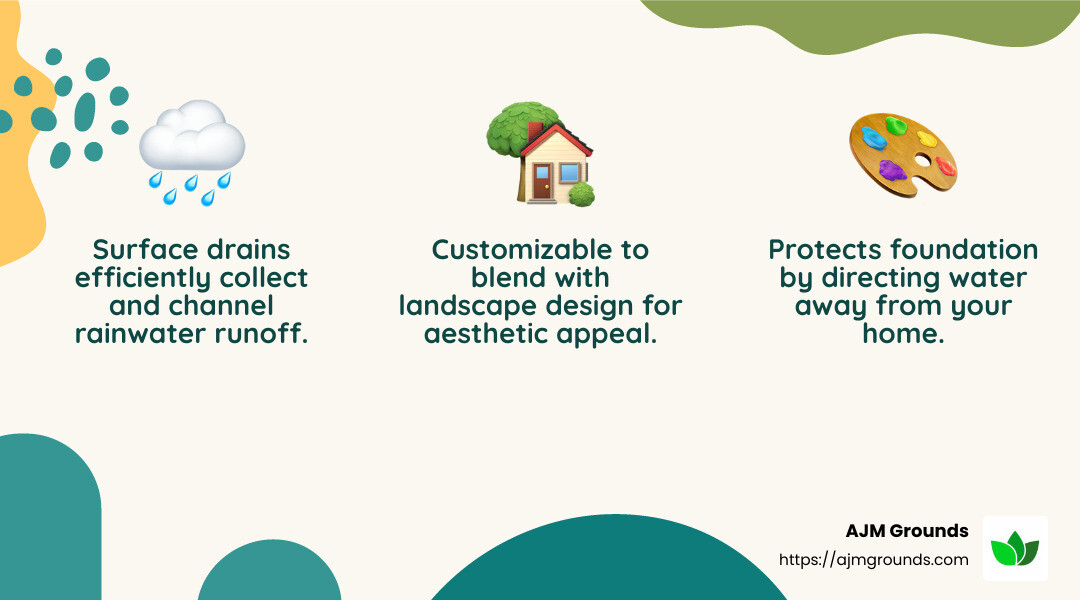
- Efficient Water Removal: They quickly capture surface runoff, preventing water from pooling in low-lying areas.
- Aesthetic Options: Surface drains can be customized to blend with your landscape design, offering various sizes and materials.
- Foundation Protection: By directing water away from your home, they help preserve the integrity of your foundation.
Surface drains are particularly useful in high-traffic areas like driveways and patios, where standing water can pose safety hazards.
By understanding these landscape drainage solutions, you can choose the right one for your property. Whether it’s a French drain, dry well, or surface drain, each has its unique benefits to keep your yard dry and beautiful.
Next, we’ll explore the top landscape drainage solutions, diving deeper into each option to help you make an informed decision.
Top Landscape Drainage Solutions
When it comes to keeping your yard dry and beautiful, choosing the right landscape drainage solutions is crucial. Let’s explore some top options: French drains, dry wells, surface drains, trench drains, and bioswales.
French Drains
French drains are a popular, cost-effective solution for managing water in your yard. These systems consist of a trench filled with gravel and a perforated pipe, which efficiently diverts water away from trouble spots.
- Water Management: French drains excel at redirecting water away from your home’s foundation, preventing costly damage.
- Low Maintenance: Once in place, they require little upkeep, mainly ensuring the gravel remains free from debris.
- Aesthetic Versatility: These drains can blend seamlessly with your yard’s design, often hidden beneath decorative elements like rocks or garden paths.
Dry Wells
Dry wells are a smart choice for properties that experience heavy rainfall. These underground structures collect excess water, allowing it to percolate into the ground and recharge local aquifers.
- Flood Control: Dry wells handle large volumes of water, preventing surface flooding and protecting your property.
- Groundwater Recharge: By promoting natural water cycles, they help maintain the local ecosystem.
- Space Efficiency: Installed below ground, they free up surface space for other landscaping features.
Surface Drains
Surface drains, or catch basins, are designed to efficiently capture and manage rainwater runoff. They consist of a surface grate that channels water into an underground drainage system.
- Efficient Water Removal: Surface drains quickly collect runoff, preventing water from pooling in low areas.
- Aesthetic Options: Available in various sizes and materials, they can be customized to match your landscape design.
- Foundation Protection: By directing water away from your home, they help preserve the integrity of your foundation.
Trench Drains
Trench drains are ideal for high-traffic areas where water management is critical. These systems feature a long, narrow trench with a grate on top.
- Effective Water Management: They efficiently channel water away, reducing the risk of flooding.
- Aesthetic Versatility: Trench drains can be seamlessly integrated into driveways and walkways without disrupting the visual appeal.
- Low Maintenance: Regular cleaning of the grates is typically all that’s needed to keep them functioning well.
Bioswales
Bioswales are shallow, vegetated channels designed to manage water flow naturally. They are an eco-friendly option that also improves the beauty of your landscape.
- Natural Appearance: Bioswales blend with the natural landscape, often landscaped with native plants and rocks.
- Erosion Control: By slowing down water flow, they reduce soil erosion and help maintain the integrity of your yard.
- Biodiversity: These systems support local flora and fauna, promoting a healthy ecosystem.
By considering these landscape drainage solutions, you can select the best option for your yard’s unique needs. Whether you choose a French drain, dry well, surface drain, trench drain, or bioswale, each offers distinct advantages to keep your property dry and attractive.
Next, we’ll dive into how to fix common yard drainage problems, offering practical tips and solutions to improve your landscape’s effectiveness.
How to Fix Common Yard Drainage Problems
Yard drainage issues can turn your beautiful landscape into a soggy mess. But don’t worry, there are effective solutions to tackle these problems head-on. Let’s explore some practical methods: regrading, gutter cleaning, and downspout extensions.
Regrading
Regrading is all about reshaping your yard to ensure water flows away from your home. If your lawn isn’t sloped correctly, water can pool or even seep into your basement, causing damage.
- How it Works: Adjust the slope of your yard so that it descends 2-3 inches every 10 feet away from your house. This directs water away from your foundation.
- DIY or Professional: While small adjustments can be a DIY project, significant changes might require a professional landscaper to ensure proper grading.
Gutter Cleaning
Gutters play a crucial role in directing rainwater away from your home. When clogged with leaves and debris, they can’t do their job effectively.
- Regular Maintenance: Clean your gutters at least twice a year, especially if you live in a wooded area. This prevents water from overflowing and pooling around your home.
- Tools Needed: A sturdy ladder, gloves, and a gutter scoop can make the job easier. Alternatively, consider hiring a professional for a thorough clean.
Downspout Extensions
Downspout extensions are a simple yet effective way to ensure rainwater is channeled away from your home’s foundation.
- Installation: Attach extensions to your existing downspouts to direct water at least 4-6 feet away from your house. This prevents water from seeping into your basement.
- Options: Choose from flexible plastic pipes or rigid models, depending on your landscape design. Splash blocks can also help disperse water more evenly.
By addressing these common issues with regrading, gutter cleaning, and downspout extensions, you can protect your home from water damage and maintain a dry, beautiful yard.
Next, we’ll answer some frequently asked questions about landscape drainage solutions, helping you make informed decisions for your property.
Frequently Asked Questions about Landscape Drainage Solutions
How do I fix bad drainage in my yard?
Fixing poor yard drainage often begins with some simple yet effective steps. One of the first things you can do is aerate your lawn. Aeration involves creating small holes in the soil to allow air, water, and nutrients to penetrate the grass roots. This can help improve drainage by breaking up compacted soil, allowing water to flow more freely.
Another approach is to amend the soil. If your yard has heavy clay soil, it might not drain well. Mixing in organic matter or even pea gravel can improve soil structure and increase its ability to drain water efficiently.
Finally, consider regrading your yard. This involves reshaping the land to ensure water flows away from your home. Proper grading should slope away from your house at a rate of about 2-3 inches every 10 feet.
What is the best landscape material for drainage?
When it comes to landscape drainage, materials matter. Pea gravel is a popular choice due to its small, rounded stones that allow water to flow through easily. It’s often used in French drains and other drainage systems.
Washed stone is another excellent option. These stones are free from dust and debris, which can block water flow. Washed stone is suitable for various drainage applications, including under decks and around foundations.
Both materials provide excellent drainage and can be used in combination with other solutions like trench drains or French drains to improve water flow and prevent pooling.
Can I dig a hole and fill it with gravel for drainage?
Yes, digging a hole and filling it with gravel can be an effective drainage solution, but it’s important to do it correctly. This method is similar to creating a dry well or a simple version of a French drain.
- Trench and Perforated Pipe: Start by digging a trench where water tends to pool. Line the trench with landscape fabric to prevent soil from clogging the gravel. Place a perforated pipe at the bottom of the trench to collect and direct water away.
- Washed Gravel: Fill the trench with washed gravel, covering the pipe. The gravel allows water to filter through and flow into the pipe, which then carries it away from problem areas.
This approach can be a DIY project, but for best results, especially in larger areas, consider consulting with a professional to ensure proper installation and effectiveness.
By addressing these common questions, you can take proactive steps to improve your yard’s drainage and protect your landscape from water damage. Up next, we’ll dig into the advantages of various drainage solutions, helping you choose the best option for your property.
Conclusion
At AJM Grounds, we understand that every landscape is unique, and so are its drainage needs. Our commitment to personalized service and attention to detail sets us apart. We work closely with you to tailor solutions that not only address your drainage issues but also improve the beauty and functionality of your outdoor space.
Whether you’re dealing with standing water, poor lawn slope, or gutter runoff, our team of experts is ready to help. From French drains to bioswales, we offer a range of landscape drainage solutions designed to manage water effectively and sustainably. Our solutions are not just about solving problems; they’re about changing your yard into a fabulous space you can enjoy year-round.
We pride ourselves on delivering exceptional results that meet your specific needs. Our knowledge and expertise ensure that your landscape is protected from water damage while maintaining its aesthetic appeal. With AJM Grounds, you can trust that your property is in good hands.
Ready to transform your landscape from flooded to fabulous? Contact us today to learn more about our landscape drainage solutions and how we can help you create the outdoor space of your dreams.
