

Is a Paver Overlay the Right Choice for Your Patio?
Installing patio pavers over concrete is a popular way to upgrade an old concrete patio without the expense of removing the existing slab. However, this method is only suitable if your current patio meets specific criteria.
Key Requirements for Success:
- Concrete Condition: The slab must be structurally sound, with no major cracks (wider than 1/2 inch) or significant settling.
- Proper Drainage: The concrete must slope away from your house (approx. 1/4 inch per foot) to prevent water pooling.
- Height Clearance: You need at least 2-3 inches of clearance at doorways to accommodate the new pavers.
While an overlay can save 10-20% on initial costs, it may reduce the patio’s lifespan due to drainage limitations. As John Caplis, owner of AJM Grounds LLC, I’ve seen this method work wonders, but it’s not a universal solution. This guide will help you determine if it’s right for you.
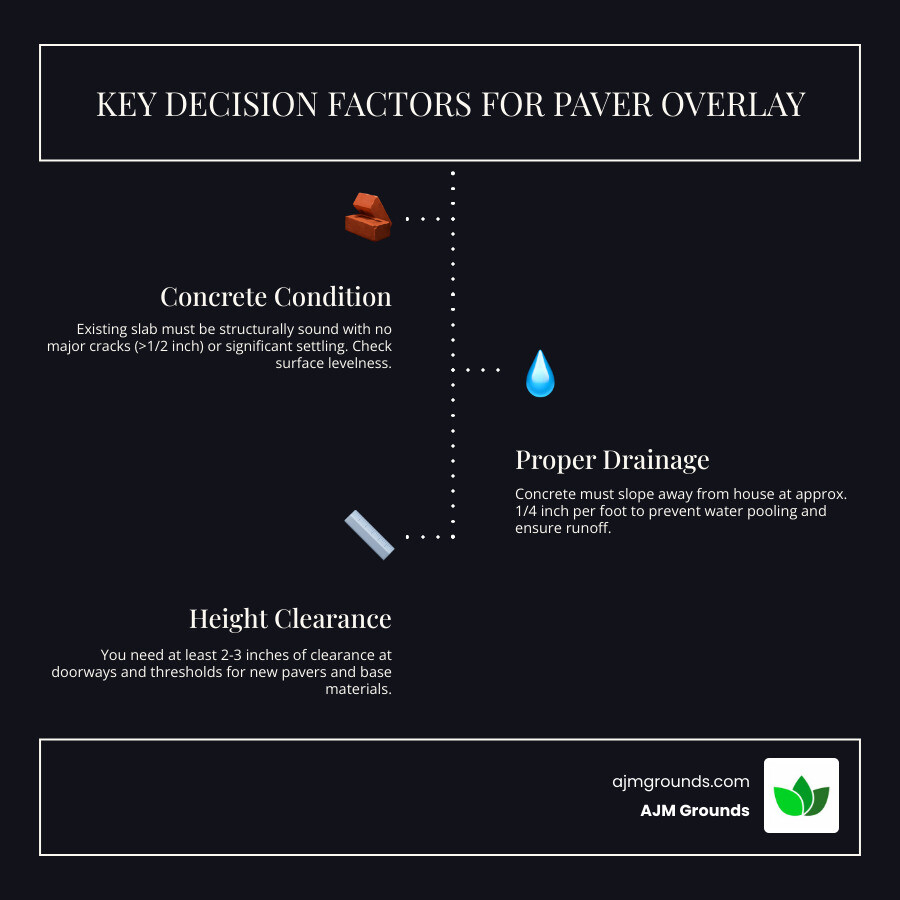
Simple guide to installing patio pavers over concrete terms:
Assessing Your Existing Concrete Slab
Before laying any pavers, a thorough inspection of your existing concrete slab is critical. Here’s what to look for:
Structural Integrity
Is the slab solid? Hairline cracks are usually fine, but major cracks (wider than 1/2 inch), heaving, or significant settling indicate deeper structural issues. An overlay will not fix a failing foundation; it will fail along with it.
Slope and Drainage
Concrete is non-permeable. Without a proper slope (at least 1/4 inch per foot away from your home), water will get trapped between the concrete and pavers. This trapped moisture can cause mold, mildew, and instability during freeze-thaw cycles. If your slab is flat or slopes toward your house, an overlay is not recommended. Learn why proper drainage is crucial for your landscape.
Surface Levelness
A thin layer of leveling sand can correct minor imperfections, but the concrete must be relatively flat. Significant dips or rises will make it difficult to achieve a stable, even paver surface.
Height Clearance at Doorways and Steps
An overlay will add 2-4 inches of height. Ensure you have enough clearance under doorways and that the new height won’t create a tripping hazard at transitions to other areas. Adjusting door thresholds can be an unexpected additional project.
Pros and Cons of Installing Pavers Over Concrete
Understanding the trade-offs is key to making the right decision.
The Sunny Side: Pros of a Paver Overlay
- Cost Savings: Save 10-20% on initial costs by avoiding demolition, debris hauling, and extensive base preparation.
- Faster Installation: With no demolition, the project timeline is significantly shorter.
- Aesthetic Improvement: Pavers offer a wide variety of colors and styles to completely revitalize an old, stained concrete slab.
- Easier Repairs: Replacing a single damaged paver is much simpler than patching concrete.
The Cloudy Side: Cons of a Paver Overlay
- Drainage Risks: Trapped water between the layers can lead to mold, mildew, and paver movement, as seen in this real-world example of moisture issues.
- Reduced Lifespan: The rigid concrete base doesn’t allow for natural movement, which can lead to premature paver cracking and a shorter lifespan compared to a full installation (20-30+ years).
- Shifting Pavers: Adhesives can fail over time, causing pavers to become loose, rock, or shift, creating an unsafe surface.
- Weed Growth: Trapped moisture can encourage more persistent weed and moss growth in the joints.
- Increased Surface Height: The added 2-4 inches can create clearance problems with doors and steps.
To help you weigh your options, here’s a quick comparison:
| Feature | Paver Overlay (Over Concrete) | Full Paver Installation (New Base) |
|---|---|---|
| Initial Cost | Lower (saves 10-20% on demolition/base) | Higher (includes demolition, excavation, new base) |
| Lifespan | Shorter (potential issues with drainage, rigidity) | Longer (20-30+ years with proper base) |
| Durability | Good, but susceptible to underlying concrete issues | Excellent, very stable and flexible |
| Drainage | Challenging, risk of trapped water, mold, freeze-thaw issues | Excellent, water drains through base |
| Flexibility | Limited (concrete is rigid) | High (pavers move with ground, preventing cracks) |
| Maintenance | Can be higher due to potential weed/moss from trapped moisture | Lower, especially with polymeric sand and proper drainage |
| DIY Feasibility | Generally easier, less heavy labor | More labor-intensive, often requires professional equipment |
How to Install Patio Pavers Over Concrete: A Step-by-Step Guide
If you’ve assessed your slab and decided an overlay is the right move, this guide will walk you through the process. Careful preparation is the key to a professional-looking result.
Gather Your Tools and Materials
Having everything ready before you start is crucial. Here’s what you’ll need.
Materials:
- Thin Pavers: Use pavers that are 1.5 to 2 inches thick to minimize the height increase. Basic concrete pavers can be affordable, with prices varying widely based on style and supplier.
- Paver Edging: This contains the paver field and prevents shifting.
- Construction Adhesive: A polyurethane-based adhesive works best to secure the edging to the concrete.
- Landscape Fabric: This acts as a separation layer, preventing the sand bed from washing into cracks in the concrete.
- Leveling Sand: Use fine mason sand to create a smooth 1-inch bed for the pavers. Do not use coarse paver base.
- Polymeric Sand: This special sand hardens when wet, locking pavers in place and resisting weeds.
- Weed Killer: To treat any existing weeds in concrete cracks.
Tools:
- Pressure washer
- Long and short levels
- Screed pipes (1/2 to 3/4 inch diameter) and a straight 2×4 (screed board)
- Rubber mallet
- Angle grinder or masonry saw with a diamond blade
- Hand tamper or plate compactor
- Tape measure and chalk line
- Shovel, rake, and broom
- Safety gear (gloves, eye protection, dust mask)
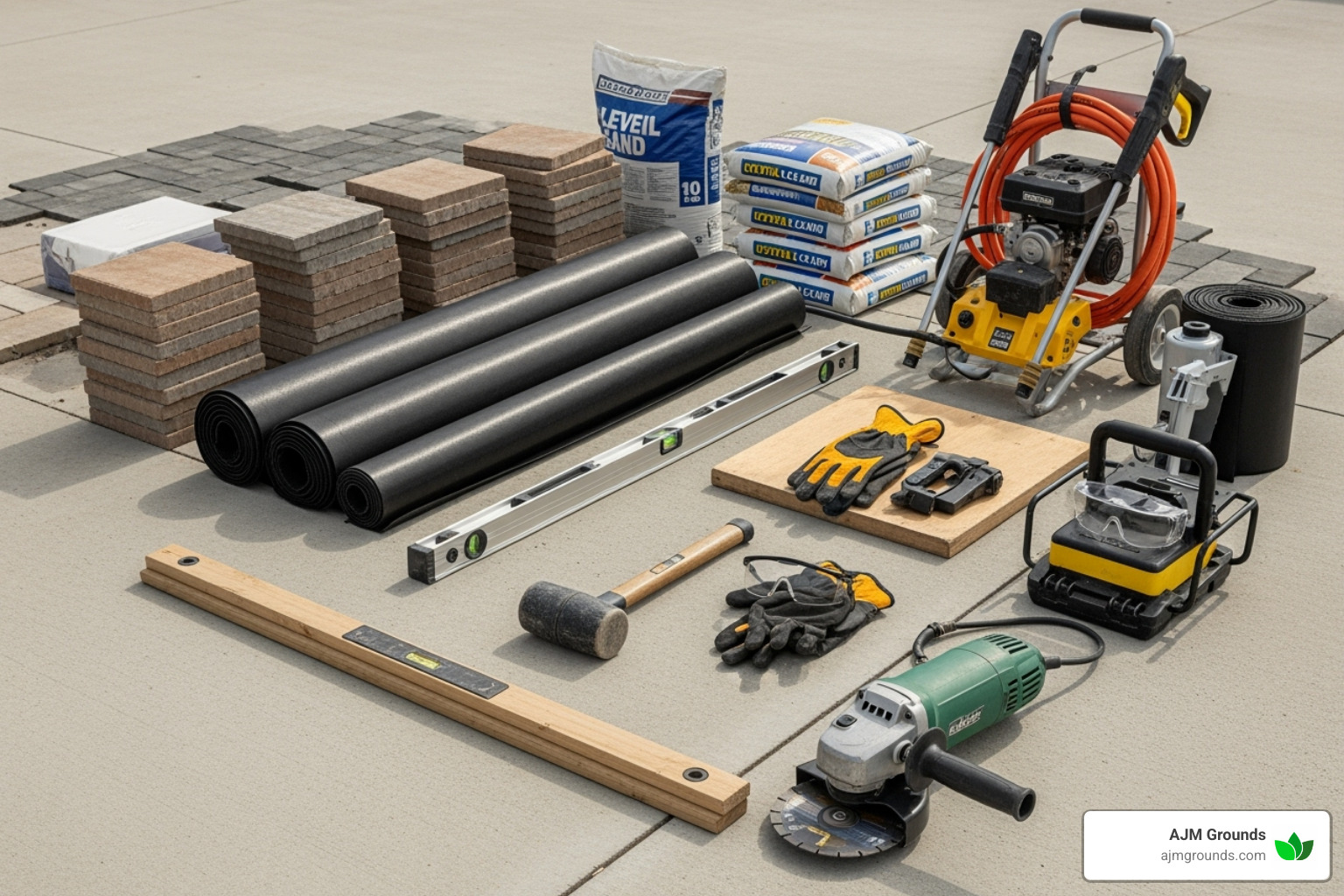
The Installation Process for installing patio pavers over concrete
We’ll use the sand-set method with adhesive borders, which offers a good balance of durability and DIY-friendliness.
Step 1: Prepare and Clean the Concrete Surface
Thoroughly clean the concrete with a pressure washer to remove all dirt, grime, and loose debris. Treat any weeds in cracks with weed killer. Fill minor cracks (less than 1/2 inch) with a flexible concrete crack filler. Allow the surface to dry completely.
Step 2: Plan Your Layout and Mark Borders
Use a tape measure and chalk line to mark the perimeter of your new patio. For square corners, use the 3-4-5 method: measure 3 feet along one side and 4 feet along the adjacent side; the diagonal between these points should be exactly 5 feet.
Step 3: Install Paver Edging with Adhesive
Secure the paver edging or a border course of pavers directly to the concrete along your marked perimeter using construction adhesive. This frame is essential for holding the field pavers in place. Allow the adhesive to cure according to the manufacturer’s instructions.
Step 4: Lay Landscape Fabric
Roll out landscape fabric over the entire area inside your edging. This stabilizes the sand bed and prevents it from migrating into concrete cracks. Overlap any seams by at least 6 inches.
Step 5: Spread 1-inch Sand Bed
Spread a uniform 1-inch layer of leveling sand over the fabric. To ensure a perfectly flat and properly sloped surface, lay two screed pipes parallel to each other. Pour sand between them and drag a straight 2×4 board across the pipes to level the sand. Remove the pipes and carefully fill in the voids.
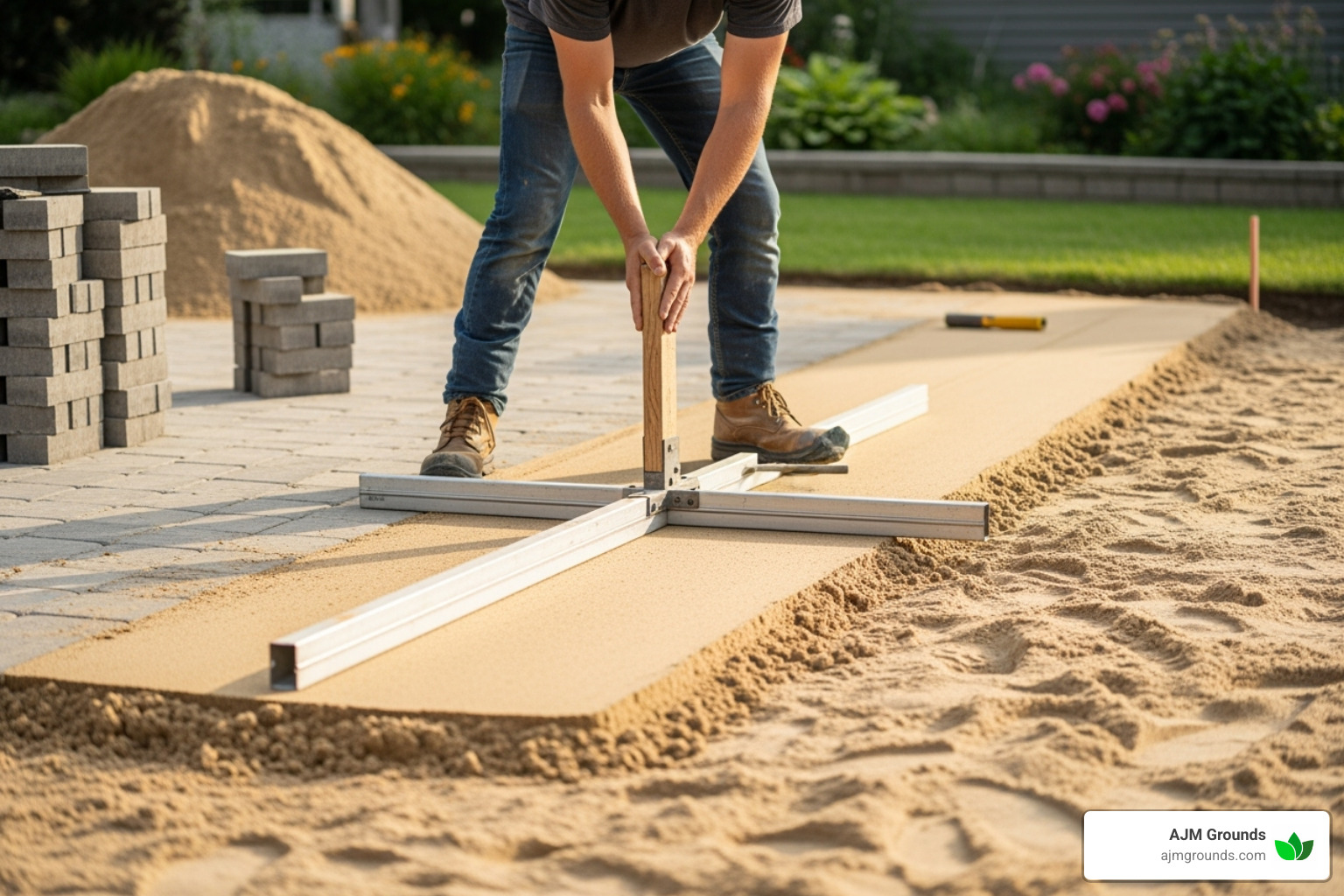
Explore our step-by-step paver installation guides
Step 6: Lay Field Pavers
Starting from a corner, begin laying the pavers. Place them straight down onto the sand bed; do not slide them, as this will disturb the level sand. Use spacers if your pavers don’t have them built-in to maintain consistent joint widths. Check for levelness every few rows and make adjustments with a rubber mallet.
Step 7: Make Cuts
When you reach the edges or need to fit pavers around obstacles, you will need to make cuts. Use an angle grinder or masonry saw for this. Always wear safety glasses, a dust mask, and hearing protection when cutting pavers. Measure carefully for a clean, professional look.
Finishing Your Project and Ensuring Long-Term Success
With the pavers laid, a few final steps will lock in your work and ensure the long-term durability of your new patio.
Applying Joint Sand and Final Compaction
This stage locks the individual pavers into a single, solid surface.
Sweeping in the Polymeric Sand
Pour polymeric sand over the dry paver surface. Use a broom to sweep the sand across the patio, working it into the joints until they are completely full. Once filled, thoroughly sweep all excess sand off the paver surfaces. A leaf blower is effective for removing the fine dust that can cause hazing later.
Tamping Everything Into Place
Run a plate compactor or hand tamper over the entire patio. This vibrates the pavers, settling them firmly into the sand bed and compacting the polymeric sand deep into the joints.
Activating the Sand
Following the manufacturer’s directions, gently mist the patio with a garden hose. The goal is to wet the sand in the joints without washing it out. Apply a light mist several times until the joints are saturated. This activates the polymers that will bind the sand together.
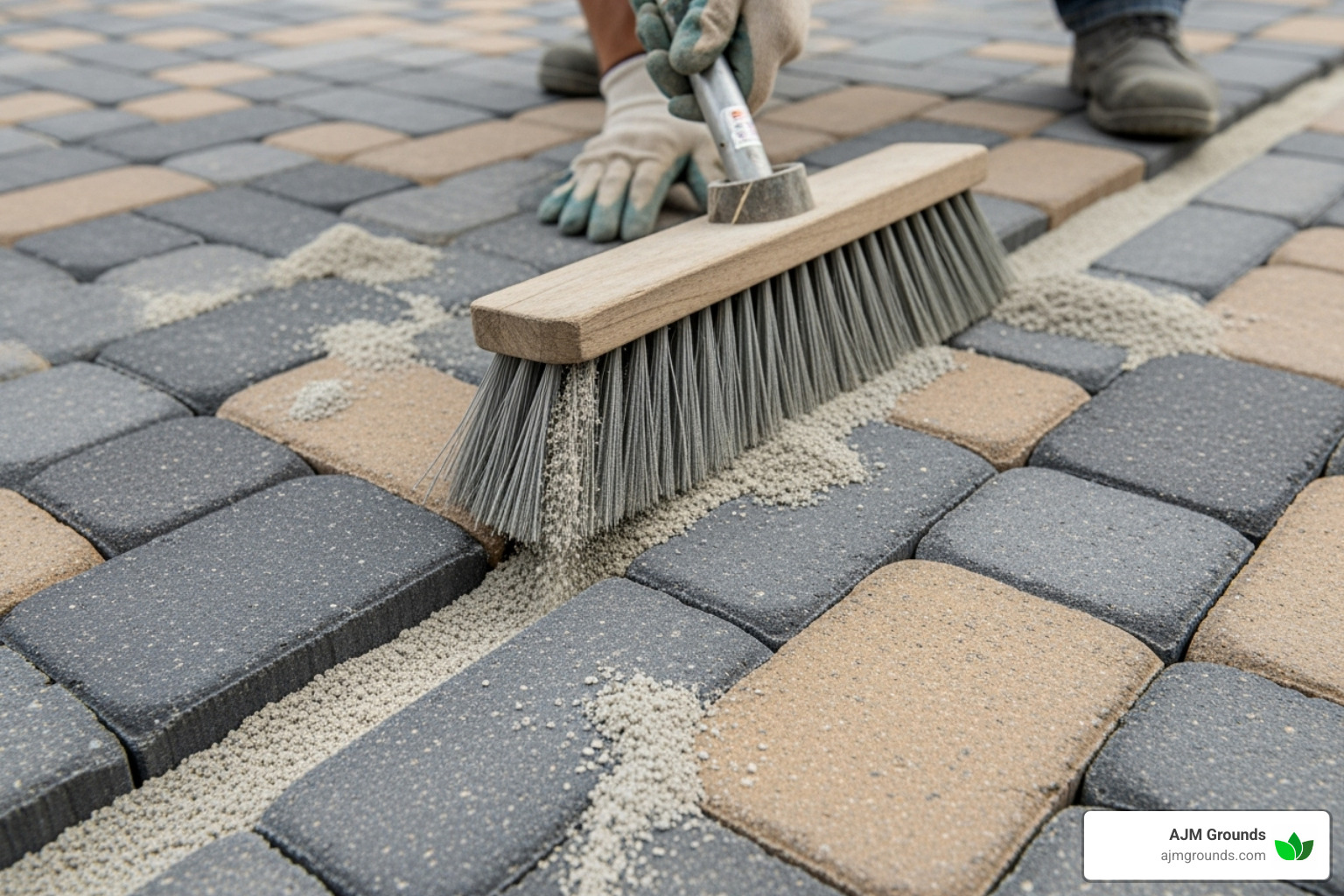
Curing
Allow the polymeric sand to cure for at least 24 hours (or as specified by the product) before walking on the patio or exposing it to heavy rain. This curing period is when the sand hardens, creating a durable, weed-resistant, and insect-proof barrier.
When to Call the Professionals for installing patio pavers over concrete
While a paver overlay can be a great DIY project, some situations require professional expertise to avoid costly future problems.
When Removing the Concrete is the Better Path
We strongly recommend a full tear-out if your project involves:
- Major Structural Issues: Concrete with cracks wider than 1/2 inch, heaving, or significant settling provides an unstable base that will cause the new pavers to fail.
- Serious Drainage Problems: If your slab is flat or slopes toward your house, an overlay will trap water. A professional can design a proper base with adequate drainage.
- Height Clearance Issues: If you lack the necessary 2-4 inches of clearance at doorways, a full removal and new installation is often the only safe solution.
Ensuring Longevity Through Proper Construction
A full installation with a proper crushed stone base is simply more reliable. It provides superior drainage and flexibility, allowing the patio to last 20-30 years or more. While an overlay saves money upfront, a full installation is often a better long-term investment.
The AJM Grounds Approach
At AJM Grounds, we’ve transformed countless outdoor spaces throughout Woburn, Lexington, Burlington, and the surrounding Massachusetts communities. Our commitment is to provide honest advice and exceptional workmanship. We’ll help you understand whether an overlay is a viable option or if a full installation is the smarter choice for your property.
If you’re unsure about the best path forward for your patio, we’re here to provide a professional assessment and deliver results that stand the test of time.
Explore our custom patio design services
Contact us for a professional patio installation
