

Beat the Heat with a Patio Misting System
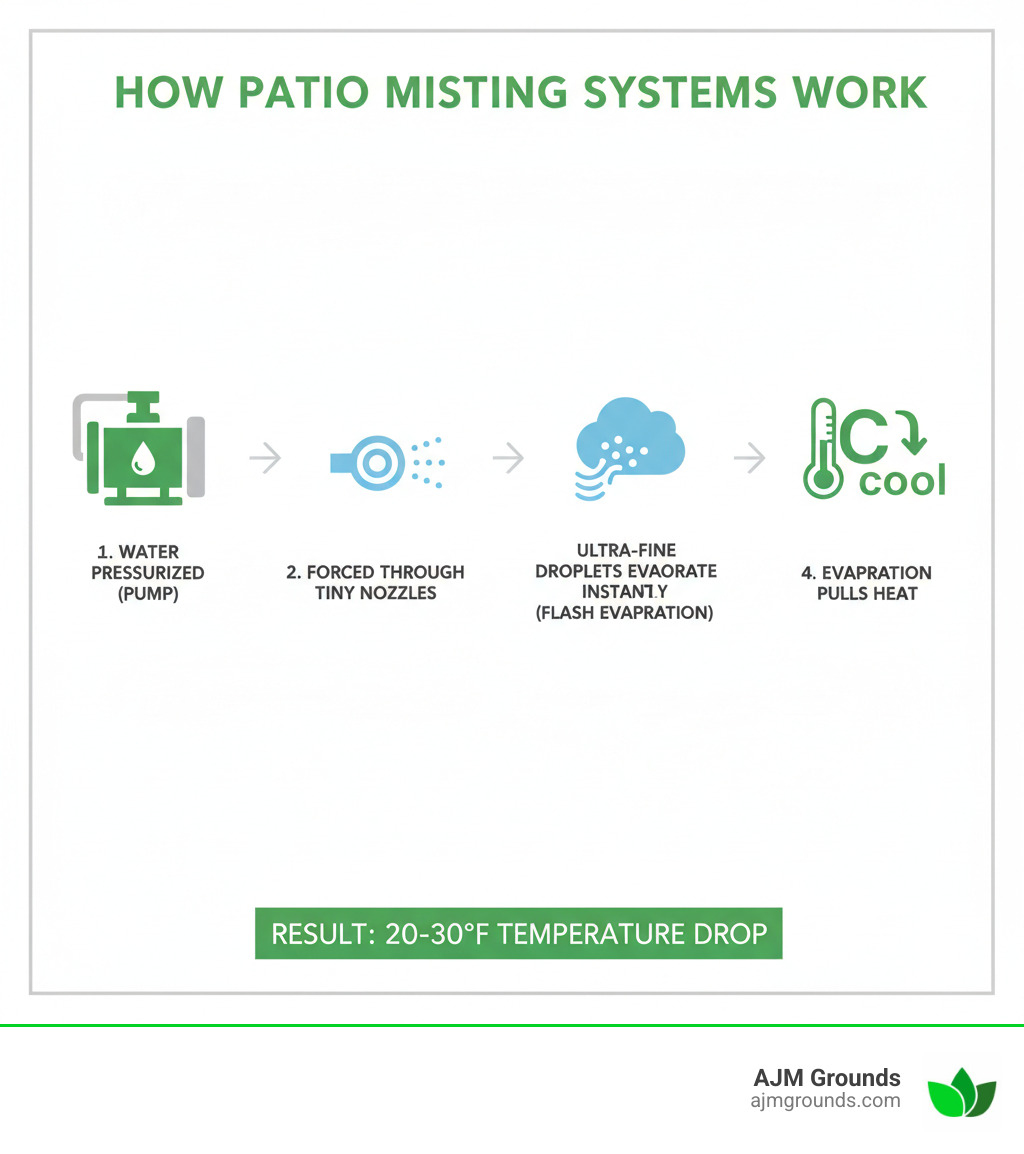
Installing misters on patio spaces is a DIY project that can drop your outdoor temperature by as much as 20-30°F. Misting systems work through evaporative cooling—tiny water droplets evaporate instantly, pulling heat from the air to create a comfortable oasis, even on the hottest Massachusetts afternoons.
Time Required: 30 minutes to 4 hours
Typical Cost Range: $50-$500 for DIY kits, $1,500-$5,000+ for professional installation
Whether you’re hosting a gathering or relaxing after work, a misting system transforms a hot patio into a pleasant retreat. The technology is simple, and the payoff in comfort is significant. As John Caplis, owner of AJM Grounds LLC, I’ve helped many Woburn-area homeowners improve their outdoor living spaces with misters. My team knows how to integrate these cooling solutions seamlessly into local hardscapes.
This guide will walk you through choosing, installing, and maintaining your system, helping you decide between a DIY approach and professional help.
Easy installing misters on patio word list:
Planning and Preparation for Installing Misters on Your Patio
This section covers choosing the right system, planning your layout, and understanding the costs and materials needed to transform your outdoor living space.
Choosing Your Misting System and Components
The first step in installing misters on patio spaces is choosing the right system type, which impacts budget, installation, and cooling effectiveness.
- Low-pressure systems (40-60 PSI): These are the most affordable and easiest to install, connecting directly to a garden hose. They produce larger droplets, resulting in moderate cooling with some surface dampness.
- Mid-pressure systems (100-250 PSI): Using a booster pump, these systems create a finer mist for better cooling with less wetness. They offer a balance of performance and cost.
- High-pressure systems (500-1500 PSI): The most effective option, these use a powerful pump to create an ultra-fine mist that flash-evaporates, cooling the air by up to 30°F without leaving surfaces wet. For true flash evaporation, pressure should be above 500 PSI.
Core components for any system include tubing (plastic, copper, or stainless steel), misting nozzles, fittings, mounting hardware, and a water filter. Mid- and high-pressure systems also require a pump. While plastic tubing is affordable and flexible for DIY, stainless steel offers superior durability and a more professional look for high-pressure setups. A misting line provides broad coverage, whereas a misting fan offers more targeted cooling for a specific zone.
| System Type | PSI Range | Cooling Effect | Cost (DIY Kit) | Installation Difficulty |
|---|---|---|---|---|
| Low-Pressure | 40-60 PSI | Moderate (larger droplets, some dampness) | Low | Easy |
| Mid-Pressure | 100-250 PSI | Good (finer mist, less dampness) | Medium | Moderate |
| High-Pressure | 500-1500 PSI | Excellent (ultra-fine mist, no dampness) | High | Moderate to Advanced |
Gathering Tools and Planning Your Layout
Proper preparation is key to a smooth installation. Before installing misters on patio areas, gather your tools and plan the layout.
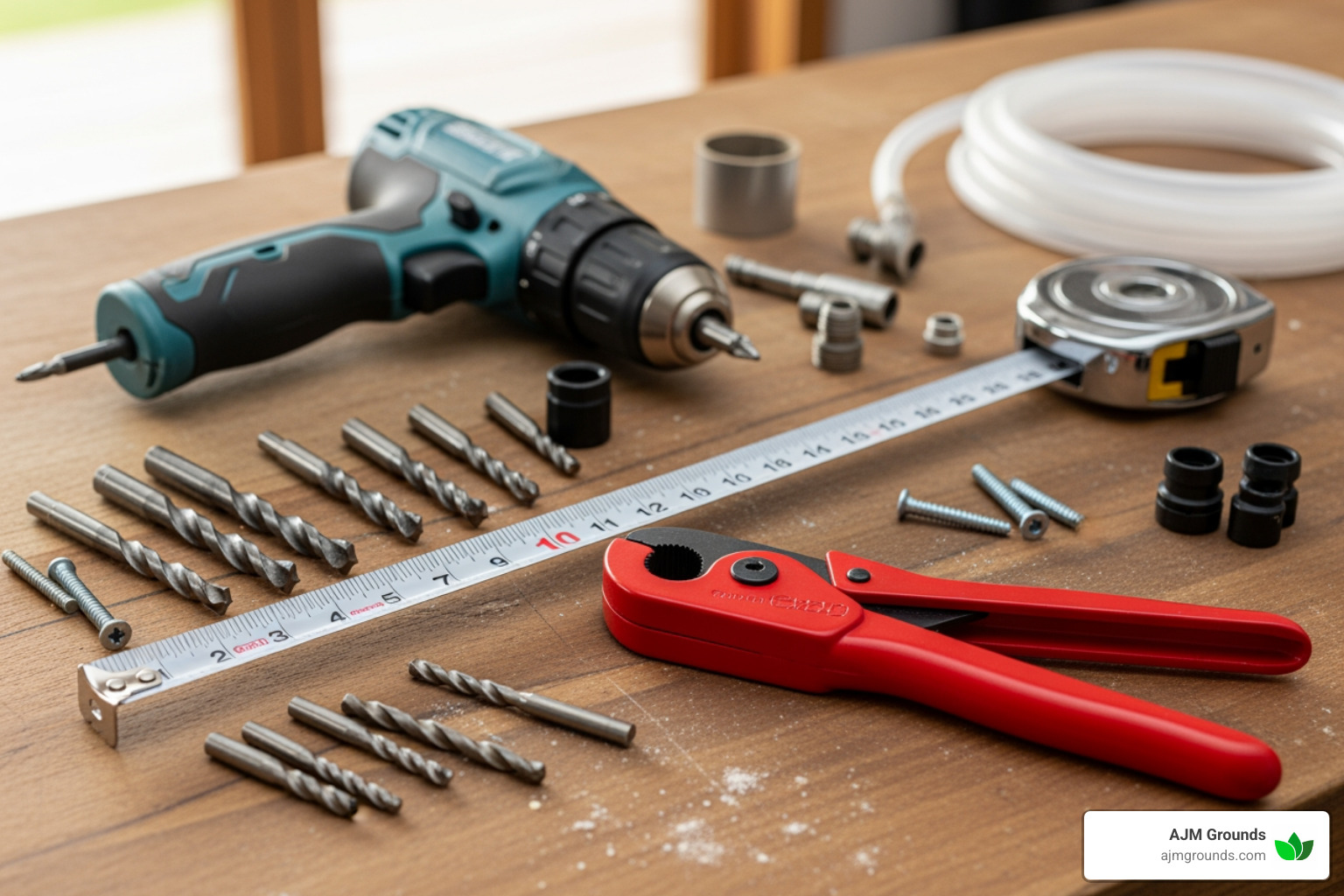
Essential tools include a measuring tape, drill, tubing cutter, ladder, and safety glasses. You’ll also need mounting hardware (screws, clamps), Teflon tape for sealing threads, and a filter washer for the hose connection.
Planning your layout:
- Measure your patio to determine the required length of tubing.
- Plan the mounting height at 8-10 feet above the ground to allow the mist to evaporate before it settles.
- Determine nozzle spacing at 2-3 feet apart. Angle nozzles slightly inward to direct the mist into the seating area, not straight down.
- Locate your water and power sources. You’ll need an outdoor spigot and, for pump systems, a GFCI-protected electrical outlet. A GFCI outlet is a critical safety feature for preventing shock in wet conditions. Never run a pump dry, as it can cause severe damage.
This planning ensures your system integrates well with your overall How to Design a Beautiful and Functional Outdoor Space.
Understanding Costs and Water Quality
Budget and water quality are two key factors for long-term satisfaction when installing misters on patio spaces.
DIY kit costs vary by system type: low-pressure kits are typically $50 to $500, mid-pressure kits range from $300 to $1,000, and high-pressure kits start around $800 and can exceed $2,500.
Professional installation for a high-pressure system generally costs $1,500 to $5,000 or more, depending on the project’s complexity and materials.
Note: Cost estimates are based on national averages and do not reflect specific pricing from AJM Grounds. DIY kits can range from $50 to $500, while professionally installed high-pressure systems can range from $1,500 to $5,000+ depending on patio size and complexity.
Water usage is minimal, with most nozzles using about one gallon per hour. However, water quality is critical. Misting nozzles have tiny openings that can easily clog with sediment or mineral deposits from hard water. This is a common issue in parts of Massachusetts. As water evaporates, it leaves behind mineral scale that builds up, causing drips and reducing performance. Using a quality water filter, especially a calcium inhibitor or anti-scale filter, is essential for preventing clogs and extending the life of your system. The U.S. Geological Survey (USGS) offers more details on Scientific research on water hardness.
The Ultimate Guide to Patio Mister Installation and Maintenance
Follow these steps for a successful installation and learn how to keep your system running perfectly for years to come.
Step-by-Step Guide for installing misters on your patio
Installing misters on patio areas is a manageable project. While systems vary, these core steps apply to most installations.
- Position the Pump (If Applicable): Place your pump in a dry, sheltered spot near your water spigot and a GFCI-protected outlet.
- Connect Water Source: Attach the system’s inlet hose to your outdoor spigot, making sure to use a filter. Connect any external filtration units between the spigot and the pump.
- Route and Cut Tubing: Following your layout plan, cut the tubing to length with a tubing cutter for clean, perpendicular cuts to prevent leaks. Route the line along your patio structure, using elbow and tee fittings for corners and branches.
- Secure the Line: Use clamps every 24-30 inches to anchor the tubing. For a clean look on pergolas, you can use o-rings and zip ties. Ensure the line has a slight downward slope for drainage.
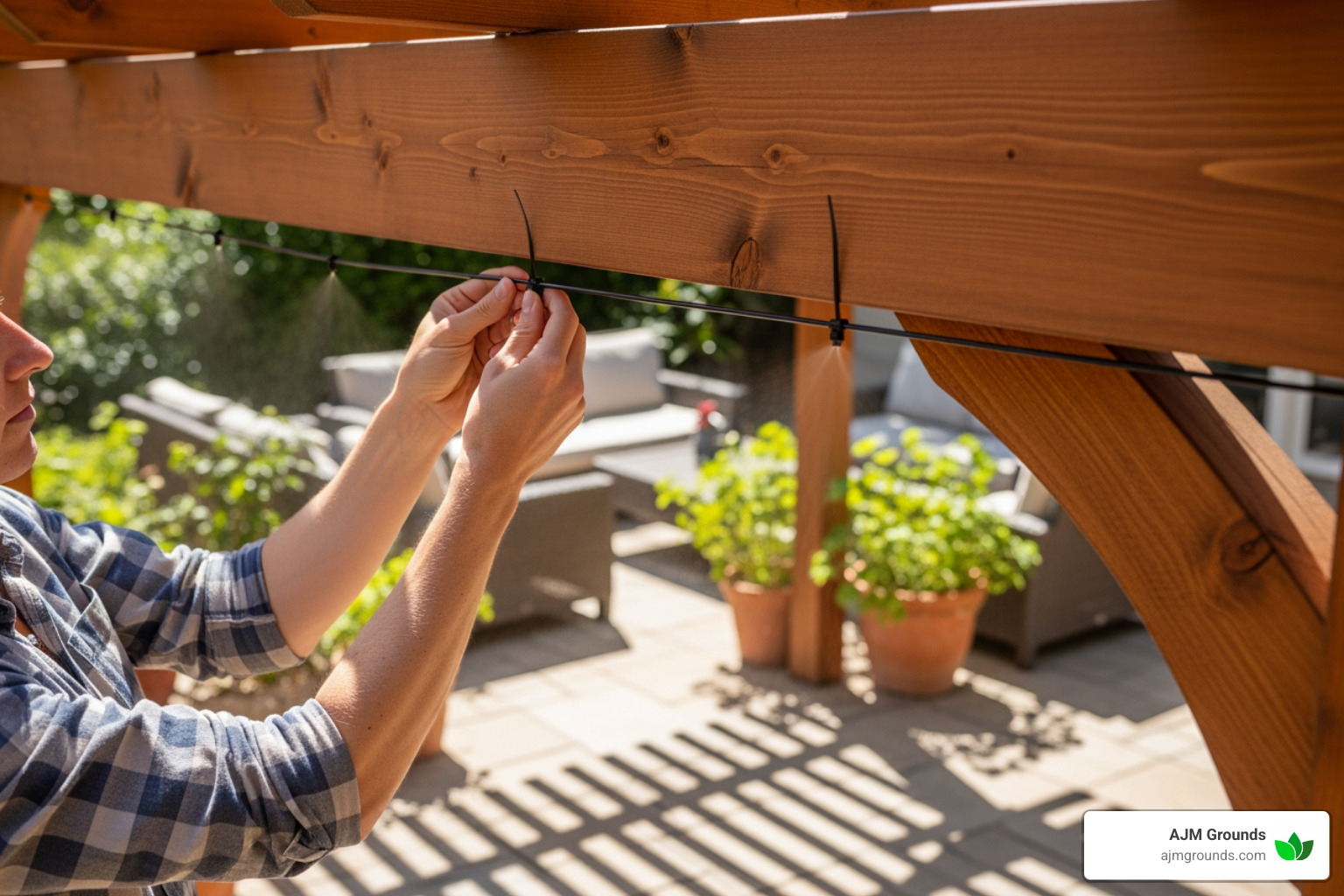
- Install Nozzles: Screw the nozzles into the fittings, angling them slightly inward toward your seating area. Leave the last nozzle off for now.
- Flush the System: Before installing the final nozzle, turn on the water and run the system for a minute. This flushes out any debris that could clog the nozzles.
- Final Test: Install the last nozzle, turn the system on, and check all connections for leaks. Inspect the mist pattern from each nozzle and adjust angles as needed for optimal cooling.
Best Practices for a Leak-Free and Effective System
To ensure your system delivers cool mist instead of annoying drips, follow these best practices learned from our experience in Woburn, Lexington, and surrounding areas.
- Ensure Watertight Connections: Use Teflon tape on all threaded connections. Make clean, straight cuts with a tubing cutter and ensure tubing is fully inserted into fittings. Tighten firmly but do not overtighten.
- Optimize the Mist: Angle nozzles slightly inward to direct mist into the cooling zone, not onto surfaces. Ensure your pump provides adequate pressure (500-1000 PSI for high-pressure systems) to create a fine mist, not wet droplets.
- Prevent Slippery Surfaces: Test your patio surface for slipperiness when wet, especially with smooth pavers or stone from our Patio and Walkway Ideas. Adjust nozzle placement or intensity if needed.
- Avoid Common Mistakes: Don’t use an underpowered pump for your system size, skip water filtration, or run the pump dry. Secure the tubing properly and place nozzles high enough to avoid spraying people or food directly.
Maintaining Your System and When to Call a Pro
Routine maintenance will keep your system running smoothly for years. For more complex jobs, professional help is a smart choice.
System Maintenance:
- Clean Nozzles: If a nozzle drips or sprays unevenly, soak it overnight in a vinegar and water solution to dissolve mineral buildup. Replace your water filter as recommended by the manufacturer.
- Winterize (Critical in Massachusetts): Before the first freeze, turn off the water, drain all lines completely, and store the pump and filters indoors in a frost-free location. Blowing out the lines with an air compressor is also recommended.
- Troubleshoot Leaks: Most leaks occur at connections and can be fixed by tightening the fitting or reapplying Teflon tape. Replace any cracked tubing or persistently clogged nozzles.
When to Hire a Professional:
While installing misters on patio can be a DIY project, consider a pro for complex layouts, high-pressure system installations, or if you want a seamless, aesthetically pleasing integration. Professionals ensure correct pump sizing, leak-free connections, and offer warranties. For a flawless addition to your Custom Patio Installations, the expert touch makes all the difference.
At AJM Grounds, we specialize in creating exceptional outdoor living spaces. Contact us for your expert Patio Installation and let us help you transform your patio into the coolest spot in your backyard.
