Why Installing Landscape Blocks is Both Rewarding and Challenging
Installing landscape blocks is one of the most satisfying DIY projects you can tackle, but it can turn into a headache fast if you skip the fundamentals. Whether you want a small raised bed or a full-blown retaining wall, success comes down to good planning, rock-solid foundations and—above all—proper drainage.
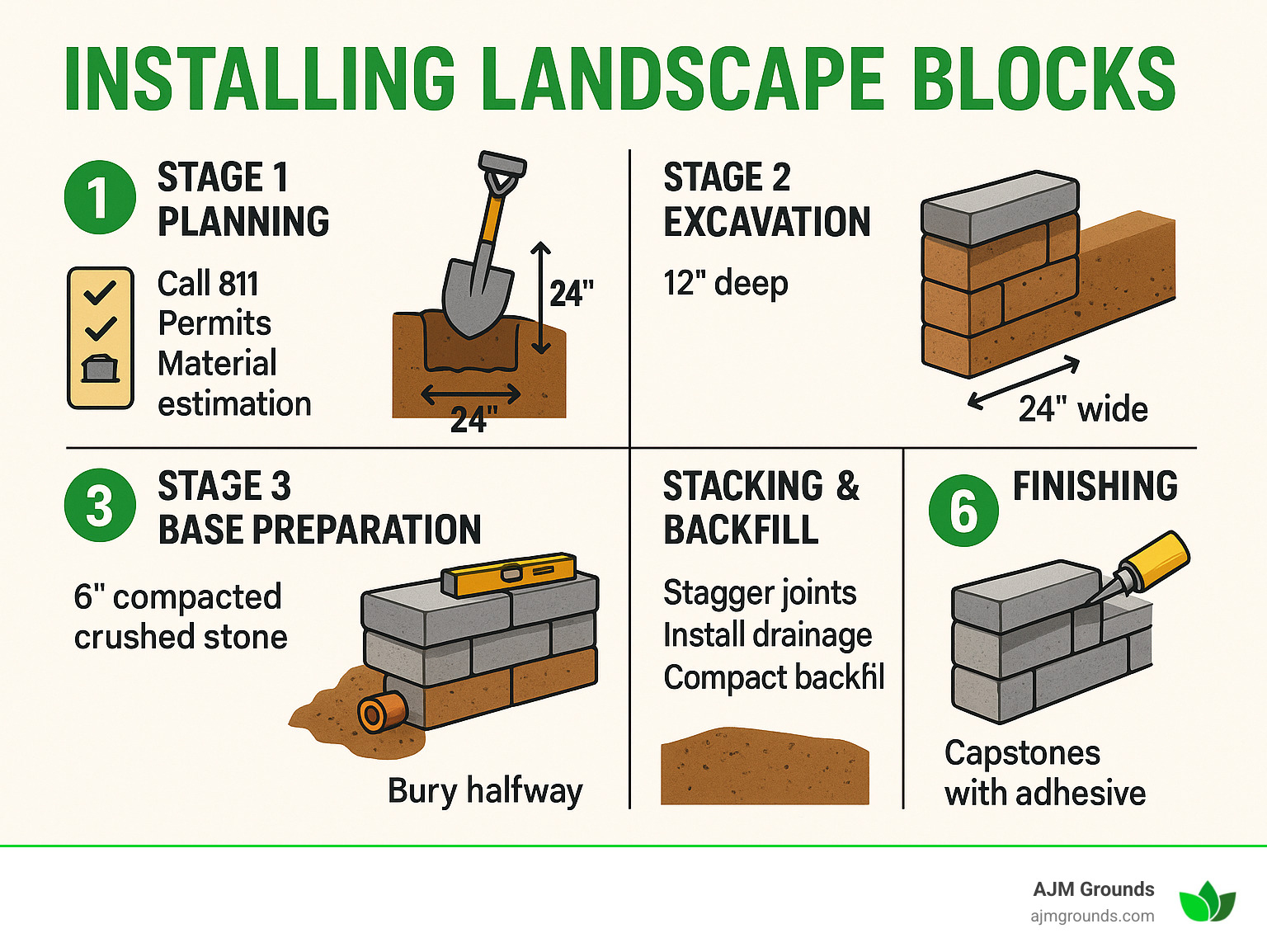
Quick Installation Overview:
- Plan & Prepare – Call 811, check permits, estimate materials
- Excavate – Dig trench 12″ deep, 24″ wide
- Build Base – Add 6″ compacted crushed stone
- Lay First Course – Level blocks, bury halfway
- Stack & Backfill – Stagger joints, add drainage, compact
- Finish – Capstones with adhesive
A recent NAR study shows landscape upgrades return an average 105 % of their cost at resale, and 79 % of homeowners say these projects give them a major sense of accomplishment. The biggest cause of failure? Poor drainage. When water builds up, the resulting hydrostatic pressure can push even a well-built wall over. Get the prep right and your wall will stay put for decades.
I’m John Caplis, owner of AJM Grounds LLC in Woburn, Massachusetts. After hundreds of walls, I’ve learned that skipping any step above is an invitation to cracked blocks, leaning walls and lost weekends.
Basics you’ll find in this guide:
Planning and Preparation: The Blueprint for a Lasting Wall
Great walls start long before the first block is set. Skipping permits or under-estimating materials is a fast track to extra costs.
Site Assessment & Legal Must-Dos
- Dial 811 before digging—utility marking is free and avoids disasters.
- Confirm local building codes. In many MA towns, any wall over 4 ft needs a permit and stamped engineering plans.
- Walls taller than 4 ft, supporting driveways or built in poor soil are professional territory.
Estimating Materials
- Measure wall length ÷ block length for courses.
- Measure wall height ÷ block height and add one extra buried course.
- Buy 10 % extra blocks for cuts and future repairs—cheaper than emergency weekend runs.
Selecting the Right Blocks & Base Materials
- For DIY builds under 4 ft, choose interlocking gravity-wall blocks.
- Solid blocks weigh more but cut cleaner; hollow blocks are lighter but show voids when cut.
- Crushed 3⁄4-in angular stone is non-negotiable for both base and drainage.
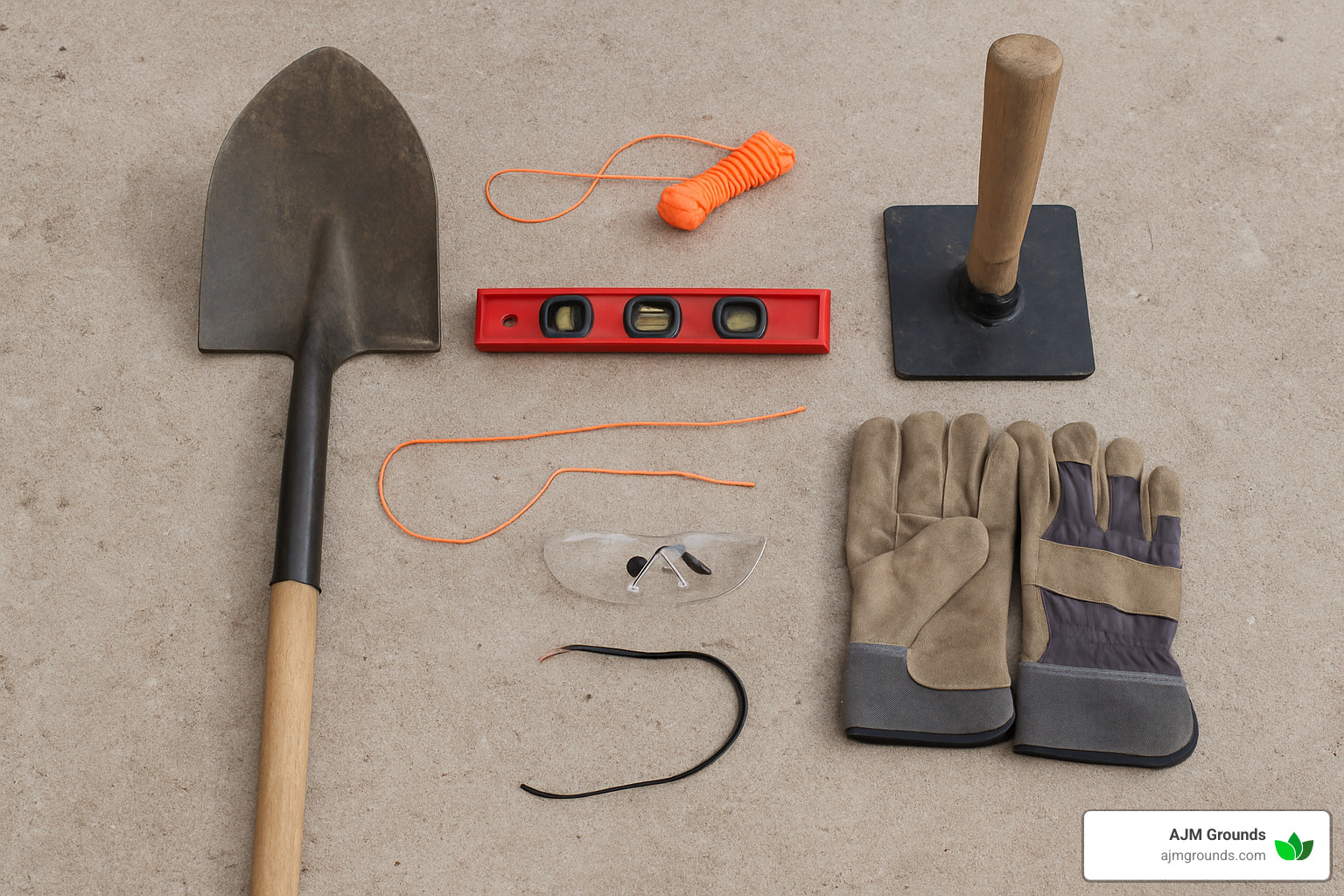
Essential Tools & PPE (Trimmed List)
Shovel, wheelbarrow, tape measure, hand tamper or rented plate compactor, torpedo & 4-ft levels, rubber mallet, masonry saw with diamond blade, string line, safety glasses, gloves and steel-toed boots.
Want someone else to do the heavy lifting? See our residential hardscape design services.
The Foundation: Excavation and Base Preparation
I’ve seen it countless times – someone gets excited about installing landscape blocks and rushes straight to stacking. Three months later, they’re calling us because their beautiful new wall is leaning like the Tower of Pisa. Here’s the truth: your retaining wall is only as strong as what’s underneath it, and this is where most DIY projects succeed or fail.
Getting Your Layout Right
Before you dig a single shovelful of dirt, mark your wall location with stakes and string lines. For straight walls, use a builder’s line level to keep everything true. If you’re planning curves, grab a garden hose – it’s the perfect tool for visualizing the shape before you commit to digging.
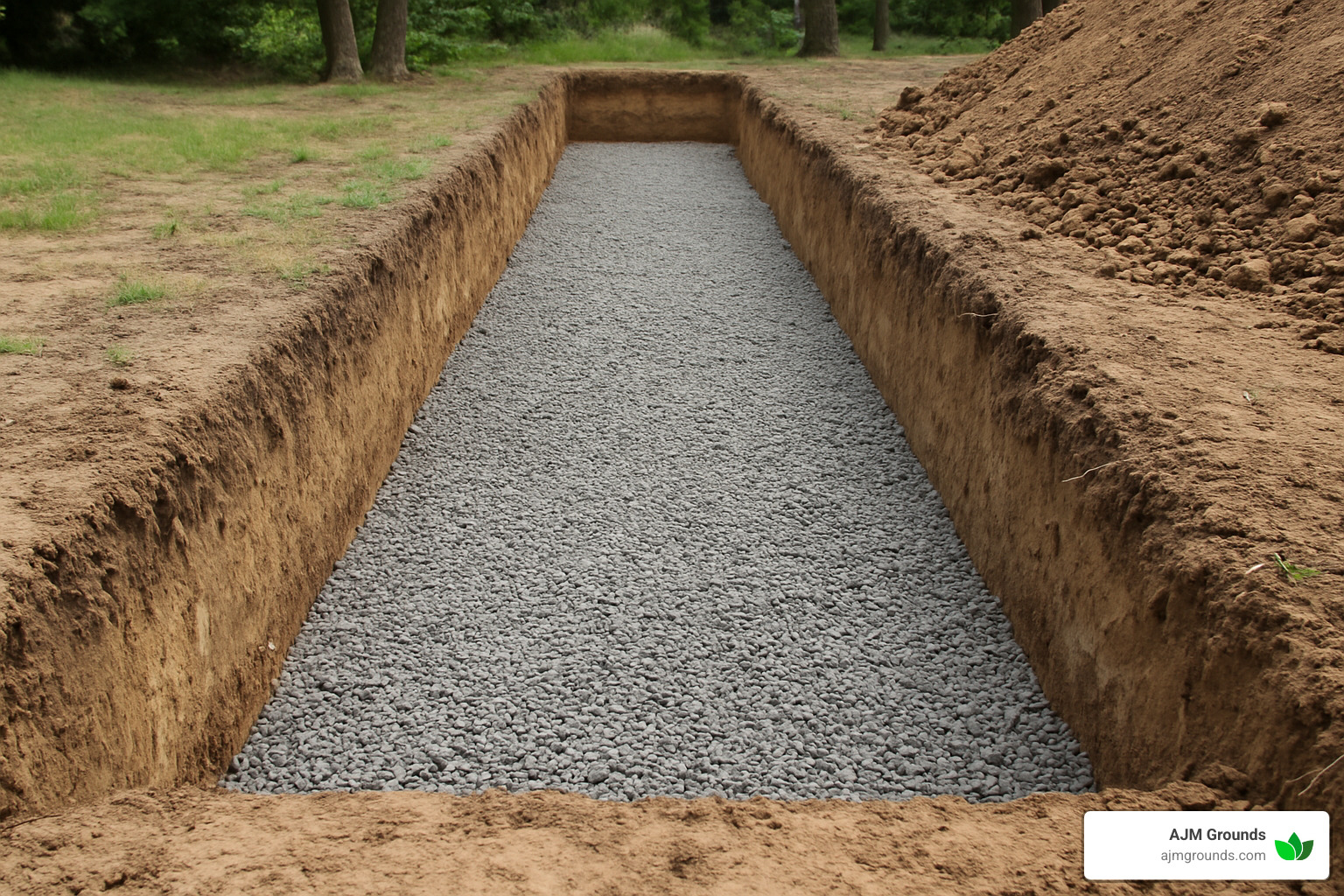
Here’s where the math matters: your trench depth should be 12 inches for most residential walls, but don’t forget to add extra depth to bury that first course. The trench width needs to be 24 inches – this gives you room to work and ensures proper support. I know it seems like a lot of digging, but trust me on this one.
The Excavation Process
Start digging at the lowest point of your wall location and work your way up. This prevents water from pooling during construction and gives you a reference point for keeping everything level. Your trench should be deep enough so the first course of blocks sits about halfway below ground level – this anchoring is what keeps your wall from sliding forward over time.
Once you’ve got your trench dug, it’s time to compact the subgrade soil. Even a couple inches of loose dirt can cause settling that’ll show up as bumps and dips in your finished wall. Use a hand tamper for smaller areas, or rent a plate compactor if you’re building something substantial.
Laying the Foundation Right
If you’re dealing with clay soil or want extra insurance against problems, roll out landscape fabric in your trench. This prevents soil from migrating into your base material over time – think of it as a long-term investment in your wall’s stability.
Now comes the star of the show: 3/4-inch crushed stone. This isn’t the place to cut corners or substitute pea gravel. You need angular crushed stone because those sharp edges lock together when compacted, creating a solid foundation that also drains well.
Install your base material in 2-3 inch lifts, compacting each layer thoroughly before adding the next. Your final leveling pad should be 6 inches thick after compaction. Use a long straight edge to check that everything’s level – any wobbles here will multiply as you stack higher.
The secret to a professional-looking wall? Taking your time with this step. I’ve watched experienced crews spend half their project time on base preparation, and there’s a good reason for it. Get this right, and the rest of your installing landscape blocks project will practically build itself.
For complex projects or challenging soil conditions, our expert retaining wall construction services can ensure your foundation is built to last decades, not just seasons.
The Critical Steps for Installing Landscape Blocks
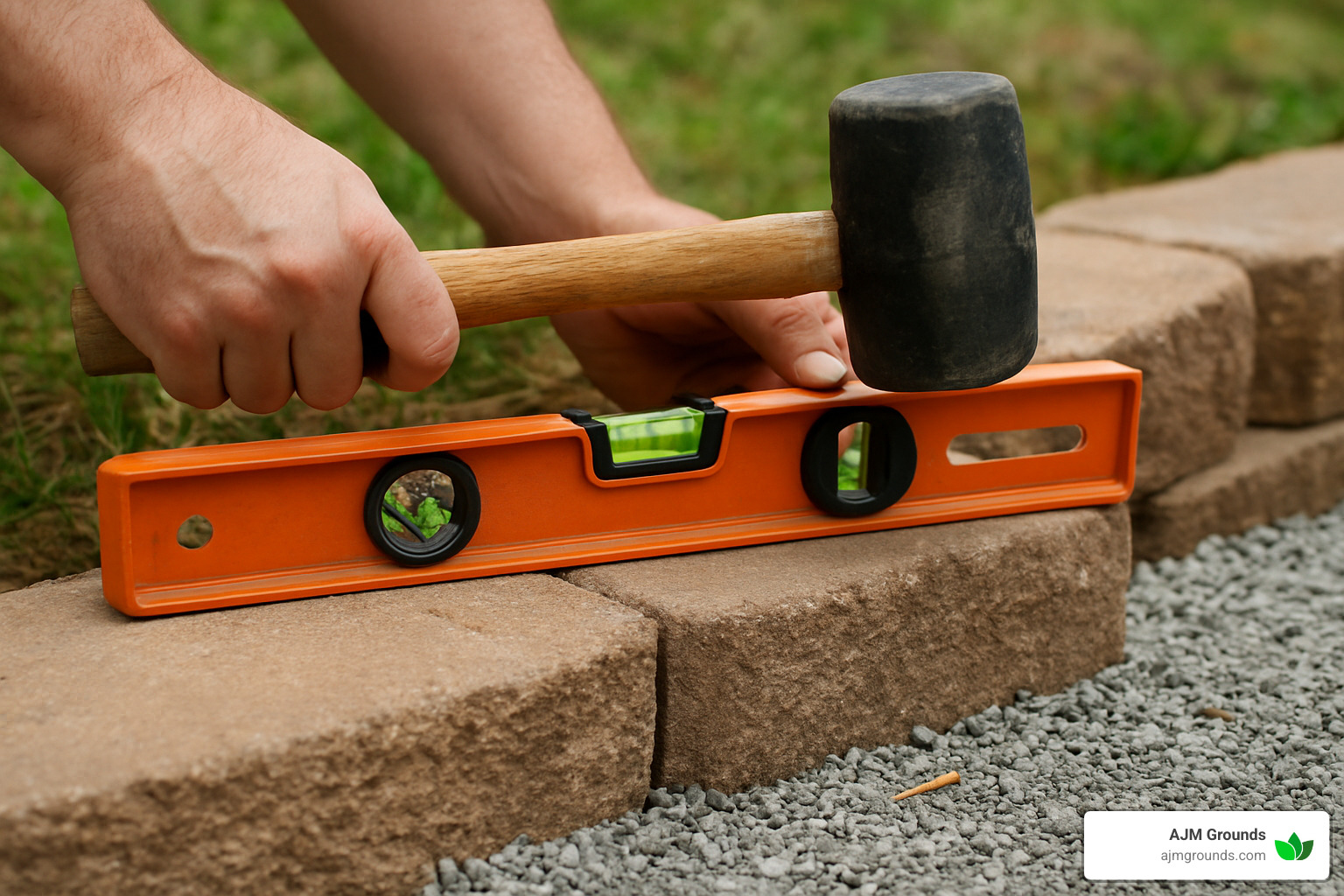
With the base ready, you’re into the make-or-break phase. Small errors now snowball higher up, so slow down and double-check.
First Course: Set It Straight, Set It Level
- Start at the lowest point of the wall.
- Bury blocks half their height for anchorage.
- Confirm each block is level front-to-back and side-to-side before moving on.
- Use a 4-ft level or string line to keep multiple blocks aligned.
Stacking Successive Courses
- Brush debris from every course—grit causes gaps.
- Stagger joints at least 4 in (running bond) for strength.
- Follow your block’s built-in setback; don’t fight it.
- Insert pins or engage lips as designed.
Drainage & Backfill (Where Most Walls Fail)
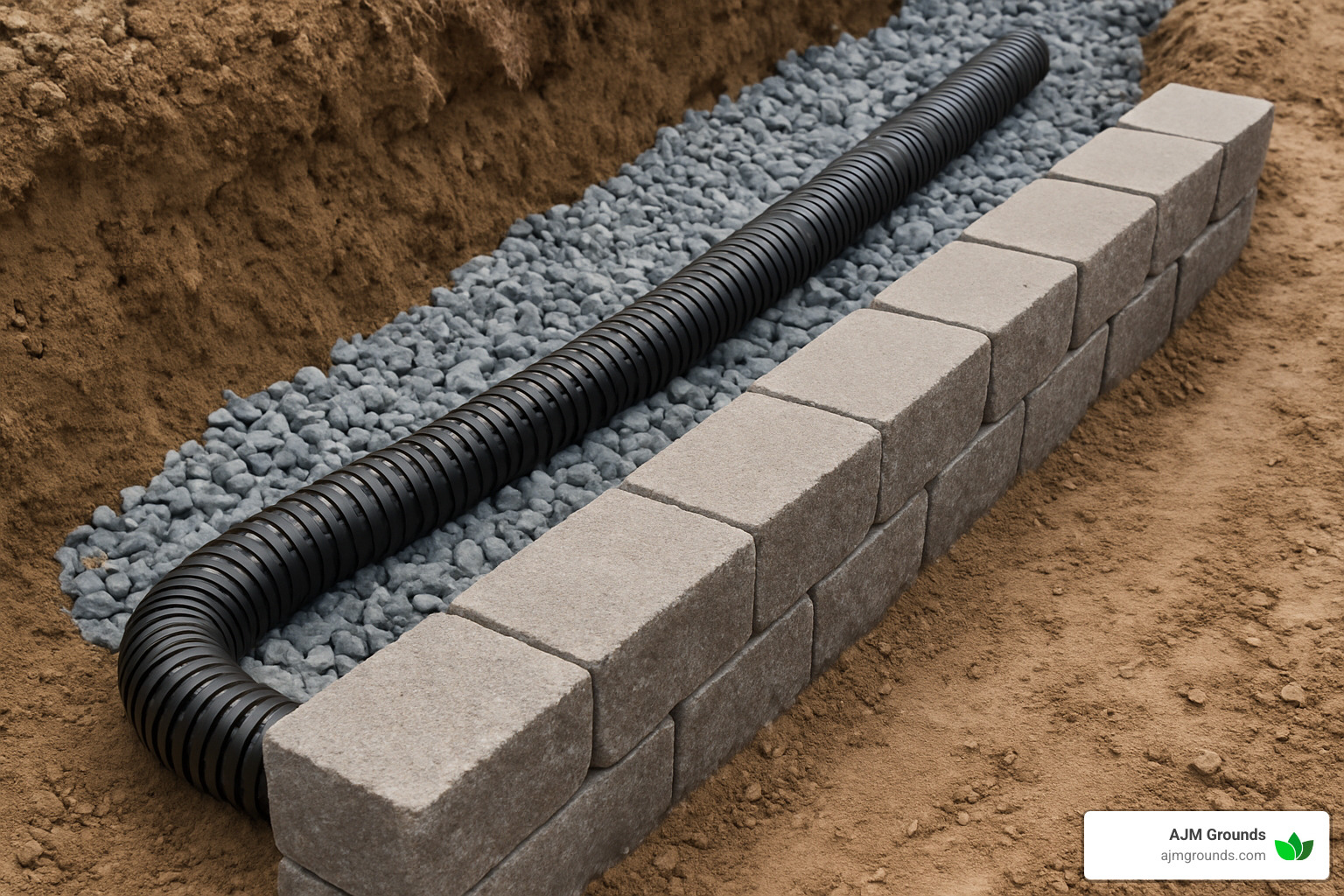
- Lay a perforated, sleeved drain pipe directly behind the first course and daylight it.
- Backfill the first 12 in behind the wall with 3⁄4-in crushed stone.
- Compact soil in 6–8 in lifts, keeping heavy plates 3 ft from the wall face.
Tackling a tall or tiered system? Our concrete block wall installation team can handle complex drainage and geogrid reinforcement.
Finishing Touches and Advanced Considerations
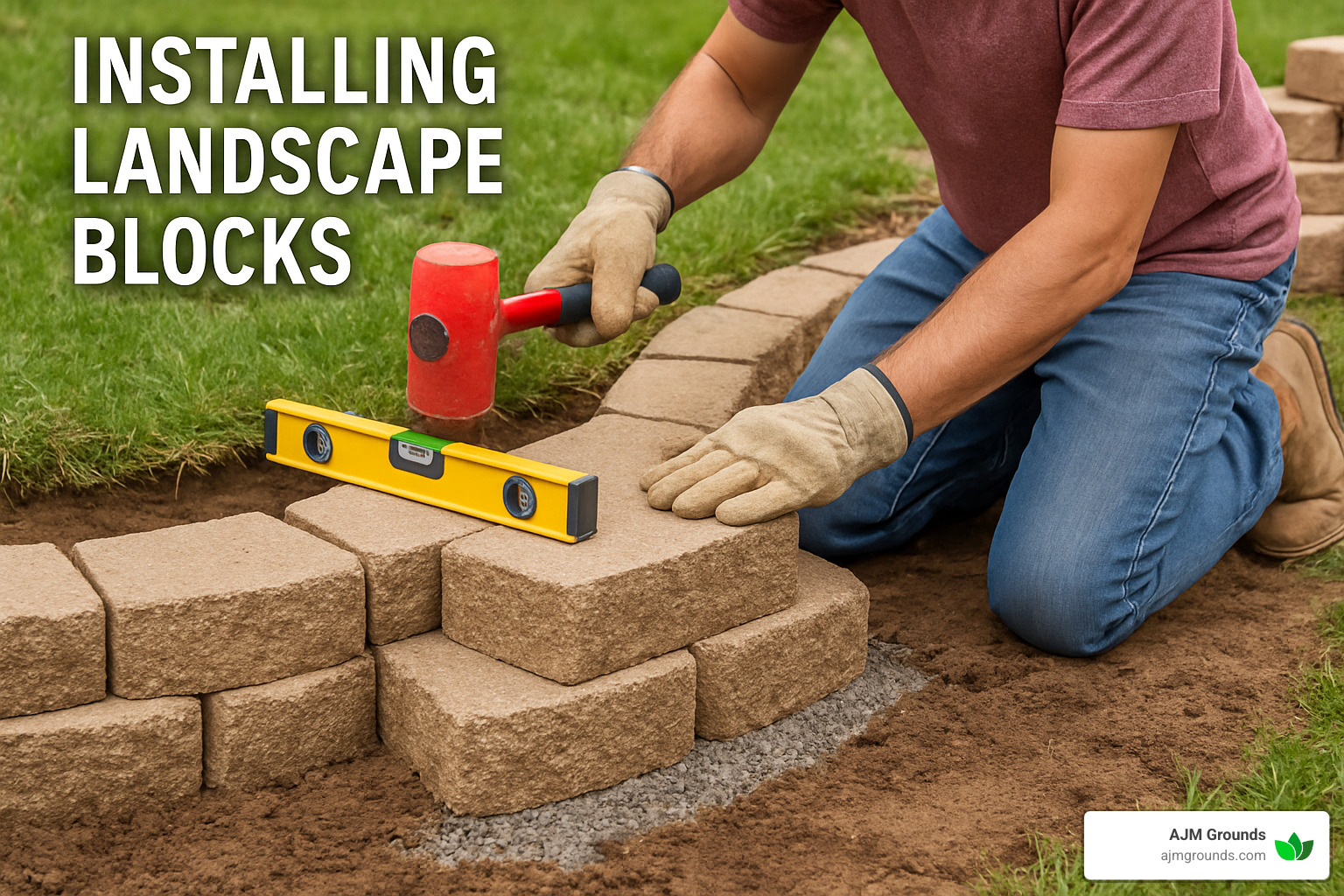
Capstones: Function Meets Finish
- Clean top course thoroughly.
- Run a continuous bead of masonry-rated adhesive 1 in from edges.
- Overhang caps 1–1.5 in to shed water and look polished.
- Allow 24 hrs cure before heavy use.
Know When to Bring in Pros
Walls over 4 ft, those carrying surcharges (driveways, patios) or built on steep slopes need engineering and specialized equipment. AJM Grounds serves Woburn, Burlington, Lexington and surrounding towns—skip the guesswork and let our retaining wall builders near me handle it.
Frequently Asked Questions about Installing Landscape Blocks
What is the best base material for a retaining wall?
3⁄4-in angular crushed stone wins every time thanks to superior compaction and drainage. Rounded pea gravel rolls, and sand holds water—both lead to settling and frost heave.
How do you properly backfill behind a retaining wall?
Create a 12-in drainage zone of crushed stone directly behind the blocks. Backfill in 6–8 in lifts, compacting each layer, and keep heavy compactors at least 3 ft from the wall face.
Do all retaining walls need a drain pipe?
Legally, pipes are required for reinforced walls and gravity walls over 4 ft, but we install one on every job—it’s inexpensive insurance against water pressure, the leading cause of failure.
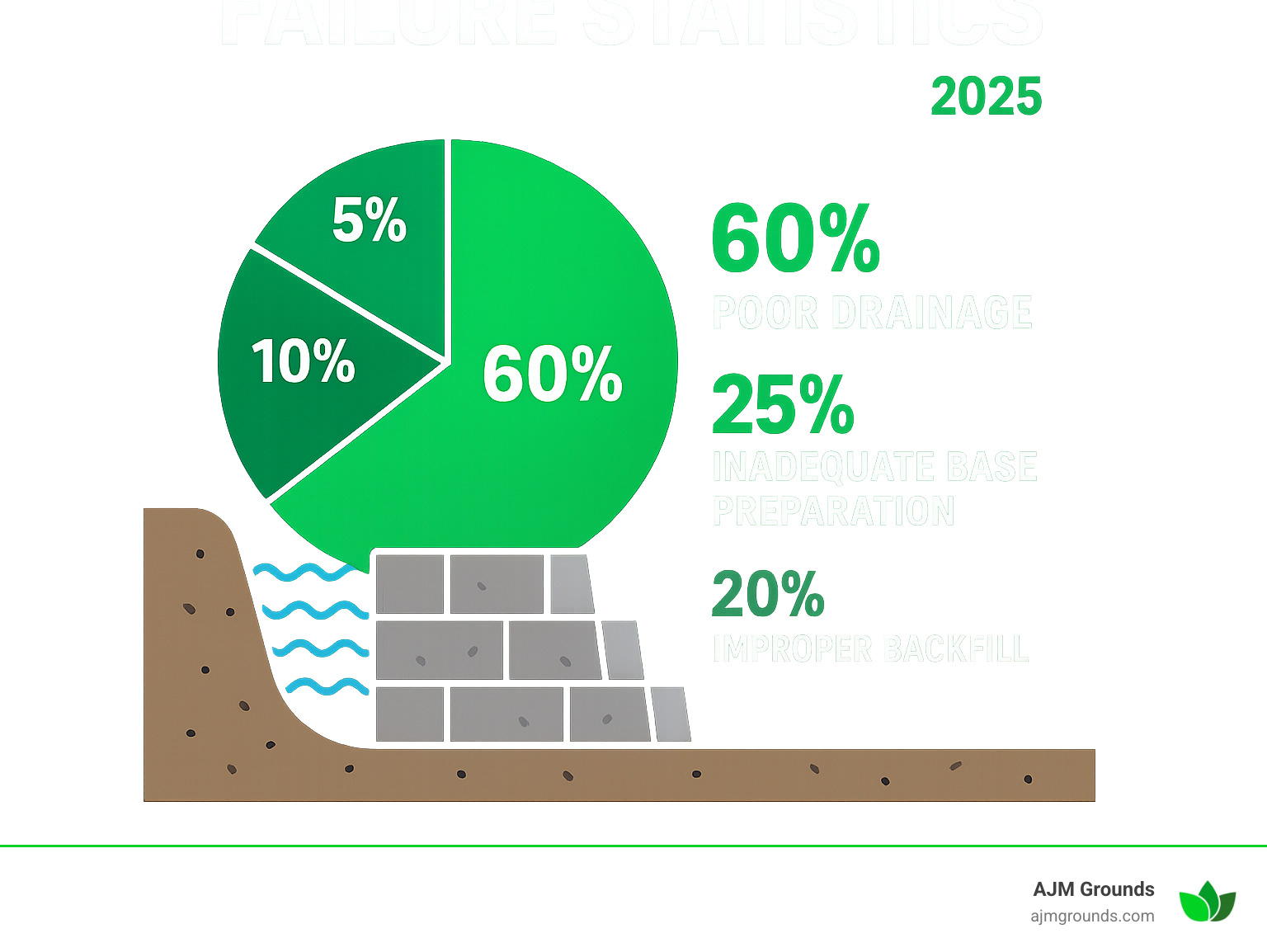
Need peace of mind? Our licensed crews throughout Middlesex County can design drainage that keeps your wall—and your sanity—intact.
Conclusion
Installing landscape blocks successfully comes down to understanding that every step matters – and honestly, that’s both the challenge and the beauty of this project. From the initial planning and permit checks to the final capstone placement, shortcuts lead to problems that can be expensive and time-consuming to fix.
The key steps we’ve covered – proper excavation, a level base, correct drainage installation, and methodical stacking – aren’t just suggestions from someone who’s read about it in a book. They’re the difference between a wall that lasts decades and one that fails within a few years. When you follow these fundamentals, you’ll not only create a functional retaining wall but also add significant value to your property.
Remember those statistics we mentioned at the beginning? Landscape redesigns show an average of 105% value recovery, and 79% of homeowners report a major sense of accomplishment after completing their projects. But that satisfaction comes from doing the job right the first time.
Here’s what I’ve learned after years of building retaining walls: the homeowners who take their time, follow the process, and don’t rush the critical steps are the ones calling us months later to say how much they love their wall. The ones who cut corners? Well, they’re usually calling us to fix problems.
For complex projects, challenging site conditions, or when you simply want the assurance of professional installation, AJM Grounds brings years of experience to every project. We understand the unique challenges of Massachusetts soil conditions, frost concerns, and local building requirements that can make or break a retaining wall project.
Whether you’re ready to tackle this as a DIY project or need professional expertise, the most important thing is not to rush. Take time to plan properly, prepare your site correctly, and build methodically. Your future self will thank you for the attention to detail – especially when you’re enjoying your new outdoor space years from now instead of dealing with a leaning wall.
Ready to get started on your retaining wall project? Contact us for your retaining wall construction needs and let our expertise ensure your project is built to last.