

Why Flagstone Paths Transform Your Lawn Into a Stunning Landscape Feature
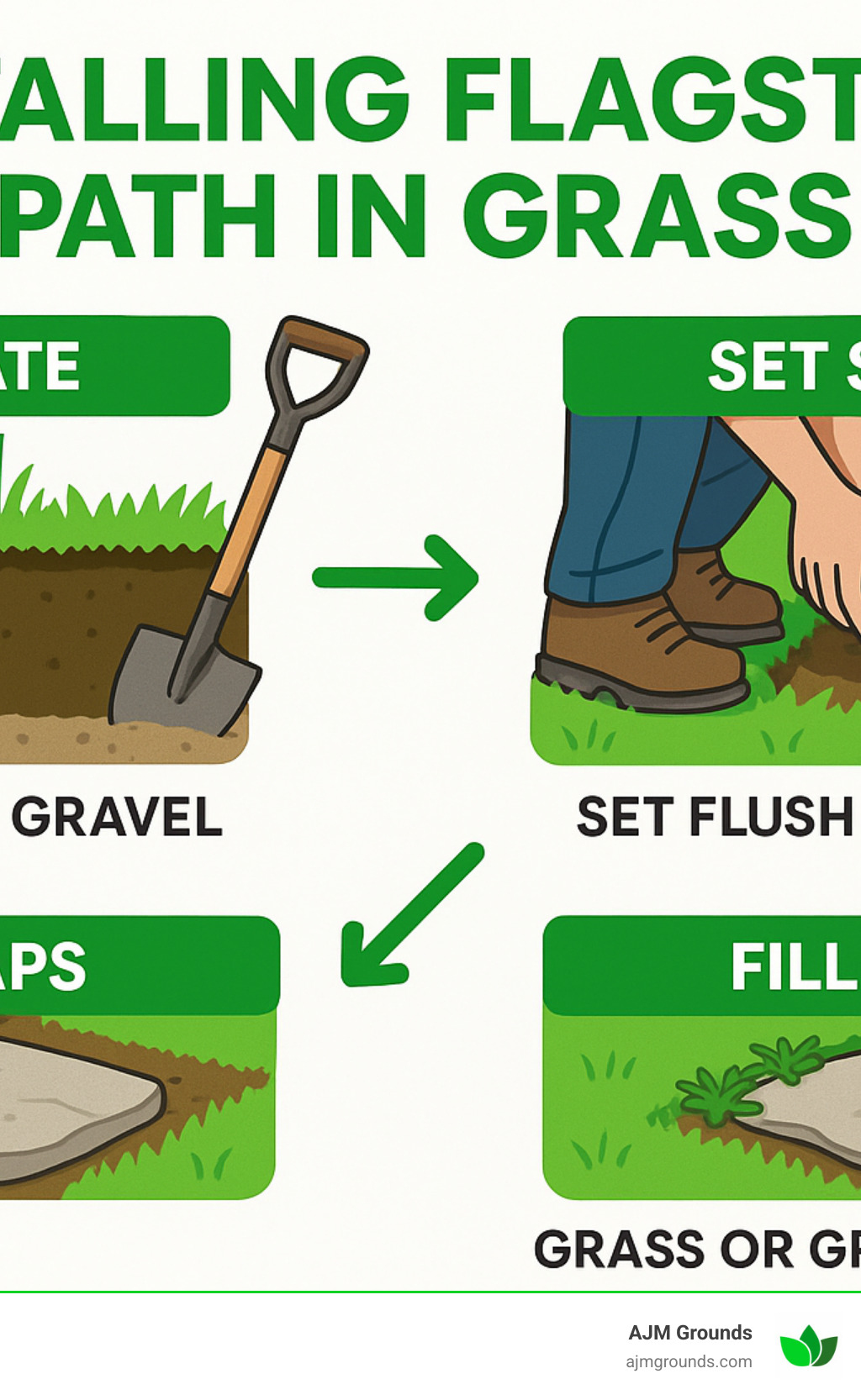
Installing flagstone path in grass creates a natural, durable walkway that seamlessly blends with your existing lawn while providing years of beautiful functionality. Here’s what you need to know:
Quick Installation Overview:
• Excavate 4-6 inches deep for each stone placement
• Add base of 2-4 inches sand or gravel for stability
• Set stones flush with grass level for easy mowing
• Fill gaps with grass, ground cover, or gravel
• Typical cost ranges from $10-30 per square foot
A flagstone walkway adds natural beauty and charm to any outdoor space, creating an inviting path through gardens or connecting different areas of your yard. As one homeowner finded, “Building a flagstone walkway is a budget-friendly project that creates a durable, non-slip path that blends seamlessly with grass and landscaping.”
The key to success? Proper excavation depth and base preparation. Most installations require removing 4-6 inches of soil and adding 2-4 inches of sand for leveling. The stones should sit flush with your lawn surface to prevent tripping hazards and allow for easy maintenance.
Whether you’re connecting your patio to a garden area or creating a curved stepping-stone path through your backyard, flagstone offers the perfect balance of durability and natural aesthetics.
I’m John Caplis, owner of AJM Grounds LLC, and I’ve helped countless Woburn-area homeowners create stunning outdoor spaces through professional landscaping and hardscaping services. My team specializes in installing flagstone path in grass projects that improve both curb appeal and property value while maintaining the natural beauty of your existing landscape.
Installing flagstone path in grass vocabulary:
– installing a stepping stone walkway
– laying a stone path
– installing a garden path
Planning & Design
Think of planning your flagstone path like sketching a rough draft before painting a masterpiece. The time you spend getting the design right will save you countless hours (and headaches) during installation.
Getting Your Layout Just Right
Your path should feel like it belongs there, not like someone randomly dropped stones across your lawn. Start by considering how people naturally move through your space. Do they cut corners? Take the scenic route? Work with these natural patterns rather than against them.
For comfortable walking, aim for a minimum width of 3 feet. This gives you enough room to stroll without feeling like you’re walking a tightrope. If you’re planning a more formal entrance path, you might want to go wider – just remember that more width means more materials and higher costs.
The Technical Details That Matter
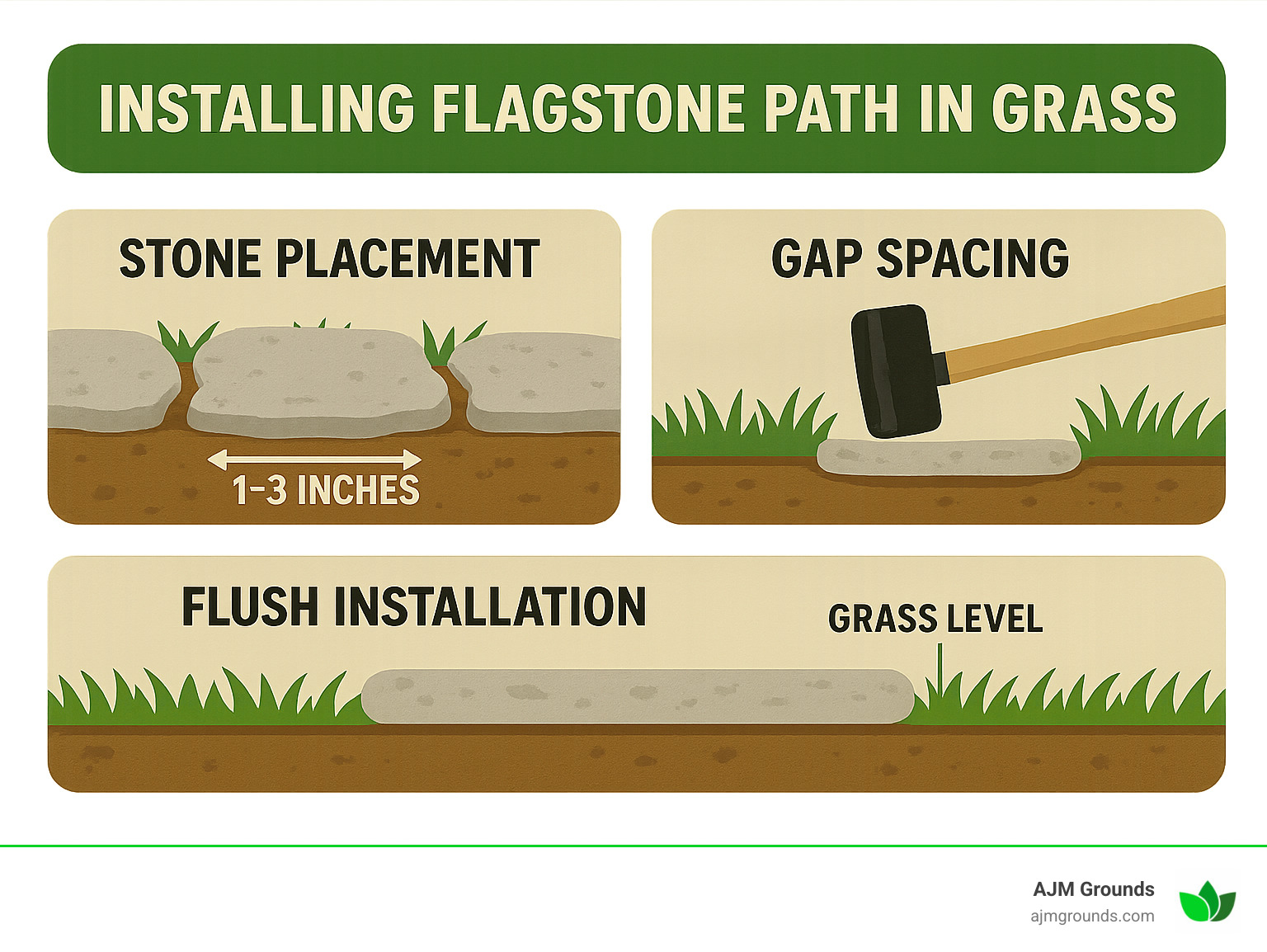
When installing flagstone path in grass, certain measurements can make or break your project. Your flagstones should be 1-2 inches thick – any thinner and they’ll crack under pressure, any thicker and you’re just showing off (and spending more money).
Spacing between stones should typically be 1-3 inches for a natural look. You can go wider if you’re planning to fill gaps with decorative gravel or let grass grow between the stones. Just remember that wider gaps mean more maintenance later.
Here’s something many DIYers overlook: drainage slope. A gentle ⅛ inch per foot slope keeps water moving away from your path instead of pooling around your beautiful new stones. Trust me, soggy flagstone is nobody’s friend.
Removing Turf and Choosing What Goes Between
You’ll need to remove the existing grass where your stones will sit – there’s no way around this step. But what you put between the stones is where you can get creative.
Grass between stones looks natural but requires regular trimming with hand shears. Creeping thyme smells amazing when you step on it and crowds out weeds naturally. Micro clover stays green longer than regular grass and needs less water.
For our Dry Lay Flagstone projects around Woburn, we often recommend thyme or micro clover for clients who want beauty without the extra maintenance headaches.
The Garden Hose Trick
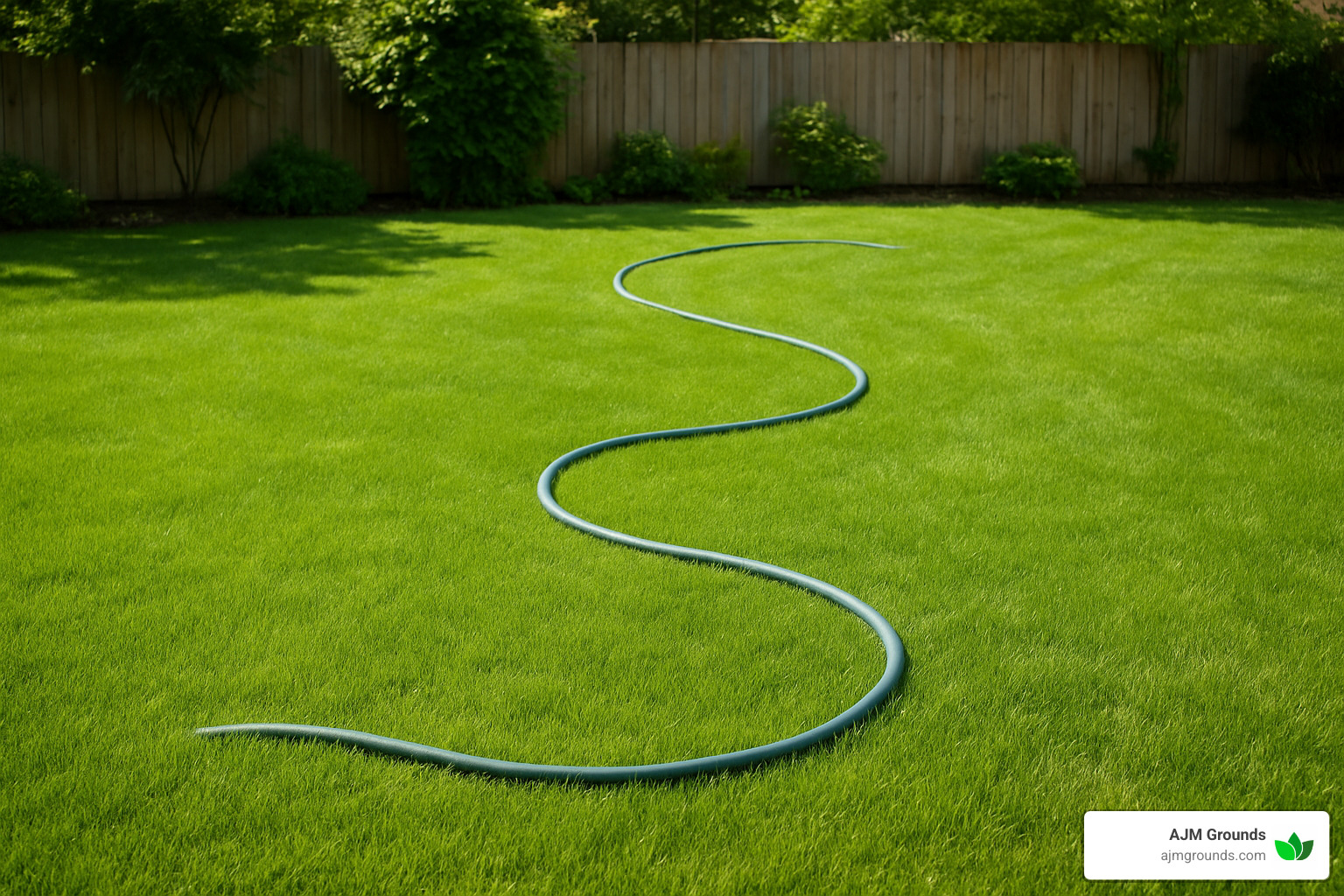
Before you commit to anything permanent, grab your garden hose and lay out your proposed path. This simple trick lets you walk the route, see how it flows, and make adjustments without any digging. Once you’re happy with the layout, mark it with spray paint.
Curved paths look more natural than straight lines, but don’t go overboard with the curves – you’re creating a walkway, not a snake trail.
Choosing Materials & Tools
The materials you choose will determine whether your path looks professional or like a weekend warrior’s first attempt. Let’s break down what really matters.
Flagstone Varieties That Work
Bluestone is the gold standard – durable, weather-resistant, and those blue-gray tones look great with almost any landscape. Limestone works beautifully if you already have a gravel driveway since the colors complement each other naturally.
Sandstone offers those warm, earthy tones that photograph beautifully, but it’s not as tough in freeze-thaw climates. Slate looks refined and neat, but it can be slippery when wet – probably not the best choice for a main walkway.
Base Materials: The Foundation of Success
Your choice here makes a huge difference in how long your path lasts. Sand is forgiving and easy to adjust, but it can wash out over time. Decomposed granite compacts better and resists weeds more effectively than regular sand.
Crushed stone provides excellent drainage – crucial in our New England climate. Pea gravel drains well too, but you might find yourself releveling stones more often as the gravel shifts.
Most successful installations use 2-4 inches of base material, depending on your soil conditions and local frost depth.
Essential Tools for Success
You don’t need a contractor’s full arsenal, but having the right tools makes everything easier. A straight shovel cuts clean edges, while a hand shovel helps with fine-tuning. A 4-foot level is essential for checking that stones sit evenly.
A rubber mallet sets stones without chipping them, and a plate compactor (worth renting) ensures your base won’t settle unevenly later. Don’t forget safety goggles – especially if you need to cut any stones – and work gloves to protect your hands from rough edges.
The beauty of installing flagstone path in grass is that it’s a project most homeowners can tackle with patience and the right preparation. Take time with your planning, and you’ll have a path that looks like it was always meant to be there.
Installing Flagstone Path in Grass: Step-by-Step Guide
Now comes the fun part – actually installing flagstone path in grass! This is where your planning pays off and you’ll start seeing your vision come to life.
The whole process revolves around getting the excavation and base preparation just right. You’ll need to dig down 4-6 inches deep to make room for your base material (usually 2-4 inches of sand or gravel) plus the stone thickness. The goal is having everything sit perfectly flush with your existing grass when you’re done.
Here’s something that might surprise you: the stones should actually sit level with your lawn surface. This isn’t just about looks – it prevents stubbed toes and makes mowing a breeze. As one experienced installer puts it, “countersinking stones so they sit level with the grass prevents tripping hazards” while keeping everything looking seamless.
The tamp compaction step is absolutely critical – don’t skip it! A properly compacted base prevents your stones from shifting or settling unevenly over time. You’ll also want to install a weed barrier if you’re planning to use gravel or decorative materials between stones.
When you’re doing the actual puzzle-fit stones layout, think of it like putting together a giant jigsaw puzzle. Each stone has its perfect spot, and finding that sweet spot makes all the difference in both appearance and stability.
For more detailed professional techniques, check out this helpful guide on How to Lay Flagstone Walkway and our specialized Installing Stone Walkway services.
Step 1 – Site Prep & Base
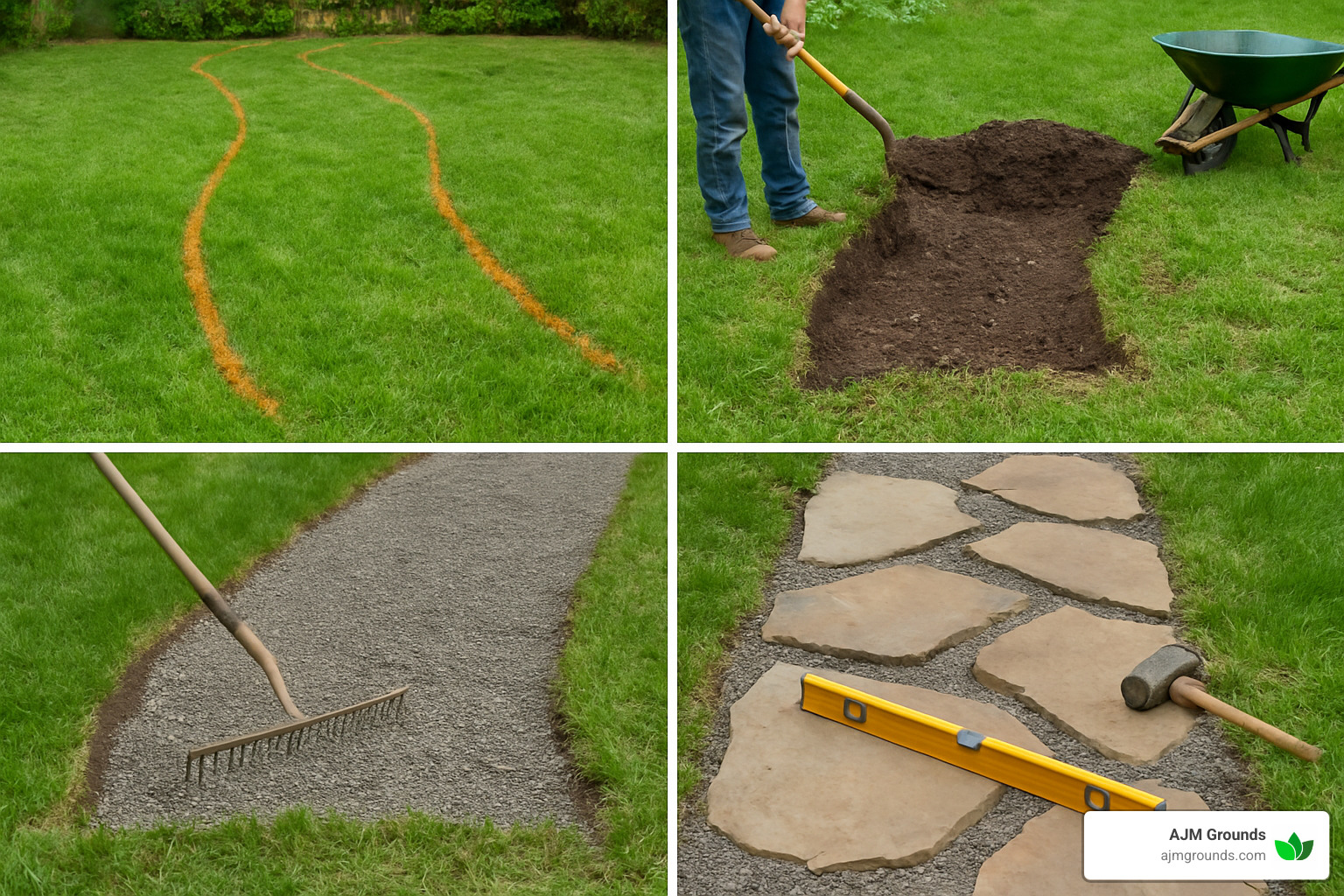
Time to get your hands dirty! Start by marking your pathway with bright spray paint along both edges. Trust me, this simple step will save you from constantly second-guessing your layout as you work.
When removing the sod, cut it into manageable pieces and set some aside – you might want to use these pieces later to fill gaps between stones. Now comes the digging part. Excavate to a depth that gives you room for both your base material and the stone thickness. For most projects, that means going down 4-6 inches.
Adding the gravel base is where the magic happens. Spread 2-4 inches of crushed stone or gravel evenly across your excavated area. Here’s a pro tip: create a slight crown in the center of your path. Make the middle just a tiny bit higher than the edges – this helps water drain off naturally instead of puddling.
Now grab that plate compactor (seriously, rent one if you don’t have it). Compact each layer thoroughly before moving on. This step prevents future headaches like wobbly stones or uneven settling. Think of it as building a rock-solid foundation for years of beautiful walkways.
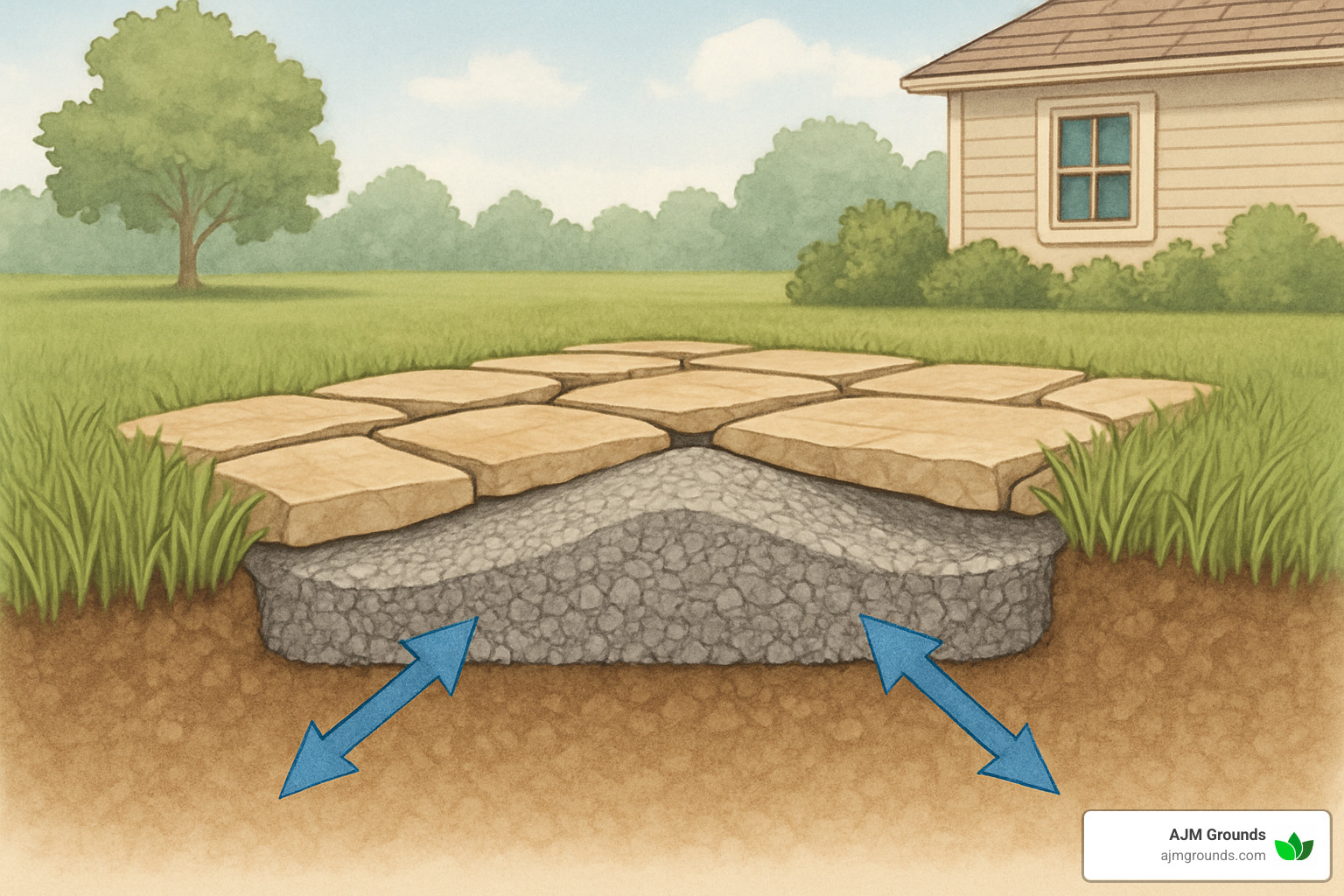
Drainage slope of about 1/8 inch per foot? It’s barely noticeable when walking but makes a huge difference in preventing water problems down the road.
Step 2 – Installing Flagstone Path in Grass — Setting Stones
Here’s where installing flagstone path in grass gets really satisfying. Start with a dry layout – place all your stones on the prepared base without setting them permanently. This is your chance to play around with the arrangement until it looks just right.
Begin with your large stones first, especially at entrances and high-traffic spots. These anchor stones give your whole path stability and visual weight. Then work outward, fitting smaller pieces around them like a natural stone puzzle.
Maintain those gaps of 1-3 inches between stones – this spacing looks natural and gives you room for ground cover or decorative materials. Use your rubber mallet to tap stones into place, but check frequently with a level to keep everything even.
Sometimes stones just don’t want to cooperate. That’s when your angle grinder becomes your best friend for making precise cuts. Always wear safety goggles and gloves when cutting – stone chips can be sharp and unpredictable.
The key is getting each stone flush with your turf level. Add sand underneath to raise stones that sit too low, or scoop out material to lower ones that stick up too high. Take your time here – this attention to detail is what separates a professional-looking job from a weekend warrior attempt.
Step 3 – Installing Flagstone Path in Grass — Edge & Level
You’re in the home stretch! Pull out that 4-foot level and check that adjacent stones are perfectly even with each other. Make sand adjustments under individual stones as needed – a little extra sand here, a little less there, until everything flows smoothly.
Steel edging is your path’s best friend for the long haul. Install it along both borders and stake it every 8 feet to keep everything locked in place. Steel beats plastic every time because it won’t warp in the sun or crack in winter freeze-thaw cycles.
Here’s a final trick to prevent stone shift: saturate the soil around each stone’s perimeter to create a natural mud seal. This helps lock everything in position while your path settles into its permanent home.
The result? A beautiful, stable walkway that’ll handle foot traffic, lawn mowers, and whatever Mother Nature throws at it. For more professional installation guidance, check out our Flagstone Walkway Installation services.
Maintenance, Costs & Climate Tips
Once your flagstone path is installed, keeping it looking beautiful doesn’t require a lot of work – but understanding the ongoing care will help you enjoy your investment for decades to come.
Keeping Your Path in Top Shape
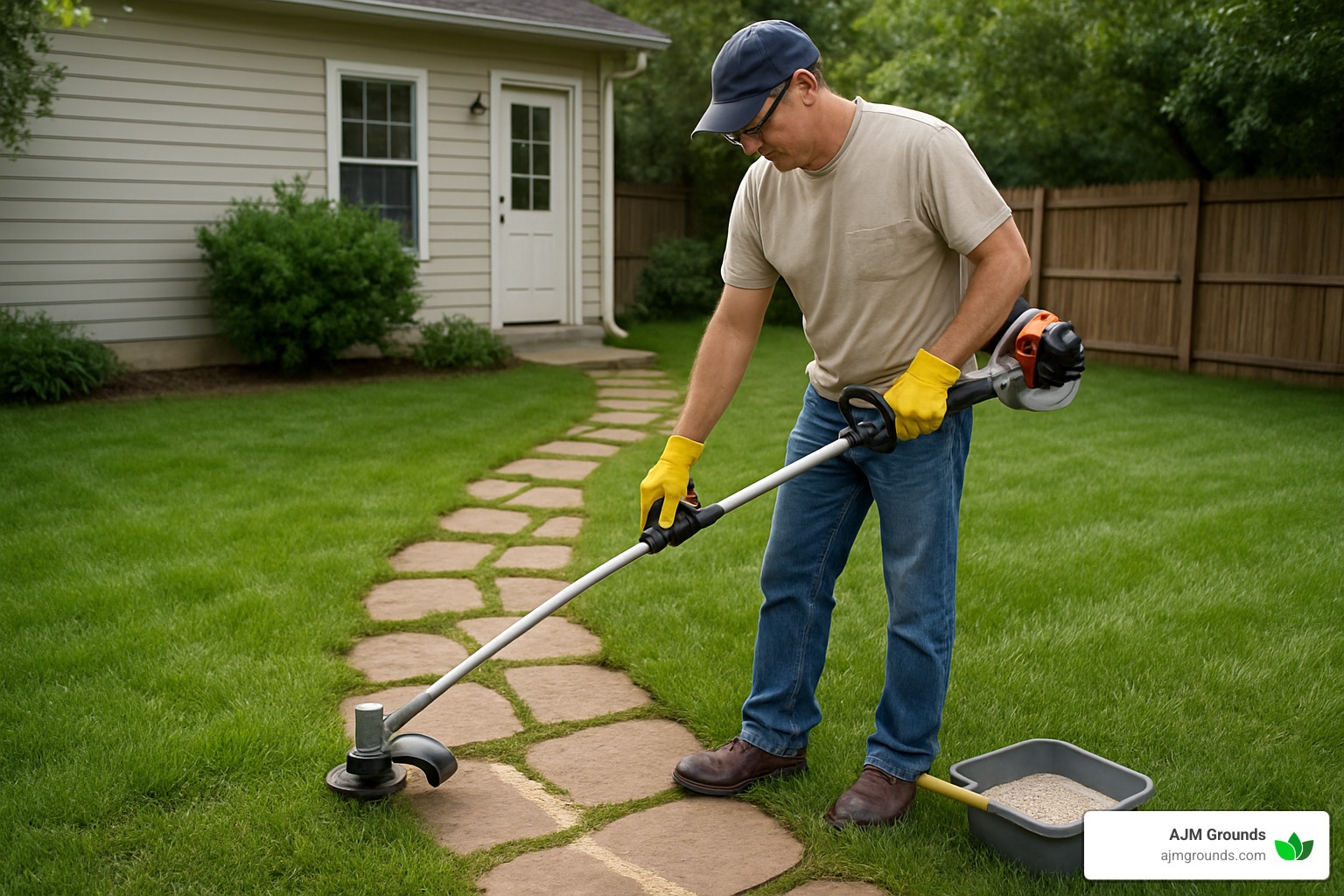
The good news? Installing flagstone path in grass creates a relatively low-maintenance feature. Your main tasks involve edging and trimming around the stones with a string trimmer rather than trying to hand-edge each piece (trust me, your back will thank you).
Weed control becomes much easier when you apply pre-emergent herbicides in spring to stop weeds before they start growing in the joints. It’s like putting up a “no vacancy” sign for unwanted plants.
You’ll occasionally need to replenish polymeric sand or add more ground cover material as it settles over time. An annual pressure washing keeps everything looking fresh and removes any moss or algae buildup.
Mowing Made Simple
When stones are properly installed flush with your lawn, mowing becomes surprisingly easy. However, you’ll still need to trim around the stone edges periodically. As one homeowner finded, “cutting grass around closely set stones can be a maintenance nightmare” if the installation isn’t done correctly – which is why proper planning matters so much.
The key is setting stones at exactly the right height during installation. Too high, and your mower scalps the surrounding grass. Too low, and grass grows over the stones, hiding your beautiful work.
Working with New England Weather
Living in Massachusetts means dealing with freeze-thaw cycles that can wreak havoc on poorly installed hardscaping. That’s why we always recommend dry-laid installation rather than mortared joints – the stones can move slightly without cracking.
Soil drainage plays a huge role in longevity. Poor drainage might require additional base depth or even drainage tiles to prevent water from pooling under your stones. Some seasonal movement is completely normal in the first year as everything settles into place.
Understanding the Investment
Based on internet data (not AJM Grounds pricing), installing flagstone path in grass typically costs $10-30 per square foot for basic installations, with premium projects reaching $90+ per square foot. The wide range depends on several factors.
Stone type and quality makes the biggest difference – premium flagstone costs significantly more than basic varieties, but the beauty and durability often justify the investment. Base preparation requirements can add costs if your soil conditions are challenging. Site accessibility matters too – if we need to carry materials through your house or around tight spaces, labor costs increase. Design complexity with intricate patterns requires more cutting and fitting time.
For our clients throughout Bedford, Billerica, Burlington, Lexington, Reading, Stoneham, Wilmington, Winchester, and Woburn, we provide detailed estimates based on your specific site conditions and material preferences. Learn more about our Walkway Installation services.
Base Options Comparison
| Base Material | Cost | Drainage | Stability | Ease of Installation |
|---|---|---|---|---|
| Sand | Low | Fair | Good | Easy |
| Decomposed Granite | Medium | Good | Excellent | Moderate |
| Crushed Stone | Medium | Excellent | Excellent | Moderate |
| Concrete Slab | High | Poor | Excellent | Difficult |
Frequently Asked Questions about installing flagstone path in grass
How deep should flagstones be set?
When installing flagstone path in grass, the stones should be set 2-3 inches below the original grade to create a stable foundation while allowing your mower to glide smoothly over the surface. This depth might seem deeper than expected, but it’s essential for long-term success.
Here’s why this depth matters: You need room for both your base material and the stone itself. Most installations require 4-6 inches of total excavation – that’s 2-4 inches for your sand or gravel base, plus another 1-2 inches for the flagstone thickness. When done correctly, your finished path sits perfectly flush with the surrounding grass.
Think of it like building a foundation for a house – you wouldn’t skip the basement just to save time! The same principle applies here. Proper depth prevents your stones from shifting, settling, or creating those annoying trip hazards that make guests do an unexpected dance move on your walkway.
What is the best filler between stones?
The space between your flagstones is like choosing the perfect frame for a beautiful painting – it can make or break the entire look. Your choice depends on how much maintenance you enjoy and what aesthetic you’re going for.
Grass keeps that natural lawn appearance flowing seamlessly through your path, but be prepared for some detailed trimming work around each stone. It’s beautiful when maintained but can become tedious over time.
Creeping thyme is a game-changer for many homeowners. This fragrant ground cover practically takes care of itself while releasing a pleasant aroma when you walk on it. Plus, it naturally suppresses weeds, which means less work for you and more time to enjoy your beautiful path.
For those who prefer minimal maintenance, pea gravel offers excellent drainage and requires virtually no upkeep. It creates a clean, finished look that complements most stone colors beautifully.
Polymeric sand provides the most stable option, especially for high-traffic areas. It locks stones in place and resists weeds, though it creates a more formal appearance than living ground covers.
In our experience with clients throughout the Woburn area, creeping thyme and micro clover consistently rank as favorites. They provide that lush, natural look while significantly reducing maintenance time compared to grass.
Can I install over existing lawn without removing grass?
This is probably the most common shortcut homeowners consider, and I completely understand why – removing sod feels like extra work. However, installing flagstone path in grass without proper sod removal is like building a house on quicksand.
You absolutely must remove the grass beneath each stone location. Here’s what happens when you don’t: The grass creates an unstable, spongy base that allows stones to wobble and shift with every step. Small stones are particularly vulnerable to this movement, creating an uneven, unprofessional appearance.
Beyond the wobbling issue, grass underneath prevents proper soil contact, which leads to settling problems down the road. Your beautiful path might look great initially, but within a season or two, you’ll notice stones sinking at different rates, creating an uneven surface.
The good news? Removing sod isn’t as difficult as it sounds, especially for individual stone placements rather than entire lawn sections. Think of it as giving each stone its own custom-fitted seat in your landscape.
As one experienced installer wisely noted, “grass will eventually grow up around the stones, but they can shift or wobble since they aren’t seated in the ground.” Taking the time to do it right the first time saves you from having to redo the entire project later.
When installing flagstone path in grass, proper preparation is the difference between a weekend project you’ll admire for years and one that becomes a constant source of frustration.
Conclusion
Creating a beautiful flagstone walkway in your lawn is one of those projects that delivers immediate satisfaction and lasting value. Installing flagstone path in grass transforms ordinary outdoor spaces into inviting landscapes that feel both natural and intentionally designed.
The beauty of flagstone lies in its versatility. Unlike rigid concrete or uniform pavers, these natural stones work with your existing landscape rather than against it. They curve around that favorite oak tree, accommodate the slight slope in your yard, and blend seamlessly with your grass – creating a path that looks like it’s always belonged there.
The investment pays off in multiple ways. You’ll enjoy easier access between different areas of your property, reduced wear patterns on your lawn, and the simple pleasure of walking on a stable, attractive surface. Plus, potential buyers notice these thoughtful landscape improvements when it comes time to sell.
The process itself, while requiring some elbow grease, is surprisingly manageable for most homeowners. The key ingredients for success are straightforward: proper excavation depth, a well-prepared base, and patience during the stone-fitting process. Take your time with the layout, ensure good drainage, and don’t rush the leveling – these details make the difference between a path that looks professional and one that looks, well, like a weekend project gone wrong.
Of course, not everyone has the time or inclination to tackle excavation and stone placement. That’s perfectly fine – and honestly, it’s where we come in. At AJM Grounds, we’ve been installing flagstone path in grass for homeowners throughout Bedford, Billerica, Burlington, Lexington, Reading, Stoneham, Wilmington, Winchester, and Woburn for years. We know which flagstone varieties hold up best in New England weather, how deep to excavate for different soil types, and all those little tricks that ensure your path will still look great decades from now.
Whether you decide to make this a DIY trip or prefer to have professionals handle the heavy lifting, you’re making a smart choice for your property. A well-installed flagstone path becomes part of your home’s character – one of those features that makes guests ask, “Who did your landscaping?”
Ready to get started? Feel free to reach out for a consultation, or explore our complete walkway installation services to see how we can help bring your outdoor vision to life.
