

The Finishing Touch: Why Capstones are Essential for Your Retaining Wall
Learning how to installing cap stone on retaining wall can transform your outdoor space, adding a polished look and crucial protection. It’s a project many homeowners tackle, and getting it right makes a big difference.
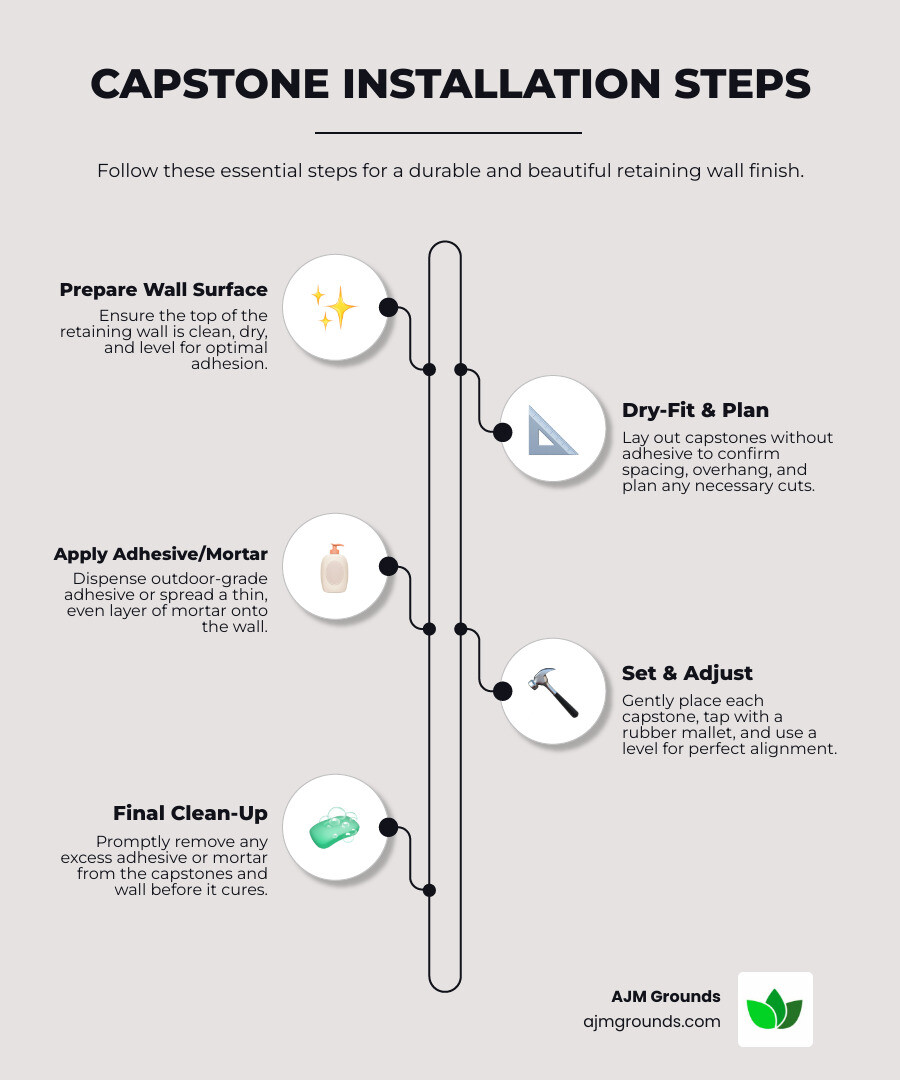
Here are the quick steps for installing capstones:
- Prepare the Wall: Ensure the top of the wall is clean, dry, and level.
- Dry-Fit Capstones: Lay out capstones without adhesive to plan cuts and spacing.
- Apply Adhesive or Mortar: Use a strong, outdoor-grade adhesive or mortar.
- Set and Level: Place each capstone, using a rubber mallet and level to ensure they are straight.
- Clean Up: Wipe away excess adhesive or mortar before it dries.
Capstones are the protective “hat” for your wall. They are key to keeping it healthy by shielding it from water damage and preventing soil erosion, all while providing a clean, usable surface.
I’m John Caplis, owner of AJM Grounds LLC. With years of experience, my team and I specialize in enhancing landscapes, including expertly installing cap stone on retaining wall projects that add both beauty and durability. This guide will walk you through everything you need to know.
Easy installing cap stone on retaining wall glossary:
What are Retaining Wall Caps and Why are They Important?
Retaining wall caps, or capstones, are the top pieces on a retaining wall. They are more than decorative; they are crucial for the wall’s longevity and function.
Protection: Capstones are a protective barrier against the elements, especially water. They prevent moisture from seeping into the wall, which can cause cracking and structural damage from freeze-thaw cycles. By covering gaps, they also keep debris out, extending the wall’s life.
Aesthetics and Usability: Capstones provide a clean, finished look that lifts the entire landscape. They can also create a level, functional surface, turning your wall into a seating area or a ledge for plants, which can increase your property value. To explore more, consider The Advantages of Hardscaping with Natural Stone.
Common Capstone Materials and Their Characteristics
Choosing the right material is key when installing cap stone on retaining wall. Each offers different benefits in durability, cost, and style.
| Material | Durability | Cost (approx. per linear foot) | Style | Maintenance |
|---|---|---|---|---|
| Concrete | Very high; resistant to weather and heavy loads | Low to Moderate | Versatile; can mimic natural stone or have modern finishes | Low; occasional cleaning, sealing recommended |
| Natural Stone | High; extremely durable, ages beautifully | Moderate to High | Timeless, neat, rustic; unique patterns and colors | Moderate; periodic sealing, especially for porous types |
| Brick | High; very long-lasting, classic appeal | Moderate | Traditional, classic; available in various colors and textures | Low; occasional cleaning, sealing recommended |
| Wood | Moderate; susceptible to rot, requires treatment | Low | Natural, rustic; fits well with informal landscapes | High; regular sealing/staining, potential for rot/warping |
- Concrete Caps: A popular, cost-effective, and durable choice available in many styles, even mimicking natural stone.
- Natural Stone Products: For a timeless look, stones like limestone or granite offer unique character and beauty. We often use Natural Stone Retaining Walls for their aesthetic appeal.
- Brick Wall Caps: Provide a classic, durable finish that can create a cohesive look with other brick features on your property.
- Wood Retaining Wall Caps: Offer a rustic look but require more maintenance to prevent rot and warping. When choosing wood, we consider sustainability and responsible sourcing.
Popular Capstone Styles and Shapes
The style of your capstones influences the final look of your wall.
- Chiseled or Split-Faced Edge: Offers a rustic, natural stone appearance with a rough, hand-hewn look.
- Square or Contemporary Edge: Features clean, crisp lines for a modern and minimalist aesthetic.
- Bullnose Edge: A rounded, smooth edge that is excellent for seating walls and softening corners.
- Peaked: A sloped surface that efficiently sheds water, offering a formal or traditional look.
- Rock-Faced: Designed to mimic natural rock with a textured, uneven surface.
- Smooth Finish: A flat, smooth top surface for a clean and understated look.
Choosing the right style depends on your overall landscape design. For more inspiration, check out our Backyard Retaining Wall Ideas.
Before You Begin: Preparation and Planning
Proper preparation and planning are essential for a successful and lasting project. Attention to detail at this stage saves headaches later on.
Key Factors in Choosing the Right Capstones
Selecting the right capstones involves several practical considerations:
- Project Budget: Costs vary widely by material, from affordable concrete to premium natural stone.
- Wall Height: Taller walls may benefit from heavier, more substantial caps for stability and a balanced look.
- Climate and Soil: In areas with freeze-thaw cycles, choose materials and adhesives that can withstand temperature changes. Soil type also impacts the wall’s structure.
- Overhang: A slight overhang (typically 1 inch) creates a finished look and directs water away from the wall’s face, preventing staining and erosion.
- Landscape Design: The capstones should complement your home’s architecture and other hardscaping features.
- Functionality and Safety: For seating walls, choose a smooth capstone like a bullnose edge. Ensure all caps are securely installed to prevent wobbling.
- Maintenance and Longevity: Consider the upkeep required. Concrete is low-maintenance, while wood requires regular sealing.
- Local Regulations: Check with your local municipality for any building codes or permit requirements, especially for larger walls.
When planning, remember the importance of a solid foundation, including your Paver Base for Retaining Wall.
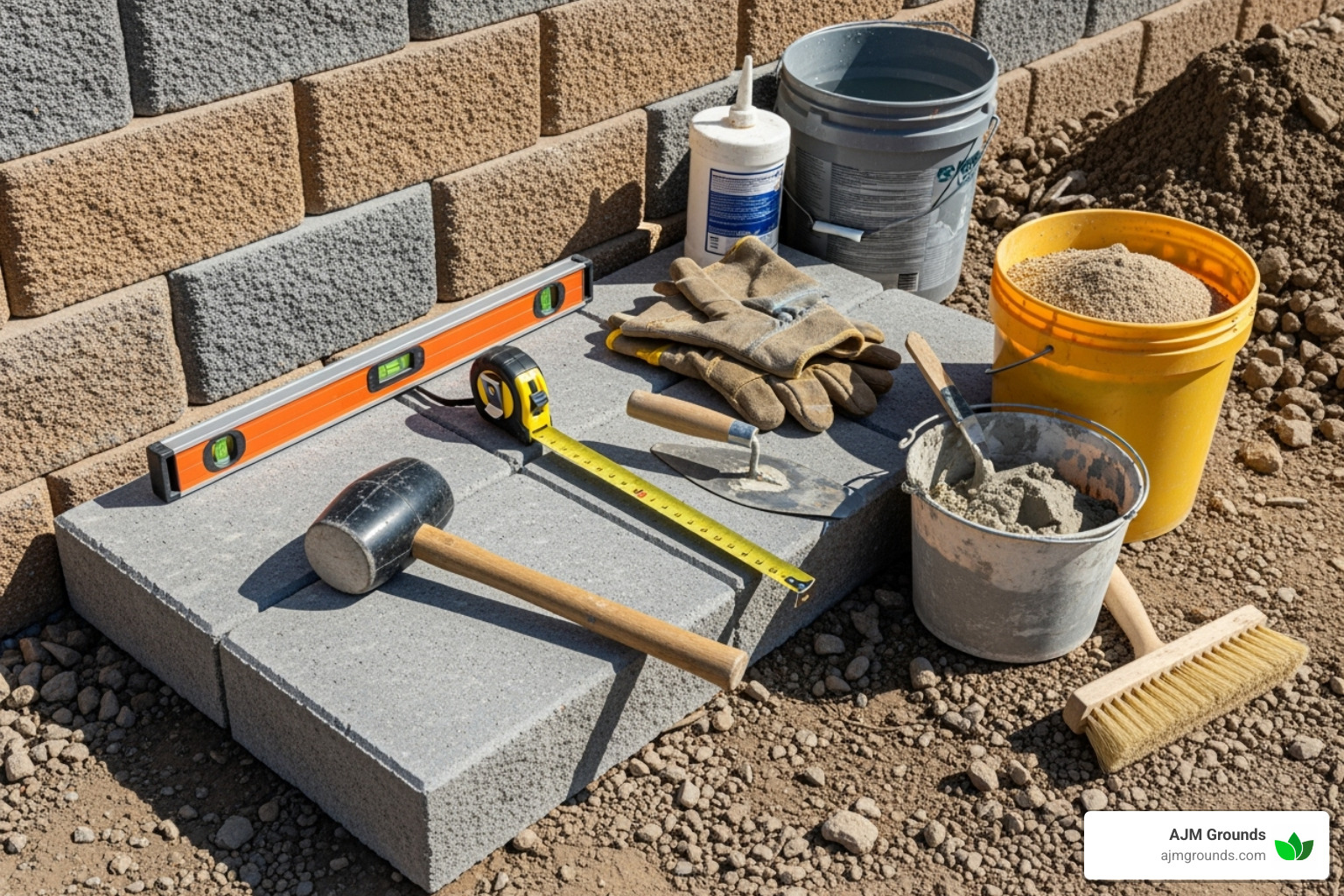
Tools and Materials Checklist
Gathering all your tools and materials beforehand makes the process smoother and safer.
Tools You’ll Need:
- Safety: Safety glasses, dust mask, work gloves
- Measuring & Marking: Tape measure, 4-foot level, pencil/marker, chalk line
- Application: Caulk gun (for adhesive), trowel and bucket (for mortar)
- Adjusting: Rubber mallet
- Cutting: Masonry saw with a diamond blade
- Cleanup: Wire brush, scrub brush, sponge, rag, utility knife
- General: Wheelbarrow, shovel
Materials You’ll Need:
- Capstones
- Masonry adhesive (exterior-grade) or Mortar mix (Type N or S)
- Concrete bonding agent (optional, for mortar)
- Composite shims (for minor leveling)
- Rags and water for cleanup
Preparing for Installing Cap Stone on Retaining Wall
Proper preparation is the secret to a professional and durable installation.
- Clean the Wall Surface: The top of the wall must be free of dirt, dust, and debris. Scrub with mild soap and water, rinse, and let it dry completely. A clean surface is crucial for a strong bond.
- Ensure Top Course is Secure: Double-check that the top row of wall blocks is stable and as level as possible. An unsound wall will only cause problems later.
- Dry-Fit Capstones: Lay out all capstones on the wall without adhesive. This lets you plan your layout, check for even spacing and overhang, and determine where cuts are needed.
- Mark a Centerline: Use a chalk line to mark a centerline along the top of the wall. This helps ensure your capstones are perfectly aligned.
- Check for Level: Use a 4-foot level to check the top course for levelness from side to side and end to end.
How to Level an Uneven Retaining Wall for Capping
If the top of your wall isn’t perfectly level, here’s how to fix it for a professional finish.
- Identify High and Low Spots: Use a long, straight edge or a 4-foot level to find any uneven areas. Check both left-to-right and front-to-back.
- Use Shims (for minor issues): Thin, composite shims can be placed under low spots. However, this can create small voids, so it’s best for very minor adjustments.
- Grind High Spots (preferred method): For a truly stable and long-lasting level surface, use a masonry saw with a diamond grinding cup wheel to grind down high spots on the wall blocks. This creates a flat, consistent surface for a rock-solid bond. Always wear safety gear (glasses, mask, hearing protection) when grinding.
- Apply a Leveling Bed of Mortar: If using mortar, you can adjust its thickness to compensate for minor variations. For significant unevenness, grinding is the better option.
A level base is crucial for stability and appearance. For more on wall construction, see our guide on How to Install a Block Retaining Wall.
The Step-by-Step Guide to Installing Cap Stone on Retaining Wall
With your wall prepped and level, it’s time for the exciting part: installing cap stone on retaining wall. This is where careful planning pays off.
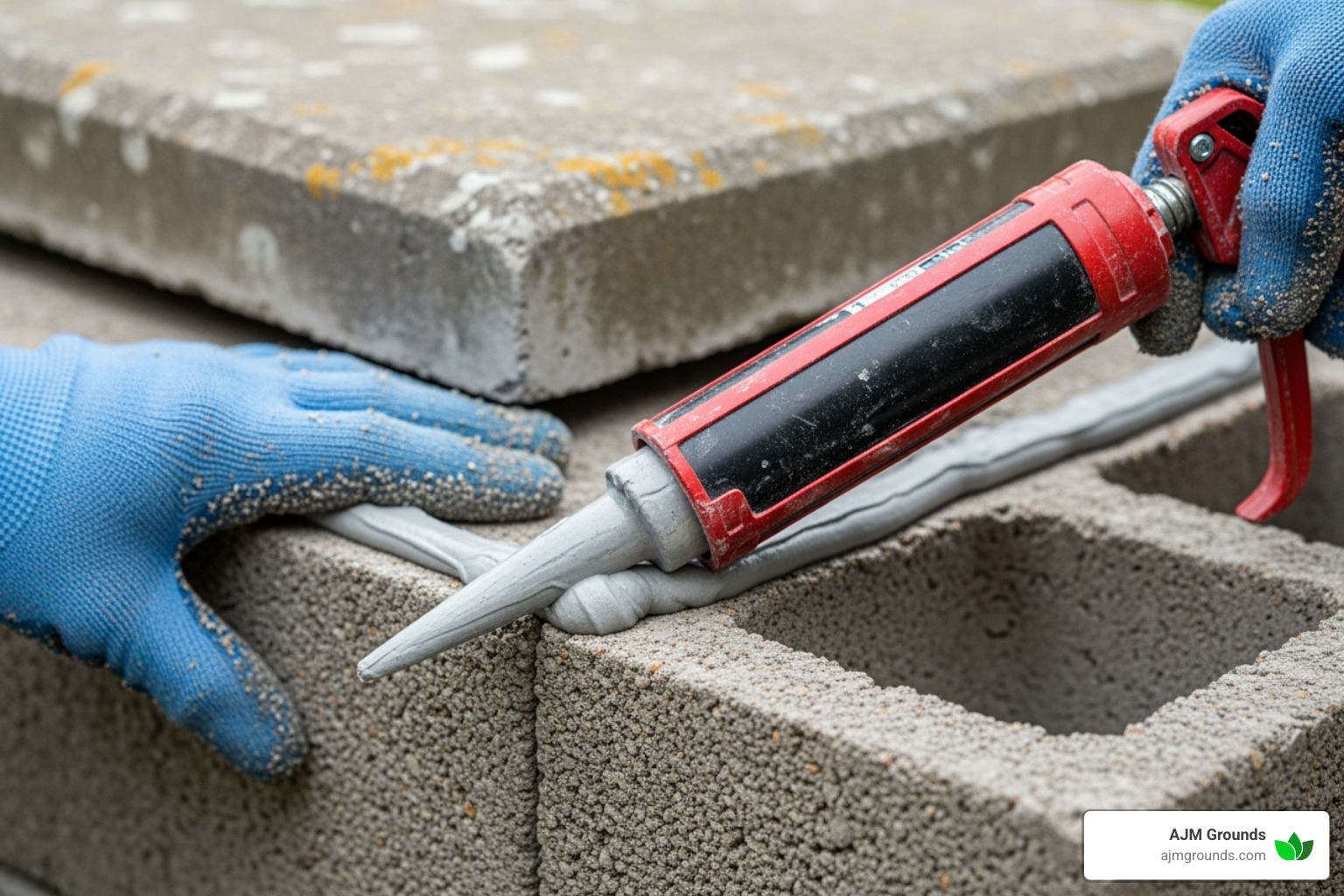
Following these steps will ensure a smooth process and a professional finish for your retaining wall.
Step 1: Measure, Mark, and Dry-Fit Your Capstones
Before applying any bonding agent, dry-fit your capstones. This practice run helps you plan the layout and mark cuts, avoiding mistakes.
Start at one end, placing each capstone on the wall. Check for a consistent overhang (typically 1 inch or 2.5 cm) and even spacing between caps. Use a pencil to mark where any cuts are needed, especially for corners and curves. Planning these cuts now saves a lot of trouble later.
Step 2: Choose Your Bonding Method (Adhesive vs. Mortar)
Secure your capstones with either masonry adhesive or traditional mortar. The best choice depends on your material, climate, and desired permanence.
- Masonry Adhesive (Dry-Laid Method): This is a quick and simple choice. Use a strong, outdoor-grade polyurethane adhesive, often labeled “landscape block adhesive.”
- Application: Apply two continuous beads of adhesive along the top of the wall for each capstone—one about 2 inches (5 cm) from the front and another 2 inches from the back.
- Benefits: It sets fast, creates a strong bond, and remains flexible to handle temperature changes without cracking. Ensure surfaces are clean and dry.
- Mortar (Wet-Laid Method): This method provides a classic, permanent bond, often preferred for natural stone or brick.
- Application: Mix Type N or S mortar according to the package directions. Spread an even, ½-inch-thick layer in short sections to prevent it from drying out. For extra adhesion, you can apply a concrete bonding agent to the wall first.
- Benefits: It creates an extremely strong, permanent bond but requires more skill and a longer curing time.
Step 3: Set, Level, and Adjust the Capstones
With your bonding agent applied, it’s time to place the capstones with precision.
- Place Caps Gently: Carefully lower each capstone onto the adhesive or mortar, aligning it with your chalk line and ensuring a consistent overhang.
- Tap with a Rubber Mallet: Give each capstone a few gentle taps to settle it into the bonding agent and ensure a strong hold. A slight back-and-forth wiggle can help spread the adhesive.
- Check for Level: Immediately use your level to check that each capstone is flat, both front-to-back and side-to-side.
- Adjust as Needed: If a cap isn’t level, you can make minor adjustments by adding a bit more mortar or a composite shim. However, a pre-leveled wall is the best foundation.
- Maintain Consistent Joints: If you’re leaving gaps between capstones, ensure they are a uniform width for a professional look.
Step 4: Clean Up Excess Adhesive or Mortar
Immediate cleanup is crucial to prevent stains and hardened residue.
- For Mortar: Use a damp sponge to wipe away any wet mortar that squeezes out. Do this before it starts to dry.
- For Adhesive: Scrape away semi-dry adhesive with a utility knife or stiff wire brush.
- For Cured Mortar: If some residue remains after drying, you may need to use a wire brush to scrub it away.
Keep rags and a dust brush handy throughout the job. For questions about our Hardscape Installation Service, the team at AJM Grounds is here to help!
Advanced Techniques and Customization
Once you’ve mastered the basics of installing cap stone on retaining wall, you can explore advanced techniques to customize your project and handle tricky areas like corners and curves.
Best Practices for Installing Cap Stone on Retaining Wall Corners and Curves
Corners and curves require precise measurements and careful cuts for a seamless, professional look.
- Outside Corners: For a perfect 90-degree corner, cut two capstones at a 45-degree angle to create a mitered joint. Always dry-fit these pieces first to ensure a tight fit before applying adhesive.
- Curves: For gentle curves, you may need to make angled cuts on the sides of straight capstones to fit them together smoothly. For tighter curves, this involves placing two caps, measuring the gap at the front, and then marking and cutting each cap at an angle from the back to the front corner. This creates a smooth, continuous flow.
When using a masonry saw, always wear safety gear, including safety glasses, a dust mask, and hearing protection. Operate power tools carefully and follow all manufacturer instructions. Your safety is the top priority. Learn more about safe masonry saw use here: always wear safety gear.
Securing and Sealing Caps for Long-Term Durability
Properly securing and sealing your capstones is vital to protect your investment and ensure your work lasts.
- Securing: A strong bond is essential. Use a high-strength, flexible masonry adhesive or properly applied mortar to prevent sliding and keep capstones firmly in place.
- Sealing: Applying a high-quality masonry sealer is crucial, especially for porous materials like natural stone or concrete. A breathable, high-quality stone sealer protects against moisture, stains, and damage from freeze-thaw cycles. Reapply the sealer every few years, depending on the product and exposure, to maintain protection.
We also recommend performing annual checks on your wall. Inspect for any loose capstones and re-secure them promptly with fresh adhesive to prevent larger issues.
Enhancing Your Wall with Custom Features
Capstones offer a great opportunity to integrate custom features that improve the function and beauty of your landscape.
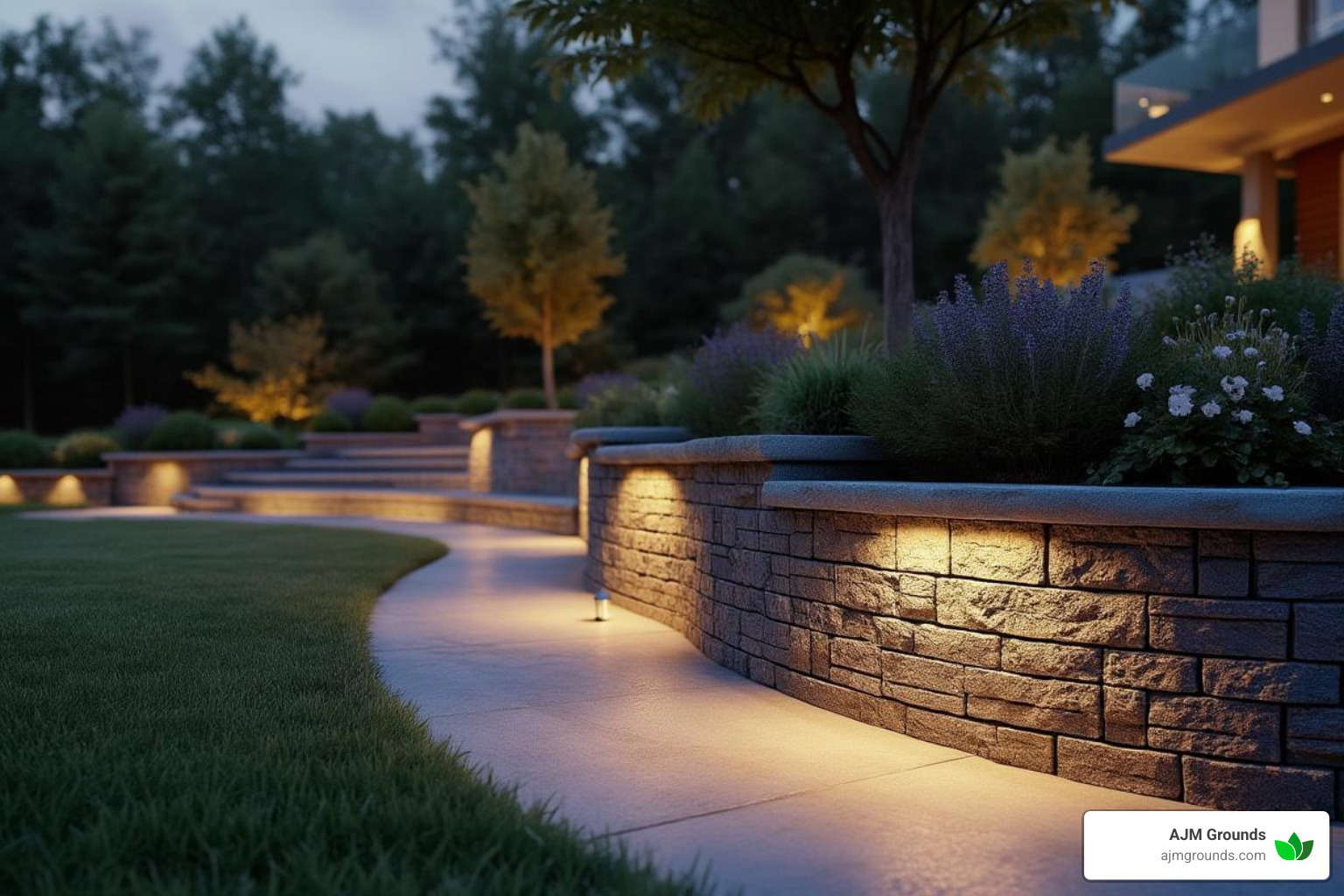
- Integrated Lighting: Tuck low-voltage LED fixtures under the capstone overhang to create a subtle, ambient glow that highlights the wall’s texture and provides soft pathway lighting.
- Built-in Planters: Incorporate planters directly into your wall design to add lush greenery and soften the hardscape.
- Seating Walls: If your wall is at a comfortable height, use wider capstones with a smooth or bullnose edge to create a functional seating wall, perfect for a patio or fire pit area.
These custom features can lift your retaining wall from a simple structure to a central element of your outdoor living space. Learn more about how we integrate such features in The Art of Hardscaping: Incorporating Stone and Pavers.
Frequently Asked Questions about Installing Capstones
Can I install capstones myself or should I hire a professional?
Installing cap stone on retaining wall can be a rewarding DIY project if your wall is relatively straight and you are comfortable with basic masonry skills. It’s a great way to add a personal touch to your landscape.
However, for walls with complex curves, significant height, or for those who want a guaranteed professional result, hiring an expert is the best choice. A professional Hardscaping Contractor has the specialized tools and experience to ensure a durable, flawless finish that adds value to your property.
How much does it cost to install retaining wall caps?
The cost of installing cap stone on retaining wall varies based on the material, wall length, design complexity, and whether it’s a DIY project or a professional installation.
Materials alone can range from $5 to over $50 per linear foot, depending on if you choose concrete, brick, or premium natural stone. For a total project, a small DIY job might cost a few hundred dollars, while professional installation for a larger, more complex wall could range from $400 to $3,000 or more.
Please note: These are average cost estimates based on general internet data and are not actual quotes from AJM Grounds. For a precise quote for your project in the Woburn, MA, area, please contact us for a consultation.
What is the a best adhesive for retaining wall caps?
For securing retaining wall caps, we recommend a high-strength, exterior-grade polyurethane construction adhesive. These products are often labeled as “landscape block adhesive” or “retaining wall adhesive.”
This type of adhesive is ideal because it creates a powerful bond while remaining flexible after curing. This flexibility is crucial for accommodating minor ground movement and seasonal temperature changes, which prevents cracking and ensures your caps stay securely in place for years. Popular brands include Loctite PL, DAP Smartbond, and Gator Block Bond XP.
Finish Your Project with Confidence
By now, you’ve seen that installing cap stone on retaining wall is more than just a finishing touch—it’s a crucial step that ensures the longevity, improves the function, and lifts the beauty of your outdoor space.
We hope this guide has empowered you with the knowledge to achieve a professional finish. Whether you feel confident tackling this as a DIY project or are considering hiring experts, attention to detail is the key to success. Following the proper steps will result in a beautiful, durable retaining wall that improves your landscape for years to come.
For complex projects, or if you simply prefer the peace of mind that comes with a guaranteed professional result, our expert team at AJM Grounds is ready to help. We provide meticulous Retaining Wall Construction services in the Woburn, MA area, including towns like Bedford, Billerica, Burlington, Lexington, Reading, Stoneham, Wilmington, and Winchester. We’re here to help you top it right and turn your vision into a stunning reality!
