

Why Installing a Patio Awning Is Your Best Summer Investment
Installing a patio awning is an intermediate-level DIY project that can transform your outdoor space in just one day. Here’s what you need to know:
Quick Installation Overview:
- Choose your awning type – Retractable, fixed, or motorized (costs range from $250 to $3,500+)
- Locate wall studs – Ensure secure mounting to structural supports
- Install mounting brackets – Level and properly spaced according to manufacturer specs
- Attach the awning – Requires 2+ people due to weight (up to 500 pounds)
- Adjust the pitch – Set angle between 20-70 degrees for proper water drainage
- Seal all connections – Prevent water infiltration with silicone sealant
Estimated time: 4-8 hours | Skill level: Moderate | Helper required: Yes
A patio awning offers instant relief from the sun, creating a comfortable outdoor living space. While many homeowners can tackle this project over a weekend, it has its challenges. Awnings are heavy, requiring precise measurements and secure mounting to your home’s structural frame—not just the siding. Different exteriors like vinyl, brick, or stucco require specific techniques for a stable, watertight fit.
Improper installation is a leading cause of product failure, especially with retractable models weighing up to 500 pounds. But when done correctly, an awning provides 5-15 years of shade and can even boost your home’s resale value.
I’m John Caplis, owner of AJM Grounds LLC in Woburn, Massachusetts. With years of experience enhancing outdoor spaces, I’ve seen how a well-installed awning improves both function and curb appeal. This guide will walk you through the process to help you decide if a DIY installation is right for you.
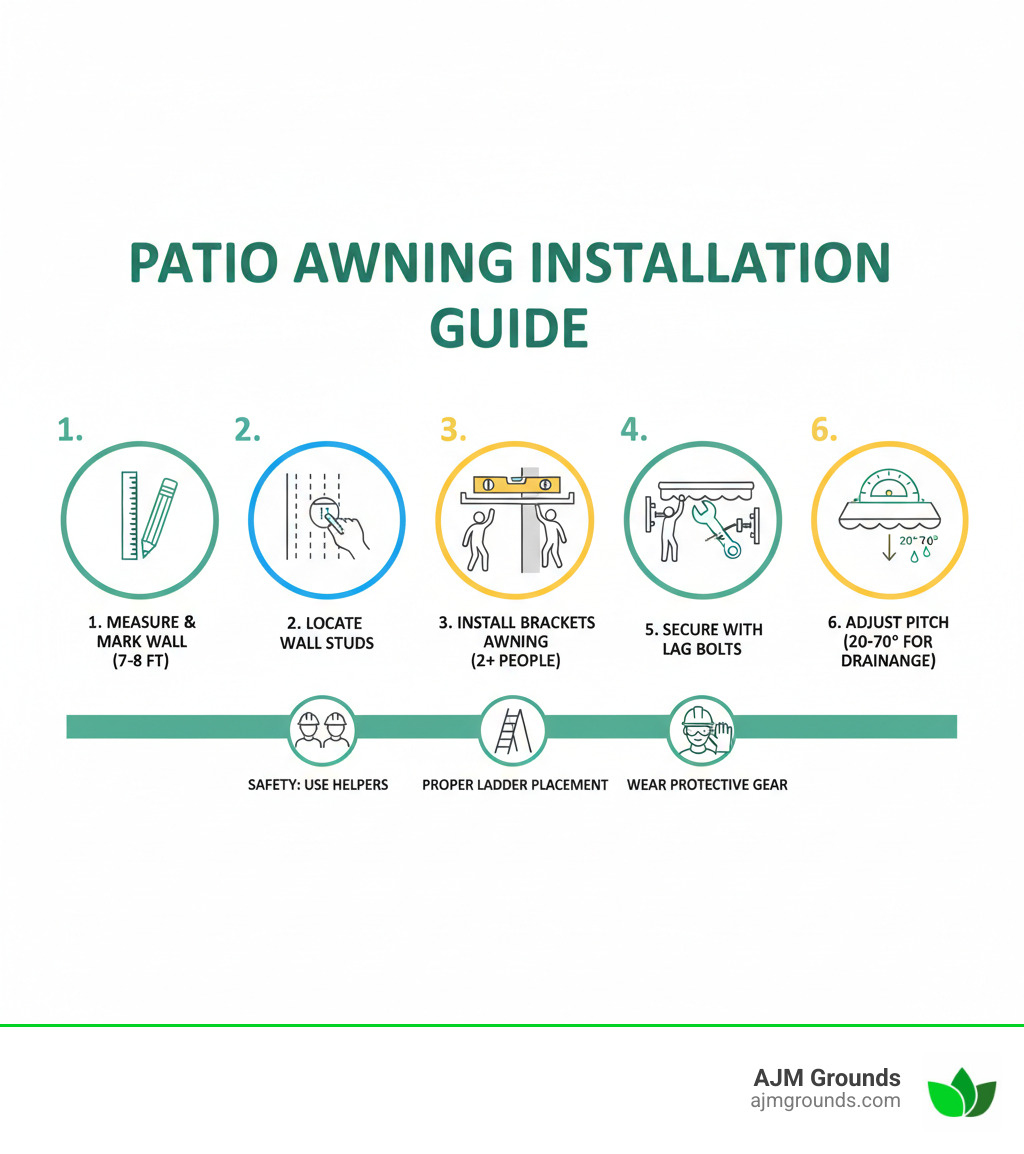
Your Complete Guide to Installing a Patio Awning
Ready to transform your outdoor living space? This guide covers every step of installing a patio awning, from selection to maintenance. It requires planning and effort, but the results are worth it.
Step 1: Choosing the Right Awning & Location
A successful patio awning installation begins with the right product and placement.
- Fixed Awnings: These provide constant, year-round shade. They are highly durable and less expensive but cannot be retracted to let in sunlight.
- Manual Retractable Awnings: Operated with a hand crank, these offer flexibility at a moderate price without needing electrical work.
- Motorized Retractable Awnings: The ultimate in convenience, these extend with a remote control and can include sun or wind sensors. They are the priciest option, require an electrical connection, and can be very heavy (up to 500 pounds).
Fabric awnings (acrylic or canvas) offer many style options and last 8-12 years. Metal awnings provide significantly longer durability.
Location Planning: Where Will Your Awning Shine?
Observe the sun’s path to determine the best placement for shade when you need it most. Also, consider prevailing winds, as strong gusts can damage any awning.
Most importantly, you must anchor the awning to your home’s structural frame—the wall studs or headers. A stud finder is essential for this. Plan for a height of 7-8 feet from the ground, ensuring at least 12-14 inches of clearance above windows and doors.
For more inspiration on creating an outdoor space that works beautifully with your new awning, check out our beautiful patio design ideas.
| Awning Type | Cost (Awning Only) | Convenience | Durability |
|---|---|---|---|
| Fixed | Low to Moderate | Low | High |
| Retractable (Manual) | Moderate | Moderate | Moderate |
| Retractable (Motorized) | High | High | Moderate |
Step 2: Tools, Materials, and Safety for Installing a Patio Awning
Gathering your tools beforehand prevents frustrating trips to the hardware store. You’ll need:
- Power drill with appropriate drill bits (wood, masonry)
- A 4-foot level (or laser level), measuring tape, and chalk line
- A quality stud finder
- Structural screws, lag bolts, and washers
- Silicone sealant and a caulk gun
- Sturdy A-frame ladders
- For vinyl siding, you’ll need PVC boards to create mounting blocks.
Safety is paramount. Installing a patio awning involves working at heights with heavy objects.
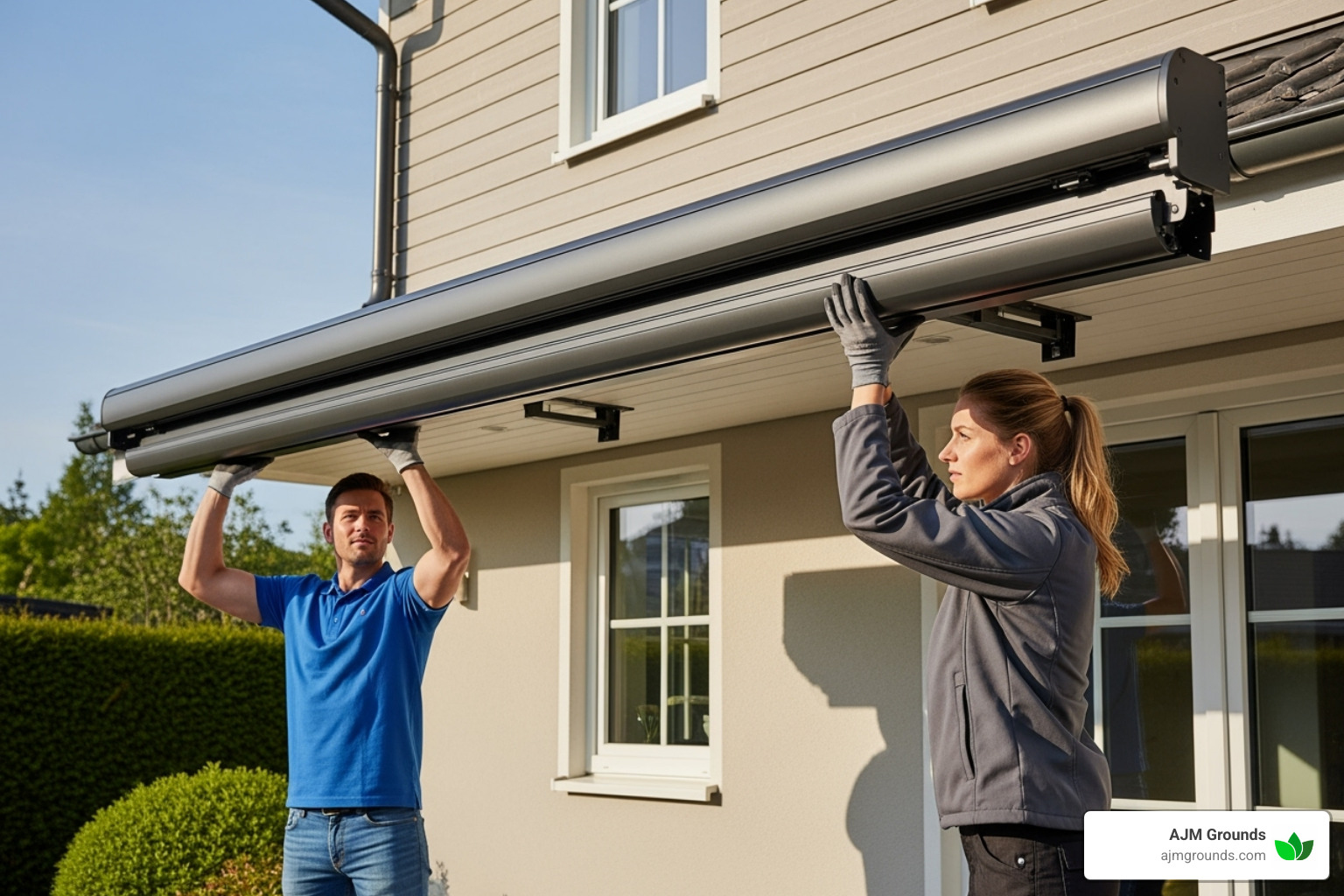
- Get a Helper: Awnings are heavy and awkward. You need at least one other person.
- Ladder Safety: Place your ladder on firm, level ground. Never overreach.
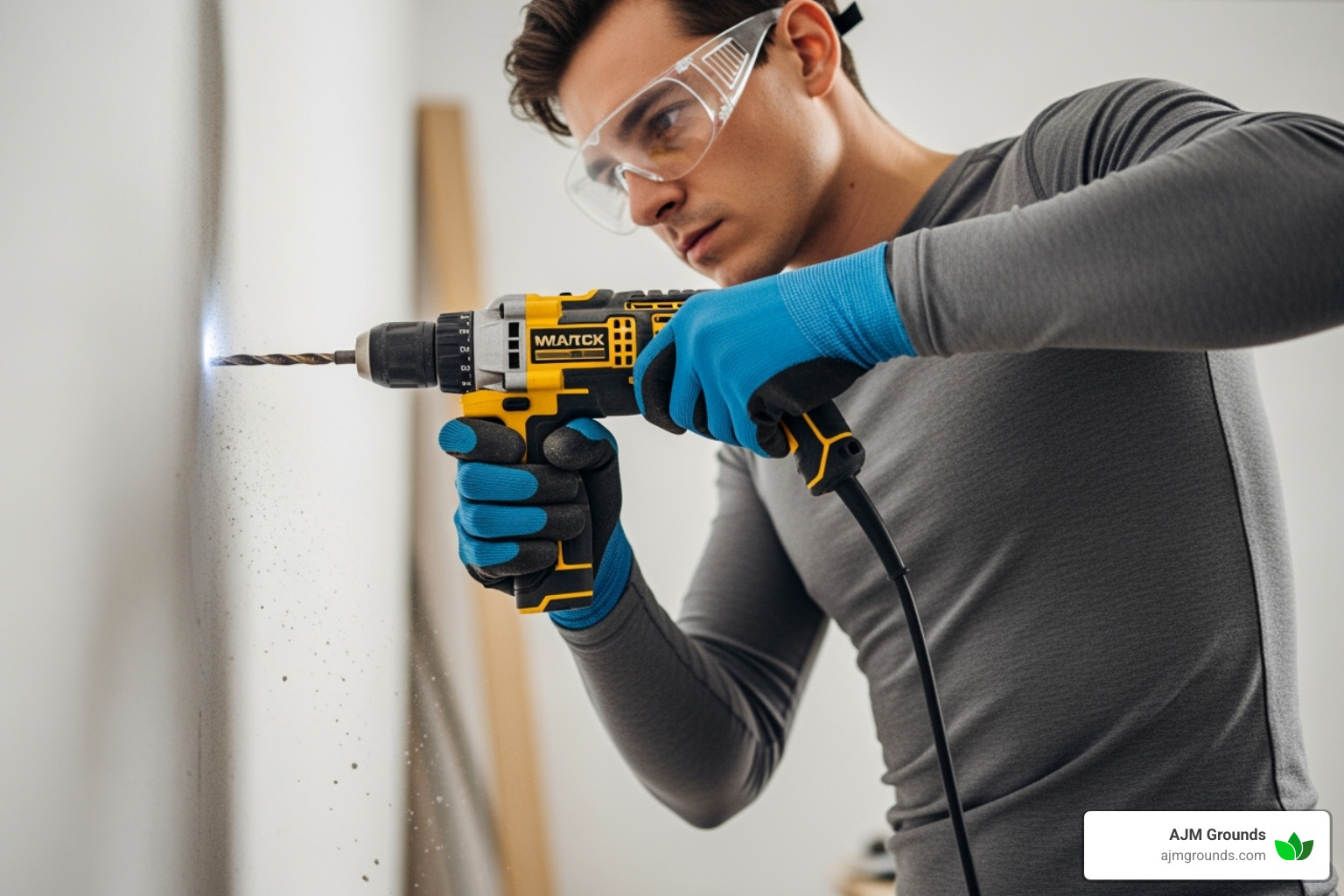
- Protective Gear: Wear safety goggles, gloves, and hearing protection.
- Check the Weather: Avoid working in high winds or rain.
- Read the Manual: Follow the manufacturer’s specific instructions. For motorized awnings, hire a qualified electrician for all wiring.
Step 3: Mounting Brackets for a Secure Patio Awning Installation
The brackets are the foundation of your installation, so precision is key.
Locating Studs and Marking
Use your stud finder to locate the wall studs at your desired height (typically 7-8 feet). Snap a level chalk line to mark where the top of the brackets will go. Mark the exact position for each bracket on this line, ensuring they align with the studs and match the manufacturer’s spacing requirements.
Drilling and Attaching Brackets
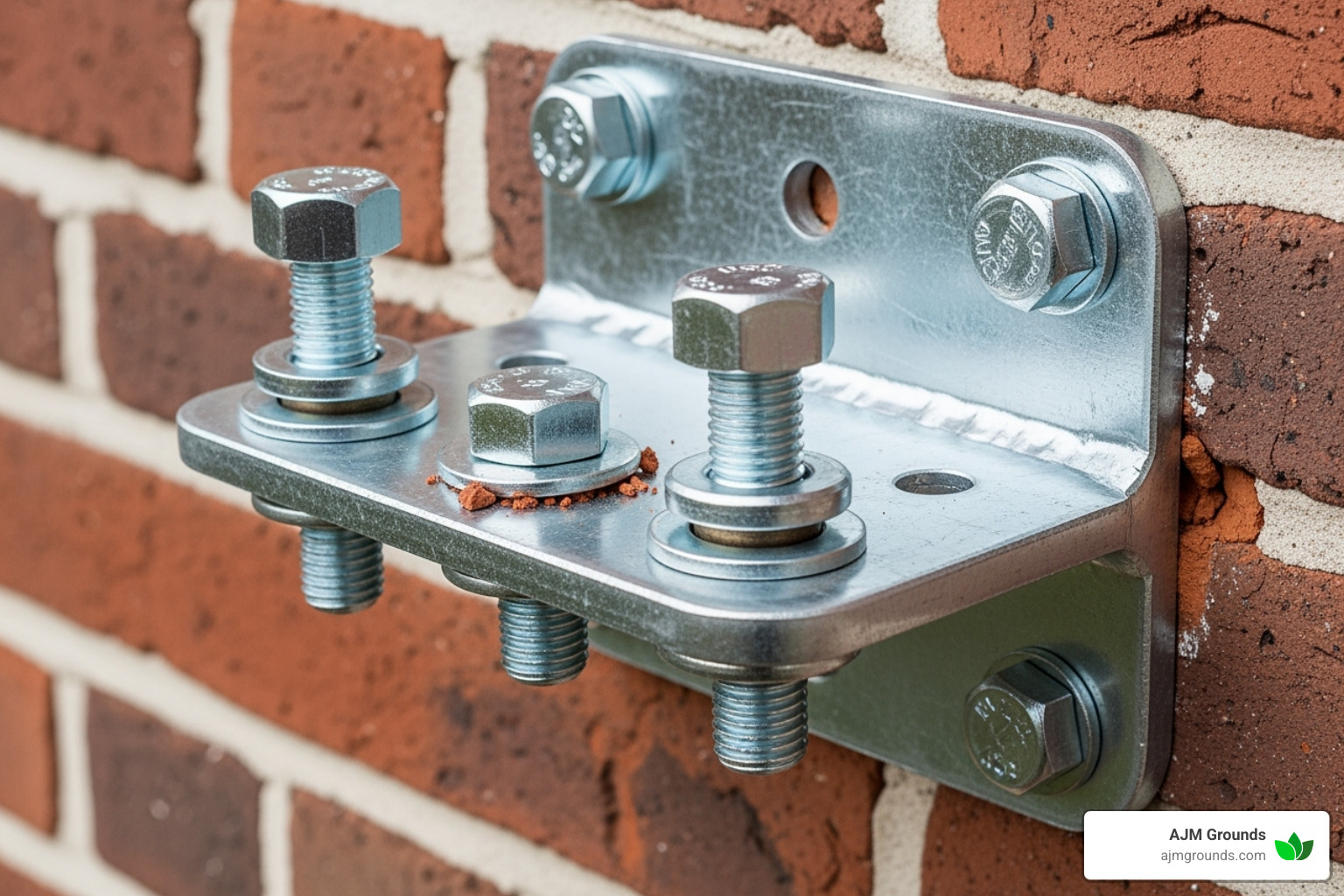
Drill pilot holes at your marked locations to prevent the wood from splitting. Use the drill bit size specified in your manual. Secure each bracket with the provided lag bolts or structural screws, driving them firmly into the wall studs. Use your level to ensure each bracket is perfectly straight before fully tightening.
Wall Type Considerations
- Vinyl Siding: Never attach brackets directly to siding. Cut custom PVC mounting blocks to fit the siding profile, creating a flat, solid surface. Seal the top and sides of the blocks with silicone sealant.
- Brick: Use masonry drill bits and appropriate anchors. If it’s a brick veneer, you may need longer fasteners to reach the structural framing behind it.
- Stucco: Use masonry bits and apply painter’s tape over the drill area to prevent crumbling. Seal thoroughly.
No matter the wall type, apply silicone sealant around all brackets to prevent water infiltration.
Step 4: Attaching the Awning and Adjusting the Pitch
This is the final assembly step and requires coordination and strength.
Lifting and Securing the Awning
With your helpers, carefully lift the awning assembly and guide it onto the installed brackets. Once it’s resting securely, insert and tighten the retaining bolts. Step back and check that the awning is level and stable.
CRITICAL SAFETY NOTE: Retractable awnings have spring-loaded arms held by a strap or pin. DO NOT remove this strap until the awning is fully secured to the brackets. The arms are under extreme tension and can spring open violently, causing serious injury.
Adjusting the Pitch or Tilt
Extend the awning fully. Use the adjustment bolts on the arms or brackets to set the pitch. The angle should be between 20 and 70 degrees to ensure proper water drainage and provide good shade. A 30-degree tilt is often a good starting point. Once you’re satisfied, tighten all locking bolts to fix the position.
Step 5: Awning Maintenance for Longevity
With proper care, your awning can last 5 to 15 years.
- Clean Regularly: Use mild soap, water, and a soft brush to clean the fabric. Rinse well and let it air dry completely before retracting to prevent mold and mildew.
- Inspect Hardware: Annually check for and tighten any loose fasteners. Clear debris from the top of the awning.
- Lubricate Moving Parts: Follow the manufacturer’s guide for lubricating retractable components.
- Retract in Bad Weather: Awnings are for sun, not high winds, heavy rain, or snow. Retract it to prevent damage. Consider a wind sensor for motorized models.
- Use a Protective Cover: For retractable models, a cover protects the unit during winter or long periods of non-use.
- Check the Sealant: Reapply silicone sealant around brackets if you see any cracking or gaps.
By following these tips, your awning will provide a comfortable outdoor retreat for years. For more ideas on improving your outdoor space, learn more about hardscape design.
When to Call a Professional
While installing a patio awning can be a rewarding DIY project, sometimes the smartest move is to hire a professional. This project is rated “moderate” difficulty because it requires comfort with ladders, home improvement skills, and altering your home’s exterior.
DIY vs. Professional Installation:
Consider hiring a pro if you face any of these situations:
- Weight and Safety: Retractable awnings can weigh up to 500 pounds. Maneuvering this weight on a ladder is dangerous without experience.
- Structural Uncertainty: If you’re unsure how to locate studs or properly anchor the awning to your home’s structure, a professional’s expertise is invaluable. They can prevent costly mistakes and ensure the installation is safe.
- Complex Installations: Mounting an awning to a soffit or roof, or dealing with unusual siding materials, requires specialized knowledge and tools that professionals possess.
- Time and Convenience: A DIY installation can take a full day or more. If you’d rather enjoy your weekend, hiring a pro is an efficient choice.
- Warranty Requirements: Some awning manufacturers require professional installation to keep the product warranty valid. Always check the terms before you begin.
Cost Considerations:
So what does professional installation actually cost? Please note that these are average cost ranges based on internet data and don’t reflect the actual pricing of AJM Grounds.
Professional installation typically costs between $100 and $1,200 or more, depending on the awning’s size, type, and installation complexity. The awning itself can range from $250 to $7,000 or more. While hiring a pro adds to the upfront cost, it provides peace of mind that the job is done correctly, safely, and is sealed against water damage. The cost of repairing a failed DIY installation can easily exceed the price of a professional job.
Here at AJM Grounds, we specialize in creating beautiful, functional outdoor spaces throughout Woburn, Bedford, Billerica, Burlington, Lexington, Reading, Stoneham, Wilmington, Winchester, and surrounding areas. While we don’t install awnings ourselves, we understand the importance of a well-designed outdoor living area. Our expertise in hardscaping and custom patio installations means we appreciate the structural considerations required for any outdoor fixture.
If you’re investing in an awning as part of a larger patio upgrade, explore our custom patio installation services to create the perfect foundation for your outdoor living dreams.
