

Transform Your Landscape with a Garden Path
Installing a garden path is one of the most effective ways to improve your outdoor space, combining beauty with functionality. A well-designed path not only creates clear walkways but also protects your lawn, defines garden areas, and adds visual appeal to your landscape.
Quick Guide to Installing a Garden Path:
- Plan your path – Determine location, width, and purpose
- Choose materials – Options include gravel, pavers, flagstone, brick, or mulch
- Gather tools – You’ll need a spade, rake, tamper, level, and edging materials
- Prepare the area – Remove sod and excavate 4-6 inches of soil
- Create the base – Add 2-4 inches of crushed stone and compact it
- Add landscape fabric – To prevent weed growth
- Install edging – To keep materials contained
- Add your path material – Following specific instructions for your chosen material
- Finish the surface – Level, compact, and fill gaps as needed
As Gordon Hayward, noted landscape designer, states: “One of the most important functions of a path is to link the house to the garden visually as well as physically.”
The right garden path creates a journey through your landscape, inviting exploration while providing practical benefits. Primary paths should be at least 48 inches wide for two people to walk side-by-side, while secondary paths can be 30-36 inches wide.
I’m John Caplis, owner of AJM Grounds LLC, and I’ve transformed countless properties through expert garden path installations, creating functional and beautiful connections that improve outdoor living spaces while adding value to homes throughout Woburn and beyond.
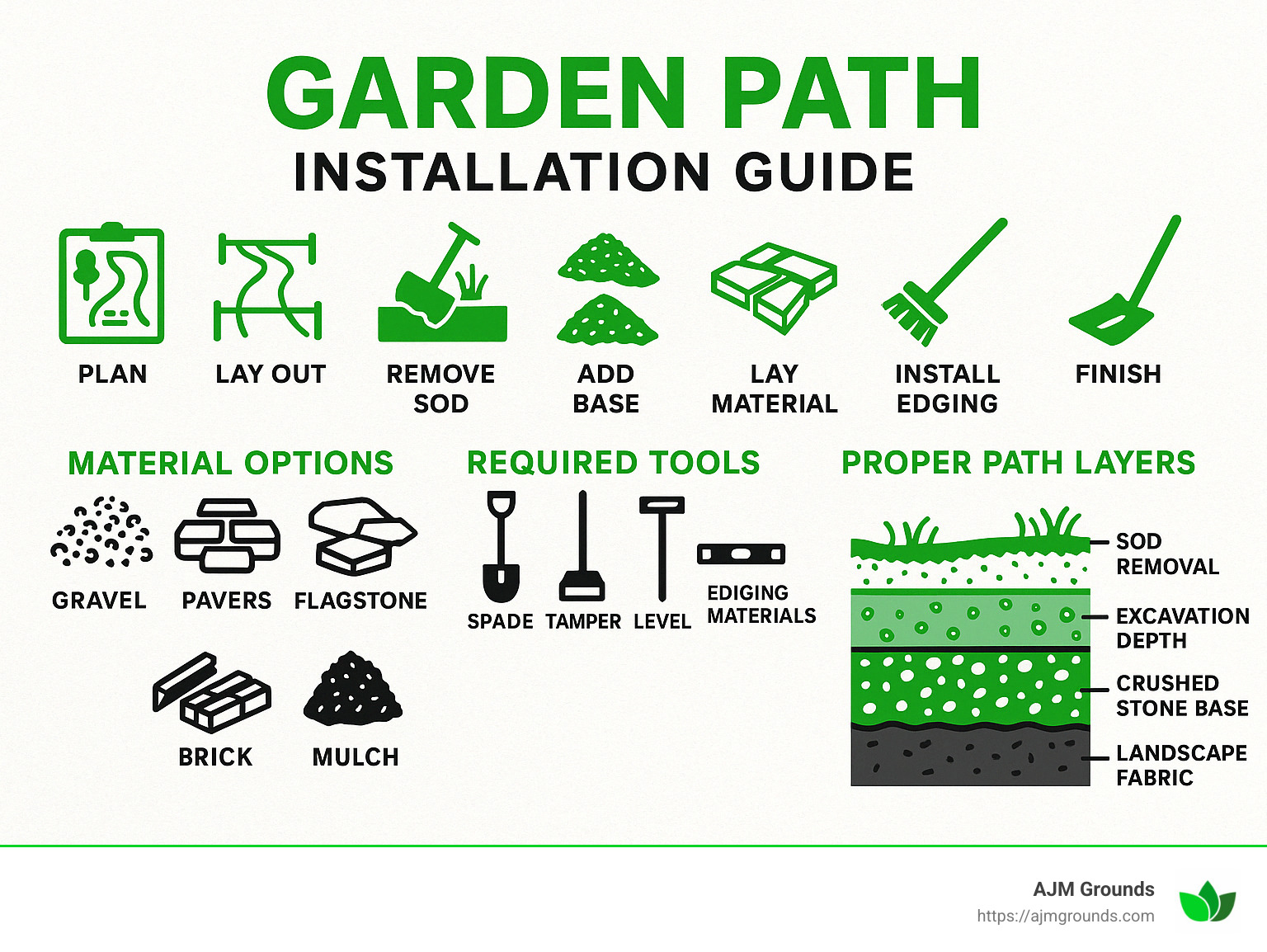
Installing a garden path terms you need:
Planning Your Garden Path: Design Considerations Before Installing
The journey to a beautiful garden path begins long before the first shovel touches soil. At AJM Grounds, we’ve learned that observing how people naturally move through your outdoor space is the key to planning a path that feels both intuitive and inviting.
Think about it – have you ever noticed those worn dirt trails that form naturally across lawns? Garden designers call these “desire paths,” and they reveal where people actually want to walk. These natural pathways offer valuable clues about where your formal path might serve best.
“One of the most important functions of a path is to link the house to the garden visually as well as physically,” notes landscape designer Gordon Hayward. This connection is crucial—your path should feel like it belongs with both your home’s style and your garden’s character.
Before installing a garden path, take time to evaluate your yard thoroughly. Watch how family members steer the space. Does everyone cut across a certain corner of the lawn? Is there a natural route people take between your patio and garden shed? These traffic patterns tell you where paths are needed most.
Consider your path’s purpose carefully. Will it be a primary route that guests use to reach your front door? A meandering journey through flowerbeds? Or a practical connection to your compost bin? Each purpose suggests different design choices.
A thorough yard evaluation should include:
Your yard’s size and dimensions, any slopes or elevation changes, sunny versus shady areas, how water moves across your property during rain, your soil type, and existing features you’ll need to work around or highlight.
I always recommend sketching a simple diagram of your yard. This helps visualize where paths would work best both functionally and aesthetically. Paths do double duty—they provide access while also guiding the eye and creating visual structure in your landscape.
For more comprehensive help with integrating paths into your overall landscape design, our team offers expert Landscape Design Installation services that ensure every element works harmoniously together.
Choosing the Right Location for Your Garden Path
Finding the perfect spot for your garden path means balancing practical needs with visual appeal. When our AJM Grounds team works with homeowners in Woburn and surrounding communities, we look for those telltale worn earth indicators that show where paths naturally want to be.

The most successful garden paths connect important spaces in your landscape. Think about linking your house to your driveway, your front door to your backyard, or your patio to your vegetable garden. These connection points form the backbone of your outdoor circulation system.
Pay attention to sight lines—how will your path look from key viewing areas like windows or seating areas? A thoughtfully placed path can frame beautiful views or draw attention to special garden features like a fountain or specimen tree.
Natural flow matters tremendously. Working with your land’s existing contours almost always yields more pleasing results than fighting against them. If your yard has a gentle slope, consider how your path can follow it gracefully rather than cutting awkwardly across it.
Paths also create garden divisions, defining different “rooms” or planting areas in your landscape. A path winding between your perennial border and herb garden creates structure while making maintenance easier.
Here in Massachusetts, practical considerations like snow removal and drainage are essential. Primary paths near the house often work best when they follow straight lines that extend from your home’s architecture. As you move deeper into the garden, paths can become more curved and informal, encouraging exploration and findy.
Determining the Ideal Width and Shape for Your Path
The width of your garden path directly impacts how it feels to use. At AJM Grounds, we recommend sizing paths according to their importance and expected traffic.
Primary paths should be at least 48 inches wide—enough for two people to walk comfortably side-by-side. These main routes typically connect your home to the street or driveway and see the most frequent use.
Secondary paths work well at 30-36 inches wide. These connect different garden areas and experience moderate traffic. They’re comfortable for single-file walking while still feeling generous.
For practical considerations, think about what might travel along your path. Wheelbarrow access requires about 3 feet of width, while lawn mowers or garden carts generally need 3-4 feet of clearance. If you use a garden tractor for maintenance, you might need paths as wide as 5 feet in some areas.
The shape of your path sets the tone for your entire garden experience. Straight paths create a formal, direct feel that extends your home’s architectural lines into the landscape. They’re efficient and purposeful, making them ideal for primary routes near structures.
Curved paths, by contrast, create a more relaxed, natural feeling. Their gentle bends encourage slower movement and exploration, making them perfect for casual garden strolls. Curves can also help your path gracefully steer around existing features like mature trees or large rocks.
When designing curved paths, remember Gordon Hayward’s wise advice that curves should “appear natural and logical, not willy-nilly.” The most pleasing curves might follow the dripline of a large tree, the natural contour of a slope, or lead the eye toward a garden focal point.
For more information about creating beautiful hardscaped paths that complement your landscape, explore our Hardscaping services. Our team brings expertise in materials and techniques that ensure your path is both beautiful and built to last through New England’s challenging seasons.
Selecting Materials for Installing a Garden Path
When it comes to installing a garden path, choosing the right material might just be the most important decision you’ll make. This choice shapes not only how your path will look but also how long it will last, how much care it will need, and what it will cost you both now and down the road.
Here at AJM Grounds, we’ve helped countless homeowners throughout Woburn, Winchester, and nearby Massachusetts communities find that perfect balance between beauty and practicality. Let me walk you through what we consider when helping clients choose their path materials.
First, think about durability. Will your path materials stand strong against our New England weather? Those freeze-thaw cycles we experience can be brutal on certain materials. A path that looks gorgeous in summer but cracks and heaves after a winter or two isn’t doing you any favors.
Next, consider the look and feel you’re going for. Your path should feel like it belongs with both your home and your landscape. A sleek, modern concrete path might look stunning beside a contemporary home but could feel oddly out of place next to a colonial. Similarly, your path material sets a mood—formal, casual, rustic, or somewhere in between.
Of course, budget matters too. But remember we’re looking at the whole picture—initial cost, yes, but also how much maintenance you’ll need to do, how often you’ll need to replace materials, and even how your choice might affect your property value.
Our Massachusetts climate demands special consideration. Some materials become dangerously slippery when wet or icy, while others handle our seasonal changes with grace. And don’t forget about maintenance requirements—are you looking for something you can install and forget, or are you willing to put in regular care to maintain a particular look?
| Material | Cost Range* | Durability | Maintenance | Best For |
|---|---|---|---|---|
| Gravel | $3-15 per sq ft | Medium | Medium | Informal paths, good drainage |
| Pavers | $15-50 per sq ft | High | Low | Primary paths, formal settings |
| Flagstone | $15-75 per sq ft | High | Low | Natural settings, primary/secondary paths |
| Brick | $15-45 per sq ft | High | Medium | Traditional homes, formal gardens |
| Mulch | $2-10 per sq ft | Low | High | Casual paths, low traffic areas |
| Concrete | $12-30 per sq ft | High | Low | Modern designs, high traffic areas |
| Wood | $15-45 per sq ft | Medium | High | Rustic settings, raised paths |
*Note: These are average costs based on internet data and not actual costs for AJM Grounds. Actual prices may vary significantly based on specific materials, site conditions, and design complexity.
A path’s purpose should influence your material choice. The welcoming path to your front door deserves different treatment than the utilitarian path to your garden shed or compost bin. Primary paths that see daily use need more durability than those charming stepping stones that meander through a flower bed.
Popular Garden Path Materials and Their Benefits
Each path material has its own personality and practical benefits. Let me share what we’ve learned from installing paths throughout the Woburn area:

Pavers offer incredible versatility in colors, textures, and patterns. I love recommending concrete and porcelain pavers to clients who want a clean, polished look that will stand the test of time. They create stable, even surfaces that rarely need more than an occasional sweeping or rinsing. They cost more upfront, but that investment pays off in longevity and low maintenance. They’re especially perfect for those high-visibility paths leading to your front door or connecting main outdoor living spaces.
Flagstone brings a timeless, organic beauty to any garden. Each stone has its own unique character, creating paths that feel like they’ve been there forever. The natural variations in color and texture blend beautifully with plantings. While flagstone can be pricey, and sometimes becomes slippery in shady spots, it creates an unmistakable charm that’s hard to beat. I’ve seen flagstone paths that look even better after decades in the landscape.
Gravel paths have a special place in my heart for their pleasant crunch underfoot and excellent drainage. They’re relatively affordable and forgiving for DIY installation. With proper edging to keep the stones contained, gravel paths can maintain their charm for years with occasional raking and topping up. They’re perfect for cottage gardens, country settings, or anywhere you want an informal, relaxed feel.
Brick offers that classic, warm look that complements so many New England homes. There’s something timeless about a brick pathway, especially when laid in attractive herringbone or basket weave patterns. While brick can settle over time and sometimes grow moss in shady areas (which some people actually love!), its traditional appeal and durability make it a perennial favorite for formal garden designs.
Mulch creates soft, natural-looking paths that blend seamlessly with garden beds. It’s gentle underfoot, inexpensive, and easy to install. The downside? It breaks down over time and needs regular replenishment. But for woodland gardens or casual secondary paths, that natural, earthy quality can be exactly what you’re looking for.
Stepping stones bring a playful, interactive quality to garden paths. They create rhythm and movement, inviting you to pay attention to each step. I love how they can be installed with groundcover plants growing between them, blurring the line between path and garden. While not ideal for heavily-trafficked areas, they’re perfect for creating those magical journeys through special garden spaces.
Concrete offers incredible versatility beyond just plain gray slabs. Today’s concrete paths can be colored, stamped, or textured to mimic natural stone at a lower price point. It creates accessible, smooth surfaces ideal for modern designs. While concrete can crack in freeze-thaw cycles, proper installation with expansion joints minimizes this risk.
Wood brings warmth and natural character to garden paths. Whether as timber steps, boardwalks over wet areas, or simple wood chips, wooden paths create a welcoming, organic feel. While they do require more maintenance to prevent rot and typically have shorter lifespans than stone or concrete, they can be the perfect choice for woodland settings or raised walkways through wet areas.
I always recommend visiting our completed projects or material suppliers to see and feel options firsthand. Photos can show you the general idea, but nothing replaces experiencing the texture, color, and overall impression in person.
For more inspiration on garden path construction techniques, check out this helpful guide on How to build a garden path.
Cost Considerations for Different Path Materials
Let’s talk dollars and cents when it comes to installing a garden path. Understanding the full financial picture helps you make choices you’ll be happy with for years to come. At AJM Grounds, we believe in helping our Woburn, Lexington, and neighboring Massachusetts clients see beyond just the initial price tag.
Average Pricing Ranges for garden paths can vary dramatically based on materials, complexity, and your specific site conditions. Based on internet data (not actual AJM Grounds pricing), here’s what you might expect to pay for installed paths:
A simple mulch path might run anywhere from $2 per square foot for basic wood chips up to $30 per square foot for premium hardwood mulch with professional installation and edging. While affordable upfront, remember you’ll need to replenish mulch regularly.
Gravel paths typically cost between $3-45 per square foot. That wide range reflects differences between basic pea gravel and premium decorative stones, as well as installation complexity. Proper base preparation and edging make a huge difference in how well a gravel path performs over time.
Stepping stone paths generally fall between $8-75 per square foot. Natural stone costs more than concrete replicas, and the spacing between stones affects the total material needed. The real craft comes in proper stone placement and ensuring each stone sits firmly without wobbling.
For brick pathways, expect to invest between $15-135 per square foot. The higher end reflects premium clay pavers, complex patterns, and challenging installation conditions. Brick paths require skilled installation to prevent settling and shifting over time.
Concrete paths typically range from $12-90 per square foot. Plain, simple concrete sits at the lower end, while decorative stamped and colored concrete with special finishes commands premium prices. The investment in quality concrete work pays dividends in durability and appearance.
Flagstone paths represent some of the most variable pricing, from $15-225 per square foot. The stone type, thickness, installation method (mortared vs. dry-laid), and complexity all influence cost. A simple irregular flagstone path with plants growing between stones costs far less than a precisely fitted, mortared bluestone walkway.
Paver paths generally run between $15-150 per square foot. Basic concrete pavers cost less than premium porcelain or natural stone options. Installation complexity, pattern choices, and edge treatments all influence the final price.
When calculating material quantities, remember it’s not just about surface area. For gravel, you’ll need about 1 ton per 100 square feet at a 2-inch depth. With pavers or brick, you’ll need to calculate based on specific sizes and patterns. Always budget for 5-10% extra material to account for cuts, breakage, and future repairs.
Thinking about long-term value often changes the equation. That $3/sq ft mulch path might need complete replacement every 2-3 years, while that $30/sq ft paver path could last 30+ years with minimal maintenance. When I work with clients on front entrance paths that visitors use daily, I often recommend investing in higher-quality materials since these create important first impressions of your home.
The installation complexity varies tremendously between materials. While spreading mulch is relatively straightforward for a DIY weekend warrior, properly installing pavers or flagstone requires significant skill. Proper base preparation makes all the difference between a path that stays beautiful for decades and one that becomes uneven and weed-filled after a few seasons.
The DIY vs. professional installation decision depends on your skills, tools, time, and the path’s importance. For casual garden paths using simple materials, DIY can be rewarding and cost-effective. For primary paths that need to withstand heavy use and harsh weather, professional installation often provides better long-term value.
I remember a client in Burlington who initially balked at the cost of professional paver installation for their front walkway. They opted for DIY gravel instead, only to call us two years later when the gravel had scattered onto their lawn and weeds had taken over. The lesson? Sometimes investing in professional installation for key paths saves money and frustration in the long run.
For complex hardscaping projects where durability and appearance are paramount, working with a qualified contractor ensures proper installation that will stand the test of time. Learn more about our approach as a Hardscaping Contractor.
Essential Tools and Materials for Garden Path Installation
Installing a garden path requires the right equipment to ensure your project goes smoothly. After years of creating beautiful pathways throughout Woburn, Stoneham, and surrounding communities, our team at AJM Grounds has perfected our tool kit for path installations.
Think of your garden path project like cooking a special meal—having all ingredients and utensils ready before you start makes the process much more enjoyable. Let’s explore what you’ll need to gather before breaking ground.
For excavation, you’ll want a good square-edged spade or shovel that creates clean edges—this makes a noticeable difference in the finished look. A sturdy garden fork helps break up compacted soil, while a reliable wheelbarrow is essential for moving soil and materials. If your ground contains rocks or tree roots, a pick or mattock will save you considerable frustration.
Accurate measurements prevent costly mistakes. Grab a measuring tape (at least 25 feet long), some stakes and string for marking your path’s layout, and marking paint for outlining curves. A carpenter’s level and line level are crucial for ensuring proper drainage—without these, you might end up with puddles on your beautiful new path after the first rain.
Base materials form the foundation of a lasting path. You’ll need:
- Crushed stone or gravel (¾-inch is ideal for base layers)
- Coarse sand for creating a smooth leveling course
- Quality landscape fabric to suppress weeds (this small investment prevents major headaches later)
Edging keeps your path materials contained and looking neat for years to come. Options include metal edging (galvanized steel or aluminum for longevity), plastic edging (budget-friendly but less durable), stone or brick edging (beautiful but more labor-intensive), or wood edging (cedar or pressure-treated for resistance to rot).
Proper compaction is non-negotiable for a stable path. For smaller projects, a hand tamper will suffice, but larger installations benefit from a plate compactor (easily rented from local equipment shops). Keep a rubber mallet handy for setting pavers or edging.
Safety should never be an afterthought. Protect yourself with work gloves, safety glasses, knee pads (your knees will thank you!), and sturdy footwear. For projects involving heavy materials, consider a back brace to prevent injury.
A few additional tools make the job significantly easier: a garden rake for leveling materials, a broom for clean-up, a utility knife for cutting landscape fabric, 2×4 lumber pieces for screed boards when leveling sand, and a garden hose with spray nozzle for dampening materials during compaction.
For complex installations or larger projects, our AJM Grounds team brings commercial-grade equipment that makes short work of even challenging installations. We’ve invested in specialized tools so our clients don’t have to.
For more creative ideas and expert guidance on garden pathways, the Garden Design website offers excellent Garden Pathways: Tips and Ideas for Function & Beauty.
Preparing Your Shopping List
Before heading to the supply store, take time to calculate quantities and create a detailed shopping list. This preparation prevents mid-project runs to the store and helps you budget accurately when installing a garden path.
For your base materials, crushed stone is calculated by volume. For a typical path with a 4-inch deep base, multiply your path width by length by 0.33 feet (4 inches) to get cubic feet. For example, a 3-foot wide, 20-foot long path needs about 20 cubic feet or 0.75 cubic yards of crushed stone. Don’t forget landscape fabric—purchase enough to cover your path width plus an extra 12 inches on each side. For our example path, you’d need about 100 square feet of fabric (5′ × 20′).
The sand leveling layer typically runs 1-2 inches deep. For our sample path with a 1-inch sand layer, you’d need approximately 5 cubic feet of sand (3′ × 20′ × 0.08′).
Edging materials are calculated by measuring your path’s perimeter. For our 3-foot by 20-foot example, you’d need about 46 linear feet of edging (both sides of the length plus both ends). Don’t forget edging stakes—plan for one every 2-3 feet, so about 18-20 stakes for our example path.
Surface materials vary by type. For pavers or bricks, first calculate your path’s square footage, then determine how many pieces you’ll need per square foot based on their size. Always add 5-10% extra for cuts and breakage—I’ve seen too many projects delayed when people run short. For gravel paths, calculate volume based on your desired depth, typically 2-3 inches. As a rule of thumb, 100 square feet at 2-inch depth requires about 1 ton of gravel.
Don’t forget the essential tools you might need to purchase or rent. A plate compactor rental makes compaction much easier than doing it by hand. A good level, string, stakes, rubber mallet, and utility knife round out the basics. And please, don’t skimp on safety gear—work gloves, eye protection, and knee pads make the job much more comfortable.
At AJM Grounds, we have access to bulk materials at contractor rates, which can save significant money on larger projects. For our clients throughout Winchester, Wilmington, and neighboring communities, we handle all material sourcing and delivery logistics, saving you both time and potential headaches.
For professional assistance with your walkway project, visit our Walkway Installation page to learn more about our services.
Safety Considerations During Installation
Safety isn’t just a box to check—it’s the foundation of every successful project when installing a garden path. Throughout our years serving Woburn and surrounding communities, our AJM Grounds team has maintained an excellent safety record by following these essential practices.
Proper lifting technique prevents the most common injuries we see in DIY landscaping projects. Remember to bend at your knees, not your waist, keeping heavy loads close to your body. Avoid twisting while lifting—instead, reposition your feet to change direction. Materials like flagstone and pavers can be deceptively heavy. One of our clients in Reading tried moving large bluestone pieces alone and strained his back, delaying his project by weeks. We recommend getting help or using mechanical assistance for anything over 50 pounds and taking frequent breaks to prevent fatigue.
Tool handling requires attention and respect. Keep your tools sharp—dull tools actually increase your risk of accidents because they require more force. Maintain proper spacing between workers, especially when using picks or shovels. After each work session, clean and store tools properly to prevent deterioration and potential hazards. Before starting each day, quickly inspect tools for damage or wear.
Protective equipment is your first defense against injuries. Choose gloves appropriate for your task—leather for rough materials, rubber for wet work. Safety glasses are non-negotiable when cutting materials or using power tools. Consider a dust mask when working with dry materials that create dust. Your knees will thank you for wearing knee pads during extended kneeling work. And proper footwear with ankle support and toe protection has saved countless toes on our job sites!
Site preparation creates a safer working environment. Clear the area of tripping hazards like garden hoses, toys, or debris. Keep your workspace tidy by disposing of packaging and material scraps promptly. Secure loose clothing and tie back long hair that could get caught in tools. If working in sunny conditions, apply sunscreen and wear a hat—sunburn can be just as debilitating as other injuries. And staying hydrated is crucial, especially during hot weather.
Perhaps the most critical safety step is utility marking. Always call 811 (Dig Safe) at least 72 hours before excavation begins. This free service arranges for utility companies to mark underground lines. Wait for confirmation that marking is complete before digging, and hand-dig carefully near marked utilities. Never assume you know the depth of buried utilities—a client in Lexington was grateful when our team identified an unmarked irrigation line before excavation began, preventing a costly repair and project delay.
Weather considerations should influence your work schedule. Avoid working in extreme heat or cold, be extra cautious on wet surfaces that become slippery, and always postpone work during thunderstorms. Take additional breaks when working in challenging weather conditions.
When using power equipment, follow all manufacturer instructions carefully. Never remove guards or safety features, turn off and unplug equipment when not in use, and keep electrical cords away from water and cutting areas. All outdoor electrical tools should use GFCI protection to prevent shock hazards.
Taking time to work safely is always more efficient than dealing with injuries or property damage. At AJM Grounds, we’ve built safety into every step of our installation process because we want everyone—both our team and our clients—to enjoy the results of beautiful pathways without unnecessary risks.
Step-by-Step Guide to Installing a Garden Path
Now that you’ve planned your path and gathered your materials, it’s time to get to work installing a garden path. At AJM Grounds, we’ve refined this process through hundreds of installations across Woburn, Bedford, and surrounding Massachusetts communities.
Let me walk you through our comprehensive approach for creating a professional-quality garden path that will improve your landscape for years to come.
We always begin by carefully marking your path. For straight sections, simple stakes and string work beautifully, while garden hoses or marking paint are perfect for visualizing curved paths. I always recommend stepping back and viewing the layout from different angles—you’d be surprised how often this reveals adjustments that improve the final result.
Once you’re happy with the layout, it’s time to dig. Most paths require excavating about 5-6 inches deep to accommodate all your materials. This typically includes 3-4 inches for the crushed stone base, an inch of sand if you’re using pavers or stones, plus the depth of your surface material. If you live in an area with harsh freeze-thaw cycles (like we experience here in Massachusetts), you might want to dig a bit deeper for extra stability.
The foundation of a great path is, quite literally, its base. After excavation, compact the soil at the bottom, then add crushed stone or gravel in 2-inch layers. A little trick we use at AJM Grounds is to lightly dampen each layer before compacting—this helps the stone lock together for maximum stability. Whether you’re using a hand tamper or a plate compactor, make multiple passes and check carefully for low spots.
Proper drainage is essential for path longevity. We ensure paths slope gently away from structures (typically 1/8 inch per foot) to prevent water pooling. For areas with drainage challenges, we might incorporate a perforated pipe beneath the path or create a slightly crowned profile to shed water effectively. One client in Reading had a particularly wet area, so we installed a French drain alongside their new path—five years later, they still have no water issues.
Now comes the rewarding part—installing your chosen material. Each type requires specific techniques: pavers need a sand bed and precise placement, gravel should be raked to an even depth, stepping stones must be set firmly for stability, and flagstone requires careful placement with appropriate gaps. Take your time here—rushing this step often leads to regrets later.
Finally, add those finishing touches that make your path truly special. Install edging to contain loose materials, fill gaps appropriately, and clean the surface thoroughly. Some clients opt for landscape lighting along the path, which not only adds safety but creates beautiful evening ambiance.
One of our Burlington clients was particularly delighted with how we incorporated subtle solar lighting along their new garden path, extending their enjoyment of the garden well into the evening hours. “It’s like having a different garden at night,” they told us.
Patience during installation pays huge dividends in the finished product. Taking time to properly prepare the base and carefully place materials will result in a path that remains beautiful and functional through many seasons of enjoyment.
Preparing the Path Foundation
The foundation is the most critical aspect of installing a garden path. At AJM Grounds, we emphasize that a properly prepared foundation prevents future problems like settling, heaving, and weed growth.
Starting with proper sod removal sets the stage for success. For smaller paths, a sharp spade works well to cut and remove grass in strips. Larger projects might warrant renting a sod cutter, which makes quick work of removing turf evenly. Be thorough in removing all root material—any remnants left behind may sprout through your beautiful new path. If the sod is healthy, consider repurposing it elsewhere in your landscape rather than discarding it.
Next comes soil excavation, where precision matters. For most residential paths, we dig to a depth of 5-6 inches, ensuring consistent depth throughout. For paths that will bear heavier loads, like those leading to a driveway where you might occasionally drive equipment, we increase this to 7-8 inches.
As landscape contractor Roger Cook wisely notes, “Gravel paths are easy to construct because they aren’t set very deep, requiring only a few inches of excavation.” However, for more permanent materials like pavers or flagstone, proper depth is absolutely essential for long-term stability.
Ground leveling follows excavation and requires attention to detail. Remove any large rocks, roots, or debris that could cause problems later. Break up compacted soil, then use a rake to create a smooth, even surface. I always recommend checking for low spots using a long, straight board—these depressions will only get worse over time if not addressed now.
Proper compaction techniques are something we emphasize with all our crews at AJM Grounds. A well-compacted base prevents future settling that can make your path uneven and hazardous. For smaller areas, a hand tamper works well, while larger projects benefit from a plate compactor. If your soil is very dry, lightly dampen it before compacting—but avoid working with soggy soil, as it won’t compact properly. Work methodically across the entire area, making multiple passes for optimal results.
Creating the right drainage slope is essential for path longevity. Water should always run off rather than pooling on or beside your path. We typically create a cross-slope of approximately 1/8 inch per foot, directing water away from buildings and structures. For longer paths on hillsides, consider incorporating steps or switchbacks to manage the grade change comfortably.
I remember a client in Stoneham who called us after their DIY path had failed within a year. When we excavated the old path, we finded they had skipped proper base preparation entirely. After we rebuilt it with thorough excavation and compaction, the difference was immediately apparent—and years later, the path remains level and weed-free.
For more detailed information on professional installation techniques, check out our guide on Installing a Brick Paver Walkway.
Installing the Base Layers
The base layers provide essential support and drainage for your garden path. At AJM Grounds, we consider this step critical for ensuring the longevity of paths we install throughout Woburn, Lexington, and neighboring communities.
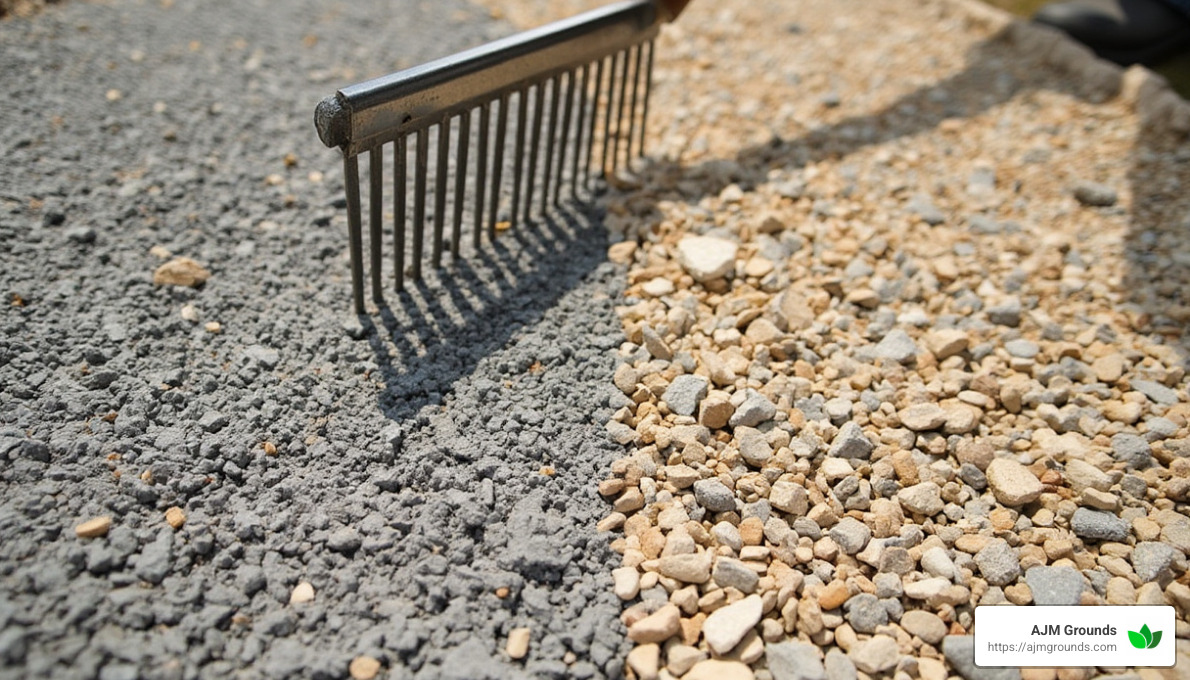
Proper crushed stone application forms the foundation of a lasting path. We typically start with a 4-inch layer of crushed stone (often called 3/4-inch or “paver base”). Rather than dumping it all at once, we apply it in 2-inch layers, which allows for much better compaction. Using a rake or shovel, we spread it evenly, extending slightly beyond the path edges for better support. This “shoulder” helps prevent edge materials from shifting outward over time.
For traditional paver walkways, a 6-inch layer of gravel paver base is our standard recommendation, though we adjust based on specific soil conditions and your chosen surface material. Clay soils, for instance, might require a thicker base for proper drainage.
Effective tamping techniques ensure your path won’t settle unevenly later. We dampen the stone lightly before compaction—this simple step helps the angular particles lock together more effectively. For smaller paths, a hand tamper works well if you use firm, overlapping strokes. Larger areas benefit from a plate compactor worked in a systematic pattern. Either way, make at least two passes in different directions for thorough compaction. When properly tamped, the base should feel firm underfoot with no shifting or movement.
Landscape fabric placement is a step many DIYers skip, but it’s one we never overlook. This critical layer prevents weeds from growing up through your path while still allowing water to drain downward. We roll it out over the compacted stone base, cutting it to size with at least 6 inches of overlap at any seams. The fabric should extend beyond the path edges by 6-12 inches, and we make small relief cuts to accommodate curves without wrinkling. In windy conditions, we secure it with landscape pins until the next layer is added.
Sand leveling creates the perfect setting bed for your surface materials. We add a 1-inch layer of coarse sand over the landscape fabric, then use a screed board (typically a straight 2×4) to create a perfectly level surface. By pulling the board across the sand while it rests on temporary guides set at the desired height, we can achieve remarkable precision. For curved paths, a flexible PVC pipe makes an excellent screed. This sand layer allows for fine adjustments when setting pavers or stones and helps with drainage.
Proper moisture control during installation prevents problems later. We lightly mist the sand with water to help it settle, but carefully avoid over-watering, which can wash away your carefully leveled surface. The sand should be damp but not saturated before placing your surface materials.
I recall a client in Winchester who was particularly concerned about drainage issues in their sloped yard. We installed a French drain alongside their new garden path, which has successfully managed water runoff for several seasons, protecting both their path and nearby planting beds. “It’s the first time this area hasn’t turned into a mud pit during spring thaws,” they told us with relief.
The time invested in proper base preparation truly pays off with a path that remains level and weed-free for years to come. Skimping on these steps often leads to uneven settling, persistent weed problems, and premature deterioration of the path surface—all issues that are far more difficult to fix than to prevent.
Laying Your Path Materials
With a properly prepared base in place, you’re ready for the most visible part of installing a garden path: laying the surface materials. At AJM Grounds, we pay special attention to this stage, as it determines both the appearance and functionality of the finished path.
Proper spacing creates both visual harmony and practical functionality. For stepping stones, we space them according to a comfortable walking stride—typically 24-30 inches center to center. Too close, and the path feels awkward; too far apart, and it becomes difficult to steer. With pavers, consistent gaps of 1/8 to 1/4 inch create a clean, professional look, unless the design specifically calls for wider joints. Irregular flagstones generally work best with gaps of 1-3 inches, depending on whether you’ll plant between stones or fill with gravel. Small plastic spacers can be invaluable for maintaining consistency.
Level checking is essential for both safety and appearance. We use a carpenter’s level to check each stone or paver as we place it, making adjustments by adding or removing sand beneath. For larger areas, a long straightedge with a level helps ensure multiple pieces align properly. A gentle tap with a rubber mallet sets pieces firmly into the sand bed. Throughout this process, we maintain that slight slope for drainage (1/8 inch per foot) that we established in the base layers.
The pattern creation process is where artistry meets craftsmanship. For uniform pavers, classic patterns like running bond, herringbone, and basketweave offer timeless appeal. With irregular stones, we create a puzzle-like fit, often rotating pieces multiple times to find the best arrangement. When working with mixed materials, establishing a rhythm or repeating sequence creates visual cohesion. I always recommend stepping back periodically to assess the overall pattern—what looks good up close sometimes needs adjustment when viewed from a distance.
Gap filling secures your materials and completes the installation. For pavers, we sweep fine sand into the joints, then mist with water to help it settle. This process might need repeating several times to completely fill the gaps. For flagstone with wider gaps, options include crushed stone, pea gravel, or planting low-growing groundcover between stones. Brick paths typically receive sand or polymeric sand for a more permanent setting. Complete filling prevents shifting and inhibits weed growth.
Edge securing prevents lateral movement and maintains your path’s crisp borders. We install edge restraints that might include plastic edging, metal edging, concrete curbing, or buried stones, depending on the path style. These are secured with stakes driven every 2-3 feet for stability. We then backfill against the outside of the edging with soil, which both conceals it and provides additional support.
When working with natural stone, our team at AJM Grounds often creates a dry layout first—arranging all stones before setting them in the sand bed. This extra step allows us to create the most pleasing arrangement and minimize cutting. We recently completed a flagstone path in Billerica where this approach resulted in a beautifully organic flow with minimal stone cutting required. The homeowner commented, “It looks like the stones have always been there, just waiting to become a path.”
For more information on working with natural stone in your landscape, visit our page on The Advantages of Hardscaping with Natural Stone.
Finishing and Edging Your Garden Path
The finishing touches make the difference between an ordinary path and an extraordinary one. At AJM Grounds, we pay careful attention to these final steps when installing a garden path for clients throughout Woburn and neighboring communities.
Edge installation creates definition and containment for your path materials. Metal edging provides a durable and nearly invisible border that works beautifully with loose materials like gravel. We install it flush with or slightly above the path surface for a clean look. Brick or stone edging creates a more decorative border that complements the path material—we set these in mortar for permanence or in compacted sand for a more natural appearance. Plastic edging offers an economical option that works well for casual paths, though we ensure it’s properly anchored with stakes every 2-3 feet to prevent shifting. For maximum durability and formality, concrete curbing can be formed into various shapes and provides the strongest border.
The material you choose for gap filling affects both appearance and function. Polymeric sand hardens when wet, creating a more permanent joint that resists weeds and insects—ideal for formal paths where you want minimal maintenance. Regular sand offers a traditional and economical option, though it may require occasional replenishment and doesn’t prevent weeds as effectively. Fine gravel creates a permeable surface that drains exceptionally well, and choosing a contrasting or complementary color can improve your design. If you’re planning to grow groundcover between stones, we fill gaps with good quality topsoil mixed with compost to give plants the best start.
Surface cleaning highlights the beauty of your materials and completes the professional look. We thoroughly sweep excess sand or debris from the surface, then rinse with a gentle spray from a garden hose. For stubborn dirt, a soft brush and mild detergent work wonders without damaging your path materials. We always advise clients to avoid pressure washing new installations until they’ve fully settled—typically waiting at least a month before using any high-pressure cleaning methods.
For loose materials like gravel, a final compaction ensures stability and a smooth walking surface. We use a hand tamper or plate compactor, making several passes in different directions to thoroughly settle the material. This final compaction also reveals any low spots that might need additional material. The result is a path that feels solid and secure underfoot from the very first use.
I remember a client in Burlington who was particularly pleased with how we finished their garden path with copper solar lights and custom cedar edging that matched their existing landscape features. These thoughtful details transformed what could have been a simple functional path into a garden highlight that they now showcase to visitors. “It’s not just a way to get from point A to point B—it’s become a feature in itself,” they told us with pride.
The right finishing touches can lift your garden path from merely functional to truly spectacular. Whether it’s decorative edging, thoughtful lighting, or carefully selected plants alongside the path, these details create the character and charm that make your garden path uniquely yours.
For more inspiration on creative edging options, visit our page on Creative Ideas for Garden Borders and Edging.
Maintaining Your Garden Path for Longevity
There’s something deeply satisfying about installing a garden path that transforms your landscape—but the real secret to enjoying that beautiful path for years to come lies in proper maintenance. At AJM Grounds, we’ve seen how regular care can extend a path’s life from mere seasons to decades.
Think of your garden path as an investment that pays dividends in beauty and functionality. With some seasonal attention, you’ll preserve not just its appearance but also its structural integrity. Our clients throughout Woburn, Reading, and surrounding areas are often surprised by how simple maintenance routines can prevent costly repairs down the road.
Good maintenance does more than just keep your path looking nice. It prevents weeds from taking hold, ensures proper drainage continues to protect the foundation, maintains the visual appeal of your entire landscape, extends the lifespan of your materials, and perhaps most importantly, prevents those annoying (and potentially dangerous) trip hazards from developing.
For more creative approaches to garden paths that stand the test of time, check out these DIY Garden Paths and Walkway Ideas! for inspiration.
Seasonal Maintenance Tips
Each season brings unique challenges and opportunities for garden path care. Our team at AJM Grounds has developed a rhythm of seasonal maintenance that keeps paths looking their best year-round.

Winter Protection becomes critical in our New England climate. Those beautiful stone or paver paths need special care during freeze-thaw cycles. We recommend avoiding metal shovels that can chip or scratch surfaces—opt for plastic or rubber-edged tools instead. Choose ice melt products carefully; calcium magnesium acetate is gentler on most materials than traditional rock salt.
“I place small reflective markers along my path edges before the first snow,” shares one of our Burlington clients. “It’s saved my path edges from snowblower damage more times than I can count.”
For gravel paths, it’s often best to let snow melt naturally rather than shoveling, which can displace your material. And always keep an eye out for heaving during freeze-thaw cycles—mark any trip hazards until repairs can be made when the ground fully thaws.
When Spring Cleaning arrives, your path needs some post-winter TLC. This is the perfect time for a gentle pressure wash on hardscape surfaces (keep the pressure low on mortared joints). Any pavers or stones that shifted during winter’s freeze-thaw cycles should be reset now before the problem worsens.
Spring is also ideal for adding fresh sand to joints between pavers or stones and redefining those path edges that may have blurred over winter. Many of our clients apply corn gluten as a natural pre-emergent weed control—a simple step that saves hours of weeding later.
Summer Weed Control becomes the priority as temperatures rise. Those tiny weed seedlings can become established problems surprisingly quickly. The easiest approach is simply pulling weeds while they’re small, before they establish deep root systems.
For natural control methods, boiling water works remarkably well for weeds in cracks and joints, while vinegar applied on a sunny day can tackle more stubborn intruders. Some of our Lexington clients have had success installing additional landscape fabric under particularly problematic areas. For persistent issues, carefully spot-treating with herbicide may be necessary.
As leaves begin to fall, Fall Preparation sets the stage for winter protection. This is the ideal time to seal porous materials before winter moisture can penetrate and cause freeze damage. Regular leaf removal prevents both staining and slippery conditions.
“Take photos of your path in fall,” recommends our maintenance team leader. “They’re invaluable for spotting subtle changes when spring arrives.” This is also the perfect time to trim back overhanging branches that might drop debris or create excessive shade that promotes moss growth.
A Winchester client once told us how our seasonal maintenance program ultimately saved them thousands in repair costs. By addressing minor settling issues each spring, we prevented water pooling that would have eventually undermined their bluestone path’s foundation completely.
Troubleshooting Common Garden Path Issues
Even the most beautifully installed garden path can develop issues over time. At AJM Grounds, we’ve seen—and fixed—virtually every path problem imaginable throughout Woburn, Winchester, and neighboring communities. Here’s our troubleshooting guide for common path problems:
Settling Problems often appear as sunken sections or uneven surfaces. These typically stem from inadequate base preparation, poor drainage, or natural soil settlement beneath the path. For loose materials like gravel or mulch, the fix is relatively simple—add additional material to low areas and compact properly.
For pavers or stones, you’ll need to carefully lift the affected pieces, add sand or base material beneath to bring them back to level, then reset them. The best prevention is ensuring proper base depth and thorough compaction during the initial installation.
One client in Stoneham called us about a section of their paver path that kept settling. When we investigated, we finded an old buried stump decomposing beneath that section—a perfect example of why proper site preparation matters so much.
Weed Growth ranks among the most common complaints we hear. Those persistent green invaders find their way through the tiniest gaps in landscape fabric, or develop as airborne seeds land and take root in organic debris. The solution starts with promptly pulling weeds before they establish. Natural controls like vinegar or boiling water work well for small outbreaks.
For severe infestations, you might need to lift sections of the path to install new landscape fabric—a bit of work that pays off in significantly reduced maintenance. The best prevention combines proper landscape fabric installation with regular joint sand replenishment that leaves little room for weeds to establish.
Frost Heaving creates those frustrating winter bumps when water trapped beneath the path freezes and expands, pushing materials upward. The immediate solution is resetting heaved materials in spring after complete thawing.
For paths with recurring heaving issues, improving drainage by installing a deeper base or adding subsurface drainage often solves the problem. Prevention focuses on ensuring proper slope for water runoff and adequate base depth below the frost line—particularly important in our Massachusetts climate.
Material Displacement happens when gravel, mulch, or other loose materials scatter beyond their intended boundaries. Inadequate edging is often the culprit, though heavy rainfall and foot traffic contribute too. Installing more robust edging, adding stabilizer to loose materials, or choosing larger gravel size can all help contain materials.
“Using angular rather than rounded gravel makes a surprising difference,” notes our hardscape specialist. “Those irregular edges lock together much better than smooth stones that act like ball bearings.”
Drainage Issues show up as water pooling on or alongside your path. These typically stem from insufficient slope, compacted soil, or blocked drainage channels. Solutions include adjusting the path grade, installing a French drain, or creating a swale alongside the path to redirect water. Proper installation should include a 1/8 inch per foot cross-slope—subtle enough to be barely noticeable but sufficient to prevent pooling.
A Billerica client experienced significant frost heaving with their brick pathway every winter. Our solution involved lifting the affected section, installing a deeper crushed stone base with improved drainage, and resetting the bricks. The path has remained stable through subsequent winters, proving that addressing the underlying cause rather than just the symptoms yields lasting results.
For persistent or complex problems, professional assessment often proves most cost-effective in the long run. Our experienced team can identify underlying issues that might not be apparent and recommend targeted solutions that address root causes rather than just treating symptoms.
Frequently Asked Questions about Garden Path Installation
The phone at AJM Grounds rings constantly with questions about garden paths. After years of helping homeowners in Woburn, Burlington, and throughout Massachusetts create beautiful pathways, we’ve gathered the most common questions (and our best answers) to help guide your project.
How deep should I dig when installing a garden path?
This might be the most common question we hear, and for good reason – dig too shallow and your path won’t last; dig too deep and you’ve created unnecessary work.
The right depth depends on what you’re building. For simple gravel or mulch paths, aim for about 4-5 inches of excavation. If you’re installing pavers or stone, you’ll need to go deeper – typically 6-8 inches to accommodate proper base materials. For mortared stone or concrete paths that need maximum stability, plan on digging 8-10 inches.
Your excavation needs to fit all the layers: 3-4 inches of crushed stone base, an inch of leveling sand (for pavers or stones), plus the actual thickness of your surface material. We usually recommend digging slightly deeper than the surrounding grade to help contain your path materials.
Massachusetts winters bring special challenges with our deep frost line (typically 48-54 inches). While it’s not practical to dig below the frost line for a garden path, you can minimize heaving by ensuring proper drainage, using adequate crushed stone, and creating a slightly crowned path surface that sheds water rather than absorbing it.
Your soil type matters too. Clay soils tend to retain moisture, so dig an extra 2 inches and add more drainage material. Sandy soils generally drain well, so standard depths usually work fine. And if your soil is rocky, take time to remove large rocks that might push up through your path over the years.
As Martha from Winchester told us after we installed her flagstone path: “The extra hour spent digging properly saved me countless hours of maintenance. It’s worth doing right the first time.”
What’s the best material for a low-maintenance garden path?
When clients ask for low-maintenance recommendations, my first question is always about their specific needs and property conditions. There’s no one-size-fits-all answer, but there are definitely materials that require less upkeep than others.
For durability, concrete pavers are hard to beat. They maintain their appearance with minimal effort and stand up to our Massachusetts freeze-thaw cycles remarkably well. Flagstone offers a more natural look with similar longevity, though the wider joints may require occasional weeding. Gravel paths need periodic raking and occasional top-ups but remain a low-maintenance favorite. Mulch looks beautiful but decomposes rather quickly, requiring yearly replenishment.
Climate plays a huge role in material selection here in New England. Concrete pavers and natural stone both handle our winters admirably. Gravel works well too, though you might need to rake it back into place after snow removal. Brick can look stunning but may crack during severe winters unless properly installed with adequate drainage. And while mulch is easy to install, our climate breaks it down faster than in drier regions.
Budget often drives material choices too. Natural stone like flagstone or bluestone typically costs the most, followed by concrete pavers, brick, gravel, and finally mulch. However, I always remind clients that higher initial costs often translate to lower maintenance expenses over time.
Your garden’s style should also influence your choice. Formal gardens look stunning with brick or uniform pavers. Natural landscapes pair beautifully with irregular flagstone or stepping stones. Cottage gardens come alive with gravel paths adorned with mixed stone borders. And woodland settings feel most authentic with simple mulch or wood chip paths.
For clients seeking truly minimal maintenance, we typically recommend concrete pavers with polymeric sand joints or properly mortared flagstone. The upfront investment pays off with years of trouble-free enjoyment.
How do I ensure proper drainage for my garden path?
Poor drainage is the number one enemy of garden paths in New England. I’ve seen beautiful installations fail within a season because water issues weren’t properly addressed. Here’s how to keep your path high and dry:
First, always create a cross-slope of about 1/8 inch per foot (a 1-2% grade). This subtle slope, barely noticeable to the eye, keeps water moving off your path rather than pooling. Make sure this slope directs water away from buildings and structures. For longer paths, consider a subtle crown (higher in the middle) to shed water to both sides.
Material selection plays a huge role in drainage. Gravel and widely-spaced stepping stones naturally allow water to percolate through. If you prefer pavers, consider permeable options with wider joints that allow water passage. Your base materials matter too – use open-graded crushed stone that allows water to drain through rather than trapping it beneath your path.
For areas with persistent moisture issues, you might need more robust solutions. A French drain alongside the path can capture and redirect water. In severe cases, placing perforated pipe beneath the crushed stone base provides an escape route for trapped moisture. Some of our most successful installations incorporate dry creek beds that double as decorative elements while managing runoff.
Always think about where the water will go. Direct runoff toward rain gardens or planted areas that can use the moisture, rather than toward neighboring properties. Consider how your path drainage works with your overall yard drainage plan.
I remember working with a client in Lexington who had a particularly challenging sloped yard that channeled water across their main garden path. Our solution incorporated cross-slope, a subtle swale alongside the path, and strategically placed river rock to create a dry stream feature. Not only did it solve the drainage problem, but it became one of the most admired features of their garden.
Water is both the most essential element for your garden and potentially the most destructive force for your garden path. A little extra attention to drainage during installation saves enormous headaches later.
For more information about professional walkway installation that addresses all these concerns, visit our Walkway Installation page.
Conclusion
Installing a garden path transforms your outdoor space in ways both beautiful and practical. As we’ve explored throughout this guide, a thoughtfully designed path creates clear walkways, protects your lawn, defines garden areas, and adds tremendous visual appeal to your landscape.
The journey from planning to completion might seem daunting at first, but the rewards are well worth the effort. Whether you’ve fallen in love with the rustic charm of gravel, the timeless elegance of flagstone, or the classic appeal of brick pavers, your new garden path will guide visitors through your landscape while adding structure and solving practical problems like muddy areas or worn lawn patches.
I’ve seen how these seemingly simple landscape elements dramatically improve outdoor living spaces throughout Woburn, Winchester, Burlington, and neighboring Massachusetts communities. A well-designed path doesn’t just connect spaces—it creates an experience, inviting exploration and enjoyment of your garden from new perspectives.
If there’s one thing I hope you’ll take away from this guide, it’s that the foundation matters most. A properly prepared base prevents most common problems, while good drainage ensures your path will stand the test of time—especially through our challenging New England seasons. The right materials should balance your aesthetic vision with practical considerations about maintenance and durability.
Many homeowners start with enthusiasm but find themselves overwhelmed by the technical aspects or physical demands of installing a garden path. That’s perfectly understandable, and it’s why our team at AJM Grounds is ready to help. We bring years of expertise in material selection, proper installation techniques, and creative design to every project.
Our approach is always personalized—we’ll work with you to create a path that perfectly complements your home’s architecture and your garden’s style while addressing practical concerns like drainage, accessibility, and maintenance requirements. We understand that a garden path isn’t just a walkway; it’s an integral part of your outdoor living experience.
For professional assistance with your garden path project, I invite you to explore our Walkway Installation services or contact us for a consultation. We proudly serve clients throughout Bedford, Billerica, Burlington, Lexington, Reading, Stoneham, Wilmington, Winchester, and Woburn, MA.
Your journey to a more beautiful, functional landscape begins with a single step. Let AJM Grounds help you make it a confident one.
