

Envisioning Your Perfect Outdoor Space
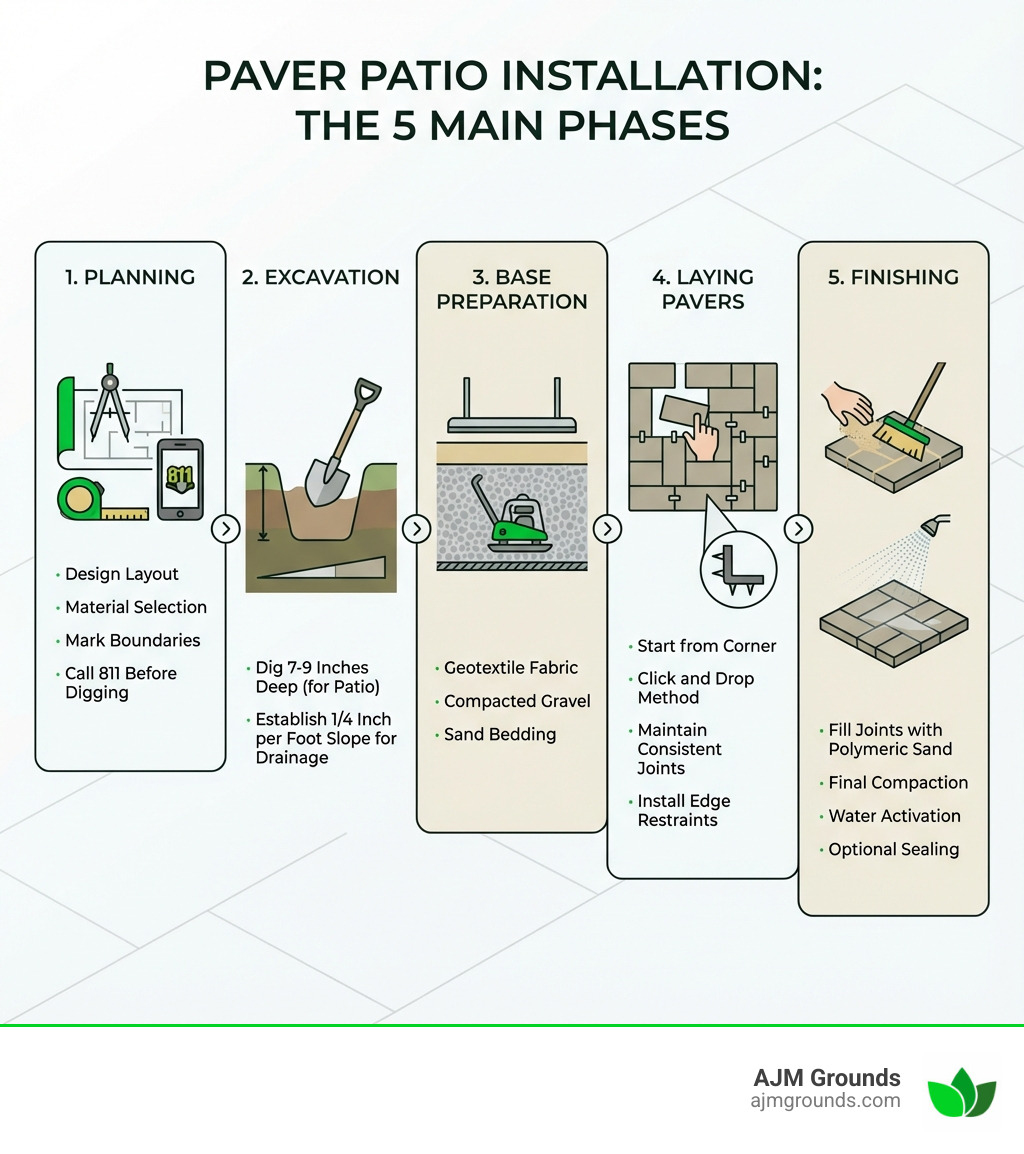
How to install a paver patio step by step involves a multi-phase process that transforms an outdoor area into a durable and beautiful living space. The key is a methodical approach focusing on a solid foundation and precise execution. Here’s a quick overview of the professional process:
The 5 Main Phases:
- Planning – Designing the layout, choosing materials, calculating quantities, and marking the project boundaries.
- Excavation – Digging out the area to the proper depth and establishing a correct slope for drainage.
- Base Preparation – Building a multi-layer, compacted base of gravel and sand to create a stable foundation.
- Laying Pavers – Carefully placing the pavers in the desired pattern and installing robust edge restraints.
- Finishing – Locking the pavers in place with jointing sand, performing a final compaction, and applying an optional sealer.
Why consider a paver patio? Pavers offer superior durability compared to poured concrete, easy repairs by replacing individual pieces, versatile design options, and improved drainage. They can also significantly boost your home’s value. Imagine stepping out your back door onto a stunning patio where you can sip your morning coffee, host a summer barbecue, or relax under the stars.
The installation process requires careful attention to detail at every stage. A solid, well-compacted base is crucial for preventing settling and ensuring your patio lasts for decades. Proper slope and drainage prevent water pooling that can damage your investment. While some homeowners may attempt this as a DIY project, the time commitment, specialized equipment, and technical precision required make it a significant undertaking.
As John Caplis, owner of AJM Grounds LLC, I’ve guided countless Woburn homeowners through how to install a paver patio step by step, helping them understand both the DIY process and when professional expertise makes the difference between a weekend project and a lasting outdoor investment. Whether you’re tackling this yourself or considering expert installation, understanding the proper techniques ensures beautiful, durable results.
How to install a paver patio step by step terminology:
The Complete Guide: How to Install a Paver Patio Step by Step
Starting on a paver patio project can transform your outdoor living space. We’re here to walk you through each critical stage, providing an overview of the professional process so you can approach your project with confidence, whether you’re planning a DIY adventure or seeking expert assistance.
Step 1: Planning, Layout, and Material Selection
Before the first shovel hits the ground, careful planning is paramount. This initial stage lays the foundation for a successful and visually appealing paver patio that will complement your home in Woburn, MA, and the surrounding communities.
First, consider your patio design. What function will it serve? A cozy spot for morning coffee or a spacious area for entertaining? This will influence the size, shape, and overall layout. When it comes to Patio Pavers Design, the possibilities are truly endless.
Next, choose your paver materials and patterns. Pavers come in a variety of materials, including natural stone, concrete, and porcelain, each offering unique aesthetics and durability. As for patterns, options like herringbone, running bond, or basketweave can dramatically change the look and feel of your patio.
Once your design is set, it’s time to calculate your material needs. We recommend adding 10-15% to your material calculations to account for cuts and waste. Tools like online product estimators can be helpful for this step, such as this Product Estimator.
With materials in mind, mark your layout using stakes and string to clearly define the perimeter. This visual guide helps you confirm the size and shape before you begin digging. Finally, and this is a non-negotiable safety step: always call 811 before you dig. This free service will mark underground utility lines, preventing costly and dangerous accidents. Understanding the full scope of the job is essential. This guide offers more insights into planning for such a project.
Step 2: Site Preparation, Excavation, and Grading
Proper site preparation is arguably the most critical stage in learning how to install a paver patio step by step. A well-prepared site ensures a stable, long-lasting patio that drains correctly.

The first step is excavation. The area must be excavated to a sufficient depth to accommodate a robust, multi-layer base. The exact depth depends on the soil type and intended use, with areas for vehicle traffic requiring a deeper base.
During excavation, all grass, roots, and organic debris are removed. Once the desired depth is reached, the exposed soil subgrade is thoroughly compacted with a plate compactor. This foundational compaction prevents future sinking.
Next, a proper slope for drainage is established. This is vital for managing rainfall and snowmelt. The professional standard is a minimum slope of 1/4 inch per foot, directed away from your home or other structures. This gentle slope ensures that water sheds off your patio effectively, preventing pooling and potential damage. Ensuring proper drainage is a key element of effective Hardscaping and protects your investment.
Step 3: Building a Durable Base and Sand Bedding
A strong, well-draining base is the backbone of any successful paver patio. Without it, your pavers are prone to shifting, settling, and becoming uneven.
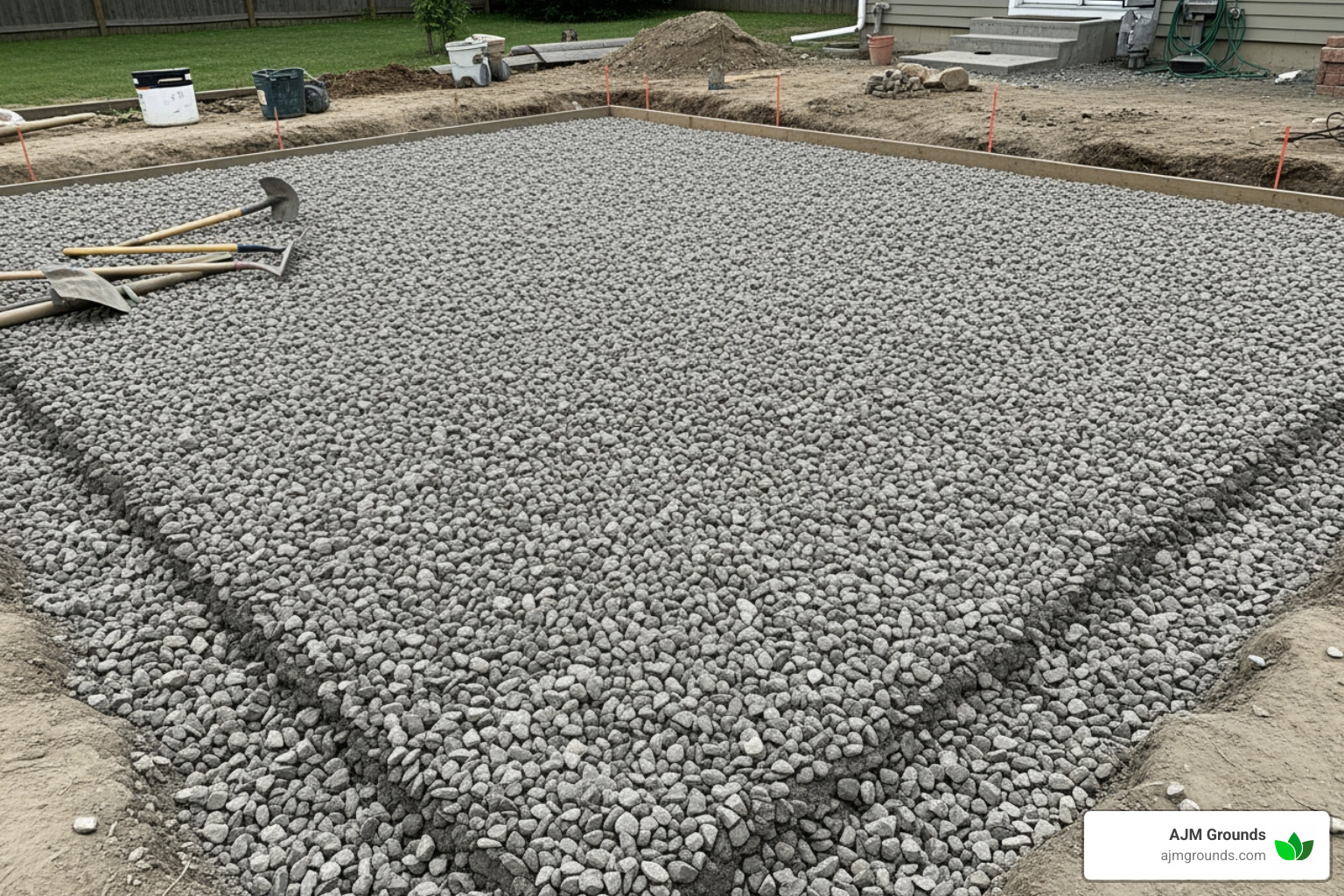
After compacting the subgrade, a layer of geotextile fabric is often laid down. This fabric acts as a barrier, preventing the base material from mixing with the underlying soil, which improves drainage and stability.
Next comes the gravel base layer. A thick layer of crushed stone is spread in 2 to 3-inch lifts (layers), with each layer being thoroughly compacted with a plate compactor before adding the next. This layered compaction is crucial for achieving maximum density and stability, ensuring the base maintains the proper slope.
On top of the compacted gravel, a 1-inch layer of bedding sand is applied. This provides a level surface for the pavers. To achieve a consistent depth, professionals use a technique called screeding, where a straight board is pulled across guides to level the sand perfectly. This creates a smooth, consistent bed for the pavers. For a visual guide on this technique, you might find this YouTube video on squaring, screeding, and laying a paver patio helpful. The quality of this base work is fundamental to all Hardscape Construction.
Step 4: Laying Pavers and Installing Edge Restraints
With your carefully prepared base and bedding sand in place, the exciting part begins: laying the pavers! This step brings your patio design to life.
Professionals typically start in a square corner or against an existing structure to ensure straight lines. It’s also a good practice to blend pavers from multiple pallets to ensure a natural variation in color. Pavers are placed gently onto the sand bed, not pushed or slid, to avoid disturbing the level surface. Spacers can be used to maintain uniform joint widths.
Throughout the process, the surface is checked with a long level to ensure the pavers are flat and maintain the correct slope. Any high spots are gently tapped down with a rubber mallet. For more detailed instructions, check out our Step-by-Step Laying Pavers guide.
As you approach the edges or any obstacles, pavers will need to be cut. This requires precision and professional tools, like a diamond-blade saw, to achieve clean, accurate cuts. Always wear appropriate safety gear when cutting is involved.
Once all pavers are laid, the next crucial step is installing edge restraints. These plastic or metal strips run along the perimeter of your patio and are anchored securely into the compacted base. This detail is vital for preventing pavers from shifting outwards and ensures the long-term integrity of your patio.
Finishing Touches and Professional Guidance
Step 5: Jointing, Compaction, and Sealing for a Flawless Finish
The final stages of how to install a paver patio step by step are all about locking everything into place and protecting your investment. These steps ensure your patio is not only beautiful but also durable and low-maintenance.
First, the joints between the pavers are filled. While regular sand can be used, professionals highly recommend polymeric sand. This material is a blend of sand and polymer additives that hardens when activated with water. The benefits are numerous: it significantly deters weed growth, prevents ant infestations, resists erosion, and adds stability to the entire paver system.
Dry polymeric sand is swept over the surface until all the joints are completely filled. Then, a plate compactor with a protective pad is run over the entire patio. This vibrates the pavers, settling them firmly into the bedding sand while also working the polymeric sand deep into the joints. Any excess sand is carefully removed from the paver surfaces to prevent a hazy residue.
Finally, the sand is activated with a light mist of water from a hose. This starts the hardening process. The patio is then left to cure according to the manufacturer’s instructions. As an optional but highly recommended final step, a paver sealer can be applied. A good quality sealer protects pavers from stains, UV damage, and weathering, which improves their color and makes them easier to clean. This adds another layer of longevity to your Patio Installation.
Avoiding Common Pitfalls: The Value of a Professional
While understanding how to install a paver patio step by step is useful, it’s also a significant undertaking where small errors can lead to big problems. Some common DIY mistakes include:
- Improper base depth: Not excavating deep enough or building a sufficient base can lead to uneven settling and a wavy patio surface.
- Incorrect slope: A patio without proper drainage will collect water, leading to pooling, erosion, and potential damage to your home’s foundation.
- Uneven pavers: Inconsistent bedding sand depth or inadequate compaction can result in pavers that rock or sit at different heights, creating tripping hazards.
- Loose edges: Skipping or improperly installing edge restraints will allow your pavers to shift, compromising the entire structure.
- Insufficient joint filling: Not fully filling joints or using the wrong type of sand can lead to weeds, ants, and structural instability.
These issues often require extensive repair, which can be more costly than hiring a professional in the first place. Tackling a paver patio requires not just patience, but also access to specialized tools like plate compactors and paver saws. Renting these can add up, and operating them effectively requires practice.
Furthermore, understanding the unique soil conditions and climate challenges in the Woburn, MA, area is critical. Our local expertise allows us to anticipate and mitigate potential issues specific to our region, ensuring a patio that withstands New England’s diverse weather patterns.
At AJM Grounds, we pride ourselves on our attention to detail and personalized service. We understand the nuances of Hardscaping Services and the importance of a properly installed paver patio. For guaranteed, long-lasting results that transform your outdoor living space into a true oasis, consider hiring experts. To transform your vision into reality, contact our team of expert paver patio contractors near me today! We’re here to ensure your patio is a source of joy for years to come.
