

Understanding the Fundamentals of Landscape Design
Hardscaping and softscaping are the two essential elements that make up every outdoor space. Understanding the difference between them is the first step to creating a beautiful, functional landscape.
Quick Answer:
| Element | Definition | Examples |
|---|---|---|
| Hardscaping | Non-living, structural elements made from hard materials | Patios, walkways, retaining walls, driveways, fire pits, decks |
| Softscaping | Living, organic elements that grow and change | Trees, shrubs, flowers, grass, soil, mulch |
Key Difference: Hardscaping provides the structure and foundation of your landscape, while softscaping adds life, color, and texture through plants and living materials.
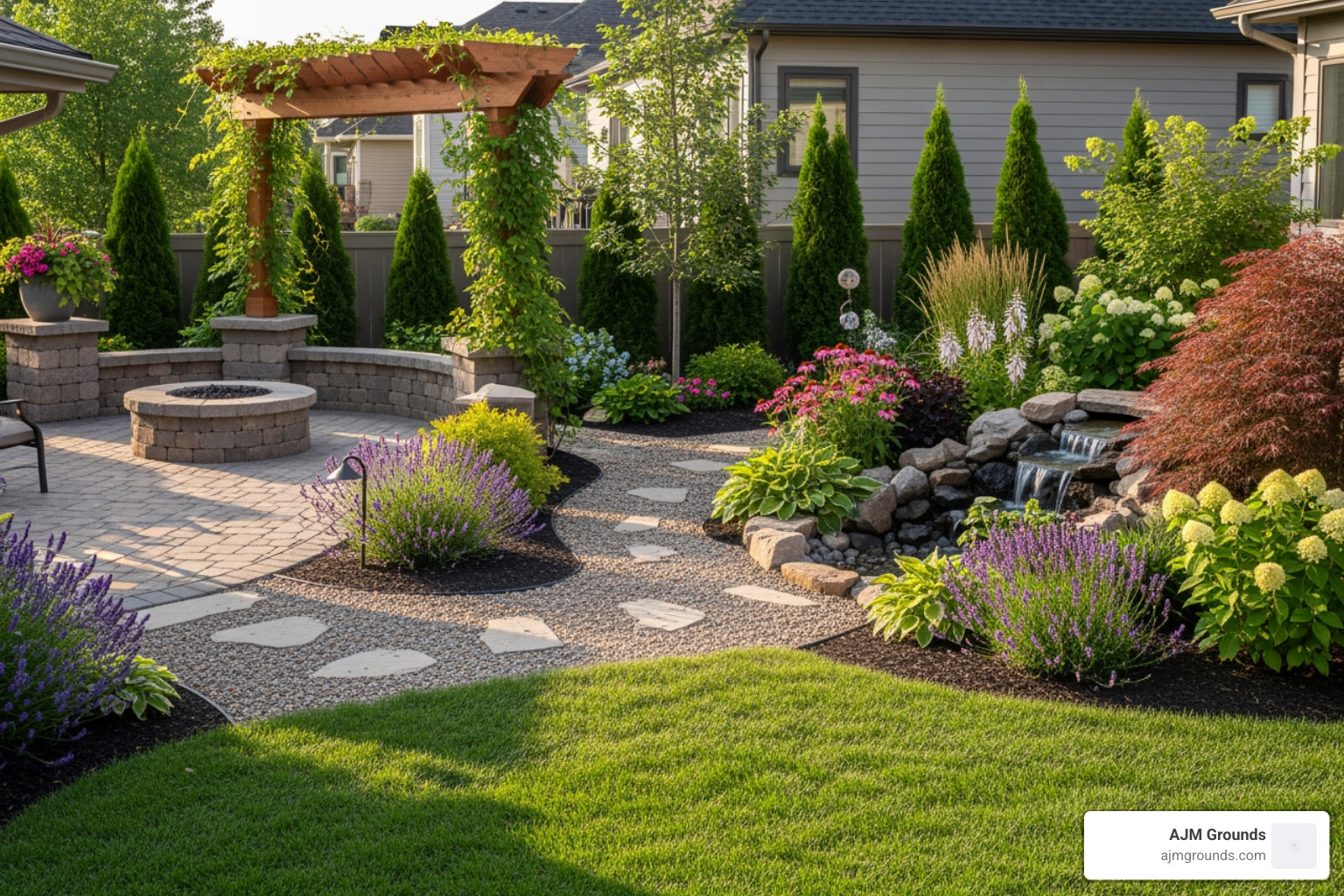
A well-designed yard is the result of these two elements working in harmony. Hardscaping creates the bones of the space—the patios, walkways, and walls—while softscaping fills it with living beauty like flowers, trees, and lawns.
Achieving the right balance is crucial. Too much hardscape can feel cold and commercial, while too much softscape can look chaotic and require high maintenance. The magic happens when they complement each other.
As John Caplis, owner of AJM Grounds LLC, I’ve spent years helping homeowners in the Greater Woburn area transform their properties by finding the perfect balance between hardscaping and softscaping. Whether designing a new patio surrounded by lush plantings or creating a complete landscape from the ground up, understanding how these elements work together is essential to every successful project.
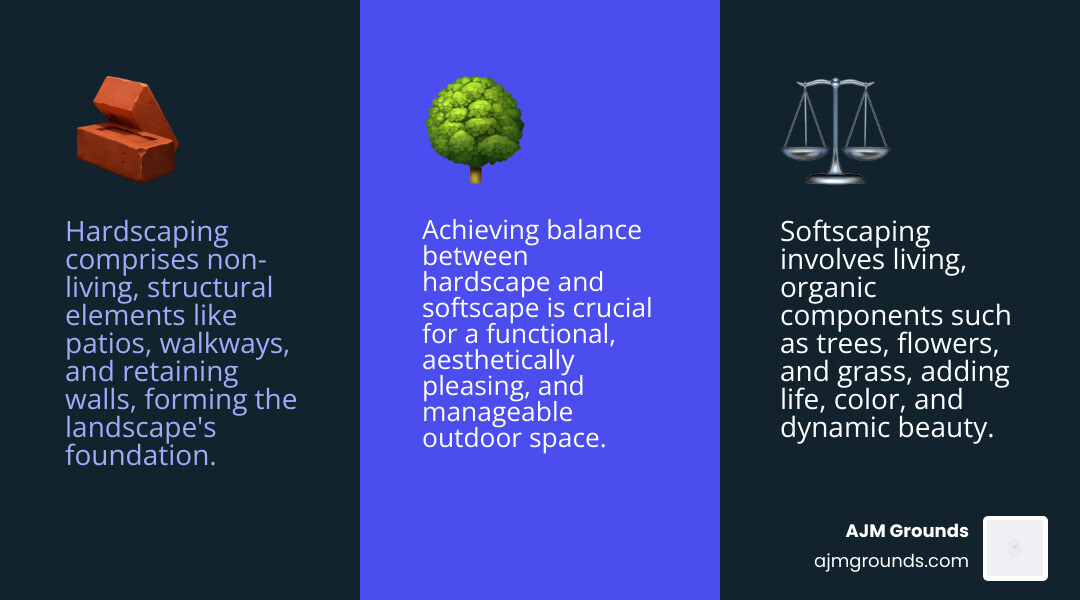
Handy hardscaping and softscaping terms:
The Art of Balancing Hardscaping and Softscaping
At AJM Grounds, we believe that an exceptional outdoor space—whether for a home in Bedford, MA, or a business in Woburn, MA—is born from the careful interplay of hardscaping and softscaping. This blend of art, botany, and architecture creates what we call “landscape design magic.”
Understanding Hardscaping: The Foundation of Your Landscape
Hardscaping refers to the non-living, structural elements that form the backbone of an outdoor design. Think of it as the sturdy framework upon which everything else is built, providing constant definition to your property.
Primary Materials Used in Hardscaping
- Stone: Natural stone, flagstone, and boulders offer timeless elegance for pathways or retaining walls.
- Pavers: Concrete, brick, or permeable varieties are ideal for patios and hardscapes, walkways, and driveways.
- Concrete: A highly versatile and durable material for custom patios and walkways.
- Brick: Classic and charming, brick is often used for traditional patios and garden edging.
- Wood: Pressure-treated lumber or composite materials are excellent for decks, pergolas, and fences, adding natural warmth.
- Metal: Used for accents, fencing, or arbors, metal can introduce a modern or rustic touch.
Common Hardscape Features
Hardscape features improve both the usability and aesthetic appeal of your outdoor areas:
- Patios: Central gathering spaces that extend your living area outdoors.
- Walkways and Paths: Guide movement and connect different parts of your property.
- Retaining Walls: Manage slopes, prevent erosion, and create level, usable areas.
- Fire Pits and Outdoor Fireplaces: Inviting gathering spots for cooler evenings.
- Decks: Raised surfaces that provide additional outdoor living space.
- Driveways: A functional feature that improves curb appeal and property value.
- Fences, Arbors, and Pergolas: Provide privacy, security, vertical interest, and shade.
- Outdoor Kitchens and Water Features: Transform your backyard into a dining haven or a soothing oasis.
Benefits of Incorporating Hardscaping into a Property’s Design
Thoughtful hardscaping offers significant advantages:
- Increased Property Value: Outdoor living spaces can increase a home’s value by 10-20% and boost marketability.
- Expanded Outdoor Living Space: Hardscaping creates dedicated zones for dining, lounging, and entertaining.
- Reduced Maintenance: Hardscape features require less upkeep than lawns and gardens, freeing up your time.
- Improved Functionality and Durability: Features like retaining walls manage erosion and provide a stable, long-lasting structure, while paths improve accessibility.
For even more ideas, explore our outdoor living space ideas.
Creative Integration and Design
Hardscaping is also about artistry. We use elements like hardscape lighting design to make a patio enchanting after sunset or a custom fire pit to create a natural gathering hub. The design possibilities are endless. You can learn more on hardscape functions to spark your imagination.
Exploring Softscaping: The Living Elements of Design
If hardscaping is the skeleton, softscaping breathes life into your landscape. It includes all living, organic components that add beauty, color, and texture, evolving with the seasons.
Main Components of Softscaping
Softscaping includes a rich mix of natural elements:
- Trees, Shrubs, and Flowers (Annuals & Perennials)
- Grass/Lawn
- Soil and Mulch
- Vines and Groundcover
Maintenance Requirements
Unlike hardscaping, softscaping is a living system requiring ongoing care. Regular maintenance includes watering, weeding, mowing, pruning, and fertilizing to ensure your plants thrive. These tasks are vital for maintaining the health and beauty of your landscape. For comprehensive care, consider our general garden maintenance services.
Plant Selection for Seasonal Interest and Aesthetics
Choosing the right plants is key in the Greater Woburn, MA, area. We prioritize plants that offer year-round appeal by mixing annuals and perennials for seasonal color, varying textures for visual depth, and incorporating native Massachusetts plants. Native species support local ecosystems and are well-adapted to our climate, often requiring less maintenance. Understanding choosing the right plants for your landscape is critical for a sustainable outdoor space.

Creating Harmony: How Hardscaping and Softscaping Work Together
The true artistry of landscape design emerges when hardscaping and softscaping are seamlessly integrated. They are complementary partners, each enhancing the other’s strengths.
Complementary Roles and Aesthetics
- Structure and Form: Hardscaping provides the rigid backbone, while softscaping softens these lines with organic shapes and textures. For example, cascading plants can soften a retaining wall.
- Creating Flow and Defining Spaces: Hardscape paths guide movement, while softscape hedges or plant beds can define these routes and create distinct outdoor “rooms.”
- Visual Contrast: The contrast between hard materials like stone and soft elements like flowers creates dynamic visual interest.
- Functionality and Aesthetics: Hardscaping provides practical function (a fire pit), while softscaping adds beauty and comfort (fragrant plants surrounding the seating area).
Planters as a Bridge Between Hardscaping and Softscaping
Planters are a perfect bridge between hardscaping and softscaping. They allow you to add greenery to patios and decks, define walkways, and even create vertical gardens on walls. Their flexibility allows you to move them to change the look of a space, making them a key element for integrating living beauty onto hard surfaces.
Importance of Balance for Aesthetics and Functionality
The right balance is essential for both aesthetics and function. Too much hardscape can feel sterile, while too much softscape can look chaotic. A balanced design creates a cohesive, inviting setting that improves curb appeal and can increase property value by 10-20%. It fosters an outdoor escape that is both beautiful and comfortable.
Here’s a quick look at the impact of balance:
| Scenario | Hardscape Dominant | Softscape Dominant | Balanced Design |
|---|---|---|---|
| Aesthetics | Cold, commercial, stark | Chaotic, overgrown, messy | Inviting, cohesive, natural |
| Functionality | Limited green space, high heat | High maintenance, potential for obstruction | Optimal usability, diverse activities |
| Maintenance | Low (after installation) | High (constant watering, weeding, pruning) | Moderate, managed upkeep |
| Property Value | Potentially lower appeal | Potentially lower appeal | Increased attractiveness & value |
Practical Planning for Hardscaping and Softscaping in Massachusetts
Designing an outdoor space in the Greater Woburn, MA, area requires careful planning to create a landscape that is beautiful, functional, and sustainable.
Planning Considerations for Your Project
- Budget: A clear budget helps guide material choices and project scope.
- Property Purpose: We design based on how you’ll use the space—whether for quiet relaxation, entertaining, or commercial appeal in areas like Stoneham or Wilmington, MA.
- Long-Term Landscape Maintenance Services: We discuss the level of upkeep you’re comfortable with and design accordingly.
- Space and Client Needs: We create a personalized design based on your property, style, and how you plan to use the space.
Climate Influence in Massachusetts
Massachusetts’ climate, with its freezing winters and humid summers, heavily influences our design. We must account for frost heave, select durable hardscape materials, and choose hardy plants. Proper drainage is critical to manage runoff from hard surfaces. We use our Massachusetts climate knowledge to select materials and plants that will thrive.
Property Use: Residential vs. Commercial Design
The intended use of a property in Reading, MA, or Winchester, MA, influences the balance of hardscape and softscape:
- Residential Design: Emphasizes creating inviting outdoor living spaces, privacy, and personal enjoyment with a mix of functional hardscapes and beautiful softscapes.
- Commercial Property Maintenance: Prioritizes durability, low maintenance, and a professional look, often with a greater emphasis on hardscaping for walkways and entrances.
For more inspiration, a good design inspiration guide can provide valuable insights.
Achieving the Perfect Balance in Your Outdoor Space
The goal of any landscape project is to achieve a perfect balance between hardscaping and softscaping, making your property functional, enjoyable, and sustainable. We blend the structural integrity of hardscape with the vibrant life of softscape to create outdoor spaces suited to your lifestyle and the New England environment. It’s about creating a living work of art that provides lasting joy.
Professional Expertise Makes the Difference
While understanding the concepts is a great start, turning ideas into a breathtaking reality requires expertise. That’s where AJM Grounds comes in. Our team specializes in landscape design installation, bringing years of experience to every project. We understand the nuances of material selection, plant hardiness, and drainage solutions needed to create exceptional outdoor spaces. We work closely with you from concept to completion to ensure your vision is realized.
Ready to transform your property with a perfectly balanced landscape? Explore our Hardscaping services to get started.
