

Why Hardscape Construction Transforms Your Outdoor Space
Hardscape construction is the art of building permanent outdoor features with stone, concrete, brick, or pavers. These elements form the backbone of your landscape, turning plain lawns into usable living space that looks great in every season.
Quick Answer for Hardscape Construction
- Definition: Crafting long-lasting outdoor features from hard materials
- Common Elements: Patios, walkways, retaining walls, fire pits, outdoor kitchens
- Benefits: Boosts property value (up to 20%), slashes yard maintenance, extends living space
- Average Cost Range: $350 – $40,000+ (internet-sourced averages; not AJM Grounds pricing)
- Popular Materials: Concrete (budget-friendly), pavers (versatile), natural stone (premium), gravel ($1–$5 / sq ft)
Research shows hardscape often represents about 50 % of a balanced landscape design. Those stone and paver features create the stable “rooms” where families actually gather, while plants supply the color and life. The result is a yard that works just as hard as it looks.
I’m John Caplis of AJM Grounds LLC, and I’ve watched thoughtful hardscape design turn under-used backyards around Woburn into favorite places to relax, entertain, and add serious curb appeal.
Related reading:
Foundations of Functionality: What Is Hardscape?
Imagine your yard as a complete picture. The soft, living elements—flowers, shrubs, and lawn—are the beautiful colors and textures. The hard, built elements—patios, paths, and walls—are the strong lines and structure that hold the picture together. That built half is hardscape. While Merriam-Webster defines it as “the use of hard materials in built landscape structures,” it’s more helpful to think of it as the permanent skeleton of your outdoor space. (For a deeper dive, see the concise Hardscape article on Wikipedia.) It’s the stone, concrete, and wood that provide year-round form and function, long after the last flower has faded.
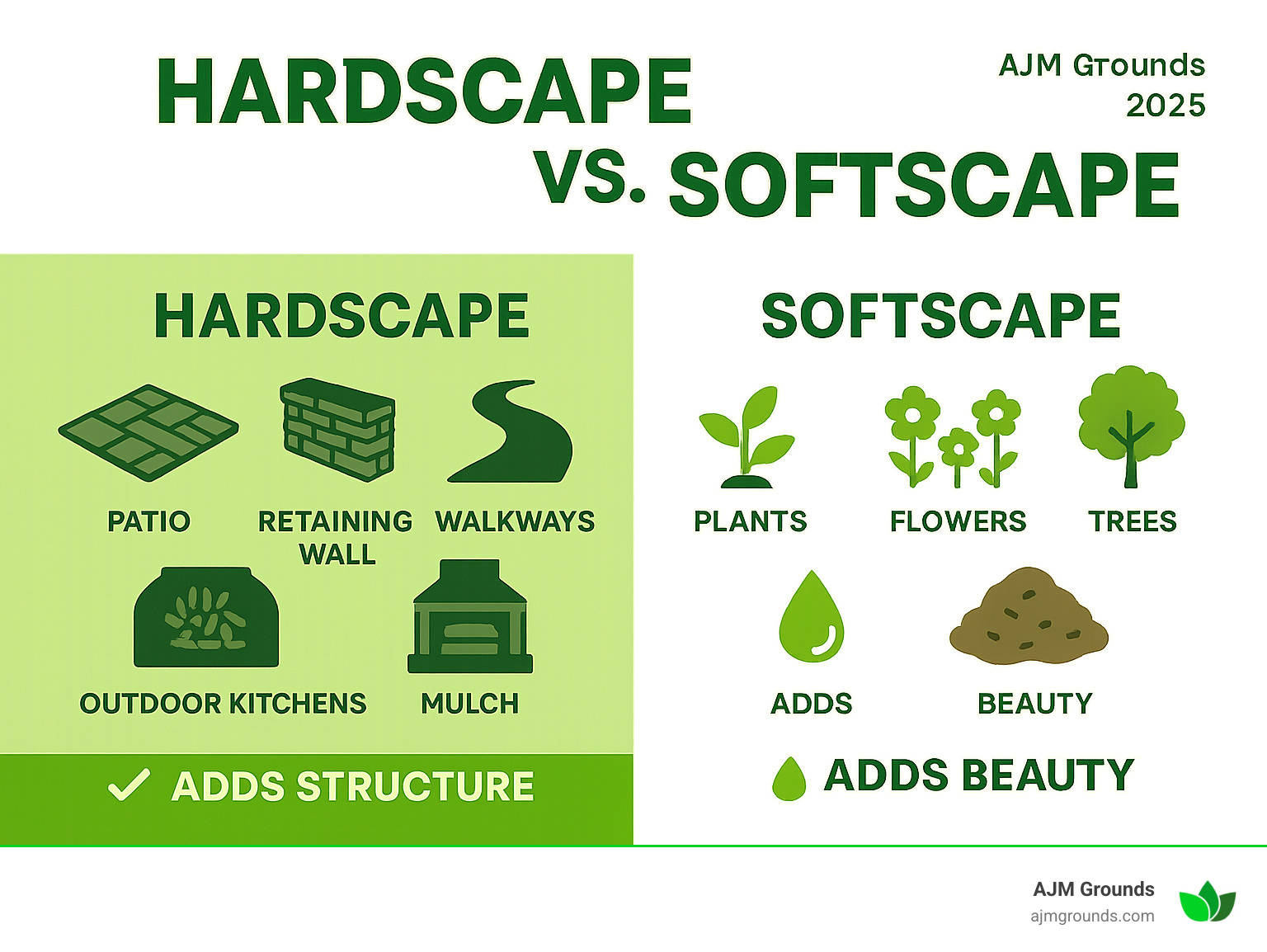
Hardscape vs. Softscape
Understanding the interplay between these two components is key to great landscape design.
- Hard materials: These are the non-living, man-made features. Think stone, concrete, brick, pavers, wood, and metal.
- Living elements: This is the horticultural side of your yard. It includes grass, soil, flowers, trees, shrubs, and organic mulches.
- Durability: Hardscape is built to last for decades, enduring weather and use with minimal changes. Softscape is dynamic, changing with the seasons, growing, and evolving over time.
- Maintenance: Hardscape maintenance involves sweeping, occasional power washing, or sealing. Softscape requires ongoing tasks like mowing, watering, weeding, and pruning.
Industry professionals, including our team at AJM Grounds, aim for a balanced ratio, often around 50% hardscape / 50% softscape. This harmony ensures you have functional, durable living areas complemented by the natural beauty and seasonal interest of plants.
Why Hardscape Matters in Design
Hardscape is the foundation of a truly usable yard. It’s the problem-solver and the place-maker. It directs flow through your property with thoughtfully laid walkways, preventing worn-out patches in your lawn. It carves out dedicated outdoor rooms—a patio for dining, a seating wall for conversation, a level area for a fire pit. Critically, it also tackles landscape challenges that plants alone can’t handle, such as erosion on a slope or poor drainage near your foundation. A well-built retaining wall can turn an unusable hill into a series of beautiful, functional terraces. Even under a blanket of New England snow, the strong lines of a stone wall or a paver path provide visual interest and continue to perform their structural duties.
The Building Blocks: Common Hardscape Elements and Materials
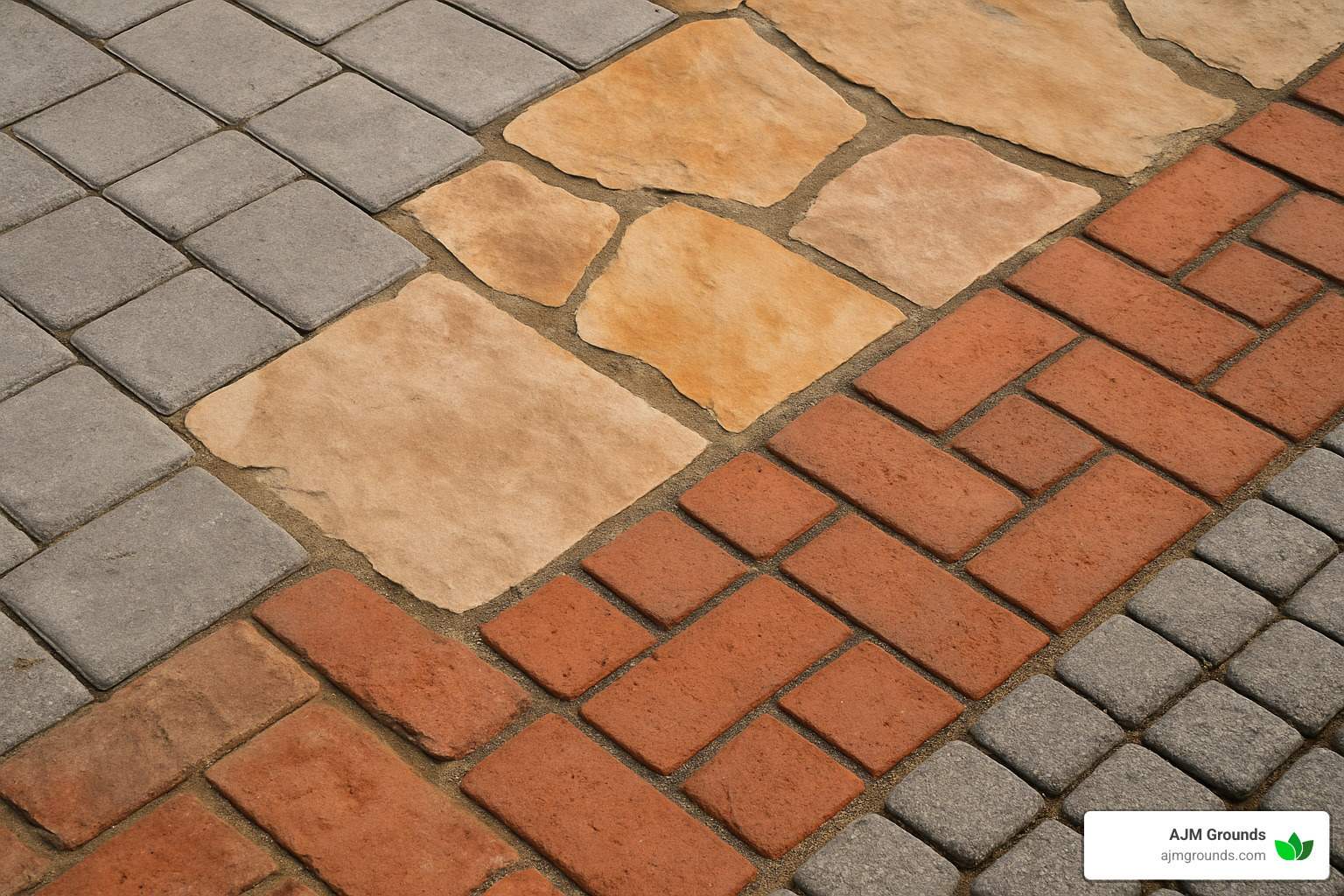
Hardscape construction uses a variety of features and materials to achieve your goals. The right combination can create a space that is both beautiful and perfectly suited to your lifestyle.
Popular Features
- Patios – This is the quintessential outdoor living room. A well-designed patio provides a solid, level surface for dining tables, lounge chairs, and grills. They can be attached to the house for a seamless indoor-outdoor transition or set as a destination deeper in the yard.
- Walkway Installation – More than just a way to get from A to B, walkways guide the eye and the feet, creating a journey through your landscape. They protect your lawn from foot traffic and keep shoes clean and dry.
- Retaining Wall Construction – These are the workhorses of sloped yards. Functionally, they hold back soil to prevent erosion and create level tiers for planting or patios. Aesthetically, they add dimension, texture, and a sense of permanence to the landscape.
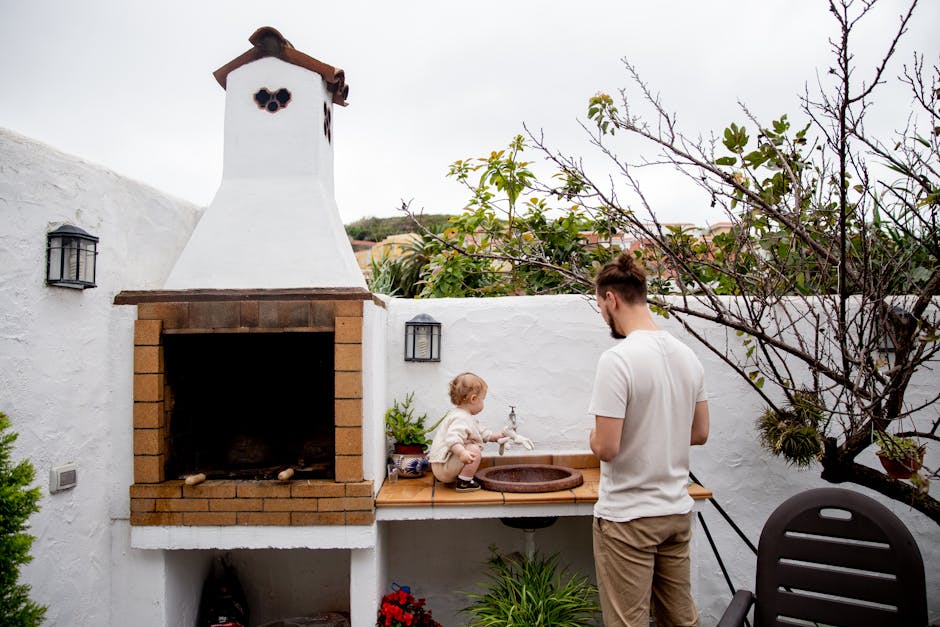
- Outdoor kitchens – For the serious home chef, an outdoor kitchen can range from a simple built-in grill station to a full-service setup with countertops, sinks, and refrigeration, turning your patio into a premier entertainment hub.
- Firepit Installation – A fire pit or outdoor fireplace becomes a natural gathering spot, extending the usability of your outdoor space into cooler evenings and later seasons.
- Decks, fences, and small water features – These elements add layers of comfort, privacy, and sensory experience. A deck provides an liftd living space, a fence defines boundaries, and the sound of a small fountain adds tranquility.
Choosing Materials
Selecting the right material is a balance of aesthetics, budget, and performance. Your choice will define the look and feel of your space for years to come.
| Material | Cost* | Durability | Maintenance | Best Use |
|---|---|---|---|---|
| Concrete | Low | High | Low | Large patios, drives |
| Natural stone | High | Very high | Very low | Premium patios, walls |
| Pavers | Mid | High | Low | Paths, patios |
| Brick | Mid | High | Moderate | Historic walkways |
| Wood | Mid | Moderate | High | Decks, fences |
| Gravel | Very low | Moderate | Moderate | Paths, French drains |
*Costs are broad internet averages and not AJM Grounds pricing.
When making your decision, consider your home’s architectural style. A historic colonial home in Lexington might call for classic brick, while a modern home in Burlington could be complemented by sleek concrete or large-format pavers. Also, think about the harsh New England freeze-thaw cycles. Materials like high-density pavers and natural stone are exceptionally resistant to cracking and heaving, making them a wise long-term investment in our climate.
Beyond Beauty: Practical & Financial Benefits
While a beautiful stone patio is a reward in itself, the benefits of professional hardscape construction extend far beyond aesthetics. They provide tangible solutions to common homeowner problems and offer a significant financial upside.
More Living Space
A thoughtfully designed hardscape literally expands the footprint of your home. Patios, decks, and seating walls create functional outdoor rooms without the expense and disruption of a traditional home addition. Imagine a space where your patio furniture sits perfectly level, where children can play on a clean, dry surface instead of a muddy lawn, and where guests have a clear, inviting place to gather during a barbecue. This isn’t just extra space; it’s higher-quality space that improves your daily life.
Problem-Solving Power
Many yards in the Woburn area have challenges that softscape alone cannot fix. Hardscape provides powerful, permanent solutions.
- Erosion & slopes – A professionally engineered retaining wall is the definitive solution for stabilizing a steep slope, preventing soil loss, and protecting your home’s foundation. It transforms a difficult-to-mow hillside into attractive, usable terraces.
- Drainage – Standing water can be a homeowner’s nightmare. Proper hardscape construction involves grading surfaces to direct water away from your house. Permeable pavers can be used to allow rainwater to soak naturally into the ground, reducing runoff and replenishing groundwater.
- High traffic – The path from the driveway to the back door can quickly become a muddy trench in a lawn. A durable stone or paver path provides a clean, stable walkway that withstands constant use in all weather.
Strong Return on Investment
Investing in quality hardscape is one of the smartest financial decisions a homeowner can make. Professional studies consistently show that well-designed landscape projects, with hardscaping as a major component, can raise home value by up to 20%. When a potential buyer sees a stunning, low-maintenance paver patio and a sturdy retaining wall, they don’t just see a pretty yard; they see a turnkey, high-value feature that adds to the home’s appeal and usability. Because stone and concrete last for decades with minimal upkeep, they continue to pay you back long after the initial installation is complete.
Blueprint for Success: Planning Your Project

A successful hardscape project begins long before the first stone is laid. Careful planning ensures the final result meets your expectations, fits your budget, and complies with local regulations. Rushing this stage is a common mistake that can lead to costly revisions later.
Design First
Before you fall in love with a specific material, think about the big picture. A professional designer can guide you through these crucial steps:
- Purpose – How do you want to use this space? Is it for large family dinners, a quiet morning coffee spot, a safe play area for kids, or a cozy retreat around a fire pit? Your answer will dictate the size, location, and features required.
- Scale – The new hardscape should feel like a natural extension of your home, not an afterthought. Its size and shape should be in proportion to your house and the rest of your yard. A massive patio can overwhelm a small yard, while a tiny one might look lost next to a large home.
- Materials – Look for materials that complement your home’s existing exterior (siding, trim, roof color). Critically for our area, select materials proven to handle the New England freeze-thaw cycle to prevent cracking and heaving.
- Drainage – This is non-negotiable. All solid surfaces like patios and walkways must be sloped correctly (typically a 1/4 inch drop per foot) to direct water away from your home’s foundation.
- Rules – Don’t get caught by surprise. Check with your local municipality (e.g., Woburn, Burlington, Lexington) for permit requirements, especially for retaining walls over a certain height or structures close to property lines. Review your HOA guidelines as well.
Budget Basics
Understanding where the money goes helps in planning. A typical project budget breaks down as follows:
- Materials: This can be 40–60% of the total cost and varies widely based on your choice (e.g., natural stone vs. concrete pavers).
- Labor: This is more than just laying stones. It pays for the professional expertise and heavy equipment required for excavation, proper base preparation (the most critical step for longevity), precise installation, and site cleanup.
- Extras: Always set aside a contingency fund of 10–20% for unforeseen issues, like finding poor soil that needs extra reinforcement. This category also includes costs for permits or any necessary demolition.
For reference, a Forbes Home article on hardscaping costs lists projects from $350 to $40,000+, with elaborate outdoor kitchens and multi-level patios topping $120,000 (internet data; not AJM Grounds quotes).
Pro vs. DIY
While laying a simple gravel path can be a satisfying weekend project, most hardscape construction is best left to professionals. The risks of a failed DIY retaining wall (which can collapse) or an improperly sloped patio (which can flood your basement) are too high. A professional contractor like AJM Grounds has the right tools, knowledge of local soil conditions, and the experience to ensure your base is compacted correctly and your project is built to last. Our Hardscape Installation Service handles every detail, from design and permits to final installation, so your investment is safe and beautiful.
Protecting Your Investment: Easy Maintenance
A major advantage of hardscaping is its durability and low maintenance compared to a lawn. However, “low maintenance” doesn’t mean “no maintenance.” A few simple, seasonal habits will keep your stone and paver work looking fresh and performing perfectly for decades.
Cleaning & Sealing
- Sweep regularly, especially in the fall, to prevent leaves from decaying and staining the surface. Use a stiff-bristled broom to clear debris from joints.
- Power-wash once a year on a low-pressure setting to remove accumulated grime and mildew. Be careful not to use too much pressure, as it can damage the surface or dislodge joint sand.
- Spot-clean spills like oil, grease, or rust as soon as possible. Use a cleaner specifically designed for masonry to avoid damaging the material.
- Seal porous materials like concrete and some natural stones every 2–4 years. Sealing prevents moisture penetration, resists stains, inhibits weed and moss growth in joints, and can improve the color of the stone. A good test is to see if water beads up on the surface; if it soaks in, it’s time to reseal.
Small Repairs
Proactive repairs are key to longevity. Catching small issues early prevents them from becoming large, expensive problems.
- Fill hairline cracks in concrete as soon as you spot them to prevent water from getting in, freezing, and expanding the crack.
- Lift and reset any individual pavers that have settled or heaved. This usually involves adding more base material underneath to re-level the paver, preventing a tripping hazard.
- Replace individual damaged stones or pavers. One of the great benefits of pavers is that you can replace a single unit without having to tear out the entire patio.
- Inspect retaining walls annually, especially after the spring thaw. Look for any signs of bulging or leaning, and ensure the drainage pipes (weep holes) at the base are clear of debris to allow water to escape.
Compared with the constant cycle of mowing, watering, and fertilizing a lawn, these simple tasks are a small price to pay for a beautiful, lasting outdoor space.
Frequently Asked Questions
What is the difference between hardscape and landscape?
Think of landscape as the entire outdoor environment of a property. It’s composed of two main parts: hardscape, which includes the permanent, non-living, built elements like patios, walls, and walkways, and softscape, which includes all the living, horticultural elements like plants, grass, trees, and soil. A successful landscape design creates a beautiful and functional balance between the two.
What is the cheapest hardscape option?
In terms of upfront material cost, gravel is typically the most budget-friendly option, often running $1–$5 per square foot for the material itself. It’s great for informal paths or utility areas. However, it requires more maintenance like raking and occasional top-ups to look its best. For a more permanent, solid surface, poured concrete is often the next most economical choice, offering excellent long-term value and durability for larger areas like patios and driveways.
How does hardscape improve my outdoor living?
Hardscape fundamentally transforms how you use your yard. It creates dedicated “rooms” that are dry, level, and low-maintenance, perfect for activities like cooking, dining, entertaining, and relaxing. It solves practical problems by turning unusable slopes into functional terraces with retaining walls and keeps your home cleaner by providing solid paths. It extends your living space into the outdoors, increasing both your enjoyment and your property value.
Do I need a permit for hardscape construction in Massachusetts?
It depends on the project and your specific town. Many smaller projects, like a simple ground-level patio or a short garden wall, may not require a permit. However, you will almost certainly need a permit for larger structures, such as retaining walls over 4 feet in height, decks, or any project that involves significant grading or is near wetlands or property lines. It is crucial to check with the building department in your specific town—be it Woburn, Reading, Winchester, or another—before starting work. A professional contractor will handle the permitting process for you.
Conclusion
Hardscape construction lets Woburn-area homeowners trade soggy grass and erosion for stone patios, sturdy walls, and year-round curb appeal. These features solve real problems, add up to 20 % in home value, and give you outdoor rooms you’ll love for decades.
Ready to plan your project in Woburn, Bedford, Burlington, Lexington, Reading, Stoneham, Wilmington, or Winchester? Explore our hardscaping services and see how AJM Grounds can bring lasting structure and beauty to your yard.
