

Why General Garden Maintenance is Essential for Your Property
General garden maintenance is the foundation of a beautiful, healthy outdoor space that improves your property value and provides year-round enjoyment. Consistent care helps your landscape thrive through Massachusetts’ changing seasons, whether you’re managing flower beds, lawns, or mixed plantings.
Essential tasks include watering, weeding, pruning, mulching, fertilizing, pest control, and soil care. A well-maintained garden requires meticulous planning and continuous care to maintain its beauty, creating a peaceful haven that significantly impacts your property’s curb appeal and value.
Most maintenance requires just a few minutes daily for basic tasks, with more intensive effort needed for seasonal work. The key is consistency, as a few small jobs undertaken regularly can have a huge impact on a garden’s overall appearance.
As John Caplis, owner of AJM Grounds LLC, I’ve spent years helping Woburn homeowners master general garden maintenance. Understanding the basics empowers property owners to make informed decisions about their landscape care needs.
The Foundation of a Healthy Garden: Soil and Water
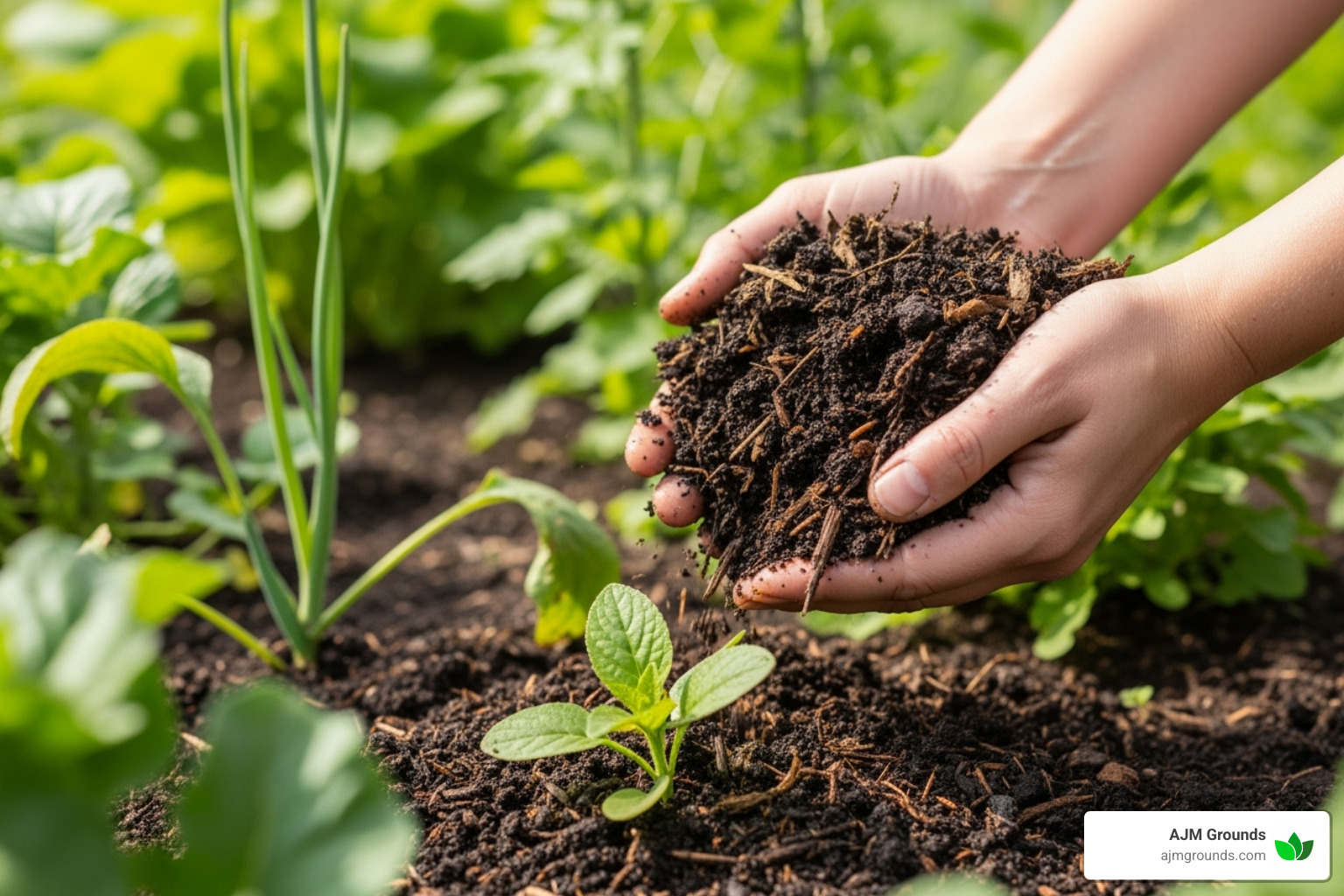
Healthy soil is the foundation of your garden. Without it, even the most beautiful plants will struggle. That’s why soil preparation is the starting point for any general garden maintenance program. We begin with a soil test to understand its pH level, nutrient content, and composition.
Once we know what your soil needs, we improve it with organic matter like compost. This natural addition feeds your plants and improves soil structure, helping with both drainage and soil aeration. Waterlogged soil suffocates roots, so we focus on creating loose, well-aerated soil that drains properly while holding enough moisture.
For more details, see our guide on Tips for Successful Garden Bed Preparation and Planting.
Best Practices for Watering
The secret to proper watering is deep watering less frequently, rather than light, daily sprinkles. This encourages roots to grow deeper, creating stronger, more drought-resistant plants.
Morning watering (4 am to 8 am) is ideal, as cooler temperatures reduce evaporation. It’s also crucial to avoid leaf contact when watering to prevent fungal diseases; aim for the soil around the plant base.
For larger gardens, drip irrigation and soaker hoses are game-changers, delivering water directly to the roots efficiently. Understanding drainage is also key, as explained in The 5 Most Important Reasons Why Proper Drainage in Your Landscape Is So Important.
Water Conservation Strategies
With Massachusetts’ occasional dry spells, smart water use is essential. Here are some effective strategies:
- Drought-tolerant plants: Options like lavender, sedum, and native grasses require less water once established. Explore more drought-tolerant plant varieties.
- Rainwater harvesting: Use water butts (rain barrels) to collect free, natural water for your garden during dry spells.
- Mulching for moisture: A layer of mulch can reduce your watering needs by up to 50%.
- Hydrozoning: Group plants with similar water needs together to avoid over- or under-watering.
These practices align with sustainable gardening. Learn more in our guide to Creating a Sustainable Landscape: Massachusetts Green Landscaping Practices.
The Essentials of General Garden Maintenance
General garden maintenance is the regular rhythm that keeps your outdoor space healthy and vibrant. Having the right tools makes all the difference. A basic toolkit should include garden gloves, a sharp weeding trowel, quality pruners (secateurs), loppers for thicker branches, a pruning saw, a sturdy garden fork, a reliable shovel, a rake, and a wheelbarrow. Quality tools are an investment that pays off in efficiency and enjoyment.
Pruning and Deadheading for Optimal Growth
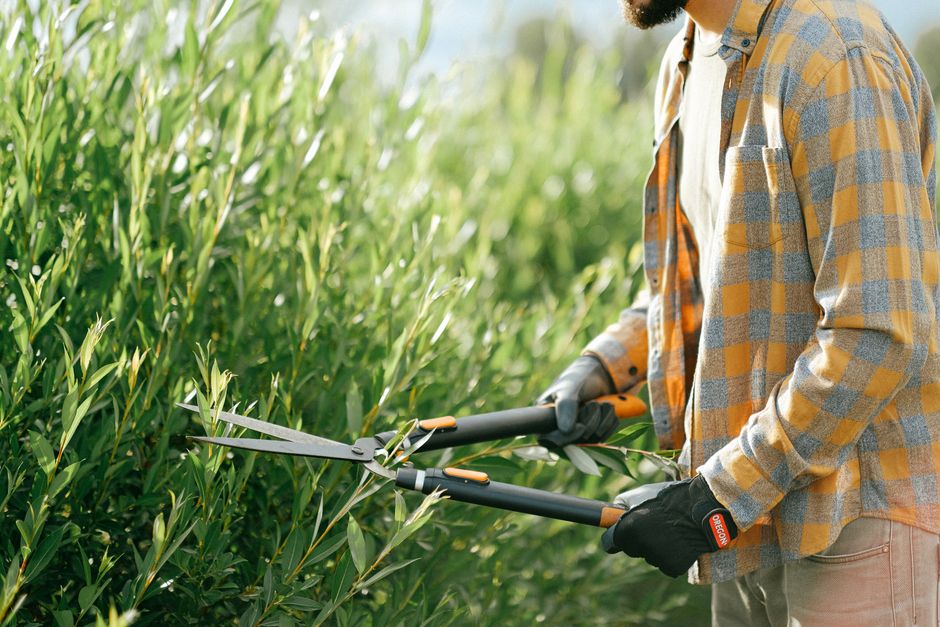
Pruning helps your plants reach their full potential. Timing is crucial. Most plants benefit from pruning in late winter or early spring while dormant. The exception is spring-blooming shrubs (like lilacs), which should be pruned right after their flowers fade.
When pruning, start by removing any dead, diseased, and damaged branches. Then, thin overcrowded areas to improve airflow and sunlight exposure, which helps reduce fungal diseases.
Deadheading, or snipping off faded blooms, encourages plants to produce more flowers instead of seeds, resulting in a longer, more abundant flowering season. Learn more about plant-specific needs in Choosing the Right Plants for Your Landscape.
The Benefits of Mulching
Mulching is one of the most effective general garden maintenance practices. A simple 2-3 inch layer of mulch provides numerous benefits.
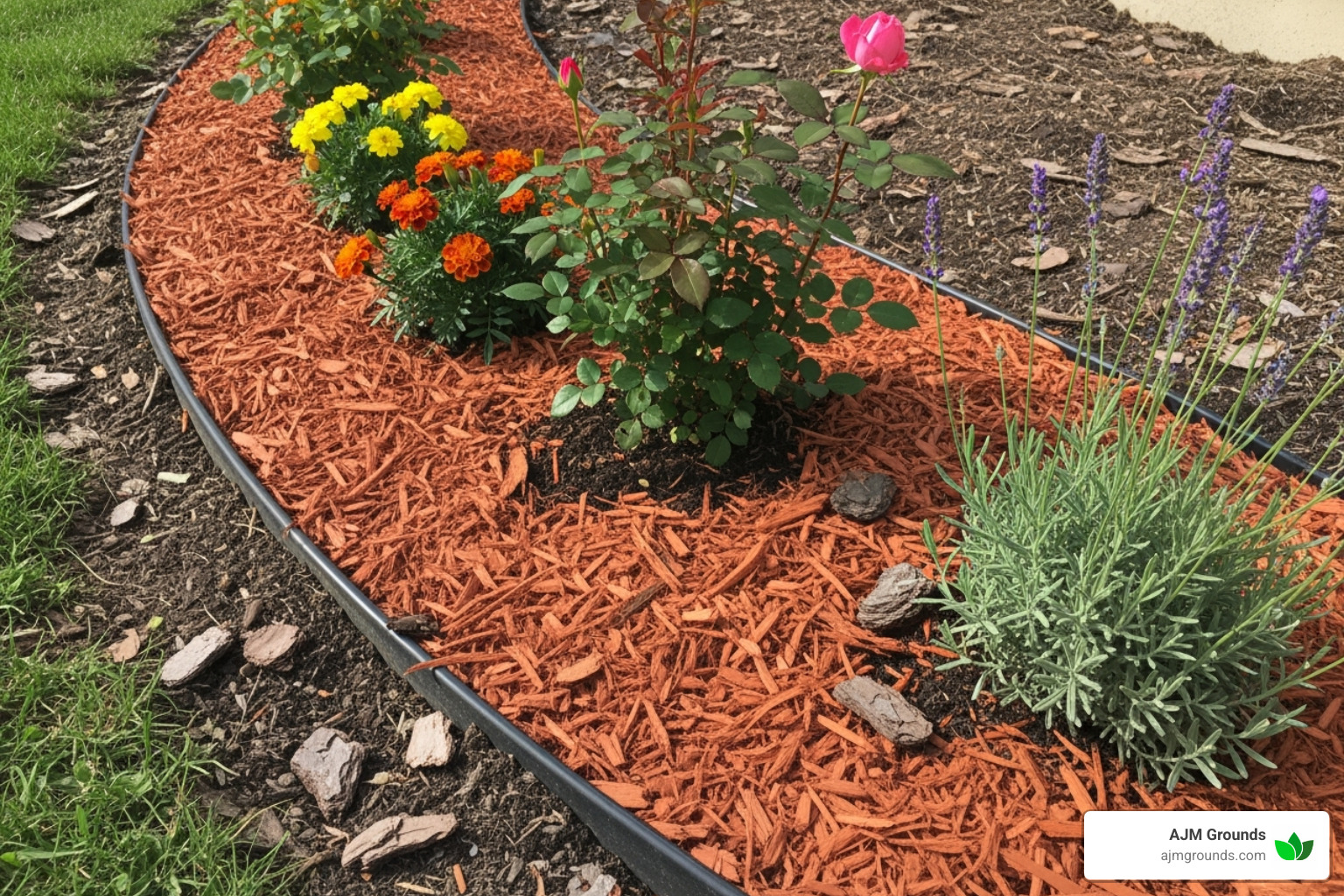
Mulch suppresses weeds, retains soil moisture by reducing evaporation, and provides temperature regulation by keeping soil cooler in summer and warmer in winter. As organic mulches break down, they also enrich the soil. When applying, keep mulch a few inches away from plant stems and tree trunks to prevent rot. For detailed guidance, see How to Install a Mulch Bed and our Mulch Installation services.
Effective Weed and Pest Control
The best defense against weeds is a good offense. Dense planting and thick mulch leave little room for them to grow. For those that appear, manual removal from moist soil is effective. Regular plant inspection helps you catch pest problems early. Look for common warning signs like yellowing leaves, spots, or visible insects.
When pests appear, start with gentle solutions like hand-picking or a strong spray of water. For persistent issues, organic solutions like insecticidal soap or neem oil are effective without harming beneficial insects. Explore our Fertilization and Pest Control and Lawn Service Weed Control options for comprehensive management.
Adapting Your Routine: Seasonal and Garden-Specific Care
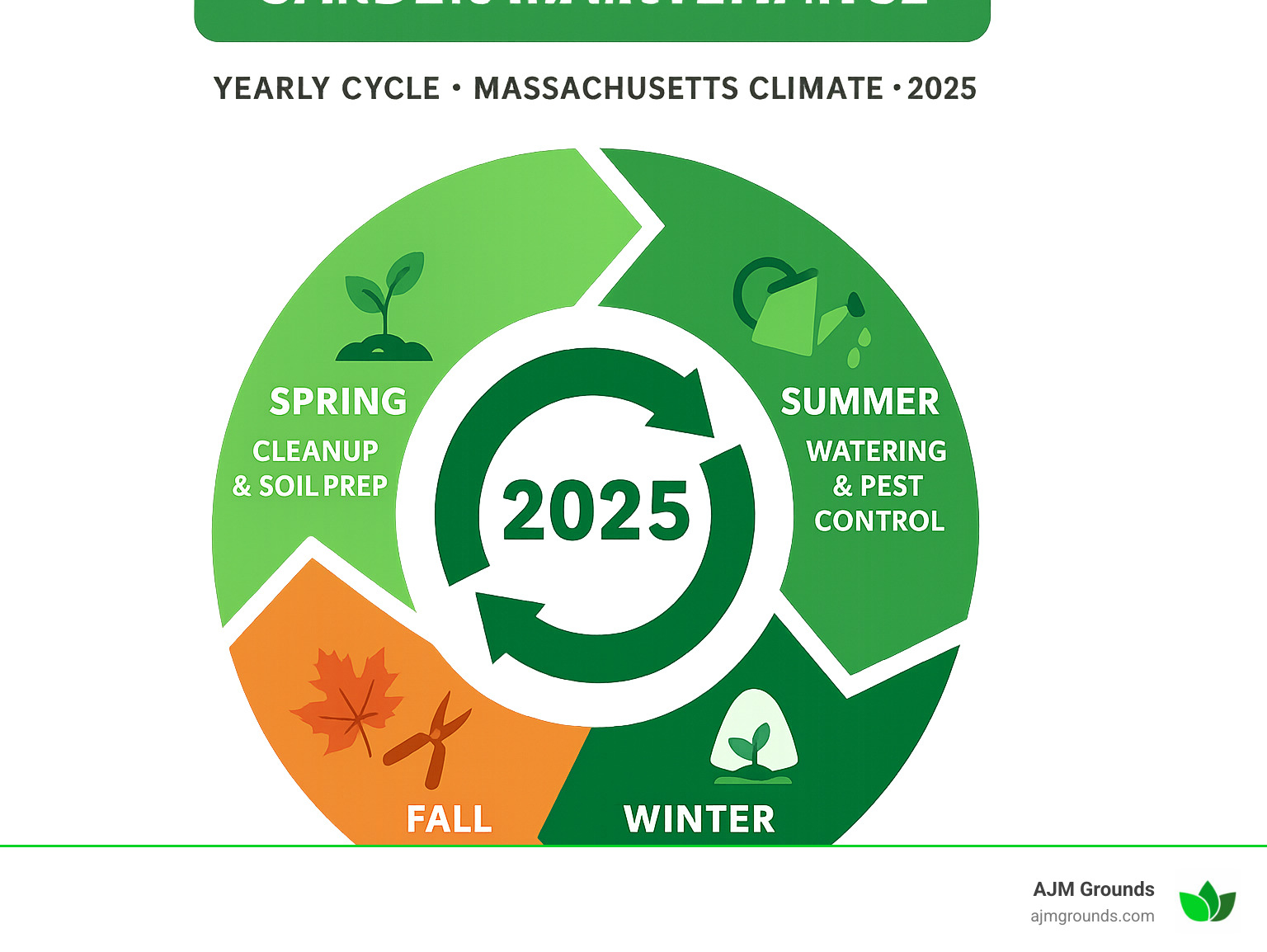
In Massachusetts, successful general garden maintenance means adapting to the seasons. Each time of year brings unique tasks and challenges, and adjusting your care routine is key to a thriving landscape.
A Guide to Seasonal General Garden Maintenance
- Spring (March-May): This is the year’s biggest cleanup. We clear winter debris, refresh mulch, and apply a slow-release fertilizer. After the last frost (mid-May), we plant tender annuals and start vegetable gardens. Spring-blooming shrubs are pruned after they flower. Our Spring Clean Ups service can handle this busy season for you.
- Summer (June-August): The focus shifts to hydration and upkeep. Lawns need about an inch of water weekly, and we consistently deadhead flowers to encourage more blooms. We adjust mowing schedules when temperatures rise above 86°F, as grass growth slows.
- Autumn (September-November): We prepare gardens for winter. This is the prime time for lawn fertilization and planting spring-flowering bulbs like tulips and daffodils. Learn more about fall prep in Envisioning Fall Splendor: The Role of a Landscaper in Preparing Your Yard for the Season.
- Winter (December-February): A quiet but important time for planning and specific tasks. We prune oaks and other deciduous trees, sharpen tools, and plan next year’s garden. These rhythms are detailed in our guide to 4 Seasonal Landscaping Tips to Thrive in Massachusetts Climate.
Caring for Different Garden Types
Different gardens have different needs:
- Vegetable gardens: Require rich soil, consistent water, and timely harvesting.
- Flower beds: Need regular deadheading, thoughtful fertilizing, and strategic pruning.
- Lawns: Maintain grass at two inches during hot weather and water deeply in the early morning. Learn more in our Best Practices for Lawn Care and Maintenance.
- Container and vertical gardens: Dry out faster and need more frequent attention and excellent drainage.
- Retaining walls: Require maintenance to prevent erosion and ensure stability. See more at Retaining Walls for Gardens.
Creating a Wildlife-Friendly Garden
Improve your garden by making it a haven for local wildlife. Native plants are the foundation, as they support local critters while requiring less maintenance. Read about their benefits in Embracing Nature’s Finest: The Bountiful Benefits of Native Plants in Your Landscape.
Add pollinator-friendly flowers, bird baths, and avoid chemical pesticides. Mowing less frequently can also provide shelter and food for beneficial insects, as noted in tips like these 13 easy garden maintenance tips.
DIY vs. Professional Garden Care
When it comes to general garden maintenance, homeowners must decide between the DIY route and hiring professionals. The DIY approach can be rewarding but requires a significant time commitment, research, and investment in tools. Professional maintenance frees up your time and ensures your garden receives expert care.
| Feature | DIY Garden Maintenance | Professional Garden Maintenance |
|---|---|---|
| Time Commitment | Significant – requires regular hours, especially during peak seasons. | Minimal – frees up your time for other activities. |
| Required Knowledge | Learning curve – involves research, trial, and error. | Expert knowledge applied directly to your garden. |
| Equipment Costs | Initial investment in tools, plus ongoing maintenance. | No equipment costs for you; professionals bring their own. |
| Physical Effort | Demanding – involves lifting, kneeling, bending, and manual labor. | Minimal for you; professionals handle all physical tasks. |
| Consistency | Depends on your availability and discipline. | Scheduled, consistent care ensures continuous health. |
| Results | Can be excellent with dedication, but mistakes can happen. | High-quality, professional results custom to your garden. |
The Costs of Hiring a Professional Gardener
For homeowners in Woburn, MA, and surrounding areas, understanding the investment in professional general garden maintenance is key.
Disclaimer on pricing: The following costs are average rates based on internet data and not actual costs for AJM Grounds. Our pricing is customized based on your specific needs and garden size.
Average costs for regular maintenance typically range from $100 to $300 per month, with larger or more complex gardens potentially reaching $900 or more. Hourly rates generally fall between $20 to $30 for basic services, while specialized work can range from $50 to $100 per hour.
Factors influencing cost include garden size and terrain, task complexity, the type of plants, seasonality, and your location. For specific services, you might expect to pay:
- Lawn Mowing: $20 to $80 per visit
- Weeding: $25 to $75 per hour
- Pruning & Trimming: $30 to $100 per hour
- Pest Control: $100 to $300 per treatment
For an accurate, custom quote, schedule a consultation. You can also explore our breakdown of the Average Cost of Lawn Fertilization Service.
A Guide to Professional General Garden Maintenance
Choosing professional general garden maintenance offers numerous benefits beyond saving time. The expertise and knowledge of professionals means quick problem diagnosis and effective solutions custom to Massachusetts’ climate. You also benefit from their proper tools and equipment, ensuring every job is done correctly and safely.
Perhaps the most significant advantages are consistent care and peace of mind. Professional services ensure your garden receives regular attention, which is crucial for its long-term health and beauty. This consistency boosts curb appeal and property value, allowing you to simply enjoy your outdoor space without the stress. Learn more about the advantages in Expert Touch for Fall: The Advantages of Professional Landscapers in Preparing Your Yard.
Frequently Asked Questions about Garden Maintenance
Here are answers to common questions about general garden maintenance that we hear from Woburn homeowners.
How often should I water my garden?
Watering frequency depends on plant type, soil, and weather. The best practice is deep, infrequent watering, which encourages strong root growth. To check if it’s time to water, stick your finger 1-2 inches into the soil. If it’s dry, it’s time. While new plants may need daily watering, established gardens with proper mulch can often go 2-3 days between waterings. Be careful, as overwatering is more dangerous than underwatering and can lead to root rot and fungal diseases.
What is the most important garden maintenance task?
If we had to pick one, it would be maintaining healthy soil. Everything else flows from this foundation. By consistently adding organic matter like compost and protecting the soil with mulch, you create an environment where plants thrive. Healthy soil holds moisture better, provides natural nutrients, and helps plants resist pests and diseases, simplifying all other maintenance tasks.
How can I control weeds without using chemicals?
Organic weed control is highly effective. The best strategies are preventative:
- Mulching: A 2-3 inch layer of organic mulch blocks sunlight, preventing most weed seeds from sprouting.
- Manual Removal: Pull weeds by hand when the soil is moist to ensure you get the entire root system.
- Dense Planting: Filling garden beds with desired plants leaves no space for weeds to establish themselves.
Consistency is key. A few minutes of weeding each week is far easier than tackling an overgrown garden later.
Conclusion
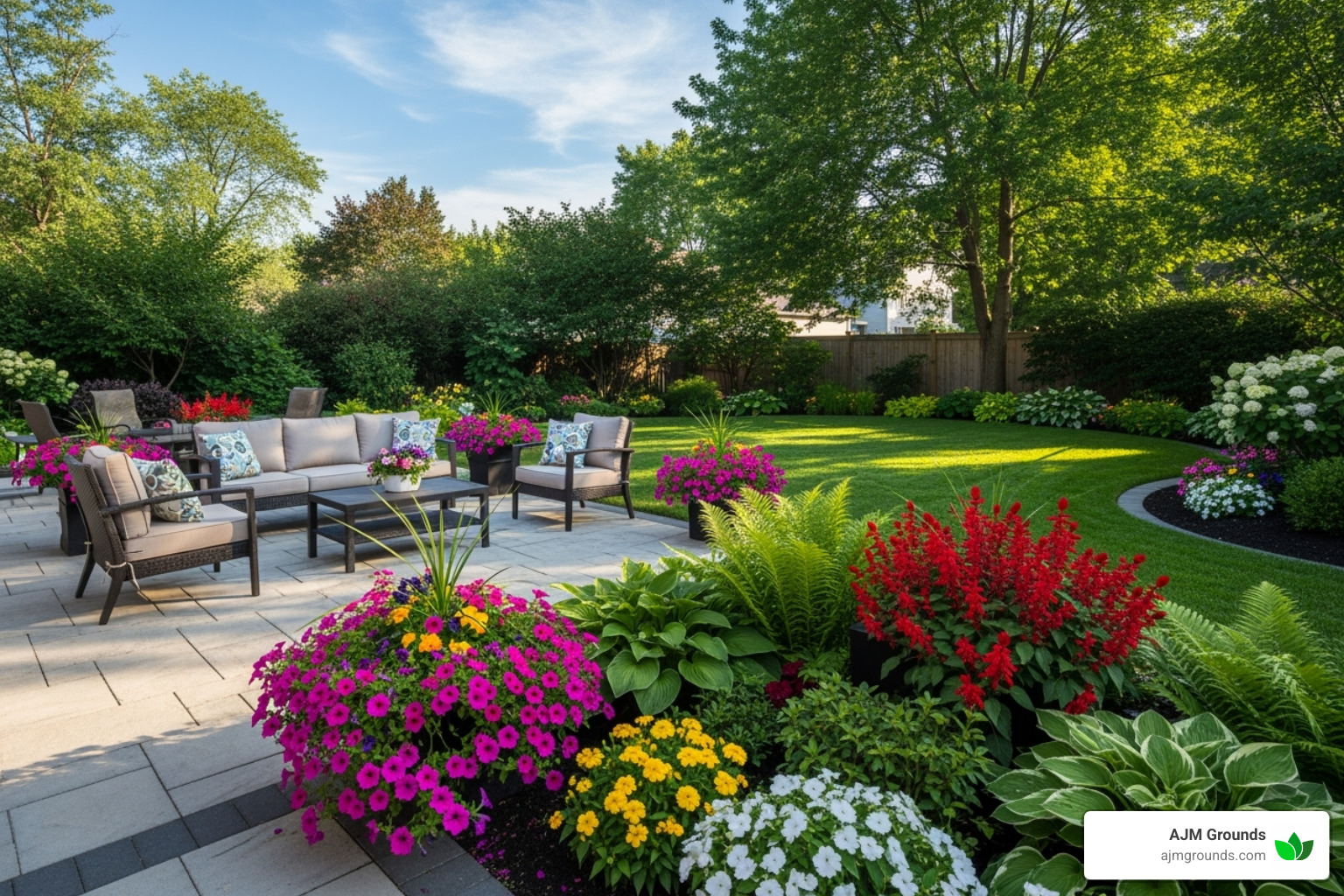
General garden maintenance is about creating a living masterpiece that brings joy throughout the seasons. The key principles are simple: build healthy soil, water properly, and perform regular pruning and mulching with an awareness of seasonal changes. This consistent effort, whether your own or from trusted professionals, transforms ordinary outdoor spaces into extraordinary sanctuaries.
Your garden is an extension of your home that increases your property’s value and provides a peaceful retreat. For homeowners throughout Woburn, Burlington, Lexington, and the surrounding Massachusetts communities, local expertise makes all the difference in navigating our unique climate.
At AJM Grounds, we understand how to make New England gardens flourish. Our team provides the right care at the right time, preparing your landscape to be beautiful and healthy year-round.
Ready to enjoy your outdoor space without the stress of constant upkeep? Contact us for comprehensive landscape maintenance services and let us transform your property into the garden you’ve always envisioned.
