

Why Front Yard Grass Selection Matters for Your Home
Your front yard grass is the foundation of your home’s curb appeal. The right grass type creates a lush, low-maintenance lawn, while the wrong choice can lead to a constant struggle with brown patches and high water bills.
Quick Guide to Front Yard Grass:
- Best for MA: Cool-season grasses like Kentucky Bluegrass, Fescues, and Ryegrass.
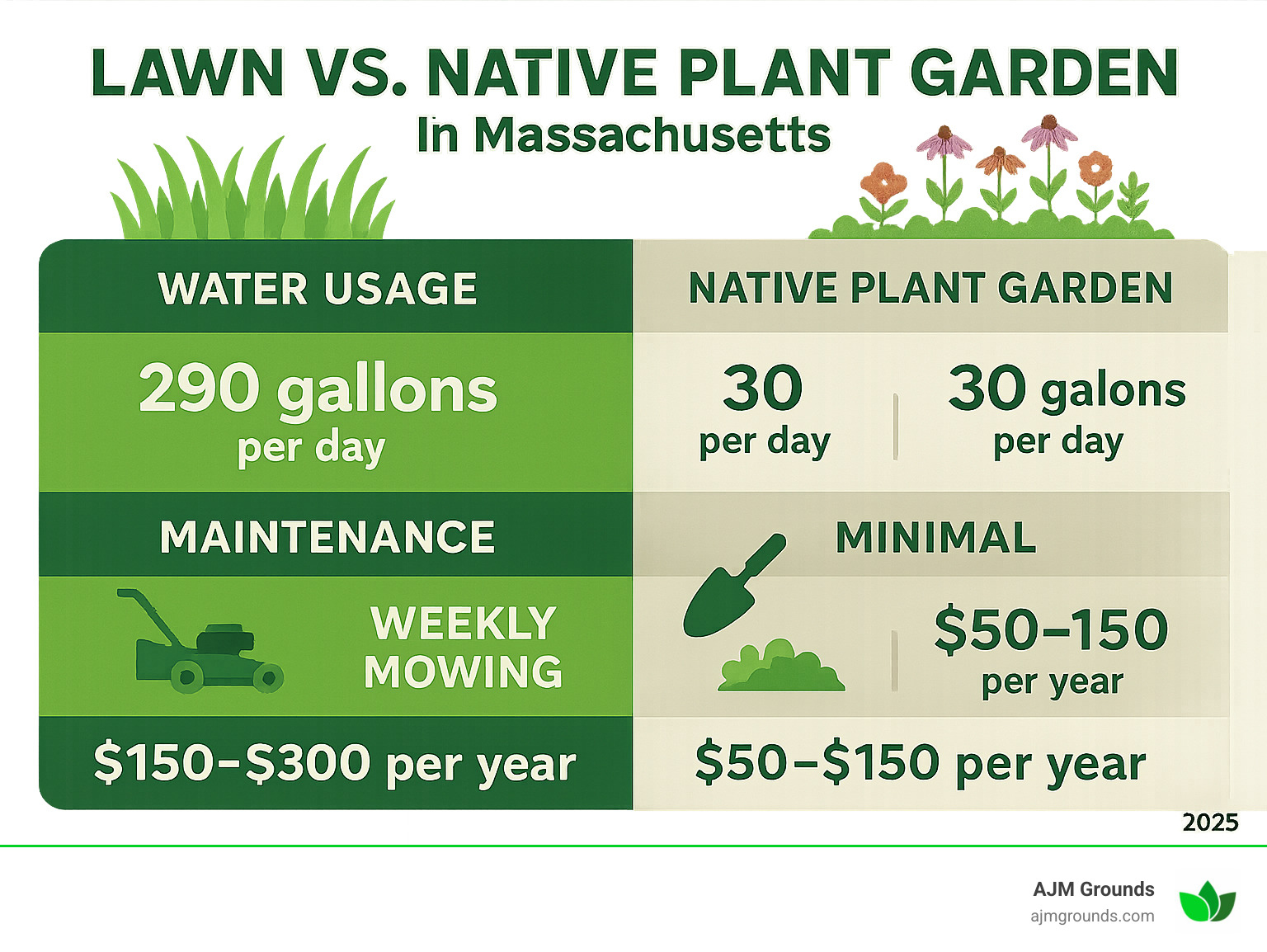
- Water Usage: Traditional lawns can use significant water, with outdoor landscaping accounting for nearly 9 billion gallons daily across the US.
- Annual Costs: Homeowners may spend $150-$300 or more per year on lawn care.
- Modern Alternatives: Creeping thyme, white clover, and native groundcovers are gaining popularity.
Many homeowners are now replacing underused lawns with environmentally friendly gardens that require less water, support pollinators, and offer more visual interest. The key is to select options that thrive in the Massachusetts climate while matching your maintenance preferences.
As John Caplis, owner of AJM Grounds LLC, I’ve helped homeowners in Woburn and surrounding areas create beautiful, sustainable landscapes. My team specializes in traditional lawn installation and modern alternatives that reduce maintenance while enhancing curb appeal.
Choosing the Best Traditional Front Yard Grass
A manicured, emerald-green lawn is the gold standard of curb appeal for many New England homes. However, not all grasses are suited for our unique climate of cold winters and warm summers. That’s why we focus on cool-season grasses, which thrive in the moderate temperatures of spring and fall.
Top Cool-Season Grasses for New England Lawns
The best lawns often come from blending different grass types to combine their strengths. Here are the top performers for our region:

- Kentucky Bluegrass: Creates a dense, beautiful lawn with a rich green color. It self-repairs bare spots via underground stems (rhizomes). However, it requires regular watering and fertilizing and prefers full sun.
- Perennial Ryegrass: A reliable workhorse that germinates and establishes quickly, making it great for fast results and crowding out weeds. It handles moderate foot traffic well but does not self-repair like Bluegrass.
- Fine Fescues: The problem-solvers for tricky areas. This group (including Creeping Red and Chewings Fescue) is known for its excellent shade and drought tolerance, creating a soft, natural-looking lawn.
- Tall Fescue: Modern varieties are tough and refined. This grass develops deep roots, giving it superior heat and drought tolerance. It’s an excellent choice for a low-maintenance lawn that can withstand New England weather.
A pro tip: Grass blends almost always outperform single varieties by combining the best traits of each type for a more resilient lawn. Fall overseeding is a key practice to thicken your lawn and prepare it for winter. Learn more with our Tips for Successful Lawn Seeding and Overseeding: Transform Your Yard into a Lush Green Oasis.
Key Factors for Selecting Your Front Yard Grass
Choosing the right front yard grass means matching it to your yard’s conditions and your lifestyle.
- Sunlight Exposure: Does your yard get full sun (6+ hours), partial sun (4-6 hours), or shade? Kentucky Bluegrass needs sun, while Fine Fescues thrive in shade. Many homes in Woburn and Lexington have mature trees, making shade-tolerant varieties essential.
- Foot Traffic: For areas with kids or pets, choose durable grasses like Perennial Ryegrass or Tall Fescue. Fine Fescues are better for low-traffic zones.
- Water Requirements: To conserve water, consider drought-tolerant Tall Fescue. Kentucky Bluegrass requires more consistent moisture to look its best.
- Maintenance Commitment: Be realistic. Kentucky Bluegrass demands regular care, while Fine Fescues are more low-maintenance.
- Soil Type: Your soil’s composition (sandy vs. clay) affects drainage and nutrient availability. We can amend soil, but starting with the right grass for your soil type helps.
- Hardiness Zone: Massachusetts is primarily in USDA Hardiness Zones 5 and 6, which is ideal for cool-season grasses. You can check your hardiness zone with the USDA Zone Map to be sure.
The best time for planting is late summer to early fall. For more detailed timing, see our guide on the Best Time to Plant a New Lawn.
The Foundation of a Great Lawn: Installation and Care
Proper installation and care are what bring your vision to life.
Seeding vs. Sodding: Seeding is budget-friendly and offers more variety, but requires patience (7-21 days for germination). Sodding provides an instant lawn, which is great for erosion control, but is more expensive upfront. We offer both Professional Sod Installation and complete Lawn Installation Services.
Mowing: Never cut more than one-third of the grass blade at a time. Mowing higher (2.5-3 inches) promotes deeper roots and helps shade out weeds.
Watering: Water deeply but infrequently, preferably in the morning to reduce evaporation and prevent fungal disease. Efficient watering is good for your lawn and the environment.
Fertilization: Provides essential nutrients for growth and color. A professional Lawn Fertilizing Service ensures your lawn gets the right nutrients at the right time. Based on internet data, homeowners may spend between $150-$600 annually on professional lawn care, though costs vary. This is an average and not reflective of AJM Grounds pricing.
Exploring Modern, Low-Maintenance Lawn Alternatives
The traditional front yard grass lawn is beautiful, but modern alternatives offer exciting possibilities for homeowners seeking lower maintenance, better water conservation, or a unique aesthetic. These options can still benefit from professional design and installation.
Shifting away from pure turf creates landscapes that work smarter. The benefits are significant:
- Water Savings: Replacing thirsty grass with drought-tolerant plants makes a real impact on your water bill and the environment.
- Pollinator Support: Flowering groundcovers and native plants turn your yard into a habitat for bees and butterflies.
- Reduced Mowing: Spend less time on chores and more time enjoying your yard.
- Unique Curb Appeal: Create a dynamic landscape that stands out from the standard green carpet.
Living Groundcovers and Garden Beds
One of the best ways to reimagine your front yard grass is with living groundcovers and well-designed garden beds.
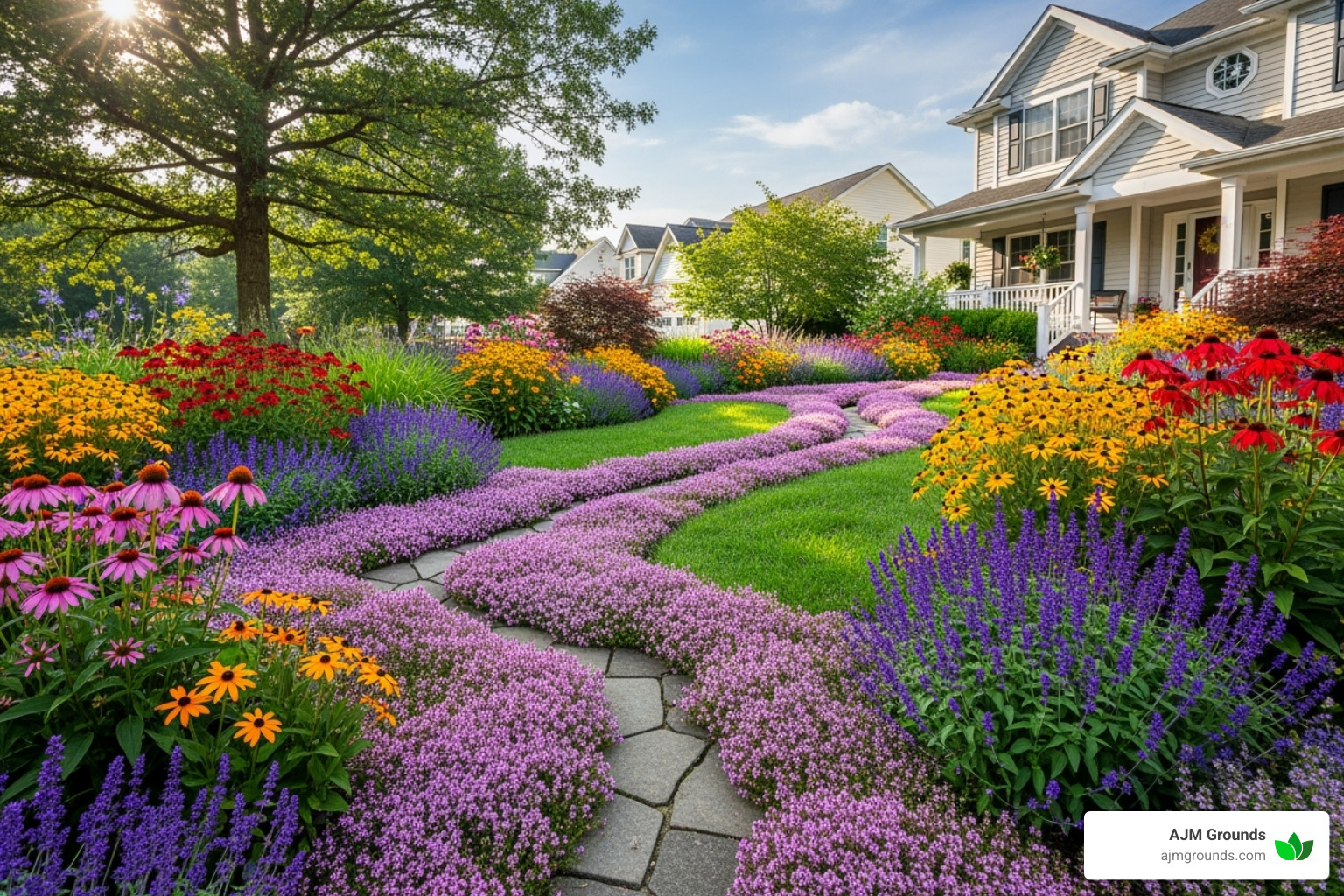
- Creeping Thyme: A durable, fragrant groundcover that forms a soft carpet, handles light traffic, and is very drought-tolerant.
- White Clover: A natural nitrogen-fixer that improves soil, stays green during drought, and requires little to no mowing.
- Sedum: These succulent groundcovers offer incredible color and texture, thriving in sunny, dry areas where grass struggles.
- Pachysandra: A classic evergreen groundcover for shady spots, it forms a dense mat that chokes out weeds with minimal care.
The magic happens when we combine these with design elements like stone pathways or borders. We can create layers and heights with ornamental grasses and perennials for year-round interest. For more ideas, see our guide on Improve Your Curb Appeal: Top 5 Landscaping Trends in Massachusetts.
Blending Lawn with Sustainable Features
You don’t have to eliminate your lawn entirely. A hybrid approach, blending manageable turf areas with mulched garden beds and native plantings, often provides the best of both worlds.
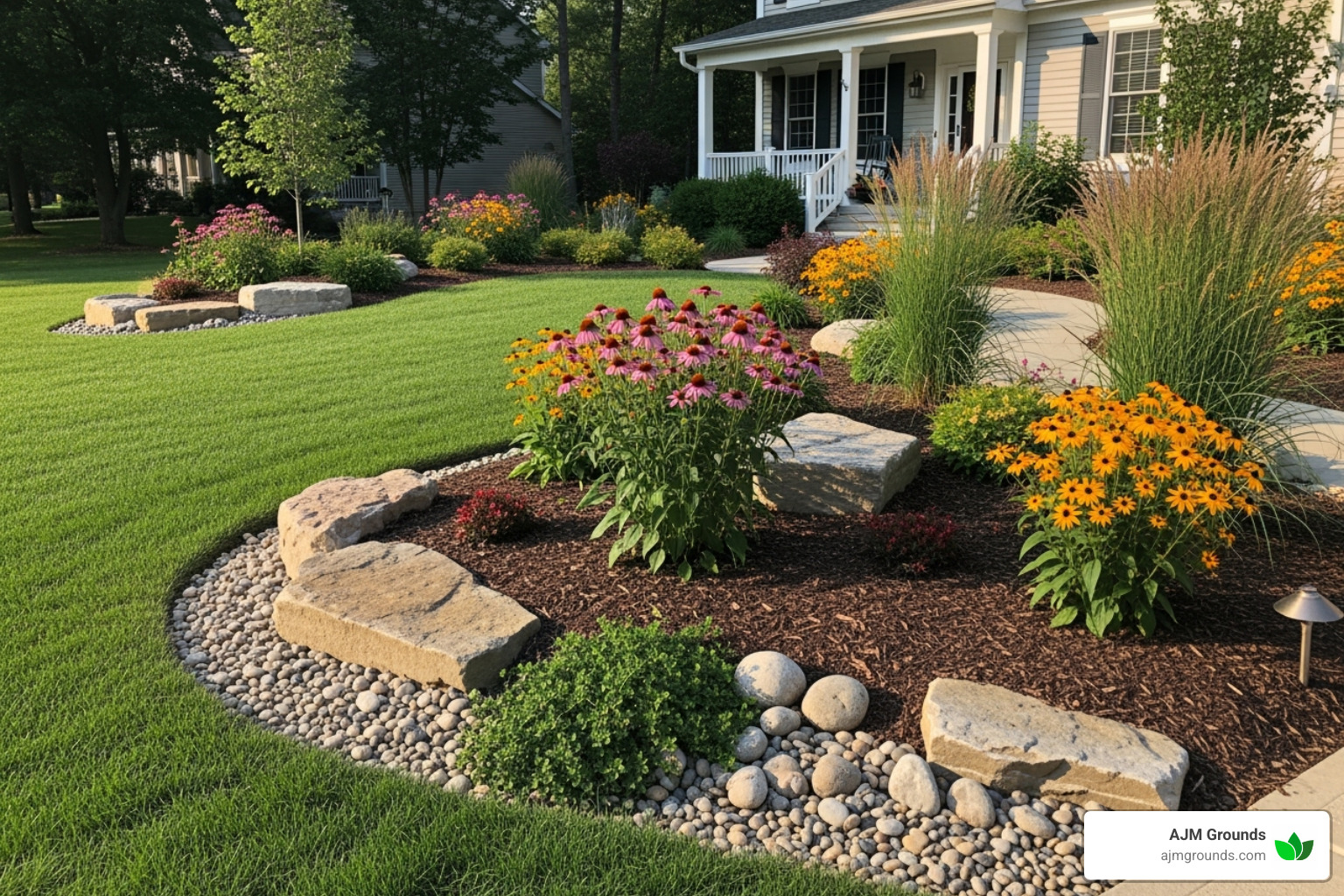
This blended landscape offers lower maintenance, water conservation, and unique curb appeal. While the initial change may require design expertise to create a cohesive look, the long-term benefits are substantial. At AJM Grounds, we specialize in these changes, helping clients convert parts of their lawn into vibrant, low-maintenance gardens with features like raised stone planters or new pathways.
Creating Your Perfect, Sustainable Landscape
The journey from a traditional front yard grass lawn to your ideal landscape starts with understanding your goals and property. Are you seeking lower maintenance, environmental benefits, or a unique look?
A professional property assessment is crucial. We evaluate sunlight, soil, drainage, and how you use your space to create a plan that works for you. Whether you’re in Woburn, Lexington, or Winchester, our local expertise ensures your landscape will thrive.
You have options: a perfect traditional lawn, a fully sustainable alternative, or a thoughtful blend. The right plan is the key to success. Ready to transform your front yard? Explore our Lawn Installation Services to get started.
