

Firepit installation can transform an average backyard into a cozy retreat perfect for entertaining or unwinding after a hectic day. If you’ve ever dreamed of creating an outdoor oasis, adding a firepit is a great way to improve your space. With firepit installation, you can enjoy warmth, ambiance, and a stunning focal point in your yard, often enhancing your property’s aesthetic and value.
Here’s a quick glance at the essentials for firepit installation:
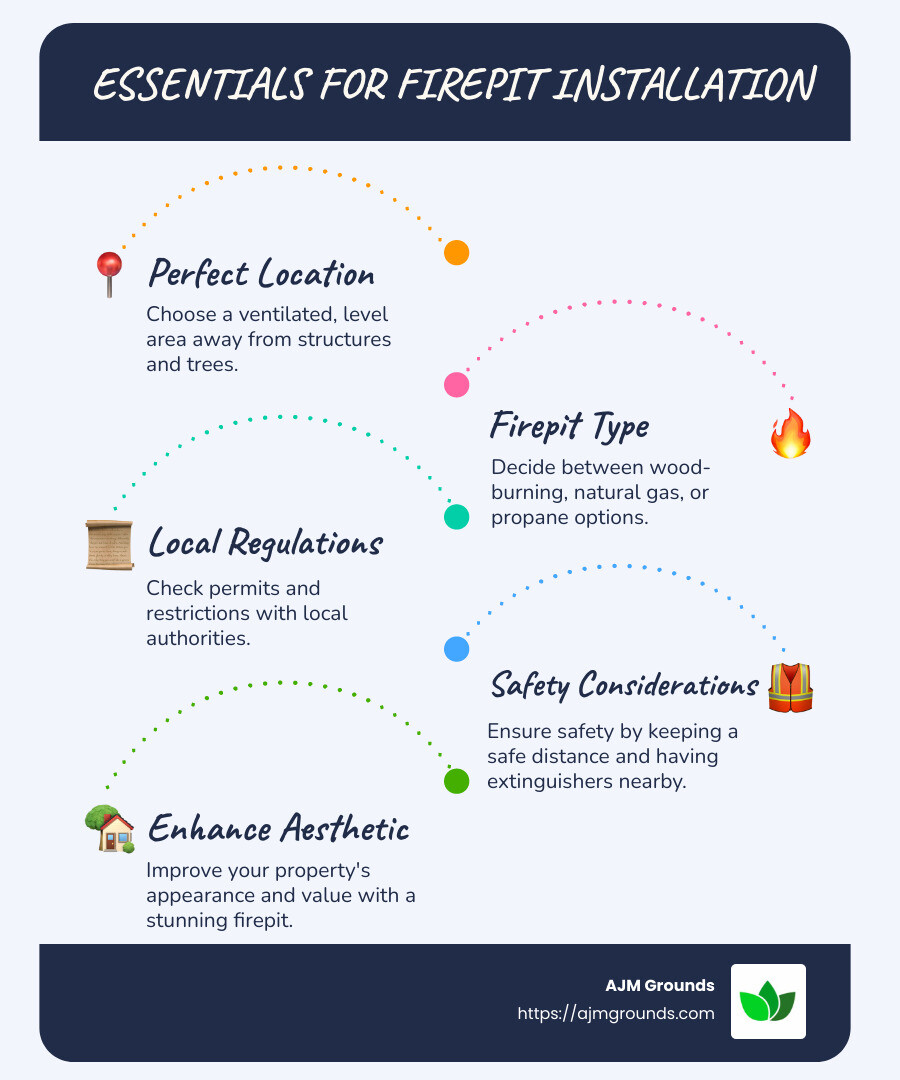
- Identify the perfect location: Ensure safety and enjoyment by choosing a well-ventilated, level spot away from structures and trees.
- Select the right firepit type: Choose from wood-burning, natural gas, or propane options, each offering unique benefits.
- Consider local regulations: Always check with local authorities for any required permits or restrictions on firepit use.
Now, a bit about me—I’m John Caplis, owner of AJM Grounds LLC, based in Woburn, Massachusetts. With years of experience in firepit installation and landscaping services, I’m passionate about helping homeowners transform their outdoor spaces into captivating retreats.
Planning Your Firepit Installation
Planning your firepit installation is the first and most crucial step in creating your backyard retreat. Here’s how to get started:
Location Selection
Choosing the right spot for your firepit is essential for both safety and enjoyment. Safety first: Position your firepit away from your house, low-hanging branches, or any flammable structures. A level ground is ideal, ensuring stability and ease of use. Additionally, consider the prevailing wind direction to keep smoke from blowing towards seating areas.
Pro Tip: Keep a distance of 6 to 7 feet between the firepit and the back legs of any outdoor furniture to ensure safety and comfort.
Safety Considerations
Safety should be your top priority. It’s not just about the location but also about the materials and design. Opt for non-combustible materials like stone or brick. If you’re considering a wood-burning firepit, ensure you have a steady supply of firewood and a plan for ash disposal.
Drainage is another important aspect. Whether your firepit is in-ground or raised, make sure rainwater and melted snow can easily drain. Use a layer of pea gravel underneath or consider adding drainage holes for raised designs.
Local Regulations
Before you start digging, always check local regulations. This includes setback requirements, fire containment rules, and any restrictions on burning materials. In some areas, permits might be necessary, especially if you’re installing a gas or propane firepit.
Remember: Regulations can vary widely depending on your location, so it’s essential to verify with your city or county authorities.
Firepit Design
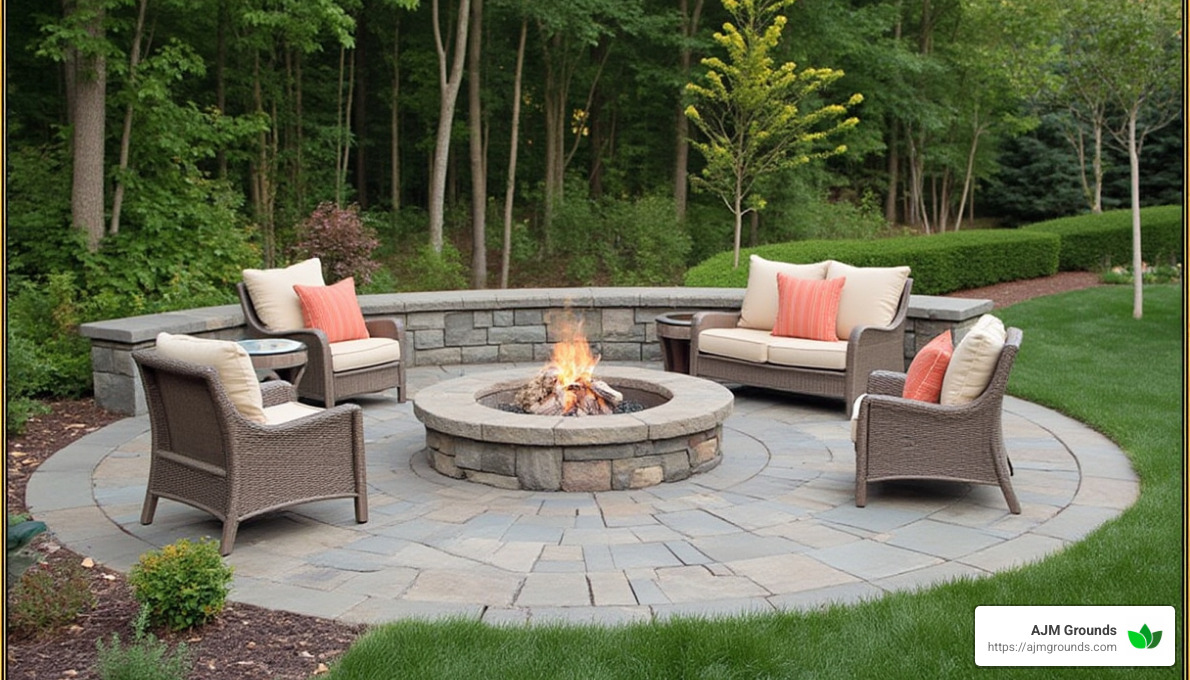
Your firepit should reflect your style and meet your needs. Whether you opt for a wood-burning pit for that classic campfire feel or a sleek gas firepit for convenience, the design possibilities are endless. Consider using materials like stone veneer, ceramic tile, or stucco for a custom look.
Design Tip: Raised firepits, built 16 to 21 inches above ground, not only prevent drainage issues but also improve airflow for a better burn.
With these planning steps in mind, you’re well on your way to creating a safe, functional, and beautiful firepit area. Next, we’ll guide you through the various types of firepits to help you choose the best fit for your backyard oasis.
Types of Firepits
When it comes to changing your backyard into a cozy retreat, choosing the right type of firepit is key. Let’s explore the different options available to suit your style and needs.
Wood-Burning Firepits
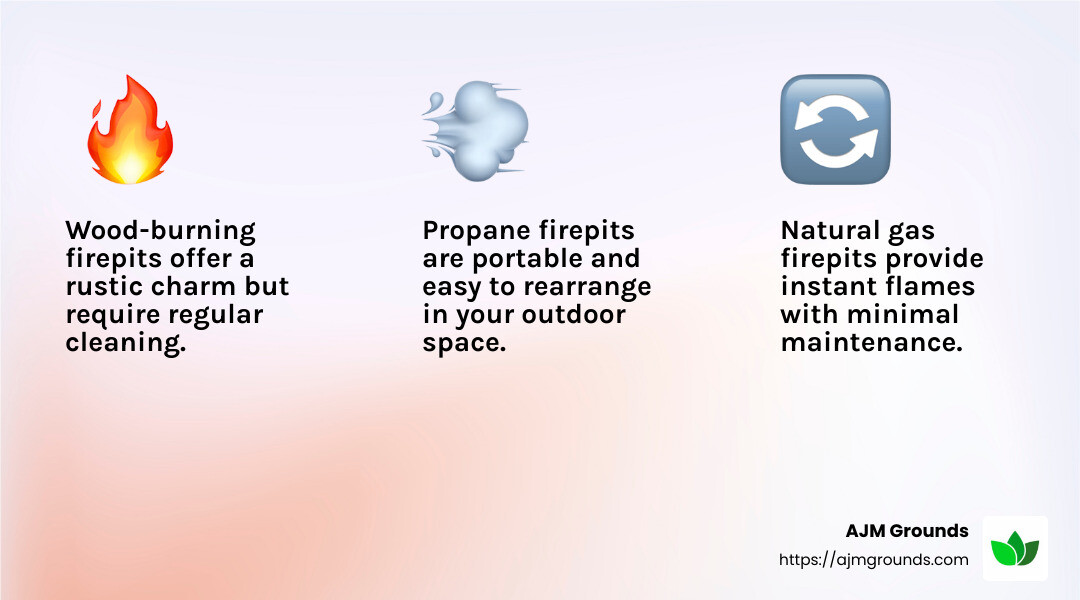
Wood-burning firepits are the classic choice for those who love the crackling sound and smoky aroma of a traditional campfire. They are often more affordable to design and install compared to other types. Plus, they bring a rustic charm that many homeowners adore. However, they do require a steady supply of firewood and regular cleaning to remove ash.
Natural Gas Firepits
If convenience is at the top of your list, consider a natural gas firepit. These firepits offer the advantage of instant flames with just the push of a button. They burn cleanly, producing almost no smoke or ash, which makes them easier to maintain. While the initial setup may be more costly due to gas line installation, the ease of use can be a worthwhile trade-off.
Propane Firepits
Similar to natural gas options, propane firepits provide instant flames and minimal cleanup. They are portable and can be moved around your yard, which is a big plus for those who like to rearrange their outdoor space. Propane tanks are easy to replace, making them a flexible choice for many homeowners.
In-Ground Firepits
In-ground firepits blend seamlessly into the landscape, reminiscent of traditional campfires. They require digging a sizable hole, usually to a depth of at least 18 inches, and are often lined with fire-rated materials like steel rings and stone pavers. While they offer a charming, low-profile look, keep in mind that maintenance might require a bit more bending and effort.
Raised Firepits
Raised firepits are built above ground, typically 16 to 21 inches high, which helps with drainage and airflow. This style is perfect for those who want to make a statement in their backyard. Raised firepits can also double as a gathering spot, where guests can prop their feet or rest drinks when the fire isn’t lit. The liftd design helps contain embers and offers a convenient height for roasting marshmallows.
Choosing the right firepit depends on your personal preferences and how you plan to use your outdoor space. Whether you prefer the traditional feel of a wood-burning pit or the modern convenience of gas or propane, there’s an option to fit every backyard oasis.
Next, we’ll walk you through the step-by-step installation process to bring your firepit vision to life.
Step-by-Step Firepit Installation Guide
Once you’ve chosen the perfect firepit for your backyard, it’s time to get started on the installation. We’ll break it down into simple steps so you can transform your outdoor space with confidence.
Marking the Site
1. Choose the Location:
Select a spot that is safe and convenient. Make sure it’s away from structures, trees, and anything flammable. Local regulations might require certain distances, so check those first.
2. Outline the Area:
Use spray paint to mark the outer diameter of your firepit. This will be your guide as you dig and lay materials. A string tied to a stake can help you draw a perfect circle.
Preparing the Area
1. Clear the Space:
Remove grass, rocks, and roots within the marked circle. You want a clean, level area to work with.
2. Dig a Foundation:
Dig down about 5 inches. This depth helps with stability and drainage. Ensure the base is level by checking with a long level tool.
3. Add Gravel:
Fill the hole with gravel, then level and tamp it down. This creates a solid base for your firepit and helps with drainage.
Laying the Base
1. Lay the First Layer of Blocks:
Place the first row of firepit blocks on the gravel. Push them together tightly and ensure they are level. If needed, use a rubber mallet to tap them into place.
2. Adjust as Needed:
Use leveling sand under low blocks or tap high blocks down to keep everything even. Check the level frequently.
Assembling the Firepit
1. Place the Steel Ring:
Lay firepit pavers on top of the gravel, then place the steel ring in the center. This ring will protect the blocks from direct heat.
2. Build the Walls:
Add layers of blocks around the ring, staggering the joints for strength. Use a rubber mallet to secure them against the ring.
3. Secure with Adhesive:
Apply construction adhesive between block layers to hold them in place. Follow the adhesive’s instructions for curing time, usually between two to seven days.
4. Test-Fit the Bowl:
If your firepit includes a bowl, place it on top to ensure it fits well. The lip should rest fully on the edge of the blocks.
With these steps, you’ve laid the foundation for a cozy retreat right in your backyard. Next, we’ll explore the costs and considerations involved in firepit installation.
Firepit Installation Costs and Considerations
When planning your firepit installation, understanding the costs and considerations is crucial. Let’s break down the main factors: average cost, materials, labor, and permits.
Average Cost
The cost of installing a firepit varies widely based on design, materials, and labor. On average, expect to spend anywhere from $1,500 to $7,000 for a built-in firepit. Prefabricated options can be more budget-friendly, ranging from $100 to $2,500. If you’re a DIY enthusiast, building a firepit yourself might cost between $50 and $500 in materials.
Materials
Materials play a significant role in the overall cost. Here’s a quick look at some common options:
- Concrete: Affordable and durable, costing around $150 for a basic setup.
- Brick: Offers a classic look, averaging $850.
- Natural Stone: A premium choice, often exceeding $4,000.
The material choice affects not just the price but also the aesthetics and durability of your firepit. Consider your budget and the style you’re aiming for.
Labor
Labor costs depend on the complexity of the installation and whether you opt for professional help. A basic professional installation might cost around $850, while custom projects can soar past $4,000. If you decide to go the DIY route, you’ll save on labor but should budget for any tools you might need.
Permits
Before you start digging, check with local authorities regarding permits. Many municipalities require permits for permanent firepits to ensure safety standards are met. Permit fees typically range from $25 to $150. It’s a small price for peace of mind and compliance with local regulations.
Additional Considerations
- Landscaping and Patio: Enhancing your firepit area with a patio or landscaping can add $2,000 to $15,000 to your budget.
- Overhead Structures: Adding a gazebo or pergola might cost between $1,500 and $6,000, depending on size and materials.
By planning ahead and considering these factors, you can create a cozy backyard retreat that fits your budget and style. Now that you have a grasp on the costs, let’s move on to some frequently asked questions about firepit installation.
Frequently Asked Questions about Firepit Installation
How much does it cost to have a fire pit installed?
The cost of having a fire pit installed can vary significantly based on several factors. On average, you might spend between $1,500 and $7,000 for a built-in fire pit. If you prefer a prefabricated option, costs range from $100 to $2,500. DIY enthusiasts can build a fire pit for as low as $50 to $500, depending on the materials used.
Labor is another critical component. Hiring professionals could cost you anywhere from $850 to over $4,000, depending on the complexity of the project. Always consider getting multiple quotes to ensure you get the best deal.
What is the best thing to put under a fire pit?
When installing a fire pit, use non-combustible materials for safety and functionality. Gravel and paver bases are popular choices. They provide a stable foundation and help with drainage, preventing water from accumulating under the fire pit.
Fire bricks are another excellent option, especially for lining the interior, as they can withstand high temperatures. Ensuring proper ventilation is also crucial to maintain airflow and prevent overheating.
Can I have a fire pit in my backyard in Texas?
In Texas, whether you can have a fire pit in your backyard depends on local regulations. Many areas allow outdoor burning for recreational use, but you must follow specific guidelines. Always check with your local city or county authorities to understand setback requirements and any restrictions on burning materials.
It’s also wise to consider environmental factors, like wind direction, to minimize smoke impact on neighbors. Ensuring compliance with local rules not only keeps you safe but also fosters a friendly neighborhood environment.
By addressing these key questions, you’ll be well-equipped to make informed decisions about your fire pit installation. Whether you choose to DIY or hire professionals, understanding these aspects will help you create a safe and inviting outdoor space.
Conclusion
Changing your backyard into a cozy retreat with a fire pit is a rewarding endeavor. At AJM Grounds, we pride ourselves on offering personalized service and professional installation to bring your vision to life. Our skilled team focuses on attention to detail, ensuring every firepit installation meets your specific needs and improves your outdoor living space.
We understand that each backyard is unique, which is why we work closely with you to design and build a fire pit that complements your style and fits seamlessly into your environment. Whether you’re looking for a traditional wood-burning pit or a modern gas-powered option, our experts are here to guide you through the process, from planning to completion.
Our commitment to quality means you can trust us to handle every aspect of your project with care and precision. We serve a wide range of locations, including Bedford, Billerica, Burlington, Lexington, Reading, Stoneham, Wilmington, Winchester, and Woburn, MA.
Ready to transform your backyard? Contact us today to start planning your custom outdoor fire pit and experience the AJM Grounds difference.
Create a space where memories are made, and enjoy the warmth and ambiance of your new fire pit for years to come.
